
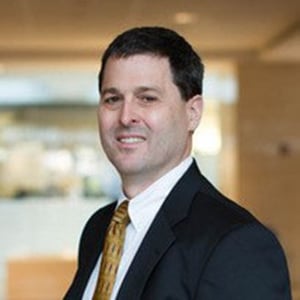
Scott K. Ginsburg Professor of Health Law & Policy, Georgetown University
David A. Hyman, M.D., J.D., is the Scott K. Ginsburg Professor of Health Law & Policy at Georgetown University. Professor Hyman focuses his research and writing on the regulation and financing of health care. He teaches or has taught health care regulation, civil procedure, insurance, medical malpractice, law & economics, professional responsibility, and tax policy.
While serving as Special Counsel to the Federal Trade Commission, Professor Hyman was principal author and project leader for the first joint report ever issued by the Federal Trade Commission and Department of Justice, “Improving Health Care: A Dose of Competition” (2004). He is also the author of Medicare Meets Mephistopheles, which was selected by the U.S. Chamber of Commerce/National Chamber Foundation as one of the top ten books of 2007, and the co-author (with Charles Silver) of Overcharged: Why Americans Pay Too Much for Health Care (2018). He has published widely in student-edited law reviews and peer-reviewed medical, health policy, law, and economics journals.
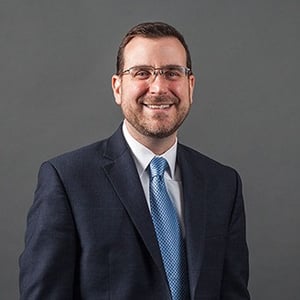
Professor of Law, Antonin Scalia Law School, George Mason University
Adam Mossoff is Professor of Law at Antonin Scalia Law School, George Mason University. He has published extensively on why patents, copyrights, and other intellectual property rights have been—and should be—legally secured to innovators and creators as property rights. His scholarship has been relied on by the United States Supreme Court, by lower federal courts, and by U.S. federal agencies. He has been invited to testify numerous times before the U.S. Senate and the House of Representatives on intellectual property legislation. His writings on intellectual property policy have also appeared in the Wall Street Journal, New York Times, Forbes, Investors Business Daily, and in other media outlets. His journal articles can be downloaded here.
Professor Mossoff is a longstanding member of the Executive Committee of the Intellectual Property Practice Group of the Federalist Society, on which he served as Chairperson from 2016-2018, and he is Chair of the Intellectual Property Working Group of the Regulatory Transparency Project of the Federalist Society. He is a Senior Fellow and Chair of the Forum for Intellectual Property at the Hudson Institute, a Visiting Intellectual Property Fellow at the Heritage Foundation, and a member of the Board of Directors of the Center for Intellectual Property Understanding. He is a member of the Intellectual Property Rights Policy Committee of ANSI and he has served as Chair and Vice-Chair of the Intellectual Property Committee of the IEEE-USA, on which he remains a member in good standing.
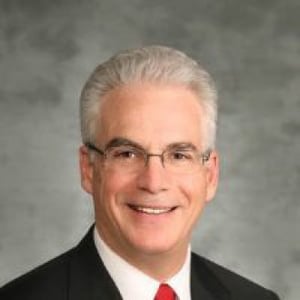
Dinsmore & Shohl LLP, Partner
Brian is chair of Dinsmore’s IP Transactions and Licensing Group. He is a past president of the Licensing Executives Society (USA and Canada), Inc. (LES), the leading professional society devoted to commercial transactions and licensing of intangible property. He continues to serve LES as senior vice president for public policy. He has extensive experience in a wide variety of commercial transactions involving intangible property, and is known for creative licensing strategies to promote collaboration and resolve IP-related disputes.
He is a registered patent attorney with more than 30 years of experience before the U.S. Patent and Trademark Office and in structuring global IP portfolios and strategies. He has extensive experience in contested proceedings before the USPTO Patent Trial and Appeal Board (interferences, Inter Partes Reviews and Post Grant Reviews), as well as contested matters in federal courts and the International Trade Commission. His wide-ranging experience affords a broad, informed perspective and facilitates creative approaches to intellectual property management, licensing, and enforcement.
In addition to his leadership of LES, Brian served on the LES Board of Directors 2007 – 2018. In his ongoing role as senior vice president for public policy he is responsible for coordinating the society’s public policy positions, amicus briefs, and congressional outreach. He works with legislators, the executive branch, and the courts toward consistent, reliable, and prudent IP laws and policies that advance innovation and economic development. He has also served LES as trustee for education, and has long served as an author, editor, and faculty member of LES educational programs focusing on best practices in IP licensing.
He is also active in the global society, LES International (LESI). Among his various roles in LESI, he has served as co-chair of the External Relations Committee, coordinating public policy and advocacy for effective IP laws and policies among the 33 regional LES societies, and with various non-governmental organizations such as WIPO and EPO. In 2019, he received the LES International President’s Service Recognition Award.
Brian also serves as Chair of the Board of Directors of the Bayh Dole Coalition, a 501(c)(4) corporation dedicated to promoting and preserving the Bayh Dole Act. He is a member of the Founding Board of Directors of the United States Intellectual Property Alliance (USIPA), an organization dedicated to raising public awareness of, and appreciation for, the role of IP in fostering innovation for the public good; and he has served on the DC Bar Intellectual Property Section Steering Committee (2013 – 2016).
In 2016, Brian testified before the U.S. Senate Committee on Small Business and Entrepreneurship on the effects of the America Invents Act on small business and entrepreneurs in a hearing entitled “An Examination of Changes to the U.S. Patent System & Impacts on America's Small Businesses.”
With his longstanding and diverse patent practice, in both private practice and in-house, Brian advises corporate leaders and entrepreneurs in effective IP procurement practices, and in maximizing value from IP assets. He has been retained as a testifying witness in IP and licensing disputes by the U.S. Department of Justice, the U.S. Department of the Treasury, and by various private enterprises.
Brian has been acknowledged by IAM magazine as among its “IAM Strategy 300”, the world’s leading IP strategists, and among “The World's Leading Patent and Technology Licensing Lawyers.”
He earned B.S. and M.S. degrees from the Department of Chemistry, Rochester Institute of Technology, Rochester, NY; and Juris Doctor from Syracuse University, College of Law, Syracuse, NY (1986).
Brian has served his alma mater as president of the RIT Alumni Association 2005 – 2009; and now serves on the RIT Board of Trustees as a member of its Executive Committee, chair of its Student Life Committee, and vice-chair of its Committee on Trustees. In 2013, Brian was awarded RIT’s Outstanding Alumnus Award, and in 2005 he was awarded the Distinguished Alumnus Award by RIT’s College of Science.
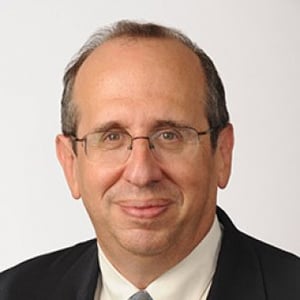
Director and Senior Fellow, Berkeley Center for Law and Technology, University of California at Berkeley
Mark Cohen heads the Asia IP Project at the Berkeley Center for Law and Technology at Berkeley Law School. He is also responsible for teaching international trade law and research and writing on IP issues. Previously, Cohen was Senior Counsel, China in the Office of Policy and International Affairs at the U.S. Patent and Trademark Office, after serving as a visiting professor at Fordham Law School (2011-2012). Prior to that time, he served in such functions as: Director, International Intellectual Property at Microsoft Corporation; Of Counsel to Jones Day’s Beijing office; and Senior Intellectual Property Attaché at the U.S. Embassy in Beijing (2004- 2008). In total, he has over 30 years private, public sector, in-house and academic experience in China and transition economies, with a focus on technology trade and intellectual property.
Cohen was the first IPR Attaché posted by USPTO to handle IPR issues in a foreign country. In addition, he launched the annual “Ambassador’s IPR Roundtable” which he co-chaired for five years, devised IPR “toolkits”, “road shows”, pro-bono programs, internal training programs for the US government and external training programs, and worked with USPTO and other US agencies to engage China and Chinese IP agencies. Cohen led a China team at USPTO consisting of 21 individuals in DC, Beijing, Shanghai and Guangzhou, China on all aspects of USPTO’s activities in China. Among his book-length publications are Antimonopoly Law and Practice in China (Oxford University Press 2011, with Steve Harris et al.). He was also the editor of Chinese Intellectual Property Law and Practice (Kluwer Law International 1999) and has edited or published a number of on-line publications, including the blog www.chinaipr.com.
Mr. Cohen has taught and lectured at numerous universities in the United States, Asia and Europe. Amongst other honors, he was the recipient of the US Chamber of Commerce’s “IP Champion” award in 2014. Mr. Cohen holds a J.D. degree from Columbia University (1984), an M.A. from the University of Wisconsin in Chinese Language and Literature (1979) and a B.A. from the State University of New York at Albany in Chinese Studies (1977).
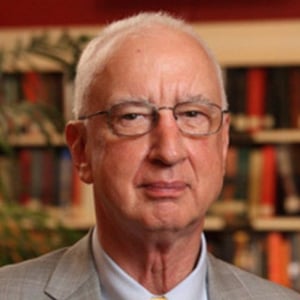
Former Chief Judge, United States Court of Appeals for the Federal Circuit
Judge Michel served for more than 22 years on the Federal Circuit, retiring on May 31, 2010. From December 25, 2004 until his retirement, he also discharged the duties of Chief Judge of this national court, serving simultaneously on the U.S. Judicial Conference -- the Judiciary's governing body -- and by appointment of the Chief Justice on its seven-judge Executive Committee.
He judged several thousand appeals and authored more than 800 opinions, one third concerning intellectual property law. Intellectual Asset Management magazine inducted him into its Hall of Fame and he was designated one of the 50 most influential leaders in intellectual property law in the world. His contributions were also recognized by lifetime achievement and similar awards by the American Intellectual Property Law Association (AIPLA); Intellectual Property Owners Education Foundation (IPO); the American Bar Association's Intellectual Property Section; Managing Intellectual Property magazine; the Sedona Conference; the Patent and Trademark Office Society (PTOS); the New York, Chicago, Philadelphia, and Los Angeles Intellectual Property Law Associations; and the William C. Connor, the Giles S. Rich, and the Richard Linn Intellectual Property American Inns of Court. In 2010 the Los Angeles IP Inn was renamed in his honor as the Paul R. Michel IP Inn.
Judge Michel received the Jefferson Medal, the Eli Whitney Award, and the Katz-Kiley Prize as well as Honorary Doctor of Law degrees from the Catholic University of America and the John Marshall Law School. He is a lifetime Member of Honore of FICPI, the international association of private practitioners of intellectual property law. Williams College granted him the Kellogg Award for "outstanding leadership in law and public service."
Judge Michel has written numerous articles on patent law and advocacy, taught related courses and master classes at George Washington University, the University of Akron, and John Marshall law schools, serving as well on their IP advisory boards and on counterpart boards at the universities of California (Berkley), Washington, and Maryland. He co-authored a casebook, Patent Litigation and Strategy (West, 1999) and an August 2010 editorial in the New York Times on strengthening the patent system to promote prosperity and create new jobs.
A frequent speaker at conferences and law schools during his judicial tenure and since, he retired from a lifetime appointment to be free to speak out on the national need for better patent policy and protection of intellectual property and the vital, unmet resource needs of the courts, the PTO, the International Trade Commission, and other IP-related agencies. He was appointed Distinguished Scholar in Residence by IPO, following his retirement. Judge Michel also consults for law firms and their clients in intellectual property litigations, conducting moot courts, mock trials, case evaluations, editing briefs, advising on strategy and providing mediation and arbitration services.
Dinsmore & Shohl LLP, Partner
Brian is chair of Dinsmore’s IP Transactions and Licensing Group. He is a past president of the Licensing Executives Society (USA and Canada), Inc. (LES), the leading professional society devoted to commercial transactions and licensing of intangible property. He continues to serve LES as senior vice president for public policy. He has extensive experience in a wide variety of commercial transactions involving intangible property, and is known for creative licensing strategies to promote collaboration and resolve IP-related disputes.
He is a registered patent attorney with more than 30 years of experience before the U.S. Patent and Trademark Office and in structuring global IP portfolios and strategies. He has extensive experience in contested proceedings before the USPTO Patent Trial and Appeal Board (interferences, Inter Partes Reviews and Post Grant Reviews), as well as contested matters in federal courts and the International Trade Commission. His wide-ranging experience affords a broad, informed perspective and facilitates creative approaches to intellectual property management, licensing, and enforcement.
In addition to his leadership of LES, Brian served on the LES Board of Directors 2007 – 2018. In his ongoing role as senior vice president for public policy he is responsible for coordinating the society’s public policy positions, amicus briefs, and congressional outreach. He works with legislators, the executive branch, and the courts toward consistent, reliable, and prudent IP laws and policies that advance innovation and economic development. He has also served LES as trustee for education, and has long served as an author, editor, and faculty member of LES educational programs focusing on best practices in IP licensing.
He is also active in the global society, LES International (LESI). Among his various roles in LESI, he has served as co-chair of the External Relations Committee, coordinating public policy and advocacy for effective IP laws and policies among the 33 regional LES societies, and with various non-governmental organizations such as WIPO and EPO. In 2019, he received the LES International President’s Service Recognition Award.
Brian also serves as Chair of the Board of Directors of the Bayh Dole Coalition, a 501(c)(4) corporation dedicated to promoting and preserving the Bayh Dole Act. He is a member of the Founding Board of Directors of the United States Intellectual Property Alliance (USIPA), an organization dedicated to raising public awareness of, and appreciation for, the role of IP in fostering innovation for the public good; and he has served on the DC Bar Intellectual Property Section Steering Committee (2013 – 2016).
In 2016, Brian testified before the U.S. Senate Committee on Small Business and Entrepreneurship on the effects of the America Invents Act on small business and entrepreneurs in a hearing entitled “An Examination of Changes to the U.S. Patent System & Impacts on America's Small Businesses.”
With his longstanding and diverse patent practice, in both private practice and in-house, Brian advises corporate leaders and entrepreneurs in effective IP procurement practices, and in maximizing value from IP assets. He has been retained as a testifying witness in IP and licensing disputes by the U.S. Department of Justice, the U.S. Department of the Treasury, and by various private enterprises.
Brian has been acknowledged by IAM magazine as among its “IAM Strategy 300”, the world’s leading IP strategists, and among “The World's Leading Patent and Technology Licensing Lawyers.”
He earned B.S. and M.S. degrees from the Department of Chemistry, Rochester Institute of Technology, Rochester, NY; and Juris Doctor from Syracuse University, College of Law, Syracuse, NY (1986).
Brian has served his alma mater as president of the RIT Alumni Association 2005 – 2009; and now serves on the RIT Board of Trustees as a member of its Executive Committee, chair of its Student Life Committee, and vice-chair of its Committee on Trustees. In 2013, Brian was awarded RIT’s Outstanding Alumnus Award, and in 2005 he was awarded the Distinguished Alumnus Award by RIT’s College of Science.
Chief Judge (ret.), U.S. Court of Appeals for the Federal Circuit, and Honorary Professor, Tsinghua University
Randall R. Rader was appointed to the United States Court of Appeals for the Federal Circuit by President George H. W. Bush in 1990 and served as Chief Judge from June 2010 to June 2014. He was appointed to the United States Claims Court (now the U. S. Court of Federal Claims) by President Ronald W. Reagan in 1988. Judge Rader's most prized title may well be "Professor Rader."
As Professor, Judge Rader has taught courses on patent law and other advanced intellectual property courses at The George Washington University Law School,University of Virginia School of Law, Georgetown University Law Center, the Munich Intellectual Property Law Center, and other university programs in Tokyo, Taipei, New Delhi, and Beijing. Due to the size and diversity of his classes, Judge Rader may have taught patent law to more students than anyone else. Judge Rader has also co-authored several texts including the most widely used textbook on U. S. patent law, "Cases and Materials on Patent Law," (St. Paul, Minn.: Thomson/West 3d ed. 2009) and "Patent Law in a Nutshell," (St. Paul, Minn.: Thomson/West 2007) (translated into Chinese and Japanese). Judge Rader has won acclaim for leading dozens of government and educational delegations to every continent (except Antarctica), teaching rule of law and intellectual property law principles.
Judge Rader has received many awards, including the Sedona Lifetime Achievement Award for Intellectual Property Law, 2009; Distinguished Teaching Awards from George Washington University Law School, 2003 and 2008 (by election of the students); the Jefferson Medal from the New Jersey Intellectual Property Law Association, 2003; the Distinguished Service Award from the Berkeley Center for Law and Technology, 2003; the J. William Fulbright Award for Distinguished Public Service from George Washington University Law School, 2000; and the Younger Federal Lawyer Award from the Federal Bar Association, 1983. Before appointment to the Court of Federal Claims, Judge Rader served as Minority and Majority Chief Counsel to Subcommittees of the U.S. Senate Committee on the Judiciary. From 1975 to 1980, he served as Counsel in the House of Representatives for representatives serving on the Interior, Appropriations, and Ways and Means Committees. He received a B.A. in English from Brigham Young University in 1974 and a J.D. from George Washington University Law School in 1978.

Director, Technology Licensing Office & Director, Catalysts, Office of Strategic Alliances & Technology Transfer, MIT
Lesley is formerly the director of the Office of Technology Management at the University of Illinois at Urbana-Champaign (UIUC), where she had responsibility for the oversight of all technology transfer activities across the university. In this position, Lesley demonstrated leadership in all phases of the commercialization of technology and intellectual property, ranging from proof of concept programs to enable the launch of startup companies through patenting and licensing processes. She played a major role in developing a thriving innovation ecosystem at UIUC, marked by strong corporate engagement. Beyond her university focus, Lesley has been a prominent speaker nationally and internationally on the economic importance of technology transfer.
Lesley holds bachelor’s and master’s degrees in education from the University of Edinburgh and the University of Georgia, respectively, and an MBA from UIUC.
Professor of Law, Antonin Scalia Law School, George Mason University
Adam Mossoff is Professor of Law at Antonin Scalia Law School, George Mason University. He has published extensively on why patents, copyrights, and other intellectual property rights have been—and should be—legally secured to innovators and creators as property rights. His scholarship has been relied on by the United States Supreme Court, by lower federal courts, and by U.S. federal agencies. He has been invited to testify numerous times before the U.S. Senate and the House of Representatives on intellectual property legislation. His writings on intellectual property policy have also appeared in the Wall Street Journal, New York Times, Forbes, Investors Business Daily, and in other media outlets. His journal articles can be downloaded here.
Professor Mossoff is a longstanding member of the Executive Committee of the Intellectual Property Practice Group of the Federalist Society, on which he served as Chairperson from 2016-2018, and he is Chair of the Intellectual Property Working Group of the Regulatory Transparency Project of the Federalist Society. He is a Senior Fellow and Chair of the Forum for Intellectual Property at the Hudson Institute, a Visiting Intellectual Property Fellow at the Heritage Foundation, and a member of the Board of Directors of the Center for Intellectual Property Understanding. He is a member of the Intellectual Property Rights Policy Committee of ANSI and he has served as Chair and Vice-Chair of the Intellectual Property Committee of the IEEE-USA, on which he remains a member in good standing.
Dinsmore & Shohl LLP, Partner
Brian is chair of Dinsmore’s IP Transactions and Licensing Group. He is a past president of the Licensing Executives Society (USA and Canada), Inc. (LES), the leading professional society devoted to commercial transactions and licensing of intangible property. He continues to serve LES as senior vice president for public policy. He has extensive experience in a wide variety of commercial transactions involving intangible property, and is known for creative licensing strategies to promote collaboration and resolve IP-related disputes.
He is a registered patent attorney with more than 30 years of experience before the U.S. Patent and Trademark Office and in structuring global IP portfolios and strategies. He has extensive experience in contested proceedings before the USPTO Patent Trial and Appeal Board (interferences, Inter Partes Reviews and Post Grant Reviews), as well as contested matters in federal courts and the International Trade Commission. His wide-ranging experience affords a broad, informed perspective and facilitates creative approaches to intellectual property management, licensing, and enforcement.
In addition to his leadership of LES, Brian served on the LES Board of Directors 2007 – 2018. In his ongoing role as senior vice president for public policy he is responsible for coordinating the society’s public policy positions, amicus briefs, and congressional outreach. He works with legislators, the executive branch, and the courts toward consistent, reliable, and prudent IP laws and policies that advance innovation and economic development. He has also served LES as trustee for education, and has long served as an author, editor, and faculty member of LES educational programs focusing on best practices in IP licensing.
He is also active in the global society, LES International (LESI). Among his various roles in LESI, he has served as co-chair of the External Relations Committee, coordinating public policy and advocacy for effective IP laws and policies among the 33 regional LES societies, and with various non-governmental organizations such as WIPO and EPO. In 2019, he received the LES International President’s Service Recognition Award.
Brian also serves as Chair of the Board of Directors of the Bayh Dole Coalition, a 501(c)(4) corporation dedicated to promoting and preserving the Bayh Dole Act. He is a member of the Founding Board of Directors of the United States Intellectual Property Alliance (USIPA), an organization dedicated to raising public awareness of, and appreciation for, the role of IP in fostering innovation for the public good; and he has served on the DC Bar Intellectual Property Section Steering Committee (2013 – 2016).
In 2016, Brian testified before the U.S. Senate Committee on Small Business and Entrepreneurship on the effects of the America Invents Act on small business and entrepreneurs in a hearing entitled “An Examination of Changes to the U.S. Patent System & Impacts on America's Small Businesses.”
With his longstanding and diverse patent practice, in both private practice and in-house, Brian advises corporate leaders and entrepreneurs in effective IP procurement practices, and in maximizing value from IP assets. He has been retained as a testifying witness in IP and licensing disputes by the U.S. Department of Justice, the U.S. Department of the Treasury, and by various private enterprises.
Brian has been acknowledged by IAM magazine as among its “IAM Strategy 300”, the world’s leading IP strategists, and among “The World's Leading Patent and Technology Licensing Lawyers.”
He earned B.S. and M.S. degrees from the Department of Chemistry, Rochester Institute of Technology, Rochester, NY; and Juris Doctor from Syracuse University, College of Law, Syracuse, NY (1986).
Brian has served his alma mater as president of the RIT Alumni Association 2005 – 2009; and now serves on the RIT Board of Trustees as a member of its Executive Committee, chair of its Student Life Committee, and vice-chair of its Committee on Trustees. In 2013, Brian was awarded RIT’s Outstanding Alumnus Award, and in 2005 he was awarded the Distinguished Alumnus Award by RIT’s College of Science.
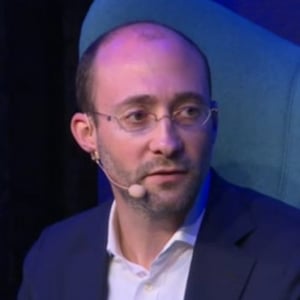
Vice President, Global Head IP Affairs, Novartis
Corey Salsberg is the Vice President of Global Head IP Affairs in Novartis. He leads the Global IP Affairs function for Novartis, a multinational Fortune Global 200 healthcare company and world leader in innovative medicines and biosimilars.
Corey is a member of the Steering Committee and founder of the WIPO-World Economic Forum Inventors Assistance Program (IAP), an innovative international program aimed at providing pro bono IP services to under-resourced inventors and small businesses in developing countries.
Furthermore, he is one of architects of the Patent Information Initiative for Medicines (Pat-INFORMED), a voluntary global online database of patent information now co-sponsored and hosted by WIPO and the International Federation of Pharmaceutical Manufacturers (IFPMA).
Globally recognized thought leader, advocate, and speaker on IP, innovation and related topics. Recent engagements include testimony before the US Senate Judiciary, keynote address at the 7th Annual IBA World Life Sciences Conference, and many others.
Corey is a Stanford University of Law School graduate and Yale University undergraduate.
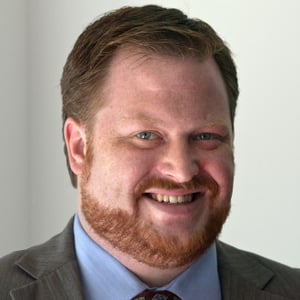
Research Fellow, Robert A. Levy Center for Constitutional Studies, Cato Institute
Trevor Burrus is a research fellow in the Cato Institute’s Robert A. Levy Center for Constitutional Studies and Center for the Study of Science, as well as managing editor of the Cato Supreme Court Review. His research interests include constitutional law, civil and criminal law, legal and political philosophy, legal history, and the interface between science and public policy. His academic work has appeared in journals such as the Harvard Journal of Law and Public Policy, the New York University Journal of Law and Liberty, the New York University Annual Survey of American Law, the Syracuse Law Review, and many others. His popular writing has appeared in the Washington Post, the New York Times, USA Today, Forbes, the Huffington Post, the New York Daily News, and others.
Burrus lectures regularly on behalf of the Federalist Society, the Institute for Humane Studies, the Foundation for Economics Education, and other organizations, and he frequently appears on major media outlets. He is also the co-host of Free Thoughts, a weekly podcast that covers topics in libertarian theory, history, and philosophy.
He is the editor of A Conspiracy against Obamacare (Palgrave Macmillan, 2013) and Deep Commitments: The Past, Present, and Future of Religious Liberty (Cato, 2017), and holds a BA in philosophy from the University of Colorado at Boulder and a JD from the University of Denver Sturm College of Law.
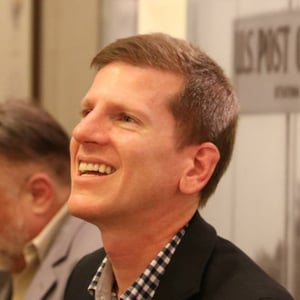
Historian and Author
Garrett Peck is an author, historian and tour guide in the nation's capital. He leads tours through The Smithsonian Associates, and his Temperance Tour of Prohibition-related sites has been featured on C-SPAN Book TV and the History Channel program "Ten Things You Didn't Know About" with punk rock legend Henry Rollins. He was featured on a two-hour documentary about Prohibition by the Smithsonian Channel. His seventh book, The Great War in America: World War I and Its Aftermath, was published in 2018.
Peck was involved with the DC Craft Bartenders Guild in lobbying the DC City Council to have the Rickey declared Washington's native cocktail in 2011. He researched and pinpointed the Washington Brewery site at Navy Yard, and is particularly proud that Green Hat Gin is named after a character Peck wrote about in Prohibition in Washington, D.C.: congressional bootlegger George Cassiday. He has lectured at the Library of Congress, the National Archives, and the Smithsonian Institution, and often speaks at historical societies, literary clubs and trade associations.
Peck is on the board of the Woodrow Wilson House and is a member of the Association of the Oldest Inhabitants of D.C. A native Californian and graduate of the Virginia Military Institute and George Washington University and U.S. Army veteran, he lives in Arlington, Virginia.
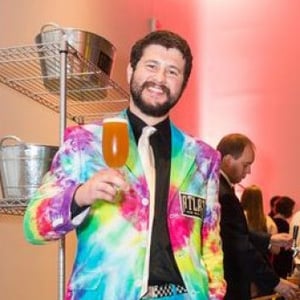
Head Brewer, Atlas Brew Works
As Head Brewer at Atlas, Daniel oversees production of Atlas’ varied portfolio of ales and lagers. Daniel has a Bachelor's Degree in Chemistry from the University of Maryland and he is a graduate of the Siebel Institute's Concise Course in Brewing Technology. Daniel came to Atlas mere months after we opened from Franklin's Restaurant and Brewery in Hyattsville, MD. Before entering the craft beer industry, Daniel held a position with Chesapeake Spice Co, as a Quality Control technician. Raised in Prince George’s County, he works hard, has incredible tastes in suits, and loves pepperoni pizza.

Founder, Atlas Brew Works
Now a DC resident for more than a decade, Justin was born and raised in the Smokey Mountains of East Tennessee. Justin pursued his undergraduate degree at Vanderbilt University in Engineering Science and Economics. Shortly after, he moved to Washington, DC to work in business consulting. He returned to law school at George Mason University School of Law in Arlington, VA. After graduating in 2009, Justin took a Presidential Management Fellowship with the General Services Administration.
Meanwhile, he honed his homebrewing skills, becoming a very popular neighbor by having lots of great beer always on hand. Justin decided to throw caution to the wind and explore his entrepreneurial side by opening Atlas Brew Works in his new hometown, the District of Columbia. Calling on long time friend Will Durgin to join as Head Brewer, the two opened the business in September of 2013.
When not putting out fires or marketing and selling beer, Justin enjoys any activity on the water, watching crappy reality TV, and spending time with his wife and English Bulldog.
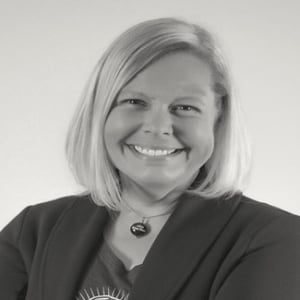
Partner, Dinsmore & Shohl LLP
Candace has experience in the craft beer industry, which began while bartending at Hamilton’s Tavern, one of San Diego’s premier craft beer bars. She worked at Hamilton’s during law school, and the tavern is where she learned how craft brewers were lacking representation in the legal field, as many had trouble finding attorneys who could answer specific questions about the intricate alcohol-based industry. Craft brewers are constantly dealing with questions such as whether their clever craft brewery name will be approved by the trademark office or whether a lease for a new taproom space will protect their needs and interests. She is aware of what it takes to start, open, sustain and grow a craft brewery.
She has devoted her practice to serving the needs of craft brewers, and during her career, Candace has worked with more than 350 craft breweries and breweries-in-planning across the country. She has counseled them on issues, including business entity formation, alcoholic beverage law, contract review, trademark law and other legal needs.
Candace has also spoken to brewers guilds and at brewers association meetings nationwide on matters such as distribution laws and trademarks, to ensure clients and breweries-in-planning are complying with industry standards and regulations. She has also been a resource for brewery-related issues in newspapers, magazines, TV segments, online and at conferences across the country.
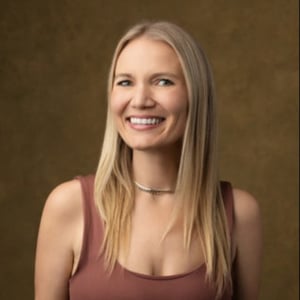
Constitutional Scholarship Director and Senior Legal Analyst, Pacific Legal Foundation
Anastasia Boden is Director of Constitutional Scholarship at Pacific Legal Foundation, where she leads the organization’s Supreme Court commentary and directs scholarly analysis in support of the firm’s litigation. She has represented entrepreneurs and small businesses nationwide in challenges to onerous licensing regimes, anti-competitive titling restrictions, Certificate of Need (“competitor’s veto”) laws, and other forms of unnecessary red tape that block economic opportunity.
Prior to this role, Anastasia developed nearly a dozen constitutional challenges to Certificate of Need laws across the country, helping spur legislative reform in Montana, Pennsylvania, and West Virginia. Her victories include a ruling invalidating Houston’s busking restrictions, multiple appellate decisions expanding access to the courts for civil rights plaintiffs, and the legislative repeal of Virginia’s happy-hour advertising ban.
Her writings on law and liberty have been featured in USA Today, The Washington Post, The Wall Street Journal, the Los Angeles Times, the Chicago Tribune, Forbes, and more, and she has appeared on Headline News, CBS News, Fox News, ReasonTV, Newsmax, and John Stossel. In 2020, she was featured on Libertarian Party presidential candidate Jo Jorgensen’s Supreme Court shortlist.
Anastasia earned her BA with dean’s honors from the University of California, Santa Barbara, and her JD from Georgetown University Law Center, where she was research assistant to Professor Randy E. Barnett—the “intellectual godfather” of the constitutional challenge to Obamacare. She is the co-creator of the podcast Dissed, about infamous Supreme Court dissents. She authors the biweekly newsletter SCOTUS Scoop and the column, “In Dissent” for SCOTUSblog.
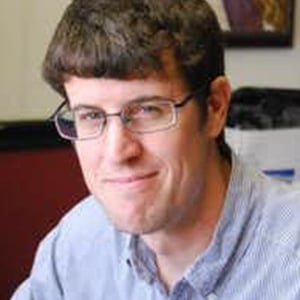
Founder, Bunch O Balloons
Josh Malone quit his corporate job in 2006 to take his shot at the American (Inventor’s) Dream. Eight years later, savings depleted and orthodontics and college unfunded, he took one last swing before trudging back to the corporate world. And hit the homerun with Bunch O Balloons. His solution to the 63 year old problem of filling and tying water balloons instantly became the number one selling spring/summer toy. It was just as quickly knocked off resulting in a patent litigation now totaling 6 patents, 5 patent suits, 5 PTAB petitions/trials, 4 preliminary injunctions, and 8 appeals at the Federal Circuit. He is currently a Fellow with US Inventor working to restore the patent system.
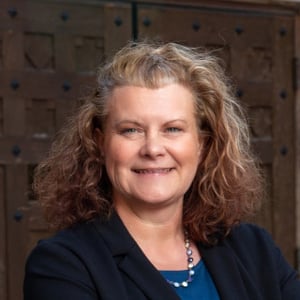
Associate Dean for Academic Affairs, Austin E. Owen Research Scholar & Professor of Law, The University of Richmond School of Law
Dean Kristen Jakobsen Osenga teaches and writes in the areas of patent law, antitrust, and legislation and regulation. Some of her recent scholarship focuses on standard development organizations, patent eligible subject matter, patent licensing firms, litigation and remedies for patent infringement, and patent law reform. She has written numerous law review articles on these and other topics, as well as book chapters and op eds on various aspects of patent law. Additionally, she has spoken on these issues at many academic conferences and bar events. Dean Osenga is Chief Policy Counselor for the Inventors Defense Alliance, as well as an active member of the Federal Circuit Bar Association and the American Intellectual Property Law Association.
Dean Osenga received a B.S. degree in Biomedical Engineering from the University of Iowa, an M.S. degree in Electrical Engineering from Southern Illinois University – Carbondale, and a J.D. from the University of Illinois College of Law, where she graduated magna cum laude. After law school, she practiced at the law firm of Finnegan, Henderson, Farabow, Garrett, & Dunner LLP, (now Finnegan) where she did patent prosecution and litigation. She then clerked for the Judge Richard Linn of the U.S. Court of Appeals for the Federal Circuit. After clerking, she entered academia, teaching first at Chicago-Kent College of Law and then at the University of Richmond, where she has been since 2006. She has also been a Visiting Professor at Emory University School of Law and at William & Mary School of Law.
Scott K. Ginsburg Professor of Health Law & Policy, Georgetown University
David A. Hyman, M.D., J.D., is the Scott K. Ginsburg Professor of Health Law & Policy at Georgetown University. Professor Hyman focuses his research and writing on the regulation and financing of health care. He teaches or has taught health care regulation, civil procedure, insurance, medical malpractice, law & economics, professional responsibility, and tax policy.
While serving as Special Counsel to the Federal Trade Commission, Professor Hyman was principal author and project leader for the first joint report ever issued by the Federal Trade Commission and Department of Justice, “Improving Health Care: A Dose of Competition” (2004). He is also the author of Medicare Meets Mephistopheles, which was selected by the U.S. Chamber of Commerce/National Chamber Foundation as one of the top ten books of 2007, and the co-author (with Charles Silver) of Overcharged: Why Americans Pay Too Much for Health Care (2018). He has published widely in student-edited law reviews and peer-reviewed medical, health policy, law, and economics journals.
Professor of Law, Antonin Scalia Law School, George Mason University
Adam Mossoff is Professor of Law at Antonin Scalia Law School, George Mason University. He has published extensively on why patents, copyrights, and other intellectual property rights have been—and should be—legally secured to innovators and creators as property rights. His scholarship has been relied on by the United States Supreme Court, by lower federal courts, and by U.S. federal agencies. He has been invited to testify numerous times before the U.S. Senate and the House of Representatives on intellectual property legislation. His writings on intellectual property policy have also appeared in the Wall Street Journal, New York Times, Forbes, Investors Business Daily, and in other media outlets. His journal articles can be downloaded here.
Professor Mossoff is a longstanding member of the Executive Committee of the Intellectual Property Practice Group of the Federalist Society, on which he served as Chairperson from 2016-2018, and he is Chair of the Intellectual Property Working Group of the Regulatory Transparency Project of the Federalist Society. He is a Senior Fellow and Chair of the Forum for Intellectual Property at the Hudson Institute, a Visiting Intellectual Property Fellow at the Heritage Foundation, and a member of the Board of Directors of the Center for Intellectual Property Understanding. He is a member of the Intellectual Property Rights Policy Committee of ANSI and he has served as Chair and Vice-Chair of the Intellectual Property Committee of the IEEE-USA, on which he remains a member in good standing.
Dinsmore & Shohl LLP, Partner
Brian is chair of Dinsmore’s IP Transactions and Licensing Group. He is a past president of the Licensing Executives Society (USA and Canada), Inc. (LES), the leading professional society devoted to commercial transactions and licensing of intangible property. He continues to serve LES as senior vice president for public policy. He has extensive experience in a wide variety of commercial transactions involving intangible property, and is known for creative licensing strategies to promote collaboration and resolve IP-related disputes.
He is a registered patent attorney with more than 30 years of experience before the U.S. Patent and Trademark Office and in structuring global IP portfolios and strategies. He has extensive experience in contested proceedings before the USPTO Patent Trial and Appeal Board (interferences, Inter Partes Reviews and Post Grant Reviews), as well as contested matters in federal courts and the International Trade Commission. His wide-ranging experience affords a broad, informed perspective and facilitates creative approaches to intellectual property management, licensing, and enforcement.
In addition to his leadership of LES, Brian served on the LES Board of Directors 2007 – 2018. In his ongoing role as senior vice president for public policy he is responsible for coordinating the society’s public policy positions, amicus briefs, and congressional outreach. He works with legislators, the executive branch, and the courts toward consistent, reliable, and prudent IP laws and policies that advance innovation and economic development. He has also served LES as trustee for education, and has long served as an author, editor, and faculty member of LES educational programs focusing on best practices in IP licensing.
He is also active in the global society, LES International (LESI). Among his various roles in LESI, he has served as co-chair of the External Relations Committee, coordinating public policy and advocacy for effective IP laws and policies among the 33 regional LES societies, and with various non-governmental organizations such as WIPO and EPO. In 2019, he received the LES International President’s Service Recognition Award.
Brian also serves as Chair of the Board of Directors of the Bayh Dole Coalition, a 501(c)(4) corporation dedicated to promoting and preserving the Bayh Dole Act. He is a member of the Founding Board of Directors of the United States Intellectual Property Alliance (USIPA), an organization dedicated to raising public awareness of, and appreciation for, the role of IP in fostering innovation for the public good; and he has served on the DC Bar Intellectual Property Section Steering Committee (2013 – 2016).
In 2016, Brian testified before the U.S. Senate Committee on Small Business and Entrepreneurship on the effects of the America Invents Act on small business and entrepreneurs in a hearing entitled “An Examination of Changes to the U.S. Patent System & Impacts on America's Small Businesses.”
With his longstanding and diverse patent practice, in both private practice and in-house, Brian advises corporate leaders and entrepreneurs in effective IP procurement practices, and in maximizing value from IP assets. He has been retained as a testifying witness in IP and licensing disputes by the U.S. Department of Justice, the U.S. Department of the Treasury, and by various private enterprises.
Brian has been acknowledged by IAM magazine as among its “IAM Strategy 300”, the world’s leading IP strategists, and among “The World's Leading Patent and Technology Licensing Lawyers.”
He earned B.S. and M.S. degrees from the Department of Chemistry, Rochester Institute of Technology, Rochester, NY; and Juris Doctor from Syracuse University, College of Law, Syracuse, NY (1986).
Brian has served his alma mater as president of the RIT Alumni Association 2005 – 2009; and now serves on the RIT Board of Trustees as a member of its Executive Committee, chair of its Student Life Committee, and vice-chair of its Committee on Trustees. In 2013, Brian was awarded RIT’s Outstanding Alumnus Award, and in 2005 he was awarded the Distinguished Alumnus Award by RIT’s College of Science.
Director and Senior Fellow, Berkeley Center for Law and Technology, University of California at Berkeley
Mark Cohen heads the Asia IP Project at the Berkeley Center for Law and Technology at Berkeley Law School. He is also responsible for teaching international trade law and research and writing on IP issues. Previously, Cohen was Senior Counsel, China in the Office of Policy and International Affairs at the U.S. Patent and Trademark Office, after serving as a visiting professor at Fordham Law School (2011-2012). Prior to that time, he served in such functions as: Director, International Intellectual Property at Microsoft Corporation; Of Counsel to Jones Day’s Beijing office; and Senior Intellectual Property Attaché at the U.S. Embassy in Beijing (2004- 2008). In total, he has over 30 years private, public sector, in-house and academic experience in China and transition economies, with a focus on technology trade and intellectual property.
Cohen was the first IPR Attaché posted by USPTO to handle IPR issues in a foreign country. In addition, he launched the annual “Ambassador’s IPR Roundtable” which he co-chaired for five years, devised IPR “toolkits”, “road shows”, pro-bono programs, internal training programs for the US government and external training programs, and worked with USPTO and other US agencies to engage China and Chinese IP agencies. Cohen led a China team at USPTO consisting of 21 individuals in DC, Beijing, Shanghai and Guangzhou, China on all aspects of USPTO’s activities in China. Among his book-length publications are Antimonopoly Law and Practice in China (Oxford University Press 2011, with Steve Harris et al.). He was also the editor of Chinese Intellectual Property Law and Practice (Kluwer Law International 1999) and has edited or published a number of on-line publications, including the blog www.chinaipr.com.
Mr. Cohen has taught and lectured at numerous universities in the United States, Asia and Europe. Amongst other honors, he was the recipient of the US Chamber of Commerce’s “IP Champion” award in 2014. Mr. Cohen holds a J.D. degree from Columbia University (1984), an M.A. from the University of Wisconsin in Chinese Language and Literature (1979) and a B.A. from the State University of New York at Albany in Chinese Studies (1977).
Former Chief Judge, United States Court of Appeals for the Federal Circuit
Judge Michel served for more than 22 years on the Federal Circuit, retiring on May 31, 2010. From December 25, 2004 until his retirement, he also discharged the duties of Chief Judge of this national court, serving simultaneously on the U.S. Judicial Conference -- the Judiciary's governing body -- and by appointment of the Chief Justice on its seven-judge Executive Committee.
He judged several thousand appeals and authored more than 800 opinions, one third concerning intellectual property law. Intellectual Asset Management magazine inducted him into its Hall of Fame and he was designated one of the 50 most influential leaders in intellectual property law in the world. His contributions were also recognized by lifetime achievement and similar awards by the American Intellectual Property Law Association (AIPLA); Intellectual Property Owners Education Foundation (IPO); the American Bar Association's Intellectual Property Section; Managing Intellectual Property magazine; the Sedona Conference; the Patent and Trademark Office Society (PTOS); the New York, Chicago, Philadelphia, and Los Angeles Intellectual Property Law Associations; and the William C. Connor, the Giles S. Rich, and the Richard Linn Intellectual Property American Inns of Court. In 2010 the Los Angeles IP Inn was renamed in his honor as the Paul R. Michel IP Inn.
Judge Michel received the Jefferson Medal, the Eli Whitney Award, and the Katz-Kiley Prize as well as Honorary Doctor of Law degrees from the Catholic University of America and the John Marshall Law School. He is a lifetime Member of Honore of FICPI, the international association of private practitioners of intellectual property law. Williams College granted him the Kellogg Award for "outstanding leadership in law and public service."
Judge Michel has written numerous articles on patent law and advocacy, taught related courses and master classes at George Washington University, the University of Akron, and John Marshall law schools, serving as well on their IP advisory boards and on counterpart boards at the universities of California (Berkley), Washington, and Maryland. He co-authored a casebook, Patent Litigation and Strategy (West, 1999) and an August 2010 editorial in the New York Times on strengthening the patent system to promote prosperity and create new jobs.
A frequent speaker at conferences and law schools during his judicial tenure and since, he retired from a lifetime appointment to be free to speak out on the national need for better patent policy and protection of intellectual property and the vital, unmet resource needs of the courts, the PTO, the International Trade Commission, and other IP-related agencies. He was appointed Distinguished Scholar in Residence by IPO, following his retirement. Judge Michel also consults for law firms and their clients in intellectual property litigations, conducting moot courts, mock trials, case evaluations, editing briefs, advising on strategy and providing mediation and arbitration services.
Dinsmore & Shohl LLP, Partner
Brian is chair of Dinsmore’s IP Transactions and Licensing Group. He is a past president of the Licensing Executives Society (USA and Canada), Inc. (LES), the leading professional society devoted to commercial transactions and licensing of intangible property. He continues to serve LES as senior vice president for public policy. He has extensive experience in a wide variety of commercial transactions involving intangible property, and is known for creative licensing strategies to promote collaboration and resolve IP-related disputes.
He is a registered patent attorney with more than 30 years of experience before the U.S. Patent and Trademark Office and in structuring global IP portfolios and strategies. He has extensive experience in contested proceedings before the USPTO Patent Trial and Appeal Board (interferences, Inter Partes Reviews and Post Grant Reviews), as well as contested matters in federal courts and the International Trade Commission. His wide-ranging experience affords a broad, informed perspective and facilitates creative approaches to intellectual property management, licensing, and enforcement.
In addition to his leadership of LES, Brian served on the LES Board of Directors 2007 – 2018. In his ongoing role as senior vice president for public policy he is responsible for coordinating the society’s public policy positions, amicus briefs, and congressional outreach. He works with legislators, the executive branch, and the courts toward consistent, reliable, and prudent IP laws and policies that advance innovation and economic development. He has also served LES as trustee for education, and has long served as an author, editor, and faculty member of LES educational programs focusing on best practices in IP licensing.
He is also active in the global society, LES International (LESI). Among his various roles in LESI, he has served as co-chair of the External Relations Committee, coordinating public policy and advocacy for effective IP laws and policies among the 33 regional LES societies, and with various non-governmental organizations such as WIPO and EPO. In 2019, he received the LES International President’s Service Recognition Award.
Brian also serves as Chair of the Board of Directors of the Bayh Dole Coalition, a 501(c)(4) corporation dedicated to promoting and preserving the Bayh Dole Act. He is a member of the Founding Board of Directors of the United States Intellectual Property Alliance (USIPA), an organization dedicated to raising public awareness of, and appreciation for, the role of IP in fostering innovation for the public good; and he has served on the DC Bar Intellectual Property Section Steering Committee (2013 – 2016).
In 2016, Brian testified before the U.S. Senate Committee on Small Business and Entrepreneurship on the effects of the America Invents Act on small business and entrepreneurs in a hearing entitled “An Examination of Changes to the U.S. Patent System & Impacts on America's Small Businesses.”
With his longstanding and diverse patent practice, in both private practice and in-house, Brian advises corporate leaders and entrepreneurs in effective IP procurement practices, and in maximizing value from IP assets. He has been retained as a testifying witness in IP and licensing disputes by the U.S. Department of Justice, the U.S. Department of the Treasury, and by various private enterprises.
Brian has been acknowledged by IAM magazine as among its “IAM Strategy 300”, the world’s leading IP strategists, and among “The World's Leading Patent and Technology Licensing Lawyers.”
He earned B.S. and M.S. degrees from the Department of Chemistry, Rochester Institute of Technology, Rochester, NY; and Juris Doctor from Syracuse University, College of Law, Syracuse, NY (1986).
Brian has served his alma mater as president of the RIT Alumni Association 2005 – 2009; and now serves on the RIT Board of Trustees as a member of its Executive Committee, chair of its Student Life Committee, and vice-chair of its Committee on Trustees. In 2013, Brian was awarded RIT’s Outstanding Alumnus Award, and in 2005 he was awarded the Distinguished Alumnus Award by RIT’s College of Science.
Chief Judge (ret.), U.S. Court of Appeals for the Federal Circuit, and Honorary Professor, Tsinghua University
Randall R. Rader was appointed to the United States Court of Appeals for the Federal Circuit by President George H. W. Bush in 1990 and served as Chief Judge from June 2010 to June 2014. He was appointed to the United States Claims Court (now the U. S. Court of Federal Claims) by President Ronald W. Reagan in 1988. Judge Rader's most prized title may well be "Professor Rader."
As Professor, Judge Rader has taught courses on patent law and other advanced intellectual property courses at The George Washington University Law School,University of Virginia School of Law, Georgetown University Law Center, the Munich Intellectual Property Law Center, and other university programs in Tokyo, Taipei, New Delhi, and Beijing. Due to the size and diversity of his classes, Judge Rader may have taught patent law to more students than anyone else. Judge Rader has also co-authored several texts including the most widely used textbook on U. S. patent law, "Cases and Materials on Patent Law," (St. Paul, Minn.: Thomson/West 3d ed. 2009) and "Patent Law in a Nutshell," (St. Paul, Minn.: Thomson/West 2007) (translated into Chinese and Japanese). Judge Rader has won acclaim for leading dozens of government and educational delegations to every continent (except Antarctica), teaching rule of law and intellectual property law principles.
Judge Rader has received many awards, including the Sedona Lifetime Achievement Award for Intellectual Property Law, 2009; Distinguished Teaching Awards from George Washington University Law School, 2003 and 2008 (by election of the students); the Jefferson Medal from the New Jersey Intellectual Property Law Association, 2003; the Distinguished Service Award from the Berkeley Center for Law and Technology, 2003; the J. William Fulbright Award for Distinguished Public Service from George Washington University Law School, 2000; and the Younger Federal Lawyer Award from the Federal Bar Association, 1983. Before appointment to the Court of Federal Claims, Judge Rader served as Minority and Majority Chief Counsel to Subcommittees of the U.S. Senate Committee on the Judiciary. From 1975 to 1980, he served as Counsel in the House of Representatives for representatives serving on the Interior, Appropriations, and Ways and Means Committees. He received a B.A. in English from Brigham Young University in 1974 and a J.D. from George Washington University Law School in 1978.
Director, Technology Licensing Office & Director, Catalysts, Office of Strategic Alliances & Technology Transfer, MIT
Lesley is formerly the director of the Office of Technology Management at the University of Illinois at Urbana-Champaign (UIUC), where she had responsibility for the oversight of all technology transfer activities across the university. In this position, Lesley demonstrated leadership in all phases of the commercialization of technology and intellectual property, ranging from proof of concept programs to enable the launch of startup companies through patenting and licensing processes. She played a major role in developing a thriving innovation ecosystem at UIUC, marked by strong corporate engagement. Beyond her university focus, Lesley has been a prominent speaker nationally and internationally on the economic importance of technology transfer.
Lesley holds bachelor’s and master’s degrees in education from the University of Edinburgh and the University of Georgia, respectively, and an MBA from UIUC.
Professor of Law, Antonin Scalia Law School, George Mason University
Adam Mossoff is Professor of Law at Antonin Scalia Law School, George Mason University. He has published extensively on why patents, copyrights, and other intellectual property rights have been—and should be—legally secured to innovators and creators as property rights. His scholarship has been relied on by the United States Supreme Court, by lower federal courts, and by U.S. federal agencies. He has been invited to testify numerous times before the U.S. Senate and the House of Representatives on intellectual property legislation. His writings on intellectual property policy have also appeared in the Wall Street Journal, New York Times, Forbes, Investors Business Daily, and in other media outlets. His journal articles can be downloaded here.
Professor Mossoff is a longstanding member of the Executive Committee of the Intellectual Property Practice Group of the Federalist Society, on which he served as Chairperson from 2016-2018, and he is Chair of the Intellectual Property Working Group of the Regulatory Transparency Project of the Federalist Society. He is a Senior Fellow and Chair of the Forum for Intellectual Property at the Hudson Institute, a Visiting Intellectual Property Fellow at the Heritage Foundation, and a member of the Board of Directors of the Center for Intellectual Property Understanding. He is a member of the Intellectual Property Rights Policy Committee of ANSI and he has served as Chair and Vice-Chair of the Intellectual Property Committee of the IEEE-USA, on which he remains a member in good standing.
Dinsmore & Shohl LLP, Partner
Brian is chair of Dinsmore’s IP Transactions and Licensing Group. He is a past president of the Licensing Executives Society (USA and Canada), Inc. (LES), the leading professional society devoted to commercial transactions and licensing of intangible property. He continues to serve LES as senior vice president for public policy. He has extensive experience in a wide variety of commercial transactions involving intangible property, and is known for creative licensing strategies to promote collaboration and resolve IP-related disputes.
He is a registered patent attorney with more than 30 years of experience before the U.S. Patent and Trademark Office and in structuring global IP portfolios and strategies. He has extensive experience in contested proceedings before the USPTO Patent Trial and Appeal Board (interferences, Inter Partes Reviews and Post Grant Reviews), as well as contested matters in federal courts and the International Trade Commission. His wide-ranging experience affords a broad, informed perspective and facilitates creative approaches to intellectual property management, licensing, and enforcement.
In addition to his leadership of LES, Brian served on the LES Board of Directors 2007 – 2018. In his ongoing role as senior vice president for public policy he is responsible for coordinating the society’s public policy positions, amicus briefs, and congressional outreach. He works with legislators, the executive branch, and the courts toward consistent, reliable, and prudent IP laws and policies that advance innovation and economic development. He has also served LES as trustee for education, and has long served as an author, editor, and faculty member of LES educational programs focusing on best practices in IP licensing.
He is also active in the global society, LES International (LESI). Among his various roles in LESI, he has served as co-chair of the External Relations Committee, coordinating public policy and advocacy for effective IP laws and policies among the 33 regional LES societies, and with various non-governmental organizations such as WIPO and EPO. In 2019, he received the LES International President’s Service Recognition Award.
Brian also serves as Chair of the Board of Directors of the Bayh Dole Coalition, a 501(c)(4) corporation dedicated to promoting and preserving the Bayh Dole Act. He is a member of the Founding Board of Directors of the United States Intellectual Property Alliance (USIPA), an organization dedicated to raising public awareness of, and appreciation for, the role of IP in fostering innovation for the public good; and he has served on the DC Bar Intellectual Property Section Steering Committee (2013 – 2016).
In 2016, Brian testified before the U.S. Senate Committee on Small Business and Entrepreneurship on the effects of the America Invents Act on small business and entrepreneurs in a hearing entitled “An Examination of Changes to the U.S. Patent System & Impacts on America's Small Businesses.”
With his longstanding and diverse patent practice, in both private practice and in-house, Brian advises corporate leaders and entrepreneurs in effective IP procurement practices, and in maximizing value from IP assets. He has been retained as a testifying witness in IP and licensing disputes by the U.S. Department of Justice, the U.S. Department of the Treasury, and by various private enterprises.
Brian has been acknowledged by IAM magazine as among its “IAM Strategy 300”, the world’s leading IP strategists, and among “The World's Leading Patent and Technology Licensing Lawyers.”
He earned B.S. and M.S. degrees from the Department of Chemistry, Rochester Institute of Technology, Rochester, NY; and Juris Doctor from Syracuse University, College of Law, Syracuse, NY (1986).
Brian has served his alma mater as president of the RIT Alumni Association 2005 – 2009; and now serves on the RIT Board of Trustees as a member of its Executive Committee, chair of its Student Life Committee, and vice-chair of its Committee on Trustees. In 2013, Brian was awarded RIT’s Outstanding Alumnus Award, and in 2005 he was awarded the Distinguished Alumnus Award by RIT’s College of Science.
Vice President, Global Head IP Affairs, Novartis
Corey Salsberg is the Vice President of Global Head IP Affairs in Novartis. He leads the Global IP Affairs function for Novartis, a multinational Fortune Global 200 healthcare company and world leader in innovative medicines and biosimilars.
Corey is a member of the Steering Committee and founder of the WIPO-World Economic Forum Inventors Assistance Program (IAP), an innovative international program aimed at providing pro bono IP services to under-resourced inventors and small businesses in developing countries.
Furthermore, he is one of architects of the Patent Information Initiative for Medicines (Pat-INFORMED), a voluntary global online database of patent information now co-sponsored and hosted by WIPO and the International Federation of Pharmaceutical Manufacturers (IFPMA).
Globally recognized thought leader, advocate, and speaker on IP, innovation and related topics. Recent engagements include testimony before the US Senate Judiciary, keynote address at the 7th Annual IBA World Life Sciences Conference, and many others.
Corey is a Stanford University of Law School graduate and Yale University undergraduate.

Partner and Co-Chair, Constitutional and Appellate Law Practice Group, Gibson, Dunn & Crutcher LLP
Allyson N. Ho is a partner in the Dallas office of Gibson, Dunn & Crutcher LLP and co‐chair of the Firm’s nationwide Appellate and Constitutional Law practice group.
Mrs. Ho is “undoubtedly one of the premier appellate lawyers in the United States” (Chambers). She has presented over 100 oral arguments in federal and state courts nationwide, including multiple high‐stakes cases on behalf of business before the U.S. Supreme Court.
Her most significant winning arguments include a U.S. Supreme Court reversal worth billions of dollars for unionized employers in the Sixth Circuit; a U.S. Supreme Court reversal limiting the power of federal regulators; a multi‐billion dollar environmental win in the Fifth Circuit; a multi‐billion dollar commercial victory for the founder of a technology company in the Appellate Division of the New York Supreme Court; a billion dollar environmental win in the Houston Court of Appeals; a nine‐figure commercial victory in the Corpus Christi Court of Appeals; and a nine‐figure arbitration win in the Fifth Circuit.
Among her numerous accolades, Mrs. Ho is one of only a small group of appellate lawyers nationwide, and the only one in Texas, to be nationally ranked by Chambers every year for the past ten years (2012‐21). She is also one of the few appellate lawyers nationwide to be named to the BTI Client Service All‐Stars List, an honor bestowed by the corporate counsel community for lawyers “who stand above all the others in delivering the absolute best in client service.” She is also routinely named as a leading appellate lawyer by Benchmark, The Best Lawyers in America®, The Legal 500, Texas Super Lawyers, and D Magazine.
Mrs. Ho has received the Gregory S. Coleman Outstanding Appellate Lawyer Award (Texas Bar Foundation, June 22, 2018), been named a “Distinguished Leader” (Texas Lawyer, Sep. 1, 2017) and “Appellate MVP” (Law360, Nov. 23, 2015), and been recognized on the “Appellate Hot List” (National Law Journal, Nov. 16, 2015). In addition, she has been profiled in “Texas Powerhouse” (Law360, Aug. 2, 2021), “Texas Appellate Power Couple” (Texas Lawbook, January 7, 2021), “Litigators of the Week” (The American Lawyer, May 8, 2020), “Litigation Powerhouse” (Law360, Aug. 10, 2016), “Supreme Court Insider” (National Law Journal, July 21, 2016), “Supreme Court Specialists, Mostly Male, Dominated Arguments This Term” (National Law Journal, May 11, 2016), “Attorney of the Year Finalist” (Texas Lawyer, Nov. 2, 2015), “Litigation Department of the Year” (Texas Lawyer, June 1, 2015), “Employment Group of the Year” (Law360, Jan. 13, 2015), “A Supreme Month: Lawyer Credits Preparedness in Ability to Argue Two U.S. High Court Cases in Three Weeks” (Texas Lawyer, Dec. 8, 2014), “High Court Debuts for Two Lawyers” (National Law Journal, Nov. 3, 2014), “Women in Business Awards” (Dallas Business Journal, Aug 29, 2014), “Litigation Departments of the Year” (Texas Lawyer, June 2, 2014), “Winning Women” (Texas Lawyer, Aug. 22, 2011), and “High court practitioners: increasingly diverse” (National Law Journal, June 6, 2011).
Federal and State Appellate Practice
Mrs. Ho has argued a series of high stakes, landmark cases on behalf of the business community before the U.S. Supreme Court. National Law Journal called her a “Veteran SCOTUS Advocate” in the “upper echelons of Supreme Court practice.” Law360 named her a “Supreme Court Star” and “one of the nation’s preeminent appellate lawyers.” And EmpiricalSCOTUS.com ranked her among “the most successful attorneys that currently practice before the Court.” Mrs. Ho once argued two significant business cases before the Court within the span of 21 days—including a “significant ruling for employers” that “paved a new path for companies paying millions of dollars in retiree health care benefits” (Law360), as well as a landmark administrative law dispute in which “several justices agreed with Ho’s contention that SCOTUS should revisit and overrule its own precedent” (Law360). She also prevailed against the EEOC in a case that the employment defense bar called “good news for employers across the country.” And in “the most important patent case in modern history” according to patent law experts, her argument before the Court was credited for “pick[ing] up two votes that pundits thought unreachable.”
She has appeared before every federal court of appeals in the country, including en banc arguments before the Fourth and Sixth Circuits. She has successfully represented business clients in every circuit, including the First (Pruco Life Insurance Company), Second (Swiss Federation; Rite Aid), Third (Johnson & Johnson), Fourth (Genex Services), Fifth (United Space Alliance LLC; Elliott Co.; MERSCORP; 24 Hour Fitness USA, Inc.; Stream Energy; Health Management Systems), Sixth (Deutsche Bank; American Airlines; M&G Polymers), Seventh (Expedia), Eighth (Cotter), Ninth (Boeing; JP Morgan Chase Bank), Tenth (Mitchell International), Eleventh (AstraZeneca), D.C. (FedEx), and Federal (Repros Therapeutics) Circuits.
In addition, Mrs. Ho regularly appears in state appellate courts across the country. She has argued numerous cases in the Texas Supreme Court, Texas appellate courts in Dallas, Houston, San Antonio, Corpus Christi, and Eastland, and state appellate courts in Arizona, Michigan, New York, Ohio, Oklahoma, and West Virginia, prevailing on behalf of Ford Motor Company, PepsiCo, International Paper, Tenet, GameStop, Deutsche Bank, and Unit.
Government and Public Service Experience
Mrs. Ho has a distinguished record of experience at the highest levels of the federal government. She served as Special Assistant to President George W. Bush, Counselor to Attorney General John Ashcroft, and law clerk to Justice Sandra Day O’Connor of the U.S. Supreme Court and Judge Jacques L. Wiener Jr. of the U.S. Court of Appeals for the Fifth Circuit.
Her record of public service also includes appointments to various boards and commissions. Among the most notable are her election as a member of the Administrative Conference of the United States, a trustee of the United States Supreme Court Historical Society, and a trustee of the Texas Supreme Court Historical Society. She is also vice chair of the Federal Judicial Evaluation Committee, appointed by U.S. Senators John Cornyn and Ted Cruz to evaluate potential appointments of all federal judges and U.S. Attorneys in Texas, and has previously served on the U.S. Magistrate Judge Merit Selection Panel for the Northern District of Texas.
Other Background Information
An active pro bono litigator, Mrs. Ho works most frequently with the First Liberty Institute and as amicus counsel for the State and Local Legal Center, the National Organization for Victim Assistance, and the National Crime Victim Law Institute. She is a frequent public speaker and active member of the Federalist Society, the American Law Institute, and the Washington Legal Foundation’s Legal Policy Advisory Board.
Mrs. Ho graduated from Duke University magna cum laude with a B.A. in English, Rice University with an M.A. and Ph.D. in English Literature, and the University of Chicago Law School with high honors. She was a member of the Law Review and Order of the Coif. She and her husband Jim, a federal judge, have a twin daughter and son.
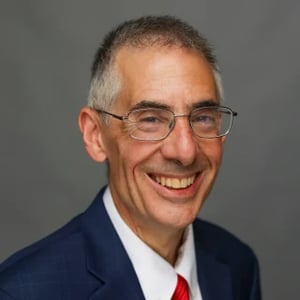
Wendell H. Ford Professor of Law, University of Kentucky J. David Rosenberg College of Law
Paul E. Salamanca graduated from Dartmouth College in 1983 and Boston College Law School in 1989, where he was a note editor for the Boston College Law Review and a member of the Order of the Coif.
Professor Salamanca served as a law clerk to Judge David H. Souter of the U.S. Court of Appeals for the First Circuit, and subsequently clerked for Justice Souter on the U.S. Supreme Court. He practiced law with the firm of Debevoise & Plimpton in New York from 1991 to 1994 and was a visiting assistant professor of law at Loyola University School of Law in New Orleans before joining the faculty at the University of Kentucky College of Law in June 1995.
Professor Salamanca writes in the areas of separation of powers, freedom of speech, freedom of religion, and privacy. He has published articles on these subjects in the University of Cincinnati Law Review, the Missouri Law Review, the Georgia Law Review and the Kentucky Law Journal, among other places.
From 2019 until 2021, Professor Salamanca served as a Senior Counsel and then as a Deputy Assistant Attorney General in the Environment and Natural Resources Division (ENRD) of the United States Department of Justice. His duties included supervision of the Natural Resources and Land Acquisition Sections of ENRD.

Deep Dive Episode 156 – Incentivizing Drug Development: Patents or Prizes?
David Hyman, Adam Mossoff, Brian O'Shaughnessy
Medical innovation has made modern life miraculous by historical standards, as demonstrated by the unprecedented...
Deep Dive Episode 156 – Incentivizing Drug Development: Patents or Prizes?
Regulatory Transparency Project's Fourth Branch Pdcast
TeleforumDeep Dive Episode 142 – The United States-China Relationship and Intellectual Property
Mark Cohen, Paul Redmond Michel, Brian O'Shaughnessy, Randall R. Rader
Recent disputes between the United States and China have focused on trade, but perhaps the...
Deep Dive Episode 142 – The United States-China Relationship and Intellectual Property
A Regulatory Transparency Project Teleforum
TeleforumHigh Profile Cases of the 2019 SCOTUS Term
West Virginia Lawyers Chapter
Deep Dive Episode 118 – Can Patents and Bayh-Dole Fuel Innovation in the Time of COVID-19?
Lesley Millar-Nicholson, Adam Mossoff, Brian O'Shaughnessy, Corey Salsberg
Activists and politicians have responded to the worldwide COVID-19 pandemic by calling for the elimination...
Deep Dive Episode 118 – Can Patents and Bayh-Dole Fuel Innovation in the Time of COVID-19?
Regulatory Transparency Project Teleforum
TeleforumAmerican Craft: What Beer Can Teach Us About Well-Crafted Laws
Trevor Burrus, Garrett Peck, Daniel Vilarrubi, Justin Cox, Candace Moon, Anastasia P. Boden
There’s never been a better time to be a beer drinker, with thousands of breweries...
Supreme Court Term in Review
Central Kentucky Lawyers Chapter
Lexington, KYIs There a "Death Squad" at the U.S. Patent Office?: Examining the PTAB
Josh Malone, Kristen Osenga, Brian OShaughnessy
In 2011, Congress created a new administrative tribunal in the U.S. Patent Office with the...