
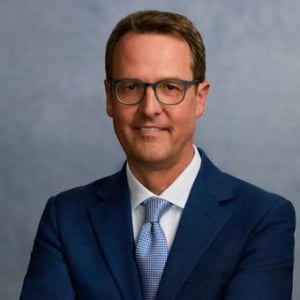
Partner, Orrick, Herrington & Sutcliffe LLP
Andy excels at solving complex problems for his clients using a variety of effective strategies. As former Chief Deputy Attorney General for the State of Wisconsin, Andy Cook has extensive experience representing businesses before state Attorneys General involving investigations and lawsuits. His strong relationships with Attorneys General and their senior staff frequently facilitate the successful resolution of client issues through diplomacy and negotiations. When litigation becomes necessary, Andy effectively advocates for clients throughout the litigation process.
Andy combines his legal expertise in numerous areas of law covered by state Attorneys General, an understanding of how state AG offices operate, and vast knowledge of legal and regulatory issues facing his clients. This substantive and comprehensive legal approach is crucial to effectively representing clients before state Attorneys General. Andy also has substantial experience drafting and enacting complex civil liability reforms before state legislatures to successfully address client goals.
Andy’s main practice focuses on advising Fortune 500 companies before state Attorneys General in the areas of antitrust, consumer protection, False Claims Act, environmental law, and cybersecurity and data privacy. Andy, in collaboration with a team of attorneys, successfully navigated a client through antitrust regulatory review by state Attorneys General in one of the nation’s largest mergers of two major telecommunication companies. Andy also worked with a team of lawyers representing a large corporation involving the multistate opioids litigation brought by state Attorneys General.
Andy gained valuable experience serving as Deputy Attorney General for the State of Wisconsin where he was the second in command of the 700-plus state agency. In his role as Chief Deputy Attorney General, Andy oversaw the day-to-day operations at the Wisconsin Department of Justice (DOJ); directed the State’s litigation strategy; negotiated, reviewed, and approved all settlements; drafted and reviewed attorney general opinions; managed the agency’s budget; oversaw civil and criminal investigations handled by DOJ; and managed DOJ’s legislative agenda.
Andy played college hockey and remains active by running, cross country skiing, and playing golf. On the weekends, Andy and his wife enjoy watching their kids’ sporting events, including soccer, baseball, gymnastics, and track. In his rare spare time, Andy reads history books.
Co-Director, Center for Economic and Policy Research
Dean Baker is co-director of the Center for Economic and Policy Research in Washington, DC. He is frequently cited in economics reporting in major media outlets, including the New York Times,Washington Post, CNN, CNBC, and National Public Radio. He writes a weekly column for the Guardian Unlimited (UK), the Huffington Post,TruthOut, and his blog, Beat the Press, features commentary on economic reporting. His analyses have appeared in many major publications, including the Atlantic Monthly, the Washington Post, theLondon Financial Times, and the New York Daily News. He received his Ph.D in economics from the University of Michigan.
Dean has written several books, his latest being The End of Loser Liberalism: Making Markets Progressive. His other books includeTaking Economics Seriously (MIT Press), which thinks through what we might gain if we took the ideological blinders off of basic economic principles, False Profits: Recovering from the Bubble Economy(PoliPoint Press, 2010) about what caused - and how to fix - the current economic crisis. In 2009, he wrote Plunder and Blunder: The Rise and Fall of the Bubble Economy (PoliPoint Press), which chronicled the growth and collapse of the stock and housing bubbles and explained how policy blunders and greed led to the catastrophic - but completely predictable - market meltdowns. He also wrote a chapter ("From Financial Crisis to Opportunity") in Thinking Big: Progressive Ideas for a New Era (Progressive Ideas Network, 2009). His previous books include The United States Since 1980 (Cambridge University Press, 2007); The Conservative Nanny State: How the Wealthy Use the Government to Stay Rich and Get Richer (Center for Economic and Policy Research, 2006), and Social Security: The Phony Crisis (with Mark Weisbrot, University of Chicago Press, 1999). His book Getting Prices Right: The Debate Over the Consumer Price Index (editor, M.E. Sharpe, 1997) was a winner of a Choice Book Award as one of the outstanding academic books of the year.
Among his numerous articles are "The Benefits of a Financial Transactions Tax," Tax Notes 121, no. 4, 2008; "Are Protective Labor Market Institutions at the Root of Unemployment? A Critical Review of the Evidence," (with David R. Howell, Andrew Glyn, and John Schmitt),Capitalism and Society 2, no. 1, 2007; "Asset Returns and Economic Growth," (with Brad DeLong and Paul Krugman), Brookings Papers on Economic Activity, 2005; "Financing Drug Research: What Are the Issues," Center for Economic and Policy Research, 2004; "Medicare Choice Plus: The Solution to the Long-Term Deficit Problem," Center for Economic and Policy Research, 2004; The Benefits of Full Employment (with Jared Bernstein), Economic Policy Institute, 2004; "Professional Protectionists: The Gains From Free Trade in Highly Paid Professional Services," Center for Economic and Policy Research, 2003; and "The Run-Up in Home Prices: Is It Real or Is It Another Bubble," Center for Economic and Policy Research, 2002.
Dean previously worked as a senior economist at the Economic Policy Institute and an assistant professor at Bucknell University. He has also worked as a consultant for the World Bank, the Joint Economic Committee of the U.S. Congress, and the OECD's Trade Union Advisory Council. He was the author of the weekly online commentary on economic reporting, the Economic Reporting Review (ERR), from 1996 - 2006.
Partner, Sullivan & Cromwell LLP
H. Rodgin Cohen is a partner at Sullivan & Cromwell LLP. He was Chairman of the Firm from July 1, 2000 through December 31, 2009 and has served as its Senior Chairman since January 1, 2010. The primary focus of his practice is corporate governance, regulatory, acquisition and securities law matters for major U.S. and non-U.S. banking and other financial institutions.
Mr. Cohen has acted in most of the major U.S. bank acquisitions and government-sponsored and capital-raising efforts during the financial crisis and provides corporate governance advice to a large number of financial and non-financial institutions. He has played a singular role in the market events that have changed the face of the financial services industry and economy, for which The American Lawyer ranked Mr. Cohen #1 among its 25 “Dealmakers of the Year” in 2009.
In March 2010, Mr. Cohen was recognized as one of the “Decade’s Most Influential Lawyers” by The National Law Journal. In late 2009, he was among the top 25 people named to Institutional Investor’s “The Power 25: Leaders in Finance.” Mr. Cohen was also presented with an FT Special Achievement Award in recognition of his work on nearly 20 substantial credit crisis-related transactions by the Financial Times in October 2009.
Mr. Cohen is or has been a member of the FDIC Systemic Resolution Advisory Committee, The Pew Financial Reform Project, the IIF Special Committee for a Strategic Dialogue for Effective Regulation, the Treasury Advisory Committee on the Auditing Profession, The New York State Commission to Modernize the Regulation of Financial Services and The Financial Services Roundtable’s Blue Ribbon Commission on Enhancing Competitiveness.
Mr. Cohen is a trustee of New York Presbyterian Hospital, Rockefeller University, the Hackley School, Deerfield Academy, Hampton University, Lincoln Center Theater, New York City Partnership and, formerly, the Economic Club of New York. He is also a member of Harvard Law School’s Visiting Committee and the advisory boards of United Way of Westchester-Putnam, the University of Charleston and Wall Street Rising, which in 2005 honored him with its annual Leadership Award for his “steadfast commitment to Lower Manhattan” in the aftermath of the attacks of September 11, 2001. In May 2010, Mr. Cohen and his wife Barbara were honored with the Servant of Justice Award at the Legal Aid Society’s 33rd Annual Dinner.
Founder and Chief Executive Officer, Elliott Management Corporation
Paul E. Singer is founder and general partner of Elliott Associates LP, a New York–based trading partnership formed in 1977. Elliott's compound annual rate of return from inception to June 30, 2011 has been 14.2% net to investors, compared with 10.9% for the S&P 500 in the same period. Elliott's volatility of return has been roughly one-third that of the S&P 500. Total assets under management were approximately $17 billion as of July 1, 2011. Elliott has offices in New York, London, Hong Kong and Tokyo.
The Wall Street Journal has recognized Elliott's early forecasting of the systemic economic crisis of 2008. The New York Times has written that “of all the hedge fund managers on Wall Street, [Elliott] is one of the most revered.”
Mr. Singer is on the board of fellows of Harvard Medical School. He is also chairman of the Manhattan Institute and an advisory board member of the James Madison Program in American Ideals and Institutions at Princeton University, and on the board of directors of Commentary Magazine. He is a member of the Marketable Assets Advisory Committee at Williams College as well as an ex officio member of the Investment Committee of the University of Rochester.
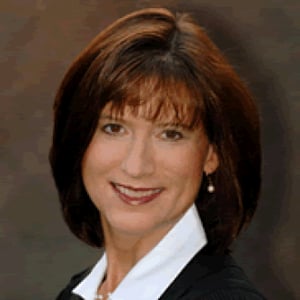
Judge, United States Court of Appeals, Seventh Circuit
Judge Sykes was nominated to the Seventh Circuit by President George W. Bush and confirmed by the Senate in 2004. Prior to her appointment to the federal bench, Judge Sykes served as a justice on the Wisconsin Supreme Court. Governor Tommy G. Thompson appointed her in September 1999 to fill a mid-term vacancy on the state supreme court, and she was elected to a full ten-year term in April 2000. From 1992-1999, Judge Sykes served on the state trial bench in Milwaukee County (elected in 1992 and re-elected in 1998). From 1985-1992, Judge Sykes practiced law with the Milwaukee firm of Whyte & Hirschboeck, S.C., and from 1984-1985, was a law clerk to Federal Judge Terence T. Evans.
Born and raised in the Milwaukee area, Judge Sykes earned a bachelor’s degree in journalism from Northwestern University in 1980 and a law degree from Marquette University Law School in 1984. Between college and law school, Judge Sykes worked as a reporter for The Milwaukee Journal.
Judge Sykes has two sons.
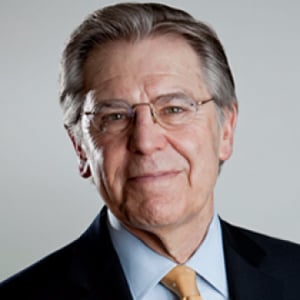
Senior Fellow, Arthur F. Burns Fellow in Financial Policy Studies, American Enterprise Institute
Peter J. Wallison holds the Arthur F. Burns Chair in Financial Policy Studies and is co-director of AEI’s program on Financial Policy Studies. Prior to joining AEI, he practiced banking, corporate and financial law at Gibson, Dunn & Crutcher in Washington, D.C., and New York. Mr. Wallison has held a number of government positions. From June 1981 to January 1985, he was General Counsel of the United States Treasury Department, where he had a significant role in the development of the Reagan Administration's proposals for deregulation in the financial services industry. During 1986 and 1987, Mr. Wallison was White House counsel to President Ronald Reagan, and between 1972 and 1976, he served first as Special Assistant to New York's Gov. Nelson A. Rockefeller and, subsequently, as counsel to Mr. Rockefeller as vice president of the United States.
Mr. Wallison was admitted to practice before the courts of New York and the District of Columbia, and is retired from practice in New York. He continues to be a member of the District of Columbia Bar Association. He received his undergraduate degree from Harvard College in 1963 and law degree from Harvard Law School in 1966.
Mr. Wallison is the author of Ronald Reagan: The Power of Conviction and the Success of His Presidency, published in December 2002 by Westview Press. On campaign finance, he is the author (with Joel Gora) of Better Parties, Better Government, (AEI Press 2009). On financial or regulatory matters, he is the author of Back From the Brink, a proposal for a private deposit insurance system, and co-author of Nationalizing Mortgage Risk: The Growth of Fannie Mae and Freddie Mac; The GAAP Gap: Corporate Disclosure in the Internet Age; Competitive Equity: A Better Way to Organize Mutual Funds; Bad History, Worse Policy: How a False Narrative about the Financial Crisis Led to the Dodd-Frank Act (AEI Press 2013); and Hidden In Plain Sight: What Caused the World’s Worst Financial Crisis and Why it Could Happen Again (Encounter Books 2015). His most recent book is Judicial Fortitude: The Last Chance to Rein in the Administrative State, published by Encounter Books in October 2018.
He testifies frequently before committees of Congress, and is a frequent contributor to the op-ed pages of the Wall Street Journal and other print and online journals. He has also been a speaker at many conferences on financial services, housing, the causes of the financial crisis, the Dodd-Frank Act, accounting, and corporate governance, and was a member of the Shadow Financial Regulatory Committee between 1995 and 2015. He was a member of the SEC Advisory Committee on Improvements to Financial Reporting (2008), co-Chair of the Pew Financial Reform Task Force (2009), and a member of the congressionally- appointed Financial Crisis Inquiry Commission (2009-2011). In May 2011, for his work in financial policy, Mr. Wallison received an honorary doctorate in Humane Letters from the University of Colorado.
Co-Director, Center for Economic and Policy Research
Dean Baker is co-director of the Center for Economic and Policy Research in Washington, DC. He is frequently cited in economics reporting in major media outlets, including the New York Times,Washington Post, CNN, CNBC, and National Public Radio. He writes a weekly column for the Guardian Unlimited (UK), the Huffington Post,TruthOut, and his blog, Beat the Press, features commentary on economic reporting. His analyses have appeared in many major publications, including the Atlantic Monthly, the Washington Post, theLondon Financial Times, and the New York Daily News. He received his Ph.D in economics from the University of Michigan.
Dean has written several books, his latest being The End of Loser Liberalism: Making Markets Progressive. His other books includeTaking Economics Seriously (MIT Press), which thinks through what we might gain if we took the ideological blinders off of basic economic principles, False Profits: Recovering from the Bubble Economy(PoliPoint Press, 2010) about what caused - and how to fix - the current economic crisis. In 2009, he wrote Plunder and Blunder: The Rise and Fall of the Bubble Economy (PoliPoint Press), which chronicled the growth and collapse of the stock and housing bubbles and explained how policy blunders and greed led to the catastrophic - but completely predictable - market meltdowns. He also wrote a chapter ("From Financial Crisis to Opportunity") in Thinking Big: Progressive Ideas for a New Era (Progressive Ideas Network, 2009). His previous books include The United States Since 1980 (Cambridge University Press, 2007); The Conservative Nanny State: How the Wealthy Use the Government to Stay Rich and Get Richer (Center for Economic and Policy Research, 2006), and Social Security: The Phony Crisis (with Mark Weisbrot, University of Chicago Press, 1999). His book Getting Prices Right: The Debate Over the Consumer Price Index (editor, M.E. Sharpe, 1997) was a winner of a Choice Book Award as one of the outstanding academic books of the year.
Among his numerous articles are "The Benefits of a Financial Transactions Tax," Tax Notes 121, no. 4, 2008; "Are Protective Labor Market Institutions at the Root of Unemployment? A Critical Review of the Evidence," (with David R. Howell, Andrew Glyn, and John Schmitt),Capitalism and Society 2, no. 1, 2007; "Asset Returns and Economic Growth," (with Brad DeLong and Paul Krugman), Brookings Papers on Economic Activity, 2005; "Financing Drug Research: What Are the Issues," Center for Economic and Policy Research, 2004; "Medicare Choice Plus: The Solution to the Long-Term Deficit Problem," Center for Economic and Policy Research, 2004; The Benefits of Full Employment (with Jared Bernstein), Economic Policy Institute, 2004; "Professional Protectionists: The Gains From Free Trade in Highly Paid Professional Services," Center for Economic and Policy Research, 2003; and "The Run-Up in Home Prices: Is It Real or Is It Another Bubble," Center for Economic and Policy Research, 2002.
Dean previously worked as a senior economist at the Economic Policy Institute and an assistant professor at Bucknell University. He has also worked as a consultant for the World Bank, the Joint Economic Committee of the U.S. Congress, and the OECD's Trade Union Advisory Council. He was the author of the weekly online commentary on economic reporting, the Economic Reporting Review (ERR), from 1996 - 2006.
Partner, Sullivan & Cromwell LLP
H. Rodgin Cohen is a partner at Sullivan & Cromwell LLP. He was Chairman of the Firm from July 1, 2000 through December 31, 2009 and has served as its Senior Chairman since January 1, 2010. The primary focus of his practice is corporate governance, regulatory, acquisition and securities law matters for major U.S. and non-U.S. banking and other financial institutions.
Mr. Cohen has acted in most of the major U.S. bank acquisitions and government-sponsored and capital-raising efforts during the financial crisis and provides corporate governance advice to a large number of financial and non-financial institutions. He has played a singular role in the market events that have changed the face of the financial services industry and economy, for which The American Lawyer ranked Mr. Cohen #1 among its 25 “Dealmakers of the Year” in 2009.
In March 2010, Mr. Cohen was recognized as one of the “Decade’s Most Influential Lawyers” by The National Law Journal. In late 2009, he was among the top 25 people named to Institutional Investor’s “The Power 25: Leaders in Finance.” Mr. Cohen was also presented with an FT Special Achievement Award in recognition of his work on nearly 20 substantial credit crisis-related transactions by the Financial Times in October 2009.
Mr. Cohen is or has been a member of the FDIC Systemic Resolution Advisory Committee, The Pew Financial Reform Project, the IIF Special Committee for a Strategic Dialogue for Effective Regulation, the Treasury Advisory Committee on the Auditing Profession, The New York State Commission to Modernize the Regulation of Financial Services and The Financial Services Roundtable’s Blue Ribbon Commission on Enhancing Competitiveness.
Mr. Cohen is a trustee of New York Presbyterian Hospital, Rockefeller University, the Hackley School, Deerfield Academy, Hampton University, Lincoln Center Theater, New York City Partnership and, formerly, the Economic Club of New York. He is also a member of Harvard Law School’s Visiting Committee and the advisory boards of United Way of Westchester-Putnam, the University of Charleston and Wall Street Rising, which in 2005 honored him with its annual Leadership Award for his “steadfast commitment to Lower Manhattan” in the aftermath of the attacks of September 11, 2001. In May 2010, Mr. Cohen and his wife Barbara were honored with the Servant of Justice Award at the Legal Aid Society’s 33rd Annual Dinner.
Founder and Chief Executive Officer, Elliott Management Corporation
Paul E. Singer is founder and general partner of Elliott Associates LP, a New York–based trading partnership formed in 1977. Elliott's compound annual rate of return from inception to June 30, 2011 has been 14.2% net to investors, compared with 10.9% for the S&P 500 in the same period. Elliott's volatility of return has been roughly one-third that of the S&P 500. Total assets under management were approximately $17 billion as of July 1, 2011. Elliott has offices in New York, London, Hong Kong and Tokyo.
The Wall Street Journal has recognized Elliott's early forecasting of the systemic economic crisis of 2008. The New York Times has written that “of all the hedge fund managers on Wall Street, [Elliott] is one of the most revered.”
Mr. Singer is on the board of fellows of Harvard Medical School. He is also chairman of the Manhattan Institute and an advisory board member of the James Madison Program in American Ideals and Institutions at Princeton University, and on the board of directors of Commentary Magazine. He is a member of the Marketable Assets Advisory Committee at Williams College as well as an ex officio member of the Investment Committee of the University of Rochester.
Judge, United States Court of Appeals, Seventh Circuit
Judge Sykes was nominated to the Seventh Circuit by President George W. Bush and confirmed by the Senate in 2004. Prior to her appointment to the federal bench, Judge Sykes served as a justice on the Wisconsin Supreme Court. Governor Tommy G. Thompson appointed her in September 1999 to fill a mid-term vacancy on the state supreme court, and she was elected to a full ten-year term in April 2000. From 1992-1999, Judge Sykes served on the state trial bench in Milwaukee County (elected in 1992 and re-elected in 1998). From 1985-1992, Judge Sykes practiced law with the Milwaukee firm of Whyte & Hirschboeck, S.C., and from 1984-1985, was a law clerk to Federal Judge Terence T. Evans.
Born and raised in the Milwaukee area, Judge Sykes earned a bachelor’s degree in journalism from Northwestern University in 1980 and a law degree from Marquette University Law School in 1984. Between college and law school, Judge Sykes worked as a reporter for The Milwaukee Journal.
Judge Sykes has two sons.
Senior Fellow, Arthur F. Burns Fellow in Financial Policy Studies, American Enterprise Institute
Peter J. Wallison holds the Arthur F. Burns Chair in Financial Policy Studies and is co-director of AEI’s program on Financial Policy Studies. Prior to joining AEI, he practiced banking, corporate and financial law at Gibson, Dunn & Crutcher in Washington, D.C., and New York. Mr. Wallison has held a number of government positions. From June 1981 to January 1985, he was General Counsel of the United States Treasury Department, where he had a significant role in the development of the Reagan Administration's proposals for deregulation in the financial services industry. During 1986 and 1987, Mr. Wallison was White House counsel to President Ronald Reagan, and between 1972 and 1976, he served first as Special Assistant to New York's Gov. Nelson A. Rockefeller and, subsequently, as counsel to Mr. Rockefeller as vice president of the United States.
Mr. Wallison was admitted to practice before the courts of New York and the District of Columbia, and is retired from practice in New York. He continues to be a member of the District of Columbia Bar Association. He received his undergraduate degree from Harvard College in 1963 and law degree from Harvard Law School in 1966.
Mr. Wallison is the author of Ronald Reagan: The Power of Conviction and the Success of His Presidency, published in December 2002 by Westview Press. On campaign finance, he is the author (with Joel Gora) of Better Parties, Better Government, (AEI Press 2009). On financial or regulatory matters, he is the author of Back From the Brink, a proposal for a private deposit insurance system, and co-author of Nationalizing Mortgage Risk: The Growth of Fannie Mae and Freddie Mac; The GAAP Gap: Corporate Disclosure in the Internet Age; Competitive Equity: A Better Way to Organize Mutual Funds; Bad History, Worse Policy: How a False Narrative about the Financial Crisis Led to the Dodd-Frank Act (AEI Press 2013); and Hidden In Plain Sight: What Caused the World’s Worst Financial Crisis and Why it Could Happen Again (Encounter Books 2015). His most recent book is Judicial Fortitude: The Last Chance to Rein in the Administrative State, published by Encounter Books in October 2018.
He testifies frequently before committees of Congress, and is a frequent contributor to the op-ed pages of the Wall Street Journal and other print and online journals. He has also been a speaker at many conferences on financial services, housing, the causes of the financial crisis, the Dodd-Frank Act, accounting, and corporate governance, and was a member of the Shadow Financial Regulatory Committee between 1995 and 2015. He was a member of the SEC Advisory Committee on Improvements to Financial Reporting (2008), co-Chair of the Pew Financial Reform Task Force (2009), and a member of the congressionally- appointed Financial Crisis Inquiry Commission (2009-2011). In May 2011, for his work in financial policy, Mr. Wallison received an honorary doctorate in Humane Letters from the University of Colorado.
Partner, Orrick, Herrington & Sutcliffe LLP
Andy excels at solving complex problems for his clients using a variety of effective strategies. As former Chief Deputy Attorney General for the State of Wisconsin, Andy Cook has extensive experience representing businesses before state Attorneys General involving investigations and lawsuits. His strong relationships with Attorneys General and their senior staff frequently facilitate the successful resolution of client issues through diplomacy and negotiations. When litigation becomes necessary, Andy effectively advocates for clients throughout the litigation process.
Andy combines his legal expertise in numerous areas of law covered by state Attorneys General, an understanding of how state AG offices operate, and vast knowledge of legal and regulatory issues facing his clients. This substantive and comprehensive legal approach is crucial to effectively representing clients before state Attorneys General. Andy also has substantial experience drafting and enacting complex civil liability reforms before state legislatures to successfully address client goals.
Andy’s main practice focuses on advising Fortune 500 companies before state Attorneys General in the areas of antitrust, consumer protection, False Claims Act, environmental law, and cybersecurity and data privacy. Andy, in collaboration with a team of attorneys, successfully navigated a client through antitrust regulatory review by state Attorneys General in one of the nation’s largest mergers of two major telecommunication companies. Andy also worked with a team of lawyers representing a large corporation involving the multistate opioids litigation brought by state Attorneys General.
Andy gained valuable experience serving as Deputy Attorney General for the State of Wisconsin where he was the second in command of the 700-plus state agency. In his role as Chief Deputy Attorney General, Andy oversaw the day-to-day operations at the Wisconsin Department of Justice (DOJ); directed the State’s litigation strategy; negotiated, reviewed, and approved all settlements; drafted and reviewed attorney general opinions; managed the agency’s budget; oversaw civil and criminal investigations handled by DOJ; and managed DOJ’s legislative agenda.
Andy played college hockey and remains active by running, cross country skiing, and playing golf. On the weekends, Andy and his wife enjoy watching their kids’ sporting events, including soccer, baseball, gymnastics, and track. In his rare spare time, Andy reads history books.
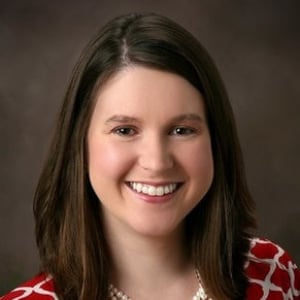
Attorney, Lobbyist & Communications Professional, Kelchen Consulting
Partner, Orrick, Herrington & Sutcliffe LLP
Andy excels at solving complex problems for his clients using a variety of effective strategies. As former Chief Deputy Attorney General for the State of Wisconsin, Andy Cook has extensive experience representing businesses before state Attorneys General involving investigations and lawsuits. His strong relationships with Attorneys General and their senior staff frequently facilitate the successful resolution of client issues through diplomacy and negotiations. When litigation becomes necessary, Andy effectively advocates for clients throughout the litigation process.
Andy combines his legal expertise in numerous areas of law covered by state Attorneys General, an understanding of how state AG offices operate, and vast knowledge of legal and regulatory issues facing his clients. This substantive and comprehensive legal approach is crucial to effectively representing clients before state Attorneys General. Andy also has substantial experience drafting and enacting complex civil liability reforms before state legislatures to successfully address client goals.
Andy’s main practice focuses on advising Fortune 500 companies before state Attorneys General in the areas of antitrust, consumer protection, False Claims Act, environmental law, and cybersecurity and data privacy. Andy, in collaboration with a team of attorneys, successfully navigated a client through antitrust regulatory review by state Attorneys General in one of the nation’s largest mergers of two major telecommunication companies. Andy also worked with a team of lawyers representing a large corporation involving the multistate opioids litigation brought by state Attorneys General.
Andy gained valuable experience serving as Deputy Attorney General for the State of Wisconsin where he was the second in command of the 700-plus state agency. In his role as Chief Deputy Attorney General, Andy oversaw the day-to-day operations at the Wisconsin Department of Justice (DOJ); directed the State’s litigation strategy; negotiated, reviewed, and approved all settlements; drafted and reviewed attorney general opinions; managed the agency’s budget; oversaw civil and criminal investigations handled by DOJ; and managed DOJ’s legislative agenda.
Andy played college hockey and remains active by running, cross country skiing, and playing golf. On the weekends, Andy and his wife enjoy watching their kids’ sporting events, including soccer, baseball, gymnastics, and track. In his rare spare time, Andy reads history books.
Attorney, Lobbyist & Communications Professional, Kelchen Consulting
Judge, United States Court of Appeals, Seventh Circuit
Judge Sykes was nominated to the Seventh Circuit by President George W. Bush and confirmed by the Senate in 2004. Prior to her appointment to the federal bench, Judge Sykes served as a justice on the Wisconsin Supreme Court. Governor Tommy G. Thompson appointed her in September 1999 to fill a mid-term vacancy on the state supreme court, and she was elected to a full ten-year term in April 2000. From 1992-1999, Judge Sykes served on the state trial bench in Milwaukee County (elected in 1992 and re-elected in 1998). From 1985-1992, Judge Sykes practiced law with the Milwaukee firm of Whyte & Hirschboeck, S.C., and from 1984-1985, was a law clerk to Federal Judge Terence T. Evans.
Born and raised in the Milwaukee area, Judge Sykes earned a bachelor’s degree in journalism from Northwestern University in 1980 and a law degree from Marquette University Law School in 1984. Between college and law school, Judge Sykes worked as a reporter for The Milwaukee Journal.
Judge Sykes has two sons.
Judge, United States Court of Appeals, Seventh Circuit
Judge Sykes was nominated to the Seventh Circuit by President George W. Bush and confirmed by the Senate in 2004. Prior to her appointment to the federal bench, Judge Sykes served as a justice on the Wisconsin Supreme Court. Governor Tommy G. Thompson appointed her in September 1999 to fill a mid-term vacancy on the state supreme court, and she was elected to a full ten-year term in April 2000. From 1992-1999, Judge Sykes served on the state trial bench in Milwaukee County (elected in 1992 and re-elected in 1998). From 1985-1992, Judge Sykes practiced law with the Milwaukee firm of Whyte & Hirschboeck, S.C., and from 1984-1985, was a law clerk to Federal Judge Terence T. Evans.
Born and raised in the Milwaukee area, Judge Sykes earned a bachelor’s degree in journalism from Northwestern University in 1980 and a law degree from Marquette University Law School in 1984. Between college and law school, Judge Sykes worked as a reporter for The Milwaukee Journal.
Judge Sykes has two sons.
Co-Director, Center for Economic and Policy Research
Dean Baker is co-director of the Center for Economic and Policy Research in Washington, DC. He is frequently cited in economics reporting in major media outlets, including the New York Times,Washington Post, CNN, CNBC, and National Public Radio. He writes a weekly column for the Guardian Unlimited (UK), the Huffington Post,TruthOut, and his blog, Beat the Press, features commentary on economic reporting. His analyses have appeared in many major publications, including the Atlantic Monthly, the Washington Post, theLondon Financial Times, and the New York Daily News. He received his Ph.D in economics from the University of Michigan.
Dean has written several books, his latest being The End of Loser Liberalism: Making Markets Progressive. His other books includeTaking Economics Seriously (MIT Press), which thinks through what we might gain if we took the ideological blinders off of basic economic principles, False Profits: Recovering from the Bubble Economy(PoliPoint Press, 2010) about what caused - and how to fix - the current economic crisis. In 2009, he wrote Plunder and Blunder: The Rise and Fall of the Bubble Economy (PoliPoint Press), which chronicled the growth and collapse of the stock and housing bubbles and explained how policy blunders and greed led to the catastrophic - but completely predictable - market meltdowns. He also wrote a chapter ("From Financial Crisis to Opportunity") in Thinking Big: Progressive Ideas for a New Era (Progressive Ideas Network, 2009). His previous books include The United States Since 1980 (Cambridge University Press, 2007); The Conservative Nanny State: How the Wealthy Use the Government to Stay Rich and Get Richer (Center for Economic and Policy Research, 2006), and Social Security: The Phony Crisis (with Mark Weisbrot, University of Chicago Press, 1999). His book Getting Prices Right: The Debate Over the Consumer Price Index (editor, M.E. Sharpe, 1997) was a winner of a Choice Book Award as one of the outstanding academic books of the year.
Among his numerous articles are "The Benefits of a Financial Transactions Tax," Tax Notes 121, no. 4, 2008; "Are Protective Labor Market Institutions at the Root of Unemployment? A Critical Review of the Evidence," (with David R. Howell, Andrew Glyn, and John Schmitt),Capitalism and Society 2, no. 1, 2007; "Asset Returns and Economic Growth," (with Brad DeLong and Paul Krugman), Brookings Papers on Economic Activity, 2005; "Financing Drug Research: What Are the Issues," Center for Economic and Policy Research, 2004; "Medicare Choice Plus: The Solution to the Long-Term Deficit Problem," Center for Economic and Policy Research, 2004; The Benefits of Full Employment (with Jared Bernstein), Economic Policy Institute, 2004; "Professional Protectionists: The Gains From Free Trade in Highly Paid Professional Services," Center for Economic and Policy Research, 2003; and "The Run-Up in Home Prices: Is It Real or Is It Another Bubble," Center for Economic and Policy Research, 2002.
Dean previously worked as a senior economist at the Economic Policy Institute and an assistant professor at Bucknell University. He has also worked as a consultant for the World Bank, the Joint Economic Committee of the U.S. Congress, and the OECD's Trade Union Advisory Council. He was the author of the weekly online commentary on economic reporting, the Economic Reporting Review (ERR), from 1996 - 2006.
Partner, Sullivan & Cromwell LLP
H. Rodgin Cohen is a partner at Sullivan & Cromwell LLP. He was Chairman of the Firm from July 1, 2000 through December 31, 2009 and has served as its Senior Chairman since January 1, 2010. The primary focus of his practice is corporate governance, regulatory, acquisition and securities law matters for major U.S. and non-U.S. banking and other financial institutions.
Mr. Cohen has acted in most of the major U.S. bank acquisitions and government-sponsored and capital-raising efforts during the financial crisis and provides corporate governance advice to a large number of financial and non-financial institutions. He has played a singular role in the market events that have changed the face of the financial services industry and economy, for which The American Lawyer ranked Mr. Cohen #1 among its 25 “Dealmakers of the Year” in 2009.
In March 2010, Mr. Cohen was recognized as one of the “Decade’s Most Influential Lawyers” by The National Law Journal. In late 2009, he was among the top 25 people named to Institutional Investor’s “The Power 25: Leaders in Finance.” Mr. Cohen was also presented with an FT Special Achievement Award in recognition of his work on nearly 20 substantial credit crisis-related transactions by the Financial Times in October 2009.
Mr. Cohen is or has been a member of the FDIC Systemic Resolution Advisory Committee, The Pew Financial Reform Project, the IIF Special Committee for a Strategic Dialogue for Effective Regulation, the Treasury Advisory Committee on the Auditing Profession, The New York State Commission to Modernize the Regulation of Financial Services and The Financial Services Roundtable’s Blue Ribbon Commission on Enhancing Competitiveness.
Mr. Cohen is a trustee of New York Presbyterian Hospital, Rockefeller University, the Hackley School, Deerfield Academy, Hampton University, Lincoln Center Theater, New York City Partnership and, formerly, the Economic Club of New York. He is also a member of Harvard Law School’s Visiting Committee and the advisory boards of United Way of Westchester-Putnam, the University of Charleston and Wall Street Rising, which in 2005 honored him with its annual Leadership Award for his “steadfast commitment to Lower Manhattan” in the aftermath of the attacks of September 11, 2001. In May 2010, Mr. Cohen and his wife Barbara were honored with the Servant of Justice Award at the Legal Aid Society’s 33rd Annual Dinner.
Founder and Chief Executive Officer, Elliott Management Corporation
Paul E. Singer is founder and general partner of Elliott Associates LP, a New York–based trading partnership formed in 1977. Elliott's compound annual rate of return from inception to June 30, 2011 has been 14.2% net to investors, compared with 10.9% for the S&P 500 in the same period. Elliott's volatility of return has been roughly one-third that of the S&P 500. Total assets under management were approximately $17 billion as of July 1, 2011. Elliott has offices in New York, London, Hong Kong and Tokyo.
The Wall Street Journal has recognized Elliott's early forecasting of the systemic economic crisis of 2008. The New York Times has written that “of all the hedge fund managers on Wall Street, [Elliott] is one of the most revered.”
Mr. Singer is on the board of fellows of Harvard Medical School. He is also chairman of the Manhattan Institute and an advisory board member of the James Madison Program in American Ideals and Institutions at Princeton University, and on the board of directors of Commentary Magazine. He is a member of the Marketable Assets Advisory Committee at Williams College as well as an ex officio member of the Investment Committee of the University of Rochester.
Judge, United States Court of Appeals, Seventh Circuit
Judge Sykes was nominated to the Seventh Circuit by President George W. Bush and confirmed by the Senate in 2004. Prior to her appointment to the federal bench, Judge Sykes served as a justice on the Wisconsin Supreme Court. Governor Tommy G. Thompson appointed her in September 1999 to fill a mid-term vacancy on the state supreme court, and she was elected to a full ten-year term in April 2000. From 1992-1999, Judge Sykes served on the state trial bench in Milwaukee County (elected in 1992 and re-elected in 1998). From 1985-1992, Judge Sykes practiced law with the Milwaukee firm of Whyte & Hirschboeck, S.C., and from 1984-1985, was a law clerk to Federal Judge Terence T. Evans.
Born and raised in the Milwaukee area, Judge Sykes earned a bachelor’s degree in journalism from Northwestern University in 1980 and a law degree from Marquette University Law School in 1984. Between college and law school, Judge Sykes worked as a reporter for The Milwaukee Journal.
Judge Sykes has two sons.
Senior Fellow, Arthur F. Burns Fellow in Financial Policy Studies, American Enterprise Institute
Peter J. Wallison holds the Arthur F. Burns Chair in Financial Policy Studies and is co-director of AEI’s program on Financial Policy Studies. Prior to joining AEI, he practiced banking, corporate and financial law at Gibson, Dunn & Crutcher in Washington, D.C., and New York. Mr. Wallison has held a number of government positions. From June 1981 to January 1985, he was General Counsel of the United States Treasury Department, where he had a significant role in the development of the Reagan Administration's proposals for deregulation in the financial services industry. During 1986 and 1987, Mr. Wallison was White House counsel to President Ronald Reagan, and between 1972 and 1976, he served first as Special Assistant to New York's Gov. Nelson A. Rockefeller and, subsequently, as counsel to Mr. Rockefeller as vice president of the United States.
Mr. Wallison was admitted to practice before the courts of New York and the District of Columbia, and is retired from practice in New York. He continues to be a member of the District of Columbia Bar Association. He received his undergraduate degree from Harvard College in 1963 and law degree from Harvard Law School in 1966.
Mr. Wallison is the author of Ronald Reagan: The Power of Conviction and the Success of His Presidency, published in December 2002 by Westview Press. On campaign finance, he is the author (with Joel Gora) of Better Parties, Better Government, (AEI Press 2009). On financial or regulatory matters, he is the author of Back From the Brink, a proposal for a private deposit insurance system, and co-author of Nationalizing Mortgage Risk: The Growth of Fannie Mae and Freddie Mac; The GAAP Gap: Corporate Disclosure in the Internet Age; Competitive Equity: A Better Way to Organize Mutual Funds; Bad History, Worse Policy: How a False Narrative about the Financial Crisis Led to the Dodd-Frank Act (AEI Press 2013); and Hidden In Plain Sight: What Caused the World’s Worst Financial Crisis and Why it Could Happen Again (Encounter Books 2015). His most recent book is Judicial Fortitude: The Last Chance to Rein in the Administrative State, published by Encounter Books in October 2018.
He testifies frequently before committees of Congress, and is a frequent contributor to the op-ed pages of the Wall Street Journal and other print and online journals. He has also been a speaker at many conferences on financial services, housing, the causes of the financial crisis, the Dodd-Frank Act, accounting, and corporate governance, and was a member of the Shadow Financial Regulatory Committee between 1995 and 2015. He was a member of the SEC Advisory Committee on Improvements to Financial Reporting (2008), co-Chair of the Pew Financial Reform Task Force (2009), and a member of the congressionally- appointed Financial Crisis Inquiry Commission (2009-2011). In May 2011, for his work in financial policy, Mr. Wallison received an honorary doctorate in Humane Letters from the University of Colorado.
Judge, United States Court of Appeals, Seventh Circuit
Judge Sykes was nominated to the Seventh Circuit by President George W. Bush and confirmed by the Senate in 2004. Prior to her appointment to the federal bench, Judge Sykes served as a justice on the Wisconsin Supreme Court. Governor Tommy G. Thompson appointed her in September 1999 to fill a mid-term vacancy on the state supreme court, and she was elected to a full ten-year term in April 2000. From 1992-1999, Judge Sykes served on the state trial bench in Milwaukee County (elected in 1992 and re-elected in 1998). From 1985-1992, Judge Sykes practiced law with the Milwaukee firm of Whyte & Hirschboeck, S.C., and from 1984-1985, was a law clerk to Federal Judge Terence T. Evans.
Born and raised in the Milwaukee area, Judge Sykes earned a bachelor’s degree in journalism from Northwestern University in 1980 and a law degree from Marquette University Law School in 1984. Between college and law school, Judge Sykes worked as a reporter for The Milwaukee Journal.
Judge Sykes has two sons.
Judge, United States Court of Appeals, Seventh Circuit
Judge Sykes was nominated to the Seventh Circuit by President George W. Bush and confirmed by the Senate in 2004. Prior to her appointment to the federal bench, Judge Sykes served as a justice on the Wisconsin Supreme Court. Governor Tommy G. Thompson appointed her in September 1999 to fill a mid-term vacancy on the state supreme court, and she was elected to a full ten-year term in April 2000. From 1992-1999, Judge Sykes served on the state trial bench in Milwaukee County (elected in 1992 and re-elected in 1998). From 1985-1992, Judge Sykes practiced law with the Milwaukee firm of Whyte & Hirschboeck, S.C., and from 1984-1985, was a law clerk to Federal Judge Terence T. Evans.
Born and raised in the Milwaukee area, Judge Sykes earned a bachelor’s degree in journalism from Northwestern University in 1980 and a law degree from Marquette University Law School in 1984. Between college and law school, Judge Sykes worked as a reporter for The Milwaukee Journal.
Judge Sykes has two sons.

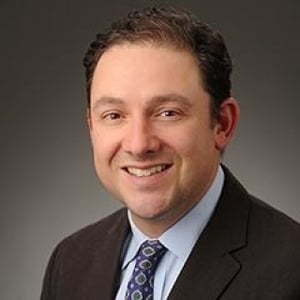
Wisconsin Supreme Court Rules Plaintiffs Entitled to Receive "Phantom Damages"
Andrew Cook
In a recent decision, the Wisconsin Supreme Court has added to the growing list of...
Citizens United in the Montana Supreme Court: When a State Supreme Court Ignores the U.S. Supreme Court
Citizens United in the Montana Supreme Court: When a State Supreme Court Ignores the U.S. Supreme Court
Showcase Panel I: Too Big to Fail
Dean Baker, H. Rodgin Cohen, Paul Singer, Diane S. Sykes, Peter J. Wallison
The Dodd-Frank Wall Street Reform and Consumer Protection Act was aimed at correcting a number...
Showcase Panel I: Too Big to Fail
Dean Baker, H. Rodgin Cohen, Paul Singer, Diane S. Sykes, Peter J. Wallison
The Dodd-Frank Wall Street Reform and Consumer Protection Act was aimed at correcting a number...
Showcase Panel I: Too Big to Fail
2011 National Lawyers Convention
Washington, DCState Court Judges & Politics
Harvard Student Chapter
Cambridge, MAState Court Challenges to Legislatively Enacted Tort Reforms
Andrew Cook, Emily Kelchen
Introduction Over the past three decades, proponents of civil liability reform have made significant gains.1 Propelled...
State Court Challenges to Legislatively Enacted Tort Reforms
Andrew Cook, Emily Kelchen
Introduction Over the past three decades, proponents of civil liability reform have made significant gains.1...
Gender & Judging