

Professor of Law and Faculty Director for the Georgetown Center for the Constitution, Georgetown University Law Center
Stephanie Barclay is a Professor of Law at Georgetown Law School, and the Faculty Director of the Georgetown Center for the Constitution. Her research focuses on the role our different democratic institutions play in protecting minority rights, particularly at the intersection of free speech and religious exercise. Barclay‘s work is published or is forthcoming in leading journals such as the Harvard Law Review, the Chicago Law Review, the University of Pennsylvania Law Review, and the Yale Law Journal Forum. One of her articles was also selected for the 2020 Stanford/Harvard/Yale Junior Faculty Forum. Her work has been featured in many media outlets, including The New York Times, The Wall Street Journal, The Washington Post, USA Today, Bloomberg BNA, The Hill, and Law 360. And her work has also been cited by the U.S. Supreme Court.
Prior to joining Georgetown, Barclay was twice voted Professor of the Year. Barclay has also litigated constitutional cases at both the trial and appellate level, including before the U.S. Supreme Court. Barclay served as a law clerk to Judge N. Randy Smith on the U.S. Court of Appeals for the Ninth Circuit, and to Justice Neil M. Gorsuch of the U.S. Supreme Court.
Barclay is a Faculty Affiliate at the Constitutional Law Center at Stanford Law School; and she is a Nootbaar Fellow at the Nootbaar Institute on Law, Religion, and Ethics at Pepperdine University. She currently serves as the Chair for the AALS Law and Religion Section and as a Member of the Executive Committee for the AALS Constitutional Law Section. She graduated summa cum laude from BYU Law School, where she was elected to the Order of the Coif. She is completing a Ph.D. in Law at Oxford University as a Clarendon Scholar and a Tang Scholar.
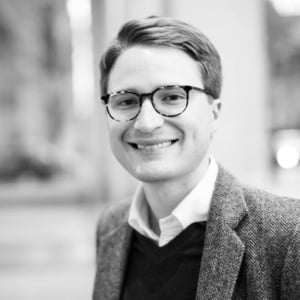
Senior Counsel, The Becket Fund for Religious Liberty
Joe Davis joined Becket in 2017 as Legal Counsel. His work at Becket has included appellate litigation in both federal and state courts, including representing religious entities and governments sued because of their openness to religious expression in precedent-setting victories before the Third, Fifth, Seventh, and Eleventh Circuits. Joe has appeared in national media to discuss religious liberty issues, including on Fox News and numerous radio and print outlets, and his academic work on topics related to religious liberty has been published at venues including the Yale Law Journal Forum and the Notre Dame Law Review Online.
Before joining Becket, Joe worked as a litigator at Jones Walker LLP in New Orleans, Louisiana, where he worked on a variety of matters from commercial and criminal litigation to bankruptcy. From 2014 to 2015, he clerked for the Honorable E. Grady Jolly of the U.S. Court of Appeals for the Fifth Circuit.
Joe graduated summa cum laude from the University of Virginia School of Law in 2014, where he served on the Virginia Law Review and was elected to the Order of the Coif. While in law school, Joe studied religious liberty law with one of the top religious liberty scholars and litigators in the nation. He also worked as a researcher for the law school’s Supreme Court Litigation Clinic. Before going to law school, Joe received his B.A. in Economics with a minor in Religion, summa cum laude, from Mississippi State University.
Joe is married to his high school sweetheart. When he’s not helping her corral their four young children, he tends to be reading the classics, watching college football, or listening to his vinyl collection.
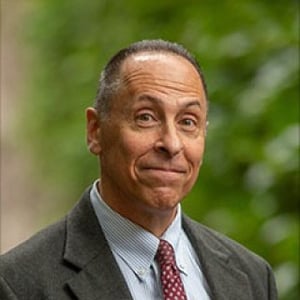
John Paul Stevens Professor of Law, Northwestern University School of Law
Andrew Koppelman is John Paul Stevens Professor of Law, Professor (by courtesy) of Political Science, and Philosophy Department Affiliated Faculty at Northwestern University. He received the Walder Award for Research Excellence from Northwestern, the Hart-Dworkin award in legal philosophy from the Association of American Law Schools, and the Edward S. Corwin Prize from the American Political Science Association. His scholarship focuses on issues at the intersection of law and political philosophy. He has written more than 100 scholarly articles and eight books, most recently Burning Down the House: How Libertarian Philosophy Was Corrupted by Delusion and Greed, (St. Martin’s Press). His column appears regularly at The Hill. You can find his recent work at andrewkoppelman.com.
Professor of Law and Faculty Director for the Georgetown Center for the Constitution, Georgetown University Law Center
Stephanie Barclay is a Professor of Law at Georgetown Law School, and the Faculty Director of the Georgetown Center for the Constitution. Her research focuses on the role our different democratic institutions play in protecting minority rights, particularly at the intersection of free speech and religious exercise. Barclay‘s work is published or is forthcoming in leading journals such as the Harvard Law Review, the Chicago Law Review, the University of Pennsylvania Law Review, and the Yale Law Journal Forum. One of her articles was also selected for the 2020 Stanford/Harvard/Yale Junior Faculty Forum. Her work has been featured in many media outlets, including The New York Times, The Wall Street Journal, The Washington Post, USA Today, Bloomberg BNA, The Hill, and Law 360. And her work has also been cited by the U.S. Supreme Court.
Prior to joining Georgetown, Barclay was twice voted Professor of the Year. Barclay has also litigated constitutional cases at both the trial and appellate level, including before the U.S. Supreme Court. Barclay served as a law clerk to Judge N. Randy Smith on the U.S. Court of Appeals for the Ninth Circuit, and to Justice Neil M. Gorsuch of the U.S. Supreme Court.
Barclay is a Faculty Affiliate at the Constitutional Law Center at Stanford Law School; and she is a Nootbaar Fellow at the Nootbaar Institute on Law, Religion, and Ethics at Pepperdine University. She currently serves as the Chair for the AALS Law and Religion Section and as a Member of the Executive Committee for the AALS Constitutional Law Section. She graduated summa cum laude from BYU Law School, where she was elected to the Order of the Coif. She is completing a Ph.D. in Law at Oxford University as a Clarendon Scholar and a Tang Scholar.
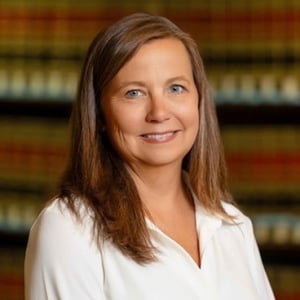
John P. Murphy Foundation Professor of Law and Associate Dean for External Engagement, University of Notre Dame Law School
Nicole Stelle Garnett is the John P. Murphy Foundation Professor of Law at Notre Dame Law School, where she also serves as the Associate Dean for External Engagement and directs the Notre Dame Education Law Project. Her teaching and research focus on education law and policy, religious liberty, and topics related to property law (especially land use and urban development policies). In addition to dozens of articles on these subjects, she is the author of Lost Classroom, Lost Community: Catholic Schools' Importance in Urban America (University of Chicago Press, 2014) and Ordering the City: Land Use, Policing and the Restoration of Urban America (Yale University Press, 2009).
Garnett received her B.A. with distinction in Political Science from Stanford University and her J.D. from Yale Law School. After law school, she clerked for the Honorable Morris S. Arnold of the United States Court of Appeals for the Eighth Circuit and for Associate Justice Clarence Thomas of the Supreme Court of the United States. Before joining the law school faculty in 1999, she worked for two years as a staff attorney at the Institute for Justice, a non-profit public-interest law firm in Washington, D.C., where she helped to defend the constitutionality of the nation's first private-school-choice programs.
At Notre Dame, Garnett is a faculty fellow in the Institute for Educational Initiatives, Kellogg Institute for International Studies, Fitzgerald Institute for Real Estate, and deNicola Center for Ethics and Culture. She also is an elected member of the American Law Institute and a Senior Fellow at the Manhattan Institute.

Judge, United States Court of Appeals, Second Circuit
Judge Menashi was appointed to the U.S. Court of Appeals for the Second Circuit on November 14, 2019. Previously, he served as special assistant and associate counsel to the President in the White House and as acting general counsel at the U.S. Department of Education. He was assistant professor of law at Scalia Law School, George Mason University, where he taught administrative law and civil procedure, and a research fellow at New York University School of Law and Georgetown University Law Center. He was also a partner at Kirkland & Ellis LLP in New York, where he practiced appellate and commercial litigation, and served as a law clerk to Justice Samuel Alito on the Supreme Court of the United States and to Judge Douglas Ginsburg on the U.S. Court of Appeals for the District of Columbia Circuit. He graduated from Stanford Law School, where he was elected to Order of the Coif and served as senior articles editor of the Stanford Law Review, and from Dartmouth College, where he was elected to Phi Beta Kappa.
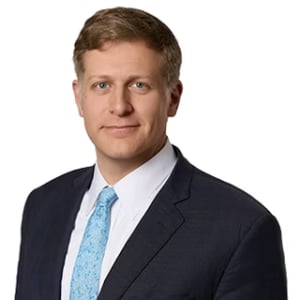
Judge, U.S. Court of Appeals, Second Circuit
On April 10, 2026, President Trump nominated Matthew Schwartz to the United States Court of Appeals for the Second Circuit. He was confirmed on July 14, 2026.
Prior to his appointment, Matthew Schwartz was a partner in the Firm’s Litigation Group. He joined the Firm in 2007 after clerking for Justice Samuel A. Alito, Jr. of the U.S. Supreme Court. He was elected partner in 2011.
Mr. Schwartz’s wide-ranging practice comprises complex litigation, arbitration, and government investigations in the areas of securities law, M&A, derivative suits, antitrust, bank regulation, contracts, constitutional law, administrative law and general commercial litigation. He has represented some of the world’s leading corporations, financial institutions, and industry organizations. Mr. Schwartz provides regular advice on legislation and regulations in the AI, banking, FinTech, and payments fields.
Matt also regularly speaks and writes on legal ethics issues.
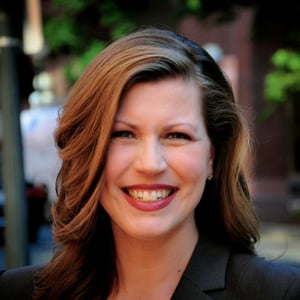
Senior Counsel, The Becket Fund for Religious Liberty
Senior Counsel Hannah Smith joined Becket in 2007 following two clerkships at the U.S. Supreme Court for Justices Clarence Thomas and Samuel A. Alito, Jr.
Ms. Smith was a member of the Becket legal team that secured victories in key U.S. Supreme Court religious liberty cases, including Holt v. Hobbs, 574 U.S. ___ (Jan. 20, 2015), where a unanimous Court held in an opinion authored by Justice Alito that the Religious Land Use and Institutionalized Persons Act requires prison officials to accommodate peaceful expressions of religious devotion; Burwell v. Hobby Lobby, 134 S. Ct. 2751 (June 30, 2014), where the Court held in a 5-4 opinion authored by Justice Alito that family-owned businesses enjoy religious liberty rights under the Religious Freedom Restoration Act and that the HHS mandate violated the Act; and Hosanna-Tabor Evangelical Lutheran Church and School v. EEOC, 132 S. Ct. 694 (2012), where a unanimous Court held in an opinion authored by Chief Justice Roberts that the “ministerial exception” under the First Amendment protects a church’s right to choose its own ministers.
Ms. Smith contributed to Becket's Supreme Court filings in Little Sisters of the Poor v. Burwell (2015); Houston Baptist University v. Burwell (2015); Stormans v. Wiesman (2015); Michigan Catholic Conference v. Burwell (2015); Obergefell v. Hodges (2015); University of Notre Dame v. Burwell (2014); Wheaton College v. Burwell, 134 S. Ct. 2806 (2014); Little Sisters of the Poor v. Sebelius, 134 S. Ct. 1022 (2014); Bronx Household of Faith v. New York City Board of Education (2014), Elmbrook School District v. Doe (2014), Big Sky Colony v. Montana Department of Labor and Industry (2013), Sossamon v. Texas (2011), Arizona Christian School Tuition Association v. Winn (2011), Bronx Household of Faith v. New York City Board of Education (2011), Utah Highway Patrol Association v. American Atheists (2011), Christian Legal Society v. Martinez (2010), and Salazar v. Buono (2010).
Ms. Smith has been featured on CNN, Fox News, The O'Reilly Factor, The Sean Hannity Show, C-Span, EWTN, Al Jazeera America, the Wall Street Journal, the Washington Post, the Los Angeles Times, U.S. News and World Report, the Associated Press, National Review Online, Bloomberg News, NPR, BBC, the Laura Ingraham Show, the Rush Limbaugh Show, the Hugh Hewitt Show, BYU Radio, and many other publications and radio shows. She has been invited to speak on religious liberty at Harvard Law School, Princeton University, Stanford Law School, University of Pennsylvania Law School, Southern Methodist University Law School, Brigham Young University Law School, American University Washington College of the Law, and Central European University. And she has given briefings on religious liberty issues at the U.S. Capitol, the State Department, the Heritage Foundation, the Ethics and Public Policy Center, the Federalist Society for Law and Public Policy Studies, the American Bar Association, and the National Constitution Center.
Ms. Smith received her B.A. from Princeton University, concentrating in the Woodrow Wilson School of Public and International Affairs. She graduated with honors from Brigham Young University Law School and was elected to the Order of the Coif. She served as Executive Editor of the BYU Law Review, as a research assistant for the BYU International Center for Law and Religion Studies, and as president of the BYU Federalist Society. BYU awarded her its Alumni Achievement Award for her work in the defense of religious freedom. Ms. Smith also received the J. Reuben Clark Law Society's Women-in-Law Leadership Award for her national leadership in defending religious liberty and advancing the contributions of Mormon women to the law.
Following law school and in between clerkships, she was an associate in private practice at Williams & Connolly and Sidley Austin in Washington D.C., representing clients before state and federal courts and the U.S. Supreme Court in civil, criminal, and constitutional cases. Her private practice religious liberty work included the U.S. Supreme Court petition for certiorari in Corporation of the Presiding Bishop of the Church of Jesus Christ of Latter-day Saints v. First Unitarian Church of Salt Lake City (2003), as well as matters on behalf of Brigham Young University, the Church of Jesus Christ of Latter-day Saints, and the Roman Catholic Archdiocese of Washington D.C.
Ms. Smith served as a full-time volunteer missionary for the Church of Jesus Christ of Latter-day Saints in France and Switzerland. She currently serves as a member of the J. Reuben Clark Law Society International Board and as a member of the Deseret News Editorial Advisory Board. She writes on religious liberty issues in the Deseret News. Hannah and her husband John are happily married with 4 wonderful children.
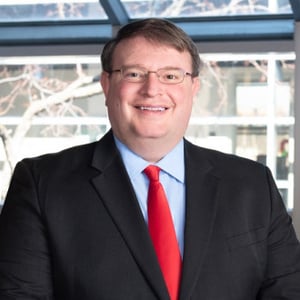
Partner, Shumaker, Loop & Kendrick, LLP
Larry builds on a wide range of experiences – including as an accomplished attorney, a former President of the Ohio Senate, and a legal academic – to help solve his clients’ most challenging legal problems. Larry focuses on complex litigation, including high-stakes appeals.
Larry is a Partner in the firm’s Litigation practice. He focuses his practice on litigation at both the trial and appellate levels and has experience in a variety of matters involving antitrust, fiduciary duties, torts, contracts, securities, and employment law. These range from standard contract disputes to constitutional challenges against federal statutes to defending against complex class actions.
In addition to his litigation practice, Larry served as a member of the Ohio Senate for nearly a decade. His colleagues unanimously elected him to serve as Senate President, the presiding officer of the 33-member chamber, from 2017-2020. During his time in the Senate, Larry successfully sponsored legislation on a wide range of topics, including education, tax law, elections administration, criminal law, and corporate law. These included a comprehensive update to Ohio’s corporate code and limited liability company law, including the sections setting out fiduciary duties for officers and shareholders. Larry also sponsored significant updates to Ohio’s Control Share Acquisition Act (which governs corporate takeovers). In 2018, he received the Ohio State Bar Association’s Lawyer-Legislator Distinguished Service Award.
Larry has also taught courses on Civil Procedure and Legislation as an adjunct law professor at Case Western Reserve University School of Law. He has published legal scholarship on a range of issues including constitutional law, education, law and economics, and securities. He has been cited in roughly 75 law journals throughout the country and by a member of the United States Supreme Court.
Larry began his legal career as a law clerk to Judge Alice M. Batchelder of the United States Court of Appeals for the Sixth Circuit. He has worked at some of the nation’s largest law firms and began his private practice by spending more than five years with Chicago-based Kirkland & Ellis LLP.
From 2018-2020, Larry was a Rodel Fellow at the Aspen Institute, a program designed to bring greater civility to public discourse. He is active in the Federalist Society and is a former board member of the Ohio Legal Assistance Foundation (now known as the Ohio Access to Justice Foundation), the statewide umbrella organization for legal aid.
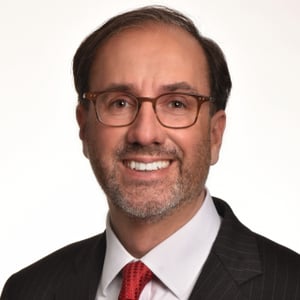
President and CEO, The Buckeye Institute
Robert Alt is the President and Chief Executive Officer of The Buckeye Institute where he has catalyzed exponential growth since he took the organization’s helm in 2012. He has since founded Buckeye’s renowned Economic Research Center and established its impactful Legal Center.
Alt is a distinguished scholar and attorney with particular expertise in legal policy, criminal justice, national security, and constitutional law. He previously worked for former U.S. Attorney General Edwin Meese III, regularly provides commentary on television and radio programs, and his writings have appeared in countless outlets.
In 2004, Alt spent five months in Iraq as an embedded war correspondent.
Alt has testified before Congress multiple times—including at the confirmation hearings for U.S. Supreme Court Justice Elena Kagan—the Federal Election Commission regarding matters of constitutional and administrative law, and numerous state legislatures.
Alt serves as an officer on the boards of The Philadelphia Society and the Federalist Society’s Columbus Lawyers Chapter. He taught national security law, criminal law, and legislation at Case Western Reserve University School of Law, as well as constitutional law and political parties and interest groups at Ashland University.
Alt earned his Doctor of Law degree from The University of Chicago Law School, where he was Symposium Editor and the winner of the Mulroy Prize for Excellence in Appellate Advocacy as well as research assistant to Professor Richard Epstein. Following law school, he clerked for Judge Alice Batchelder on the U.S. Court of Appeals for the Sixth Circuit. Alt graduated with his Bachelor of Arts in philosophy and political science magna cum laude from Azusa Pacific University where he also won the Outstanding Senior Award in Political Science.
Alt is an accomplished high-altitude alpinist and endurance athlete who has successfully climbed 6.75 of the famed Seven Summits of the World including Mount Everest. He is the creator of PROFOUND CLIMBING™ and a frequent speaker across the country and around the world on legal and public policy topics as well as effective leadership, management, decision-making, and teamwork in contexts ranging from extraordinary life/death situations to ordinary professional/business settings.
Partner, Shumaker, Loop & Kendrick, LLP
Larry builds on a wide range of experiences – including as an accomplished attorney, a former President of the Ohio Senate, and a legal academic – to help solve his clients’ most challenging legal problems. Larry focuses on complex litigation, including high-stakes appeals.
Larry is a Partner in the firm’s Litigation practice. He focuses his practice on litigation at both the trial and appellate levels and has experience in a variety of matters involving antitrust, fiduciary duties, torts, contracts, securities, and employment law. These range from standard contract disputes to constitutional challenges against federal statutes to defending against complex class actions.
In addition to his litigation practice, Larry served as a member of the Ohio Senate for nearly a decade. His colleagues unanimously elected him to serve as Senate President, the presiding officer of the 33-member chamber, from 2017-2020. During his time in the Senate, Larry successfully sponsored legislation on a wide range of topics, including education, tax law, elections administration, criminal law, and corporate law. These included a comprehensive update to Ohio’s corporate code and limited liability company law, including the sections setting out fiduciary duties for officers and shareholders. Larry also sponsored significant updates to Ohio’s Control Share Acquisition Act (which governs corporate takeovers). In 2018, he received the Ohio State Bar Association’s Lawyer-Legislator Distinguished Service Award.
Larry has also taught courses on Civil Procedure and Legislation as an adjunct law professor at Case Western Reserve University School of Law. He has published legal scholarship on a range of issues including constitutional law, education, law and economics, and securities. He has been cited in roughly 75 law journals throughout the country and by a member of the United States Supreme Court.
Larry began his legal career as a law clerk to Judge Alice M. Batchelder of the United States Court of Appeals for the Sixth Circuit. He has worked at some of the nation’s largest law firms and began his private practice by spending more than five years with Chicago-based Kirkland & Ellis LLP.
From 2018-2020, Larry was a Rodel Fellow at the Aspen Institute, a program designed to bring greater civility to public discourse. He is active in the Federalist Society and is a former board member of the Ohio Legal Assistance Foundation (now known as the Ohio Access to Justice Foundation), the statewide umbrella organization for legal aid.
President and CEO, The Buckeye Institute
Robert Alt is the President and Chief Executive Officer of The Buckeye Institute where he has catalyzed exponential growth since he took the organization’s helm in 2012. He has since founded Buckeye’s renowned Economic Research Center and established its impactful Legal Center.
Alt is a distinguished scholar and attorney with particular expertise in legal policy, criminal justice, national security, and constitutional law. He previously worked for former U.S. Attorney General Edwin Meese III, regularly provides commentary on television and radio programs, and his writings have appeared in countless outlets.
In 2004, Alt spent five months in Iraq as an embedded war correspondent.
Alt has testified before Congress multiple times—including at the confirmation hearings for U.S. Supreme Court Justice Elena Kagan—the Federal Election Commission regarding matters of constitutional and administrative law, and numerous state legislatures.
Alt serves as an officer on the boards of The Philadelphia Society and the Federalist Society’s Columbus Lawyers Chapter. He taught national security law, criminal law, and legislation at Case Western Reserve University School of Law, as well as constitutional law and political parties and interest groups at Ashland University.
Alt earned his Doctor of Law degree from The University of Chicago Law School, where he was Symposium Editor and the winner of the Mulroy Prize for Excellence in Appellate Advocacy as well as research assistant to Professor Richard Epstein. Following law school, he clerked for Judge Alice Batchelder on the U.S. Court of Appeals for the Sixth Circuit. Alt graduated with his Bachelor of Arts in philosophy and political science magna cum laude from Azusa Pacific University where he also won the Outstanding Senior Award in Political Science.
Alt is an accomplished high-altitude alpinist and endurance athlete who has successfully climbed 6.75 of the famed Seven Summits of the World including Mount Everest. He is the creator of PROFOUND CLIMBING™ and a frequent speaker across the country and around the world on legal and public policy topics as well as effective leadership, management, decision-making, and teamwork in contexts ranging from extraordinary life/death situations to ordinary professional/business settings.

Litigation Update: Ten Commandments in Public Schools
Stephanie Barclay, Joseph Davis, Andrew Koppelman
This week, the en banc U.S. Court of Appeals for the Fifth Circuit held that...
Plenary Panel 4: Justice Alito’s Impact on Religious Liberties & Speech
Stephanie Barclay, Nicole Stelle Garnett, Steven J. Menashi, Matthew A. Schwartz
This panel will analyze Justice Alito’s contributions to the Supreme Court’s religious liberty and free...
Topics
Exploring American Legion: What Shelving Lemon Could Mean for Monuments Litigation
In 2015, the Arkansas legislature authorized placement of a privately-donated Ten Commandments monument on the...
Can a New Establishment Clause Jurisprudence Succeed in Protecting Religious Minorities Where Lemon Has Failed?
Alexandra M. Lightfoot
Note from the Editor: The Federalist Society takes no positions on particular legal and public...
When a Pastor’s House Is a Church Home: Why the Parsonage Allowance Is Desirable Under the Establishment Clause
Daniel Benson, Hannah C. Smith
Note from the Editor: This article discusses the parsonage allowance, whereby the value of a...
It’s Not Just the Test That’s a Lemon, It’s How Some Judges Apply It
Larry J. Obhof, Robert Alt
On March 2, 2005, the United States Supreme Court heard two cases involving public displays...
It's Not Just the Test That's a Lemon, It's How Some Judges Apply It
Larry J. Obhof, Robert Alt
On March 2, 2005, the United States Supreme Court heard two cases involving public displays...