
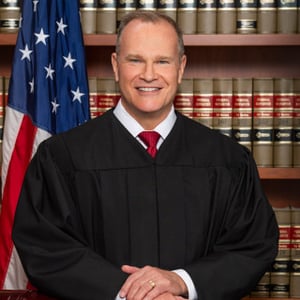
Judge, U.S. District Court for the Central District of California
John W. Holcomb is a U.S. District Judge for the Central District of California, Southern Division, in Santa Ana, California. Judge Holcomb was nominated for that position by President Donald J. Trump in November 2019 and was confirmed by the U.S. Senate in September 2020.
Judge Holcomb earned his S.B. in civil engineering from the Massachusetts Institute of Technology in 1984. For the next five years, Judge Holcomb served as a commissioned officer in the United States Navy, including assignments aboard the battleship U.S.S. New Jersey (BB62) and with the Joint Staff at the Pentagon. In 1993, Judge Holcomb received his M.B.A. from Harvard Business School and his J.D., cum laude, from Harvard Law School. Judge Holcomb then served as a law clerk for Judge Ronald Barliant of the U.S. Bankruptcy Court for the Northern District of Illinois.
Thereafter, Judge Holcomb joined Irell & Manella LLP as an associate, practicing bankruptcy law and general civil litigation. In 1997, Judge Holcomb joined the intellectual property law firm of Knobbe, Martens, Olson & Bear, LLP, and he was elevated to partner in 2002. As a partner at Knobbe Martens, Judge Holcomb participated in several speaking engagements regarding the intersection of intellectual property and bankruptcy law. In 2014, Judge Holcomb co-authored the chapter on U.S. Law in Licenses and Insolvency, A Practical Guide to the Effects of Insolvency on IP License Agreements, which was published by the International Bar Association. Judge Holcomb retired from Knobbe Martens in 2018, and he briefly practiced as a bankruptcy and litigation sole-practitioner before joining the firm Greenberg Gross LLP as a partner in 2019.
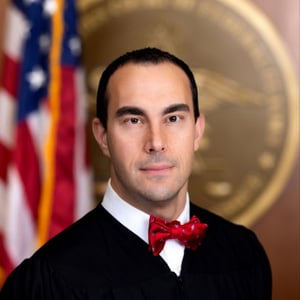
U.S. Court of Federal Claims and Jurist-In-Residence Professor of Law, The University of Akron School of Law
Judge Ryan T. Holte was sworn in as a judge on the United States Court of Federal Claims in July 2019. Prior to confirmation he served as the David L. Brennan Professor of Law and Director of the Center for Intellectual Property Law and Technology at The University of Akron School of Law (2017-2019) and an assistant professor of law at Southern Illinois University School of Law (2013-2017). Judge Holte has written and presented widely on patent law subjects and empirical legal studies of Federal Circuit and district court patent law cases. His most recent articles were published in the Iowa Law Review (2019), George Mason Law Review (2018), and Washington Law Review (2017).
In practice, Judge Holte served for six years as general counsel and partner of an electrical engineering technology company and is co-inventor of multiple patents related to Systems and Methods for Countering Satellite-Navigated Munitions. Prior to entering academia, Judge Holte practiced as a litigation attorney at the Federal Trade Commission and an associate in the Intellectual Property Practice Group at Jones Day. Prior to practice, he served as a law clerk to Judge Stanley F. Birch, Jr. on the United States Court of Appeals for the Eleventh Circuit and as a law clerk to Judge Loren A. Smith on the United States Court of Federal Claims.
Judge Holte received his JD from the University of California Davis School of Law and his BS, magna cum laude, in engineering from the California Maritime Academy where he was a First Class graduate of the Corps of Cadets Third Engineering Division and sailed as a U.S. Merchant Marine oiler.

Associate Dean for Academic Affairs, Austin E. Owen Research Scholar & Professor of Law, The University of Richmond School of Law
Dean Kristen Jakobsen Osenga teaches and writes in the areas of patent law, antitrust, and legislation and regulation. Some of her recent scholarship focuses on standard development organizations, patent eligible subject matter, patent licensing firms, litigation and remedies for patent infringement, and patent law reform. She has written numerous law review articles on these and other topics, as well as book chapters and op eds on various aspects of patent law. Additionally, she has spoken on these issues at many academic conferences and bar events. Dean Osenga is Chief Policy Counselor for the Inventors Defense Alliance, as well as an active member of the Federal Circuit Bar Association and the American Intellectual Property Law Association.
Dean Osenga received a B.S. degree in Biomedical Engineering from the University of Iowa, an M.S. degree in Electrical Engineering from Southern Illinois University – Carbondale, and a J.D. from the University of Illinois College of Law, where she graduated magna cum laude. After law school, she practiced at the law firm of Finnegan, Henderson, Farabow, Garrett, & Dunner LLP, (now Finnegan) where she did patent prosecution and litigation. She then clerked for the Judge Richard Linn of the U.S. Court of Appeals for the Federal Circuit. After clerking, she entered academia, teaching first at Chicago-Kent College of Law and then at the University of Richmond, where she has been since 2006. She has also been a Visiting Professor at Emory University School of Law and at William & Mary School of Law.

Vice President and Counsel of Government Affairs, QUALCOMM Incorporated
Laurie Self is Vice President and Counsel of Government Affairs at Qualcomm Incorporated, where she specializes in U.S. patent policy matters at the federal and state level. Based in Washington, D.C., Ms. Self also supports Qualcomm’s government affairs initiatives to promote strong intellectual property rights in emerging markets. Ms. Self’s particular focus is to ensure that U.S. intellectual property laws and policies provide the necessary protections and incentives to support the Company’s R&D-driven business model. Prior to her arrival at Qualcomm in July 2012, Ms. Self was a partner at the law firm Covington & Burling where she chaired the firm’s intellectual property practice group.

Head of Patent Policy, Google
Laura Sheridan is Head of Patent Policy at Google, advocating for an effective patent examination process, a patent litigation system that operates fairly for all participants, and transparency in these areas. She has shared her views on patent issues in numerous policy dialogues, including testifying before Congress on the intersection of AI and patents. Her patent policy work is shaped by years of private practice experience in patent prosecution, litigation, due diligence, and post-grant practice before the Patent Office.
An active member of the IP community, Laura is part of the Intellectual Property Owners Association delegation to IP5 Industry, a group which engages on procedural harmonization matters with the IP5 Offices (the Offices of China, Europe, Japan, Korea, and the US). Laura also helped to form the New York chapter of ChIPs and is a member of the Advisory Board for the NYU Law Engelberg Center on Innovation Law & Policy. Laura studied mechanical engineering at Cornell University and received her J.D. from Fordham Law School.

Internet Policy Counsel and Director of Appellate Litigation, TechFreedom
Corbin Barthold is TechFreedom's Internet Policy Counsel and Director of Appellate Litigation.
Corbin clerked for the Hon. Steven D. Merryday (M.D. Fla.) and the Hon. Robert H. Cleland (E.D. Mich.). After his clerkships, he became an associate, and later a partner, in the Los Angeles office of Browne George Ross LLP, where he engaged in high-stakes complex litigation. He then served as Senior Litigation Counsel at Washington Legal Foundation, a D.C. public-interest firm, where his practice focused on appeals involving administrative law, the separation of powers, antitrust, and tech policy.
Corbin received his J.D. from the University of California, Berkeley, School of Law. He also holds a B.A., magna cum laude and Phi Beta Kappa, from the University of California, San Diego, and an Msc., with distinction, from the London School of Economics.
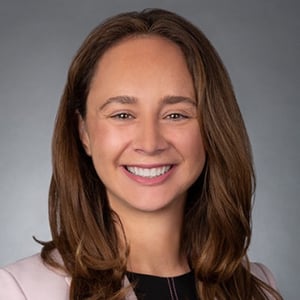
Partner, Kirkland & Ellis LLP
Elyse Dorsey is a partner in the Washington, D.C., office of Kirkland & Ellis LLP. Elyse's practice encompasses a wide array of antitrust and competition matters across the globe. She is uniquely situated to advise clients in domestic and international competition matters, given her combination of government and private practice experience.
Elyse has a focus in cutting edge competition issues, as well as privacy, data security, and consumer protection matters. She has represented clients across levels of government, from state agencies to the U.S. Supreme Court. Prior to joining Kirkland, Elyse served as Counsel to the Assistant Attorney General at the U.S. Department of Justice's Antitrust Division. Her work at the Antitrust Division covered a spectrum of legal and policy matters, including IP and technology issues, the Division's appellate and amicus brief programs, and its international and competition policy efforts. Elyse joined the Division from the U.S. Federal Trade Commission, where she served as Attorney Advisor to Commission Noah Joshua Phillips. While at the Commission, she advised on key cases, matters, and policies affecting industries across the economy--from digital and tech to pharmaceuticals and hospitals and more.
Elyse is a recognized thought leader in the antitrust and competition communities. She has been a frequent nominee and recipient of antitrust writing awards for her scholarship in this space. She has also served as an adjunct professor at George Mason University's Scalia Law School for several years, helping to launch their Antitrust LL.M. program; and she previously served as a visiting scholar at the University of Virginia.
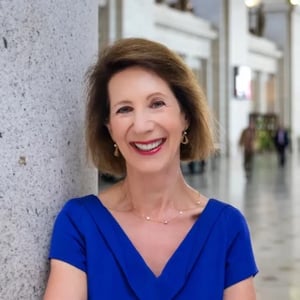
Distinguished Fellow, Energy Policy Research Foundation
Diana Furchtgott-Roth, an Oxford-educated economist, is an Adjunct Professor at George Washington University and a Distinguished Fellow at the Energy Policy Research Foundation. She writes and comments regularly on energy, trade law, tariff authority, and regulatory policy, including recent work on Section 301 and executive trade power. From 2022 until February 2026, Diana headed the Center for Energy, Climate, and Environment at The Heritage Foundation. In President Trump's first term, she was Deputy Assistant Secretary for Research and Technology at the U.S. Department of Transportation and Acting Assistant Secretary for Economic Policy at the U.S. Department of Treasury. She served in the White House under Presidents Reagan, George H.W. Bush, and George W. Bush, including as Chief of Staff of the President's Council of Economic Advisers and Chief Economist of the U.S. Department of Labor, and has testified before Congress on economic and regulatory policy. Diana is the author or coauthor of six books, including Regulating to Disaster, and hundreds of articles in The Wall Street Journal, The Washington Post, The New York Times, National Review, Forbes, the UK’s Daily Telegraph and the New York Post.
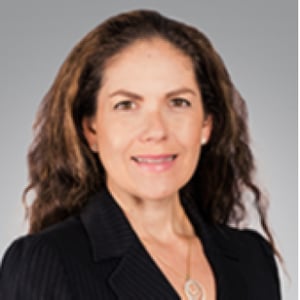
Partner, Gibson, Dunn & Crutcher, LLP
Svetlana S. Gans is a partner in the Washington, D.C. office of Gibson, Dunn & Crutcher, LLP where she helps clients navigate complex consumer protection, privacy, and competition related regulatory proceedings before the U.S. Federal Trade Commission (FTC), , U.S. Department of Justice Antitrust Division, State Attorneys General and other enforcement bodies. Ms. Gans also assists on litigation matters and provides strategic counseling and advice related to public policy issues.
Before joining Gibson Dunn, she served as the Vice President & Associate General Counsel at NCTA, the Internet & Television Association, where she helped lead the association’s consumer protection and competition policy work. Prior to joining NCTA, Ms. Gans served with distinction as Chief of Staff to Acting Chairman Maureen K. Ohlhausen at the FTC. As the agency chief of staff, Ms. Gans managed and oversaw agency operations, including bureau and office heads reporting to the Chairman, a seven-member office staff, and an agency budget of over $300 million. She also served as the Acting Chairman’s key advisor on consumer protection and competition investigations and litigation, working with a diverse team of attorneys and economists to preserve competition and protect U.S. consumers. She created, executed, and oversaw several strategic initiatives for the agency, including the agency process reform, regulatory reform, and data security transparency initiatives. Previously, Ms. Gans had the unique experience of serving in both litigating bureaus of the FTC: the Bureau of Competition and the Bureau of Consumer Protection.
Prior to her time in government, Ms. Gans worked as an antitrust associate at major law firms. Her practice focused on defending consumer product, financial services, and trade association clients in regulatory and private investigations alleging conspiracy and violations of antitrust and consumer protection laws.
Ms. Gans has been an active leader in the ABA Antitrust Law Section (“Section”) for two decades, and currently serves as the Section’s Marketing Officer. Ms. Gans helped create the Section’s Young Lawyer Representative Program, now in its 10th year, and the Section’s Law Ambassador Program, each aimed at developing and promoting the next generation of consumer protection and competition attorneys. Ms. Gans is also active in the Federal Communications Bar Association, currently serving as Co-Chair of the Diversity Pipeline Initiative and the Women’s Leadership Committee.
Ms. Gans received her law degree with high honors from the University of Denver College of Law. During law school, Ms. Gans served as a Judicial Intern to the Honorable John L. Kane, Jr. and as an Honors Program Paralegal for the United States Department of Justice Antitrust Division, Merger Taskforce. Ms. Gans earned her undergraduate degree cum laude from Boston University.

Senior Fellow and Academic Director, Penn Carey Law School
Gus Hurwitz is a Senior Fellow and the Academic Director of the Center for Technology, Innovation & Competition and the University of Pennsylvania Carey Law School where he is working to develop academic and scholarly programs at the intersecution of law, technology, and policy.
He is also Director of Law & Economics Programs at the International Center for Law & Economics (ICLE), a think tank based in Portland, Oregon, where he directs its law and economics-focused research program and helps to translate academic research into applied policy issues.
Hurwitz's research focuses on the regulation of technology, including administrative and regulatory law, antitrust law, torts and products liability, and media law - alongside cognate fields. Inrecent years he has worked on an AI standardization initiative with Seoul National University, a UNICEF-organized study of broadband deployment to public schools in Rwanda, and a book on conglomerate and ecosystems theories of antitrust.
He has published over 30 articles and book chapters, two books (one on cybersecurity law & policy, one on media regulation in the digital era) and have two more in process, over 100 shorter writings (op-eds, shorter analyses, blog posts, &c), hosted over 100 podcast episodes, and regularly appear or am quoted in popular media (including the NY Times, Wall Street Journal, Washington Post, and Associated Press). His work has been cited by legislators, federal courts of appeals, and federal regulatory agencies.
He was previously a full professor and founding director of the Governance & Technology Center at the University of Nebraska, prior to which he was the inaugural research fellow at the Center for Technology, Innovation & Competition (CTIC). From 2007 to 2010, he was a trial attorney with the U.S. Department of Justice Antitrust Division in the Telecommunications and Media Enforcement Section.
He also is, or has been, affiliated with the Classical Liberal Institute at New York University School of Law, the National Security Institute at George Mason University, and the American Enterprise Institute (AEI).
Before attending law school, Hurwitz worked at Los Alamos National Lab and interned at the Naval Research Lab. During this time his work was recognized by the Federal Laboratory Consortium, Los Alamos National Lab, IEEE & ACM, Corporation for Education Network Initiatives in California, R&D Magazine, and even the Guinness Book of World Records.
A current list of Hurwitz’s publications is available on his website: GusHurwitz.net.
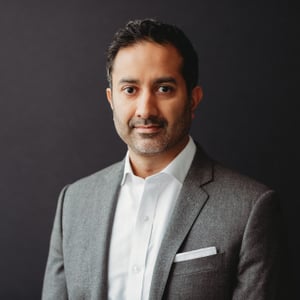
Antitrust Partner, White & Case
Rahul Rao is a partner in the Global Antitrust Practice at White & Case and the former Deputy Director of the Federal Trade Commission’s Bureau of Competition. He advises clients on merger clearance, government investigations, antitrust litigation, and regulatory strategy, with particular depth in healthcare, life sciences, private equity, retail, and labor markets.
At the FTC, Rahul led major merger and conduct investigations, supervised enforcement in critical sectors, and helped shape landmark policy initiatives, including the revised Merger Guidelines and the Commission’s noncompete rulemaking. Earlier, he helped establish the Washington State Attorney General’s Antitrust Division as a national leader in labor market competition enforcement.
Having served on both the federal and state enforcement front lines, Rahul brings clients a unique understanding of agency priorities, risk profiles, and strategies for navigating today’s increasingly dynamic antitrust environment.

Assistant Professor of Law, University of Baltimore
Matthew Sipe is an assistant professor of law. He joined the faculty in 2020 and teaches Civil Procedure, Antitrust, Property, and Introduction to Lawyering Skills.
His research focuses on the relationship among law, innovation and ownership. His work has been published in academic journals such as the University of Pennsylvania Law Review, the Wisconsin Law Review, the Harvard Journal of Law & Technology, and the American University Law Review.
Prior to joining the faculty, Sipe taught at George Washington University Law School as the Frank H. Marks Visiting Associate Professor in Intellectual Property. His previous position was at the U.S. Supreme Court, serving an appointment as a Supreme Court Fellow.
Sipe received his J.D. from Yale Law School, where he was an editor and author for the Yale Law Journal and the Yale Journal on Regulation. Following law school, he clerked for Judge Kathleen O'Malley, of the U.S. Court of Appeals for the Federal Circuit, and Judge Samuel Mays, of the U.S. District Court for the Western District of Tennessee. He received his undergraduate degree in mathematics and economics from the University of Virginia, where he was honored with residency on the Lawn.

Associate Professor, Robert H. Smith School of Business, University of Maryland
Evan Starr is an Assistant Professor of Management & Organization at the Robert H. Smith School of Business at the University of Maryland. He received a Ph.D. in economics from the University of Michigan and a bachelor's degree from Denison University. He originally hails from Claremont, California. Starr's current research examines issues at the intersection of human capital accumulation, employee mobility, entrepreneurship, and innovation. In a recent set of projects utilizing employee-employer matched data and survey data that he and coauthors developed, Starr examined the use and impacts of noncompete agreements and their enforceability on the provision of firm-sponsored training, employee mobility and earnings, and on the creation, growth, and survival of new ventures.
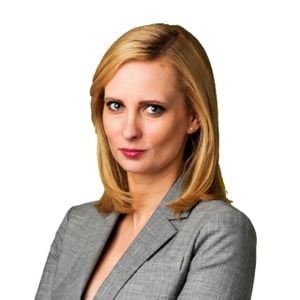
Executive Director, Committee for Justice
Ashley Baker is Executive Director of the Committee for Justice and founder of the Alliance on Antitrust coalition. Her work focuses on antitrust law, technology regulation, administrative-agency authority, the Supreme Court, and judicial nominations. She closely follows the Federal Trade Commission and the Department of Justice’s Antitrust Division, with particular attention to merger review, agency procedure, and the effects of regulation on American innovation and competitiveness. She is also founder of the Alliance on Antitrust Coalition.
Ashley has testified before the United States Senate on antitrust law. Her writing has appeared in Fox News, USA Today, The Boston Globe, The Hill, RealClearPolitics, The American Spectator, and other national publications. She also provides policy analysis through congressional testimony and correspondence, regulatory comments, and public commentary.
Ashley serves on the Federalist Society’s Regulatory Transparency Project and Antitrust and Consumer Protection Practice Group Executive Committee. She is also active in the Republican National Lawyers Association and has spoken on the Supreme Court and the federal judiciary. An authority on the judicial-confirmation process, she worked closely on the successful confirmation efforts for Justices Neil Gorsuch and Brett Kavanaugh, as well as multiple federal appellate judges.

President, Committee for Justice
Curt Levey is President of the Committee For Justice, an organization devoted to advancing constitutionally limited government and individual liberty. He is a veteran of Supreme Court and other judicial confirmation battles and serves on the executive committee of the Federalist Society's Civil Rights Practice Group.
After graduating Harvard Law School with honors and clerking for the U.S. Court of Appeals for the Sixth Circuit, Mr. Levey served as Director of Legal & Public Affairs at the Center for Individual Rights (CIR). There he worked on landmark Supreme Court cases, including the University of Michigan affirmative action cases and the successful constitutional challenge to the Violence Against Women Act. After CIR, Mr. Levey headed the Title IX policy group at the U.S. Department of Education.
Before attending law school, Mr. Levey earned an M.S. and B.A. in computer science from Brown University and worked in the field of artificial intelligence (AI). He invented a new type of AI technology, for which he wrote a successful patent application.
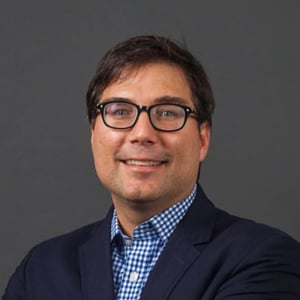
Associate Professor of Law and Director, Program on Economics & Privacy, Antonin Scalia Law School, George Mason University
Associate Professor of Law James C. Cooper brings over a decade of public and private sector experience to his research and teaching. He served as Deputy and Acting Director of the Federal Trade Commission’s Office of Policy Planning, Advisor to Federal Trade Commissioner William Kovacic, and an associate in the antitrust group of Crowell and Moring, LLP. His research on vertical restraints, price discrimination, behavioral economics and antitrust, and privacy policy have appeared in top journals and are widely cited.
Professor Cooper has a BA from the University of South Carolina, received his PhD in economics from Emory University, and his law degree (magna cum laude) from Antonin Scalia Law School, George Mason University, where he was a Levy Fellow and a member of the George Mason Law Review.
He teaches Economics for Lawyers, Advanced Seminar on Law & Economics, and Digital Information Policy Seminar.

Partner, Sullivan & Cromwell LLP
Andrei Iancu is a partner at Sullivan & Cromwell and one of the leading voices in intellectual property law and innovation policy. He is a former Undersecretary of Commerce for Intellectual Property and Director of the U.S. Patent and Trademark Office (USPTO), a position to which he was confirmed unanimously by the Senate. Andrei has decades of experience representing plaintiffs and defendants in IP matters across the technical and scientific spectra, including medical devices, genetic testing, therapeutics, the Internet, telephony, TV broadcasting, video game systems and computer peripherals. He represents clients in litigation and trials before the district courts, the U.S. International Trade Commission and the USPTO, the Federal Circuit and U.S. Supreme Court, and also counsels clients on obtaining, licensing, enforcing and defending against IP rights globally.
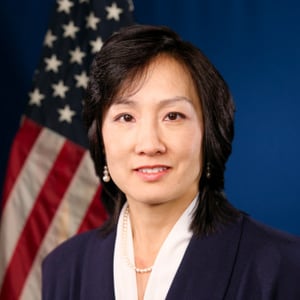
Former Under Secretary of Commerce for Intellectual Property and Director, U.S. Patent and Trademark Office
The Hon. Michelle K. Lee is a proven leader in technology, law, business and government. She spent most of her professional career advising some of the country's most innovative companies on issues at the intersection of law, technology and policy.
As the Under Secretary of Commerce for Intellectual Property and Director of the United States Patent and Trademark Office (USPTO), Ms. Lee led one of the largest intellectual property offices in the world, with 13,000 employees and an annual budget of over $3 billion. Ms. Lee also served as the principal advisor to the President, through the Secretary of Commerce, on domestic and international intellectual property policy and a trial judge on the USPTO’s Patent Trial and Appeal Board. She is the first woman Director of the USPTO in our country’s 200+ year history.
Prior to joining the USPTO, Ms. Lee was Deputy General Counsel at Google, where she was responsible for formulating and implementing Google’s patent strategy (including dispute resolution) for all its products and services worldwide. Before Google, Ms. Lee served as a partner at Fenwick & West, advising on technology licensing, litigation, intellectual property, corporate and mergers and acquisition matters, and as a litigator at the trial boutique law firm of Keker & Van Nest. Earlier in her career, Ms. Lee worked as a computer scientist at Hewlett-Packard Research Laboratories and the MIT Artificial Intelligence Lab. She holds a B.S. and an M.S. in electrical engineering and computer science from MIT (where she wrote her graduate thesis on artificial intelligence) and a J.D. from Stanford Law School. Ms. Lee clerked for the Honorable Vaughn Walker, U.S. District Court for the Northern District of California and the Honorable Paul Michel of the U.S. Court of Appeals for the Federal Circuit.
From 2017-2018, Ms. Lee held the appointment as the Herman Phleger Visiting Professor at Law at Stanford Law School where she taught on disruptive technologies (including artificial intelligence and driverless cars) and their impact on existing laws and regulations. Ms. Lee also serves on a number of public and private company boards including alarm.com (NASDAQ: ALRM) and Nauto, Inc.
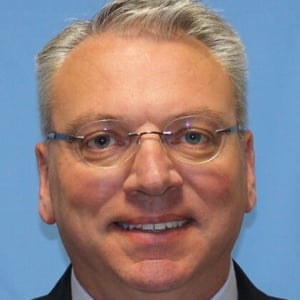
Judge, United States Court of Appeals, Third Circuit
David J. Porter is a judge on the United States Court of Appeals for the Third Circuit. He was nominated by President Donald Trump and confirmed on October 11, 2018. Before his appointment, he was a shareholder at Buchanan Ingersoll & Rooney PC, where he practiced commercial and civil litigation. Porter received his bachelor’s degree from Grove City College and his J.D. from the George Mason University School of Law. He clerked for Judge D. Brooks Smith on the United States District Court for the Western District of Pennsylvania.

Of Counsel, Jones Day
Dr. Ognian Shentov is a lead trial lawyer who secured over $30 million damages in a patent infringement case, where the jury verdict was affirmed en banc by the Federal Circuit. He directed a joint defense group of international companies in a semiconductor manufacturing dispute and has led jury trials, arbitrations, and numerous claim construction and summary judgment hearings. His practice focuses on patent, trade secret, copyright, and complex technology issues in the electronics, communications, artificial intelligence (AI), medical device, and finance industries.
Oggie represents companies like IBM, Qualcomm, DirecTV, Lenovo, Marine Polymer, and Chevron in matters ranging from distributed servers, to satellite television, MPEG video, dynamic web page generation, anti-hemmoraging devices, and trade secret misappropriation of high-throughput technology. He was lead attorney in an instituted PTAB trial on Distributed Antenna Systems. Oggie also represents Korean companies, successfully defending SOLiD, Inc. against a competitor by defeating the asserted patents on summary judgment and jury verdict of noninfringement, as well as Sewoon and Taewoong in a dispute over stents. With litigation in mind, he also builds patent portfolios and has prosecuted more than 500 patents with international counterparts.
Oggie is vice chair of the International Patent Law and Trade committee of the Intellectual Property Owners (IPO) Association and a five-term vice chair of its U.S. Patent Law committee. He frequently leads panel discussions on intellectual property (IP), lectures internationally on AI-related legal issues and, along with several technical journal articles, has published on issues of patent eligibility, international IP protection, portfolio management, and monetization.
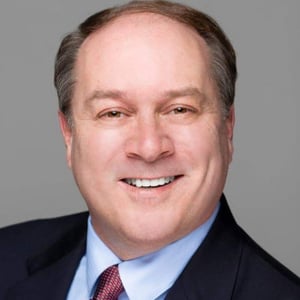
Of Counsel, Fisher & Phillips, LLP
Greg Grisham has over 25 years of successful experience counseling and representing employers in all aspects of workplace law in Tennessee and across the United States.
He has helped employers avoid claims, charges and lawsuits with a focus on preventative practices. Preventative practices include counseling in situations involving discipline, termination, demotion, promotion and other workplace changes in the terms and conditions of employment, harassment investigations, wage and hour compliance, FMLA Compliance, Reasonable Accommodation assessment, supervisor training and the review of employment policies and procedures. In addition, Greg's practice includes the representation of business entities subject to Title III of the Americans with Disabilities Act in Public Accommodation cases.
Greg has successfully litigated hundreds of administrative charges, employment lawsuits, and arbitration demands on behalf of employers, including federal and state law claims alleging discrimination, harassment, retaliation, wrongful termination, defamation, invasion of privacy, breach of contract, wage and hour violations and ERISA violations, among others. He also represents employers before the National Labor Relations Board in unfair labor practice proceedings. He represents employers in the enforcement of post-employment restrictive covenants such as non-compete, non-solicitation and non-disclosure agreements and related trade secret litigation. Greg's practice also includes the defense of property owners and property management companies in federal and state Housing Discrimination charges and litigation. He also advises Tennessee Public Charter Schools on education law and workplace compliance matters.
Greg has extensive experience working with insurance carriers and their insureds in the defense of EPLI claims. He is a regular speaker at public seminars on workplace law issues and has authored numerous articles on a variety of labor and employment law related topics.
Greg holds an AV Preeminent Peer Review rating from Martindale-Hubbell and has been selected for inclusion in Mid-South Super Lawyers and Best Lawyers in America for Employment Litigation-Management side. Greg was elected as a 2016 Fellow to the College of Labor and Employment Lawyers and has been selected to the “Top 20 Lawyers in Traditional Labor & Employment Law” list in conjunction with Human Resource Executive Magazine and LawDragon’s 2017 and 2018 “Most Powerful Employment Attorneys” lists and specialty guides. Greg was also named a Fellow in the American Bar Foundation in 2017.
Associate Dean for Academic Affairs, Austin E. Owen Research Scholar & Professor of Law, The University of Richmond School of Law
Dean Kristen Jakobsen Osenga teaches and writes in the areas of patent law, antitrust, and legislation and regulation. Some of her recent scholarship focuses on standard development organizations, patent eligible subject matter, patent licensing firms, litigation and remedies for patent infringement, and patent law reform. She has written numerous law review articles on these and other topics, as well as book chapters and op eds on various aspects of patent law. Additionally, she has spoken on these issues at many academic conferences and bar events. Dean Osenga is Chief Policy Counselor for the Inventors Defense Alliance, as well as an active member of the Federal Circuit Bar Association and the American Intellectual Property Law Association.
Dean Osenga received a B.S. degree in Biomedical Engineering from the University of Iowa, an M.S. degree in Electrical Engineering from Southern Illinois University – Carbondale, and a J.D. from the University of Illinois College of Law, where she graduated magna cum laude. After law school, she practiced at the law firm of Finnegan, Henderson, Farabow, Garrett, & Dunner LLP, (now Finnegan) where she did patent prosecution and litigation. She then clerked for the Judge Richard Linn of the U.S. Court of Appeals for the Federal Circuit. After clerking, she entered academia, teaching first at Chicago-Kent College of Law and then at the University of Richmond, where she has been since 2006. She has also been a Visiting Professor at Emory University School of Law and at William & Mary School of Law.

The Injunction Function: Is IP Law Promoting Markets for Innovators and Creators?
John W. Holcomb, Ryan T. Holte, Kristen Osenga, Laurie Self, Laura Sheridan
In patent and copyright law, injunctions are now a subject of significant policy debate. Innovators...
The Implications of the FTC's Proposed Ban on Noncompete Agreements
Corbin K. Barthold, Elyse Dorsey, Diana Furchtgott-Roth, Svetlana Gans, Justin (Gus) Hurwitz, Rahul Rao, Matthew Sipe, Evan Starr
In January 2023, the FTC announced a proposed rule that would ban noncompete agreements across...
Trade Secrets Litigation: Do Damages Awarded in Texas Case Have Broader Ramifications?
Ashley Baker, Curt Levey
Intellectual property (IP) theft has taken an increasingly prominent place in the news as various...
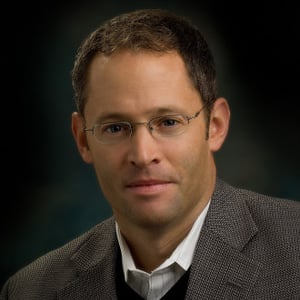
Artificial Intelligence and Big Data Innovation: Navigating the Technology World of the Near Future
James C. Cooper, Shawn D. Hamacher, Andrei Iancu, Michelle K. Lee, David James Porter, Ognian V. Shentov
Technology progress in recent years has been driven in large part by the continuous generation...
Beyond the Red-Blue Divide: An Overview of Current Trends in State Non-Compete Law
J. Gregory Grisham
Introduction Covenants not to compete (“non-competes”)[1] have a long history dating back to the medieval...
Patents: The Supreme Court Rules, Again - Podcast
Kristen Osenga
On June 13, 2016, the Supreme Court decided Halo Electronics v. Pulse Electronics and a...