
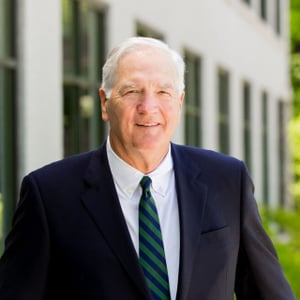
Former Senator, State of Alabama
Luther J. Strange, III is a former Republican member of the U.S. Senate from the state of Alabama. Strange was first appointed to the Senate position by Gov. Robert Bentley on February 9, 2017. He replaced Jeff Sessions, who was confirmed as United States Attorney General.
Strange is the former Republican Attorney General of Alabama. He was first elected to the statewide position in 2010 and assumed office on January 17, 2011. Strange's first four-year term ended on January 19, 2015, and he won re-election to a second term on November 4, 2014.
Prior to his election as Attorney General, Luther Strange practiced law in Birmingham, Alabama. In 2010, U.S. News-Best Lawyers "Best Law Firms" gave his firm a first-tier ranking, and the firm was named as one of the Top Ten Law Firms that Understand Economic Development by Southern Business & Development magazine.
Before establishing his own law firm, Strange was a partner with Bradley Arant Boult Cummings LLP. During his time in private practice, he was recognized in Best Lawyers in America® , named Best of the Bar by the Birmingham Business Journal, and called one of the "Best Lawyers" in Alabama by Birmingham magazine.
His tenure in office was marked by a strong emphasis on fighting public corruption, including the conviction and removal from office of the Alabama House Speaker in June 2016. He was also a leader in opposing costly overregulation and the expansion of the federal government at the expense of the states.
Luther Strange served as the court-appointed Coordinating Counsel for the Gulf Coast States in the historic Deepwater Horizon Oil spill litigation. Strange was actively involved in trying the case, which led to a landmark settlement agreement to compensate Alabama for both economic and environmental damages as a result of that disaster.
Among many civic commitments, he has served on the Advisory Board of the United States Merchant Marine Academy and as a Trustee of Talladega College, Alabama’s oldest historically black college.
An Eagle Scout since he was 13 and a recipient of the Distinguished Eagle Scout Award from the Boy Scouts of America in 2011, Strange is passionate about encouraging young people in Alabama to become involved in public service.
Strange received both his undergraduate and law degrees from Tulane University. He was a scholarship basketball player while earning his undergraduate degree at Tulane. In June of 2016, he was inducted into the Tulane Law School Hall of Fame.
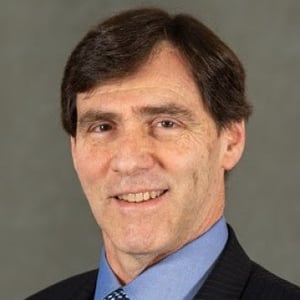
Professor of Business and Professor of Law (by courtesy) | Executive Director, Georgetown Institute for the Study of Markets and Ethics McDonough School of Business, Georgetown University
John Hasnas is a professor of business at Georgetown's McDonough School of Business and a professor of law (by courtesy) at Georgetown University Law Center in Washington, DC, where he teaches courses in ethics and law.
Professor Hasnas is also the executive director of the Georgetown Institute for the Study of Markets and Ethics, whose tripartite mission is to produce high-quality research on matters related to the ethics of market activity, improve ethics pedagogy, and educate the broader, non-academic community about ethical issues related to the functioning of markets.
Professor Hasnas has held previous appointments as associate professor of law at George Mason University School of Law, visiting associate professor of law at Duke University School of Law and the Washington College of Law at American University, and Law and Humanities Fellow at Temple University School of Law. Professor Hasnas has also been a visiting scholar at the Kennedy Institute of Ethics in Washington, DC and the Social Philosophy and Policy Center in Bowling Green, Ohio.
He received his B.A. in Philosophy from Lafayette College, his J.D. and Ph.D. in Legal Philosophy from Duke University, and his LL.M. in Legal Education from Temple Law School. His scholarship concerns ethics and white collar crime, jurisprudence, and legal history.
Professor of Business and Professor of Law (by courtesy) | Executive Director, Georgetown Institute for the Study of Markets and Ethics McDonough School of Business, Georgetown University
John Hasnas is a professor of business at Georgetown's McDonough School of Business and a professor of law (by courtesy) at Georgetown University Law Center in Washington, DC, where he teaches courses in ethics and law.
Professor Hasnas is also the executive director of the Georgetown Institute for the Study of Markets and Ethics, whose tripartite mission is to produce high-quality research on matters related to the ethics of market activity, improve ethics pedagogy, and educate the broader, non-academic community about ethical issues related to the functioning of markets.
Professor Hasnas has held previous appointments as associate professor of law at George Mason University School of Law, visiting associate professor of law at Duke University School of Law and the Washington College of Law at American University, and Law and Humanities Fellow at Temple University School of Law. Professor Hasnas has also been a visiting scholar at the Kennedy Institute of Ethics in Washington, DC and the Social Philosophy and Policy Center in Bowling Green, Ohio.
He received his B.A. in Philosophy from Lafayette College, his J.D. and Ph.D. in Legal Philosophy from Duke University, and his LL.M. in Legal Education from Temple Law School. His scholarship concerns ethics and white collar crime, jurisprudence, and legal history.
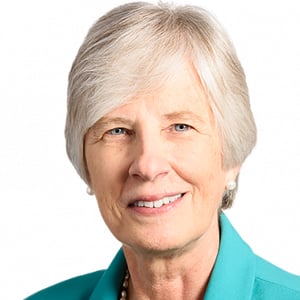
Ronald Reagan Distinguished Fellow, The Heritage Foundation
Becky Norton Dunlop, a prominent leader, strategist, and counselor in the conservative movement, is The Heritage Foundation’s Ronald Reagan Distinguished Fellow.
Dunlop, who joined the leading think tank in 1998, holds the only policy chair in the country to be officially named for the 40th president. She succeeds Ed Meese, the U.S. attorney general under Reagan, who assumed emeritus status.
Dunlop oversees special projects, travels as an ambassador for Heritage, and works tirelessly to assure that the legacy of principles, policies, and practices represented by the life and service of Ronald Reagan remain in the hearts and minds of Americans.
Previously, Dunlop was Heritage’s vice president for external relations from 1998 until May 2016. She served on the Trump Transition team.
Dunlop was a senior official in the Reagan administration from 1981-1989 inside the White House, at the Justice Department, and at the Interior Department.
She served from 1994-1998 as Secretary of Natural Resources for the Commonwealth of Virginia in the Cabinet of then-Virginia Gov. George Allen.
As political director for the American Conservative Union from 1973- 1977, she was instrumental in organizing grass-roots activists for Reagan’s unsuccessful 1976 race for the Republican nomination and advised his successful 1980 nomination and general election campaigns.
From Reagan’s first inauguration in 1981 to 1985, her White House posts included Deputy Assistant to the President for Presidential Personnel and Special Assistant to the President and Director of his Cabinet office. During Reagan’s second term, Dunlop served as senior special assistant to Meese, then attorney general, in charge of managing Cabinet-level domestic policy issues. She oversaw major policy reports on the environment, the family, federalism, tort reform, privatization, and welfare reform.
She completed her service in the Reagan administration as deputy undersecretary of the Interior Department and as assistant interior secretary for fish, wildlife, and parks.
Dunlop is one of the few of the insiders from the beginnings of the Reagan era who remain active in public policy leadership.
As Virginia’s natural resources chief, Dunlop worked to streamline, decentralize, and down-size agencies while protecting and improving the environment. She is one of the few “free-market environmentalists” to have headed a state agency and put ideas into action. Her book, “Clearing the Air” (Alexis de Tocqueville Institute, 2000), chronicles some of her experiences in advancing those principles.
In 2002, President George W. Bush appointed her to a part-time post as chairwoman of the Federal Service Impasses Panel. The seven-member panel resolves disputes between federal agencies management and labor unions. Under her leadership, it took on several hundred cases and eliminated backlogs.
Other current leadership roles include the boards of the Virginia Institute for Public Policy, the Reagan Ranch Board of Governors, the Reagan Alumni Association, the Association for American Educators and the AAE Foundation, the Council for National Policy and the American Conservative Union.
In addition to topics addressing conservative principles and their roots in the nation’s founding, Dunlop is a sought-after public speaker on the idea that personnel is policy; on energy, natural resources and the environment (including free market environmentalism); on federalism as a former member of a governor’s Cabinet; Capitalism and the Rule of Law, and on the Reagan administration (including the 40th president’s effective leadership style).
A graduate of Miami University in Ohio, she currently resides in Arlington, Virginia, with her husband, George S. Dunlop. The Dunlops are members of Oakland Baptist Church in Alexandria, Virginia.
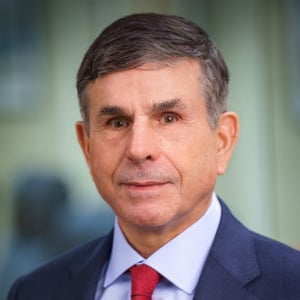
Partner, Marzulla Law
Roger J. Marzulla is one of the nation’s leading environmental, water, and property lawyers. As Assistant Attorney General in charge of the U.S. Justice Department’s Environment and Natural Resources Division, Roger learned first hand the operations and litigation styles of his client agencies: EPA, Interior Department, Bureau of Reclamation, Fish and Wildlife Service, National Marine Fisheries Service, Department of Transportation, Department of Commerce. In 1997, he co-founded Marzulla Law, where he brings to bear more than 35 years of expertise representing companies and individuals in industries as diverse as land and project development, aerospace, chemicals, oil and gas, mining, timber, manufacturing, computers, agriculture and water service.
Roger began his legal career as a trial lawyer in San Jose, California, after graduating magna cum laude from the University of Santa Clara School of Law. As a partner in Matthews & Marzulla he represented developers, title and construction companies, shopping centers, apartment owners and lenders in litigation throughout California. In 1981 he moved to Denver to become President of Mountain States Legal Foundation, litigating environmental and natural resource cases across the West.
In 1983 Roger joined the Justice Department as Special Litigation Counsel. He was subsequently promoted to Deputy Assistant Attorney General and, in 1987, was confirmed by the Senate as Assistant Attorney General in charge of the Environment and Natural Resources Division. At the Justice Department, Roger helped create litigation strategies for government programs as diverse as Superfund, the Clean Air Act, off-shore oil leasing, environmental crimes, federal facility clean-up, wetlands, endangered species and hazardous waste enforcement, as well as Presidential Order EO 12,630 (Government Interference with Private Property Rights).
In 1989 Roger returned to private law practice, successively heading the environmental law practices of the Powell, Goldstein and Akin, Gump law firms.
Since 1997, as a partner in Marzulla Law, Roger has continued to represent corporate and business clients in a wide array of environmental and property issues in courts across the country, frequently in litigation against the United States. He also assists clients in attaining compliance with environmental, health and safety regulation, and in avoiding risks in transactions.

Lunch with Luther Strange
Birmingham Lawyers Chapter
Birmingham, ALObama Administration Policy on Offshore Oil and Gas Production: Consensus or Contempt?
Roger J. Marzulla
In March 2010, President Obama announced his support for expanded oil and gas production in...
The BP Oil Spill and the Rule of Law or Lack Thereof
The BP Oil Spill and How the Government's Intervention Was Unnecessary & Possibly to Its Own Detriment
The Future of US Energy Policy After the BP Oil Spill