

Professor of Law, University of Minnesota Law School
Professor James W. Coleman is a scholar of energy law. He specializes in North American energy infrastructure, transport, and trade. He is also a nonresident senior fellow at the American Enterprise Institute focused on energy policy.
Professor Coleman has testified before Congress on steps to speed up energy infrastructure permits. He also worked with a team of experts as part of Alberta's Royalty Review to revise the Canadian province's management of its vast oil and gas resources.
Before joining Minnesota, Professor Coleman taught at Southern Methodist University's Dedman School of Law, the University of Calgary’s law and business schools, and Harvard Law School. Earlier, he practiced environmental and appellate law at Sidley Austin in Washington, D.C., and clerked for the Honorable Steven M. Colloton of the U.S. Court of Appeals for the Eighth Circuit.
Professor Coleman received two degrees from Harvard University—a J.D. (cum laude) and B.A. in biology (magna cum laude with highest honors in the field). As a result of his undergraduate thesis on butterfly genetics, which required fieldwork in Central Asia, a species of lycaenid butterfly was named after him—Agrodiaetus ripartii colemani.
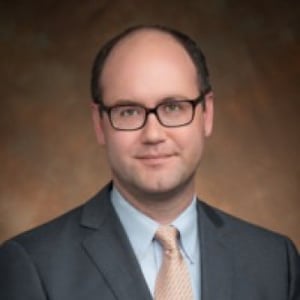
Vice President, Regulatory Affairs, NRG Energy
Travis Kavulla joined NRG after a decade of work as a policy wonk and government regulator. Previously, Travis headed up energy and environmental policy for the R Street Institute, a think tank, and before that was twice elected to public office as a utility commissioner in Montana. Travis has also held leadership roles in national policy circles, including as president of the National Association of Regulatory Utility Commissioners. During his work in public life, Travis has written dozens of articles and speeches on electricity policy and regulation.
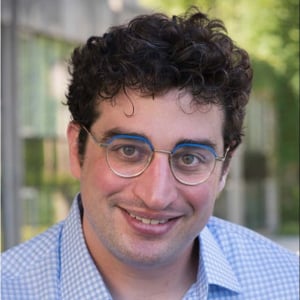
Associate Professor of Law, Yale Law School
Josh Macey teaches and writes about bankruptcy, environmental law, energy law, and the regulation of financial institutions. He is the three-time winner of the Morrison Prize for most influential environmental law article of the previous year (“Zombie Energy Laws,” 73 Vanderbilt Law Review; “Long Live the Federal Power Act’s Bright Line,” 134 Harvard Law Review; "Clean Energy Through Grid Reliability," 74 Stanford Law Review). He is also a co-author on one of the leading Energy Law casebooks and has been recognized by the American Bankruptcy Institute as one of the “40 Under 40” emerging leaders in insolvency practice.
Professor Macey graduated from Yale College, the London School of Economics, and Yale Law School. He has worked at Morgan Stanley and clerked for Judge J. Harvie Wilkinson III on the Court of Appeals for the Fourth Circuit
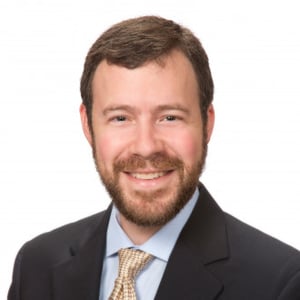
Director, Electricity Law Initiative, Harvard Law School
Ari Peskoe is the Director of the Electricity Law Initiative at the Harvard Law School Environmental and Energy Law Program. He has written extensively about electricity regulation, on issues ranging from Constitutional challenges to states’ energy laws to federal regulation of distributed energy resources. Prior to the Environmental and Energy Law Program, Ari was an associate at a law firm in Washington, D.C. where he litigated before the Federal Energy Regulatory Commission about the Western Energy Crisis. Before that, Ari was a Peace Corps Volunteer in Ghana and spent two years trying to bring the 2012 Olympics to New York. He received his J.D. from Harvard Law School and graduated from the University of Pennsylvania with degrees in electrical engineering and business.
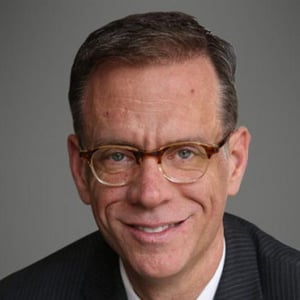
Judge William Hawley Atwell Chair of Constitutional Law, SMU Dedman School of Law
Professor Carpenter is the Judge William Hawley Atwell Chair of Constitutional Law. He previously served as the Charles J. and Inez Wright Murray Distinguished Visiting Professor of Law at SMU, teaching Constitutional Law I as well as LGBT Rights and the Law. This fall he will teach Constitutional Law II.
Prior to joining SMU, Professor Carpenter taught for 16 years at the University of Minnesota, where he served as a Distinguished University Teaching Professor and the Earl R. Larson Professor of Civil Rights and Civil Liberties Law. He won multiple teaching awards. He is also an editor of Constitutional Commentary.
The Texas native received his B.A. degree in history, magna cum laude, from Yale College and received his J.D., with honors, from the University of Chicago Law School, where he was editor-in-chief of the University of Chicago Law Review. After serving as a law clerk for Fifth Circuit Judge Edith Jones, he practiced at the firms Vinson & Elkins LLP in Houston, and at Howard, Rice, Nemerovski, Canady, Falk & Rabkin, P.C. in San Francisco.
As the author of numerous articles and an award-winning book —FLAGRANT CONDUCT: THE STORY OF LAWRENCE V. TEXAS (W.W. Norton & Co., 2012), about the landmark U.S. Supreme Court case that invalidated America's sodomy laws — he is often asked by the media to comment on constitutional law, the First Amendment, and LGBT Rights and the Law. Since 2005, he has been an active blogger on the popular legal blog, The Volokh Conspiracy, which is hosted by the Washington Post.
Frederick A. Whitney Professor of Contract Law and Director, Center for Law and Religion, St. John's University School of Law
Professor Movsesian is the Frederick A. Whitney Professor of Contract Law and the Director of the Center for Law and Religion. He writes in law and religion, contracts and international and comparative law; his articles have appeared in the Harvard, North Carolina, and Washington & Lee Law Reviews, the Oxford Journal of Law and Religion, the American Journal of International Law, the Harvard International Law Journal, the Virginia Journal of International Law, and many others. He has been a visiting professor at Notre Dame and Cardozo Law Schools and has delivered papers at numerous workshops in the United States and Europe. He teaches offerings in contracts, comparative law and law and religion.
Professor Movsesian graduated summa cum laude from Harvard College and magna cum laude from Harvard Law School. In law school, he was an editor of the Harvard Law Review and a recipient of the Sears Prize, awarded to the two highest-ranking students in the second-year class. He clerked for Justice David H. Souter of the Supreme Court of the United States and served as an attorney-advisor in the Office of Legal Counsel at the United States Department of Justice. Before starting at St. John's, he was the Max Schmertz Distinguished Professor of Law at Hofstra.
Professor Movsesian blogs regularly at the Law and Religion Forum.
Associate Professor of Legal Studies & Business Ethics, University of Pennsylvania The Wharton School
Partner, Quinn Emanuel
John F. Bash is an American attorney who served as the United States Attorney for the Western District of Texas from 2017 to 2020. After graduating from Harvard Law School, Mr. Bash clerked for Judge Kavanaugh during his first year on the bench and went on to clerk for Justice Antonin Scalia. He then served as an Assistant to the Solicitor General in the U.S. Department of Justice, where he argued ten cases in the United States Supreme Court. He also served briefly as Special Assistant to the President and Associate Counsel to the President before his appointment as United States Attorney.
Federal Public Defender for the Southern District of Florida

Co-Director, Tsai Center for Law, Science and Innovation, Altshuler Distinguished Teaching Professor, and Professor of Law, Southern Methodist University Dedman School of Law, SMU Dedman School of Law
Meghan J. Ryan is an award-winning teacher and scholar working at the intersection of criminal law & procedure, torts, and law & science. Her current research focuses on the impact of evolving science, technology, and cultural values on criminal convictions and punishments, as well as on civil liability and remedies. This includes research on forensic science, wrongful convictions, sentencing, cruel & unusual punishments, and toxic torts.
Professor Ryan received her A.B., magna cum laude, in Chemistry from Harvard University. She earned her J.D., magna cum laude, from the University of Minnesota Law School, where she was a member of the Order of the Coif and received the American Law Institute-American Bar Association Scholarship and Leadership Award. She was also a member of both the Minnesota Law Review and the Minnesota Journal of Global Trade.
After graduation, Professor Ryan clerked for the Honorable Roger L. Wollman of the U.S. Court of Appeals for the Eighth Circuit. She also practiced law in the trial group at the Minneapolis-based law firm of Dorsey & Whitney LLP, where she focused her practice on commercial and intellectual property litigation, as well as on white collar defense and compliance. Additionally, Professor Ryan has conducted research in the areas of bioinorganic chemistry, molecular biology, and experimental therapeutics at the Mayo Clinic and the University of Minnesota. Prior to joining the SMU faculty, Professor Ryan was a Visiting Assistant Professor at the University of Minnesota Law School, where she taught Criminal Law, Criminal Process, and Sales.

Professor of Law and Assistant Director, Criminal Justice Center, University of Florida Levin College of Law
Professor Stinneford teaches and writes about legal ethics, criminal law, criminal procedure, and constitutional law. His work has been cited by the United States Supreme Court, several state supreme courts and federal courts of appeal, and numerous scholars. It has published in numerous scholarly journals including the Georgetown Law Journal, the Northwestern University Law Review, the Virginia Law Review, the Notre Dame Law Review, and the William & Mary Law Review. The Stanford-Yale Junior faculty forum selected one of his articles as the best paper in the category of Constitutional History, and the AALS Criminal Justice Section named another article as the best paper in its Junior Scholars Paper Competition. In the fall of 2015, he was a Visiting Scholar at the Georgetown Law Center, Center for the Constitution.
Before joining the Florida faculty in 2009, Stinneford clerked for the Hon. James Moran of the United States District Court for the Northern District of Illinois, served as an Assistant United States Attorney, and practiced law with Winston & Strawn in Chicago. Stinneford teaches first-year courses in Criminal Law and Constitutional Law, and upper-level courses in Professional Responsibility, Criminal Procedure, Federal Criminal Law, Law & Literature, and White Collar Crime.
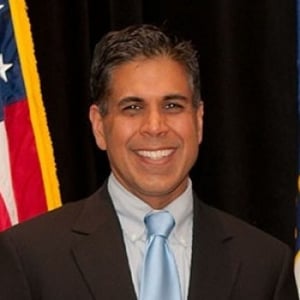
Judge, United States Court of Appeals, Sixth Circuit
Amul R. Thapar serves as a judge on the United States Court of Appeals for the Sixth Circuit. His judicial career began in 2007 when President George W. Bush nominated him to serve on the Eastern District of Kentucky, making him the first South Asian Article III judge in American history. In 2017, he became President Donald J. Trump’s first appellate court nominee.
Before joining the bench, Judge Thapar served as the United States Attorney for the Eastern District of Kentucky. While United States Attorney, Judge Thapar worked on the Attorney General’s Advisory Committee (“AGAC”) and chaired the AGAC’s Controlled Substances and Asset Forfeiture subcommittee. He also served on the Terrorism and National Security subcommittee, the Violent Crime subcommittee, and the Child Exploitation working group.
Judge Thapar has worked in private practice, at Williams & Connolly in Washington, D.C., and Squire, Sanders & Dempsey in Cincinnati, Ohio. He also served as an Assistant United States Attorney in both the Southern District of Ohio and the District of Columbia.
Judge Thapar received his undergraduate degree from Boston College and his law degree from the University of California, Berkeley. After graduating, Judge Thapar worked as a law clerk to the Honorable S. Arthur Spiegel of the United States District Court for the Southern District of Ohio, and the Honorable Nathaniel R. Jones of the United States Court of Appeals for the Sixth Circuit.
Judge Thapar has also published in the Yale Law Journal, Michigan Law Review, and Catholic University Law Review. He teaches courses on originalism, the Federalists and Anti-Federalists, and legal writing at Notre Dame Law School, the University of Virginia School of Law, and Vanderbilt Law School.
Professor of Law, University of Minnesota Law School
Professor James W. Coleman is a scholar of energy law. He specializes in North American energy infrastructure, transport, and trade. He is also a nonresident senior fellow at the American Enterprise Institute focused on energy policy.
Professor Coleman has testified before Congress on steps to speed up energy infrastructure permits. He also worked with a team of experts as part of Alberta's Royalty Review to revise the Canadian province's management of its vast oil and gas resources.
Before joining Minnesota, Professor Coleman taught at Southern Methodist University's Dedman School of Law, the University of Calgary’s law and business schools, and Harvard Law School. Earlier, he practiced environmental and appellate law at Sidley Austin in Washington, D.C., and clerked for the Honorable Steven M. Colloton of the U.S. Court of Appeals for the Eighth Circuit.
Professor Coleman received two degrees from Harvard University—a J.D. (cum laude) and B.A. in biology (magna cum laude with highest honors in the field). As a result of his undergraduate thesis on butterfly genetics, which required fieldwork in Central Asia, a species of lycaenid butterfly was named after him—Agrodiaetus ripartii colemani.
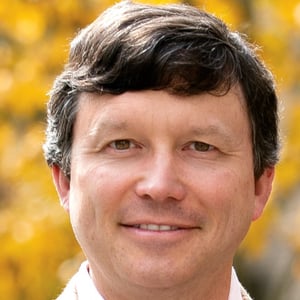
Partner, Baker Botts
George Fibbe represents clients in complex commercial disputes and regulatory matters, focusing on high-stakes matters across the energy sector. Before joining Baker Botts, he served as the Deputy General Counsel for Litigation, Regulation & Enforcement for the U.S. Department of Energy. Mr. Fibbe is a commercial trial attorney who practiced with Yetter Coleman, LLP in Houston for over ten years. He then served as head of litigation for the petroleum division of an international mining corporation. Before joining the Department of Energy, he served as General Counsel for a private solar company.
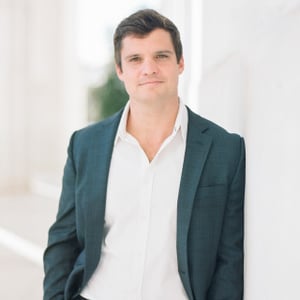
Managing Director, SCF Partners
Daniel G. West invests in energy services, equipment, and technology companies at SCF Partners in Houston, Texas. He provides equity capital and strategic growth assistance to entrepreneurs and leaders of both start-up ventures and established, growing businesses.
Prior to joining the private sector, Mr. West served as an infantry officer in the United States Marine Corps. As a platoon commander with the 22nd Marine Expeditionary Unit aboard the USS Mesa Verde, he led the Tactical Recovery of Aircraft and Personnel force in support of the NATO aerial campaign over Libya. He then served as executive officer of India Company, 3rd Battalion, 9th Marines as it mentored Afghan forces to assume lead security responsibility and executed counter-narcotics missions in Marjah, Helmand Province, Afghanistan. He also served as a clerk for Judge Laurence H. Silberman on the U.S. Court of Appeals for the D.C. Circuit.
Mr. West holds degrees in law, business administration, and economics from Harvard University, where he served as an editor of the Harvard Law Review and taught undergraduate courses in economics and government. He is a member of the Executive Committee of the International & National Security Law Practice Group of the Federalist Society and a term member of the Council on Foreign Relations.
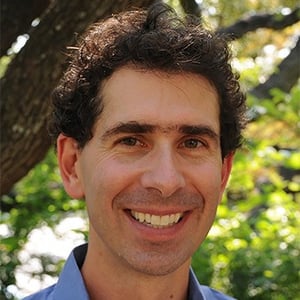
Harry Reasoner Regents Chair in Law, The University of Texas at Austin School of Law
David Adelman teaches and writes in the areas of environmental law, intellectual property law, and climate change policy. Professor Adelman’s research focuses on the many interfaces between law and science. His articles have addressed such topics as the implications of emerging genomic technologies for toxics regulation, the tensions between legal and scientific evidentiary standards in regulatory decision making, and development of effective policies for promoting innovation relevant to addressing climate change. Professor Adelman clerked for the Honorable Samuel Conti of the United States District Court for the Northern District of California. Before entering academia, he was an associate with the law firm Covington & Burling in Washington, D.C., where he litigated patent disputes and provided counsel on environmental regulatory matters, and a Senior Attorney with the Natural Resources Defense Council also in Washington, D.C. Professor Adelman was an Associate Professor of Law at the University of Arizona Rogers College of Law from 2001 to 2009.
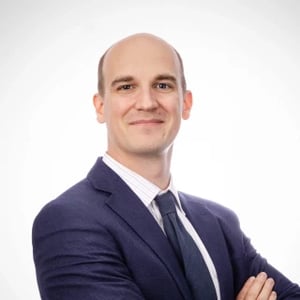
Managing Partner, Boyden Gray PLLC
Michael Buschbacher is the managing partner of Boyden Gray PLLC. He represents public and private companies, trade associations, non-profits, and individuals in high-stakes litigation and administrative proceedings, with a particular focus on environmental and energy matters.
In addition to trial-level work, Mr. Buschbacher maintains an active appellate practice, both as merits counsel and as counsel for amici curiae. He has written amicus briefs quoted by the Seventh and Ninth Circuits. And his Supreme Court advocacy has been cited by The New Yorker, The New York Times, and E&E News. Mr. Buschbacher’s commentary on legal issues has been published in The Wall Street Journal, Newsweek, and The American Conservative.
Before joining the firm, Mr. Buschbacher served at the U.S. Department of Justice as counsel to the Assistant Attorney General for the Environment and Natural Resources Division. There, he advised senior Department leadership, served as the lead attorney on several lawsuits, and helped draft policy memoranda for the Department on the proper scope and procedure for environmental enforcement. Prior to serving in the government, Mr. Buschbacher was an associate in the D.C. office of Sidley Austin.
Mr. Buschbacher is a former clerk to Judge Alice M. Batchelder of the U.S. Court of Appeals for the Sixth Circuit and to Magistrate Judge Paul R. Cherry of the U.S. District Court for the Northern District of Indiana.
Mr. Buschbacher holds a B.A. in Music and Germanic Studies from Indiana University and a J.D., magna cum laude, from Notre Dame Law School.
Professor of Law, University of Minnesota Law School
Professor James W. Coleman is a scholar of energy law. He specializes in North American energy infrastructure, transport, and trade. He is also a nonresident senior fellow at the American Enterprise Institute focused on energy policy.
Professor Coleman has testified before Congress on steps to speed up energy infrastructure permits. He also worked with a team of experts as part of Alberta's Royalty Review to revise the Canadian province's management of its vast oil and gas resources.
Before joining Minnesota, Professor Coleman taught at Southern Methodist University's Dedman School of Law, the University of Calgary’s law and business schools, and Harvard Law School. Earlier, he practiced environmental and appellate law at Sidley Austin in Washington, D.C., and clerked for the Honorable Steven M. Colloton of the U.S. Court of Appeals for the Eighth Circuit.
Professor Coleman received two degrees from Harvard University—a J.D. (cum laude) and B.A. in biology (magna cum laude with highest honors in the field). As a result of his undergraduate thesis on butterfly genetics, which required fieldwork in Central Asia, a species of lycaenid butterfly was named after him—Agrodiaetus ripartii colemani.
Professor of Law, University of Minnesota Law School
Professor James W. Coleman is a scholar of energy law. He specializes in North American energy infrastructure, transport, and trade. He is also a nonresident senior fellow at the American Enterprise Institute focused on energy policy.
Professor Coleman has testified before Congress on steps to speed up energy infrastructure permits. He also worked with a team of experts as part of Alberta's Royalty Review to revise the Canadian province's management of its vast oil and gas resources.
Before joining Minnesota, Professor Coleman taught at Southern Methodist University's Dedman School of Law, the University of Calgary’s law and business schools, and Harvard Law School. Earlier, he practiced environmental and appellate law at Sidley Austin in Washington, D.C., and clerked for the Honorable Steven M. Colloton of the U.S. Court of Appeals for the Eighth Circuit.
Professor Coleman received two degrees from Harvard University—a J.D. (cum laude) and B.A. in biology (magna cum laude with highest honors in the field). As a result of his undergraduate thesis on butterfly genetics, which required fieldwork in Central Asia, a species of lycaenid butterfly was named after him—Agrodiaetus ripartii colemani.
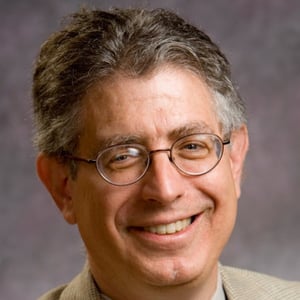
Sho Sato Professor of Law; Faculty Director, Center for Law, Energy, & the Environment, University of California, Berkeley
Dan Farber is the Sho Sato Professor of Law at the University of California, Berkeley. He is also the Co-Director of the Center for Law, Energy, and the Environment. Professor Farber serves on the editorial board of Foundation Press. He is a member of the American Academy of Arts and Sciences and a Life Member of the American Law Institute. He is the editor of Issues in Legal Scholarship.
Professor Farber is a graduate of the University of Illinois, where he earned his B.A., M.A., and J.D. degrees. He graduated, summa cum laude, from the College of Law, where he was the class valedictorian and served as Editor-in-Chief of the University of Illinois Law Review. After graduation from law school, he was a law clerk for Judge Philip W. Tone of the United States Court of Appeals for the Seventh Circuit and then for Justice John Paul Stevens of the Supreme Court of the United States. Professor Farber practiced law with Sidley & Austin, where he primarily worked on energy issues, before joining the University of Illinois College of Law faculty in 1978. He was a member of the University of Minnesota Law School faculty from1981 to 2002, where he was the McKnight Presidential Professor of Public Law. He also has been a Visiting Professor at the Stanford Law School, Harvard Law School, and the University of Chicago Law School.
Among Professor Farber’s eighteen books are RESEARCH HANDBOOK ON PUBLIC CHOICE AND PUBLIC LAW (Elgar 2010) (with A. O’Connell); JUDGMENT CALLS: POLITICS AND PRINCIPLE IN CONSTITUTIONAL LAW (Oxford University Press 2008) (with S. Sherry); RETAINED BY THE PEOPLE: THE “SILENT” NINTH AMENDMENT AND THE RIGHTS AMERICANS DON’T KNOW THEY HAVE (Basic Books 2007); and LINCOLN’S CONSTITUTION (University of Chicago Press 2003).
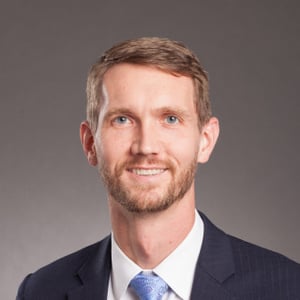
Senior Counsel for Environmental and Regulatory Affairs, Boeing
Adam Gustafson is a Senior Counsel for Environmental and Regulatory Affairs at Boeing.
Prior to joining Boeing, he served as Deputy General Counsel at the Environmental Protection Agency. Prior to that, he was a partner at Boyden Gray & Associates, where he represented States, federal judges, environmental groups, biofuel producers, agricultural interests, and public policy organizations, on such issues as the constitutional separation of powers, the First Amendment, automotive regulations, environmental computer models, healthcare regulation, and judicial deference to federal agencies.
Mr. Gustafson received his J.D. in 2009 from Yale Law School, where he was an editor of the Yale Law Journal, a managing editor of the Yale Journal of Law & the Humanities, and an executive editor of the symposium issue of the Harvard Journal of Law & Public Policy.
Mr. Gustafson served as a Vice President of the Yale Law School Federalist Society. He was a Coker Fellow, and his legal writing won the Joseph A. Chubb Competition Prize and the Edward D. Robbins Memorial Prize.
Mr. Gustafson graduated with high distinction in 2005 from the University of Virginia, where he was an Echols Scholar, a member of the Raven Society, a member of the rowing team, and a Lawn resident.
Before joining Boyden Gray & Associates, Mr. Gustafson was an associate at Cooper & Kirk, where he specialized in appellate litigation. Mr. Gustafson served as a law clerk to Judge Richard R. Clifton of the U.S. Court of Appeals for the Ninth Circuit, and to Judge Janice Rogers Brown of the U.S. Court of Appeals for the D.C. Circuit.
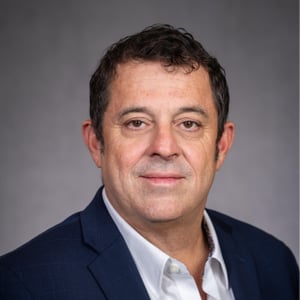
Senior Fellow for Law, Economics, and Technology, The Heritage Foundation; Professor, Florida International University
Mario Loyola is a Senior Fellow for Law, Economics, and Technology at The Heritage Foundation.
Loyola served in the Trump Administration as Associate Director for Regulatory Reform at the White House Council on Environmental Quality. In that role, he was one of the principal drafters of the One Federal Decision policy, which helped to streamline the permitting and environmental review of large infrastructure projects. While at CEQ, he was a member of the U.S. delegation to the USMCA free trade negotiations with Mexico and Canada, as well as the United Nations conference on biodiversity on the high seas. Loyola initially joined the White House in February 2017 as a Presidential Speechwriter, employing his expertise in many areas of foreign and domestic policy.
After beginning his career in M&A and corporate finance law, Loyola served in the Bush 43 Administration as a special assistant to the Undersecretary of Defense for Policy. He left that position to start writing on national defense issues in magazines such as National Review and The Weekly Standard, reporting from the front lines of the war on terrorism in Lebanon, Israel, and Iraq. He finished the Bush Administration as Foreign and Defense Counsel to the U.S. Senate Republican Policy Committee, then under the chairmanship of Senator Kay Bailey Hutchison of Texas. He subsequently moved to Texas and joined the Texas Public Policy Foundation, where he specialized in energy, environment, and federalism.
Loyola is a frequent contributor to The Wall Street Journal, National Review, and The Atlantic, among others. He teaches environmental and administrative law at Florida International University, where he is Founding Director of the Environmental Finance and Risk Management program in FIU’s prestigious Institute of Environment. He received a bachelor’s degree in European history from the University of Wisconsin–Madison and a J.D. from Washington University School of Law.
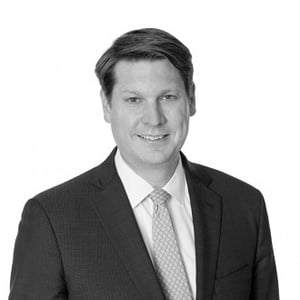
Former Acting Assistant Attorney General, United States Department of Justice; Partner, Winston & Strawn LLP
Jonathan “Jon” Brightbill is a trial and appellate lawyer in Winston’s Washington, D.C. office, and a partner in the firm’s Litigation and White Collar, Regulatory Defense, and Investigations Practices. He represents public and private companies, corporate officers, and other individuals across white collar, regulatory defense, and government and internal investigation matters and rulemaking challenges, as well as complex commercial disputes, citizen suits, and class actions. His commercial litigation experience encompasses business disputes, false advertising, consumer protection and fraud, FCA, and extensive class action defense work; antitrust and unfair competition matters; and intellectual property litigation, such as trademarks, patents, and trade secrets.
Jon served as the Nation’s lead environmental civil and criminal enforcement official and litigator, as Acting Assistant Attorney General for the Environment & Natural Resources Division (“ENRD”) of the U.S. Department of Justice (DOJ). Jon led ENRD’s 425 lawyers, overseeing 6,500 active matters and managing an annual budget of more than $150 million. Jon brings highly experienced executive leadership from among the most senior level of DOJ on white collar and regulatory enforcement, as well as on federal policymaking and rulemaking development and challenges. He speaks with authority on government decision-making processes, and the arguments and perspectives that move regulators and enforcers, best advising and positioning clients to deal with challenges.
Jon argued many of the government’s most significant cases during his time with the DOJ. This included the Navigable Waters Protection Rule and Clean Water Rule Repeal (10th Cir., district courts), the Affordable Clean Energy Rule and Clean Power Plan Repeal (D.C. Cir), defense of EPA actions on pesticide tolerances under FIFRA and the FDCA (9th Cir. en banc), among numerous others. Jon represented the United States in trial courts in both enforcement and defensive cases, including federal enforcement action against Jeffrey Lowe and the Tiger King Park, of Netflix fame, securing a first-of-its-kind injunction for violations of the Endangered Species Act and Animal Welfare Act. Jon directed the litigation and briefing of scores of additional federal cases nationwide, covering all of the major environmental and natural resources statutes, such as the Clean Air Act, the Clean Water Act, FIFRA (pesticides), FDCA (food safety), TSCA (toxics), CERCLA (land remediation), RCRA (waste), National Environmental Policy Act, Federal Land Policy and Management Act, and numerous other land- and resource-management statutes.
Jon has unmatched experience litigating legal and technical issues relating to climate change. He argued in the courts of appeals, including the D.C. Circuit, regarding the most significant climate change regulations by EPA, as well as the preemptive scope of the Clean Air Act. Jon also litigated climate change-related credit and trading schemes and international agreements in district court. During Jon’s time in leadership at ENRD, it successfully defeated one of the most wide-ranging lawsuits regarding climate change to date—obtaining a stay pending interlocutory appeal and dismissal just weeks before a scheduled three-month trial on federal government liability for climate change.
An accomplished trial lawyer, prior to working at DOJ, Jon was a partner in the Washington, D.C. office of another global law firm. He not only represents clients in court, but creatively counsels corporations on balancing business needs and realities with a broad range of litigation risks and compliance obligations. Jon is also an Adjunct Professor at Georgetown University Law Center. He served on the American Bar Association’s E-Discovery Working Group for Bankruptcy Practice, and was a frequent lecturer for District of Columbia Bar Association Continuing Legal Education Programs.
Jon served as an appellate clerk for the Honorable D. Brooks Smith, U.S. Court of Appeals for the Third Circuit, after graduating magna cum laude from the Georgetown University Law Center. He worked in state government as an Executive Policy Specialist for air, waste, land remediation, and radiation matters at the Pennsylvania Department of Environmental Protection.
Professor of Law, University of Minnesota Law School
Professor James W. Coleman is a scholar of energy law. He specializes in North American energy infrastructure, transport, and trade. He is also a nonresident senior fellow at the American Enterprise Institute focused on energy policy.
Professor Coleman has testified before Congress on steps to speed up energy infrastructure permits. He also worked with a team of experts as part of Alberta's Royalty Review to revise the Canadian province's management of its vast oil and gas resources.
Before joining Minnesota, Professor Coleman taught at Southern Methodist University's Dedman School of Law, the University of Calgary’s law and business schools, and Harvard Law School. Earlier, he practiced environmental and appellate law at Sidley Austin in Washington, D.C., and clerked for the Honorable Steven M. Colloton of the U.S. Court of Appeals for the Eighth Circuit.
Professor Coleman received two degrees from Harvard University—a J.D. (cum laude) and B.A. in biology (magna cum laude with highest honors in the field). As a result of his undergraduate thesis on butterfly genetics, which required fieldwork in Central Asia, a species of lycaenid butterfly was named after him—Agrodiaetus ripartii colemani.
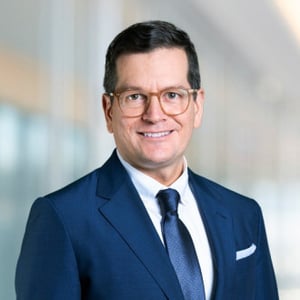
Partner, Covington & Burling LLP
Kevin Poloncarz co-chairs the Environmental and Energy Practice Group, Energy Industry Group and ESG Practice at Covington & Burling LLP.
Kevin is ranked by Chambers USA among the nation’s leading climate change attorneys and California’s leading environmental lawyers, with sources describing him as “a phenomenal” and “tremendous lawyer.”
He represents electric utilities, financial institutions, investors and companies in policy, litigation and transactional matters concerning power and carbon markets, carbon capture, utilization and storage (CCUS), sustainable aviation fuel, green and blue hydrogen and carbon offsets projects.
He also helps clients establish and communicate their ESG commitments and decarbonization objectives to investors, customers and other stakeholders.
Former Acting Assistant Attorney General, United States Department of Justice; Partner, Winston & Strawn LLP
Jonathan “Jon” Brightbill is a trial and appellate lawyer in Winston’s Washington, D.C. office, and a partner in the firm’s Litigation and White Collar, Regulatory Defense, and Investigations Practices. He represents public and private companies, corporate officers, and other individuals across white collar, regulatory defense, and government and internal investigation matters and rulemaking challenges, as well as complex commercial disputes, citizen suits, and class actions. His commercial litigation experience encompasses business disputes, false advertising, consumer protection and fraud, FCA, and extensive class action defense work; antitrust and unfair competition matters; and intellectual property litigation, such as trademarks, patents, and trade secrets.
Jon served as the Nation’s lead environmental civil and criminal enforcement official and litigator, as Acting Assistant Attorney General for the Environment & Natural Resources Division (“ENRD”) of the U.S. Department of Justice (DOJ). Jon led ENRD’s 425 lawyers, overseeing 6,500 active matters and managing an annual budget of more than $150 million. Jon brings highly experienced executive leadership from among the most senior level of DOJ on white collar and regulatory enforcement, as well as on federal policymaking and rulemaking development and challenges. He speaks with authority on government decision-making processes, and the arguments and perspectives that move regulators and enforcers, best advising and positioning clients to deal with challenges.
Jon argued many of the government’s most significant cases during his time with the DOJ. This included the Navigable Waters Protection Rule and Clean Water Rule Repeal (10th Cir., district courts), the Affordable Clean Energy Rule and Clean Power Plan Repeal (D.C. Cir), defense of EPA actions on pesticide tolerances under FIFRA and the FDCA (9th Cir. en banc), among numerous others. Jon represented the United States in trial courts in both enforcement and defensive cases, including federal enforcement action against Jeffrey Lowe and the Tiger King Park, of Netflix fame, securing a first-of-its-kind injunction for violations of the Endangered Species Act and Animal Welfare Act. Jon directed the litigation and briefing of scores of additional federal cases nationwide, covering all of the major environmental and natural resources statutes, such as the Clean Air Act, the Clean Water Act, FIFRA (pesticides), FDCA (food safety), TSCA (toxics), CERCLA (land remediation), RCRA (waste), National Environmental Policy Act, Federal Land Policy and Management Act, and numerous other land- and resource-management statutes.
Jon has unmatched experience litigating legal and technical issues relating to climate change. He argued in the courts of appeals, including the D.C. Circuit, regarding the most significant climate change regulations by EPA, as well as the preemptive scope of the Clean Air Act. Jon also litigated climate change-related credit and trading schemes and international agreements in district court. During Jon’s time in leadership at ENRD, it successfully defeated one of the most wide-ranging lawsuits regarding climate change to date—obtaining a stay pending interlocutory appeal and dismissal just weeks before a scheduled three-month trial on federal government liability for climate change.
An accomplished trial lawyer, prior to working at DOJ, Jon was a partner in the Washington, D.C. office of another global law firm. He not only represents clients in court, but creatively counsels corporations on balancing business needs and realities with a broad range of litigation risks and compliance obligations. Jon is also an Adjunct Professor at Georgetown University Law Center. He served on the American Bar Association’s E-Discovery Working Group for Bankruptcy Practice, and was a frequent lecturer for District of Columbia Bar Association Continuing Legal Education Programs.
Jon served as an appellate clerk for the Honorable D. Brooks Smith, U.S. Court of Appeals for the Third Circuit, after graduating magna cum laude from the Georgetown University Law Center. He worked in state government as an Executive Policy Specialist for air, waste, land remediation, and radiation matters at the Pennsylvania Department of Environmental Protection.
Professor of Law, University of Minnesota Law School
Professor James W. Coleman is a scholar of energy law. He specializes in North American energy infrastructure, transport, and trade. He is also a nonresident senior fellow at the American Enterprise Institute focused on energy policy.
Professor Coleman has testified before Congress on steps to speed up energy infrastructure permits. He also worked with a team of experts as part of Alberta's Royalty Review to revise the Canadian province's management of its vast oil and gas resources.
Before joining Minnesota, Professor Coleman taught at Southern Methodist University's Dedman School of Law, the University of Calgary’s law and business schools, and Harvard Law School. Earlier, he practiced environmental and appellate law at Sidley Austin in Washington, D.C., and clerked for the Honorable Steven M. Colloton of the U.S. Court of Appeals for the Eighth Circuit.
Professor Coleman received two degrees from Harvard University—a J.D. (cum laude) and B.A. in biology (magna cum laude with highest honors in the field). As a result of his undergraduate thesis on butterfly genetics, which required fieldwork in Central Asia, a species of lycaenid butterfly was named after him—Agrodiaetus ripartii colemani.
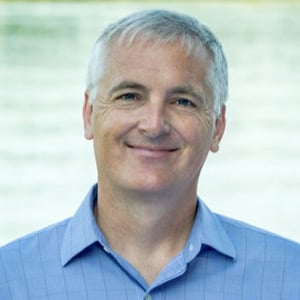
Partner, Donahue & Goldberg LLP
Sean H. Donahue's practice is focused on appellate litigation, including environmental cases in federal and state appellate courts, legal counseling, and helping clients communicate effectively to courts, agencies, and other audiences. He is a member of the bars of the District of Columbia and the State of California.
A 1992 graduate of University of Chicago Law School, Sean served as law clerk to Ruth Bader Ginsburg, then of the U.S. Court of Appeals for the D.C. Circuit, and to Justice John Paul Stevens. He entered private practice at Jenner & Block's Washington office, where he worked on civil matters including in telecommunications and First Amendment law. He then spent four years at the Department of Justice, Environmental and Natural Resources Division, Appellate Section, briefing and arguing cases in the United States Courts of Appeals, and state supreme courts concerning federal environmental and natural resources law, federal property law, takings, and Indian law.
Sean has argued approximately 50 cases in federal and state appellate courts. Since first establishing his own practice in 2002, he has represented environmental and public health organization parties in numerous major environmental and clean energy cases in the Supreme Court and the courts of appeals. His current practice includes representation of public interest organizations, governmental bodies, and private entities in environmental, energy, natural resources, and other cases. Sean has taught courses in environmental law, civil procedure, constitutional law and other subjects at Washington & Lee University School of Law, Iowa College of Law, and Georgetown University Law Center, and currently teaches climate change law and policy as a lecturer at Stanford Law School. He has given presentations at law schools including Berkeley, Columbia, Fordham, Harvard, Duke, Georgetown, Maryland, NYU, Northwestern, Stanford, University of Chicago, University of Florida, Vermont Law School, and Washington & Lee.

The Viability of Bruen: Challenges and Applications
The Second Amendment sits at the heart of ongoing debates about originalism, tradition, and individual...
The Viability of Bruen: Challenges and Applications
Second Amendment Practice Group
Washington, DCLuncheon Panel: Climate Change and the Free Market
Washington, DCLuncheon Discussion: Free Speech vs. Non-Discrimination: A Discussion on 303 Creative
Washington, DCAfter Dobbs and Samia: The Potential Implications of Applying a Dobbs Lens to the Supreme Court’s Constitutional Criminal Jurisprudence
2023 National Lawyers Convention
Washington, DCEnergy Security After Ukraine: What are the Challenges and Opportunities for the U.S. and its Allies?
TeleforumThe Future of NEPA Reform
A Regulatory Transparency Project Webinar
TeleforumWest Virginia v. EPA and the Major Questions Doctrine
A Regulatory Transparency Project Webinar
TeleforumAn Update on the Clean Power Plan Litigation
A Regulatory Transparency Project Webinar
TeleforumDeep Dive Episode 184 – Federalism or a Federal Standard? Fuel Economy and Greenhouse Gas Emissions Standards
Regulatory Transparency Project's Fourth Branch Podcast