
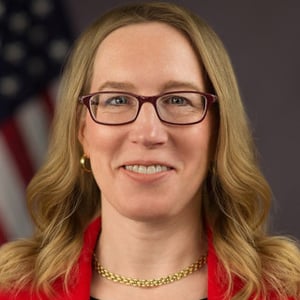
Commissioner, United States Securities and Exchange Commission
Hester M. Peirce was appointed by President Donald J. Trump to the U.S. Securities and Exchange Commission and was sworn in on January 11, 2018.
Prior to joining the SEC, Commissioner Peirce conducted research on the regulation of financial markets at the Mercatus Center at George Mason University. She was a Senior Counsel on the U.S. Senate Committee on Banking, Housing, and Urban Affairs, where she advised Ranking Member Richard Shelby and other members of the Committee on securities issues. Commissioner Peirce served as counsel to SEC Commissioner Paul S. Atkins. She also worked as a Staff Attorney in the SEC’s Division of Investment Management. Commissioner Peirce was an associate at Wilmer, Cutler & Pickering (now WilmerHale) and clerked for Judge Roger Andewelt on the Court of Federal Claims.
Commissioner Peirce earned her bachelor’s degree in Economics from Case Western Reserve University and her JD from Yale Law School.
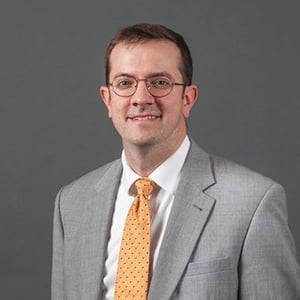
Associate Professor of Law, Antonin Scalia Law School, George Mason University
Associate Professor of Law J.W. Verret joined the Antonin Scalia Law School, George Mason University faculty in 2008. In 2013, he took leave for two years to serve as the Chief Economist and Senior Counsel for the U.S. House Committee on Financial Services. He received his JD and MA in Public Policy from Harvard Law School and the Harvard Kennedy School of Government, respectively, in 2006. While in law school, Professor Verret served an Olin Fellowship in Law and Economics at the Harvard Program on Corporate Governance under the guidance of Prof. Lucian Bebchuk.
Professor Verret then served as a law clerk for Vice-Chancellor John W. Noble of the Delaware Court of Chancery. Prior to joining the faculty at Scalia Law, Professor Verret was an associate in the SEC Enforcement Defense Practice Group at Skadden, Arps in Washington, D.C. He has written extensively on corporate law topics, including Delaware's Guidance, co-written with Chief Justice Myron T. Steele of the Delaware Supreme Court. His academic work has been featured in the Yale Journal on Regulation, The Business Lawyer, the Delaware Journal of Corporate Law, the Stanford Law Review, the University of Pennsylvania Journal of Business Law, and the Virginia Law and Business Review. Professor Verret was selected by the Northwestern Law School Searle Center on Law, Regulation, and Economic Growth for a 2009-2010 Searle-Kaufmann Research Fellowship.
Professor Verret is also a Senior Scholar at the Mercatus Center Working Group on Financial Markets, where he regularly briefs Congressional staff, members of Congress, SEC Commissioners and other financial regulatory agencies on financial regulation topics. He also directs the Corporate Federalism Initiative, where he obtains research grants for a network of students and faculty scholars who study the division between states and the federal government as sources of corporate law. Professor Verret has been invited to testify before various House and Senate Committees four times during the financial crisis of 2009 regarding all of the central provisions of the Obama Administration's 2009 financial regulatory reform proposals. For a full list of Professor Verret's C-Span appearances, including testimony before the U.S. House of Representatives and the U.S. Senate, see http://www.c-spanvideo.org/jwverret.
Professor Verret has been an invited panelist for various television appearances, including an interview on The NewsHour with Jim Lehrer. Professor Verret has been quoted in various media on financial regulation and corporate law topics, including the New York Times, CNN Money, the CNN Political Ticker, CNBC, ABC News, Investor's Business Daily, ESPN.com, The American Banker, The American Lawyer, The Huffington Post, CBS.com, and AP News. Professor Verret's op-eds have been featured in Forbes, The Chicago Tribune, The Orange County Register, and The Wall Street Journal. Professor Verret is also a regular guest contributor to three of the most noted corporate law and financial regulation law blogs: the Harvard Law School Corporate Governance and Financial Regulation Forum, Deallawyers.com, and The Conglomerate.
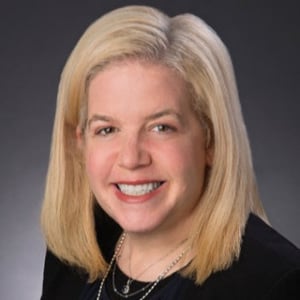
Counsel, Government Affairs and Strategy, Paul Hastings
Dina Ellis Rochkind is Of Counsel in the Paul Hastings Government Affairs practice and is based in the firm’s Washington, D.C. office. Her practice focuses on representing clients before Members of Congress on Capitol Hill and the Executive Branch. Ms. Rochkind represents clients in matters involving regulatory initiatives, policymaking and legislation, and enforcement actions. Ms. Rochkind's legislative experience allows her to advise her clients on the latest client initiatives, from starting a business to crowdsourcing; bitcoin ($bitcoin) and ICOs; and blockchain technologies.
Ms. Rochkind has over 20 years of experience on Capitol Hill, lobbying, and working for the Executive Branch. Prior to joining Paul Hastings, she served as Washington Director in the office of Rep. Mike Coffman (R-CO). Other Capitol Hill experience includes serving as senior staff for various Congressional Committees and for Senator Pat Toomey (R-PA). Ms. Rochkind also served in the George W. Bush Administration as Deputy Assistant Secretary at the Treasury Department. She has been involved in drafting major pieces of legislation over the last two decades, including: the 2005 bankruptcy reform legislation, the FACT Act, E-Sign, Check 21, Federal Deposit Insurance Reform Act, Gramm-Leach-Bliley Act, and, most recently, the comprehensive and bipartisan JOBS Act, for which she was the lead staffer in the Senate.
Ms. Rochkind has worked across party lines on both sides of the aisle to achieve key legislative successes and has a reputation for "getting things done" in Washington. She is also experienced in crisis management. During the auto industry crisis, Ms. Rochkind led the lobby to rescue Chrysler and handled the consequences and fallout from its bankruptcy. She has led legislative advocacy on behalf of major corporate entities and advised congressional leaders on issues such as banking, bankruptcy, insurance, other financial services, and economic development.
Prior to leading Rep. Coffman’s office, Ms. Rochkind served as Vice President of Federal Government Affairs for a leading mortgage lending company.
Ms. Rochkind is admitted to practice law in the District of Columbia and Pennsylvania.

Head of Regulatory, a16z Crypto
Michele Korver is the head of regulatory at a16z crypto, a leading venture capital fund that invests in crypto and web3 companies, where she works with policymakers to shape cryptocurrency regulation and helps web3 startups navigate the landscape.
Prior to joining a16z, Michele spent more than 25 years in government and law enforcement and has been at the forefront of the rapidly-evolving web3 space. Michele started her career in the Secret Service, advancing to become one of the foremost federal prosecutors in crypto, and was the U.S. Department of Justice’s first dedicated subject matter expert in cryptocurrency-related prosecutions and forfeitures, creating and managing the Criminal Division’s Digital Currency Initiative. Most recently she served as Chief Digital Currency Advisor at the Department of the Treasury’s Financial Crimes Enforcement Network (FinCEN), advising on digital asset-related matters while advancing FinCEN’s leadership role within the space.
Michele participated in the Treasury-led U.S. delegation to the Financial Action Task Force, consulting on standards involving virtual asset activities and service providers, and was a contributing author to the Department of Justice’s 2020 Cryptocurrency Enforcement Framework. She also co-authored the articles “Attribution in Cryptocurrency Cases” (Feb. 2019) and “Surfing the First Wave of Cryptocurrency Money Laundering” (May 2021) published in the DOJ Journal of Federal Law and Practice.
She received her B.A. from the University of Florida, her J.D. magna cum laude from the University of Miami School of Law, and clerked for the Honorable William P. Dimitrouleas in the U.S. District Court for the Southern District of Florida.
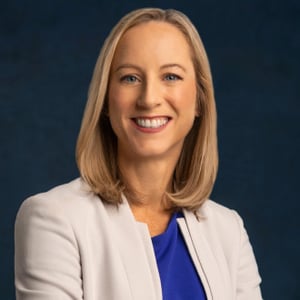
Vice President of Regulatory Affairs, Solidus Labs; Former Director, Consumer Financial Protection Bureau
The Honorable Kathleen L. Kraninger is the Vice President of Regulatory Affairs at Solidus Labs where she leads the firm’s regulatory strategy and works to advance market integrity and responsible innovation in digital asset markets. Solidus Labs is the first automated, comprehensive, and testable market surveillance and risk monitoring hub tailored for digital assets.
Previously, she served as the Senate-confirmed Director of the Consumer Financial Protection Bureau from December 2018 until January 2021, leading the 1,500-person independent, regulatory and law enforcement agency. She made her mark on all aspects of the agency’s mission and operations, particularly in facilitating innovation, promoting financial inclusion and leading through the economic uncertainty of the global pandemic. In addition, Kraninger served on the board of the Federal Deposit Insurance Corporation, the Financial Stability Oversight Board, and as chair of the Federal Financial Institutions Examinations Council.
Her distinguished public sector career spans senior roles at the Departments of Transportation and Homeland Security, the Office of Management and Budget, and in both the Senate and the House of Representatives. Kraninger graduated magna cum laude from Marquette University and earned a law degree from Georgetown University Law Center. She served as a U.S. Peace Corps Volunteer in Ukraine.
Vice President and Director, Center for Monetary and Financial Alternatives, Cato Institute
Norbert Michel is vice president and director of the Cato Institute’s Center for Monetary and Financial Alternatives, where he specializes on issues pertaining to financial markets and monetary policy. Michel was most recently the Director for Data Analysis at the Heritage Foundation where he edited, and contributed chapters, to two books: The Case Against Dodd–Frank: How the “Consumer Protection” Law Endangers Americans, and Prosperity Unleashed: Smarter Financial Regulation
Michel was previously a tenured professor at Nicholls State University’s College of Business, teaching finance, economics and statistics. Before that, he worked at Heritage as a tax policy analyst in the think tank’s Center for Data Analysis from 2002 to 2005. He previously was with the global energy company Entergy, where he worked on models to help predict bankruptcies of commercial clients.
Michel holds a doctoral degree in financial economics from the University of New Orleans. He received his bachelor of business administration degree in finance and economics from Loyola University. He currently resides in Virginia.
Co-Chair, Actum LLC; Former Director, Office of Management and Budget
Mick Mulvaney is a co-chair at Actum LLC, a global consultancy designed to solve diverse public and private sector challenges. Mulvaney previously served as Acting White House Chief of Staff from January 2019 until March 2020.
Mulvaney also served as director of the Office of Management and Budget (OMB). He was nominated to the post by President Donald J. Trump in December 2016 and confirmed by the Senate on February 16, 2017. Prior to his time as the director of OMB, he served the people of the 5th District of South Carolina as their Congressman where he was first elected in 2010, he is the first Republican member to hold the seat in 128 years.
A lifelong Carolinas resident, he attended Georgetown University, graduating with honors in International Economics, Commerce, and Finance and graduated as an Honor Scholar – the highest award given to students of the Georgetown School of Foreign Service.
After college, Mick received his law degree from the University of North Carolina at Chapel Hill on a full academic scholarship. He completed his formal education at Harvard Business School's OPM program in 2006.
In addition to practicing law and opening his own firm, he also ran the family real estate business, started a small homebuilding company, and became a minority shareholder in a local family restaurant franchise.
While in Congress, he served on the Budget Committee, Joint Economic Committee, Small Business Committee, Financial Services Committee, and the Oversight and Government Reform Committee.
He was a founding member of the Indian Land Rotary, a member of St. Philip Neri Catholic Church, and founding member of Our Lady of Grace Catholic Mission.
Mick and Pam were married in 1998, and are the proud parents of triplets: James, Caroline, and Finnegan, and two great danes: Guiness and Harper.

Partner, Oliver Wyman
Douglas Elliott is a Partner at Oliver Wyman in New York, where he focuses on financial regulation and associated public policy issues and their implications for the financial sector.
He analyzes a wide range of issues and has published papers on such diverse topics as “Financial Institutions in an Age of Populism,” “Data Rights in Finance,” and “Tackling Global Market Fragmentation in Banking.” He has also written extensively on the impacts of capital and liquidity requirements, including a 150-page literature review in 2016, which followed on an earlier study for the IMF. Recently he addressed the finance ministers and central bank governors of the 28 EU member states on the topic of “Rebooting Capital Markets Union.”
Prior to joining the firm, he was a Fellow in Economic Studies at The Brookings Institution, generally ranked as the world’s top think tank. He primarily analyzed financial institutions and markets and their regulation, along with extensive analysis of the Euro Crisis. He has twice been a Visiting Scholar at the International Monetary Fund. Mr. Elliott also worked as a consultant for the IMF, the World Bank, and the Asian Development Bank. Prior to Brookings, he was a financial institutions investment banker for two decades, principally at J.P. Morgan.
He has testified multiple times before both houses of Congress and participated in numerous speaking engagements, as well as appearing widely in the major media outlets. The New York Times has described his analyses as “refreshingly understandable” and “without a hint of dogma or advocacy.”
Mr. Elliott graduated from Harvard College magna cum laude with an A.B. in Sociology in 1981. In 1984, he graduated from Duke University with an M.A. in Computer Science.
Executive Director, Milken Institute Center for Financial Markets
Michael S. Piwowar is the executive director of the Milken Institute Center for Financial Markets. Dr. Piwowar served as a Commissioner at the U.S. Securities and Exchange Commission from August 15, 2013 to July 6, 2018. He was first appointed to the SEC by President Barack Obama and was designated Acting Chairman of the Commission by President Donald Trump from January 23, 2017 to May 4, 2017. He was previously the Republican chief economist for the U.S. Senate Committee on Banking, Housing, and Urban Affairs under Senators Mike Crapo (R-ID) and Richard Shelby (R-AL) and served as the lead Republican economist on the four SEC-related titles of the Dodd-Frank Act and the JOBS Act. During the financial crisis and its immediate aftermath, Dr. Piwowar served in a one-year fixed-term position at the White House as a senior economist at the President’s Council of Economic Advisers (CEA) in both the George W. Bush and Barack Obama Administrations. Before joining the White House, Dr. Piwowar worked as a Principal at the Securities Litigation and Consulting Group (SLCG). He received a B.A. in Foreign Service and International Politics from the Pennsylvania State University, an M.B.A. from Georgetown University, and a Ph.D. in Finance from the Pennsylvania State University.
Former Commissioner, The Commodity Futures Trading Commission
Dawn Stump is a senior leader and regulatory expert in domestic and international financial services. Her experience and thought leadership have tactically identified potential risks and initiated regulatory and systemic solutions to protect industries, infrastructures, and economies. Based on her global perspective and industry expertise, Dawn is able to raise critical financial services issues to the board level and/or the global stage as business environments fluctuate. She is widely respected for her leadership, bipartisanism, and consensus building among senior government officials, senior regulatory ministry officials, corporate, and academic leaders worldwide.
Recently, she completed her term as a Commissioner of the CFTC, the independent U.S. agency that regulates the $200+ Trillion derivatives market. As one of five Commissioners, she helped to shape the priorities of the agency while overseeing policy direction and internal planning. Dawn prioritized sector resilience in evolving global markets through robust regulatory strategies necessary during market volatility and changing economic environments. Within the agency, she also championed the importance of enterprise-wide risk management practices. Specifically, Dawn initiated new agency wide data protection procedures for the consistent handling of data intake and strengthening of responses to potential cyber intrusions.
Previously, as Senior Vice President of the Futures Industry Association and concurrently Executive Director of its Americas Advisory Board, Dawn advised its President and global Board of Directors on the impacts of public policy changes on the industry and association members. Earlier, she was Vice President of Government Affairs for NYSE Euronext where she developed regulatory compliance policies alongside her international counterparts to ensure adherence across jurisdictions. Her leadership was critical to the establishment of a new U.S. based derivative exchange/clearing house.
During her early career in public service, she served as majority and minority senior professional staff for the U.S. Senate Committee on Agriculture, Nutrition & Forestry, U.S. House of Representatives Committee on Agriculture, and initially on the staff of U.S. Senator Phil Gramm. She was actively involved in negotiating the reform of derivatives regulations contained in the Dodd-Frank Act and efforts to conduct oversight of commodity and financial derivatives, under the jurisdiction of the CFTC.
Dawn shares her professional expertise as a member of the 3-person Advisory Council to the Women In Derivative’s (WIND) Board of Directors and through committee service for the National Charity League. She earned a Bachelor of Science from Texas Tech University in Lubbock, Texas and is a past President of the Texas Tech Alumni Association’s Washington, DC Chapter. Dawn and her husband have two children and live in the greater Washington, DC area.
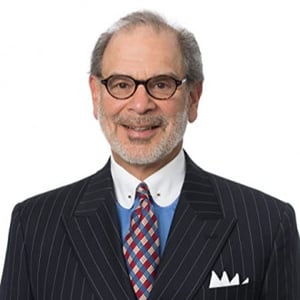
Executive Director, The Financial Technology and Cybersecurity Center
Thomas P. Vartanian is the Executive Director of the Financial Technology & Cybersecurity Center, an author, financial services advisor, expert witness, and board mentor. He is the former Executive Director of the Program on Financial Regulation & Technology at George Mason University’s Antonin Scalia Law School, where he was also a Professor of Law. Between 1983 and 2018, he chaired the Financial Institution’s practices at two international law firms, Dechert LLP and Fried Frank LLP, through four financial crises. Both as a regulator and private practitioner, he has represented parties in a majority of the 50 largest financial institution failures in American history.
Mr. Vartanian served in the Reagan Administration during the S&L crisis as General Counsel of the Federal Home Loan Bank Board and the FSLIC. Prior to that, he served in the Carter Administration in the Office of the Comptroller of the Currency as Special Assistant to the Chief Counsel. Since departing government service, he has advised many subsequent presidential administrations on financial institution issues.
Mr. Vartanian is a futurist and expert in financial technology who has been described by clients in Chambers as “one of the best financial services lawyers in America.” Mr. Vartanian was Chairman of the American Bar Association’s Cyberspace Law Committee between 1998 and 2002, where he chaired an international task force of lawyers from twenty countries which released a seminal report in London in 2000 on the novel issues created by doing business in Cyberspace. He is currently a member of the American Association of Bank Directors’ Task Force on Bank Director Personal Liability Mitigation.
Mr. Vartanian has authored more than four hundred articles and eight books, including his new book, 200 Years of American Financial Panics: Crashes, Recessions, Depressions, and the Technology That Will Change It All chronicling the country’s tumultuous financial history and the impact that technology will have on its future.
He is a frequent lecturer and media commentator on the financial services industry, having appeared on Bloomberg TV, CNN, Fox News, Newsmax, PBS and various local and national radio shows. He has also taught financial services and digital commerce law at Georgetown Law School, George Washington Law School, and Boston University School of Law, and has been a guest lecturer at Harvard Law School.
In 2008, Mr. Vartanian was named “Washingtonian of the Year” based on his use of music and sports to raise money for charities in the D.C. metropolitan area. As a musician, he appeared in the first production in the United States in 1970 of Joseph and the Amazing Technicolor Dreamcoat. His classic rock band, The Johnny Esquire Band, has helped raise approximately $5,000,000 for charities in the Washington D.C. area over the last twenty-five years. Mr. Vartanian also founded and plays for the Washington All Stars, a senior baseball team that has raised more than $500,000 for Special Olympics.
His next book, The Unhackable Internet, will be published in early 2023.
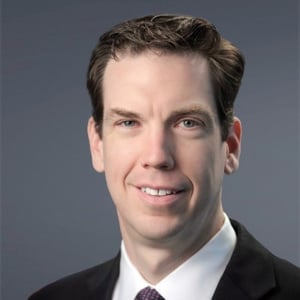
Partner, Fusion Law, PLLC
Paul is the founding partner of Fusion Law, PLLC. He has extensive experience with state, federal, and global regulators building coalitions and implementing policies to promote innovation in financial services. He is responsible for designing and implementing the first state (Arizona) and federal (CFPB) FinTech sandboxes in the United States. He also designed the CFPB no-action letter and trial disclosure policies. He helped found the first global regulatory innovation coalition (Global Financial Innovation Network) and led the founding of the first U.S. regulatory innovation coalition (American Consumer Financial Innovation Network). He served on the Financial Stability Oversight Council subcommittee on digital assets. He also has drafted state-level laws on blockchain and utility tokens.
Paul also has significant enforcement and litigation experience. He led many multi-state consumer protection enforcement matters as Civil Litigation Division Chief at the Arizona Attorney General’s Office.
Prior to his government service, Paul practiced law in the areas of securities litigation and transactional work for approximately six years at two well-known law firms. He also clerked on the U.S. Court of Appeals for the Fourth Circuit.
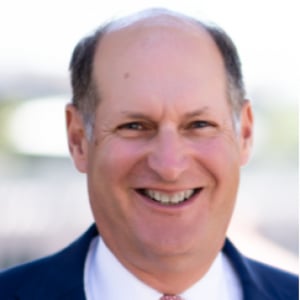
President & Chief Executive Officer, Bank Policy Institute
Greg Baer is the President and Chief Executive Officer at the Bank Policy Institute. Previously, he served as President of The Clearing House Association and Executive Vice President and General Counsel of The Clearing House Payments Company, the largest private sector payments operator in the United States.
Prior to joining The Clearing House, Mr. Baer was Managing Director and Head of Regulatory Policy at JPMorgan Chase. He previously served as General Counsel for Corporate and Regulatory Law at JPMorgan Chase, supervising the company’s legal work with respect to financial reporting, global regulatory affairs, intellectual property, private equity and corporate M&A, and data protection and privacy.
Mr. Baer previously served as Deputy General Counsel for Corporate Law at Bank of America, and as a partner and co-head of the financial institutions group at Wilmer, Cutler, Pickering, Hale & Dorr. From 1999 to 2001, Mr. Baer served as Assistant Secretary for Financial Institutions at the U.S. Department of the Treasury, after serving as Deputy Assistant Secretary. Prior to working for the Treasury Department, Mr. Baer was managing senior counsel at the Board of Governors of the Federal Reserve System.
Mr. Baer received his J.D. cum laude from Harvard Law School in 1987, and served as managing editor of the Harvard Law Review. He received his A.B. with honors from the University of North Carolina at Chapel Hill in 1984.
Mr. Baer also serves as an adjunct professor at Georgetown University Law School, and is a member of the Economic Club of Washington. He currently serves on the board of Honors Carolina, and previously served on the boards of Enterprise Community Partners, the DC College Access Program, and the Appleseed Foundation. He is also the author of two books: The Great Mutual Fund Trap (Random House, 2002) and Life: The Odds (And How to Improve Them) (Penguin-Putnam, 2003).
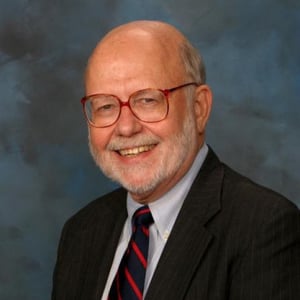
Principal, Ely & Company, Inc.
Bert Ely has specialized in deposit insurance and banking structure issues since 1981. In 1986, he became an early predictor of the S&L crisis and a taxpayer bailout of the FSLIC. In 1991, he was the first person to correctly predict the non-crisis in commercial banking; in 1992, he predicted an eventual taxpayer bailout of the Japanese banking system.
Bert continuously monitors conditions in the banking and S&L industries, monetary policy, and the growing federalization of credit risk. He has helped to draft legislation to enact the cross-guarantee concept for privatizing banking regulation and its related deposit insurance and systemic risks. He has testified on numerous occasions before congressional committees on banking issues and he often speaks on these matters to bankers and others.
Bert first established his consulting practice in 1972. Before that, he was the chief financial officer of a public company, a consultant with Touche, Ross & Company, and an auditor with Ernst & Ernst. He received his MBA from the Harvard Business School in 1968 and his Bachelor's degree in economics in 1964 from Case Western Reserve University.
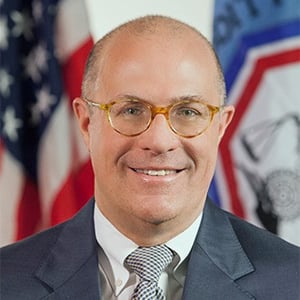
Senior Counsel, Willkie Farr & Gallagher LLP
J. Christopher “Chris” Giancarlo is senior counsel at Willkie Farr & Gallagher LLP, based in the firm’s New York office. Chris served as the thirteenth Chairman of the U.S. Commodity Futures Trading Commission (CFTC), where he oversaw regulation of the futures, options and swaps derivatives markets. Chris was also a successful entrepreneur helping GFI Group Inc. grow into a leading trading platform and technology vendor to global markets for OTC swaps and other derivatives and managing GFI’s successful private equity financing and IPO.
Chris is a renowned blockchain technology advocate and key contributor to the global discourse on cryptocurrencies and digital assets. During his tenure at the CFTC (2014-2019), Chris oversaw the first bitcoin futures products entering the marketplace and applied a “Do No Harm” regulatory approach towards blockchain technology.
Chris has testified often about financial and derivatives markets before the U.S. Congress and EU Parliament and is a frequent guest on broadcast radio and television, including BloombergTV, CNBC, Fox Business and the BBC, as well as podcasts such as “Unchained” and “CoinDesk.” Chris has written and spoken extensively on public policy, legal and other matters involving technology and the financial markets and has authored numerous white papers, articles and op-eds that have been published in The Wall Street Journal, Financial Times, Cato Journal, New York Law Journal, Les Echos and Coinbase.
Chris has over 45,000 followers on Twitter as @giancarloMKTS where he is known as “CryptoDad.”

Senior Fellow, Mises Institute
Alex J. Pollock is a Senior Fellow with the Mises Institute, providing thought and policy leadership on financial issues and the study of financial systems. His work includes cycles of booms and busts, financial crises with their political responses, housing finance, government-sponsored enterprises, risk and uncertainty, central banking, banking and financial regulation, corporate governance, retirement finance, student loans, and the politics of finance.
He previously served as the Principal Deputy Director of the Office of Financial Research in the U.S. Treasury Department 2019-2021. He was a Distinguished Senior Fellow with the R Street Institute 2015-2019 and 2021, and a resident fellow at the American Enterprise Institute, 2004-2015. Among the many aspects of his AEI work, he developed the One Page Mortgage Form to give borrowers in clear form the key information they need in order to know what they are committing themselves to. He was President and CEO of the Federal Home Loan Bank of Chicago from 1991 to 2004. There he invented the Mortgage Partnership Finance program, which successfully created front-end mortgage credit risk sharing beginning in 1997. His decades of banking experience include being a Visiting Scholar at the Federal Reserve Bank of St. Louis, 1991.
Pollock was a director of the CME Group 2004-2019 and of Ascendium Education Group 1989-2019. He is a director and past-chairman of the Great Books Foundation and a past president of the International Union for Housing Finance.
He is the co-author of Surprised Again! - The COVID Crisis and the New Market Bubble (2022), and the author of Finance and Philosophy—Why We’re Always Surprised (2018) and Boom and Bust: Financial Cycles and Human Prosperity (2011), as well as numerous articles and Congressional testimony.
Pollock is a graduate of Williams College, the University of Chicago, and Princeton University.
His work is available on alexjpollock.com.

Senior Fellow and Director of Finance Policy, Competitive Enterprise Institute
John Berlau is a senior fellow and Director of Finance Policy at the Competitive Enterprise Institute. His work focuses on how public policy affects access to capital, entrepreneurship, and investments made by the public and business community alike. In recent years, he has studied the consequences of financial reform efforts passed by Congress like the Sarbanes-Oxley Act, the government’s response to the 2008 financial crisis including the Dodd-Frank Act, the placement of Fannie Mae and Freddie Mac into conservatorship, and the rise of cryptocurrency.
He is also the author of the book George Washington: Entrepreneur: How Our Founding Father’s Private Business Pursuits Changed America and the World. The book received rave reviews in the Wall Street Journal and other forums, and was endorsed by eminent historians and scholars such as Richard Brookhiser, Amity Shlaes, and Craig Shirley.
Berlau is a contributing writer for Forbes. His work has been published and cited in The Wall Street Journal, The New York Times, The Washington Post, Financial Times, Bloomberg News, The Atlantic, Politico, Daily Caller, Washington Examiner, Investor’s Business Daily, National Journal, National Review, American Spectator, Reason Magazine, and more. He is a frequent guest on radio and television programs, including CNBC’s “The Call,” “Power Lunch” and “Closing Bell,” Fox News’ “Fox & Friends” and “Your World with Neil Cavuto,” and Fox Business’ “Cavuto.”
He has testified on the impact of financial regulation before the House Committee on Financial Services and the House Committee on Energy and Commerce. A recognized expert on the phenomenon of crowdfunding, Berlau has spoken at prominent conferences such as South by Southwest Interactive in Austin, Money 20/20 in Las Vegas, the FinTech Global Expo in San Diego, the CFGE Crowdfund Banking and Lending Summit in San Francisco and the Crowdfund Intermediary Regulatory Advocates (CFIRA) Summit in Washington, D.C. He is also author of the widely cited paper “Declaration of Crowdfunding Independence: Finance of the People, by the People, and for the People.”
Berlau is an award-winning financial and political journalist. He served as Washington correspondent for Investor’s Business Daily and as a staff writer for Insight magazine, published by The Washington Times. In 2002, he received the Sandy Hume Memorial Award for Excellence in Political Journalism from Washington’s National Press Club. He was a media fellow at the Hoover Institution in 2003. He graduated from the University of Missouri-Columbia in 1994 with degrees in journalism and economics.
Principal Attorney, Jossey PLLC
Paul H. Jossey is principal attorney at Jossey PLLC. He has practiced law for six years representing clients in both state and federal court in Florida, Georgia, Virginia, and Washington, DC.
His wide-ranging practice has included everything from simple contract disputes to First Amendment litigation to international terrorism. Paul has specialized in campaign finance and election law for the past three years. He has now expanded into business startup and capitalization focusing on the crowdfunding provisions of Title III of the JOBS Act of 2012, whose regulations went live on May 16, 2016.
In addition to managing his own firm, Paul is an Adjunct Fellow at the Center for Competitive Politics where he researches and writes commentary about campaign finance issues. His work has been published in the New York Post, The Hill, The Federalist, The Daily Caller among others.
Prior to starting his own firm, he worked for law firms in Washington, DC and Alexandria, Virginia. After graduating law school he litigated cases for a nonprofit in Atlanta, Georgia.
He is licensed to practice in Georgia, Virginia, and Washington, DC. He holds a Juris Doctor from Case Western Reserve University School of Law and a Bachelor of Science from the University of Southern Mississippi.
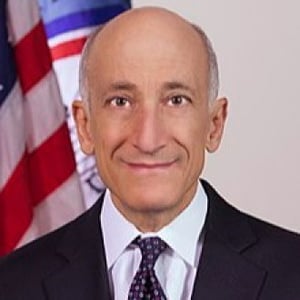
Research Fellow, Harvard Kennedy School
Timothy Massad is currently a Research Fellow at the Kennedy School of Government at Harvard University, an Adjunct Professor of Law at Georgetown Law School and a consultant on financial regulatory and fintech issues.
Mr. Massad served as Chairman of the U.S. Commodity Futures Trading Commission from 2014-2017. Under his leadership, the agency implemented the Dodd Frank reforms of the over-the-counter swaps market and harmonized many aspects of cross-border regulation, including reaching a landmark agreement with the European Union on clearinghouse oversight. The agency also declared virtual currencies to be commodities, introduced reforms to address automated trading and strengthened cybersecurity protections.
Previously, Mr. Massad served as the Assistant Secretary for Financial Stability of the U.S. Department of the Treasury. In that capacity, he oversaw the Troubled Asset Relief Program (TARP), the principal U.S. governmental response to the 2008 financial crisis. During his tenure, Treasury recovered more on all the crisis investments than was disbursed. Mr. Massad was with the Treasury from 2009 to 2014 and also served as a counselor to the Treasury Secretary.
Prior to his government service, Mr. Massad was a partner in the law firm of Cravath, Swaine & Moore, LLP. His practice included corporate finance, derivatives and advising boards of directors. He managed the firm’s Hong Kong office from 1998 to 2002 and represented governments and corporations on transactions throughout Asia. Mr. Massad was also one of a small group of lawyers who drafted the original ISDA standard agreements for swaps.

General Partner, Trust Ventures
Salen is a leading expert on navigating the collision points of innovation and regulation. A former law professor at the University of Chicago and founder of its Innovation Clinic, he has advised startups on regulatory strategy across industries. Previously, Salen practiced law at the international law firms of Kirkland & Ellis and Sidley Austin, and advised low-income entrepreneurs in overcoming barriers at the Institute for Justice.
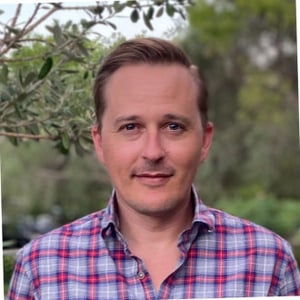
Head of Policy & General Counsel, Crypto, Andreessen Horowitz (a16z)
Miles Jennings joined the a16z Crypto team as General Counsel in August 2021.
Miles was most recently a partner at Latham & Watkins, where he focused on working with startups and investors in heavily regulated sectors including life sciences and, most importantly, crypto. He has been the go-to, trusted advisor for countless startups and crypto projects, guiding them from incorporation through financings, acquisitions, token offerings, and governance matters.
Miles’ experience within the sector stretches back to 2017, when he first began working with ConsenSys, a firm client, and he quickly became one of the most sought-after legal minds working in crypto. During his time at Latham, he co-chaired its global blockchain and cryptocurrency task force, which was composed of over 80 lawyers around the globe. In addition, he worked regularly with almost every venture firm operating in crypto, designing several of the investment structures they use today, and he was counsel to dozens of startups in the sector, including Aave, Bitwise, Avalanche, Element, Idle, Connext, 3Box, and Aztec. Miles was also an editor of Latham’s Global Fintech & Payments blog and has published several articles relating to legal matters relevant to crypto startups.

Former President & CEO, The Federalist Society for Law and Public Policy Studies
Eugene B. Meyer, former President and CEO of the Federalist Society, has served as Executive Director, CEO, and/or President of the organization for more than 40 years. He is responsible for shepherding the organization from a small group of law students to a community of 90,000 lawyers, law students, academics, judges, and others interested in the rule of law. The Society now includes a Student Chapter at nearly every ABA-accredited law school in the country and Lawyers Chapters in 220 major cities across the nation. Gene earned his B.A. in history at Yale in 1975 and his M.A. in political science from the London School of Economics in 1976. Gene currently serves on the boards of the U.S. Chess Center, the Holman Foundation, the Sarah Scaife Foundation, and the advisory board of the Adam Smith Society. He holds the title of International Chess Master.

Managing Partner, West Loop Ventures
Timing is everything, and no one knows this better than a trader. Jeff traded his own money at the Chicago Mercantile Exchange, and was on its board. In the mid-nineties, he was part of a group of equity owners that saw a huge opportunity and remade the entire exchange. When he joined the CME Board, it was worth less than $200 million and had less than $20 million in the bank. CME was the first exchange to demutualize, and the first to go public in November of 2002. Today it is a $55B company and the largest exchange in the world. In April of 2007, he used his market intuition and network to help found Hyde Park Angels. HPA is one of the most active angel groups in the United States. Jeff actively recruited like minded investors dedicated to fostering the entrepreneurial ecosystem throughout the Midwest. In 2017, He was an advisor to the G7 on the future of work, artificial intelligence and big data.
MBA Chicago Booth (2006)
BS Gies College of Business University of Illinois
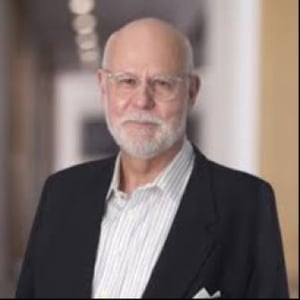
Partner, Foley & Lardner LLP
Patrick Daugherty is a senior corporate and securities law partner of Foley & Lardner LLP, based in Chicago. He also is an adjunct professor of Cornell Law School, where he teaches in residence each Fall Term.
Mr. Daugherty is a member of the Bar in New York, the District of Columbia, North Carolina, Michigan and Illinois. Credentialing organizations have named him “Lawyer of the Year” in both Michigan (2007) and Illinois (2022). A graduate of Northwestern University and of Cornell Law School (Class of 1981), he clerked for SDNY Chief Judge Lloyd F. MacMahon for a year before entering private practice. Mr. Daugherty also served as Counsel to SEC Commissioner Edward H. Fleischman in Washington, D.C., from 1986 to 1989. An Emeritus Member of the American Law Institute, he is the author, co-author or editor of several books and many articles on securities regulation and new financial products.
Mr. Daugherty believes that he was the first lawyer inside the SEC to join the Federalist Society when he became a member in the late 1980s. A mainstay of the Chicago Lawyers Chapter, at the national level of the Society he serves on the Executive Committee for the Financial Services & E-Commerce Practice Group.

Partner, Katten Muchin Rosenman LLP
Clients trust Dan’s experience to help mitigate risks in the face of investigations and enforcement actions and to assess rules issued by financial agencies. From futures commission merchants to swap dealers to derivatives clearing organizations, he is well-positioned to advise on potential enforcement priorities, staff relief and exemptive orders, and submit comments on proposed financial agency rules. Dan has particular experience in handling fraud-related allegations under the Commodity Exchange Act (CEA) and can help clients develop compliance practices for meeting regulatory requirements. He also has successfully challenged rulemakings by financial agencies, such as the Securities and Exchange Commission’s (SEC) first rulemaking under the Dodd-Frank Wall Street Reform and Consumer Protection Act regarding proxy access and the SEC’s attempt to regulate fixed indexed annuities.
In Dan’s role at the CFTC, he assisted with the creation and development of LabCFTC, the agency’s hub for engagement with the fintech community to promote innovation and fair competition. He is highly experienced with helping crypto exchanges, bank and other fintech entities in working with distributed ledger technologies. He also provides counsel on meeting regulatory requirements when bringing new products to market. Dan had a distinguished career at the CFTC, receiving the Chairman’s Award for Excellence in 2019. This award is the CFTC’s highest honor, given to one employee annually in recognition of extraordinary accomplishments and superior service dedicated to realizing the vision, mission and values of the CFTC.
Dan has the full range of litigation experience, having practiced in federal and state court, defending clients in arbitration and jury trial, and arguing ten cases before the federal courts of appeals. He excels at crisis litigation, having successfully obtained a rarely granted writ of mandamus on behalf of the CFTC. Dan uses his extensive litigation experience to advise clients on both litigation and regulatory matters.
Previously, Dan served as counsel to the Assistant Attorney General, Civil Division for the US Department of Justice. He also clerked for the Honorable Douglas H. Ginsburg, Court of Appeals for the District of Columbia Circuit. While in law school, Dan served as Executive Editor of The University of Chicago Law Review.

Chief Executive Officer, Typhon Capital Management, LLC
Mr. Koutoulas is the head of Typhon Capital Management, a NFA-registered Commodity Trading Advisor and Commodity Pool Operator. Typhon manages several CTA strategies, each isolated to a single asset class so that investors may select specific niche exposures that best suit their portfolios. Typhon also offers customized multi-strategy programs that are available either via cross-margined managed accounts, or in custom fund structures.
James has a broad background across the hedge fund industry, including alternative investment analysis, risk management, corporate finance, securities law, IT/software development, and marketing honed through his experience managing eight startups. He has supervised the trading of several alternative investment strategies, served as the COO and chief analyst of a boutique fund of funds provider, was the head of operations and software development at a market and operational risk firm, and ran an IT and management consulting company with national operations.
James earned his law degree from Northwestern Law where he specialized in securities law. He also has a degree in Finance from the University of Florida, where he was a National Merit Scholar and AP National Scholar.

George C. Dix Professor in Constitutional Law, Northwestern University Pritzker School of Law
John O. McGinnis is a graduate of Harvard College and Harvard Law School where he was an editor of the Harvard Law Review. He also has an MA degree from Balliol College, Oxford, in philosophy and theology. Professor McGinnis clerked on the U.S. Court of Appeals for the District of Columbia. From 1987 to 1991, he was deputy assistant attorney general in the Office of Legal Counsel at the Department of Justice. He is the author of Accelerating Democracy: Transforming Government Through Technology (Princeton 2013) and Originalism and the Good Constitution (Harvard 2013) (with M. Rappaport). He is a past winner of the Paul Bator award given by the Federalist Society to an outstanding academic under 40. He has been listed by the United States on the roster of panelists who may be called upon to decide World Trade Organization Disputes.
Commissioner, United States Securities and Exchange Commission
Hester M. Peirce was appointed by President Donald J. Trump to the U.S. Securities and Exchange Commission and was sworn in on January 11, 2018.
Prior to joining the SEC, Commissioner Peirce conducted research on the regulation of financial markets at the Mercatus Center at George Mason University. She was a Senior Counsel on the U.S. Senate Committee on Banking, Housing, and Urban Affairs, where she advised Ranking Member Richard Shelby and other members of the Committee on securities issues. Commissioner Peirce served as counsel to SEC Commissioner Paul S. Atkins. She also worked as a Staff Attorney in the SEC’s Division of Investment Management. Commissioner Peirce was an associate at Wilmer, Cutler & Pickering (now WilmerHale) and clerked for Judge Roger Andewelt on the Court of Federal Claims.
Commissioner Peirce earned her bachelor’s degree in Economics from Case Western Reserve University and her JD from Yale Law School.


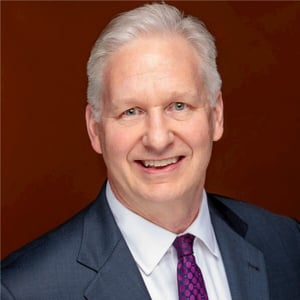
Regulating the New Crypto Ecosystem: SEC Commissioner Hon. Hester M. Peirce
Washington, DCCrypto Wars: Balancing Privacy versus National Security
Dina Ellis Rochkind, Michele Korver, Kathy Kraninger, Norbert J. Michel, Mick Mulvaney
Senior officials in the Administration have expressed concern about cryptocurrencies being used for criminal activity...
The Government’s Arms Around Cryptocurrency: Hug or Stranglehold?
Douglas Elliott, Michael Piwowar, Dawn Stump, Thomas P. Vartanian, Paul N. Watkins
As the cryptocurrency industry grows, state and federal governments are considering how that industry should...
Central Bank Digital Currency--Efficient Innovation or the End of the Private Banking System?
Greg Baer, Bert Ely, J. Christopher Giancarlo, Alex J. Pollock
Central Bank Digital Currencies (CBDC) are the subject of a global debate. In one version,...
A Discussion on Stablecoins
John Berlau, Paul H. Jossey, Timothy G. Massad
Stablecoins are unique types of digital tokens that have emerged out of the cryptocurrency revolution...
Opening and a Conversation on Regulation as Opportunity
Salen Churi, Miles Jennings, Ann McDonald, Eugene B. Meyer
Convocation Eugene B. Meyer, President and CEO, The Federalist Society A Conversation on Regulation as Opportunity...
Digital Assets in 2021
Jeffrey R. Carter, Patrick Daugherty, Daniel J. Davis, James Koutoulas, Matt Lisle, John O. McGinnis
Hear from a panel of experts who will discuss key legal and regulatory issues surrounding...
Capital Conversations: Hester Peirce, Commissioner, U.S. Securities and Exchange Commission
Hester M. Peirce
Join us as Hester Peirce, Commissioner on the Securities and Exchange Commission, discusses the intersection...