
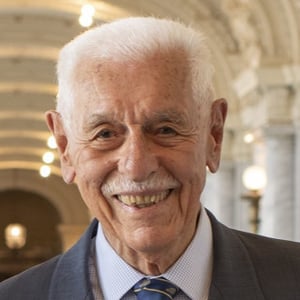
Judge, United States Court of Appeals, Ninth Circuit
Judge Carlos Bea serves as a judge on the United States Court of Appeals for the Ninth Circuit. He received his Bachelor's Degree from Stanford University in 1956 and his J.D. from Stanford Law School in 1958. Judge Bea was born in San Sebastian, Spain, and immigrated with his family to Cuba in 1939. In 1952, he represented Cuba on the Cuban National basketball team in the Helsinki Olympics. Judge Bea became a naturalized citizen of the United States in 1958. He engaged in private practice in San Francisco, principally in the area of civil trials (jury and non-jury), from 1959-75 at Dunne, Phelps & Mills and from 1975-90 at Carlos Bea, A Law Corporation. He taught courses in civil litigation advocacy at Hastings College of Law and Stanford Law School. From 1990 to 2003, Judge Bea served as a judge of the San Francisco Superior Court. He was nominated by President George W. Bush to the United States Court of Appeals for the Ninth Circuit and was confirmed in 2003.
Judge Bea and his wife Louise reside in San Francisco, where they raised their four sons, Sebastian, Alexander, Nicholas, and Dominic.
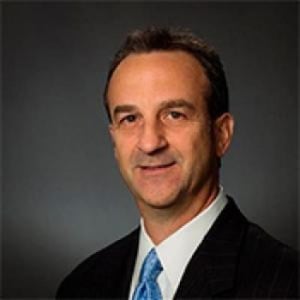
Senior Counsel and Vice President of U.S. Litigation, Alliance Defending Freedom
David A. Cortman, Esq., serves as senior counsel and vice president of U.S. litigation with Alliance Defending Freedom. He joined ADF in 2005 and currently supervises a team of nearly 40 attorneys and legal staff who specialize in constitutional law, focusing on religious freedom, sanctity of life, and marriage and family.
Cortman has successfully litigated over 200 constitutional law cases in both federal and state court at all levels. He has also litigated several U.S. Supreme Court cases, including arguing before the Court in Reed v. Town of Gilbert, which resulted in a 9-0 victory, with the Court holding that the government could not discriminate against religious speech while favoring political speech. He served as lead counsel in Trinity Lutheran Church of Columbia v. Pauley, which was decided in the Church's favor. He has also served as lead or co-counsel in victories at the high court in Conestoga Wood Specialties v. Burwell, successfully challenging the U.S. Department of Health and Human Services abortion pill mandate that forces employers to provide healthcare coverage that includes abortion-inducing drugs in violation of their religious convictions; Town of Greece v. Galloway, successfully defending the freedom of Americans to pray at public meetings.
Cortman earned his J.D. from Regent University School of Law in 1996, graduating magna cum laude. He is a member of the state bar in Georgia, Florida, Arizona, and the District of Columbia, and is admitted to practice in over two dozen federal courts, including the U.S. Supreme Court. He also teaches legal courses on the First Amendment and civil rights litigation.
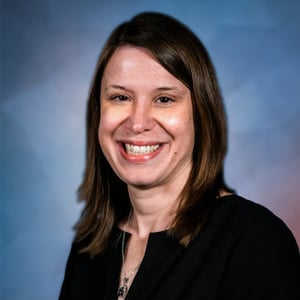
Senior Director of Strategic Partnerships, First Liberty Institute
Lisa Budzynski Ezell is the former Vice President and Director of the Federalist Society’s Lawyers Chapters. In this role, she managed a growing network of over 90 lawyers chapters nationwide, including oversight of leadership recruitment, chapter programming, state conferences, civics education outreach, and young lawyers activities. She holds a Bachelor of Arts degree from Saint Mary’s College in Political Science and History and a Master of Public Policy from George Mason University.
Fred H. Paulus Professor of Law, Director of the Center for Reli, Willamette University College of Law
Steven K. Green is the Fred H. Paulus Professor of Law and Affiliated Professor of History at Willamette University where he teaches courses in Constitutional Law, First Amendment, Legal History, Jurisprudence, and Criminal Law in the College of Law, and Legal History and American Religious History in the College of Liberal Arts. In addition, Professor Green directs the interdisciplinary Center for Religion, Law and Democracy, one of Willamette’s Centers of Excellence.
Professor Green joined the Willamette faculty in August 2001, after serving for 10 years as legal director and special counsel for Americans United for Separation of Church and State, a Washington, DC, public interest organization that concentrates on First Amendment issues. Professor Green has extensive litigation and appellate experience in First Amendment law involving issues such as school prayer, public funding of religious institutions, public religious displays, religious discrimination, religious free exercise and freedom of speech. He has participated in several cases before the U.S. Supreme Court, including Zelman v. Simmons-Harris (2002), the Cleveland school vouchers case; Mitchell v. Helms (2000), authorizing state-paid computers and educational equipment to religious schools; and Santa Fe Ind. Sch. Dist. v. Doe (2000), striking prayer at public school football games. He regularly submits amicus curiae (friend-of-the-court) briefs at the U.S. Supreme Court, most recently co-authoring two amicus briefs in the 2013-14 term.
In addition, Professor Green has significant legislative experience, having testified before Congress and several state legislatures. He helped draft federal and state laws affecting religious liberty interests, including the Religious Freedom Restoration Act (1993), the Religious Land-Use and Institutionalized Persons Protection Act (2000), and the Oregon Workplace Religious Freedom Act (2009).
Professor Green is a widely sought speaker at national conferences and a prolific author whose writings have been cited by the U.S. Supreme Court and lower courts. He is the author of Inventing a Christian America: The Myth of the Religious Founding (Oxford University Press, 2015), The Bible, the School, and the Constitution: The Clash that Shaped Modern Church-State Doctrine (Oxford, 2012); The Second Disestablishment: Church and State in Nineteenth Century America (Oxford, 2010), co-author of Religious Freedom and the Supreme Court (Baylor, 2008), and a contributor to the Encyclopedia of American Civil Liberties and the Yale Biographical Dictionary of American Law, among others. He is currently writing a new book on church and state in the middle of the twentieth century. Professor Green holds a PhD in American constitutional history and an MA in American religious history from the University of North Carolina, a JD from the University of Texas, and a BA in history and political science, Phi Beta Kappa, from Texas Christian University. He also took post-graduate study at Duke Law and Divinity Schools.
Professor Green serves on the public policy board of Ecumenical Ministries of Oregon. He also serves on the editorial council of the Journal of Church and State and the legal advisory committee of the National Center for Science Education. He previously served on the religious liberty committee of the National Council of Churches and as recorder for the Oregon Law Commission's study of the faith-based initiative in Oregon.
In 2014 and 2006, Professor Green received the Robert L. Misner Award for Excellence in Scholarship, which was established in memory of former College of Law Dean and Professor Robert L. Misner. Professor Green also received the 2003 Professor of the Year Award for Teaching.
Judge, United States Court of Appeals, Ninth Circuit
Judge Carlos Bea serves as a judge on the United States Court of Appeals for the Ninth Circuit. He received his Bachelor's Degree from Stanford University in 1956 and his J.D. from Stanford Law School in 1958. Judge Bea was born in San Sebastian, Spain, and immigrated with his family to Cuba in 1939. In 1952, he represented Cuba on the Cuban National basketball team in the Helsinki Olympics. Judge Bea became a naturalized citizen of the United States in 1958. He engaged in private practice in San Francisco, principally in the area of civil trials (jury and non-jury), from 1959-75 at Dunne, Phelps & Mills and from 1975-90 at Carlos Bea, A Law Corporation. He taught courses in civil litigation advocacy at Hastings College of Law and Stanford Law School. From 1990 to 2003, Judge Bea served as a judge of the San Francisco Superior Court. He was nominated by President George W. Bush to the United States Court of Appeals for the Ninth Circuit and was confirmed in 2003.
Judge Bea and his wife Louise reside in San Francisco, where they raised their four sons, Sebastian, Alexander, Nicholas, and Dominic.
Senior Counsel and Vice President of U.S. Litigation, Alliance Defending Freedom
David A. Cortman, Esq., serves as senior counsel and vice president of U.S. litigation with Alliance Defending Freedom. He joined ADF in 2005 and currently supervises a team of nearly 40 attorneys and legal staff who specialize in constitutional law, focusing on religious freedom, sanctity of life, and marriage and family.
Cortman has successfully litigated over 200 constitutional law cases in both federal and state court at all levels. He has also litigated several U.S. Supreme Court cases, including arguing before the Court in Reed v. Town of Gilbert, which resulted in a 9-0 victory, with the Court holding that the government could not discriminate against religious speech while favoring political speech. He served as lead counsel in Trinity Lutheran Church of Columbia v. Pauley, which was decided in the Church's favor. He has also served as lead or co-counsel in victories at the high court in Conestoga Wood Specialties v. Burwell, successfully challenging the U.S. Department of Health and Human Services abortion pill mandate that forces employers to provide healthcare coverage that includes abortion-inducing drugs in violation of their religious convictions; Town of Greece v. Galloway, successfully defending the freedom of Americans to pray at public meetings.
Cortman earned his J.D. from Regent University School of Law in 1996, graduating magna cum laude. He is a member of the state bar in Georgia, Florida, Arizona, and the District of Columbia, and is admitted to practice in over two dozen federal courts, including the U.S. Supreme Court. He also teaches legal courses on the First Amendment and civil rights litigation.
Senior Director of Strategic Partnerships, First Liberty Institute
Lisa Budzynski Ezell is the former Vice President and Director of the Federalist Society’s Lawyers Chapters. In this role, she managed a growing network of over 90 lawyers chapters nationwide, including oversight of leadership recruitment, chapter programming, state conferences, civics education outreach, and young lawyers activities. She holds a Bachelor of Arts degree from Saint Mary’s College in Political Science and History and a Master of Public Policy from George Mason University.
Fred H. Paulus Professor of Law, Director of the Center for Reli, Willamette University College of Law
Steven K. Green is the Fred H. Paulus Professor of Law and Affiliated Professor of History at Willamette University where he teaches courses in Constitutional Law, First Amendment, Legal History, Jurisprudence, and Criminal Law in the College of Law, and Legal History and American Religious History in the College of Liberal Arts. In addition, Professor Green directs the interdisciplinary Center for Religion, Law and Democracy, one of Willamette’s Centers of Excellence.
Professor Green joined the Willamette faculty in August 2001, after serving for 10 years as legal director and special counsel for Americans United for Separation of Church and State, a Washington, DC, public interest organization that concentrates on First Amendment issues. Professor Green has extensive litigation and appellate experience in First Amendment law involving issues such as school prayer, public funding of religious institutions, public religious displays, religious discrimination, religious free exercise and freedom of speech. He has participated in several cases before the U.S. Supreme Court, including Zelman v. Simmons-Harris (2002), the Cleveland school vouchers case; Mitchell v. Helms (2000), authorizing state-paid computers and educational equipment to religious schools; and Santa Fe Ind. Sch. Dist. v. Doe (2000), striking prayer at public school football games. He regularly submits amicus curiae (friend-of-the-court) briefs at the U.S. Supreme Court, most recently co-authoring two amicus briefs in the 2013-14 term.
In addition, Professor Green has significant legislative experience, having testified before Congress and several state legislatures. He helped draft federal and state laws affecting religious liberty interests, including the Religious Freedom Restoration Act (1993), the Religious Land-Use and Institutionalized Persons Protection Act (2000), and the Oregon Workplace Religious Freedom Act (2009).
Professor Green is a widely sought speaker at national conferences and a prolific author whose writings have been cited by the U.S. Supreme Court and lower courts. He is the author of Inventing a Christian America: The Myth of the Religious Founding (Oxford University Press, 2015), The Bible, the School, and the Constitution: The Clash that Shaped Modern Church-State Doctrine (Oxford, 2012); The Second Disestablishment: Church and State in Nineteenth Century America (Oxford, 2010), co-author of Religious Freedom and the Supreme Court (Baylor, 2008), and a contributor to the Encyclopedia of American Civil Liberties and the Yale Biographical Dictionary of American Law, among others. He is currently writing a new book on church and state in the middle of the twentieth century. Professor Green holds a PhD in American constitutional history and an MA in American religious history from the University of North Carolina, a JD from the University of Texas, and a BA in history and political science, Phi Beta Kappa, from Texas Christian University. He also took post-graduate study at Duke Law and Divinity Schools.
Professor Green serves on the public policy board of Ecumenical Ministries of Oregon. He also serves on the editorial council of the Journal of Church and State and the legal advisory committee of the National Center for Science Education. He previously served on the religious liberty committee of the National Council of Churches and as recorder for the Oregon Law Commission's study of the faith-based initiative in Oregon.
In 2014 and 2006, Professor Green received the Robert L. Misner Award for Excellence in Scholarship, which was established in memory of former College of Law Dean and Professor Robert L. Misner. Professor Green also received the 2003 Professor of the Year Award for Teaching.

Vice President, Edwin Meese III Institute for the Rule of Law, Advancing American Freedom
John G. Malcolm oversees Advancing American Freedom’s work to increase understanding of the Constitution and the rule of law as Vice President of the organization’s Edwin Meese III Institute for the Rule of Law. Malcolm brings to the challenge a wealth of legal expertise and experience in both the public and private sectors.
Prior to joining Advancing American Freedom in 2025, Malcolm was the Vice President of the Institute for Constitutional Government and the Director of the Meese Center for Legal and Judicial Studies at the Heritage Foundation. Prior to joining Heritage in 2012, Malcolm was general counsel at the U.S. Commission on International Religious Freedom, as well as a distinguished practitioner in residence at Pepperdine Law School. From 2004 to 2009, Malcolm was executive vice president and director of worldwide anti-piracy operations for the Motion Picture Association.
Malcolm served as a deputy assistant attorney general in the Department of Justice’s Criminal Division from 2001 to 2004, where he oversaw sections on computer crime and intellectual property, domestic security, child exploitation and obscenity, and special investigations. Immediately prior to that, he was a founding partner in the Atlanta law firm of Malcolm & Schroeder, LLP.
From 1990 to 1997, Malcolm was an assistant U.S. attorney in Atlanta, assigned to the fraud and public corruption section, and also an associate independent counsel, investigating fraud and abuse in the Department of Housing and Urban Development. He was honored with the Director’s Award for Superior Performance for his work in connection with the successful prosecution of Walter Leroy Moody Jr., who assassinated an 11th Circuit judge and the head of the Savannah chapter of the NAACP.
A graduate of Harvard Law School and Columbia College, Malcolm began his career as a law clerk to a federal district court judge and a federal appellate court judge, and as an associate at the Atlanta-based law firm of Sutherland, Asbill & Brennan (new Eversheds Sutherland).
Malcolm, who resides in Washington, D.C., serves on the Board of Trustees of the Washington National Opera and is a Senate-confirmed member of the Board of Directors of the Legal Services Corporation, the largest funder of civil legal aid in the United States.
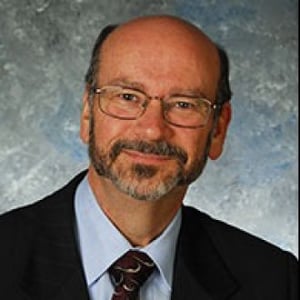
Clinical Professor of Law, Dale E. Fowler School of Law, Chapman University
Clinical Professor of Law, Dale E. Fowler School of Law, Chapman University
Judge, United States Court of Appeals, Ninth Circuit
Judge Carlos Bea serves as a judge on the United States Court of Appeals for the Ninth Circuit. He received his Bachelor's Degree from Stanford University in 1956 and his J.D. from Stanford Law School in 1958. Judge Bea was born in San Sebastian, Spain, and immigrated with his family to Cuba in 1939. In 1952, he represented Cuba on the Cuban National basketball team in the Helsinki Olympics. Judge Bea became a naturalized citizen of the United States in 1958. He engaged in private practice in San Francisco, principally in the area of civil trials (jury and non-jury), from 1959-75 at Dunne, Phelps & Mills and from 1975-90 at Carlos Bea, A Law Corporation. He taught courses in civil litigation advocacy at Hastings College of Law and Stanford Law School. From 1990 to 2003, Judge Bea served as a judge of the San Francisco Superior Court. He was nominated by President George W. Bush to the United States Court of Appeals for the Ninth Circuit and was confirmed in 2003.
Judge Bea and his wife Louise reside in San Francisco, where they raised their four sons, Sebastian, Alexander, Nicholas, and Dominic.
Senior Counsel and Vice President of U.S. Litigation, Alliance Defending Freedom
David A. Cortman, Esq., serves as senior counsel and vice president of U.S. litigation with Alliance Defending Freedom. He joined ADF in 2005 and currently supervises a team of nearly 40 attorneys and legal staff who specialize in constitutional law, focusing on religious freedom, sanctity of life, and marriage and family.
Cortman has successfully litigated over 200 constitutional law cases in both federal and state court at all levels. He has also litigated several U.S. Supreme Court cases, including arguing before the Court in Reed v. Town of Gilbert, which resulted in a 9-0 victory, with the Court holding that the government could not discriminate against religious speech while favoring political speech. He served as lead counsel in Trinity Lutheran Church of Columbia v. Pauley, which was decided in the Church's favor. He has also served as lead or co-counsel in victories at the high court in Conestoga Wood Specialties v. Burwell, successfully challenging the U.S. Department of Health and Human Services abortion pill mandate that forces employers to provide healthcare coverage that includes abortion-inducing drugs in violation of their religious convictions; Town of Greece v. Galloway, successfully defending the freedom of Americans to pray at public meetings.
Cortman earned his J.D. from Regent University School of Law in 1996, graduating magna cum laude. He is a member of the state bar in Georgia, Florida, Arizona, and the District of Columbia, and is admitted to practice in over two dozen federal courts, including the U.S. Supreme Court. He also teaches legal courses on the First Amendment and civil rights litigation.
Senior Director of Strategic Partnerships, First Liberty Institute
Lisa Budzynski Ezell is the former Vice President and Director of the Federalist Society’s Lawyers Chapters. In this role, she managed a growing network of over 90 lawyers chapters nationwide, including oversight of leadership recruitment, chapter programming, state conferences, civics education outreach, and young lawyers activities. She holds a Bachelor of Arts degree from Saint Mary’s College in Political Science and History and a Master of Public Policy from George Mason University.
Fred H. Paulus Professor of Law, Director of the Center for Reli, Willamette University College of Law
Steven K. Green is the Fred H. Paulus Professor of Law and Affiliated Professor of History at Willamette University where he teaches courses in Constitutional Law, First Amendment, Legal History, Jurisprudence, and Criminal Law in the College of Law, and Legal History and American Religious History in the College of Liberal Arts. In addition, Professor Green directs the interdisciplinary Center for Religion, Law and Democracy, one of Willamette’s Centers of Excellence.
Professor Green joined the Willamette faculty in August 2001, after serving for 10 years as legal director and special counsel for Americans United for Separation of Church and State, a Washington, DC, public interest organization that concentrates on First Amendment issues. Professor Green has extensive litigation and appellate experience in First Amendment law involving issues such as school prayer, public funding of religious institutions, public religious displays, religious discrimination, religious free exercise and freedom of speech. He has participated in several cases before the U.S. Supreme Court, including Zelman v. Simmons-Harris (2002), the Cleveland school vouchers case; Mitchell v. Helms (2000), authorizing state-paid computers and educational equipment to religious schools; and Santa Fe Ind. Sch. Dist. v. Doe (2000), striking prayer at public school football games. He regularly submits amicus curiae (friend-of-the-court) briefs at the U.S. Supreme Court, most recently co-authoring two amicus briefs in the 2013-14 term.
In addition, Professor Green has significant legislative experience, having testified before Congress and several state legislatures. He helped draft federal and state laws affecting religious liberty interests, including the Religious Freedom Restoration Act (1993), the Religious Land-Use and Institutionalized Persons Protection Act (2000), and the Oregon Workplace Religious Freedom Act (2009).
Professor Green is a widely sought speaker at national conferences and a prolific author whose writings have been cited by the U.S. Supreme Court and lower courts. He is the author of Inventing a Christian America: The Myth of the Religious Founding (Oxford University Press, 2015), The Bible, the School, and the Constitution: The Clash that Shaped Modern Church-State Doctrine (Oxford, 2012); The Second Disestablishment: Church and State in Nineteenth Century America (Oxford, 2010), co-author of Religious Freedom and the Supreme Court (Baylor, 2008), and a contributor to the Encyclopedia of American Civil Liberties and the Yale Biographical Dictionary of American Law, among others. He is currently writing a new book on church and state in the middle of the twentieth century. Professor Green holds a PhD in American constitutional history and an MA in American religious history from the University of North Carolina, a JD from the University of Texas, and a BA in history and political science, Phi Beta Kappa, from Texas Christian University. He also took post-graduate study at Duke Law and Divinity Schools.
Professor Green serves on the public policy board of Ecumenical Ministries of Oregon. He also serves on the editorial council of the Journal of Church and State and the legal advisory committee of the National Center for Science Education. He previously served on the religious liberty committee of the National Council of Churches and as recorder for the Oregon Law Commission's study of the faith-based initiative in Oregon.
In 2014 and 2006, Professor Green received the Robert L. Misner Award for Excellence in Scholarship, which was established in memory of former College of Law Dean and Professor Robert L. Misner. Professor Green also received the 2003 Professor of the Year Award for Teaching.
Former Adjunct Professor of Law; former Special Counsel to the President; former federal prosecutor, Georgetown Law (ret.)
Bill Otis is a former Adjunct Professor of Law at Georgetown University, a one-time federal prosecutor, and a former Special White House Counsel for President George H. W. Bush. After graduating from Stanford Law School, he started his career in the Criminal Division of the Justice Department, then became chief of appeals for the US Attorney's Office for the Eastern District of Virginia. In the 1980's he served on the Department's "Train the Trainer" team, which taught US Attorneys Offices across the county how to implement the then-new Sentencing Reform Act. He has held several posts in the federal government, including Special Assistant to the Secretary of Energy and Counselor to the head of the Drug Enforcement Administration, in addition to the White House post. He has testified before Congress on issues in criminal procedure, illegal drugs, the US Sentencing Commission, and the death penalty, and has given numerous media interviews on those and other subjects. He currently teaches a seminar at Georgetown Law titled "Conservatism in Law in America" with his wife, Federalist Society co-founder Lee Liberman Otis.
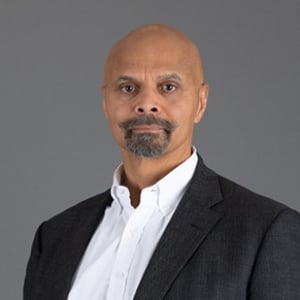
Partner, Benesch, Friedlander, Coplan & Aronoff LLP
Peter focuses his legal practice on representing management in employment-related litigation and in contract negotiations, NLRB proceedings, EEO matters and arbitration.
Peter Kirsanow is a partner with Benesch’s Labor & Employment Practice Group. He returned to Benesch in January 2008 after serving as a presidential appointee to the National Labor Relations Board (NLRB) in Washington D.C. for two years. While serving on the NLRB, he was involved with significant decisions including Oakwood Healthcare, Inc., Dana/Metaldyne and Oil Capital Sheet Metal, Inc. In addition, Peter testified before the Senate Judiciary Committee on the nominations of John Roberts, Samuel Alito, Sonia Sotomayor, Elena Kagan and Neil Gorsuch to the Supreme Court. He also continues to testify before and advise members of the U.S. Congress on employment law matters, most recently on November 18 before the House Subcommittee on Investigations and Oversight regarding disparate impact theory.
Peter was recently reappointed by the Majority Leader of the House of Representatives to his fourth consecutive six-year term on the U.S. Commission on Civil Rights. This is a part-time position which will expire in December 2025.
Recently, Peter and a team of Benesch attorneys served as lead counsel to the National Association of Manufacturers in litigation before the U.S. Circuit Court for the District of Columbia against the NLRB, challenging the Board’s Notice of Employer Rights Posting Rule. The court ruled in favor of Benesch’s client, striking down the NLRB’s Rule in its entirety. This ruling impacts over 6,000,000 employers nationwide which would have been subject to the posting requirement.
Additionally, Peter is past chair of the board of directors of the Center for New Black Leadership and is a member of Benesch’s Diversity & Inclusion Committee. This committee helps ensure that the firm promotes an environment in which differences are respected, employees are treated fairly, and individual skills and talents are valued.

Debate—State Blaine Amendments
Carlos T. Bea, David A. Cortman, Lisa Ezell, Steven Green
The Supreme Court has agreed to hear oral arguments in Trinity Lutheran Church of Columbia, Inc. v....
Debate—State Blaine Amendments
Carlos T. Bea, David A. Cortman, Lisa Ezell, Steven Green
The Supreme Court has agreed to hear oral arguments in Trinity Lutheran Church of Columbia, Inc. v....
Debate—State Blaine Amendments
2017 Annual Western Chapters Conference
Simi Valley, CA2017 Annual Western Chapters Conference
Simi Valley, CABook Review: The War on Cops
John G. Malcolm
Note from the Editor: This book review supports the basic contentions of Heather Mac Donald’s...
Debate on Sentencing Reform
Dallas, TexasProving Racial Discrimination: The Ferguson DOJ Report
St. Louis, MissouriPart II: Can States Require Proof of Citizenship for Voter Registration?: Arizona v. Inter Tribal Council of Arizona
Anthony (Tom) Caso
Note from the Editor: This article discusses the Arizona v. Inter Tribal Council of Arizona...
Can States Require Proof of Citizenship for Voter Registration?--Arizona v. Inter Tribal Council of Arizona
Anthony (Tom) Caso
Introduction This term the Court will hear a case examining a perceived clash between state...
Tavern Debate - Resolved: The Only Fair Tax Is a Flat Rate Tax
Chicago, Illinois