

Managing Director, BGR Group
Sean Cooksey, a former senior official in the Trump administration and on Capitol Hill, works as a Managing Director with BGR Group’s Commerce and Infrastructure Practice. He brings a wealth of executive branch, legislative, and private sector experience to his work with clients on issues ranging from congressional oversight and investigations, competition and antitrust matters, intellectual property and technology policy, and litigation support.
Prior to joining the BGR team, Sean was Counsel to Vice President JD Vance. In this role, he served as the Vice President’s chief legal adviser and a senior policy staffer within the White House. As part of the Trump-Vance administration, he regularly advised the Vice President and senior White House staff on constitutional law, domestic policy, ethics, and executive and judicial nominations.
Previously, Sean was a member of the Federal Election Commission, after being nominated by President Trump in 2020. Sean served on the FEC for four years and was elected Chairman for the 2024 presidential election year, overseeing an agency of 300 staff to administer federal campaign-finance law.
Sean began his political career in the United States Senate, where he served as General Counsel for Senator Josh Hawley (R-MO) and Deputy Chief Counsel for Senator Ted Cruz (R-TX). During his tenure in both offices, Sean worked on the Senate’s Committee on the Judiciary on some of the Senate’s most high-stakes matters, including major legislation and two Supreme Court confirmations.
Prior to his Senate service, Sean worked at an international law firm in Washington, D.C., where his practice focused on appeals and constitutional law. He also served as a law clerk for Judge Jerry E. Smith of the United States Court of Appeals for the Fifth Circuit in Houston, Texas.
Sean has appeared on television, on radio, and in print in outlets such as The Ingraham Angle, Varney & Co., Morning Edition, The New York Times, The Wall Street Journal, The Washington Post, Axios, and Politico. He speaks regularly at major conferences, including the Republican National Lawyers Association and the National Association of Business PACs.

Founder and Executive Director, National Security Institute; Assistant Professor of Law, Antonin Scalia Law School, George Mason University
Jamil N. Jaffer is the Founder and Executive Director of the National Security Institute at the Antonin Scalia Law School at George Mason University where he also serves as an Assistant Professor of Law, Director of the National Security Law and Policy Program, and Director of the Cyber, Intelligence, and National Security LLM Program. Jamil also teaches classes on counterterrorism, intelligence, surveillance, cybersecurity, and other national security matters, as well as a summer course held abroad with U.S. Supreme Court Justice Neil M. Gorsuch. Jamil is also affiliated with Stanford University’s Center for International Security and Cooperation and previously served as a Visiting Fellow at the Hoover Institution from 2016 to 2019.
Jamil is also a Venture Partner with Paladin Capital Group, where he assists the firm with investments across the full range of its themes and theses, including a focus on dual-use national security technologies. Jamil also serves on the board of directors of RangeForce, a cybersecurity training and readiness platform startup and Tozny, a digital identity startup, and on the advisory boards of U.S. Strategic Metals, North America’s largest primary producer of cobalt, a critical mineral used in EV batteries, aerospace, and other national security applications; and Constella Intelligence, a deep and dark web intelligence startup. Jamil also serves as an advisor to Beacon Global Strategies, a strategic advisory firm and Duco, a technology platform startup that connects corporations with geopolitical and international business experts. Jamil is also the managing director of Trigraph Caveat Capital, a private investment vehicle.
Among other things, Jamil currently serves on the Board of Directors for the Greater Washington Board of Trade, the Board of Advisors for the Global Cyber Alliance, and the Advisory Board of the Foundation for the Defense of Democracies’ Center on Cyber and Tech Innovation, the Executive Committee of the Reagan Institute Strategy Group. Jamil is also a Fellow at the Academy for Judaic, Christian, and Islamic Studies, an advisor to the Concordia Summit, and is a member of the Board of Directors for the Center for Intelligence Policy, the Board of Directors of Speech First, and the Executive Committee of the International Law and National Security Practice Group of the Federalist Society.
Immediately prior to his current positions, from 2015-2021, Jamil served as a senior business leader at IronNet Cybersecurity, helping take the company from a bootstrapped first-year technology products startup through two rounds of venture capital fundraising, growing from 40 employees to over 300, and through its listing on New York Stock Exchange. In his role as IronNet's Senior Vice President for Strategy, Partnerships & Corporate Development, Jamil worked directly for the co-CEOs of the company, Gen (ret.) Keith B. Alexander, the former Director of the National Security Agency and Founding Commander of U.S. Cyber Command, and Bill Welch, the former COO of Zscaler and Duo; in that role, Jamil led all of the company’s strategic and technology partnership efforts, including developing go-to-market and technology integration plans with some of the largest cloud platforms and cybersecurity companies in the market, evaluating potential acquisition targets, and developing overall corporate strategy and thought leadership around collective security and collaborative defense in the cyber arena.
Prior to his time at IronNet, Jamil served on the leadership team of the Senate Foreign Relations Committee as Chief Counsel and Senior Advisor under Chairman Bob Corker (R-TN), where he worked on key national security and foreign policy issues, including leading the drafting of the proposed Authorization for the Use of Military Force against ISIS in 2014 and 2015, the AUMF against Syria in 2013, and revisions to the 9/11 AUMF against al Qaeda. Jamil was also the lead architect of the Iran Nuclear Agreement Review Act and two sanctions laws against Russia for its first intervention in Ukraine.
Prior to joining SFRC, Jamil served as Senior Counsel to the House Permanent Select Committee on Intelligence under Chairman Mike Rogers (R-MI) where he led the committee’s oversight of NSA surveillance, NRO intelligence issues, and NGA analytic and collection matters, as well as intelligence community-wide counterterrorism issues. Jamil was also the lead architect of the Cyber Intelligence Sharing and Protection Act, the nation’s first cyber threat intelligence sharing legislation that was signed into law in 2015.
In the Bush Administration, Jamil served in the White House as an Associate Counsel to the President, handling Defense Department, State Department, and intelligence community matters, and serving as one of the White House Counsel’s primary representatives to the National Security Council Deputies Committee.
Prior to the White House, Jamil served on the leadership team of the Justice Department’s National Security Division as Counsel to the Assistant Attorney General for National Security, where he focused on counterterrorism and intelligence matters. At NSD, Jamil helped lead the division’s work on In re: Directives, the first ever two-party litigated matter in the FISA Court and the second case before the FISA Court of Review in its 30-year history. Jamil also led NSD’s efforts on the President’s Comprehensive National Cybersecurity Initiative (CNCI), including the drafting of NSPD-54/HSPD-23, and related classified matters, and advised the National Security Agency (NSA) and U.S. Cyber Command’s predecessor organization, the Joint Function Component Command for Network Warfare (JFCC-NW), on matters related to cyber intelligence collection and offensive cyber activities. For his work on these matters, Jamil was awarded the Assistant Attorney General’s Award for Special Initiative and was among the group of lawyers awarded the Director of National Intelligence’s 2008 Legal Award (Team of the Year – Cyber Legal).
Jamil also served in other positions in the Justice Department, including in the Office of Legal Policy, where he worked on the confirmations of Chief Justice John G. Roberts, Jr. and Justice Samuel A. Alito, Jr. to the United States Supreme Court.
Jamil also served as a lawyer in private practice at Kellogg Huber, a Washington, DC-based litigation boutique, as a policy advisor to Congressman Bob Goodlatte (R-VA), and as a staff member or senior advisor on a number of political campaigns, including two presidential campaigns and a presidential transition team. While in law school, Jamil was a member of the University of Chicago Law Review, managing editor of the Chicago Journal of International Law, and National Symposium Editor of the Harvard Journal of Law & Public Policy. Following law school, Jamil served as a law clerk to Judge Edith H. Jones of the United States Court of Appeals for the Fifth Circuit and, later in his career, as a law clerk to then-Judge Neil M. Gorsuch when he first joined the United States Court of Appeals for the Tenth Circuit as well as a law clerk to Justice Neil Gorsuch when he joined the U.S. Supreme Court.
Jamil has published multiple op-eds and academic articles on national security, foreign policy, cybersecurity, counterterrorism, encryption, and intelligence matters, and is the co-author of a book chapter with former NSA Director Gen. (Ret.) Keith B. Alexander on national security and the press in National Security, Leaks, and the Freedom of the Press: The Pentagon Papers Fifty Years On (2021) and a book chapter with former CIA Director Gen. (ret.) Mike Hayden on ISIS, al Qaeda, and other international terrorist groups in Choosing to Lead: American Foreign Policy for a Disordered World (2015). Jamil has also written book chapters on cybersecurity and surveillance, as well as op-eds and policy papers with former Attorney General Michael B. Mukasey, former National Counterterrorism Center Director Matt Olsen, and Congressman Mike Waltz (R-FL), among others.
Jamil has previously taught graduate-level courses in intelligence law and policy at George Washington University’s Elliott School of International Affairs and the National Intelligence University, served an outside advisor to the Cyberspace Solarium Commission, and has recently testified before committees of the U.S. Senate and House of Representatives on China, cybersecurity, counterterrorism, and other national security matters. Jamil has also recently appeared on a range of national television and radio outlets including CNN, Fox News, Fox Business, MSNBC, Bloomberg, PBS, Voice of America, and National Public Radio, and in various print and online publications, including the Wall Street Journal, New York Times, and the Washington Post on a range of national security matters including cybersecurity, counterterrorism, surveillance, encryption, privacy, and foreign policy issues.
Jamil holds degrees from UCLA (BA, cum laude), the University of Chicago Law School (JD, with honors), and the United States Naval War College (MA, with distinction).
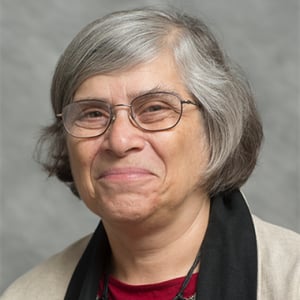
Professor of Cyber Security and Policy, Tufts University
Susan Landau is Professor of Cyber Security and Policy in the Department of Computer Science, Tufts University. Earlier, as Bridge Professor of Cyber Security and Policy at the Fletcher School and School of Engineering, she founded Tufts's innovative MS degree in Cybersecurity and Public Policy. Prior to Tufts, Landau was Senior Staff Privacy Analyst at Google, Distinguished Engineer at Sun Microsystems, and faculty member at Worcester Polytechnic Institute, the University of Massachusetts Amherst, and Wesleyan University.
An interdisciplinary scholar, Landau works at the intersection of privacy, surveillance, cybersecurity, and the law. She has testified before Congress and briefed US and European policymakers on encryption, Landau and Whitfield Diffie won the McGannon Book Award for Social and Ethical Relevance in Communication Policy Research for Privacy on the Line: The Politics of Wiretapping and Encryption. She received the Surveillance Studies Book Prize for Surveillance or Security? The Risks Posed by New Wiretapping Technologies, the USENIX Lifetime Achievement Award, shared with Steven Bellovin and Matt Blaze, and the American Mathematical Society's Bertrand Russell Prize. Landau has served on committees of the National Academies of Sciences, Engineering, and Medicine, on the National Science Foundation Computer and Information Science Engineering Advisory Board, the National Institute of Standards and Technology Information Security and Privacy Advisory Board, and on mathematics and computer science journal editorial boards. Landau received her BA from Princeton, MS from Cornell, and PhD from MIT.

Strategic Council, Silverado Policy Accelerator; former Republican Deputy Staff Director, U.S. Senate Select Committee on Intelligence
Tara Caroselli McFeely is a senior national security executive with expertise spanning defense, intelligence, and technology policy, political, and budgetary domains. She serves on the Strategic Council at Silverado Policy Accelerator, advising on innovative, data-driven national security policy initiatives, and is an Adjunct Professor in the Master of Science in Foreign Service program at Georgetown University’s Edmund A. Walsh School of Foreign Service.
In government, she most recently served as the Republican Deputy Staff Director on the U.S. Senate Select Committee on Intelligence (SSCI) driving the national security and intelligence policy and Executive Branch oversight strategic direction. She also co-led the professional staff oversight functions of the policies and programs of the U.S. intelligence enterprise spanning six Departments: Defense, Energy, Homeland Security, Justice, Treasury, State; and two independent agencies: the Central Intelligence Agency and the Office of the Director of National Intelligence. Prior to this role she served as the SSCI Budget Director, leading the staff oversight of the Intelligence Community (IC) and Defense Intelligence Enterprise annual $100.0+ billion budget and programs. Formerly, she was the SSCI Chairman’s Senior Advisor for Counterterrorism and the Federal Bureau of Investigation’s intelligence programs.
In the research domain, Ms. McFeely was the Deputy Director of the Intelligence Analyses Division at the Institute for Defense Analyses. In this role she led a large team of senior social sciences and STEM researchers on complex multidisciplinary research and analysis projects.
At Booz Allen Hamilton, she was a senior advisor for multiple IC and Department of Defense clients. She also led numerous multifaceted contracts across the U.S. Government landscape globally, including multilateral counter-Biological Weapons (BW) program initiatives.
Ms. McFeely began her career serving globally in the U.S. Navy, initially as a Surface Warfare Officer conducting U.S. 2nd Fleet and NATO operations across the Atlantic, and subsequently as a Naval Intelligence Officer supporting operations in the Balkans and the Global War on Terror.
Ms. McFeely has a Bachelor of Science in Political Science from the U.S. Naval Academy where she was a letterwoman on the Women’s Varsity Basketball Team. She also has a Master of Arts in Law and Diplomacy (MALD) from The Fletcher School of Law and Diplomacy, Tufts University.
Managing Director, BGR Group
Sean Cooksey, a former senior official in the Trump administration and on Capitol Hill, works as a Managing Director with BGR Group’s Commerce and Infrastructure Practice. He brings a wealth of executive branch, legislative, and private sector experience to his work with clients on issues ranging from congressional oversight and investigations, competition and antitrust matters, intellectual property and technology policy, and litigation support.
Prior to joining the BGR team, Sean was Counsel to Vice President JD Vance. In this role, he served as the Vice President’s chief legal adviser and a senior policy staffer within the White House. As part of the Trump-Vance administration, he regularly advised the Vice President and senior White House staff on constitutional law, domestic policy, ethics, and executive and judicial nominations.
Previously, Sean was a member of the Federal Election Commission, after being nominated by President Trump in 2020. Sean served on the FEC for four years and was elected Chairman for the 2024 presidential election year, overseeing an agency of 300 staff to administer federal campaign-finance law.
Sean began his political career in the United States Senate, where he served as General Counsel for Senator Josh Hawley (R-MO) and Deputy Chief Counsel for Senator Ted Cruz (R-TX). During his tenure in both offices, Sean worked on the Senate’s Committee on the Judiciary on some of the Senate’s most high-stakes matters, including major legislation and two Supreme Court confirmations.
Prior to his Senate service, Sean worked at an international law firm in Washington, D.C., where his practice focused on appeals and constitutional law. He also served as a law clerk for Judge Jerry E. Smith of the United States Court of Appeals for the Fifth Circuit in Houston, Texas.
Sean has appeared on television, on radio, and in print in outlets such as The Ingraham Angle, Varney & Co., Morning Edition, The New York Times, The Wall Street Journal, The Washington Post, Axios, and Politico. He speaks regularly at major conferences, including the Republican National Lawyers Association and the National Association of Business PACs.
Founder and Executive Director, National Security Institute; Assistant Professor of Law, Antonin Scalia Law School, George Mason University
Jamil N. Jaffer is the Founder and Executive Director of the National Security Institute at the Antonin Scalia Law School at George Mason University where he also serves as an Assistant Professor of Law, Director of the National Security Law and Policy Program, and Director of the Cyber, Intelligence, and National Security LLM Program. Jamil also teaches classes on counterterrorism, intelligence, surveillance, cybersecurity, and other national security matters, as well as a summer course held abroad with U.S. Supreme Court Justice Neil M. Gorsuch. Jamil is also affiliated with Stanford University’s Center for International Security and Cooperation and previously served as a Visiting Fellow at the Hoover Institution from 2016 to 2019.
Jamil is also a Venture Partner with Paladin Capital Group, where he assists the firm with investments across the full range of its themes and theses, including a focus on dual-use national security technologies. Jamil also serves on the board of directors of RangeForce, a cybersecurity training and readiness platform startup and Tozny, a digital identity startup, and on the advisory boards of U.S. Strategic Metals, North America’s largest primary producer of cobalt, a critical mineral used in EV batteries, aerospace, and other national security applications; and Constella Intelligence, a deep and dark web intelligence startup. Jamil also serves as an advisor to Beacon Global Strategies, a strategic advisory firm and Duco, a technology platform startup that connects corporations with geopolitical and international business experts. Jamil is also the managing director of Trigraph Caveat Capital, a private investment vehicle.
Among other things, Jamil currently serves on the Board of Directors for the Greater Washington Board of Trade, the Board of Advisors for the Global Cyber Alliance, and the Advisory Board of the Foundation for the Defense of Democracies’ Center on Cyber and Tech Innovation, the Executive Committee of the Reagan Institute Strategy Group. Jamil is also a Fellow at the Academy for Judaic, Christian, and Islamic Studies, an advisor to the Concordia Summit, and is a member of the Board of Directors for the Center for Intelligence Policy, the Board of Directors of Speech First, and the Executive Committee of the International Law and National Security Practice Group of the Federalist Society.
Immediately prior to his current positions, from 2015-2021, Jamil served as a senior business leader at IronNet Cybersecurity, helping take the company from a bootstrapped first-year technology products startup through two rounds of venture capital fundraising, growing from 40 employees to over 300, and through its listing on New York Stock Exchange. In his role as IronNet's Senior Vice President for Strategy, Partnerships & Corporate Development, Jamil worked directly for the co-CEOs of the company, Gen (ret.) Keith B. Alexander, the former Director of the National Security Agency and Founding Commander of U.S. Cyber Command, and Bill Welch, the former COO of Zscaler and Duo; in that role, Jamil led all of the company’s strategic and technology partnership efforts, including developing go-to-market and technology integration plans with some of the largest cloud platforms and cybersecurity companies in the market, evaluating potential acquisition targets, and developing overall corporate strategy and thought leadership around collective security and collaborative defense in the cyber arena.
Prior to his time at IronNet, Jamil served on the leadership team of the Senate Foreign Relations Committee as Chief Counsel and Senior Advisor under Chairman Bob Corker (R-TN), where he worked on key national security and foreign policy issues, including leading the drafting of the proposed Authorization for the Use of Military Force against ISIS in 2014 and 2015, the AUMF against Syria in 2013, and revisions to the 9/11 AUMF against al Qaeda. Jamil was also the lead architect of the Iran Nuclear Agreement Review Act and two sanctions laws against Russia for its first intervention in Ukraine.
Prior to joining SFRC, Jamil served as Senior Counsel to the House Permanent Select Committee on Intelligence under Chairman Mike Rogers (R-MI) where he led the committee’s oversight of NSA surveillance, NRO intelligence issues, and NGA analytic and collection matters, as well as intelligence community-wide counterterrorism issues. Jamil was also the lead architect of the Cyber Intelligence Sharing and Protection Act, the nation’s first cyber threat intelligence sharing legislation that was signed into law in 2015.
In the Bush Administration, Jamil served in the White House as an Associate Counsel to the President, handling Defense Department, State Department, and intelligence community matters, and serving as one of the White House Counsel’s primary representatives to the National Security Council Deputies Committee.
Prior to the White House, Jamil served on the leadership team of the Justice Department’s National Security Division as Counsel to the Assistant Attorney General for National Security, where he focused on counterterrorism and intelligence matters. At NSD, Jamil helped lead the division’s work on In re: Directives, the first ever two-party litigated matter in the FISA Court and the second case before the FISA Court of Review in its 30-year history. Jamil also led NSD’s efforts on the President’s Comprehensive National Cybersecurity Initiative (CNCI), including the drafting of NSPD-54/HSPD-23, and related classified matters, and advised the National Security Agency (NSA) and U.S. Cyber Command’s predecessor organization, the Joint Function Component Command for Network Warfare (JFCC-NW), on matters related to cyber intelligence collection and offensive cyber activities. For his work on these matters, Jamil was awarded the Assistant Attorney General’s Award for Special Initiative and was among the group of lawyers awarded the Director of National Intelligence’s 2008 Legal Award (Team of the Year – Cyber Legal).
Jamil also served in other positions in the Justice Department, including in the Office of Legal Policy, where he worked on the confirmations of Chief Justice John G. Roberts, Jr. and Justice Samuel A. Alito, Jr. to the United States Supreme Court.
Jamil also served as a lawyer in private practice at Kellogg Huber, a Washington, DC-based litigation boutique, as a policy advisor to Congressman Bob Goodlatte (R-VA), and as a staff member or senior advisor on a number of political campaigns, including two presidential campaigns and a presidential transition team. While in law school, Jamil was a member of the University of Chicago Law Review, managing editor of the Chicago Journal of International Law, and National Symposium Editor of the Harvard Journal of Law & Public Policy. Following law school, Jamil served as a law clerk to Judge Edith H. Jones of the United States Court of Appeals for the Fifth Circuit and, later in his career, as a law clerk to then-Judge Neil M. Gorsuch when he first joined the United States Court of Appeals for the Tenth Circuit as well as a law clerk to Justice Neil Gorsuch when he joined the U.S. Supreme Court.
Jamil has published multiple op-eds and academic articles on national security, foreign policy, cybersecurity, counterterrorism, encryption, and intelligence matters, and is the co-author of a book chapter with former NSA Director Gen. (Ret.) Keith B. Alexander on national security and the press in National Security, Leaks, and the Freedom of the Press: The Pentagon Papers Fifty Years On (2021) and a book chapter with former CIA Director Gen. (ret.) Mike Hayden on ISIS, al Qaeda, and other international terrorist groups in Choosing to Lead: American Foreign Policy for a Disordered World (2015). Jamil has also written book chapters on cybersecurity and surveillance, as well as op-eds and policy papers with former Attorney General Michael B. Mukasey, former National Counterterrorism Center Director Matt Olsen, and Congressman Mike Waltz (R-FL), among others.
Jamil has previously taught graduate-level courses in intelligence law and policy at George Washington University’s Elliott School of International Affairs and the National Intelligence University, served an outside advisor to the Cyberspace Solarium Commission, and has recently testified before committees of the U.S. Senate and House of Representatives on China, cybersecurity, counterterrorism, and other national security matters. Jamil has also recently appeared on a range of national television and radio outlets including CNN, Fox News, Fox Business, MSNBC, Bloomberg, PBS, Voice of America, and National Public Radio, and in various print and online publications, including the Wall Street Journal, New York Times, and the Washington Post on a range of national security matters including cybersecurity, counterterrorism, surveillance, encryption, privacy, and foreign policy issues.
Jamil holds degrees from UCLA (BA, cum laude), the University of Chicago Law School (JD, with honors), and the United States Naval War College (MA, with distinction).
Professor of Cyber Security and Policy, Tufts University
Susan Landau is Professor of Cyber Security and Policy in the Department of Computer Science, Tufts University. Earlier, as Bridge Professor of Cyber Security and Policy at the Fletcher School and School of Engineering, she founded Tufts's innovative MS degree in Cybersecurity and Public Policy. Prior to Tufts, Landau was Senior Staff Privacy Analyst at Google, Distinguished Engineer at Sun Microsystems, and faculty member at Worcester Polytechnic Institute, the University of Massachusetts Amherst, and Wesleyan University.
An interdisciplinary scholar, Landau works at the intersection of privacy, surveillance, cybersecurity, and the law. She has testified before Congress and briefed US and European policymakers on encryption, Landau and Whitfield Diffie won the McGannon Book Award for Social and Ethical Relevance in Communication Policy Research for Privacy on the Line: The Politics of Wiretapping and Encryption. She received the Surveillance Studies Book Prize for Surveillance or Security? The Risks Posed by New Wiretapping Technologies, the USENIX Lifetime Achievement Award, shared with Steven Bellovin and Matt Blaze, and the American Mathematical Society's Bertrand Russell Prize. Landau has served on committees of the National Academies of Sciences, Engineering, and Medicine, on the National Science Foundation Computer and Information Science Engineering Advisory Board, the National Institute of Standards and Technology Information Security and Privacy Advisory Board, and on mathematics and computer science journal editorial boards. Landau received her BA from Princeton, MS from Cornell, and PhD from MIT.
Strategic Council, Silverado Policy Accelerator; former Republican Deputy Staff Director, U.S. Senate Select Committee on Intelligence
Tara Caroselli McFeely is a senior national security executive with expertise spanning defense, intelligence, and technology policy, political, and budgetary domains. She serves on the Strategic Council at Silverado Policy Accelerator, advising on innovative, data-driven national security policy initiatives, and is an Adjunct Professor in the Master of Science in Foreign Service program at Georgetown University’s Edmund A. Walsh School of Foreign Service.
In government, she most recently served as the Republican Deputy Staff Director on the U.S. Senate Select Committee on Intelligence (SSCI) driving the national security and intelligence policy and Executive Branch oversight strategic direction. She also co-led the professional staff oversight functions of the policies and programs of the U.S. intelligence enterprise spanning six Departments: Defense, Energy, Homeland Security, Justice, Treasury, State; and two independent agencies: the Central Intelligence Agency and the Office of the Director of National Intelligence. Prior to this role she served as the SSCI Budget Director, leading the staff oversight of the Intelligence Community (IC) and Defense Intelligence Enterprise annual $100.0+ billion budget and programs. Formerly, she was the SSCI Chairman’s Senior Advisor for Counterterrorism and the Federal Bureau of Investigation’s intelligence programs.
In the research domain, Ms. McFeely was the Deputy Director of the Intelligence Analyses Division at the Institute for Defense Analyses. In this role she led a large team of senior social sciences and STEM researchers on complex multidisciplinary research and analysis projects.
At Booz Allen Hamilton, she was a senior advisor for multiple IC and Department of Defense clients. She also led numerous multifaceted contracts across the U.S. Government landscape globally, including multilateral counter-Biological Weapons (BW) program initiatives.
Ms. McFeely began her career serving globally in the U.S. Navy, initially as a Surface Warfare Officer conducting U.S. 2nd Fleet and NATO operations across the Atlantic, and subsequently as a Naval Intelligence Officer supporting operations in the Balkans and the Global War on Terror.
Ms. McFeely has a Bachelor of Science in Political Science from the U.S. Naval Academy where she was a letterwoman on the Women’s Varsity Basketball Team. She also has a Master of Arts in Law and Diplomacy (MALD) from The Fletcher School of Law and Diplomacy, Tufts University.

Head of U.S. Policy and Strategic Advocacy, Electric Coin Company
Paul Brigner is the Head of U.S. Policy and Strategic Advocacy at the Electric Coin Company. He has served in senior level technology policy and government relations roles for the last eighteen years with another ten years of hands-on technical experience at the beginning his career after serving in the United States Army.
He holds an MBA from the McDonough School of Business at Georgetown University and a JD from the Georgetown University Law Center. He received a Bachelors degree from Stephen F. Austin State University where he was named the Outstanding Computer Science Graduate.

General Counsel, Espresso Systems
Michael Mosier is General Counsel at Espresso Systems, which is developing configurable privacy for digital assets with decentralized private computation. He served as Acting Director, Deputy Director, and the first Digital Innovation Officer of the U.S. Treasury’s Financial Crimes Enforcement Network (FinCEN). He also was Counselor (for Cybersecurity & Emerging Technology) to the Deputy Secretary of the Treasury.
Previously, Michael was Chief Technical Counsel at Chainalysis; an Associate Director of Treasury’s Office of Foreign Assets Control; a Deputy Chief at the Department of Justice’s Money Laundering Section; and White House National Security Council Director for Transnational Organized Crime. He began his public service with the Manhattan District Attorney’s Office and has been an adjunct professor at Georgetown University Law Center.

Professor of Legal Studies and Business Ethics at the Wharton School, University of Pennsylvania
Kevin Werbach is a professor of Legal Studies and Business Ethics at the Wharton School, University of Pennsylvania, and formerly Counsel for New Technology Policy at the U.S. Federal Communications Commission, Werbach has spent the past two decades exploring major trends at the intersection of the Internet, digital media, and communications. He served on the Obama Administration's Presidential Transition Team and founded the Supernova Group, a technology consulting firm, which organized the CEO-level Supernova technology conference. He also created one of the most successful massive open online courses, with nearly half a million enrollments. He was named Wharton's first-ever Iron Prof in 2010.
Werbach has published four books, including The Blockchain and the New Architecture of Trust, For the Win: The Power of Gamification and Game Thinking in Business, Education, Government, and Social Impact, and After the Digital Tornado: Networks, Algorithms, Humanity.
Earlier in his career, he edited the influential technology newsletter Release 1.0, and helped develop the U.S. Government's Internet and e-commerce policies in the Clinton Administration

Associate Professor of Law, Antonin Scalia Law School, George Mason University
Associate Professor of Law J.W. Verret joined the Antonin Scalia Law School, George Mason University faculty in 2008. In 2013, he took leave for two years to serve as the Chief Economist and Senior Counsel for the U.S. House Committee on Financial Services. He received his JD and MA in Public Policy from Harvard Law School and the Harvard Kennedy School of Government, respectively, in 2006. While in law school, Professor Verret served an Olin Fellowship in Law and Economics at the Harvard Program on Corporate Governance under the guidance of Prof. Lucian Bebchuk.
Professor Verret then served as a law clerk for Vice-Chancellor John W. Noble of the Delaware Court of Chancery. Prior to joining the faculty at Scalia Law, Professor Verret was an associate in the SEC Enforcement Defense Practice Group at Skadden, Arps in Washington, D.C. He has written extensively on corporate law topics, including Delaware's Guidance, co-written with Chief Justice Myron T. Steele of the Delaware Supreme Court. His academic work has been featured in the Yale Journal on Regulation, The Business Lawyer, the Delaware Journal of Corporate Law, the Stanford Law Review, the University of Pennsylvania Journal of Business Law, and the Virginia Law and Business Review. Professor Verret was selected by the Northwestern Law School Searle Center on Law, Regulation, and Economic Growth for a 2009-2010 Searle-Kaufmann Research Fellowship.
Professor Verret is also a Senior Scholar at the Mercatus Center Working Group on Financial Markets, where he regularly briefs Congressional staff, members of Congress, SEC Commissioners and other financial regulatory agencies on financial regulation topics. He also directs the Corporate Federalism Initiative, where he obtains research grants for a network of students and faculty scholars who study the division between states and the federal government as sources of corporate law. Professor Verret has been invited to testify before various House and Senate Committees four times during the financial crisis of 2009 regarding all of the central provisions of the Obama Administration's 2009 financial regulatory reform proposals. For a full list of Professor Verret's C-Span appearances, including testimony before the U.S. House of Representatives and the U.S. Senate, see http://www.c-spanvideo.org/jwverret.
Professor Verret has been an invited panelist for various television appearances, including an interview on The NewsHour with Jim Lehrer. Professor Verret has been quoted in various media on financial regulation and corporate law topics, including the New York Times, CNN Money, the CNN Political Ticker, CNBC, ABC News, Investor's Business Daily, ESPN.com, The American Banker, The American Lawyer, The Huffington Post, CBS.com, and AP News. Professor Verret's op-eds have been featured in Forbes, The Chicago Tribune, The Orange County Register, and The Wall Street Journal. Professor Verret is also a regular guest contributor to three of the most noted corporate law and financial regulation law blogs: the Harvard Law School Corporate Governance and Financial Regulation Forum, Deallawyers.com, and The Conglomerate.
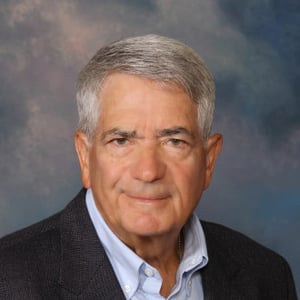
Professor Emeritus of Law, Indiana University; Co-Author, The Law of Lawyering
After graduating with honors from Harvard College in 1966, and from Rutgers Law School with highest honors in 1969, W. William Hodes began practice in a small civil rights and personal injury firm in New Orleans, where he had lived as a child. During the next eight years, he worked in Newark, New Jersey, first for the Kenneth Gibson administration, and then as senior staff attorney for the Education Law Center, a public interest law firm funded by the Ford Foundation.
In 1979, Hodes returned to the legal academy, first as a Bigelow Teaching Fellow at the University of Chicago Law School, and then as a Professor of Law at the Indiana University School of Law in Indianapolis. For the next twenty years, Professor Hodes taught in the areas of Civil Procedure, Constitutonal Law, Federal Courts, Administrative Law, and Professional Responsibility. He gained a national reputation as a scholar, consultant, and expert witness in the areas of Legal Ethics and Professional Responsbility, as they were then known.
Beginning in 1985 however, those subjects began to be known as "The Law of Lawyering," after a book of that name was published, co-authored by Professor Hodes and Professor Geoffrey C. Hazard, Jr., who had served as the Reporter to the Kutak Commission that developed the Model Rules of Professional Conduct. The treatise, which is now in its fourth edition and updated twice a year by Hodes and new co-author Peter R. Jarvis of Portland, Oregon, has become a mainstay resource for both the practicing bar and the academic community, and is often cited in court and ethics committee opinions.
While in the academy, Professor Hodes took two unusual sabbatical leaves. In the Spring of 1989, Hodes, who had spent his junior high school years in Beijing and is still fluent in Chinese, was a Visiting Scholar and Lecturer at the China University of Politics and Law, teaching a course in American Civil Procedure and conducting research into Chinese People's Mediation. (The course was suspended in April, when the events leading to the June 4th Tiananmen Massacre began to unfold, and Professor Hodes began to accompany his students on protest marches.)
During the October 1996 Term of the United States Supreme Court, Professor Hodes served as law clerk to Justice Ruth Bader Ginsburg, who had been his Civil Procedure and Conflicts of Law professor some thirty years earlier, during her Rutgers days. According to knowledgeable sources, Hodes was the oldest person to have served as a law clerk since the early 19th Century.
In 1999, W. William Hodes retired from law teaching (at age 56) in order to establish the William Hodes Professional Corporation, which was later renamed The William Hodes Law Firm; he became Professor Emeritus of Law at Indiana University as the new century began. Through this solo practice, Hodes can now devote full time to providing representation, consultation, expert testimony, legal opinions, and other counsel and assistance to lawyers in the areas of The Law of Lawyering, and Constitutional, Appellate, Supreme Court, and other complex litigation.

Judge, Arizona Court of Appeals, Division One
The Honorable Jennifer M. Perkins began service on the Arizona Court of Appeals, Division One, on October 30, 2017. At the time of her appointment by Governor Douglas Ducey, Judge Perkins was Assistant Solicitor General for the State of Arizona.
Judge Perkins was born in Portales, New Mexico, and primarily raised in Albuquerque. She attended the prestigious Albuquerque Academy from 1988-1995, before moving to Washington D.C. to attend the Elliott School of International Affairs at the George Washington University as a National Merit Scholar. Therafter, she relocated again to Dallas, Texas, and earned her juris doctor from the SMU Dedman School of Law, graduating cum laude in 2002.
Judge Perkins started her career at the law firm of Browning & Peifer (now Peifer, Hanson, Mullins, and Baker) in Albuquerque, New Mexico. While there, she litigated complex commercial matters including class action plaintiff and defense work, and assisted with employment and contract litigation. In 2003, the judge accompanied the Honorable James O. Browning in transitioning to the federal district court bench, serving as his first law clerk.
After her clerkship, Judge Perkins moved to Arizona to work for the Institute for Justice, Arizona Chapter, a public interest law firm. She spent five years with IJ-AZ litigating civil rights cases in Arizona and across the country. In 2009, the judge became Disciplinary Counsel for the Arizona Commission on Judicial Conduct, where she reviewed and prosecuted ethics complaints against state court judges throughout Arizona. After five years serving the state in this capacity, Judge Perkins entered private practice by joining an appellate law firm in Phoenix. While there, she worked on state and federal appeals involving a wide range of legal subjects, including complex business disputes, property rights, judicial ethics, and personal injury matters.
In January 2015, Judge Perkins joined the Office of the Arizona Attorney General to serve as the first Assistant Solicitor General; in that capacity, she was responsible for oversight of Attorney General Opinions and served as ethics counsel to the entire office. In addition to these two primary roles, the judge assisted on a variety of matters including trial and appellate litigation of election-related matters; federal appellate litigation with the Federalism Unit; state criminal appeals; and drafting amicus briefs on behalf of Arizona in state and federal courts.

Partner, Steptoe & Johnson LLP
Stewart Baker is a partner in the law firm of Steptoe & Johnson in Washington, D.C. From 2005 to 2009, he was the first Assistant Secretary for Policy at the Department of Homeland Security. His law practice covers cybersecurity, data protection, homeland security, and travel and foreign investment regulation; he has been awarded one patent.
Mr. Baker has been General Counsel of the National Security Agency and General Counsel of the commission that investigated WMD intelligence failures prior to the Iraq war. He is the author of Skating on Stilts, a book on terrorism, cybersecurity, and other technology issues; he also hosts the weekly Cyberlaw Podcast.
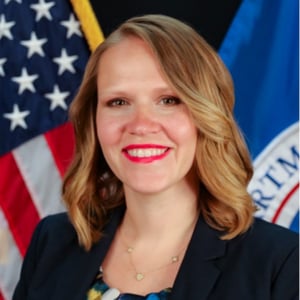
Director, Cybersecurity and Emerging Threats, R Street Institute
Tatyana Bolton is the Policy Director for R Street’s Cybersecurity & Emerging Threats team. She crafts and oversees the public policy strategy for the department with a focus on secure and competitive markets, data security and data privacy, and diversity in cybersecurity. Other areas of research for the team include cyber metrics, Bureau of Cyber Statistics, content moderation, 5G, building capacity, state and local cybersecurity, and supporting innovation.
Most recently, Tatyana worked as the senior policy director for the U.S. Cyberspace Solarium Commission focusing on U.S. government reorganization and resilience portfolios. From 2017-2020, Tatyana also served at the Cybersecurity and Infrastructure Security Agency as the cyber policy lead in the Office of Strategy, Policy and Plans where she developed strategies for strengthening the cybersecurity of our nation’s critical infrastructure. Tatyana’s work included efforts on the Cyber Deterrence Strategy of the United States, the Department of Homeland Security Cybersecurity Strategy and the National Cyber Strategy.
Tatyana has published pieces in Lawfare and Defense News on cybersecurity clinics and women in cybersecurity. She also received an award for exceptionally meritorious service from the Cyberspace Solarium Commission.
She received a Master of Arts in security studies with a focus on Asian affairs from Georgetown University’s Walsh School of Foreign Service’s Security Studies Program and earned a Bachelor of Arts with honors in political science and theatre from the Ohio State University.
Tatyana lives in Alexandria, Virginia with her family.

Executive Vice President, Chief Legal Officer, Gates Corporation
Matthew R. A. Heiman joined the Company in May 2026 and has served as the Company’s Chief Legal Officer and Corporate Secretary since June 2026. As Chief Legal Officer, Mr. Heiman is responsible for all legal functions for Gates, including securities and corporate governance, M&A, litigation, commercial, regulatory, compliance, patents and trademarks, real estate, employment and labor, sustainability and environmental matters. Prior to joining Gates, Mr. Heiman held senior legal leadership roles at Waystar, where he served as Chief Legal & Administrative Officer from 2023 to 2025 and as General Counsel and Corporate Secretary from 2020 to 2023. Prior to that, he was with Johnson Controls, where he served as Vice President, Corporate Secretary, and Associate General Counsel. Mr. Heiman has been a Senior Fellow for the National Security Institute at George Mason University’s Antonin Scalia School of Law since 2018.

Senior Fellow, Technology Policy, Cato Institute
Jennifer’s research focuses on the intersection of emerging technology and law with a particular interest in the interactions between technology and the administrative state. Her work covers topics including judicial deference, liability protection for Internet platforms, autonomous vehicles and other disruptive transportation technologies, the regulation of data privacy, and the benefits of technology and innovation. Her work has appeared in USA Today, the Chicago Tribune, the New York Daily News, the Sacramento Bee, the Washington Times, Real Clear Policy, and U.S. News and World Report. Jennifer has a JD from the University of Alabama School of Law and a BA in political science at Wellesley College.

Multistate Policy Director, Common Sense Media
Joseph Jerome serves as Director for Multistate Policy at Common Sense Media, where he focuses on common-sense legislative and policy solutions that support kids’ digital well-being. Joseph has worked at the intersection of law and technology, and has written about AR/VR, the privacy implications of big data, trust deficits in the online sharing economy, and emerging technologies in video games. Previously, he was part of the Privacy & Data Project at the Center for Democracy & Technology, an associate in the cybersecurity and privacy practice at WilmerHale, and counsel at the Future of Privacy Forum. He was a fellow with the Internet Law & Policy Foundry and has taught courses on cybersecurity and privacy compliance. Joseph has a J.D. from the New York University School of Law, where he was an International Law and Human Rights Student Fellow.
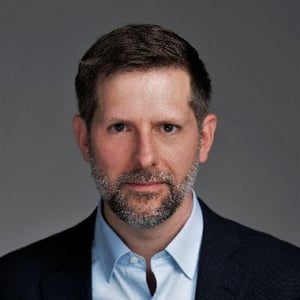
Head of AI Policy, Abundance Institute
Neil Chilson is the Head of AI Policy at the Abundance Institute. Prior to this position, he served as a Senior Research Fellow at the Center for Growth and Opportunity. Chilson is a lawyer, computer scientist, and author of the book “Getting Out of Control: Emergent Leadership in a Complex World.”
Chilson was previously the senior research fellow for Technology and Innovation at Stand Together, where he guided efforts to understand and promote the legal and cultural paradigms that best enable people to discover, innovate, and improve all our lives.
Before Stand Together, Chilson was the Chief Technologist at the Federal Trade Commission, where he focused on the economics of privacy and blockchain-related issues. Previously, he was an attorney advisor to Acting FTC Chairman Maureen K. Ohlhausen. In both roles he advised Chairman Ohlhausen and worked with staff on nearly every major technology-related case, report, workshop, or other FTC proceeding since January 2014. Neil joined the FTC from telecom firm Wilkinson Barker Knauer. Neil is frequently quoted by the press and his work has appeared in numerous news outlets, including The Wall Street Journal, The Washington Post, USAToday, and Newsweek. Neil has a J.D. from The George Washington Law School, a M.S. in computer science from University of Illinois, Urbana-Champaign, and a B.S. in computer science from Harding University.
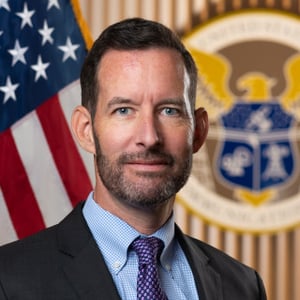
Chief of Staff, Federal Communications Commission (FCC)
Mr. Delacourt is Chief of Staff of the Federal Communications Commission. In this role, he manages the Chairman's policy agenda and strategic initiatives and serves as Chief Operating Officer for the Agency. He has a broad range of experience in telecommunications and technology law and policy spanning both the governmental and private sectors. Scott joined the FCC from Wiley Rein LLP where he served as Partner and Chair of the Wireless Practice Group. He previously served in leadership positions at the FCC, including Deputy Bureau Chief and Chief of Staff of the Wireless Bureau, Senior Counsel in the Office of General Counsel, and Legal Advisor to the Wireless Bureau Chief. Scott received his Law Degree, cum laude, from the University of Michigan Law School, and his Bachelor’s Degree, summa cum laude, from Georgetown University.

Partner, Wiley Rein, LLP
Megan L. Brown is a partner at Wiley Rein LLP. She has significant litigation, appellate and regulatory experience before state and federal courts and agencies.
Ms. Brown helps businesses respond to federal, state and local regulation and investigations raising administrative law, statutory interpretation, and constitutional issues, including the First Amendment.
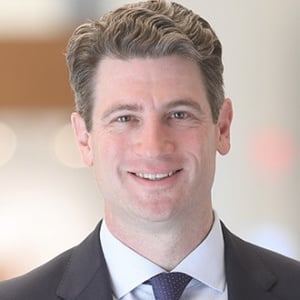
General Counsel and Corporate Secretary, Citigroup
Brent McIntosh joined Citi as General Counsel and Corporate Secretary in October 2021. Brent leads Citi's global legal team, including Citi security and investigative services, and oversees Citi’s independent compliance risk management function.
Brent served as Under Secretary of the Treasury for International Affairs from 2019 to 2021. He led the Treasury Department’s engagement in the G7 and G20, represented the United States on the Financial Stability Board, and managed U.S. participation at the IMF and World Bank. He oversaw Treasury’s international economic and financial policy work, including significant engagements on investment security and regulation of digital currencies. During 2020, he coordinated initiatives to alleviate the COVID-19 pandemic’s economic consequences.
From 2017 to 2019, Brent served as Treasury’s General Counsel, leading the department’s approximately 2,000 lawyers and spearheading its regulatory reform efforts. Prior to that, he was a partner in the law firm of Sullivan & Cromwell, where his practice focused on complex disputes involving financial institutions and multinational corporations.
Brent served in the White House from 2006 until 2009, first as Associate Counsel to the President and then as Deputy Assistant to the President and Deputy Staff Secretary. Before that, he was a Deputy Assistant Attorney General at the Justice Department, where his work focused on national security matters.
A Michigan native, Brent holds an A.B. in economics and political science from the University of Michigan and a J.D. from Yale Law School. Following law school, he was a law clerk to two federal appellate judges, Dennis Jacobs of the Second Circuit and Laurence H. Silberman of the D.C. Circuit. Brent serves on the Board of Directors of the Alexander Hamilton Society, the Board of Advisors for the National Security Institute at George Mason University’s Antonin Scalia Law School, and the Advisory Council of the Official Monetary and Financial Institutions Forum. He is a member of the Council on Foreign Relations, where he previously served as an Adjunct Senior Fellow for International Economics and Finance, as well as the Bretton Woods Committee and the International Institute for Strategic Studies.

Rebecca Seidel currently resides in Louisville, Kentucky and in 2023 recently joined the state office of Senator Rand Paul, M.D, as Grant Coordinator. In this position, Ms. Seidel tracks grant opportunities, both public and private, that could aid constituents and works to provide support and helpful information to those in need who can benefit.
Prior to moving to Kentucky in 2016 Rebecca Seidel was General Counsel of the Senate Commerce Committee in Washington D.C. In that role, Ms. Seidel handled cybersecurity, privacy, data security, vehicle safety and consumer protections issues. She also oversaw committee investigations and oversight of the executive branch and private sector companies. Prior to joining the Commerce Committee, Ms. Seidel held positions in the Senate, the Executive Branch and in private sector law practice.
Immediately prior to the Commerce Committee, Ms. Seidel was counsel to the Senate Impeachment Trial Committee, formed for the trial of Judge G. Thomas Porteous. Before that Ms. Seidel was Deputy Assistant Attorney General for Legislative Affairs at the Department of Justice. Previously she served as senior counsel on the Senate Judiciary Committee handling legal reform issues including asbestos and class action. Prior to that she started her government career as counsel to then Senator George V. Voinovich.
Ms. Seidel’s time in private law practice was spent in the Boston, Massachusetts area where she was a litigator for five years practicing federal and state civil litigation defense in complex product liability, premises liability, liquor liability, and ERISA cases. She received her undergraduate degree from the University of Notre Dame and her law degree from the University of Dayton.

Chief Legal Officer, Castle Island Ventures
Gus Coldebella is the Chief Legal Officer of Castle Island Ventures, a venture capital firm focused on early-stage investing in blockchain technology, where he handles legal, regulatory, policy, and compliance matters for the firm.
Over a career spanning private practice, government, and technology, he has served as a law firm partner, prosecutor, senior federal official, general counsel, and venture capital partner. He previously served as acting general counsel of the U.S. Department of Homeland Security in the George W. Bush administration, leading a team of 1,700 lawyers, and focusing on all major security issues confronting the nation. His private-sector leadership roles have included chief legal officer of Circle; general counsel of Paradigm; partner at True Ventures; and partner in Goodwin Procter’s litigation and investigations practice.
Coldebella holds a J.D. from Cornell Law School and a B.A. from Colgate University, where he later served as vice chair of the Board of Trustees and president of the Alumni Council. He teaches “Artificial Intelligence: Law and Policy” at Boston College Law School.
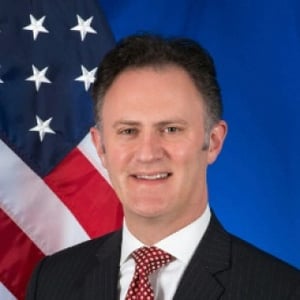
Founder and Principal, Fillmore Global Strategies LLC
Ambassador Nathan A. Sales is the founder and principal of Fillmore Global Strategies LLC, a consultancy that provides legal and strategic advisory services on matters at the intersection of law, policy, and diplomacy.
From 2017 to 2021, Ambassador Sales served at the U.S. Department of State as Under Secretary for Civilian Security, Democracy, and Human Rights (acting). He oversaw nine bureaus and offices led by Senate-confirmed principals, with 1,300 employees and a combined foreign assistance budget of more than $5 billion annually, and the mission of preventing and countering threats to civilian security, including terrorism, mass atrocities, and violations of human rights and the rule of law.
Concurrently, Ambassador Sales was Ambassador-at-Large and Coordinator for Counterterrorism. After being nominated by the President and unanimously confirmed by the U.S. Senate, he was sworn in on August 10, 2017. He served as the principal adviser to the Secretary of State on international counterterrorism matters, and led the State Department’s Counterterrorism Bureau, a 200-person team with an annual foreign assistance budget of $400 million. He was also the Special Presidential Envoy to the Global Coalition to Defeat ISIS, leading U.S. relations with the 83-member Coalition and efforts to ensure the lasting defeat of ISIS in the Middle East and around the world.
While at the State Department, Ambassador Sales led the elements of the U.S. government’s China strategy promoting democratic values and human rights, including with respect to Hong Kong and Xinjiang. He oversaw the development and implementation of a wide range of U.S. government sanctions, including Global Magnitsky actions and Executive Order 13,936, targeting those responsible for undermining Hong Kong’s freedoms and autonomy. Ambassador Sales was the architect of the landmark 2017 UN Security Council Resolution 2396 on terrorist travel, and successfully pressed NATO to make counterterrorism a core Alliance mission. He led diplomatic engagements to persuade a dozen key partners in Europe and the Americas to designate Hizballah as a terrorist organization in its entirety. He launched the Western Hemisphere Counterterrorism Ministerial, in which heads of state and minister-level officials meet bianually to coordinate efforts against terrorist threats in the region. He led the U.S. government’s international efforts to combat white supremacist terrorism. Under his leadership, the State Department imposed terrorism sanctions on the Russian Imperial Movement – the first-ever U.S. designation of white supremacist terrorists.
Before joining the State Department, Ambassador Sales was Of Counsel at the law firm Kirkland & Ellis LLP (formerly Bancroft PLLC). He was also a tenured law professor, teaching and writing in the fields of administrative law, constitutional law, and national security law. His scholarship has been cited by the U.S. Supreme Court multiple times.
Ambassador Sales previously was Deputy Assistant Secretary for Policy at the U.S. Department of Homeland Security. He led DHS’s efforts to draft and implement legislation that strengthened the security of and expanded the Visa Waiver Program (which allows citizens of certain countries to travel to the United States without a visa). He headed the U.S. delegation in talks with seven countries to implement the new security measures and was the Secretary of Homeland Security’s Special Envoy to South Korea.
Ambassador Sales also served at the Office of Legal Policy at the U.S. Department of Justice, where he worked on regulatory initiatives, counterterrorism, and judicial confirmations. In 2005, he managed DOJ’s “war room” for the confirmation of Chief Justice John Roberts. He received the Attorney General’s Award for Exceptional Service – the Justice Department’s highest honor – for his role in drafting the USA PATRIOT Act, as well as the Attorney General’s Distinguished Service Award for his work on judicial confirmations.
In addition to his work at Fillmore Global Strategies, Ambassador Sales is a nonresident senior fellow at the Atlantic Council and a senior advisor at the Soufan Group, a global intelligence and security consultancy. He serves on a number of advisory boards, including for the Counter-Extremism Project (a nonprofit and nonpartisan international policy organization formed to combat the growing threat from extremist ideologies), the Secure Community Network (the official safety and security organization for the North American Jewish community), and the Sue J. Henry Center for Pre-Law Education at Miami University.
An Ohio native, Ambassador Sales received his B.A., summa cum laude, from Miami University in Oxford, Ohio, where he was elected to Phi Beta Kappa. He earned his J.D., magna cum laude, from Duke Law School, where he was Research Editor of the Duke Law Journal and joined the Order of the Coif. After law school, he clerked for the Honorable David B. Sentelle of the U.S. Court of Appeals for the DC Circuit.

Executive Vice President, The Federalist Society
Dean Reuter is Executive Vice President at the Federalist Society for Law and Public Policy Studies. He has served in two federal government agency Offices of the Inspector General, as Counsel to the Inspector General and Deputy Inspector General, responsible for policing the use of federal funds granted and contracted through those agencies. As such, he helped conduct and oversee criminal investigations across the country. He is the principal author of the non-fiction book, The Hidden Nazi: The Untold Story of America's Deal with the Devil, and editor of Liberty’s Nemesis: The Unchecked Expansion of the State and Confronting Terror: 9/11 and the Future of American National Security. He was appointed by the President and served as Vice-Chairman of the Board of Directors of the Corporation for National and Community Service, and recently served as an appointee on the U.S. Commission on Presidential Scholars. He is a graduate of Hood College (BA with Honors) and the University of Maryland School of Law.

Legislative Counsel, American Civil Liberties Union
Michelle Richardson is a Legislative Counsel with the American Civil Liberties Union Washington Legislative Office where she focuses on national security and government transparency issues such as the Patriot Act, the Foreign Intelligence Surveillance Act, cybersecurity, state secrets and the Freedom of Information Act. Before coming to the ACLU in 2006, Richardson served as counsel to the House Judiciary Committee where she specialized in national security, civil rights and constitutional issues for Democratic Ranking Member John Conyers (D-Mich.).?

Professor of Law, Stanford Law School
Orin S. Kerr is a Professor of Law at Stanford Law School, where he teaches and writes in the areas of criminal procedure and computer crime law. Kerr earned mechanical engineering degrees from Princeton University and Stanford University before graduating with a J.D. from Harvard Law School. He is a former law clerk to Justice Anthony M. Kennedy at the United States Supreme Court and Judge Leonard I. Garth of the U.S. Court of Appeals for the Third Circuit.

President and Executive Director, Electronic Privacy Information Center
Marc Rotenberg is President and Executive Director of the Electronic Privacy Information Center (EPIC) in Washington, DC. He teaches information privacy law at Georgetown University Law Center and frequently testifies before Congress on emerging privacy and civil liberties issues. He testified before the 9-11 Commission on "Security and Liberty: Protecting Privacy, Preventing Terrorism." He has served on several national and international advisory panels, including the expert panels on Cryptography Policy and Computer Security for the OECD, the Legal Experts on Cyberspace Law for UNESCO, and the Countering Spam program of the ITU. He chairs the ABA Committee on Privacy and Information Protection. He is a founding board member and former Chair of the Public Interest Registry, which manages the .ORG domain. He is editor of "The Privacy Law Sourcebook," and co-editor of "Information Privacy Law" (Aspen Publishing 2006) and "Litigation Under the Federal Open Government Laws" (EPIC 2010). He is a graduate of Harvard College and Stanford Law School. He served as Counsel to Senator Patrick J. Leahy on the Senate Judiciary Committee after graduation from law school. He is the recipient of several awards, including the World Technology Award in Law, the American Lawyer Award for Top Lawyers Under 45, the Norbert Weiner Award for Social and Professional Responsibility, and the Vicennial medal from Georgetown University.

Senior Vice President, Chief Legal Officer and General Counsel, Ryan LLC
John Smith is the Senior Vice President, Chief Legal Officer and General Counsel at Ryan, LLC. Based at Ryan’s global headquarters in Dallas, Texas, John Smith brings more than 20 years of experience as a proven leader in the legal, business, and national security communities, including all three branches of the United States Government.
Prior to joining Ryan, Mr. Smith spent 12 years in Texas and Virginia at Raytheon Technologies, an American multinational aerospace and defense corporation. He pioneered roles as the company’s first cybersecurity lawyer and first privacy lawyer. During the last seven years, as a divisional Vice President and General Counsel, Mr. Smith led the legal departments of the two Raytheon divisions focused primarily on services.
Before Raytheon, Mr. Smith served as Associate Counsel to U.S. President George W. Bush. He was the lead lawyer for the White House Homeland Security Council staff. He began his legal career by clerking for Judge Samuel Alito, a few years before Alito’s elevation to the U.S. Supreme Court, and then by practicing at the international law firm of Covington & Burling.
Mr. Smith served a decade as a U.S. Army reservist and two years as a missionary in Ukraine and Russia, a few years after the collapse of the Soviet Union. He graduated with high honors from both Princeton University and Brigham Young University Law School.

Partner, Steptoe & Johnson LLP
Michael A. Vatis is a partner in the New York office of Steptoe & Johnson LLP. His practice focuses on Internet, e-commerce, and technology matters, providing legal advice and strategic counsel on matters involving privacy, security, encryption, intelligence, law enforcement, Internet gambling, and international regulation of Internet content. He also is an experienced appellate litigator, representing clients before the US Supreme Court and federal courts of appeals.
Mr. Vatis has spent most of his career addressing cutting edge issues at the intersection of law, policy, and technology. He was the founding director of the National Infrastructure Protection Center at the FBI, the first government organization responsible for detecting, warning of, and responding to cyber attacks, including computer crimes, cyber terrorism, cyber espionage, and information warfare. Before that, Mr. Vatis served as Associate Deputy Attorney General and Deputy Director of the Executive Office for National Security in the Department of Justice, where he advised the Attorney General and Deputy Attorney General and coordinated the Department’s activities involving counterterrorism, intelligence, encryption, and cyber crime. In that capacity, he also helped lead the development of the nation’s first policies regarding critical infrastructure protection. Mr. Vatis served as Special Counsel at the Department of Defense, where he handled sensitive legal and policy issues for the Secretary and Deputy Secretary of Defense and the General Counsel, receiving the Secretary of Defense Award for Excellence.
After leaving the government in 2001, Mr. Vatis served as the first Director of the Institute for Security Technology Studies at Dartmouth, a federally funded counterterrorism and cyber security research institute. He was simultaneously the founding Chairman of the Institute for Information Infrastructure Protection (I3P). I3P, a consortium of leading cyber security research organizations, worked with industry, government, and academia to develop a comprehensive research and development agenda to improve the security of the nation’s computer and communications networks. Mr. Vatis also served as the Executive Director of the Markle Task Force on National Security in the Information Age, a highly influential group of technology company executives, former government officials, and civil libertarians that recommended ways the government could more effectively use information and technology to combat terrorism while preserving civil liberties. Mr. Vatis was the principal author of the group’s second report, whose recommendations were adopted by the 9/11 Commission and included in the 2004 Intelligence Reform Act.
Mr. Vatis has been a Senior Fellow at New York University Law School’s Center on Law and Security and a member of numerous expert working groups on counterterrorism, intelligence, and technology issues. He is currently a member of the National Academy of Science/National Research Council Committee on the Policy Consequences and Legal/Ethical Implications of Offensive Information Warfare and served on the Commission on Cyber Security for the 44th Presidency, an independent group of cyber security experts who examined existing and potential cyber security threats and developed recommendations for the US government and private businesses. Mr. Vatis has also regularly testified before congressional committees on counterterrorism, intelligence, and cyber security issues. He is also interviewed frequently on television, radio, and in print media, and has been a guest lecturer at many prestigious law schools and universities and a speaker at industry conferences worldwide.

Fellow, National Security Institute, Antonin Scalia Law School, George Mason University
Vince Vitkowsky chaired the Executive Committee of the Federalist Society’s International and National Security Law and Policy Practice Group for over a decade. He is also a Fellow at the National Security Institute of George Mason University Law School. Vince spent 45 years in private practice, primarily in AmLaw 100/200 firms and their spin-offs. His practice included domestic and international commercial arbitration and litigation, as well as cyber risks and liabilities. Vince's current focus is on national security policy, artificial intelligence, cybersecurity, and counterterrorism. He has often written and spoken on national security and other public policy issues. Among other affiliations, Vince has been an Adjunct Fellow at the Center for Law and Counterterrorism of the Foundation for the Defense of Democracies, a member of the Executive Committee of the American Branch of the International Law Association, and Co-Chair of the Committee on Interventions and Trial Observations of the International Bar Association’s Human Rights Institute. He received his B.A. from Northwestern University and his J.D. from Cornell Law School.

Foreign State Actors, Security, and Privacy: What is the Future of End-to-End Encryption?
Sean Cooksey, Jamil N. Jaffer, Susan Landau, Tara C. McFeely
The 2015 terrorist attack in San Bernardino, California kicked off a debate over whether U.S....
Foreign State Actors, Security, and Privacy: What is the Future of End-to-End Encryption?
Sean Cooksey, Jamil N. Jaffer, Susan Landau, Tara C. McFeely
The 2015 terrorist attack in San Bernardino, California kicked off a debate over whether U.S....
Is the Office of Foreign Assets Control's Sanctioning of Tornado Cash a Threat to the Future of Financial Privacy?
Paul Brigner, Michael Mosier, Kevin Werbach, J.W. Verret
Tornado Cash is an open source, decentralized cryptocurrency tumbler that was introduced in 2019. The...
Some Recent (and Ongoing) Developments in Legal Ethics
William Hodes, Jennifer Perkins
All CLE forms can be found here. If you already attended the webinar and completed...
Deep Dive Episode 182 – Cybersecurity Threats and the Regulatory Response
Stewart A. Baker, Tatyana Bolton
The Biden administration had barely named a cabinet, let alone staffed the government, when it...
Deep Dive Episode 147 – The State of State Data Privacy Laws Post-2020 Election
Matthew R. A. Heiman, Jennifer Huddleston, Joseph Jerome
In the absence of federal data privacy legislation, some states have acted to pass their...
Courthouse Steps: LabMD Inc. v. Federal Trade Commission
Neil Chilson, Scott D. Delacourt
The 11th Circuit’s decision in LabMD v. FTC comes just as the new FTC Chairman...
Cybersecurity: Private Sector Faces Increasing Regulatory Risk From Agency Enforcement and Informal “Guidance” Becoming Standard of Care - Podcast
Megan L. Brown, Brent J. McIntosh, Rebecca Seidel
After Target, Anthem, Sony, and Ashley Madison, cybersecurity is at the top of every company...
Cybersecurity -- Information Sharing, Privacy, Regulation, and Reason - Podcast
Gus P. Coldebella, John P. Sneed, Nathan A. Sales, Dean Reuter, Michelle Richardson
Cyber threats were the first identified Global Threat in the U.S. Intelligence Community Worldwide Threat...
Panel Two: Economic Security
Orin S. Kerr, Marc Rotenberg, John Smith, Michael Vatis, Vincent Vitkowsky
Both President Bush and President Obama directed comprehensive reviews of America's cyber security strategy. The...