
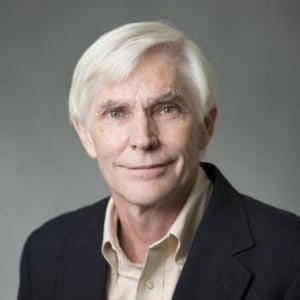
Senior Fellow, Manhattan Institute
Peter Huber, who died in 2021, was a senior fellow at the Manhattan Institute, where he wrote on drug development, energy, technology, and the law. He was the author of The Cure in the Code: How 20th Century Law Is Undermining 21st Century Medicine (2013); The Bottomless Well: The Twilight of Fuel, the Virtue of Waste, and Why We Will Never Run Out of Energy (2005), coauthored with Mark P. Mills, which Bill Gates said “is the only book I’ve ever seen that really explains energy, its history and what it will be like going forward”; and Hard Green: Saving the Environment from the Environmentalists (2000), which William F. Buckley, Jr., called “the richest contribution ever made to the greening of the political mind” and which set out a new conservative manifesto on the environment that advocates a return to conservation and environmental policy based on sound science and market economics.
Huber’s other books included Judging Science: Scientific Knowledge and the Federal Courts (1999), Law and Disorder in Cyberspace: Abolish the FCC and Let Common Law Rule the Telecosm (1997), Orwell’s Revenge: The 1984 Palimpsest (1994), Galileo’s Revenge: Junk Science in the Courtroom (1991), and Liability: The Legal Revolution and Its Consequences (1988). He published articles in scholarly journals, such as the Harvard Law Review and Yale Law Journal, and in such publications as Science, Wall Street Journal, Reason, Regulation, and National Review. He appeared on numerous TV and radio programs, including Face the Nation and The NewsHour with Jim Lehrer.
Before joining MI, Huber was an associate professor at MIT. He clerked on the D.C. Circuit Court of Appeals for Ruth Bader Ginsburg and on the U.S. Supreme Court for Sandra Day O’Connor. Huber was a partner at the Washington, D.C., law firm Kellogg, Huber, Hansen and Todd. He held a J.D. from Harvard University and a Ph.D. in mechanical engineering from MIT.
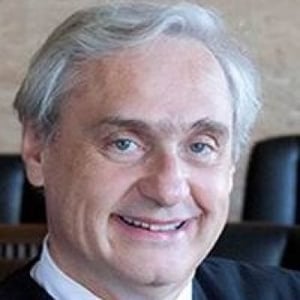
Former Judge, United States Court of Appeals, Ninth Circuit
Judge Kozinski served as a United States Circuit Judge for the Ninth Circuit from November 1985 until December 2017. He served as Chief Judge from 2007 to 2014. He graduated from UCLA, receiving an A.B. degree in 1972, and from UCLA Law School, receiving a J.D. degree in 1975.
Prior to his appointment to the appellate bench, Judge Kozinski served as Chief Judge of the United States Claims Court, 1982-85; Special Counsel, Merit Systems Protection Board, 1981-82; Assistant Counsel, Office of Counsel to the President, 1981; Deputy Legal Counsel, Office of President-Elect Reagan, 1980-81; Attorney, Covington & Burling, 1979-81; Attorney, Forry Golbert Singer & Gelles, 1977-79; Law Clerk to Chief Justice Warren E. Burger, 1976-77; and Law Clerk to Circuit Judge Anthony M. Kennedy, 1975-76.
Judge Kozinski is married to Marcy Jane Tiffany and has three children: Yale, Wyatt and Clayton, and three grandchildren: Quinn, Owen and Anna.
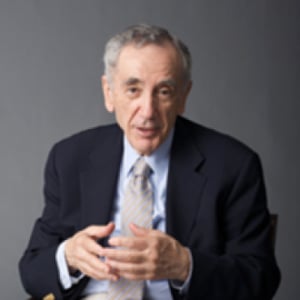
Professor Emeritus, Georgetown University Law Center
Professor Page’s academic work lies in the fields of torts, products liability, and food, drug and cosmetics regulation. His most recent scholarship includes a book entitled Torts: Proximate Cause (2003); articles entitled “Roscoe Pound, Melvin Belli and the Personal-Injury Bar: The Tale of an Odd Coupling,’ in 26 Thomas M. Cooley Law Review 639 (2009), and “The Voice of Reason: The Products Liability Scholarship of Gary T. Schwartz,” in 53 South Carolina Law Review 797 (2002); and chapters entitled “American Tort Law and the Right to Privacy,” in Personality Rights in European Tort Law (G. Bruggemeier et al. Eds., 2010), and “Reflections on Pain-and-Suffering Damages in the United States,” in Liability in the Third Millennium (A. Ciacchi et al. Eds., 2009).
Professor Page has engaged in advocacy promoting consumer product safety and workplace health and safety before committees of Congress and in the national media, has served on the Board of Directors of Public Citizen, Inc., and is currently the faculty advisor to the Stabile Graduate Law Fellow, dealing with issues relating to the safety of personal-care products.
In addition, he writes about Latin America. His latest volume on the subject, The Brazilians,explains what makes Brazilians Brazilian. His other Latin America-related publications include The Revolution That Never Was: Northeast Brazil, 1955-1964 (1972); Perón: A Biography (1983); a lengthy introduction to Eva Perón, In My Own Words (1996); the prologue to Argentina y la Europa del nazismo: Sus secuelas (I. Klich & C. Buchrucker Eds., 2009); and numerous articles and reviews in newspapers and magazines in the U.S., Argentina and Brazil. From 2003 to 2017 he served as the Director of the Center for the Advancement of the Rule of Law in the Americas at the Law Center. He continues to be a member of the Associated Faculty of the Latin American Studies Program at Georgetown University.
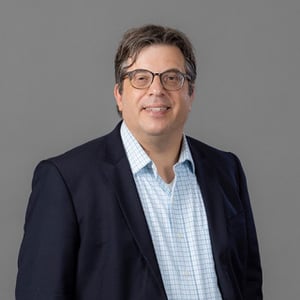
University Professor of Law and Executive Director, Liberty & Law Center, Antonin Scalia Law School, George Mason University
David Bernstein holds a University Professorship chair at the Antonin Scalia Law School, where he has been teaching since 1995. He has also been a visiting professor at the University of Michigan, Georgetown University, William & Mary, Brooklyn Law School, the University of Turin, and Hebrew University. Professor Bernstein teaches Constitutional Law, Evidence, and Products Liability.
A prolific author, Professor Bernstein often challenges the conventional wisdom with prodigious research and sharp, original analysis. He is the author of five books, and coauthor of two more. Professor Bernstein’s book Rehabilitating Lochner was praised across the political spectrum as “intellectual history in its highest form,” a “fresh perspective and a cogent analysis,” “delightful and informative,” “sharp and iconoclastic,” and “a terrific work of historical revisionism.” Columnist George Will praised Bernstein’s most recent book, Classified, The Untold Story of Racial Classification in America, as “perhaps the most consequential American book of 2022.”
Professor Bernstein has also written dozens of articles and essays published in major law reviews, including the California Law Review, Columbia Law Review, Michigan Law Review, and Yale Law Journal. An article he coauthored, Defending Daubert: It’s Time to Amend Federal Rule of Evidence 702, directly inspired a pending amendment to Rule 702.
Professor Bernstein blogs at the Instapundit.com, the Times of Israel, and the Volokh Conspiracy. He is a graduate of the Yale Law School, where he was senior editor of the Yale Law Journal and a John M. Olin Fellow in Law, Economics, and Public Policy.
Oppenheim Professor Emeritus of Antitrust and Trade Regulation Law, George Washington University Law School
Thomas D. Morgan is Oppenheim Professor of Antitrust and Trade Regulation Law Emeritus at George Washington University. He was Dean of the Emory University School of Law and on the faculties of the University of Illinois and Brigham Young University. He is co-author of Problems and Materials on Professional Responsibility (14th Ed. 2022), with Professors Mitt Regan and John Dzienkowski. Professor Morgan served as an Associate Reporter for both the American Law Institute’s Restatement of the Law (Third): The Law Governing Lawyers and the American Bar Association’s Ethics 2000 Commission. He is an Executive Committee member of the Federalist Society’s Professional Responsibility and Legal Education Practice Group and a member of the ABA Business Law Section’s Professional Responsibility committee. His book, “The Vanishing American Lawyer” (2010), was published by Oxford University Press.
A partner in the Litigation Department, David M. Bernick is a renowned trial lawyer and strategist, having acted as lead trial counsel for major U.S. and international corporations in the chemical, tobacco, technology and life sciences industries for 35 years. His experience spans complex class action and other aggregated litigation, mass torts and product liability, antitrust and competition, business restructuring and reorganization, mergers and acquisitions, corporate governance, securities and criminal environmental litigation. In 2016, Mr. Bernick was named the winner in the “Litigation: Business Trial Lawyers” category of the 2016 Chambers USA Awards. Bernick has a Masters from Yale, and graduated from the University of Chicago Law School.
Judge Robreno received a B.A. in History from Westfield State University, an M.S. in Labor Studies from the University of Massachusetts at Amherst, Massachusetts, and a J.D. from Rutgers Law School at Camden, New Jersey, where he served as articles editor of the law review. He was in private practice in Philadelphia, Pennsylvania from 1981-1992. At the time of his induction to the bench he was a partner in a large Philadelphia law firm. From 1978-1981, he served as a trial attorney for the United States Department of Justice Antitrust Division and Special Assistant U.S. Attorney. Throughout his nearly twenty five years judicial career, Judge Robreno has carried a full docket of civil and criminal cases. He is the author of over 1800 judicial opinions. Since 2008, Judge Robreno has presided over MDL-875 personal injury asbestos litigation, the largest multi-district litigation in the federal courts where he has been praised for resolving over 180,000 cases consisting of some 10 million claims. During his judicial career, in addition to his assignment as a District Judge in the Eastern District of Pennsylvania, he has sat by designation with the Court of Appeals for the Third Circuit, and Eleventh Circuit, the Ninth Circuit and the District Courts in New Jersey, Delaware and Western District of Pennsylvania. He is currently sitting by designation in the District of Delaware.
Partner, Seeger Weiss LLP
Chris is a founding partner of Seeger Weiss and one of the nation’s leading attorneys in the areas of complex and mass tort actions. He has earned leadership appointments from state and federal courts throughout the U.S. in many noteworthy multi-district litigations, including pharmaceutical actions involving Vioxx, Zyprexa, Gadolinium, and DePuy ASR, among others. In 2012, the U.S. District Court for the Eastern District of Pennsylvania appointed Chris to lead the multi-district litigation against the National Football League arising out of concussion-related injuries sustained by thousands of former NFL players. In the face of significant legal challenges, he was able to negotiate an uncapped global settlement with an estimated value of over one billion dollars. In 2016, he was appointed to the Plaintiffs' Steering Committee for the MDL concerning the Volkswagen diesel emissions scandal, in the U.S. District Court, Northern District of California. Chris served on the Settlement Committee and was one of the lead negotiators of a $14.7 billion settlement which includes a massive buyback program for consumers and billions of dollars for environmental remediation. He was also appointed Plaintiffs' Co-Lead Counsel for the Testosterone Replacement Therapy litigation in the Northern District of Illinois; as Co-Lead Counsel in the Proton Pump Inhibitor multidistrict litigation in the U.S. District Court for the District of New Jersey; to the Executive and Settlement Committees for the National Prescription Opiate litigation in the Northern District of Ohio; to the Plaintiffs’ Settlement Committee, serving as Lead Negotiator, for the Syngenta GMO Corn litigation, resulting in a $1.5 billion nationwide settlement. Recent appointments include: Co-Lead Counsel in the 3M Combat Arms Earplug Products Liability Litigation, in the Northern District of Florida, where Chris represents thousands of U.S. military members who have suffered hearing loss and tinnitus; and Co-Lead Counsel in the Intel CPU Marketing, Sales Practices and Products Liability litigation in the District of Oregon. He is an elected member of the American Law Institute; a member of the Board of Advisors to the NYU School of Law, Center on Civil Justice; and serves on the Leadership Council to the Bolch Judicial Institute at Duke Law School.
Counsel in the Complex Commercial Litigation department at McGuireWoods LLP. Co-author of The Class Action Playbook (Oxford Univ. Press 2010). Blogs at the Class Action Countermeasures blog at classactioncountermeasures.com.
Professor of Law, Yeshiva University Benjamin N. Cardozo School of Law
Professor Brickman teaches Contracts, Professional Responsibility, and Land Use, among other courses. His areas of expertise include legal ethics, contingency fees, mass torts, and asbestos litigation. His writings on these and other subjects are widely cited and he is frequently quoted in the press.

Senior Judge, United States Court of Appeals, District of Columbia Circuit
Circuit Judge Douglas H. Ginsburg was appointed to the United States Court of Appeals for the District of Columbia in 1986. After receiving his B.S. from Cornell University in 1970, and his J.D. from the University of Chicago Law School in 1973, he clerked on the D.C. Circuit and for Justice Thurgood Marshall on the United States Supreme Court. Thereafter, Judge Ginsburg was a professor at the Harvard Law School, the Deputy Assistant and then Assistant Attorney General for the Antitrust Division of the Department of Justice, as well as the Administrator of the Office of Information and Regulatory Affairs in the Office of Management and Budget. Concurrent with his service as a federal judge, Judge Ginsburg has taught at the University of Chicago Law School and the New York University School of Law. Judge Ginsburg is currently a Professor of Law at the George Mason University and a visiting professor at University College London, Faculty of Laws.
Judge Ginsburg is the Chairman of the International Advisory Board of the Global Antitrust Institute at the Law and Economics Center of the George Mason University School of Law. He also serves on the Advisory Boards of: Competition Policy International; the Harvard Journal of Law and Public Policy; the Journal of Competition Law and Economics; the Journal of Law, Economics & Policy; the Supreme Court Economic Review; the University of Chicago Law Review; the New York University Journal of Law and Liberty; and, at University College London, both the Centre for Law, Economics and Society and the Jevons Institute for Competition Law and Economics.
In 2020, Judge Ginsburg was the 11th recipient of the John Sherman Award, presented by the Antitrust Division of the Department of Justice in recognition of the awardee’s Lifetime Contributions to Antitrust Law and Policy.
In 2014, Judge Ginsburg received the Lifetime Achievement Award given annually by the Global Competition Review.
He is the author or co-author of several books and more than 100 articles on competition and regulation, including, most recently, Growing Convergence: The Limited Role of Antitrust in Standard Essential Patent Disputes, in CPI Antitrust Chronicle, Summer 2021, Vol. 1, No. 2.

Debate: Liability: The New "New Property" [Archive Collection]
Peter Huber, Alex Kozinski, Joseph A. Page
On March 10-11, 1989, the Federalist Society's University of Michigan student chapter hosted the eighth...
Roundup Weedkiller Litigation
David Bernstein
In a series of recent decisions, both federal and state courts have allowed the admission...
In Memoriam: Ronald Rotunda and Legal Ethics
Thomas D. Morgan
Ronald D. Rotunda was a highly-respected, widely-published professor of both Legal Ethics and Constitutional Law. ...
Eliminating Meritless Claims
David M. Bernick, Eduardo Robreno, Christopher A. Seeger, Andrew Trask
Multidistrict litigation (“MDL”) accounts for nearly half of all civil cases in federal courts. Although...
Mass Fraud in Mass Torts? - Event Audio
Patrick M. Hanlon, Francis E. McGovern, Joseph F. Rice, Lester Brickman, Douglas H. Ginsburg
The stakes in mass tort litigation are extremely high, with settlements and awards ranging into...