

Tazewell Taylor Professor of Law and William H. Cabell Research Professor, William & Mary Law School
Jonathan H. Adler joined the William & Mary law faculty as the Tazwell Taylor Professor of Law and William H. Cabell Research Professor in 2025. Prior to joining the faculty, he was the inaugural Johan Verheij Memorial Professor of Law and the founding Director of the Coleman P. Burke Center for Environmental Law at the Case Western Reserve University School of Law.
Professor Adler is the author or editor of seven books, including Climate Liberalism: Perspectives on Liberty, Property and Pollution (Palgrave, 2023), Marijuana Federalism: Uncle Sam and Mary Jane (Brookings Institution Press, 2020), Business and the Roberts Court (Oxford University Press, 2016) and Rebuilding the Ark: New Perspectives on Endangered Species Act Reform (AEI Press, 2011).
His articles have appeared in publications ranging from the Harvard Environmental Law Review and Yale Journal on Regulation to the Wall Street Journal, New York Times, and Washington Post. He has testified before Congress a dozen times, and his work has been cited in the U.S. Supreme Court. A 2024 study identified Professor Adler as the seventh most cited legal academic in administrative and environmental law from 2019 to 2023.
Professor Adler is a contributing editor to Civitas Outlook and a regular contributor to the popular legal blog, The Volokh Conspiracy. A regular commentator on constitutional and regulatory issues, he has appeared on numerous radio and television programs, ranging from the PBS Newshour and National Public Radio to the Fox News Channel and Entertainment Tonight.
Professor Adler is a senior fellow at the Property & Environment Research Center in Bozeman, Montana. In 2018, Professor Adler was elected to membership in the American Law Institute and helped co-found the organization Checks and Balances. In 2024, Professor Adler was appointed a public member of the Administrative Conference of the United States.
Professor Adler clerked for the Honorable David B. Sentelle on the U.S. Court of Appeals for the District of Columbia Circuit.
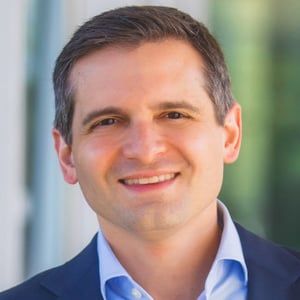
Assistant General Counsel for Litigation, Exxon Mobil Corporation
Justin Anderson is the Assistant General Counsel for Litigation at ExxonMobil. As head of litigation, Justin is responsible for protecting ExxonMobil’s interests in disputes arising around the world. That litigation portfolio includes a variety of commercial disputes, investment treaty arbitrations, long-running climate lawsuits, environmental claims, and a diverse range of other matters. Justin has led the litigation department at ExxonMobil since July 2023.
Prior to joining ExxonMobil, Justin was a partner in the litigation department of Paul, Weiss, Rifkind, Wharton & Garrison, LLP. At the law firm, Justin represented clients in a variety of litigation and regulatory matters, including class actions, white collar matters, regulatory enforcement proceedings, and complex business litigation.
Justin previously served as an Assistant U.S. Attorney in the U.S. Attorney’s Office for the Southern District of New York from 2009 to 2015. He led the investigation, prosecution, and trial of federal crimes, including financial fraud, public corruption, narcotics trafficking, identity theft, and money laundering. For his work on one of those matters, he received the John Marshall Award, the Justice Department’s highest award for trial litigators.
Earlier in his career, Justin was a law clerk to Judge José A. Cabranes of the U.S. Court of Appeals for the Second Circuit, and Judge Sidney H. Stein of the U.S. District Court for the Southern District of New York.
Justin earned his B.A. and M.A. from Johns Hopkins University and his J.D. from Yale Law School.
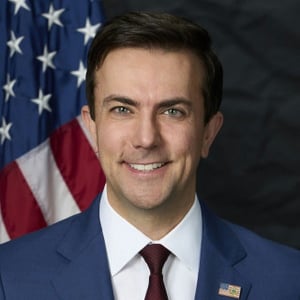
Deputy Administrator, United States Environmental Protection Agency
David Fotouhi was sworn in as Deputy Administrator of the United States Environmental Protection Agency on June 16, 2025.
Fotouhi is an experienced environmental attorney who previously served in senior roles at EPA. During the first term of the Trump Administration, Fotouhi served as EPA’s Acting General Counsel and Principal Deputy General Counsel. Prior to rejoining the agency, Fotouhi was a partner in the Washington, D.C. office of Gibson, Dunn & Crutcher LLP practicing environmental law.
Fotouhi grew up in Oklahoma and holds a B.A. from Vanderbilt University and a J.D. from Harvard Law School. Before entering private legal practice, Fotouhi served as a law clerk to the Honorable Raymond W. Gruender of the U.S. Court of Appeals for the Eighth Circuit.
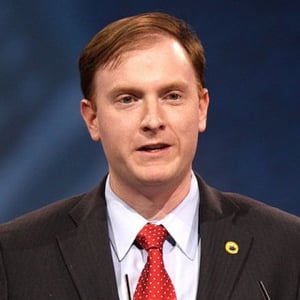
State Auditor & Securities Commissioner, West Virginia
John “JB” McCuskey is West Virginia’s 21st State Auditor. He is currently in his second term, first elected in 2016. Previously, he served two terms in the House of Delegates and practiced law in Charleston.
As Auditor, McCuskey has made it his mission to ensure an efficient, effective, and transparent government. On his watch, McCuskey has turned West Virginia into the most transparent state in the country by allowing citizens to access real-time data about how their tax dollars are spent through WVCheckbook.gov. He also established the Public Integrity and Fraud Unit which has opened more than 200 investigations into local governments, uncovering fraud totaling more than $2.5 million.
A tool to fight fraud and abuse is the use of the state Purchasing Card. Over the past five years, McCuskey has pushed for more agencies, boards and commissions, and institutions of higher education to use the P-Card, which offers an efficient method for streamlining the payment process. The P-Card program nets the state tens of millions each year in cost avoidance savings. Since Auditor McCuskey took office, the state and local governments have earned more than $41 million in rebates from the use of the P-Card.
McCuskey is also leading the nation in using augmented intelligence and machine learning to streamline government processes and mitigate fraud and abuse of taxpayer dollars. The Auditor’s Office has established a platform, the first of its kind, to be used to track government spending and highlight fraud and important trends.
Additionally, the Auditor is the Land Commissioner for the state of West Virginia. McCuskey pushed to rewrite decades old tax laws, to streamline the property tax process for taxpayers and collectors across the state. This will help speed up the process to prevent houses from becoming dilapidated during what was a very lengthy process. The legislation also created, for the first time, a payment plan for homeowners who fall on hard times.
McCuskey is a native of Harrison County, West Virginia. His parents, John and Anne McCuskey, cultivated his deep love of the Mountain State and instilled in him the values of public service.
He is a graduate of The George Washington University with a degree in Political Communication. He is also a graduate of the West Virginia University College of Law. Before attending law school, McCuskey worked as a civilian for the Department of Defense at the Pentagon in the offices of the Army and Department of Defense General Counsels.
Auditor McCuskey lives in Charleston with his wife, Wendy, and daughters, Charlotte Anne and Martha Elizabeth, and their dog Pearl, where they own a small business.
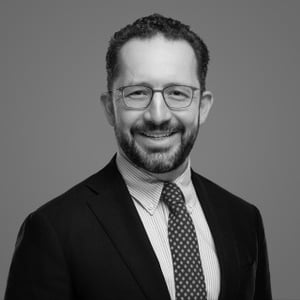
Executive Director, Alliance For Consumers; President & CEO, American Juris Link
O.H. Skinner is the President & CEO of American Juris Link, a nonprofit dedicated to accelerating nonprofit litigation to advance freedom, liberty, and the rule of law. O.H. has a long track record in facilitating strategic nonprofit litigation in his role as the Executive Director at Alliance For Consumers as well as from his time serving Arizona Attorney General Mark Brnovich in senior positions, including as Arizona Solicitor General. O.H. is a graduate of the University of Pennsylvania and Harvard Law School. Prior to joining the Arizona Attorney General's Office, O.H. practiced at WilmerHale and Ropes & Gray in Boston, and clerked for the Hon. J.L. Edmondson of the United States Court of Appeals for the Eleventh Circuit. In 2023, O.H. was a Wasserstein Public Interest Fellow at Harvard Law School, where he counseled students as a Harvard-identified “outstanding public interest attorney.”
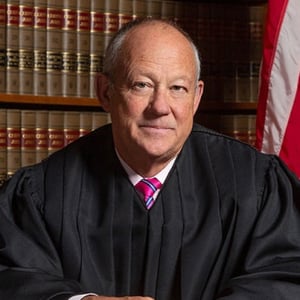
Judge, United States Court of Appeals, Tenth Circuit
Judge Tymkovich, of Denver, Colorado, was nominated to the Tenth Circuit Court of Appeals by President George W. Bush, and confirmed in April 2003. On October 1, 2015 he became Chief Circuit Judge and held this position until October 2022. He was Chair of the US Judicial Conference’s Committee on Judicial Resources from 2011 to 2015. Since 2008 he has been an adjunct professor of law at the University of Colorado School of Law, teaching Election Law. He is a member of the Doyle Inn of Court, the American Law Institute, and the International Society of Barristers. Since he joined the Circuit, Judge Tymkovich has hosted judicial delegations from Russia, Kazakhstan, and Afghanistan, and has also represented the United States in programs at Kiev and Yalta in Ukraine.
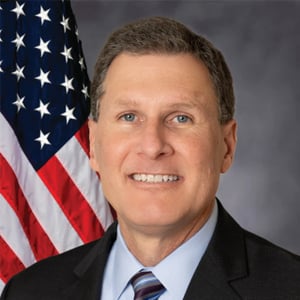
United States Attorney, Eastern District of California
Mr. Grant was appointed by Attorney General Pam Bondi to serve as the United States Attorney for the Eastern District of California beginning on August 11, 2025. Pursuant to 28 U.S.C. § 546(d), he was further appointed by the district court effective December 9, 2025.
Mr. Grant is a veteran of the Department of Justice, having served twice in Washington, D.C.: from 1991 to 1993 as an Attorney-Adviser in the Office of Legal Counsel, and from 2017 to 2021 as a Deputy Assistant Attorney General in the Environment and Natural Resources Division (ENRD). During his tenure at ENRD, he supervised more than a hundred Department litigators advancing the interests of the United States and its agencies in both enforcement and defensive matters, both civil and criminal.
In addition to his service in the Department, Mr. Grant has decades of experience in private practice in Washington, D.C. and Sacramento. That experience includes arguments in the U.S. Supreme Court, the California Supreme Court, and numerous other federal and state courts.
Mr. Grant served as a law clerk to Chief Justice Warren E. Burger (retired) and Associate Justice Clarence Thomas during the Supreme Court’s October 1994 Term. Earlier he served as a law clerk to Judge Edith H. Jones of the U.S. Court of Appeals for the Fifth Circuit in Houston, Texas.
Mr. Grant grew up in Modesto, California and raised his family in Sacramento County. He attended the University of California, Berkeley, from which he earned a bachelor’s degree in economics (1986) and a law degree (1990).
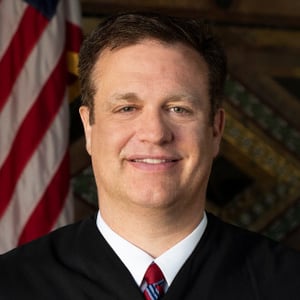
Judge, United States Court of Appeals, Ninth Circuit
Judge Nelson was confirmed to the Ninth Circuit in October 2018, as the youngest Circuit Judge to serve from Idaho and he has chambers in his hometown of Idaho Falls. Prior to his confirmation, Judge Nelson served for nine years as General Counsel of Idaho Falls-based Melaleuca, Inc., a consumer goods company. He previously worked in Washington, DC, where he served in all three branches of the federal government, including as Special Counsel for Supreme Court nominations to the Ranking Member of the Senate Judiciary Committee; Deputy General Counsel to the White House Office of Management and Budget; Deputy Assistant Attorney General in the Environment and Natural Resources Division of the United States Department of Justice; and a law clerk to Judge Henderson of the United States Court of Appeals for the D.C. Circuit. He has argued in most of the federal courts of appeals and worked on dozens of Supreme Court briefs. He started in the Washington, DC office of Sidley Austin as an appellate lawyer, after clerking for Judges Mosk and Brower of the Iran-U.S. Claims Tribunal at The Hague, and for now-Judge Tom Griffith, then-Senate Legal Counsel, during the impeachment trial of President Clinton. Judge Nelson earned his B.A. from Brigham Young University and his J.D., with honors, from BYU Law School. Judge Nelson has been a member of the Federalist Society since 1998.
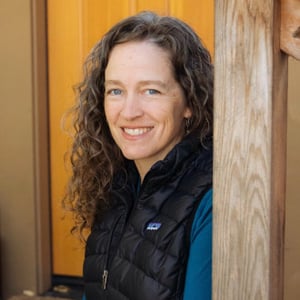
Executive Director & Chief Legal Counsel, Our Children's Trust
Julia Olson graduated from the University of California, Hastings College of the Law, with a J.D. in 1997. For the first part of her 22-year career, Julia represented grassroots conservation groups working to protect the environment, organic agriculture, and human health. After becoming a mother, and realizing the greatest threat to her children and children everywhere was climate change, she focused her work on representing young people and elevating their voices on the issue that will most determine the quality of their lives and the well-being of all future generations. Julia founded Our Children’s Trust in 2010 to lead this strategic legal campaign on behalf of the world’s youth against governments everywhere. Julia leads Juliana v. the United States, the constitutional climate change case brought by 21 youth against the U.S. government for violating their Fifth Amendment rights to life, liberty, property, and public trust resources. Julia and OCT are recipients of the Rose-Walters Prize for Global Environmental Activism. She received the Kerry Rydberg Award for Environmental Activism in 2017 and is a member of Rachel's Network Circle of Advisors. To rejuvenate, Julia loves being high up in the mountains with her family and her dog or playing tunes on her ukulele with friends.
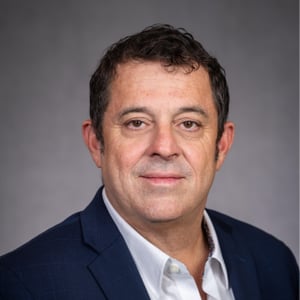
Senior Fellow for Law, Economics, and Technology, The Heritage Foundation; Professor, Florida International University
Mario Loyola is a Senior Fellow for Law, Economics, and Technology at The Heritage Foundation.
Loyola served in the Trump Administration as Associate Director for Regulatory Reform at the White House Council on Environmental Quality. In that role, he was one of the principal drafters of the One Federal Decision policy, which helped to streamline the permitting and environmental review of large infrastructure projects. While at CEQ, he was a member of the U.S. delegation to the USMCA free trade negotiations with Mexico and Canada, as well as the United Nations conference on biodiversity on the high seas. Loyola initially joined the White House in February 2017 as a Presidential Speechwriter, employing his expertise in many areas of foreign and domestic policy.
After beginning his career in M&A and corporate finance law, Loyola served in the Bush 43 Administration as a special assistant to the Undersecretary of Defense for Policy. He left that position to start writing on national defense issues in magazines such as National Review and The Weekly Standard, reporting from the front lines of the war on terrorism in Lebanon, Israel, and Iraq. He finished the Bush Administration as Foreign and Defense Counsel to the U.S. Senate Republican Policy Committee, then under the chairmanship of Senator Kay Bailey Hutchison of Texas. He subsequently moved to Texas and joined the Texas Public Policy Foundation, where he specialized in energy, environment, and federalism.
Loyola is a frequent contributor to The Wall Street Journal, National Review, and The Atlantic, among others. He teaches environmental and administrative law at Florida International University, where he is Founding Director of the Environmental Finance and Risk Management program in FIU’s prestigious Institute of Environment. He received a bachelor’s degree in European history from the University of Wisconsin–Madison and a J.D. from Washington University School of Law.

Laurence A. Tisch Professor of Law and Director, Classical Liberal Institute, New York University School of Law; Senior Fellow, The Civitas Institute, University of Texas at Austin
Richard A. Epstein is the inaugural Laurence A. Tisch Professor of Law at NYU School of Law. Prior to his joining the faculty, he was a visiting law professor at NYU from 2007 through 2009. He served as the Peter and Kirstin Bedford Senior Fellow at the Hoover Institution from 2000 to 2024. Since 2024 to the present he is a senior lecturer at the Civitas Institute at the University of Texas—Austin. Epstein is also the James Parker Hall Distinguished Service Professor of Law Emeritus and a senior lecturer at the University of Chicago. His initial law school appointment was at the University of Southern California from 1968 to 1972. Epstein received an LL.D., h.c. from the University of Ghent, 2003. He has been a member of the American Academy of Arts and Sciences since 1985 and was a Senior Fellow of the Center for Clinical Medical Ethics at the University of Chicago Division of Biological Sciences, also from 1983. to 2022 He served as editor of the Journal of Legal Studies from 1981 to 1991, and of the Journal of Law and Economics from 1991-2001. From 2001 to 2010 he was a director of the John M. Olin Program in Law and Economics at the University of Chicago.
His newest book, The Myth of Birthright Citizenship: What the Fourteenth Amendment Really Says was published in 2026 (Encounter Books). Prior to that he has published many books including, The Dubious Morality of the Modern Administrative State (Roman & Littlefield 2020).Earlier he published th Classical Liberal Constitution: The Uncertain Quest for Limited Government (Harvard 2014) iHis previous books include Design for Liberty: Private Property, Public Administration and the Rule of Law (Harvard 2011); The Case Against the Employee Free Choice Act (Hoover 2009); Supreme Neglect: How to Revive the Constitutional Protection of Property Rights (Oxford 2008); Antitrust Decrees in Theory and Practice: Why Less is More (AEI 2007); Overdose: How Excessive Government Regulation Stifles Pharmaceutical Innovation (Yale University Press. 2006); How Progressives Rewrote the Constitution (Cato 2006); Cases and Materials on Torts (Aspen Law & Business; 8th ed. 2004); Skepticism and Freedom: A Modern Case for Classical Liberalism (University of Chicago, 2003); Torts (Aspen Law & Business 1999); Principles for a Free Society: Reconciling Individual Liberty with the Common Good (Perseus Books, 1998): Mortal Peril: Our Inalienable Rights to Health Care (Addison-Wesley, 1997); Simple Rules for a Complex World (Harvard, 1995); Bargaining With the State (Princeton, 1993); Forbidden Grounds: The Case Against Employment Discrimination Laws (Harvard , 1992); Takings: Private Property and the Power of Eminent Domain (Harvard, 1985); and Modern Products Liability Law (Greenwood Press, 1980). He has also edited(with Catherine M. Sharkey) Cases and Materials on the Law of Torts (10th edition 2012).
Professor Epstein has written numerous articles on a wide range of legal and interdisciplinary subjects. He has taught courses in administrative law, antitrust law, civil procedure, communications, constitutional law, contracts, corporations, criminal law, employment discrimination law, environmental law, food and drug law health law and policy, legal history, labor law, property, real estate development and finance, jurisprudence, labor law; land use planning, patents, individual, estate and corporate taxation, Roman Law; torts, and workers' compensation.
Professor Epstein also writes a regular column for Civitas Institute, which also sponsors his podcast, The Libertarian with Charles C.W. Cooke, and Law Talk, with Cooke and John Yoo. He also does a podcast with John Batchelor. And appears regularly on the Freedom File with Judge Andrew Napolitano.
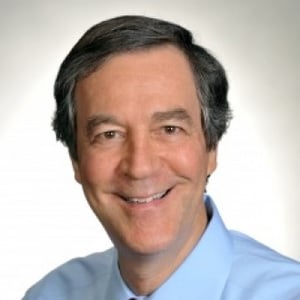
J. B. and Maurice C. Shapiro Professor of Environmental Law, George Washington University Law School
Robert L. Glicksman is a nationally and internationally recognized expert on environmental, natural resources, and administrative law issues. A graduate of the Cornell Law School, his areas of expertise include environmental, natural resources, administrative, and property law. Before joining the law school faculty in 2009, Professor Glicksman taught at the University of Kansas School of Law, where he joined the faculty in 1982 and was named the holder of the Robert W. Wagstaff Distinguished Professor of Law in 1995. Professor Glicksman has practiced with law firms in DC and New Jersey before joining and while on leave from academia, focusing on environmental, energy, and administrative law issues. He has consulted on various environmental and natural resources law issues, including work for the Secretariat of the Commission for Environmental Cooperation in Montreal, Canada.
Professor Glicksman has extensive publications in his areas of expertise. He is co-author of two law school casebooks, Environmental Protection: Law and Policy (6th ed. Aspen Publishers) and Administrative Law: Agency Action in Legal Context (Foundation Press); the four-volume treatise, Public Natural Resources Law (2d ed. Thomson/West); two monographs, Risk Regulation at Risk: A Pragmatic Approach, and Pollution Limits and Polluters’ Efforts to Comply: The Role of Government Monitoring and Enforcement, both published by Stanford University Press); and Modern Public Land Law in a Nutshell (3d ed. West). He has written numerous book chapters and articles on a variety of environmental and natural resources law topics, concentrating recently on topics such as climate change, federalism issues in environmental law, the challenges facing the federal land management agencies, and environmental enforcement. His articles have been published in law reviews and journals that include the Texas Law Review, Pennsylvania Law Review, the Northwestern University Law Review, the Duke Law Journal, the Vanderbilt Law Review, the Wake Forest Law Review, the Indiana Law Journal, the Stanford Environmental Law Journal, the Virginia Environmental Law Journal, and the Administrative Law Review.
Professor Glicksman has been a member scholar for the Center for Progressive Reform since 2002 and a member of the Center’s Board of Directors since 2008.
Senior Fellow for Law, Economics, and Technology, The Heritage Foundation; Professor, Florida International University
Mario Loyola is a Senior Fellow for Law, Economics, and Technology at The Heritage Foundation.
Loyola served in the Trump Administration as Associate Director for Regulatory Reform at the White House Council on Environmental Quality. In that role, he was one of the principal drafters of the One Federal Decision policy, which helped to streamline the permitting and environmental review of large infrastructure projects. While at CEQ, he was a member of the U.S. delegation to the USMCA free trade negotiations with Mexico and Canada, as well as the United Nations conference on biodiversity on the high seas. Loyola initially joined the White House in February 2017 as a Presidential Speechwriter, employing his expertise in many areas of foreign and domestic policy.
After beginning his career in M&A and corporate finance law, Loyola served in the Bush 43 Administration as a special assistant to the Undersecretary of Defense for Policy. He left that position to start writing on national defense issues in magazines such as National Review and The Weekly Standard, reporting from the front lines of the war on terrorism in Lebanon, Israel, and Iraq. He finished the Bush Administration as Foreign and Defense Counsel to the U.S. Senate Republican Policy Committee, then under the chairmanship of Senator Kay Bailey Hutchison of Texas. He subsequently moved to Texas and joined the Texas Public Policy Foundation, where he specialized in energy, environment, and federalism.
Loyola is a frequent contributor to The Wall Street Journal, National Review, and The Atlantic, among others. He teaches environmental and administrative law at Florida International University, where he is Founding Director of the Environmental Finance and Risk Management program in FIU’s prestigious Institute of Environment. He received a bachelor’s degree in European history from the University of Wisconsin–Madison and a J.D. from Washington University School of Law.
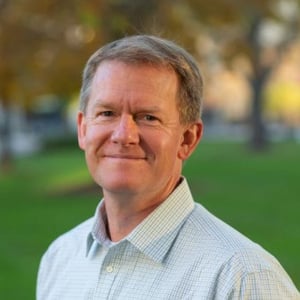
Executive Director, Environmental Policy Innovation Center
Tim leads the Environmental Policy Innovation Center, a fiscally-sponsored project of Sand County Foundation. Tim has 15 years of experience working on national policies that create more innovative, effective, and incentive-focused approaches to wildlife conservation, drought response, finance for water supplies and quality, and agricultural stewardship. His experience includes two years as Associate Director for Conservation at the White House Council on Environmental Quality from 2014 to 2017. A scientist by training, Tim is also a former city council member.
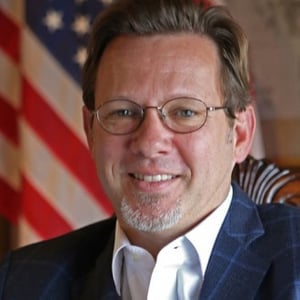
Chairman and Partner, Earth & Water Law Group
Earth & Water Group Founder, Brent Fewell, has over 25 years of experience in public policy, advocacy, and environmental law.
As an environmental lawyer and former corporate executive and senior U.S. EPA official in EPA’s Offices of Water and Congressional and Intergovernmental Relations, Brent brings a wealth of knowledge and unique perspective to his clients in navigating the regulatory and political arenas in Washington DC. As a highly regarded thought leader on environmental policy and governance matters, his counsel and opinions are sought out by corporate and government leaders around the globe. Brent brings unparalleled energy and passion to the issues in a way that few do to help his clients navigate in an increasingly complex and nuanced regulatory environment.
Brent received his B.S. in Wildlife Management from the University of Maine (high distinction), a Masters in Environmental Management from Duke University, and J.D. from Duquesne University School of Law. (Licensed in PA and DC)
Laurence A. Tisch Professor of Law and Director, Classical Liberal Institute, New York University School of Law; Senior Fellow, The Civitas Institute, University of Texas at Austin
Richard A. Epstein is the inaugural Laurence A. Tisch Professor of Law at NYU School of Law. Prior to his joining the faculty, he was a visiting law professor at NYU from 2007 through 2009. He served as the Peter and Kirstin Bedford Senior Fellow at the Hoover Institution from 2000 to 2024. Since 2024 to the present he is a senior lecturer at the Civitas Institute at the University of Texas—Austin. Epstein is also the James Parker Hall Distinguished Service Professor of Law Emeritus and a senior lecturer at the University of Chicago. His initial law school appointment was at the University of Southern California from 1968 to 1972. Epstein received an LL.D., h.c. from the University of Ghent, 2003. He has been a member of the American Academy of Arts and Sciences since 1985 and was a Senior Fellow of the Center for Clinical Medical Ethics at the University of Chicago Division of Biological Sciences, also from 1983. to 2022 He served as editor of the Journal of Legal Studies from 1981 to 1991, and of the Journal of Law and Economics from 1991-2001. From 2001 to 2010 he was a director of the John M. Olin Program in Law and Economics at the University of Chicago.
His newest book, The Myth of Birthright Citizenship: What the Fourteenth Amendment Really Says was published in 2026 (Encounter Books). Prior to that he has published many books including, The Dubious Morality of the Modern Administrative State (Roman & Littlefield 2020).Earlier he published th Classical Liberal Constitution: The Uncertain Quest for Limited Government (Harvard 2014) iHis previous books include Design for Liberty: Private Property, Public Administration and the Rule of Law (Harvard 2011); The Case Against the Employee Free Choice Act (Hoover 2009); Supreme Neglect: How to Revive the Constitutional Protection of Property Rights (Oxford 2008); Antitrust Decrees in Theory and Practice: Why Less is More (AEI 2007); Overdose: How Excessive Government Regulation Stifles Pharmaceutical Innovation (Yale University Press. 2006); How Progressives Rewrote the Constitution (Cato 2006); Cases and Materials on Torts (Aspen Law & Business; 8th ed. 2004); Skepticism and Freedom: A Modern Case for Classical Liberalism (University of Chicago, 2003); Torts (Aspen Law & Business 1999); Principles for a Free Society: Reconciling Individual Liberty with the Common Good (Perseus Books, 1998): Mortal Peril: Our Inalienable Rights to Health Care (Addison-Wesley, 1997); Simple Rules for a Complex World (Harvard, 1995); Bargaining With the State (Princeton, 1993); Forbidden Grounds: The Case Against Employment Discrimination Laws (Harvard , 1992); Takings: Private Property and the Power of Eminent Domain (Harvard, 1985); and Modern Products Liability Law (Greenwood Press, 1980). He has also edited(with Catherine M. Sharkey) Cases and Materials on the Law of Torts (10th edition 2012).
Professor Epstein has written numerous articles on a wide range of legal and interdisciplinary subjects. He has taught courses in administrative law, antitrust law, civil procedure, communications, constitutional law, contracts, corporations, criminal law, employment discrimination law, environmental law, food and drug law health law and policy, legal history, labor law, property, real estate development and finance, jurisprudence, labor law; land use planning, patents, individual, estate and corporate taxation, Roman Law; torts, and workers' compensation.
Professor Epstein also writes a regular column for Civitas Institute, which also sponsors his podcast, The Libertarian with Charles C.W. Cooke, and Law Talk, with Cooke and John Yoo. He also does a podcast with John Batchelor. And appears regularly on the Freedom File with Judge Andrew Napolitano.
Senior Fellow for Law, Economics, and Technology, The Heritage Foundation; Professor, Florida International University
Mario Loyola is a Senior Fellow for Law, Economics, and Technology at The Heritage Foundation.
Loyola served in the Trump Administration as Associate Director for Regulatory Reform at the White House Council on Environmental Quality. In that role, he was one of the principal drafters of the One Federal Decision policy, which helped to streamline the permitting and environmental review of large infrastructure projects. While at CEQ, he was a member of the U.S. delegation to the USMCA free trade negotiations with Mexico and Canada, as well as the United Nations conference on biodiversity on the high seas. Loyola initially joined the White House in February 2017 as a Presidential Speechwriter, employing his expertise in many areas of foreign and domestic policy.
After beginning his career in M&A and corporate finance law, Loyola served in the Bush 43 Administration as a special assistant to the Undersecretary of Defense for Policy. He left that position to start writing on national defense issues in magazines such as National Review and The Weekly Standard, reporting from the front lines of the war on terrorism in Lebanon, Israel, and Iraq. He finished the Bush Administration as Foreign and Defense Counsel to the U.S. Senate Republican Policy Committee, then under the chairmanship of Senator Kay Bailey Hutchison of Texas. He subsequently moved to Texas and joined the Texas Public Policy Foundation, where he specialized in energy, environment, and federalism.
Loyola is a frequent contributor to The Wall Street Journal, National Review, and The Atlantic, among others. He teaches environmental and administrative law at Florida International University, where he is Founding Director of the Environmental Finance and Risk Management program in FIU’s prestigious Institute of Environment. He received a bachelor’s degree in European history from the University of Wisconsin–Madison and a J.D. from Washington University School of Law.
Chairman and Partner, Earth & Water Law Group
Earth & Water Group Founder, Brent Fewell, has over 25 years of experience in public policy, advocacy, and environmental law.
As an environmental lawyer and former corporate executive and senior U.S. EPA official in EPA’s Offices of Water and Congressional and Intergovernmental Relations, Brent brings a wealth of knowledge and unique perspective to his clients in navigating the regulatory and political arenas in Washington DC. As a highly regarded thought leader on environmental policy and governance matters, his counsel and opinions are sought out by corporate and government leaders around the globe. Brent brings unparalleled energy and passion to the issues in a way that few do to help his clients navigate in an increasingly complex and nuanced regulatory environment.
Brent received his B.S. in Wildlife Management from the University of Maine (high distinction), a Masters in Environmental Management from Duke University, and J.D. from Duquesne University School of Law. (Licensed in PA and DC)
Laurence A. Tisch Professor of Law and Director, Classical Liberal Institute, New York University School of Law; Senior Fellow, The Civitas Institute, University of Texas at Austin
Richard A. Epstein is the inaugural Laurence A. Tisch Professor of Law at NYU School of Law. Prior to his joining the faculty, he was a visiting law professor at NYU from 2007 through 2009. He served as the Peter and Kirstin Bedford Senior Fellow at the Hoover Institution from 2000 to 2024. Since 2024 to the present he is a senior lecturer at the Civitas Institute at the University of Texas—Austin. Epstein is also the James Parker Hall Distinguished Service Professor of Law Emeritus and a senior lecturer at the University of Chicago. His initial law school appointment was at the University of Southern California from 1968 to 1972. Epstein received an LL.D., h.c. from the University of Ghent, 2003. He has been a member of the American Academy of Arts and Sciences since 1985 and was a Senior Fellow of the Center for Clinical Medical Ethics at the University of Chicago Division of Biological Sciences, also from 1983. to 2022 He served as editor of the Journal of Legal Studies from 1981 to 1991, and of the Journal of Law and Economics from 1991-2001. From 2001 to 2010 he was a director of the John M. Olin Program in Law and Economics at the University of Chicago.
His newest book, The Myth of Birthright Citizenship: What the Fourteenth Amendment Really Says was published in 2026 (Encounter Books). Prior to that he has published many books including, The Dubious Morality of the Modern Administrative State (Roman & Littlefield 2020).Earlier he published th Classical Liberal Constitution: The Uncertain Quest for Limited Government (Harvard 2014) iHis previous books include Design for Liberty: Private Property, Public Administration and the Rule of Law (Harvard 2011); The Case Against the Employee Free Choice Act (Hoover 2009); Supreme Neglect: How to Revive the Constitutional Protection of Property Rights (Oxford 2008); Antitrust Decrees in Theory and Practice: Why Less is More (AEI 2007); Overdose: How Excessive Government Regulation Stifles Pharmaceutical Innovation (Yale University Press. 2006); How Progressives Rewrote the Constitution (Cato 2006); Cases and Materials on Torts (Aspen Law & Business; 8th ed. 2004); Skepticism and Freedom: A Modern Case for Classical Liberalism (University of Chicago, 2003); Torts (Aspen Law & Business 1999); Principles for a Free Society: Reconciling Individual Liberty with the Common Good (Perseus Books, 1998): Mortal Peril: Our Inalienable Rights to Health Care (Addison-Wesley, 1997); Simple Rules for a Complex World (Harvard, 1995); Bargaining With the State (Princeton, 1993); Forbidden Grounds: The Case Against Employment Discrimination Laws (Harvard , 1992); Takings: Private Property and the Power of Eminent Domain (Harvard, 1985); and Modern Products Liability Law (Greenwood Press, 1980). He has also edited(with Catherine M. Sharkey) Cases and Materials on the Law of Torts (10th edition 2012).
Professor Epstein has written numerous articles on a wide range of legal and interdisciplinary subjects. He has taught courses in administrative law, antitrust law, civil procedure, communications, constitutional law, contracts, corporations, criminal law, employment discrimination law, environmental law, food and drug law health law and policy, legal history, labor law, property, real estate development and finance, jurisprudence, labor law; land use planning, patents, individual, estate and corporate taxation, Roman Law; torts, and workers' compensation.
Professor Epstein also writes a regular column for Civitas Institute, which also sponsors his podcast, The Libertarian with Charles C.W. Cooke, and Law Talk, with Cooke and John Yoo. He also does a podcast with John Batchelor. And appears regularly on the Freedom File with Judge Andrew Napolitano.
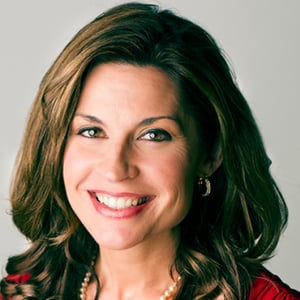
Senior Fellow, Texas Public Policy Foundation
As a senior fellow, Jacki brings expertise to the Life: Powered initiative at the Texas Public Policy Foundation. Currently the host of The Jacki Daily Show, she has had an impressive career in energy, law, and politics.
Most recently, Pick served as Chief Operating Officer for a free market think tank specializing in health care policy, entitlement reform, and energy policy. Previously, she served many years as legal counsel on Capitol Hill to the Chairman of the Subcommittee on the Constitution and the former Ranking Member of the Commercial and Administrative Law Subcommittee, advising on the oversight of federal agencies. Prior to her career in Washington, she worked as a litigator and as an Assistant Vice President for a national bank.
Prior to her legal career, Jacki served as the Public Relations Director for a statewide political organization.
Jacki studied Economics, Spanish, and World History at Marshall University (Society of Yeager Scholars), Oxford University in the United Kingdom, and the University of Zaragoza in Spain. She is an alumna of the Vanderbilt University Law School, where she served as the President of the law school’s Federalist Society chapter.
Jacki is from the Ohio River Valley, where the shale runs deep. She descends from a long line of energy workers, including roughnecks, railroaders, coal miners, and nuclear energy specialists.
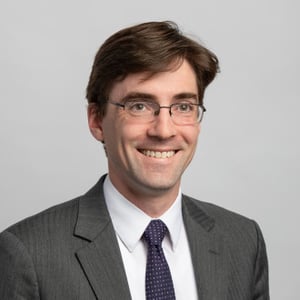
Deputy Litigation Director, Institute for Justice
Robert McNamara serves as Deputy Litigation Director with the Institute for Justice. He joined the Institute in August 2006 and litigates cutting-edge constitutional cases protecting free speech, property rights, economic liberty and other individual liberties in both federal and state courts.
Robert’s work has resulted in court victories for property owners fighting eminent domain abuse, tour guides fighting unconstitutional restrictions on their speech, taxi drivers seeking the right to own their own business, and many others. Robert also litigates in defense of innovation and entrepreneurship in medical care and was co-counsel in Flynn v. Holder, IJ’s landmark challenge to the federal prohibition on compensating bone marrow donors.
Robert’s writing has been published by outlets including The New York Times, The Wall Street Journal, The Washington Post and dozens more nationwide. His opinions and views on legal issues have been featured in radio and television programs ranging from National Public Radio’s All Things Considered to Fox News Channel’s Hannity & Colmes.
Robert is a graduate of Boston University and the New York University School of Law, where he was a founding member and eventual editor-in-chief of the NYU Journal of Law & Liberty. He currently lives in Virginia with his wife and children.
Robert McNamara is a member of the Virginia bar.
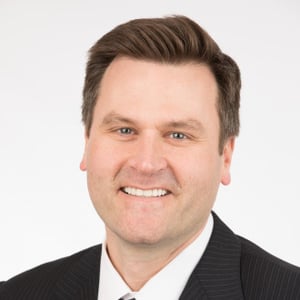
Vice President of Litigation and Deputy General Counsel, National Association of Manufacturers
Peter Tolsdorf is the vice president of litigation and deputy general counsel at the National Association of Manufacturers (NAM). As part of the Manufacturers’ Center for Legal Action, Mr. Tolsdorf works to strengthen the NAM’s ability to promote manufacturing policy objectives through litigation. He also serves as general counsel of The Manufacturing Institute, a nonprofit organization that seeks to help the manufacturing industry attract and develop world-class manufacturing talent.
Mr. Tolsdorf has extensive litigation experience on energy and the environment, labor and employment, product and civil liability, intellectual property, corporate governance and trade issues. At the American Petroleum Institute, he challenged regulatory overreach of the oil and natural gas industry. Mr. Tolsdorf previously served as an attorney at the Federal Energy Regulatory Commission (FERC), where he litigated energy generation and transmission matters. Before the FERC, he litigated cases at major international law firms Bingham McCutchen and McDermott Will & Emery.
Mr. Tolsdorf graduated from The George Washington University Law School, where he served as notes editor of The George Washington Law Review. He lives in Arlington, Virginia, with his wife and two sons.

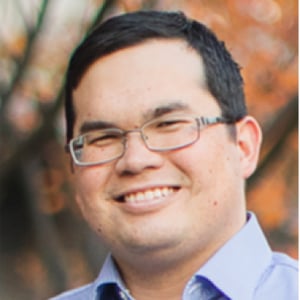
The Future of Climate Litigation
Jonathan H. Adler, Justin Anderson, David Fotouhi, John B. McCuskey, O.H. Skinner, Timothy M. Tymkovich
Climate-related litigation is front and center in a multi-layered campaign against fossil fuels and the...
PG-15 FedSoc Study Break Study Break: Climate Change Litigation for Kids: Juliana v. United States
The Federalist Society's Environmental Law & Property Rights Practice Group, Student Division & Northwestern Law School...
From Russia Without Love: U.S. Energy Policy, Environmental Goals, Foreign Wars, and the Administrative State
Tristan Abbey, Eric Grant, Ryan D. Nelson, Julia Olson
The United States is – perhaps now more than ever before – a global energy...
Topics
Litigation Update: Dakota Access Pipeline Case Gives Supreme Court Chance for Major NEPA Ruling
The Dakota Access Pipeline is the main conduit through which North Dakota’s rich oil reserves...
40 Years Later: NEPA Regulation Update
Mario Loyola
On July 16, 2020, the White House Council on Environmental Quality published the long-awaited revision...
Updating the National Environmental Policy Act (NEPA)
Richard A. Epstein, Robert Glicksman, Mario Loyola, Tim Male, Brent A. Fewell
On January 10, the White House Council on Environmental Quality (CEQ) proposed revisions to its regulations for implementing the...
Modernizing the National Environmental Policy Act (NEPA)
Richard A. Epstein, Mario Loyola, Brent A. Fewell
On January 10, the White House Council on Environmental Quality (CEQ) proposed revisions to its...
The Dubious Morality of Modern Administrative Law
Richard A. Epstein
Event Audio: The Dubious Morality of Modern Administrative Law
Pipelines and Eminent Domain [POLICYbrief]
Jacki Pick Deason
How can American oil and gas companies access and transport the valuable resources beneath the...
Pipeline Energy Infrastructure Legal Challenges
Robert J. McNamara, Peter Tolsdorf
The advent of fracking and other technological innovations has unleashed a new era of American...