
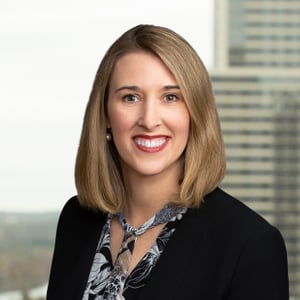
Partner, Jackson Walker
A former federal prosecutor, Jennifer Freel advises businesses and individuals under investigation by the government and conducts internal investigations for companies. Drawing on her extensive courtroom experience, Jennifer also represents clients in civil disputes at the pre-trial, trial, and appellate levels in state and federal court.
In her previous role as an Assistant U.S. Attorney in the Western District of Texas, Jennifer prosecuted cases involving child exploitation, narcotics conspiracies, gun smuggling, and white collar crimes. Her practice focused on appellate matters, defending convictions from across the district. She has argued more than 20 times before the Fifth Circuit Court of Appeals.
Before becoming a prosecutor, Jennifer clerked for Judge Fortunato Benavides, who served on the Fifth Circuit. She has been appointed to the Western District of Texas Attorney Discipline Committee and the Criminal Justice Act appellate panel for the Austin Division of the Western District of Texas. Jennifer is an elected Fellow of the Texas Bar Foundation, the Mentorship Chair of the Robert W. Calvert American Inn of Court, a past chair of the Criminal Law Section of the Federal Bar Association, and a past president of the Austin Chapter of the Federal Bar Association.
Prior to attending law school, Jennifer worked as a broadcast news reporter at the NBC affiliate in Columbia, Missouri and the ABC affiliate in Baton Rouge, Louisiana.
Executive Director, Georgetown Center for the Constitution
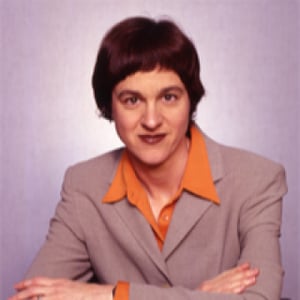
Alexa Gervasi is Executive Director at the Georgetown Center for the Constitution. Alexa is a graduate of Texas A&M University and Georgetown University Law Center. She completed law school through Georgetown Law’s evening program, spending her days working as the Program Manager for the Georgetown Center for the Constitution, directed by Professor Randy E. Barnett. After law school, Alexa spent some time in private practice before jumping ship to clerk for the Honorable D. Michael Fisher of the United States Court of Appeals for the Third Circuit. She then had the distinct privilege of clerking on the Fifth Circuit Court of Appeals for the liberty-loving Honorable Don R. Willett before joining the Institute for Justice.
Alexa is licensed to practice law in New York and the District of Columbia. She is also admitted to practice before the Third Circuit.
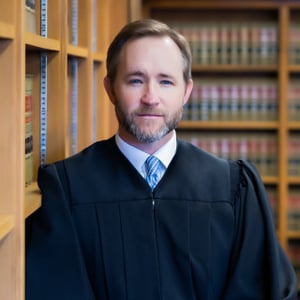
Judge, United States District Court for the Northern District of Texas
Wes Hendrix is a judge on the United States District Court for the Northern District of Texas. He was nominated by President Donald Trump in January 2019 and confirmed by the U.S. Senate in July 2019. He presides over federal civil and criminal cases in the Northern District’s Lubbock, Abilene, and San Angelo Divisions. He is a member of the Fifth Circuit’s Criminal Pattern Jury Instructions Committee and the Northern District of Texas’s Local Rules Committee. He is an adjunct professor at Texas Tech University School of Law.
Prior to his confirmation, Judge Hendrix served as the Appellate Chief for the Northern District of Texas’s United States Attorney’s Office. He served as Chair of the Department of Justice’s Appellate Chiefs Working Group and as an ex officio member of the Attorney General’s Advisory Committee. He regularly coordinated with the Department of Justice’s Criminal Division Appellate Section and the Office of the Solicitor General regarding cases appealed to and argued before the U.S. Supreme Court.
As an Assistant U.S. Attorney, he represented the United States at trial and on appeal. He helped prosecute Hosam Smadi, who was convicted of attempting to use a weapon of mass destruction in a downtown Dallas skyscraper. He also argued over 25 appeals at the Fifth and Seventh Circuits—including two en banc arguments—and served as sole counsel in over 350 appeals. He regularly taught courses at the Department of Justice’s National Advocacy Center.
Prior to his work as a prosecutor, Judge Hendrix was an associate at the Dallas office of Baker Botts L.L.P., where he focused on complex commercial, oil-and-gas, and intellectual-property litigation. He began his legal career as a law clerk to Judge Patrick Higginbotham of the United States Court of Appeals for the Fifth Circuit.
Judge Hendrix received his law degree from the University of Texas, where he served on the Texas Law Review and graduated with high honors and as a Chancellor-at-Large. He received his undergraduate degree with honors from the University of Chicago.
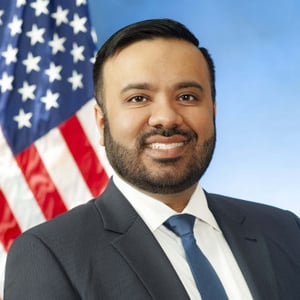
Of Counsel, Gibson, Dunn & Crutcher LLP
Prerak Shah is Of Counsel at Gibson, Dunn & Crutcher LLP. He was most recently the Acting United States Attorney for the Northern District of Texas, leading a team of approximately 120 Assistant U.S. Attorneys handling a wide range of cases, including securities fraud, health care fraud, the False Claims Act, computer crime, national security, tax fraud, money laundering, public corruption, and terrorism. Mr. Shah previously held several leadership positions at the Department of Justice, including Deputy Associate Attorney General in the office overseeing the work of the Antitrust, Civil, Civil Rights, Environment & Natural Resources, and Tax Divisions. Before joining the Justice Department, Mr. Shah served as Chief of Staff to Senator Ted Cruz and as a Chief Counsel on the Senate Judiciary Committee. He graduated from the University of Chicago Law School and clerked for the Honorable Jerry E. Smith of the U.S. Court of Appeals for the Fifth Circuit.
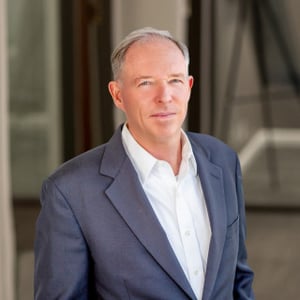
Partner, Ashcroft Law Firm
With more than 20 years government experience, Johnny Sutton has acquired expertise as a front-line trial prosecutor and a top policy advisor to a Governor and a President. Mr. Sutton runs the Austin office of the Ashcroft Law Firm which specializes in internal investigations, white-collar criminal defense and helping companies comply with federal law.
From November 2001 to April 2009, Sutton led one of the largest and busiest United States Attorney’s Offices in the nation. The Western District of Texas covers 93,000 square miles, 68 counties and 660 miles of U.S.-Mexico border. As U.S. Attorney, Mr. Sutton managed more than 300 employees, a $28 million annual budget and directed 43,000 federal prosecutions and thousands of civil cases. Under Mr. Sutton’s leadership, the office led the nation in drug convictions, was second in illegal alien prosecutions, won more than 105 public corruption convictions and sent nearly 400 violent criminal gang members to prison.
In 2003, then-United States Attorney General John Ashcroft appointed Mr. Sutton to the Attorney General’s Advisory Committee—a panel of 17 U.S. Attorneys that advise the General and help carry out the President’s national goals. Sutton served from 2003 until 2009 and was chairman for nearly two years.
After leading the Bush-Cheney Department of Justice Transition Team in 2000, Mr. Sutton was named Associate Deputy Attorney General. He held the position until becoming U.S. Attorney.
From 1995 to 2000, Mr. Sutton served as the Criminal Justice Policy Director for then-Governor George W. Bush. Mr. Sutton was the chief policy advisor to the Governor on all criminal justice issues.
From 1988 to 1995, Mr. Sutton was a prosecutor in the Harris County District Attorney’s Office (Houston, TX) where he tried more than 60 first chair felony jury trials and had only three acquittals. He also successfully tried 17 murder jury trials, including seven for capital murder.
Mr. Sutton attended the University of Texas at Austin on a baseball scholarship where he was a two year lettermen and the starting left fielder for the 1983 University of Texas National Championship baseball team. Mr. Sutton was voted the Most Valuable Player of the NCAA Central Regional Baseball Tournament in 1983. Mr. Sutton is fluent in Spanish and conversant in Portuguese.
Mr. Sutton has dedicated his career to defending the innocent and standing up for the rule of law.
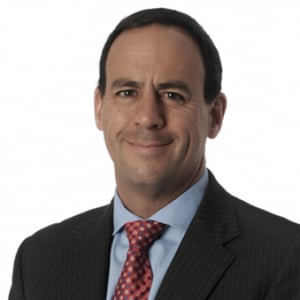
Shareholder, Greenberg Traurig LLP
Troy A. Eid focuses his litigation, mediation and transactional practice on government enforcement, investigations and compliance, environmental law, energy and natural resource development, and Federal Indian law and Native American and Alaska Native tribal law. Troy is a trusted advocate and mediator in the Rocky Mountain West and in federal, state and tribal trial and appellate courtrooms across the country.
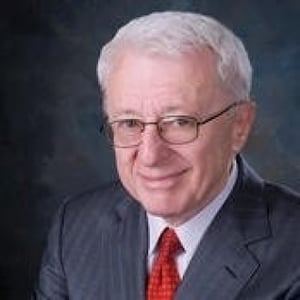
Director, Project for International Religious Liberty, Hudson Institute
Michael J. Horowitz is director of Hudson Institute's Project for Civil Justice Reform and Project for International Religious Liberty. He served as general counsel for the Office of Management and Budget (OMB) under the Reagan Administration, and has taught law at the University of Mississippi and Georgetown. He has also practiced private law as a partner at national law firms. Horowitz joined Hudson Institute as a Senior Fellow where he has put together left-right coalitions on a wide variety of foreign and domestic issues. He has written frequently and is regularly called to testify and consult with Congress.

United States Court of Appeals, Fourth Circuit
James Harvie Wilkinson III is an Article III federal judge on the United States Court of Appeals for the Fourth Circuit. He joined the Court in 1984 after being nominated by President Ronald Reagan.
Born in New York City, New York, Wilkinson graduated from Yale University with his Bachelor's degree in 1967. Wilkinson served in the United States Army from 1968 to 1969 and received his Juris Doctor degree from the University of Virginia School of Law in 1972.
On the recommendation of Virginia U.S. Senator John Warner, Wilkinson was nominated to the United States Court of Appeals for the Fourth Circuit by President Ronald Reagan on January 30, 1984 to a seat vacated by John Butzner, Jr.,. Wilkinson was confirmed by the Senate on August 9, 1984 on a Senate vote and received commission on August 13, 1984. Wilkinson served as the Chief Judge of the Court from 1996 to 2003.
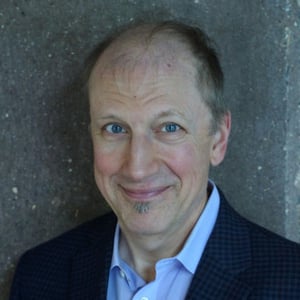
James L. Oberstar Professor of Law and Public Policy, University of St. Thomas School of Law
Erik Money is a third-year law student at the University of St. Thomas School of Law (Minnesota).
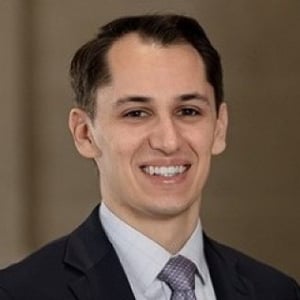
Assistant Professor of Law, Capital University Law School
Nathaniel M. Fouch is an Assistant Professor of Law at Capital University Law School in Columbus, Ohio. He previously clerked at every level of the state judiciary, including for Justice Pat DeWine of the Ohio Supreme Court. Professor Fouch was the founding president of both the Dayton Lawyers Chapter of the Federalist Society and the Dayton Catholic Lawyers Guild. He earned his B.A. from Berea College and his J.D. cum laude from the University of St. Thomas School of Law. His work on the Ohio Constitution and state constitutionalism has been cited by the Ohio Supreme Court. Professor Fouch lives in Dayton, Ohio, with his wife, Theresa, and their three young children.
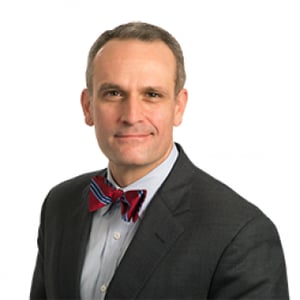
Shareholder, Littler Mendelson PC
Matthew J. Hank practices employment law, including issues arising under the common law and various statutes:
He particularly focuses on disputes concerning (1) wage and hour class actions (including cases involving independent contractor relationships, overtime claims, and payroll debit cards) and (2) noncompetition agreements and trade secrets.
Matthew served as a law clerk to the Hon. Daniel Manion of the U.S. Court of Appeals for the Seventh Circuit and the Hon. Paul V. Gadola of the U.S. District Court for the Eastern District of Michigan. Before attending law school, he served for four years on active duty in the United States Army as an Armor officer.
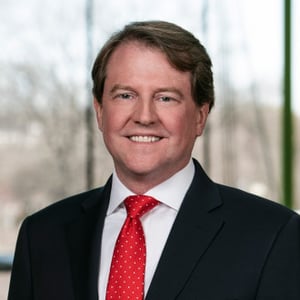
Partner, Jones Day
Don McGahn represents clients before government agencies, in enforcement matters, and in court disputes arising from government regulation or action. He handles litigation, crisis management, regulatory compliance, and political issues.
Prior to rejoining Jones Day in 2019, Don served as Counsel to the President of the United States, advising Donald J. Trump on all legal issues concerning the President and his administration, including constitutional and statutory authority, executive orders, international agreements, tariffs, trade, administrative law, and national security. Don also managed the judicial selection process for the President. During Don's tenure, a historic number of judges were appointed to the federal bench, including two Supreme Court justices. In addition, he spearheaded President Trump's deregulation efforts, which resulted in deregulation at record rates. Following Don's departure from the White House, the President appointed him to the Council of the Administrative Conference of the United States, a nonpartisan, independent agency dedicated to promoting improvement to administrative agency processes.
Don's accomplishments have been recognized at the highest levels of government. Senate Majority Leader Mitch McConnell stated that Don concluded his tenure "not only as the best White House Counsel I've seen on the job, but more broadly, as one of the most successful and consequential aides to any President in recent memory."
Don was nominated by President George W. Bush in 2008, and confirmed in the Senate by unanimous consent, to serve as a member of the Federal Election Commission. He also served as outside Counsel to the Committee on House Administration during the 113th and 114th Congresses and as general counsel to the National Republican Congressional Committee.
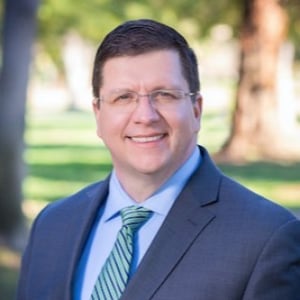
Vice President and Senior Counsel, The Becket Fund for Religious Liberty
Eric Rassbach is Vice President and Senior Counsel at the Becket Fund for Religious Liberty, where he has served since 2003. He has briefed over 90 cases at the United States Supreme Court and has led or been a part of Becket litigation teams in each of Becket’s pathbreaking victories there, including Hosanna-Tabor, Hobby Lobby, Holt v. Hobbs, Zubik v. Burwell, Agudath Israel of America v. Cuomo, and Fulton v. Philadelphia. In 2020, Eric argued Our Lady of Guadalupe School v. Morrissey-Berru to the Supreme Court, garnering a 7-2 win for his Catholic school clients. Eric has also briefed and argued cases in federal appeals courts and state supreme courts across the nation. Eric has also represented clients in appeals to the European Court of Human Rights in Strasbourg, France and in the highest courts of several other countries.
Eric believes passionately in the right of all people to the full measure of religious liberty and has represented members of almost every religious group present in the United States, including Buddhists, Christians, Hindus, Jains, Jews, Muslims, Native Americans, Santeros, and Sikhs, as well as many governmental entities targeted for accommodating religion.
Eric frequently comments on church-state issues in the media, including the New York Times, the Washington Post, the Wall Street Journal, and other major press outlets. He has published legal scholarship in the Harvard Law Review Forum, the Tennessee Law Review, the Illinois Law Review, the Cato Supreme Court Review, and other legal journals, and often speaks to law school audiences.
Before joining Becket, Eric worked at Baker Botts LLP in Houston, where he worked in international project finance. He also served as a law clerk to United States District Court Judge Lee Rosenthal in Houston, Texas.
Eric graduated from Haverford College with a degree in Comparative Literature, is a member of Fitzwilliam College, University of Cambridge, and is a graduate of Harvard Law School. Eric was a 2012-2013 Wasserstein Public Interest Fellow at Harvard Law School. He is Visiting Professor and Executive Director of The Hugh and Hazel Darling Foundation Religious Liberty Clinic at Pepperdine University Caruso School of Law in Malibu, where he leads students in litigating cases in American courts. He is also an Associated Scholar with the Centre for Religious Freedom at Jagiellonian University in Kraków, Poland. Eric is admitted in Texas, DC, California, and Ireland.
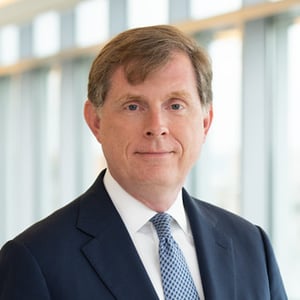
Partner, Arnold & Porter
John Elwood is the head of Arnold & Porter’s Appellate and Supreme Court practice. He has argued before the Supreme Court nine times, and appeared before most of the federal courts of appeals. He has successfully argued cases across a broad cross-section of subjects, with particular experience in environmental law, the False Claims Act, government contracting, and federal criminal law
Mr. Elwood’s work has earned him recognition as one of Washington’s top Supreme Court lawyers (Washingtonian, 2013), as one of “a small group of lawyers” with an “outsized influence at the U.S. Supreme Court” (Reuters, 2014), and as one of the country’s most innovative lawyers (Financial Times, 2014). Chambers USA reports that “[t]he much-admired John Elwood is praised for his advocacy skills” (2013), and describes Mr. Elwood as “phenomenal” (2014), “incredibly talented” (2012), and “a much-loved and widely respected lawyer who is quick on his feet” (2010).
Before joining the firm, Mr. Elwood served in senior-level positions in the U.S. Department of Justice. Beginning as an Assistant to the Solicitor General, and continuing with the firm, he has briefed more than 20 merits cases before the Supreme Court of the United States, and has briefed approximately 135 cases at the certiorari stage. As the senior Deputy in the Office of Legal Counsel, he advised the White House and federal agencies on a range of constitutional, statutory, and regulatory issues.
Attorney, Rathje Woodward LLC
Brian Murray is a first-chair trial and appellate lawyer with a nationwide practice, practicing at Rathje Woodward LLC. A former law clerk to Justice Antonin Scalia, he represents companies and individuals in complex commercial litigation, class actions and civil government enforcement and regulatory matters. In addition, Brian has briefed over a hundred appeals, and has personally argued over 30 of them — including cases before the U.S. Supreme Court, nearly every federal court of appeals, and a number of state supreme and intermediate appellate courts. Brian also served as Deputy to the Associate Attorney General for the United States Department of Justice. In this senior leadership office at the DOJ, Brian counseled Department and executive branch principals and helped formulate policies and strategies for investigating, litigating, and resolving civil regulatory and enforcement matters. Brian relies on his deep experience in guiding his clients through pressing legal challenges.
Brian is routinely called upon to present clients’ most complex and business-critical matters to tribunals nationwide. Notable first-chair jury trial wins include a full defense verdict in a sprawling civil rights class action against the City of Chicago. Key appellate wins include a victory at the Supreme Court that changed the course of CERCLA law, and multiple wins in courts across the country for pharmaceutical companies combatting consumer fraud claims related to drug pricing. Other engagements over the last twenty years have included matters involving environmental, consumer fraud, RICO, antitrust, Title VII, the FAA, and other statutory and common-law claims; enforcement litigation involving the False Claims Act, environmental, and constitutional claims; and other complex civil matters.
Brian has taught Complex Litigation and Class Actions at the University of Chicago Law School for almost a decade. He is a member of the Seventh Circuit Bar Association, the Chicago-Lincoln and Robert Jones American Inns of Court, and the Illinois Appellate Lawyers’ Association. His work has been featured in The Wall Street Journal, New York Times, Washington Post, Chicago Tribune, and on PBS’s Chicago Tonight.
Managing Partner, Schiff Hardin LLP
Ronald S. Safer concentrates in white collar criminal defense and also participates in our firm's civil litigation practice.
Mr. Safer, working with Northwestern University's Center on Wrongful Convictions, obtained a not guilty verdict for the firm's client, Julie Rea Harper. This trial involved the defense of a mother being retried for the murder of her son, even though a convicted felon in another state had confessed to the crime. Mr. Safer and his litigation team successfully discredited the prosecution's case, and her acquittal highlighted the need to reform the special prosecutor system in Illinois. ABC-TV's20/20 broadcast a feature story on this case, spotlighting Mr. Safer, in March 2007.
Mr. Safer has lectured for the U.S. Department of Justice (DOJ) on various subjects including the use of RICO, complex financial frauds, and numerous areas of trial practice.
Mr. Safer continues to lecture for the Federal Bureau of Investigation (FBI) concerning complex investigations.
Mr. Safer was an Assistant U.S. Attorney in the Northern District of Illinois from 1989 until he rejoined Schiff Hardin in 1999.
As Chief of the Criminal Division at the time he left the U.S. Attorney's Office, Mr. Safer oversaw all financial fraud cases and supervised all 100 Assistant U.S. Attorneys in the division. Earlier, he served as Deputy Chief of the Special Prosecution Section (also overseeing all financial fraud cases) and Deputy Chief of the General Crimes Division.
Mr. Safer successfully prosecuted literally hundreds of defendants during his tenure in the U.S. Attorney's Office, including:
Mr. Safer's role in the Gangster Disciples prosecution was described in a feature story in Newsweek, November 1, 1999. Mr. Safer also is spotlighted in the City Confidential and American Justice television programs produced for the A&E cable television network and on "The Prosecutors" television program produced for theDiscovery Channel.
Partner, Katten Muchin Rosenman LLP
Gil M. Soffer is Co-Chair of the firm's National White Collar Practice. He joined the Firm in August 2000, after six years as a federal prosecutor. Mr. Soffer concentrates his practice in white collar criminal litigation, particularly corporate fraud litigation; corporate investigations; insurance litigation; and anti-fraud counseling and litigation. Mr. Soffer is also involved in a wide range of matters involving reinsurance, health care, and alternative dispute resolution.
In January 2008, Mr. Soffer accepted a position as Counsel to the Deputy Attorney General in Washington, D.C., and shortly thereafter was appointed Associate Deputy Attorney General. During his year-long term with the Department of Justice, Mr. Soffer advised the Deputy Attorney General on criminal matters at the Department, with particular emphasis on corporate fraud prosecutions. He played an integral role in drafting the Department's Corporate Monitor Principles and Corporate Charging Principles, and provided training on the latter policy to U.S. Attorneys' Offices nationwide. Mr. Soffer also managed the President's Corporate Fraud Task Force and briefed members of Congress about criminal matters within the Department of Justice.
Mr. Soffer had previously served in the Department of Justice when he was an Assistant U.S. Attorney in the United States Attorney's Office in Chicago (1994 - 2000). In that capacity, he prosecuted a wide range of federal crimes, including bank, mail, wire, tax, and insurance fraud; narcotics and firearms trafficking; bank robbery; embezzlement; and money laundering. In November 1996, Mr. Soffer received the Director's Award for Superior Performance as an Assistant U.S. Attorney from then-Attorney General Janet Reno.
Mr. Soffer graduated magna cum laude from Brown University in 1986 and earned his J.D., cum laude, from Harvard Law School in 1989. Upon graduating from law school, Mr. Soffer clerked in the U.S. District Court for the Northern District of Illinois under Judge John A. Nordberg. After his clerkship, Mr. Soffer became an associate with the law firm of McCutchen, Doyle, Brown & Enersen in San Francisco, where he practiced in the general litigation department.
Mr. Soffer is a member of the American Bar Association and is admitted to practice in Illinois and California. He has served as an Adjunct Professor at Loyola University Law School, where he taught Federal Criminal Prosecution. Mr. Soffer has lectured on subjects ranging from corporate internal investigations to deferred prosecution agreements, appeared regularly as a legal expert on the ABC News Now program Guilt or Innocence, and testified before Congress about the use and selection of corporate monitors in criminal cases.
In December 2009, Mr. Soffer was appointed by Illinois Governor Quinn to serve as a Commissioner on the Illinois Executive Ethics Commission. The nine-member Commission was formed to promote ethics in the executive branch of public service and to ensure that state business is conducted with fairness and integrity. Toward that end, the Commission adjudicates alleged violations of the Illinois Ethics Act and provides guidance to the State's ethics officers.
Judge, U.S. Court of International Trade
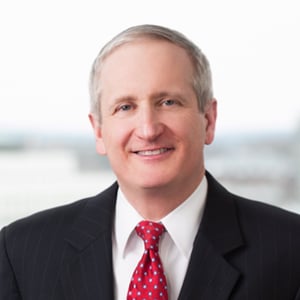
M. Miller Baker was appointed as a Judge of the United States Court of International Trade on December 18, 2019, by President Donald J. Trump. Judge Baker entered on duty on December 20, 2019.
A native of Terrebonne Parish, Louisiana, Judge Baker grew up in Louisiana and Wyoming and attended Louisiana State University. Judge Baker thereafter earned his J.D. from Tulane University Law School and was admitted to the Louisiana bar in 1984 at age 22. After graduating from Tulane, he served as a law clerk to Judge John Malcolm Duhé, Jr., of the United States District Court for the Western District of Louisiana and then for Judge Thomas Gibbs Gee of the United States Court of Appeals for the Fifth Circuit. Following his judicial clerkships, from 1986 until the end of the Reagan Administration on January 20, 1989, Judge Baker served in the Justice Department under Attorneys General Edwin Meese III and Richard Thornburgh, first as an attorney-advisor in the Office of Legal Policy, and later as a special assistant to the Assistant Attorney General for Civil Rights. Judge Baker then entered private practice in Washington, D.C., until 1991. From 1991 to 1993 he served as counsel to Senator Orrin G. Hatch on the staff of the Senate Judiciary Committee.
Following his service on the Judiciary Committee staff, Judge Baker returned to private practice in Washington, D.C., focusing on complex civil litigation involving a wide range of subjects at the law firms of Carr Goodson Warner (1993–2000) and McDermott Will & Emery LLP (2000–2019). At McDermott, Judge Baker co-chaired the firm’s appellate practice group.
When he was in private practice, Judge Baker argued before the Supreme Court, nine of the thirteen federal courts of appeals, and appellate courts in three states and the District of Columbia. In 2009, The American Lawyer named Judge Baker as “Litigator of the Week” for one of his Supreme Court wins. In addition to his appellate practice, Judge Baker litigated in state and federal trial courts in seventeen states and the District of Columbia.
From 1986 to 1995, Judge Baker served as a naval reserve intelligence officer and received an honorable discharge. His duties included serving with an anti-terrorist unit, on the battle staff of an admiral commanding a carrier battle group operating in the North Atlantic during a large NATO exercise in the Cold War, and as a watch officer in the Navy Command Center in the Pentagon during the Persian Gulf War.
In the aftermath of 9/11, Judge Baker testified before the House and Senate Judiciary Committees on constitutional and policy issues associated with continuity of government. He also testified before the Continuity of Government Commission, a bipartisan study commission established by the American Enterprise Institute and the Brookings Institution.
Judge Baker and his wife Margaret have five children, two of whom are active duty military officers.
United States Court of Appeals, Fourth Circuit
James Harvie Wilkinson III is an Article III federal judge on the United States Court of Appeals for the Fourth Circuit. He joined the Court in 1984 after being nominated by President Ronald Reagan.
Born in New York City, New York, Wilkinson graduated from Yale University with his Bachelor's degree in 1967. Wilkinson served in the United States Army from 1968 to 1969 and received his Juris Doctor degree from the University of Virginia School of Law in 1972.
On the recommendation of Virginia U.S. Senator John Warner, Wilkinson was nominated to the United States Court of Appeals for the Fourth Circuit by President Ronald Reagan on January 30, 1984 to a seat vacated by John Butzner, Jr.,. Wilkinson was confirmed by the Senate on August 9, 1984 on a Senate vote and received commission on August 13, 1984. Wilkinson served as the Chief Judge of the Court from 1996 to 2003.
Director, Project for International Religious Liberty, Hudson Institute
Michael J. Horowitz is director of Hudson Institute's Project for Civil Justice Reform and Project for International Religious Liberty. He served as general counsel for the Office of Management and Budget (OMB) under the Reagan Administration, and has taught law at the University of Mississippi and Georgetown. He has also practiced private law as a partner at national law firms. Horowitz joined Hudson Institute as a Senior Fellow where he has put together left-right coalitions on a wide variety of foreign and domestic issues. He has written frequently and is regularly called to testify and consult with Congress.
Shareholder, Greenberg Traurig LLP
Troy A. Eid focuses his litigation, mediation and transactional practice on government enforcement, investigations and compliance, environmental law, energy and natural resource development, and Federal Indian law and Native American and Alaska Native tribal law. Troy is a trusted advocate and mediator in the Rocky Mountain West and in federal, state and tribal trial and appellate courtrooms across the country.

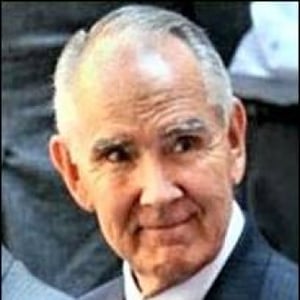
Lives of Service: A Conversation with Judge D. Michael Fisher and Governor Tom Corbett
Duquesne Student Chapter
Pittsburgh, PAPanel 1: Rising Crime Rates and Criminal Justice Reform
Jennifer Sheffield Freel, Alexa L. Gervasi, James Wesley Hendrix, Prerak Shah, Johnny Sutton
Alexa Gervasi, Executive Director, Georgetown Center for the Constitution Jennifer Freel, Partner, Jackson Walker Prerak Shah,...
Did the Law Cause Columbine? [Archive Collection]
Ann Beeson, Troy A. Eid, Michael J. Horowitz, William F. Kilpatrick, George Nicholson, James Rapp, J. Harvie Wilkinson
On August 13, 1999, the Federalist Society's Criminal Law & Procedure Practice Group sponsored a...
Credentials Not Required: Why an Employee’s Significant Religious Functions Should Suffice to Trigger the Ministerial Exception
Thomas C. Berg, Erik Money, Nathaniel M. Fouch
Note from the Editor: The Federalist Society takes no positions on particular legal and public...
Keynote Address by Don McGahn
Matthew J. Hank, Donald F. McGahn
On October 24, 2019, The Federalist Society held its annual Third Circuit Chapters Conference. The...
Litigation Update: Religious Schools Head to the Supreme Court
Eric Rassbach
The Ninth Circuit recently split from seven other Circuits in deciding a First Amendment question...
An Evening with Judge D. Michael Fisher
Philadelphia, PennsylvaniaHonest Services Fraud: What's Left?
John P. Elwood, Brian J. Murray, Ronald S. Safer, Gil Soffer
Last year, in its "Honest Services Cases" the Supreme Court purported to confine the statute...
SCOTUScast 11-20-07 featuring Miller Baker
M. Miller Baker
On October 1st, 2007, the Supreme Court heard oral arguments in the Washington State Grange...
Did the Law Cause Columbine?
George Nicholson, Ann Beeson, William F. Kilpatrick, J. Harvie Wilkinson, Michael J. Horowitz, James Rapp, Troy A. Eid
APPEARANCES:JUDGE GEORGE NICHOLSON (Court of Appeals, State of California)PANELISTS:MR. TROY EID (Discussion Leader) (Chief Counsel...