

Vice President, Edwin Meese III Institute for the Rule of Law, Advancing American Freedom
John G. Malcolm oversees Advancing American Freedom’s work to increase understanding of the Constitution and the rule of law as Vice President of the organization’s Edwin Meese III Institute for the Rule of Law. Malcolm brings to the challenge a wealth of legal expertise and experience in both the public and private sectors.
Prior to joining Advancing American Freedom in 2025, Malcolm was the Vice President of the Institute for Constitutional Government and the Director of the Meese Center for Legal and Judicial Studies at the Heritage Foundation. Prior to joining Heritage in 2012, Malcolm was general counsel at the U.S. Commission on International Religious Freedom, as well as a distinguished practitioner in residence at Pepperdine Law School. From 2004 to 2009, Malcolm was executive vice president and director of worldwide anti-piracy operations for the Motion Picture Association.
Malcolm served as a deputy assistant attorney general in the Department of Justice’s Criminal Division from 2001 to 2004, where he oversaw sections on computer crime and intellectual property, domestic security, child exploitation and obscenity, and special investigations. Immediately prior to that, he was a founding partner in the Atlanta law firm of Malcolm & Schroeder, LLP.
From 1990 to 1997, Malcolm was an assistant U.S. attorney in Atlanta, assigned to the fraud and public corruption section, and also an associate independent counsel, investigating fraud and abuse in the Department of Housing and Urban Development. He was honored with the Director’s Award for Superior Performance for his work in connection with the successful prosecution of Walter Leroy Moody Jr., who assassinated an 11th Circuit judge and the head of the Savannah chapter of the NAACP.
A graduate of Harvard Law School and Columbia College, Malcolm began his career as a law clerk to a federal district court judge and a federal appellate court judge, and as an associate at the Atlanta-based law firm of Sutherland, Asbill & Brennan (new Eversheds Sutherland).
Malcolm, who resides in Washington, D.C., serves on the Board of Trustees of the Washington National Opera and is a Senate-confirmed member of the Board of Directors of the Legal Services Corporation, the largest funder of civil legal aid in the United States.

Emanuel S. Heller Professor of Law, University of California at Berkeley; Thomas Smith Senior Research Fellow, The Civitas Institute, University of Texas at Austin
John Yoo is the Emanuel Heller Professor of Law at the University of California at Berkeley. He is also the Thomas Smith Senior Research Fellow, Civitas Institute, at the University of Texas at Austin. He is also a Nonresident Senior Fellow at the American Enterprise Institute.
His most recent book, The Politically Incorrect Guide to the Supreme Court, co-authored with Robert Delahunty, was published in 2023. Professor Yoo’s other books include Defender-in-Chief: Trump’s Fight for Presidential Power; Striking Power: How Cyber, Robots, and Space Weapons Change the Rules for War; Point of Attack: Preventive War, International Law, and Global Welfare; and Crisis and Command: A History of Executive Power from George Washington to George Bush.
He is a co-author of volumes 1 and 2 of R. Rossum, G. Tarr, V. Munoz & J. Yoo American Constitution Law (Routledge, 2026), and a co-editor of the eight-volume series on the 250th anniversary of the American Revolution, We Hold These Truths, with Yuval Levin and Adam White of the American Enterprise Institute.
Professor Yoo has published more than 100 articles in academic journals on subjects including national security, constitutional law, international law, and the Supreme Court. He also regularly contributes to the editorial pages of the Wall Street Journal, New York Times, Washington Post, Los Angeles Times, and National Review, among others.
Professor Yoo has served in all three branches of government. He was an official in the U.S. Department of Justice, where he worked on national security and terrorism issues after the 9/11 attacks. He served as general counsel of the U.S. Senate Judiciary Committee. He has been a law clerk for Supreme Court Justice Clarence Thomas and federal appeals Judge Laurence Silberman. He has been a visiting professor at the University of Texas at Austin’s School of Civic Leadership, Seoul National University, the Interdisciplinary Center Herzliya, Keio University, Trento University, the University of Chicago, and the Free University of Amsterdam.
Professor Yoo supervises the Public Law and Policy Program and the California Constitution Center. He also serves on the boards of Founding Forward, the Washington Legal Foundation, the Pacific Legal Foundation, the Ulysses Grant Institute, the Federalist Society’s Separation of Powers and Federalism Division, the Universidad Cientifica del Sur Law School, and the Asia-Pacific Law Institute at Seoul National University. He is a winner of the Federalist Society’s Paul Bator award and the Heritage Foundation’s Edwin Meese III Originalism Lectureship.
Professor Yoo graduated from Yale Law School and summa cum laude from Harvard College.
Vice President, Edwin Meese III Institute for the Rule of Law, Advancing American Freedom
John G. Malcolm oversees Advancing American Freedom’s work to increase understanding of the Constitution and the rule of law as Vice President of the organization’s Edwin Meese III Institute for the Rule of Law. Malcolm brings to the challenge a wealth of legal expertise and experience in both the public and private sectors.
Prior to joining Advancing American Freedom in 2025, Malcolm was the Vice President of the Institute for Constitutional Government and the Director of the Meese Center for Legal and Judicial Studies at the Heritage Foundation. Prior to joining Heritage in 2012, Malcolm was general counsel at the U.S. Commission on International Religious Freedom, as well as a distinguished practitioner in residence at Pepperdine Law School. From 2004 to 2009, Malcolm was executive vice president and director of worldwide anti-piracy operations for the Motion Picture Association.
Malcolm served as a deputy assistant attorney general in the Department of Justice’s Criminal Division from 2001 to 2004, where he oversaw sections on computer crime and intellectual property, domestic security, child exploitation and obscenity, and special investigations. Immediately prior to that, he was a founding partner in the Atlanta law firm of Malcolm & Schroeder, LLP.
From 1990 to 1997, Malcolm was an assistant U.S. attorney in Atlanta, assigned to the fraud and public corruption section, and also an associate independent counsel, investigating fraud and abuse in the Department of Housing and Urban Development. He was honored with the Director’s Award for Superior Performance for his work in connection with the successful prosecution of Walter Leroy Moody Jr., who assassinated an 11th Circuit judge and the head of the Savannah chapter of the NAACP.
A graduate of Harvard Law School and Columbia College, Malcolm began his career as a law clerk to a federal district court judge and a federal appellate court judge, and as an associate at the Atlanta-based law firm of Sutherland, Asbill & Brennan (new Eversheds Sutherland).
Malcolm, who resides in Washington, D.C., serves on the Board of Trustees of the Washington National Opera and is a Senate-confirmed member of the Board of Directors of the Legal Services Corporation, the largest funder of civil legal aid in the United States.
Emanuel S. Heller Professor of Law, University of California at Berkeley; Thomas Smith Senior Research Fellow, The Civitas Institute, University of Texas at Austin
John Yoo is the Emanuel Heller Professor of Law at the University of California at Berkeley. He is also the Thomas Smith Senior Research Fellow, Civitas Institute, at the University of Texas at Austin. He is also a Nonresident Senior Fellow at the American Enterprise Institute.
His most recent book, The Politically Incorrect Guide to the Supreme Court, co-authored with Robert Delahunty, was published in 2023. Professor Yoo’s other books include Defender-in-Chief: Trump’s Fight for Presidential Power; Striking Power: How Cyber, Robots, and Space Weapons Change the Rules for War; Point of Attack: Preventive War, International Law, and Global Welfare; and Crisis and Command: A History of Executive Power from George Washington to George Bush.
He is a co-author of volumes 1 and 2 of R. Rossum, G. Tarr, V. Munoz & J. Yoo American Constitution Law (Routledge, 2026), and a co-editor of the eight-volume series on the 250th anniversary of the American Revolution, We Hold These Truths, with Yuval Levin and Adam White of the American Enterprise Institute.
Professor Yoo has published more than 100 articles in academic journals on subjects including national security, constitutional law, international law, and the Supreme Court. He also regularly contributes to the editorial pages of the Wall Street Journal, New York Times, Washington Post, Los Angeles Times, and National Review, among others.
Professor Yoo has served in all three branches of government. He was an official in the U.S. Department of Justice, where he worked on national security and terrorism issues after the 9/11 attacks. He served as general counsel of the U.S. Senate Judiciary Committee. He has been a law clerk for Supreme Court Justice Clarence Thomas and federal appeals Judge Laurence Silberman. He has been a visiting professor at the University of Texas at Austin’s School of Civic Leadership, Seoul National University, the Interdisciplinary Center Herzliya, Keio University, Trento University, the University of Chicago, and the Free University of Amsterdam.
Professor Yoo supervises the Public Law and Policy Program and the California Constitution Center. He also serves on the boards of Founding Forward, the Washington Legal Foundation, the Pacific Legal Foundation, the Ulysses Grant Institute, the Federalist Society’s Separation of Powers and Federalism Division, the Universidad Cientifica del Sur Law School, and the Asia-Pacific Law Institute at Seoul National University. He is a winner of the Federalist Society’s Paul Bator award and the Heritage Foundation’s Edwin Meese III Originalism Lectureship.
Professor Yoo graduated from Yale Law School and summa cum laude from Harvard College.
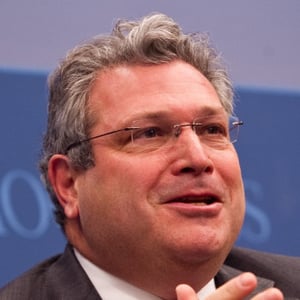
Stephen & Barbara Friedman Senior Fellow, The Brookings Institution
Robert Kagan is the Stephen & Barbara Friedman Senior Fellow with the Project on International Order and Strategy in the Foreign Policy program at Brookings. He is a contributing columnist at The Washington Post. His new book is The Jungle Grows Back: America and Our Imperiled World (Knopf, 2018). His previous book was The New York Times bestseller, The World America Made (Knopf, 2012).
He is also the author of Return of History and the End of Dreams (Knopf, 2008), Dangerous Nation: America’s Place in the World from its Earliest Days to the Dawn of the 20th Century (Knopf 2006), Of Paradise and Power (Knopf 2003), and A Twilight Struggle: American Power and Nicaragua, 1977-1990 (Free Press, 1996).
For his writings, Politico Magazine named Kagan one of the “Politico 50” in 2016, the “thinkers, doers and visionaries transforming American politics in 2016.” His most recent pieces include “The Twilight of the Liberal World Order” in “Brookings Big Ideas for America” and “Backing into World War III” in Foreign Policy.
He served in the State Department from 1984 to 1988 as a member of the policy planning staff, as principal speechwriter for Secretary of State George P. Shultz, and as deputy for policy in the Bureau of Inter-American Affairs. He is a graduate of Yale University and Harvard University’s Kennedy School of Government and holds a doctorate in American history from American University.

Professor Emeritus of Law, Antonin Scalia Law School, George Mason University
Jeremy A. Rabkin is a Professor Emeritus of Law at the Antonin Scalia Law School, George Mason University. Before joining the faculty in June 2007, he was for over two decades a professor in the Department of Government at Cornell University. Professor Rabkin serves on the board of directors of the Center for Individual Rights, a public interest law firm based in Washington, D.C. Previously he was a board member of the U.S. Institute of Peace and the board of academic advisors of the American Enterprise Institute.
Professor Rabkin’s books include Law Without Nations? (Princeton University Press, 2005). He authored “If You Need a Friend, Don’t Call a Cosmopolitan,” a chapter in Varieties of Sovereignty and Citizenship (Sigal R. Ben-Porath & Rogers M. Smith eds., University of Pennsylvania Press, 2012). His articles have appeared in major law reviews and political science journals and his journalistic contributions in a range of magazines and newspapers, including the Washington Post and the Wall Street Journal.
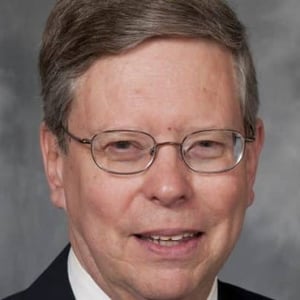
Professor of History and Charles O. Lee and Louise K. Lee Chair in the Western Heritage, Hillsdale College
After reading Litterae Humaniores at Wadham College, Oxford, on a Rhodes Scholarship from 1971-1974, Paul A. Rahe completed a Ph.D. in ancient history at Yale University under the direction of Donald Kagan in 1977. In subsequent years, he taught at Cornell University, Franklin and Marshall College, and the University of Tulsa, where he spent twenty-four years before accepting a position at Hillsdale College, where he is Professor of History and Political Science and holds The Charles O. Lee and Louise K. Lee Chair in the Western Heritage.
Professor Rahe’s entire scholarly career has been focused on studying the origins and evolution of self-government within the West. His range is considerable. His first book, Republics Ancient and Modern: Classical Republicanism and the American Revolution (1992), was 1200 pages in length and surveyed the origins and development of self-government in ancient Greece and Rome, its re-emergence in a new form in the Middle Ages, the transformation it underwent at the hands of the political philosophers of early modernity, and the statesmanship of the American Founding Fathers. Within the first thirteen months of publication, the hardback edition sold out. Thereafter, it reappeared as an alternative selection of the History Book Club. In 1994, it was reissued in a three-volume paperback edition by the University of North Carolina Press, and it remains in print.
In the course of his career, Professor Rahe has published dozens of chapters on related subjects in edited books and scholarly articles in journals such as The American Journal of Philology, Historia, The American Journal of Archaeology, The American Historical Review, The Review of Politics, The American Journal of Business and Professional Ethics, The Journal of the Historical Society, The National Interest, The Woodrow Wilson Quarterly, and History of Political Thought. He spent two years in Istanbul, Turkey in the mid-1980s as a fellow of the Institute of Current World Affairs; he has been awarded research fellowships by the National Endowment for the Humanities and the Earhart Foundation; and he has held research fellowships at the Center for Hellenic Study, the National Humanities Center, the Woodrow Wilson International Center for Scholars in Washington, D. C. , Clare College at Cambridge University, All Souls College at Oxford University, and the American Academy in Berlin; and he has given a host of public lectures at universities in the United States and abroad – most recently at the Hebrew University and at Al-Quds University in Jerusalem, at the Sorbonne in Paris, at the Royal Military Academy at Sandhurst in England and the Free University in Berlin. In 1997-98, he was named to the Templeton Honor Rolls for Education in a Free Society by The John M. Templeton Foundation, and in 2006 the Society for French Historical Studies awarded him the Koren Prize for the Best Article Published in French History the preceding year.
Professor Rahe co-edited Montesquieu’s Science of Politics: Essays on the Spirit of Laws(2001) with David W. Carrithers and Michael A. Mosher, and he edited Machiavelli’s Liberal Republican Legacy (2006). His second book, Against Throne and Altar: Machiavelli and Political Theory under the English Republic, which examines the political thought inspired by the abortive republican experiment that took place in England in the period stretching from 1649 to 1660, was published by Cambridge University Press in April, 2008. His third and fourth books, Montesquieu and the Logic of Liberty: War, Religion, Commerce, Climate, Terrain, Technology, Uneasiness of Mind, the Spirit of Political Vigilance, and the Foundations of the Modern Republic and Soft Despotism, Democracy’s Drift: Montesquieu, Rousseau, and Tocqueville on the Modern Prospect, were published by Yale University Press in 2009. For his fifth book, The Spartan Way of War, which he hopes to have finished by the end of 2010, Professor Rahe has received a contract from Yale University Press.
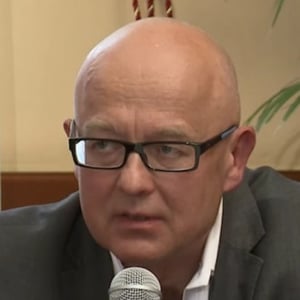
Professor, Jagiellonian University
Prof. Bryk is the director of the Institute of American Studies, Krakow Academy as well as a professor of constitutional law and history, political philosophy at the Krakow Academy and the Jagiellonian University in Krakow. He is also a visiting professor at such institutions as: Harvard University, Marquette University, Amherst College, University of New Hampshire, Institute of the European Studies, Vienna.
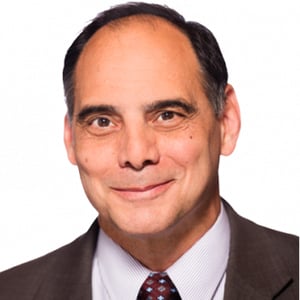
Vice President, Kathryn and Shelby Cullom Davis Institute for National Security and Foreign Policy, and the E. W. Richardson Fellow, The Heritage Foundation
James Jay Carafano, a leading expert in national security and foreign policy challenges, is the vice president of Heritage's Kathryn and Shelby Cullom Davis Institute for National Security and Foreign Policy and the E. W. Richardson Fellow.
Carafano is an accomplished historian and teacher as well as a prolific writer and researcher. His most recent publication is an e-book, “Surviving the End”, which addresses emergency preparedness. He also authored “Wiki at War: Conflict in a Socially Networked World” (Texas A&M University Press, 2012), a survey of the revolutionary impact of the Internet age on national security. He was selected from thousands to speak on cyber warfare at the 2014 South by Southwest (SXSW) Interactive Conference in Austin, Texas, the nation’s premier tech and social media conference.
Before assuming responsibility for Heritage’s entire defense and foreign policy team in December 2012, Carafano had served as deputy director of the Davis Institute as well as director of its Douglas and Sarah Allison Center for Foreign Policy Studies since 2009.
His recent research has focused on developing the national security required to secure the long-term interests of the United States -- protecting the public, providing for economic growth and preserving civil liberties.
He is editor of a book series, The Changing Face of War, which examines how emerging political, social, economic and cultural trends will affect the nature of armed conflict. From 2012 to 2014, he served on the Homeland Security Advisory Council convened by the secretary of the U.S. Department of Homeland Security.
Carafano, a 25-year Army veteran with a master’s and doctorate from Georgetown University, joined Heritage in 2003 as a senior research fellow in homeland security and missile defense. He worked with Kim R. Holmes, his predecessor as vice president and director of Davis Institute, to produce Heritage’s groundbreaking documentary film “33 Minutes: Protecting America in the New Missile Age.”
Carafano now directs Heritage's team of foreign and defense policy experts in three centers on the front lines of international affairs: the Allison Center, the Asian Studies Center, the Margaret Thatcher Center for Freedom, and the Center for National Defense.
Carafano also is president of a nonprofit organization, Esprit de Corps, which educates the public about veteran affairs. In this capacity he co-produced and co-wrote the documentary “Veteran Nation,” an official selection of the 2013 G.I. Film Festival.
Before coming to Heritage, Carafano was a senior fellow at the Center for Strategic and Budgetary Assessments, a Washington policy institute dedicated to defense issues.
In his Army career, Carafano rose to the rank of lieutenant colonel. He served in Europe, Korea and the United States. His assignments included head speechwriter for the Army Chief of Staff, the service's highest-ranking officer. Before retiring, Carafano was executive editor of Joint Force Quarterly, the Defense Department's premiere professional military journal.
A graduate of West Point, Carafano holds a master's degree and a doctorate from Georgetown University as well as a master's degree in strategy from the U.S. Army War College.
He is an adjunct professor at Georgetown University and serves as a visiting professor at National Defense University. He currently sits on the Board of Advisors for Daniel Morgan Academy. He previously served as an assistant professor at the U.S. Military Academy in West Point, N.Y., and as director of military studies at the Army's Center of Military History. He taught at Mount Saint Mary College in New York and was a fleet professor at the U.S. Naval War College.
He is the co-author with Paul Rosenzweig of Winning the Long War: Lessons from the Cold War for Defeating Terrorism and Preserving Freedom (2005). The authors, first to coin the term “the long war,” argued that a successful strategy requires a balance of prudent military and security measures, continued economic growth, zealous protection of civil liberties and prevailing in the “war of ideas” against terrorist ideologies.
Carafano also co-authored a textbook, Homeland Security (McGraw-Hill, second edition 2012), designed as a practical introduction to everyday life in the era of terrorism. The textbook addresses such key details as the roles of first responders and volunteers, family preparedness techniques and in-depth looks at weapons of mass destruction.
His other works include Private Sector/Public Wars: Contracting in Combat--Iraq, Afghanistan and Future Conflicts (2008); G.I. Ingenuity: Improvisation, Technology and Winning World War II (2006); Waltzing Into the Cold War (2002); and After D-Day (2000), a Military Book Club main selection.
As an expert on foreign affairs, defense, intelligence and homeland security issues, Carafano has testified many times before Congress.
He is a regular guest analyst for the major U.S. network and cable television news organizations, from ABC to Fox to MSNBC to PBS, as well as such outlets as National Public Radio, Pajamas TV, Voice of America and the History Channel. From SkyNews to Al Jazeera, he also has appeared on TV news programs originating in Australia, Austria, Canada, China, Estonia, France, Great Britain, Greece, Hong Kong, Ireland, Iran, Japan, Norway, Poland, Portugal, Russia, Spain, Sweden and Vietnam.
Carafano’s op-ed columns and commentary are published widely, including the Baltimore Sun, Boston Globe, New York Post, Philadelphia Inquirer, USA Today and Washington Times in addition to Forbes.
He served on the board of trustees of the Marine Corps University Foundation and advisory boards for the West Point Center of Oral History, the Hamilton Society, the Spirit of America, and the Operation Renewed Hope Foundation, which serves homeless veterans. He formerly was a senior fellow at George Washington University's Homeland Security Policy Institute. He also previously served on the congressionally-mandated Advisory Panel on Department of Defense Capabilities for Support of Civil Authorities, the National Academy's Board on Army Science and Technology and the Department of the Army Historical Advisory Committee.
In 2005, he received Heritage's prestigious W. Glenn and Rita Ricardo Campbell Award. The honor goes to the staff member determined to have made “an outstanding contribution to the analysis and promotion of the free society.”
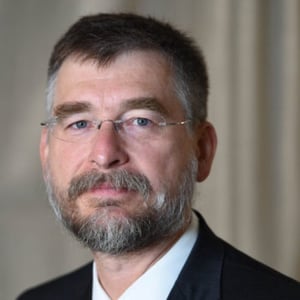
Associate Professor, Catholic University of America
Jakub Grygiel is an associate professor at the Catholic University of America (Washington, DC). In 2017-2018 he was a senior advisor to the Secretary of State in the Office of Policy Planning working on European affairs. Previously, he was a Senior Fellow at the Center for European Policy Analysis and on the faculty of SAIS-Johns Hopkins University in Washington DC. He is the author of Return of the Barbarians (Cambridge University Press, 2018), Great Powers and Geopolitical Change (JHU Press, 2006), and co-author with Wess Mitchell of The Unquiet Frontier (Princeton University Press, 2016). His writings on international relations and security studies have appeared in Foreign Affairs, The American Interest, Security Studies, Journal of Strategic Studies, Orbis, Commentary, Parameters, as well as several U.S. and foreign newspapers. He earned a Ph.D., M.A. and an MPA from Princeton University, and a BSFS Summa Cum Laude from Georgetown University.
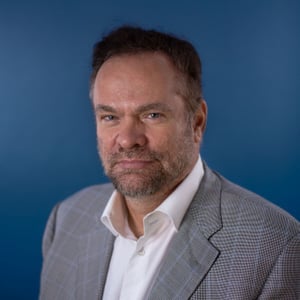
Senior Fellow, Foundation for Defense of Democracies
Reuel Marc Gerecht is a senior fellow at Foundation for Defense of Democracies (FDD) where he focuses on Iran, Iraq, Afghanistan, terrorism, and intelligence. He was previously a resident fellow at the American Enterprise Institute and the director of the Middle East Initiative at the Project for the New American Century. Earlier, he served as a Middle Eastern specialist at the CIA’s Directorate of Operations.
He is the author of The Wave: Man, God, and the Ballot Box in the Middle East (Hoover Institution Press, 2011), Know Thine Enemy: A Spy’s Journey into Revolutionary Iran (Farrar, Straus & Giroux, 1997) and The Islamic Paradox: Shiite Clerics, Sunni Fundamentalists, and the Coming of Arab Democracy (AEI Press, 2004). He is a contributing editor for The Weekly Standard and has been a correspondent for The Atlantic Monthly, as well as a frequent contributor to The Wall Street Journal, The New York Times, and other publications.
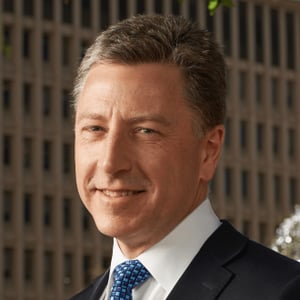
Executive Director, McCain Institute
Ambassador Kurt Volker is a leading expert in U.S. foreign and national security policy with some 30 years of experience in a variety of government, academic, and private sector capacities. Ambassador Volker serves as executive director of the McCain Institute for International Leadership at Arizona State University based in Washington, D.C. He is also a non-resident senior fellow at the Center for Transatlantic Relations at Johns Hopkins University’s School of Advanced International Studies, a senior advisor at the Atlantic Council, and a Trustee of IAU College in Aix-en-Provence, France. He is a consultant to international business, a member of the Board of Directors of Capital Guardian Funds Trust, and had previously served as managing director—International for BGR Group. He has taught Transatlantic Relations at The George Washington University Elliott School of International Affairs. In July, 2017, Ambassador Volker was also appointed U.S. Special Representative for Ukraine Negotiations.
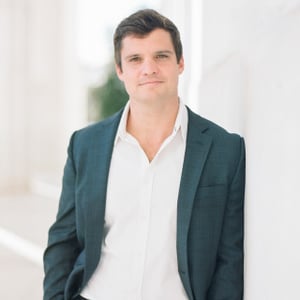
Managing Director, SCF Partners
Daniel G. West invests in energy services, equipment, and technology companies at SCF Partners in Houston, Texas. He provides equity capital and strategic growth assistance to entrepreneurs and leaders of both start-up ventures and established, growing businesses.
Prior to joining the private sector, Mr. West served as an infantry officer in the United States Marine Corps. As a platoon commander with the 22nd Marine Expeditionary Unit aboard the USS Mesa Verde, he led the Tactical Recovery of Aircraft and Personnel force in support of the NATO aerial campaign over Libya. He then served as executive officer of India Company, 3rd Battalion, 9th Marines as it mentored Afghan forces to assume lead security responsibility and executed counter-narcotics missions in Marjah, Helmand Province, Afghanistan. He also served as a clerk for Judge Laurence H. Silberman on the U.S. Court of Appeals for the D.C. Circuit.
Mr. West holds degrees in law, business administration, and economics from Harvard University, where he served as an editor of the Harvard Law Review and taught undergraduate courses in economics and government. He is a member of the Executive Committee of the International & National Security Law Practice Group of the Federalist Society and a term member of the Council on Foreign Relations.
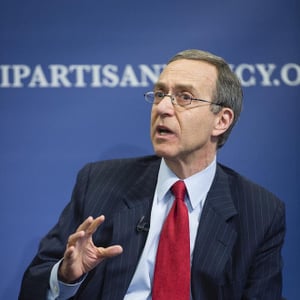
Senior Fellow, Center for American Progress Action Fund
Alan Makovsky is a Senior Fellow on the National Security and International Policy team at American Progress. From 2001 to 2013, he served as a senior professional staff member on the Committee on Foreign Affairs in the U.S. House of Representatives, where he covered the Middle East, Turkey, and other related issues.
At the Washington Institute for Near East Policy—a private think tank where he worked from 1994 to 2001—Mr. Makovsky wrote widely on various Middle Eastern and Turkish topics. He also founded and directed the Washington Institute’s Turkey Research Program.
At the State Department where he worked from 1983 to 1994—Mr. Makovsky variously covered southern European affairs and Middle Eastern affairs for the Bureau of Intelligence and Research. He also served as the political advisor to Operation Provide Comfort in 1992 and as the special advisor to the special Middle East coordinator from 1993 to 1994.
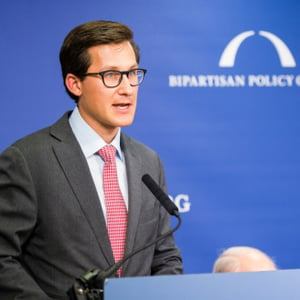
Director of National Security, Bipartisan Policy Center
Blaise Misztal is the director of BPC’s national security program. He previously served as the project’s associate director and senior policy analyst. At BPC, Misztal has researched a variety national security issues, including Iran and its nuclear program, Turkey, cybersecurity, stabilizing fragile states, and public diplomacy in the 21st century. He has testified before Congress and published op-eds in The Washington Post, The Wall Street Journal, The Weekly Standard, The New Republic, and Roll Call. In addition, Mr. Misztal wrote and directed the 2009 “Cyber ShockWave” simulation that aired on CNN.
Prior to joining BPC, Mr. Misztal spent a year as a Nuffield Fellow at Nuffield College, Oxford University. He was selected as a future leader by the Foreign Policy Initiative in 2010 and named as a national security fellow by the Foundation for Defense of Democracies in 2011.
Mr. Misztal is currently completing his Ph.D. in political science at Yale University, where his research focuses on the relationship between democracy, liberalism, and social stability. He holds an M.Phil. in political science from Yale and an A.B. with honors from the University of Chicago.
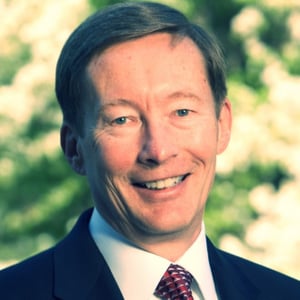
Professor of the Practice of Law and Executive Director, Center on Law, Ethics and National Security, Duke University Law School
Charles J. Dunlap Jr. joined the Duke Law faculty in July 2010 where he is currently a professor of the practice of law and Executive Director of the Center on Law, Ethics and National Security. His teaching and scholarly writing focus on national security, law of armed conflict, the use of force under international law, civil-military relations, cyberwar, airpower, military justice, and ethical issues related to the practice of national security law.
Dunlap retired from the Air Force in June 2010, having attained the rank of major general during a 34-year career in the Judge Advocate General Corps. In his capacity as Deputy Judge Advocate General spanning from May 2006 to March 2010, he assisted the Judge Advocate General in the professional supervision of more than 2,200 judge advocates, 350 civilian lawyers, 1,400 enlisted paralegals, and 500 civilians around the world. In addition to overseeing an array of military justice, operational, international, and civil law functions, he provided legal advice to commanders and civilian leaders at all levels.
In the course of his career, Dunlap has been involved in various high-profile interagency and policy matters, including his testimony before the U.S. House of Representatives concerning the Military Commissions Act of 2006.
Dunlap previously served as the senior lawyer (staff judge advocate) at Air Combat Command Headquarters at Langley Air Force Base in Virginia, at Air Education and Training Command Headquarters at Randolph Air Force Base in Texas, and at U.S. Strategic Command, Omaha, Nebraska, among other leadership posts. Additionally, he served on the faculty of the Air Force Judge Advocate General School where he taught various civil and criminal law topics. An experienced trial lawyer, he also spent two years as a military trial judge for a 22-state circuit. He served tours in the United Kingdom and Korea, and deployed for operations in the Middle East and Africa. He also led military-to-military delegations to Colombia, Uruguay, South Africa, and the Czech Republic.
A prolific author and accomplished public speaker, Dunlap’s commentary on a wide variety of national security topics has been published in leading newspapers and military journals. His 2001 essay written for Harvard University’s Carr Center on “lawfare,” a concept he defines as “the use or misuse of law as a substitute for traditional military means to accomplish an operational objective,” has been highly influential among military scholars and in the broader legal academy.
Dunlap is also the author of the prize-winning essay, “The Origins of the Military Coup of 2012”, originally published in 1992, which was selected for the 40th Anniversary Edition of Parameters (Winter 2010-2011).
Dunlap’s legal scholarship has been published in the Stanford Law Review, the Yale Journal of International Affairs, the Harvard Law’s National Security Journal, the Wake Forest Law Review, the Fletcher Forum of World Affairs, the University of Nebraska Law Review, the Texas Tech Law Review, Temple Law’s Journal of International & Comparative Law, the University of North Carolina’s Journal of International Law, the Connecticut Law Review, the Tennessee Law Review, and the Vanderbilt Journal of Transnational Law, among others.
He’s also authored numerous articles and opinion pieces in a range of publications including The Atlantic, the New York Times, the Washington Post, the Washington Times, the Air Force Times, Strategic Studies Quarterly, the Georgetown Journal of International Affairs, Business Insider, the Journal of Genocide Research, The Hill, Small Wars Journal, and the blogs, Lawfare and Just Security.
Maj Gen Dunlap founded his blog Lawfire in 2015 and has since written over 300 posts on a wide variety of subjects.
Dunlap's wife, Joy, was a vice president of the National Association of Broadcasters, and later a deputy director of Government Relations for the Military Officers Association of America. She served as the elected president of Duke Campus Club, and is a recipient of the prestigious Order of the Emerald by Kappa Delta sorority. Her blog, Speaking Joyfully, won 3rd place in the blog category at the 2021 Blue Ridge Mountains Christian Writers Conference. They reside in Durham.
Professor Emeritus of Law, Antonin Scalia Law School, George Mason University
Jeremy A. Rabkin is a Professor Emeritus of Law at the Antonin Scalia Law School, George Mason University. Before joining the faculty in June 2007, he was for over two decades a professor in the Department of Government at Cornell University. Professor Rabkin serves on the board of directors of the Center for Individual Rights, a public interest law firm based in Washington, D.C. Previously he was a board member of the U.S. Institute of Peace and the board of academic advisors of the American Enterprise Institute.
Professor Rabkin’s books include Law Without Nations? (Princeton University Press, 2005). He authored “If You Need a Friend, Don’t Call a Cosmopolitan,” a chapter in Varieties of Sovereignty and Citizenship (Sigal R. Ben-Porath & Rogers M. Smith eds., University of Pennsylvania Press, 2012). His articles have appeared in major law reviews and political science journals and his journalistic contributions in a range of magazines and newspapers, including the Washington Post and the Wall Street Journal.
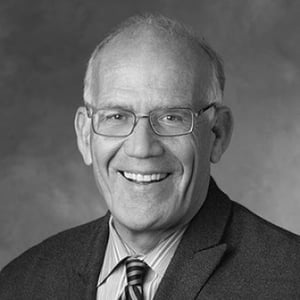
Martin and Illie Anderson Senior Fellow, Hoover Institution
Victor Davis Hanson is the Martin and Illie Anderson Senior Fellow at the Hoover Institution; his focus is classics and military history.
Hanson was a National Endowment for the Humanities fellow at the Center for Advanced Studies in the Behavioral Sciences, Stanford, California (1992–93), a visiting professor of classics at Stanford University (1991–92), the annual Wayne and Marcia Buske Distinguished Visiting Fellow in History at Hillsdale College (2004–), the Visiting Shifron Professor of Military History at the US Naval Academy (2002–3),and the William Simon Visiting Professor of Public Policy at Pepperdine University (2010).
In 1991 he was awarded an American Philological Association Excellence in Teaching Award. He received the Eric Breindel Award for Excellence in Opinion Journalism (2002), presented the Manhattan's Institute's Wriston Lecture (2004), and was awarded the National Humanities Medal (2007) and the Bradley Prize (2008).
Hanson is the author of hundreds of articles, book reviews, and newspaper editorials on Greek, agrarian, and military history and essays on contemporary culture. He has written or edited twenty-four books, the latest of which is The Case for Trump (Basic Books, 2019). His other books include The Second World Wars (Basic Books, 2017); The Savior Generals: How Five Great Commanders Saved Wars That Were Lost - from Ancient Greece to Iraq (Bloomsbury 2013); The End of Sparta (Bloomsbury, 2011); The Father of Us All: War and History, Ancient and Modern (Bloomsbury, 2010); Makers of Ancient Strategy: From the Persian Wars to the Fall of Rome (ed.) (Princeton, 2010); The Other Greeks (California, 1998); The Soul of Battle (Free Press, 1999); Carnage and Culture (Doubleday, 2001); Ripples of Battle (Doubleday, 2003); A War Like No Other (Random House, 2005); The Western Way of War (Alfred Knopf, 1989; 2nd paperback ed., University of California Press, 2000); The Wars of the Ancient Greeks (Cassell, 1999; paperback ed., 2001); and Mexifornia: A State of Becoming (Encounter, 2003), as well as two books on family farming, Fields without Dreams (Free Press, 1995) and The Land Was Everything (Free Press, 1998). Currently, he is a syndicated columnist for Tribune Media Services and a weekly columnist for the National Review Online.
Hanson received a BA in classics at the University of California, Santa Cruz (1975), was a fellow at the American School of Classical Studies, Athens (1977–78), and received his PhD in classics from Stanford University (1980).
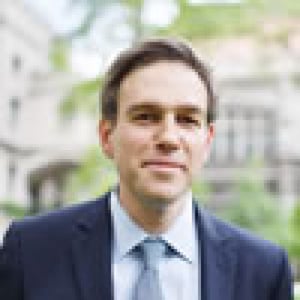
Deputy Editorial Page Editor, Foreign Affairs Columnist, The Wall Street Journal
Bret Stephens writes “Global View,” the weekly foreign-affairs column of The Wall Street Journal, for which he won the 2013 Pulitzer Prize for distinguished commentary. He is the paper’s deputy editorial-page editor, responsible for the opinion content of its overseas editions, as well as a member of the editorial board. Previously, he was editor-in-chief of the Jerusalem Post, a position he assumed in 2002 at the age of 28. He was raised in Mexico City, educated at the University of Chicago and the London School of Economics, and lives with his family in New York.

The Trump Impeachment Effort
John G. Malcolm, John C. Yoo
Defenders of the Constitution designed impeachment to be a rare event, especially by making the...
Impeachment and Presidential Powers
John G. Malcolm, John C. Yoo
Join us as John Malcolm and John Yoo discuss developments on impeachment: the latest on...
Book Review: The Jungle Grows Back: America and Our Imperiled World
Robert Kagan, Jeremy A. Rabkin, Paul Rahe
So many international developments vie for America’s attention. Dr. Robert Kagan’s book, The Jungle Grows...
Poland: Renegade or Exemplar?
Andrzej Bryk, James Jay Carafano, Jakub Grygiel
Poland holds a position of economic, strategic, and political importance in Europe. While some former...
Has NATO Expanded and Evolved Beyond Its Mission?
Reuel Marc Gerecht, Kurt Volker, Daniel G. West
As NATO launches Trident Juncture, exercises that will demonstrate the organization's largest show of force...
Turkey in NATO - Podcast
Alan Makovsky, Blaise Misztal
Turkey’s President Erdogan has secured authoritarian rule through constitutional restructuring. He does not tolerate dissent...
Mike Lewis Memorial Teleforum: Defining the Law of War - Podcast
Charles J. Dunlap, Jeremy A. Rabkin
“The law of war is of fundamental importance to the Armed Forces of the United...
Victor Davis Hanson Discusses Foreign Policy - Podcast
Victor Davis Hanson
Acclaimed military historian, prolific columnist and political essayist Victor Davis Hanson discusses President Obama’s foreign...
Wanted: American Exceptionalism in Foreign Affairs
The Obama administration’s signal achievement in foreign affairs policy is its wholesale retreat from American...
America In Retreat: The New Isolationism and the Coming Global Disorder - Podcast
Bret Stephens
In December 2011 the last American soldier left Iraq. “We’re leaving behind a sovereign, stable,...