
United States Senator, Arizona
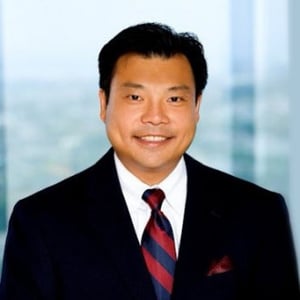
Attorney and Legal Commentator
John Shu is an attorney and legal commentator. His focus areas include constitutional law, securities & corporate law, antitrust law, administrative law, politics, and international affairs. Mr. Shu has lectured and published on a wide variety of issues.
Mr. Shu served President George H.W. Bush and President George W. Bush. He also served Judge Stanley Sporkin, U.S. District Court for the District of Columbia, who was Director of Enforcement at the U.S. Securities & Exchange Commission and General Counsel at the Central Intelligence Agency, and Judge Paul Roney, U.S. Court of Appeals for the Eleventh Circuit, who was Presiding Judge of the Foreign Intelligence Surveillance Court of Review.
Mr. Shu is a member of the National Committee on U.S. - China Relations, the Pacific Council on International Policy, and the Foreign Policy Association.

Executive Director, Ohio Dental Association
David J. Owsiany is the executive director of the Ohio Dental Association and a past president of the Columbus Lawyers Chapter of the Federalist Society.
He has served as CEO of a statewide health care association, president of the Buckeye Institute, chief of policy for the Ohio Department of Insurance, judicial law clerk for the Illinois Appellate Court, and staffer on the United State Senate Judiciary Committee.
Mr. Owsiany has written dozens of articles on legal and public policy issues for various publications, including the University of Toledo Law Review, the Federalist Society's State Court Docket Watch, Columbus Dispatch, Cincinnati Enquirer, Crain’s Cleveland Business, and Akron Beacon Journal.
Owsiany received his J.D. from Washington University School of Law in St. Louis and B.A. from the University of Michigan in Ann Arbor.
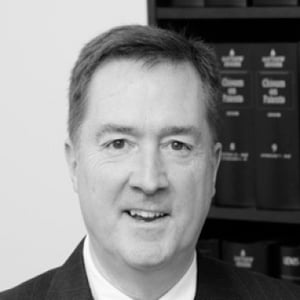
Partner, Kellogg, Hansen Todd, Figel & Frederick, P.L.L.C.
John Thorne represents innovators and individuals in commercial litigation including antitrust, patent, and copyright cases before federal courts at all levels, the USITC, the USPTO, the Copyright Royalty Board, ICANN’s Independent Review Process, and the competition agencies. He specializes in law reform to promote innovation and competition.
Prior to joining Kellogg Hansen he was Verizon’s SVP and Deputy GC in charge of intellectual property, competition, and privacy. Global Counsel Awards named his IP group one of the top five in the world in 2008 and 2010, and the world’s best in 2011. Global Counsel Awards named him the world’s best corporate competition lawyer in 2009.
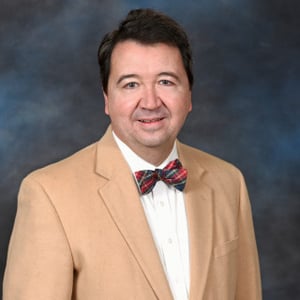
Judge, United States Court of Appeals, Sixth Circuit
John K. Bush is a Circuit Judge on the United States Court of Appeals for the Sixth Circuit.
His chambers are in Louisville, Kentucky. Prior to joining the court, Judge Bush was a partner in the
Louisville office of the firm Bingham Greenebaum Doll (now Dentons Bingham Greenebaum),
where he also was co-chair of the firm’s litigation department. He began his legal practice in the
Washington, D.C. office of Gibson Dunn & Crutcher.
Judge Bush served as a law clerk for Judge J. Smith Henley of the United States Court of
Appeals for the Eighth Circuit. He was graduated summa cum laude from Vanderbilt University,
and cum laude from Harvard Law School. He is an adjunct lecturer at The George Washington
University Law School and the Brandeis School of Law at the University of Louisville.
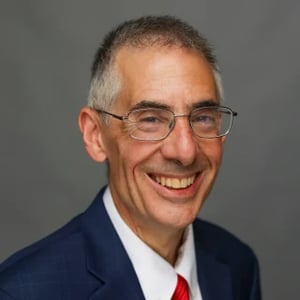
Wendell H. Ford Professor of Law, University of Kentucky J. David Rosenberg College of Law
Paul E. Salamanca graduated from Dartmouth College in 1983 and Boston College Law School in 1989, where he was a note editor for the Boston College Law Review and a member of the Order of the Coif.
Professor Salamanca served as a law clerk to Judge David H. Souter of the U.S. Court of Appeals for the First Circuit, and subsequently clerked for Justice Souter on the U.S. Supreme Court. He practiced law with the firm of Debevoise & Plimpton in New York from 1991 to 1994 and was a visiting assistant professor of law at Loyola University School of Law in New Orleans before joining the faculty at the University of Kentucky College of Law in June 1995.
Professor Salamanca writes in the areas of separation of powers, freedom of speech, freedom of religion, and privacy. He has published articles on these subjects in the University of Cincinnati Law Review, the Missouri Law Review, the Georgia Law Review and the Kentucky Law Journal, among other places.
From 2019 until 2021, Professor Salamanca served as a Senior Counsel and then as a Deputy Assistant Attorney General in the Environment and Natural Resources Division (ENRD) of the United States Department of Justice. His duties included supervision of the Natural Resources and Land Acquisition Sections of ENRD.
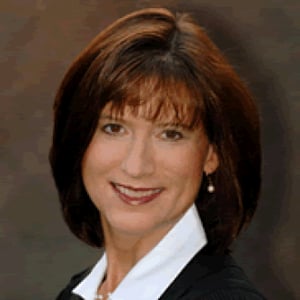
Judge, United States Court of Appeals, Seventh Circuit
Judge Sykes was nominated to the Seventh Circuit by President George W. Bush and confirmed by the Senate in 2004. Prior to her appointment to the federal bench, Judge Sykes served as a justice on the Wisconsin Supreme Court. Governor Tommy G. Thompson appointed her in September 1999 to fill a mid-term vacancy on the state supreme court, and she was elected to a full ten-year term in April 2000. From 1992-1999, Judge Sykes served on the state trial bench in Milwaukee County (elected in 1992 and re-elected in 1998). From 1985-1992, Judge Sykes practiced law with the Milwaukee firm of Whyte & Hirschboeck, S.C., and from 1984-1985, was a law clerk to Federal Judge Terence T. Evans.
Born and raised in the Milwaukee area, Judge Sykes earned a bachelor’s degree in journalism from Northwestern University in 1980 and a law degree from Marquette University Law School in 1984. Between college and law school, Judge Sykes worked as a reporter for The Milwaukee Journal.
Judge Sykes has two sons.

Address by Senator John McCain
John McCain
Limited Government and the Rule of Law Thank you, Ted, for that kind introduction. I...
Colorado’s Immigration Reform
Gwen Benevento
On June 12, 2006, the Colorado Supreme Court refused to allow a ballot initiative that...
Same-Sex Marriage in the State Courts
John Shu
Gay marriage litigation continues to occur in several states. In the first half of 2006,...
Ohio Supreme Court Limits Eminent Domain
David J. Owsiany
Since the Supreme Court’s decision in Kelo v. New London1 last year, eminent domain and...
(Pre)Clarifying the Muddy Red Waters of the Texas Redistricting War
Charles S. Bullock, Ronald Gaddie
The fight for political preeminence in the Texas congressional map unfolded amidst upheaval in governing...
Twombly: Naked (Alleged) Conspiracy Does Not Strip Freedom of Unilateral Action
John Thorne
When the Supreme Court hears Bell Atlantic Corp.v. Twombly this fall, it will confront both...
"Playing in the Joints Between the Religion Clauses"... And Other Supreme Court Catchreses
Even when the U.S. Supreme Court reaches the right result in a matter involving church-state...
“Eight Ways to Sunday”: Which Direction, Kentucky Supreme Court?
John K. Bush, Paul E. Salamanca
Attempted synthesis of the rulings of Kentucky’s highest court threatens to go the proverbial “eight...
Bar Watch Bulletin August 5, 2006
At a morning press conference, ABA President Michael Greco discussed three policies that the House...
Reflections on the Wisconsin Supreme Court
Diane S. Sykes
Editor’s Note: This article is excerpted from the Hallows Lecture that was given by the...