
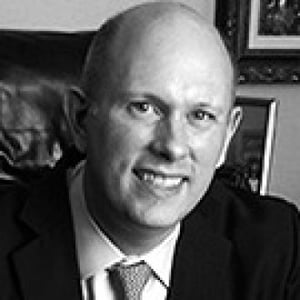
Of Counsel, Spencer Fane LLP
Anthony J. “A.J.” Ferate has built a multi-faceted background in the areas of the law, policy, energy, campaigns and elections, and defense over the last 20 years.
Through recent representation as Vice President of Regulatory Affairs for the Oklahoma Independent Petroleum Association (“OIPA”), A.J. held responsibilities over government efforts outside of the legislative branch on matters as broad as water, electric generation, commodity marketing, land matters, and seismicity. A.J. also maintained responsibility for legal matters at OIPA, including amicus briefing in appellate matters. A.J.’s extensive experience also includes management of public policy strategy for a Fortune 500 company.
For the past eleven years, A.J. has volunteered as General Counsel and spokesman for the Oklahoma Republican Party and has represented a number of elected officials, including U.S. Senator James Lankford, former statewide elected officials, a number of state legislators, and members of Congress.
Additionally, A.J. has assisted elected officials serve their constituents in all branches of government. Early in his career, A.J. held legislative aide duties in the Nebraska Legislature, then went on to work for former Nebraska Treasurer David Heineman. A.J. gained experience in the judiciary while serving Judge Gary L. Lumpkin at the Oklahoma Court of Criminal Appeals, the highest criminal appellate court in Oklahoma. Following this service, A.J. began work with Denise A. Bode of the Oklahoma Corporation Commission, assisting her in her duties regulating 70 percent of Oklahoma’s economy, including oil and gas and electric utilities.
A.J. honorably served ten years as an intelligence analyst for the United States Naval Reserve, including time at the Office of Naval Intelligence in the greater Washington DC area.
Opinion pieces authored or ghostwritten by A.J. have been published in the Seattle Times, Politico, Law360, The Oklahoman, Tulsa World and The Journal Record. A.J. has also been interviewed by national and international newspapers, and has also appeared on national radio programs including NPR’s The Diane Rehm Show and On Point with Tom Ashbrook.
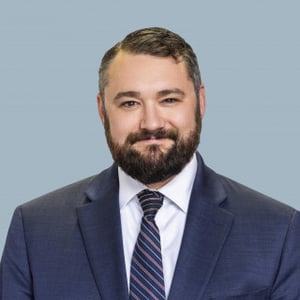
Partner, Ashbrook Byrne Kresge Flowers LLC
Ben Flowers, a partner at Ashbrook Byrne Kresge Flowers LLC, is an accomplished litigator with experience briefing, arguing, and winning high-stakes cases in courts throughout the country.
Before joining the law firm, Ben served as Ohio's 10th Solicitor General. In that role he regularly represented the State of Ohio before the Supreme Court of the United States, the United States Court of Appeals for the Sixth Circuit, and the Supreme Court of Ohio. Most prominently, in National Federation of Independent Business v. Department of Labor, Ben led a multi-state challenge to OSHA's vaccine mandate, ultimately prevailing before the Supreme Court.
Ben is a graduate of The Ohio State University and the University of Chicago Law School. Following law school, Ben clerked for Judge Sandra Ikuta of the U.S. Court of Appeals for the Ninth Circuit and for Justice Antonin Scalia of the Supreme Court of this United States. Ben lives in Upper Arlington, Ohio with his wife Denise and their three very active children.
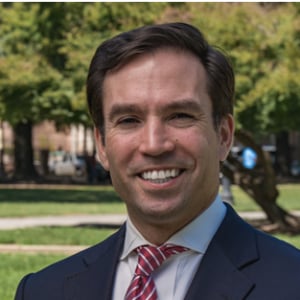
Partner, Worrell Sides LLP
Denton focuses his law practice in the area of estates and trusts, including estate administration and private wealth planning, as well as asset protection, business succession, general business, and corporate-related matters. His extensive business, financial, and legal background brings a unique perspective for his clients.
Prior to his current practice, Denton handled complex business litigation for a boutique Raleigh firm, ranging in matters from shareholder and fiduciary litigation, to contractual disputes, to state constitutional law issues. Denton clerked for Justice Paul M. Newby on the Supreme Court of North Carolina, primarily handling Business Court and complex civil appeals. His litigation experience provides valuable insight to his clients, especially in drafting and creating plans to avoid future litigation issues.
During law school, Denton had the privilege to serve as Editor-In-Chief of the Wake Forest Law Review, and was also selected by the faculty for the prestigious Dean’s Leadership Award. Prior to practicing law, he worked in wealth management and finance in Charlotte for over ten years, helping to establish and develop an independent registered investment advisory firm. As a Certified Financial Planner, he represented clients throughout the Southeast on various financial transactions, estate and trust matters, securities and investments, and corporate matters. He has extensive insurance experience and practiced as a Chartered Life Underwriter with the American College. He has represented families and their companies throughout the country.

Shareholder, Baker Do`nelson
John is a complex-problem solver and seasoned litigator who has successfully represented clients in a wide range of commercial litigation matters for almost 20 years. He frequently advocates for clients in cases involving contract and corporate ownership issues, real estate and eminent domain disputes, and claims of unfair competition or fraud. John regularly practices in federal and state trial and appellate courts throughout North Carolina, including the North Carolina Business Court. He has been admitted pro hac in a number of states in the South and the Midwest, and he handles binding arbitrations before the American Arbitration Association and other quasi-judicial bodies. In addition to his advocacy work, John serves as a trusted advisor for his clients, providing strategic, solution-oriented advice both before and after disputes arise.
John also maintains an active constitutional and political law practice. His clients have included multiple presidential, senatorial, and congressional campaigns; gubernatorial and other statewide candidates and campaigns; legislative, judicial, and local candidates; and national- and state-level political party committees. He has represented legislative officers in multiple states and defended state agencies' actions when challenged on constitutional or statutory grounds. John previously served as General Counsel for the North Carolina Republican Party and as both chairman and a member of the North Carolina State Board of Ethics and Election Enforcement.
John also counsels his clients on various employment and education law issues, including discrimination and wage and hour claims, as well as school choice and charter school issues.
After law school, John served as a law clerk for the Honorable Glen M. Williams, Senior U.S. District Judge for the Western District of Virginia. He has lived in Raleigh since completing his clerkship.
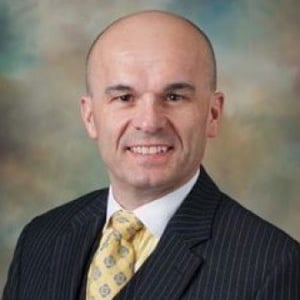
Attorney, DJ Chapman Law, P.C.
David Chapman is a solo lawyer with DJ Chapman Law, P.C., in Fargo, ND, and is a 1995 graduate of the University of North Dakota School of Law. He previously practiced with two private firms in Fargo, and served as in-house General Counsel for Global Electric Motorcars, LLC, when that company was a subsidiary of what was previously DaimlerChrysler Corporation. David has taught continuing legal education courses on immigration law as well as attorney ethics and professional responsibility, and he has authored articles and materials on immigration law and attorney ethics. David has also appeared as a guest on radio and television to discuss legal and policy issues. He currently serves as a member of the US Commission on Civil Rights and a past member of the North Dakota State Advisory Committee to the U.S. Commission on Civil Rights. He and his wife live in West Fargo with their son.

Topics
Docket Watch: State v. Jean
Does a passenger traveling with the owner of a private vehicle have a reasonable expectation...
Hunsucker v. Fallin
Anthony J. Ferate
With certain limited exceptions, the Oklahoma Supreme Court has in the past followed the U.S....
Topics
Docket Watch: Hunsucker v. Fallin
With certain limited exceptions, the Oklahoma Supreme Court has in the past followed the U.S....
Topics
On the Future of the Chevron Doctrine
Joel Nolette is a litigation attorney at Mintz Levin in Boston, and an active member...
Standing in Ohio – Preterm-Cleveland, Inc. v. Kasich
Benjamin M. Flowers
Preterm-Cleveland, Inc., v. Kasich,[1] establishes two important issues of Ohio constitutional law. First, a litigant who wishes...
Standing in Ohio – Preterm-Cleveland, Inc. v. Kasich
Preterm-Cleveland, Inc., v. Kasich,[1] establishes two important issues of Ohio constitutional law. First, a litigant...
Cooper v. Berger
H. Denton Worrell, John E. Branch
In State ex rel. Cooper v. Berger, No. 52PA17-2 (N.C. Jan. 26, 2018), the Supreme Court...
North Dakota Legislative Assembly v. Burgum
David J. Chapman
The separation of powers between executive and legislative branches is an important and central feature...
Topics
Docket Watch: North Dakota Legislative Assembly v. Burgum
The separation of powers between executive and legislative branches is an important and central feature...
Topics
ABA Model Rule 8.4(g) Cannot Survive the Supreme Court’s Recent Decisions in NIFLA and Matal
The United States Supreme Court’s decision eight weeks ago in National Institute of Family and...