
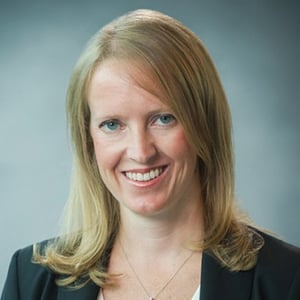
Partner, Clement & Murphy, PLLC
Erin Murphy is founding partner of Clement & Murphy, PLLC. She is widely recognized as one of the nation’s leading Supreme Court and appellate advocates. She has argued dozens of cases in appellate and trial courts throughout the country, including the Supreme Court and nearly all of the federal courts of appeals. Erin has long been ranked by Chambers & Partners rankings as a leading appellate practitioner, and the National Law Journal has named her one of the nation’s “Outstanding Women Lawyers.” Erin also has an active pro bono practice, through which she has successfully represented many religious organizations and adherents, criminal defendants, asylum applicants, adoptive parents, and more.
Erin is an adjunct professor at her alma mater the Georgetown University Law Center, a member and former officer of the Edward Coke Appellate Inn of Court, and a frequent speaker on topics relating to the Supreme Court and appellate advocacy. In her spare time, Erin serves on the board of directors of Street Law.
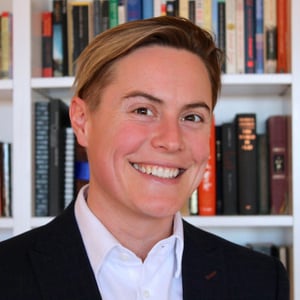
Associate Professor of Legal Studies & Business Ethics, The University of Pennsylvania Wharton School of Business
Amanda Shanor is an Assistant Professor at the University of Pennsylvania Wharton School, where her scholarship focuses on constitutional and administrative law, and in particular the First Amendment.
Shanor is a graduate of Yale Law School and Yale College, and a PhD candidate in law at Yale University. She served as a law clerk to Judges Cornelia T.L. Pillard and Judith W. Rogers on the D.C. Circuit, and Judge Robert W. Sweet in the Southern District of New York. She has taught at both Yale and Georgetown law schools and has published in the New York University Law Review, the Harvard Law Review Forum, and the Yale Law Journal Forum, among others. She is a contributor to Take Care and the co-author of a textbook on counterterrorism law.
Prior to joining the academy, Amanda worked in the National Legal Department of the American Civil Liberties Union on the organization’s Supreme Court litigation, including Masterpiece Cakeshop. Previously, she litigated a number of constitutional and national security cases with Professor David Cole, including Humanitarian Law Project v. Holder, while a fellow at Georgetown.
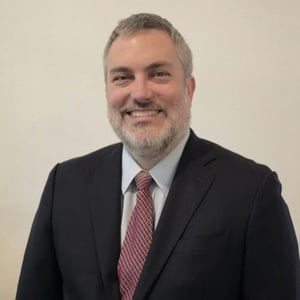
Host, The Prosecutors Podcast; Partner, Culper Law
Brett J. Talley is former a federal prosecutor (appellate chief in the Middle District of Alabama) and host of the true crime podcast "The Prosecutors." Brett has served as nominations chief and deputy assistant attorney general at the US Department of Justice, Advisor to the White House Counsel, speechwriter to Senator Rob Portman, a political and legal communications professional, deputy state solicitor general, staff writer for a presidential campaign, award-nominated horror fiction author (possibly related to the previous items on the list), US District and 11th Circuit judicial clerk, and adjunct law school professor. He is currently a partner ar Culper Law. Along the way, Brett has been involved at some level in the confirmation of a full majority of the sitting justices on the U.S. Supreme Court and scores of U.S. district and appellate court judges. A native Alabamian, Brett earned his undergraduate degree in History and Philosophy from the University of Alabama and JD from Harvard Law School. He lives in Montgomery with his wife Annie and their three small kids.
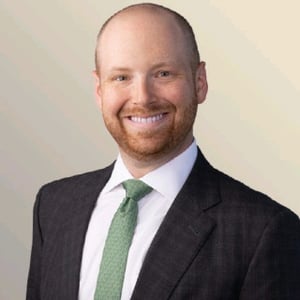
Solicitor General, Iowa Office of the Attorney General
Eric Wessan serves as Iowa’s Solicitor General in the Iowa Attorney General’s Office. In that role, Wessan leads Iowa’s litigation before State and federal appellate courts, including the Iowa and U.S. Supreme Courts. Before that role, Wessan worked on complex commercial litigation at two large law firms in Chicago. Wessan also served as a law clerk for the Honorable James C. Ho on the U.S. Court of Appeals for the Fifth Circuit and for the Honorable John F. Kness on the U.S. District Court for the Northern District of Illinois. Wessan is a graduate of the University of Chicago Law School, with honors, and of the University of Chicago.

Laurence H. Silberman Chair in Constitutional Governance, American Enterprise Institute; Executive Director, Antonin Scalia Law School’s C. Boyden Gray Center for the Study of the Administrative State
Adam J. White is the Laurence H. Silberman Chair in Constitutional Governance and senior fellow at the American Enterprise Institute, where he focuses on the Supreme Court and the administrative state. He also directs the Antonin Scalia Law School’s C. Boyden Gray Center for the Study of the Administrative State.
He writes on regulation and constitutional government for a variety of publications. He practiced law in Washington, D.C., after clerking for the D.C. Circuit's Judge David Sentelle. He also has been chairman of the ABA's Administrative Law Section.
In 2021, he served on the Presidential Commission on the Supreme Court of the United States, where he criticized “Court packing” and other efforts to restructure the Supreme Court.

Vice President, Edwin Meese III Institute for the Rule of Law, Advancing American Freedom
John G. Malcolm oversees Advancing American Freedom’s work to increase understanding of the Constitution and the rule of law as Vice President of the organization’s Edwin Meese III Institute for the Rule of Law. Malcolm brings to the challenge a wealth of legal expertise and experience in both the public and private sectors.
Prior to joining Advancing American Freedom in 2025, Malcolm was the Vice President of the Institute for Constitutional Government and the Director of the Meese Center for Legal and Judicial Studies at the Heritage Foundation. Prior to joining Heritage in 2012, Malcolm was general counsel at the U.S. Commission on International Religious Freedom, as well as a distinguished practitioner in residence at Pepperdine Law School. From 2004 to 2009, Malcolm was executive vice president and director of worldwide anti-piracy operations for the Motion Picture Association.
Malcolm served as a deputy assistant attorney general in the Department of Justice’s Criminal Division from 2001 to 2004, where he oversaw sections on computer crime and intellectual property, domestic security, child exploitation and obscenity, and special investigations. Immediately prior to that, he was a founding partner in the Atlanta law firm of Malcolm & Schroeder, LLP.
From 1990 to 1997, Malcolm was an assistant U.S. attorney in Atlanta, assigned to the fraud and public corruption section, and also an associate independent counsel, investigating fraud and abuse in the Department of Housing and Urban Development. He was honored with the Director’s Award for Superior Performance for his work in connection with the successful prosecution of Walter Leroy Moody Jr., who assassinated an 11th Circuit judge and the head of the Savannah chapter of the NAACP.
A graduate of Harvard Law School and Columbia College, Malcolm began his career as a law clerk to a federal district court judge and a federal appellate court judge, and as an associate at the Atlanta-based law firm of Sutherland, Asbill & Brennan (new Eversheds Sutherland).
Malcolm, who resides in Washington, D.C., serves on the Board of Trustees of the Washington National Opera and is a Senate-confirmed member of the Board of Directors of the Legal Services Corporation, the largest funder of civil legal aid in the United States.

Emanuel S. Heller Professor of Law, University of California at Berkeley; Thomas Smith Senior Research Fellow, The Civitas Institute, University of Texas at Austin
John Yoo is the Emanuel Heller Professor of Law at the University of California at Berkeley. He is also the Thomas Smith Senior Research Fellow, Civitas Institute, at the University of Texas at Austin. He is also a Nonresident Senior Fellow at the American Enterprise Institute.
His most recent book, The Politically Incorrect Guide to the Supreme Court, co-authored with Robert Delahunty, was published in 2023. Professor Yoo’s other books include Defender-in-Chief: Trump’s Fight for Presidential Power; Striking Power: How Cyber, Robots, and Space Weapons Change the Rules for War; Point of Attack: Preventive War, International Law, and Global Welfare; and Crisis and Command: A History of Executive Power from George Washington to George Bush.
He is a co-author of volumes 1 and 2 of R. Rossum, G. Tarr, V. Munoz & J. Yoo American Constitution Law (Routledge, 2026), and a co-editor of the eight-volume series on the 250th anniversary of the American Revolution, We Hold These Truths, with Yuval Levin and Adam White of the American Enterprise Institute.
Professor Yoo has published more than 100 articles in academic journals on subjects including national security, constitutional law, international law, and the Supreme Court. He also regularly contributes to the editorial pages of the Wall Street Journal, New York Times, Washington Post, Los Angeles Times, and National Review, among others.
Professor Yoo has served in all three branches of government. He was an official in the U.S. Department of Justice, where he worked on national security and terrorism issues after the 9/11 attacks. He served as general counsel of the U.S. Senate Judiciary Committee. He has been a law clerk for Supreme Court Justice Clarence Thomas and federal appeals Judge Laurence Silberman. He has been a visiting professor at the University of Texas at Austin’s School of Civic Leadership, Seoul National University, the Interdisciplinary Center Herzliya, Keio University, Trento University, the University of Chicago, and the Free University of Amsterdam.
Professor Yoo supervises the Public Law and Policy Program and the California Constitution Center. He also serves on the boards of Founding Forward, the Washington Legal Foundation, the Pacific Legal Foundation, the Ulysses Grant Institute, the Federalist Society’s Separation of Powers and Federalism Division, the Universidad Cientifica del Sur Law School, and the Asia-Pacific Law Institute at Seoul National University. He is a winner of the Federalist Society’s Paul Bator award and the Heritage Foundation’s Edwin Meese III Originalism Lectureship.
Professor Yoo graduated from Yale Law School and summa cum laude from Harvard College.
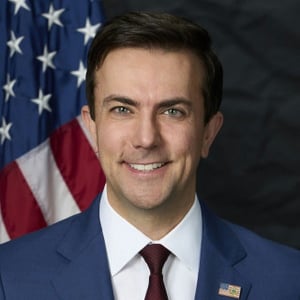
Deputy Administrator, United States Environmental Protection Agency
David Fotouhi was sworn in as Deputy Administrator of the United States Environmental Protection Agency on June 16, 2025.
Fotouhi is an experienced environmental attorney who previously served in senior roles at EPA. During the first term of the Trump Administration, Fotouhi served as EPA’s Acting General Counsel and Principal Deputy General Counsel. Prior to rejoining the agency, Fotouhi was a partner in the Washington, D.C. office of Gibson, Dunn & Crutcher LLP practicing environmental law.
Fotouhi grew up in Oklahoma and holds a B.A. from Vanderbilt University and a J.D. from Harvard Law School. Before entering private legal practice, Fotouhi served as a law clerk to the Honorable Raymond W. Gruender of the U.S. Court of Appeals for the Eighth Circuit.
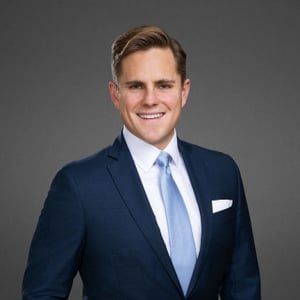
Deputy General Counsel, U.S. Environmental Protection Agency
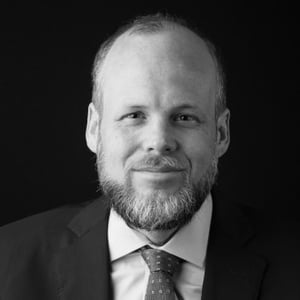
Founder, CGCN Law, PLLC
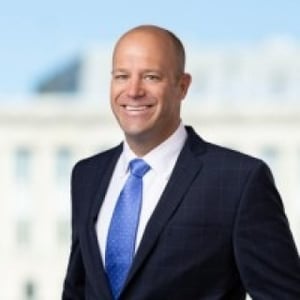
Partner, Givens Pursley LLP
Jeff Beelaert is a partner at Givens Pursley LLP in Boise, Idaho, with a distinguished background of public service and extensive experience with trial and appellate litigation. As lead counsel, Jeff has achieved success for clients in high-stakes, complex cases at every level of state and federal courts, including the United States Supreme Court.
Before joining Givens Pursley, Jeff previously held several posts at the United States Department of Justice.
Jeff previously worked as an associate at Sidley Austin in DC, where he drafted Supreme Court briefs and handled white collar matters and investigations.
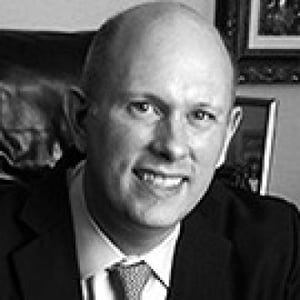
Of Counsel, Spencer Fane LLP
Anthony J. “A.J.” Ferate has built a multi-faceted background in the areas of the law, policy, energy, campaigns and elections, and defense over the last 20 years.
Through recent representation as Vice President of Regulatory Affairs for the Oklahoma Independent Petroleum Association (“OIPA”), A.J. held responsibilities over government efforts outside of the legislative branch on matters as broad as water, electric generation, commodity marketing, land matters, and seismicity. A.J. also maintained responsibility for legal matters at OIPA, including amicus briefing in appellate matters. A.J.’s extensive experience also includes management of public policy strategy for a Fortune 500 company.
For the past eleven years, A.J. has volunteered as General Counsel and spokesman for the Oklahoma Republican Party and has represented a number of elected officials, including U.S. Senator James Lankford, former statewide elected officials, a number of state legislators, and members of Congress.
Additionally, A.J. has assisted elected officials serve their constituents in all branches of government. Early in his career, A.J. held legislative aide duties in the Nebraska Legislature, then went on to work for former Nebraska Treasurer David Heineman. A.J. gained experience in the judiciary while serving Judge Gary L. Lumpkin at the Oklahoma Court of Criminal Appeals, the highest criminal appellate court in Oklahoma. Following this service, A.J. began work with Denise A. Bode of the Oklahoma Corporation Commission, assisting her in her duties regulating 70 percent of Oklahoma’s economy, including oil and gas and electric utilities.
A.J. honorably served ten years as an intelligence analyst for the United States Naval Reserve, including time at the Office of Naval Intelligence in the greater Washington DC area.
Opinion pieces authored or ghostwritten by A.J. have been published in the Seattle Times, Politico, Law360, The Oklahoman, Tulsa World and The Journal Record. A.J. has also been interviewed by national and international newspapers, and has also appeared on national radio programs including NPR’s The Diane Rehm Show and On Point with Tom Ashbrook.
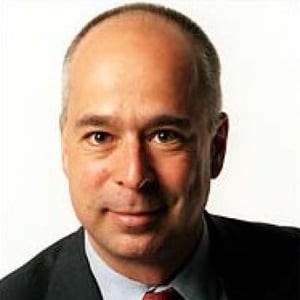
Supreme Court Correspondent, The New York Times
Adam Liptak covers the Supreme Court for The New York Times. Liptak’s column on legal affairs, “Sidebar,” appears every other Tuesday.
A graduate of Yale College and Yale Law School, Liptak practiced law at a large New York City law firm and in the legal department of The New York Times Company before joining the paper’s news staff in 2002.
Liptak was a finalist for the Pulitzer Prize in explanatory reporting in 2009 for “American Exception,” a series of articles examining ways in which the American legal system differs from those of other developed nations. He received the 2010 Scripps Howard Award for Washington reporting for a five-part series on the Roberts Court.
He is the author of “To Have and Uphold: The Supreme Court and the Battle for Same-Sex Marriage.”
His journalism has appeared in The New Yorker, Vanity Fair, Business Week and Rolling Stone, and he has published articles in The Arizona Law Review, The Michigan Law Review and The New York University Annual Survey of American Law.
Liptak has taught courses at Yale, Columbia, the University of Chicago, Washington University in St. Louis, the University of Southern California and U.C.L.A. He is a member of the American Academy of Arts and Sciences.

Solicitor General, Louisiana
In 2016, Attorney General Jeff Landry appointed Liz Murrill as the first Solicitor General for Louisiana. She has more than 25 years of experience working in diverse state and federal government legal environments and has experience handling complex litigation, state and federal appeals, and complex government transactions. Liz most recently served as the Louisiana Department of Justice's Director of Administration and, before that, Director of the Civil Division. She previously served former Governor Bobby Jindal as Executive Counsel and was Executive Counsel to the Commissioner of Administration. Liz was counsel for the Office of the Governor in the BP Oil Spill litigation and has served as a member and counsel to several state boards and commissions. She was a United States Supreme Court Judicial Fellow in 2007-08 at the Federal Judicial Center and taught appellate advocacy and legal writing at the Louisiana State University Law Center for more than ten years. Liz earned her bachelor’s degree from Louisiana State University, law degree from the Louisiana State University Law Center where she was Editor-In-Chief of the Law Review, and Master of Laws in Alternative Dispute Resolution from Pepperdine University School of Law. She clerked for U.S. District Judge Frank J. Polozola and Louisiana First Circuit Court of Appeal Judge Melvin Shortess. Liz has argued three cases at the United States Supreme Court (including June Medical v. Russo and Ramos v. Louisiana) and many others at the Louisiana Supreme Court, United States Court of Appeals for the Fifth Circuit and the District of Columbia Circuit, and multiple state and federal courts. Additionally, she has filed briefs in courts across the country on a wide variety of constitutional issues.
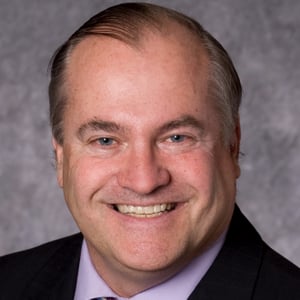
Robert F. Stanton Professor of Law, University of Maryland Carey School of Law
Robert V. Percival is the Robert F. Stanton Professor of Law and the Director of the Environmental Law Program at the University of Maryland School of Law. He received a B.A. summa cum laude from Macalester College, a J.D. from Stanford Law School and an M.A. in economics from Stanford University. At Stanford Percival was named the Nathan Abbott Scholar for graduating first in his law school class. Following graduation, he served as a law clerk for Judge Shirley M. Hufstedler of the U.S. Court of Appeals for the Ninth Circuit and for U.S. Supreme Court Justice Byron R. White. He joined the Maryland faculty in 1987 after serving as a senior attorney for the Environmental Defense Fund. Percival has served as a visiting professor of law at Harvard Law School, Georgetown University Law Center, the China University of Political Science and Law (Beijing), and Comenius University (Bratislava). He is the principal author of a leading environmental law casebook, now in its 9th edition, and the author of several articles about the Supreme Court and presidential authority over executive agencies. Percival wrote one of the first articles on the propriety of consent decrees to effectuate and enforce federal law “The Bounds of Consent: Consent Decrees, Settlements and Federal Environmental Policymaking,” 1987 Univ. Chic. Leg. F. 327 (1987). He also is the author of the first comprehensive analyses of what the papers of the late Justices Thurgood Marshall and Harry Blackmun reveal about the Supreme Court’s handling of environmental cases (“Environmental Law in the Supreme Court: Highlights from the Blackmun Papers,” 35 ELR 10637 (2005), and “Environmental Law in the Supreme Court: Highlights from the Marshall Papers,” 13 ELR 10606 (Oct. 1993)).
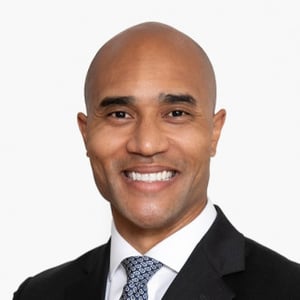
Partner, McDermott Will & Emery
Kenji M. Price focuses his practice on white-collar government investigations, internal investigations, compliance counseling, and complex civil litigation.
Prior to joining McDermott, Kenji served as the United States Attorney for the District of Hawaii. As the chief federal law enforcement officer in the district, Kenji led a team responsible for representing the United States in criminal and civil litigation in the district. In addition to leading the US Attorney’s Office in Hawaii, Kenji served as the Vice Chair of the Controlled Substances Subcommittee of the Attorney General’s Advisory Committee.
Before serving as the US Attorney in Hawaii, Kenji also served as an Assistant US Attorney in the Eastern District of New York. While serving as a federal prosecutor in Brooklyn, Kenji handled criminal investigations and prosecutions involving diverse subject matters, while serving in the office’s General Crimes and International Narcotics and Money Laundering Sections.
In addition to his service as a federal prosecutor, Kenji served as an infantry officer in the US Army. During approximately four years of active duty service, Kenji deployed overseas on four occasions, leading soldiers in the 75th Ranger Regiment and 173rd Airborne Brigade. Kenji was twice awarded the Bronze Star Medal for his service during overseas deployments.
Kenji graduated from the University of Pennsylvania Law School, where he served as Editor-in-Chief of the University of Pennsylvania Law Review. Following law school, Kenji clerked for Judge Robert B. Kugler of the US District Court for the District of New Jersey and Judge Kent A. Jordan of the US Court of Appeals for the Third Circuit.
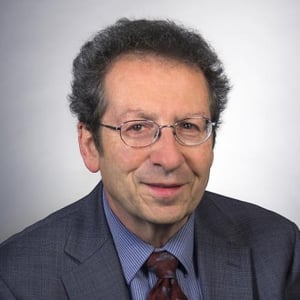
General Counsel, Competitive Enterprise Institute
Sam Kazman is general counsel at the Competitive Enterprise Institute.
Prior to joining CEI in 1986, he was managing attorney of the Washington DC office of the Pacific Legal Foundation.
His op-eds and comments have appeared in The Wall Street Journal, USA Today, The Washington Post, The New York Times, National Review, and more. Kazman has also appeared on national radio and television programs such as The Today Show, Fox News, Fox Business, and C-SPAN's Washington Journal, and National Public Radio, among others.
Kazman is a graduate of Cornell University and received his Juris Doctor cum laude at the State University of New York at Buffalo Law School.
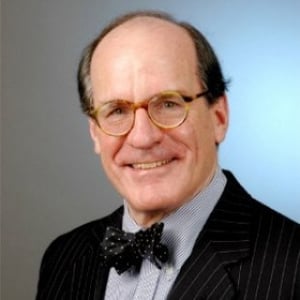
Retired Partner, Sullivan & Cromwell LLP
Upon his resignation as the Legal Adviser of the U.S. Department of State in January 1993, Mr. Williamson rejoined Sullivan & Cromwell's Washington, D.C. office. He originally joined the Firm in 1964 after graduating from New York University School of Law, where he was an editor of the Law Review. He became a partner of the Firm in 1971, moved to its London office in 1976, returned to its New York office in 1979, moved to its Washington, D.C. office in 1988 and became Of Counsel in 2007. In 2018, he retired from the firm.
At Sullivan & Cromwell, Mr. Williamson engaged in a broad and wide-ranging domestic and international financing and transactions practice, as well as advice with respect to corporate governance issues, the United States’ economic sanctions laws, the ethics rules applicable to government officials and the immunities of foreign sovereigns and international organizations.
Mr. Williamson has been an active participant on panels and other forums involving public international law and national security issues, such as the domestic and international bases for the use of force, the role of the United States with respect to the International Criminal Court, the law of the sea and the application of international legal principles in the war against terrorism.
Mr. Williamson is a member of the Council on Foreign Relations and a former member of the Executive Council of the American Society of International Law, the Executive Committees of the Business and Advisory Committee (BIAC) to the OECD and the U.S. Council for International Business, the United States Advisory Board of NTT DoCoMo, Inc. and the Board of Directors of Triton Oil & Gas Limited.
Mr. Williamson has served on the Boards of Regents and Trustees of the University of the South and as chair of the Board of Regents. He is currently a member of the Board of Directors of the American Council of Trustees and Alumni, a higher education watchdog.

Partner, Gibson Dunn & Crutcher LLP
Miguel A. Estrada is a partner in the Washington, D.C. office of Gibson, Dunn & Crutcher.
Mr. Estrada has represented clients before federal and state courts throughout the country in a broad range of matters. He has argued 24 cases before the United States Supreme Court, and briefed many others. He has also argued dozens of appeals in the lower federal courts.
Best Lawyers® recognized Mr. Estrada as a 2020 Lawyer of the Year in Intellectual Property Litigation and as a Lawyer of the Year in Appellate Practice. He has been recognized by Benchmark Litigation as a 2020 U.S. Appellate Litigation “Star”. In 2014, The American Lawyer named Mr. Estrada a “Litigator of the Year,” praising his “brains and tenacity” and noting he is the lawyer to call for “a tough, potentially unwinnable case.” From 2014-2021, Chambers & Partners has named him as one of a handful of attorneys that it ranked in the top tier among the nation’s leading appellate lawyers. Chambers & Partners noted that “clients are impressed by his intellect and ability, with one saying, ‘His papers are just blindingly clear in what they say and devastating in how they marshal the arguments.’” The Atlantic described his oral argument in a 2014 high-profile separation-of-powers case as “one of the most dazzling arguments the marble chamber has heard in many years.”
Mr. Estrada was selected by his peers for inclusion in the 2020 edition of The Best Lawyers in America® in the area of Appellate Law, in addition to previous recognition by the publication in the specialties of Bet-the-Company Litigation, Commercial Litigation and Criminal Defense: White Collar, Intellectual Property Litigation, and Regulatory Enforcement Litigation in the areas of SEC, Telecom, and Energy. In 2017, he was elected as a member of the American Law Institute. In 2021, Mr. Estrada was named among the Lawdragon 500 Leading Lawyers in America. In 2004, Legal Times named him one of the top 12 appellate litigators in the D.C. area, noting that “people who follow appellate practice in Washington have known for several years that Estrada . . . is one of the best around.” Also in 2004, Washingtonian Magazine named him one of the top constitutional law lawyers “who could become one of the legends of the Supreme Court bar.”
Mr. Estrada joined Gibson Dunn in 1997, after serving for five years as Assistant to the Solicitor General of the United States. He previously served as Assistant U.S. Attorney and Deputy Chief of the Appellate Section, U.S. Attorney’s Office, Southern District of New York. In those capacities, Mr. Estrada represented the government in numerous jury trials and in many appeals before the U.S. Court of Appeals for the Second Circuit. Before joining the U.S. Attorney’s Office, Mr. Estrada practiced corporate law in New York with Wachtell, Lipton, Rosen & Katz.
Mr. Estrada is a Trustee of the Supreme Court Historical Society. He was formerly a member of the Board of Visitors of Harvard Law School.
Mr. Estrada served as a law clerk to the Honorable Anthony M. Kennedy in the U.S. Supreme Court from 1988 to 1989 and to the Honorable Amalya L. Kearse in the U.S. Court of Appeals for the Second Circuit from 1986 to 1987. He received a J.D. degree magna cum laude in 1986 from Harvard Law School, where he was editor of the Harvard Law Review. Mr. Estrada graduated with an A.B. degree magna cum laude and Phi Beta Kappa in 1983 from Columbia College, New York. He is fluent in Spanish and proficient in French.
Representative Supreme Court matters include:
In 2011, the Supreme Court appointed Mr. Estrada to brief and argue two criminal cases –Dorsey v. United States and Hill v. United States – in which the Solicitor General declined to defend the judgments of the court of appeals. Mr. Estrada was appointed to argue the position that the Solicitor General had declined to defend.
Mr. Estrada was also part of the team that successfully presented then Governor Bush’s position to the Supreme Court in Bush v. Gore (2000). Other cases that Mr. Estrada handled in the Supreme Court include Granholm v. Heald (2005) (dormant Commerce Clause and Twenty-First Amendment), Vermont Agency of Natural Resources v. United States ex rel. Stevens (2000) (False Claims Act, Article III standing and Eleventh Amendment immunity), Old Chief v. United States (1997) (rules of evidence), United States v. Mezzanatto (1995) (evidence and plea bargaining), United States v. Robertson (1995) (constitutional limits on Congress’s Commerce Clause powers), Citizens Bank of Maryland v. Strumpf (1995) (bankruptcy law), and NOW, Inc. v. Scheidler (1994) (RICO).
Recent Court of Appeals matters include:
In addition, Mr. Estrada is lead appellate counsel to Vivendi S.A. in two securities-fraud appeals from jury verdicts that are currently pending in the Second Circuit, and to the National Association of Broadcasters in a challenge to certain procedures promulgated by the FCC in connection with the upcoming Spectrum Auction. Mr. Estrada also recently presented argument before the D.C. Circuit on behalf of the tobacco industry in a first amendment challenge to certain compelled disclosures that were imposed as part of the government’s long-running civil RICO case against the industry.
Other matters:
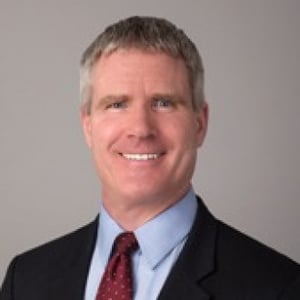
Partner, Gibson, Dunn & Crutcher LLP
Thomas G. Hungar is a partner in the Washington, D.C., office of Gibson Dunn. His practice focuses on appellate litigation, and he assists clients with congressional investigations and complex trial court litigation matters as well. He has presented oral argument before the Supreme Court of the United States in 28 cases, including some of the Court’s most important patent, antitrust, securities, and environmental law decisions, and he has also appeared before numerous lower federal and state courts.
Thomas served as General Counsel to the U.S. House of Representatives from July 2016 until January 2019. As General Counsel, he provided legal advice and litigation representation on a non-partisan basis to the House and its leadership, members, officers, and staff, and he worked closely with numerous House committees in connection with their oversight and investigative activities. Previously, he served as a Deputy Solicitor General of the United States. In that position, he supervised business-related appellate litigation for the federal government, with particular emphasis on patent, antitrust, securities, and environmental appellate cases, and he also oversaw appellate litigation in banking, bankruptcy, tax, government contracts, communications, copyright, labor, trademark, and international trade matters. In private practice, Thomas’s appellate experience has encompassed those areas as well as class actions, constitutional law, employment law, product liability, administrative procedure, insurance coverage and bad faith, and general commercial litigation. He has handled scores of business-related appeals in the Supreme Court and lower appellate courts, and has briefed and argued many high-profile matters.
Thomas is a Fellow of the American Academy of Appellate Lawyers and is a frequent lecturer in his areas of expertise. While at the Department of Justice, he served as Appellate Counsel to the Intellectual Property Task Force Executive Staff, and he was awarded the John Marshall Award for Outstanding Legal Achievement, the Department’s highest award presented to attorneys for contributions and excellence in legal performance, in recognition of his handling of patent-law matters before the Supreme Court.
Most recently, Thomas has garnered national recognition for his Appellate Practice in The Legal 500 – United States, Best Lawyers in America, and in Chambers USA, which has repeatedly highlighted Thomas for his “expertise in appellate litigation” and experience with employment and antitrust disputes, as well as Congressional Investigations. Thomas was also recently named a “Litigation Star” by Benchmark Litigation.
Thomas served as an Assistant to the Solicitor General of the United States from 1992-1994. He also served as a law clerk to Justice Anthony M. Kennedy of the Supreme Court and to Circuit Judge Alex Kozinski of the United States Court of Appeals for the Ninth Circuit. He received his law degree from Yale Law School in 1987, where he was a Senior Editor of the Yale Law & Policy Review. He received his Bachelor of Science degree magna cum laude in mathematics/computer science and economics from Willamette University in 1984.
Thomas is admitted to practice in the District of Columbia.
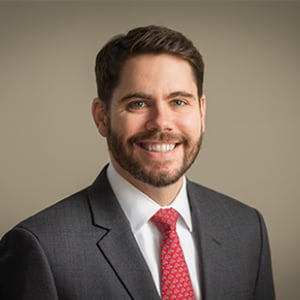
Partner, Consovoy McCarthy PLLC
Mr. Weir is an experienced litigator who focuses on constitutional and regulatory matters. He has particular expertise in cases involving the First and Fourteenth Amendments, civil rights statutes, and challenges to federal agency actions. He has briefed and presented oral argument in state and federal courts across the country, including in the Supreme Court of the United States. He was trial counsel and part of the team that prevailed before the Supreme Court in the landmark case Students for Fair Admissions, Inc. v. Harvard College and University of North Carolina.
Since 2015, Mr. Weir has been an adjunct professor for the Administrative Law and Supreme court clinics at the Antonin Scalia Law School at George Mason University. He is a former law clerk to Judge Carlos T. Bea of the United States Court of Appeals for the Ninth Circuit and Judge Anthony J. Trenga of the United States District Court for the Eastern District of Virginia. He earned his A.B. cum laude from Georgetown University and his J.D. summa cum laude from George Mason University School of Law.

Founding Partner, Boyden Gray & Associates
Ambassador C. Boyden Gray is the founding partner of Boyden Gray & Associates, a law and strategy firm in Washington, D.C., focused on constitutional and regulatory issues.
Mr. Gray worked in the White House for twelve years, first as counsel to the Vice President during the Reagan administration and then as White House Counsel to President George H.W. Bush. In the Reagan administration, he was Counsel to the Presidential Task Force on Regulatory Relief, for which he wrote the original Executive Order 12291 requiring cost-benefit analysis and White House review of regulations (later renumbered as current EO 12866). In the George H.W. Bush Administration, Mr. Gray was in charge of judicial selection and was also instrumental in the enactment of the Clean Air Act Amendments of 1990, the Energy Policy Act of 1992, and a cap-and-trade system for acid rain emissions. In 1993, he received the Presidential Citizens Medal. Under President George W. Bush, Mr. Gray was U.S. Ambassador to the European Union and U.S. Special Envoy to Europe for Eurasian Energy.
Mr. Gray practiced law for 25 years at the law firm of Wilmer, Cutler & Pickering and was chairman of the Administrative Law and Regulatory Practice Section of the American Bar Association from 2000 to 2002. Early in his career, Mr. Gray helped to develop the Business Roundtable and served as its first counsel. He is an adjunct professor at Antonin Scalia Law School and a former adjunct professor at NYU Law School (teaching energy and environmental law). Mr. Gray is on the Board of Directors of the Atlantic Council, the Federalist Society, Reason Foundation, and the Trust for the National Mall.
Mr. Gray earned his A.B. magna cum laude from Harvard, where he was an editor of the Crimson, and his J.D. with high honors from the University of North Carolina at Chapel Hill, where he was editor-in-chief of the Law Review. Mr. Gray served in the United States Marine Corps, and after law school, he clerked for Earl Warren, Chief Justice of the United States Supreme Court.
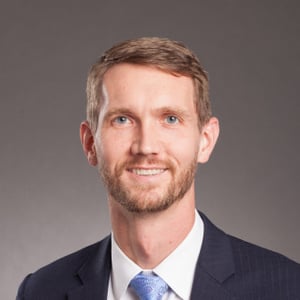
Senior Counsel for Environmental and Regulatory Affairs, Boeing
Adam Gustafson is a Senior Counsel for Environmental and Regulatory Affairs at Boeing.
Prior to joining Boeing, he served as Deputy General Counsel at the Environmental Protection Agency. Prior to that, he was a partner at Boyden Gray & Associates, where he represented States, federal judges, environmental groups, biofuel producers, agricultural interests, and public policy organizations, on such issues as the constitutional separation of powers, the First Amendment, automotive regulations, environmental computer models, healthcare regulation, and judicial deference to federal agencies.
Mr. Gustafson received his J.D. in 2009 from Yale Law School, where he was an editor of the Yale Law Journal, a managing editor of the Yale Journal of Law & the Humanities, and an executive editor of the symposium issue of the Harvard Journal of Law & Public Policy.
Mr. Gustafson served as a Vice President of the Yale Law School Federalist Society. He was a Coker Fellow, and his legal writing won the Joseph A. Chubb Competition Prize and the Edward D. Robbins Memorial Prize.
Mr. Gustafson graduated with high distinction in 2005 from the University of Virginia, where he was an Echols Scholar, a member of the Raven Society, a member of the rowing team, and a Lawn resident.
Before joining Boyden Gray & Associates, Mr. Gustafson was an associate at Cooper & Kirk, where he specialized in appellate litigation. Mr. Gustafson served as a law clerk to Judge Richard R. Clifton of the U.S. Court of Appeals for the Ninth Circuit, and to Judge Janice Rogers Brown of the U.S. Court of Appeals for the D.C. Circuit.

Supreme Court Preview: What Is in Store for October Term 2026?
Erin E. Murphy, Amanda Shanor, Brett J. Talley, Eric Wessan, Adam White
Registration is now closed No registration is needed to view the live stream, which will be...
Conservatives Talk Presidential Power: A Look into the Latest Trials, Testimonies, and Plea Deals
John G. Malcolm, John C. Yoo
John Malcolm and John Yoo continue their discussion of presidential power as they examine the...
Courthouse Steps Decision Webinar: West Virginia v. EPA
David Fotouhi, Garrett Kral, Justin Schwab
On June 30, 2022, the Supreme Court decided West Virginia v. EPA. In a 6-3...
Topics
Has Chevron Step One Stepped to Center Stage?
Unanimous Supreme Court rulings are always less likely to generate headlines. So, in a term...
A Seat at the Sitting - February 2022
Jeff Beelaert, Anthony J. Ferate, Adam Liptak, Elizabeth Murrill, Robert V. Percival, Kenji Marcel Price
Each month, a panel of constitutional experts convenes to discuss the Court’s upcoming docket sitting by...
Supreme Court Denies Review of Constitutional Challenge to CFPB
Sam Kazman
On Jan. 14 the Supreme Court denied the cert petition in State National Bank of...
Courthouse Steps Oral Argument: Jam v. International Finance Corp.
Edwin D. Williamson
The issue at hand in Jam v. International Finance Corp. is whether the International Organizations...
2018 Annual Supreme Court Round Up
Miguel A. Estrada, Thomas G. Hungar
On July 13, 2018, the Federalist Society's Washington, DC Lawyers Chapter presented its annual Supreme...
Courthouse Steps Decision: District of Columbia v. Wesby
Bryan Weir
On January 22th, the Supreme Court handed down a decision for District of Columbia v....
En Banc D.C. Circuit Upholds CFPB Constitutionality
C. Boyden Gray, Adam Gustafson
On Wednesday, January 31, the full United States Court of Appeals for the District of...