
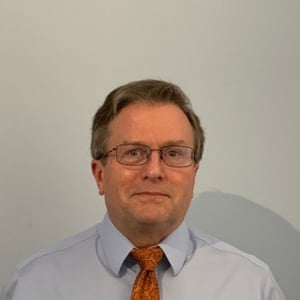
Partner, Winston & Strawn LLP
Gordon Coffee is a litigation partner in the firm’s Washington, D.C. office. Coffee’s success in litigating multimillion-dollar claims by and against energy companies has led to his being repeatedly recommended for energy litigation by Legal 500. Among the energy companies for whom he has served as lead trial counsel are Midland Cogeneration Venture, Allegheny Energy Supply, and USGen New England. Coffee also has effectively represented several other businesses in complex commercial litigation at the trial and appellate levels.
Besides commercial litigation, Coffee has defended energy and health-care companies in battles with federal agencies in federal court and administrative proceedings. He recently won summary judgment for a company seeking a multimillion-dollar refund from a federal agency and assisted hydroelectric generators in challenging onerous license conditions imposed by another federal agency. In the health-care arena, he convinced the D.C. Circuit to overturn regulations issued by the Centers for Medicare and Medicaid Services that prohibited physicians from charging technical fees for surgical procedures on a per-use basis, and he secured an injunction barring the Department of Health and Human Services from enforcing Stark Act regulations against lithotripsy providers.
Moreover, Coffee has successfully represented several energy companies in federal agency investigations. Notably, he has secured nearly a dozen favorable resolutions of Federal Energy Regulatory Commission (FERC) and North American Electric Reliability Corporation (NERC) investigations and audits. In several cases, he persuaded FERC or NERC to take no adverse action against the company or to dismiss proposed notices of violations. In other instances, his efforts resulted in substantial reductions in penalties proposed by the agency and helped his clients avoid expensive mitigation and compliance plans.
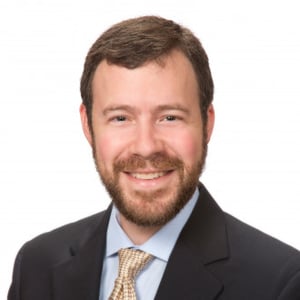
Director, Electricity Law Initiative, Harvard Law School
Ari Peskoe is the Director of the Electricity Law Initiative at the Harvard Law School Environmental and Energy Law Program. He has written extensively about electricity regulation, on issues ranging from Constitutional challenges to states’ energy laws to federal regulation of distributed energy resources. Prior to the Environmental and Energy Law Program, Ari was an associate at a law firm in Washington, D.C. where he litigated before the Federal Energy Regulatory Commission about the Western Energy Crisis. Before that, Ari was a Peace Corps Volunteer in Ghana and spent two years trying to bring the 2012 Olympics to New York. He received his J.D. from Harvard Law School and graduated from the University of Pennsylvania with degrees in electrical engineering and business.
Partner, Winston & Strawn LLP
Gordon Coffee is a litigation partner in the firm’s Washington, D.C. office. Coffee’s success in litigating multimillion-dollar claims by and against energy companies has led to his being repeatedly recommended for energy litigation by Legal 500. Among the energy companies for whom he has served as lead trial counsel are Midland Cogeneration Venture, Allegheny Energy Supply, and USGen New England. Coffee also has effectively represented several other businesses in complex commercial litigation at the trial and appellate levels.
Besides commercial litigation, Coffee has defended energy and health-care companies in battles with federal agencies in federal court and administrative proceedings. He recently won summary judgment for a company seeking a multimillion-dollar refund from a federal agency and assisted hydroelectric generators in challenging onerous license conditions imposed by another federal agency. In the health-care arena, he convinced the D.C. Circuit to overturn regulations issued by the Centers for Medicare and Medicaid Services that prohibited physicians from charging technical fees for surgical procedures on a per-use basis, and he secured an injunction barring the Department of Health and Human Services from enforcing Stark Act regulations against lithotripsy providers.
Moreover, Coffee has successfully represented several energy companies in federal agency investigations. Notably, he has secured nearly a dozen favorable resolutions of Federal Energy Regulatory Commission (FERC) and North American Electric Reliability Corporation (NERC) investigations and audits. In several cases, he persuaded FERC or NERC to take no adverse action against the company or to dismiss proposed notices of violations. In other instances, his efforts resulted in substantial reductions in penalties proposed by the agency and helped his clients avoid expensive mitigation and compliance plans.
Director, Electricity Law Initiative, Harvard Law School
Ari Peskoe is the Director of the Electricity Law Initiative at the Harvard Law School Environmental and Energy Law Program. He has written extensively about electricity regulation, on issues ranging from Constitutional challenges to states’ energy laws to federal regulation of distributed energy resources. Prior to the Environmental and Energy Law Program, Ari was an associate at a law firm in Washington, D.C. where he litigated before the Federal Energy Regulatory Commission about the Western Energy Crisis. Before that, Ari was a Peace Corps Volunteer in Ghana and spent two years trying to bring the 2012 Olympics to New York. He received his J.D. from Harvard Law School and graduated from the University of Pennsylvania with degrees in electrical engineering and business.
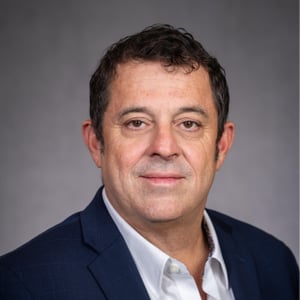
Senior Fellow for Law, Economics, and Technology, The Heritage Foundation; Professor, Florida International University
Mario Loyola is a Senior Fellow for Law, Economics, and Technology at The Heritage Foundation.
Loyola served in the Trump Administration as Associate Director for Regulatory Reform at the White House Council on Environmental Quality. In that role, he was one of the principal drafters of the One Federal Decision policy, which helped to streamline the permitting and environmental review of large infrastructure projects. While at CEQ, he was a member of the U.S. delegation to the USMCA free trade negotiations with Mexico and Canada, as well as the United Nations conference on biodiversity on the high seas. Loyola initially joined the White House in February 2017 as a Presidential Speechwriter, employing his expertise in many areas of foreign and domestic policy.
After beginning his career in M&A and corporate finance law, Loyola served in the Bush 43 Administration as a special assistant to the Undersecretary of Defense for Policy. He left that position to start writing on national defense issues in magazines such as National Review and The Weekly Standard, reporting from the front lines of the war on terrorism in Lebanon, Israel, and Iraq. He finished the Bush Administration as Foreign and Defense Counsel to the U.S. Senate Republican Policy Committee, then under the chairmanship of Senator Kay Bailey Hutchison of Texas. He subsequently moved to Texas and joined the Texas Public Policy Foundation, where he specialized in energy, environment, and federalism.
Loyola is a frequent contributor to The Wall Street Journal, National Review, and The Atlantic, among others. He teaches environmental and administrative law at Florida International University, where he is Founding Director of the Environmental Finance and Risk Management program in FIU’s prestigious Institute of Environment. He received a bachelor’s degree in European history from the University of Wisconsin–Madison and a J.D. from Washington University School of Law.

Recent Strains on Cooperative Federalism in the Energy Sector
Gordon Alan Coffee, Ari Peskoe
In statutes such as the Federal Power Act and Clean Water Act, Congress divided responsibility...
Recent Strains on Cooperative Federalism in the Energy Sector
TeleforumCooperative Federalism" and the Federal Takeover of State Government
New York, New YorkThe Future of Federalism Conference
Federalism & Separation of Powers Practice Group
Washington, DC