

Trial Lawyer, Bennett Legal
Charles Bennett is the driving force behind Bennett Legal, a nationally recognized law firm specializing in winning Personal Injury cases. He is one of the nation’s top trial attorneys and consultants. He is invited to speak and teach nationwide, educating lawyers on tactics, tips, and procedures that empower them to take on the insurance companies and get significantly improved results. Charles has secured record-breaking results in a variety of categories, including: commercial/18-wheeler crashes, wrongful deaths with a specialty in negligent landlord cases, traumatic brain damage cases, motor vehicle crashes, and workplace injuries.
Charles is highly regarded among his peers as a top lawyer in his field. Whenever other trial lawyers face complex cases and need guidance, they turn to Charles Bennett for his expert advice. He has gained extensive knowledge and experience as a principal of Trial Structure LLC, an educational corporation that catered specifically to trial lawyers. He worked on thousands of cases with a diverse range of lawyers across the nation. He is known as the “lawyer’s lawyer” because of his reputation for trial skills and collaberation. Lawyers often partner with him on their difficult cases to maximize the results.
Charles is now the captain of the Justice College, an institution whose mission is to empower lawyers to face billion-dollar insurance companies without feeling overwhelmed. Charles and the instructors at the Justice College form a special forces unit of trial excellence capable of defeating any insurance team they face. The Justice College graduates become lifelong members of a tribe that share experiences to help the community stay at the top of their game and increase case value.
Charles is a cum laude graduate of SMU Dedman School of Law. Before pursuing law, he had an outstanding career as a college basketball player at Midwestern State University, where he exhibited excellent leadership skills and athleticism. He played professional basketball in Europe. Playing at the professional level necessitates an incredible work ethic, the ability to cooperate and work as a team, and competitiveness that he now applies in the courtroom with spectacular success.
During law school, Charles’s amazed everyone with his initiative and capability by obtaining international arbitration awards for professional basketball players and agents. Recognized as a member of The National Trial Lawyers Top 40 Under 40 and nominated as a Rising Star by Thomson Reuters, Charles’s legal acumen and commitment to excellence make him your best choice when you can’t afford to lose.
He and the Bennett Legal team actively engage in charitable events, reflecting their commitment to giving back and building meaningful connections within their local communities.
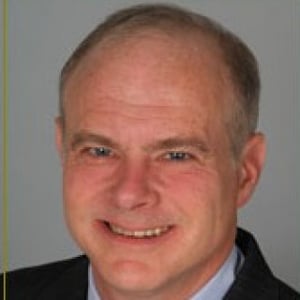
Partner, The Loree Law Firm
Philip J. Loree Jr. is the principal of The Loree Law Firm. He has 30 years of experience representing clients in complex disputes before federal and state trial and appellate courts, and arbitration panels, particularly in domestic and international arbitration-law, reinsurance, insurance, and other business and commercial disputes.
Before forming Loree & Loree in 2008 he practiced for nearly 17 years with one of the leading reinsurance practice groups in the United States, and was a litigation partner at two prominent New York City law firms, Rosenman & Colin LLP (now Katten-Muchin Rosenman LLP) and Cadwalader, Wickersham & Taft LLP. When Philip J. Loree Sr. retired from the practice of law in 2020, Philip J. Loree Jr. (“Mr. Loree” or “Loree”) continued the practice of Loree & Loree as The Loree Law Firm.
Mr. Loree has extensive experience arbitrating and litigating matters involving nearly every significant, reinsurance-related issue, including statutory and GAAP reinsurance accounting; transfer of insurance risk; independent auditor liability; fraud and rescission; London Market disputes; pool administration; insolvencies; follow-the- fortunes and follow-the-settlements; allocation of environmental liability and asbestos settlements; number of occurrences; trigger of coverage; multi-year policy issues; interpretation of reinsurance contracts and insurance policies; underwriting practices; reserving; set off; late notice; pre-hearing and pre-answer security; utmost good faith; bad faith; allocation and recovery of declaratory judgment expenses; and liability of intermediaries, managing general agents and brokers. He has also handled coverage litigation. He has counseled clients in contentious and non-contentious matters involving insurance coverage; regulatory compliance; Office of Foreign Asset Control (“OFAC”) sanctions; reinsurance or insurance coverage for hurricane or storm damage; commutations; internal reinsurance reviews; contract and policy interpretation; Bermuda Form polices; property insurance, including insurance of a major oil rig; life reinsurance; life settlements; risk transfer; and other issues.
He has also represented and counseled clients in arbitration and litigation concerning commercial and business contracts, business torts, and fraudulent transfers.
As a partner at Cadwalader, Wickersham & Taft LLP he played key roles in a number of high-profile matters. He was a member of the four-partner trial team that obtained a $1.1 billion arbitration award in favor of a large, Japanese insurance and reinsurance company against Fortress Re, Inc., the manager of what was once one of the world’s largest aviation reinsurance pools. The arbitration concerned, among other things, Fortress Re’s accounting and reporting practices for financial reinsurance, and the $1.1 billion award is reputed to be the largest in the history of reinsurance arbitration.
He was also a key member of the team that represented the same Japanese insurance and reinsurance company in the related action it brought against Deloitte & Touche, LLP, the independent auditor of the Fortress Re Pool, seeking more than $1 billion in damages. That matter resulted in what was at the time reputed to be the second largest settlement of an independent auditor liability case in history. He and his former partners also represented a large, international reinsurance company in an internal review of finite reinsurance transactions that resulted in a restatement of earnings.
Mr. Loree also has extensive experience and expertise in practice and procedure under the Federal Arbitration Act, including matters arising under the Convention on the Recognition and Enforcement of Foreign Arbitral Awards, and is a recognized commentator on U.S. arbitration-law matters. He has represented clients in numerous proceedings involving the enforcement of arbitration agreements and the confirmation and vacatur of arbitration awards arising out of industry, commercial, business contract, employment, and trust arbitrations.
He argued Nationwide Mut. Ins. Co. v. Home Ins. Co., 429 F.3d 640 (6th Cir. 2005), which rejected an evident partiality and excess of powers challenge to a favorable award he helped his client obtain. Considering for the first time what legal standard should apply to an evident partiality challenge based on a party-appointed arbitrator’s alleged failure to disclose purported conflicts of interest, the United States Court of Appeals for the Sixth Circuit rejected the challenging party’s argument that the district court applied the wrong standard. Courts, treatises and commentators have cited Nationwide extensively.
As a Loree & Loree partner he obtained on behalf of an English client partial vacatur of a reinsurance arbitration award in the United States District Court for the Southern District of New York. The final award provided that the arbitration panel would remain constituted until the parties agreed that it should disband. When the arbitration panel would not disband after resolving all issues the parties submitted to it, his client petitioned the Court for an order vacating the retention-of-jurisdiction provision and confirming all other aspects of the award. He successfully convinced the Court to grant the petition in its entirety and hold that the retention-of-jurisdiction provision exceeded the arbitrators’ authority under Section 10(a)(4) of the Federal Arbitration Act. See KX Re Co. v. General Reinsurance Corp., 08 Civ. 7807 (SAS), 2008 WL 4904882 (S.D.N.Y. Nov. 14, 2008).
Loree argued on behalf of the prevailing party Certain Underwriting Members of Lloyds of London v. State of Florida, Department of Financial Services, 892 F.3d 501, 503-04 (2d Cir. 2018) in which the United States Court of Appeals for the Second Circuit held that “a party seeking to vacate an award under Section 10(a)(2) must sustain a higher burden to prove evident partiality on the part of an arbitrator who is appointed by a party and who is expected to espouse the view or perspective of the appointing party.” Id. “An undisclosed relationship between a party and its party- appointed arbitrator constitutes evident partiality, such that vacatur of the award is appropriate if[,]” explained the Court: “(1) the relationship violates the contractual requirement of disinterestedness [or another contractual requirement of the arbitration agreement]; or (2) it prejudicially affects the award.” 892 F.3d at 504 (citations omitted). (Read more about the case here.)
Loree is a prolific and skilled writer. He has written extensively on reinsurance and arbitration-related matters, and is the editor-in-chief of the Arbitration Law Forum (formerly the Loree Reinsurance and Arbitration Law Forum) (http://www.LoreeLawFirm.com/blog), which regularly posts online articles of interest concerning reinsurance and commercial and industry arbitration. In addition to the more than 300 articles he has published in The Arbitration Law Forum (and in its predecessor, the Loree Reinsurance and Arbitration Law Forum), he has written articles published in the New York Law Journal, the National Law Journal, U.S. Insurer, Global Reinsurer, and other publications, as well as several articles for Alternatives to the High Cost of Litigation, the newsletter of the International Institute for Conflict Prevention and Resolution (“CPR”).
Mr. Loree’s publications include:
CPR conducted in 2020 several video conference interviews of Loree, and his friend, former trial judge, and fellow arbitration-law practitioner, Richard D. Faulkner, about various controversial arbitration issues pertaining to matters the U.S. Supreme Court either has been asked to hear. Links to those videos can be accessed here.
Mr. Loree’s speaking engagements include:
The Loree Law Firm’s predecessor practice, Loree & Loree, was selected by Expertise.com out of a group of 1,763 persons or firms reviewed as one of Expertise.com’s top 18 “Arbitrators & Mediators” in New York City for 2019, and now for 2020. (See here and here.)
His comments on arbitration matters have been quoted by Global Arbitration Review, a London-based trade publication that covers international arbitration; Business Insurance, and U.S. Law Week.
Loree obtained his B.A. from New York University in 1986 and his J.D. from Brooklyn Law School in 1989, where he was the Editor-in-Chief of the Brooklyn Journal of International Law, a Dean’s Merit Scholar, and a member of the Dean’s List.
He is admitted to practice in the State of New York, and in the United States District Courts for the Southern and Eastern Districts of New York, the United States District Court for the District of Connecticut, and the United States Courts of Appeals for the Second, Sixth, and Eighth Circuits.
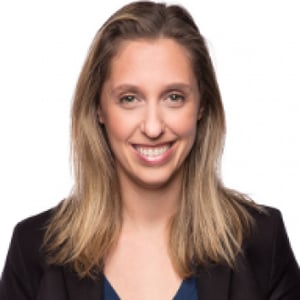
Tamar is an Assistant Professor. She holds a J.D. degree from the University of British Columbia, and a B.A. (Hons), LL.M., and SJD degrees from the University of Toronto.
Tamar practiced international commercial arbitration in a law firm in Vancouver and as Deputy Counsel at the International Court of Arbitration of the International Chamber of Commerce in Paris. She also acted as legal advisor to the Jerusalem Arbitration Center in Israel and Palestine and was a Graduate Fellow with the conflict resolution group of The Carter Center in Atlanta.
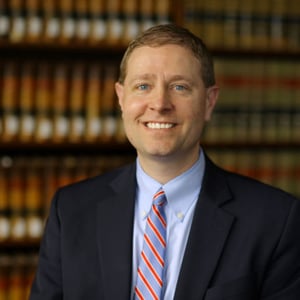
Executive Director, Salmon P. Chase Center for Civics, Culture, and Society, The Ohio State University
Professor Lee J. Strang serves as the inaugural executive director of the Salmon P. Chase Center for Civics, Culture, and Society at The Ohio State University.
Initiated in 2023 by the state of Ohio, the Chase Center will be an academic home at Ohio State for teaching, research, and programing on the foundations of the American constitutional order and its impact on society. As executive director, Professor Strang is responsible for organizing the center, overseeing the hiring and appointment of the center’s faculty, developing curriculum, and delivering student and academic programming. He also holds a faculty appointment in the Moritz College of Law at Ohio State.
Professor Strang is a nationally recognized legal scholar who has published dozens of articles in leading journals in the fields of constitutional law and interpretation, property law, and religion and the First Amendment. He co-edits the textbook Federal Constitutional Law, and his most recent book, Originalism’s Promise: A Natural Law Account of the American Constitution is the first book-length, natural law justification for originalism. He currently is writing on civic thought and leadership, and he is finalizing a book on the history of American Catholic legal education (with John M. Breen).
Before joining Ohio State, Professor Strang served as the inaugural director of the University of Toledo’s Institute of American Constitutional Thought & Leadership. He joined the Toledo College of Law faculty in 2008, was granted tenure in 2010, and was named John W. Stoepler Professor of Law & Values in 2015. The University of Toledo awarded Professor Strang its Outstanding Faculty Research and Scholarship Award in 2017. Before that, he was a visiting professor at Michigan State University College of Law. A graduate of the University of Iowa, where he was articles editor of the Iowa Law Review and Order of the Coif, Professor Strang holds an LL.M. degree from Harvard Law School.
Professor Strang has been a visiting scholar at the Georgetown Center for the Constitution and a visiting fellow at the James Madison Program at Princeton University. In 2016, he was appointed to the Ohio Advisory Committee of the U.S. Commission on Civil Rights and reappointed as chair in 2023.
Prior to teaching, Professor Strang served as a judicial clerk for Judge Alice M. Batchelder of the U.S. Court of Appeals for the Sixth Circuit. He was also an associate for Jenner & Block LLP in Chicago, where he practiced in general and appellate litigation.
Professor Strang is a frequent presenter at scholarly conferences. He is the president of the Board of Trustees of Northwest Ohio Classical Academy, Ohio’s first classical charter school. He is also a regular participant in debates at law schools across the country, a contributor to the media, and a speaker to political, civic, and religious groups.

Visiting Associate Professor of Law and Research Fellow for the Study of Objectivism
An accomplished scholar on Objectivism and privacy law, Professor Amy Peikoff has served as a faculty member at universities around the country over the past decade, teaching and writing in the areas of Contemporary Moral Problems, Contracts, Ethics, Information Privacy Law, Morality and Business, Philosophy of Law, Political Philosophy and Professional Responsibility. She served as a visiting lecturer at the University of Texas at Austin in 2003, a visiting assistant professor at the University of North Carolina at Chapel Hill in 2004, an assistant and associate professor at the U.S. Air Force Academy from 2005 to 2008, and as a visiting fellow at Chapman University School of Law from 2008 to 2012.
She joined Southwestern’s adjunct faculty in January 2013, also serving as a research fellow, and was appointed as Visiting Associate Professor and Research Fellow for the Study of Objectivism at Southwestern in July 2014. She is teaching courses in Law and Literature, Education Law and Jurisprudence Seminar. In her role as a Research Fellow, Professor Peikoff will engage in scholarly work related to the philosophy and writings of Ayn Rand. The Fellowship is funded by the Anthem Foundation for Objectivist Scholarship.
In trying to convey to her students some effective ways to approach their studies, Professor Peikoff shares what she found to be true in her own law school career. “If you care about what the law says about a particular issue, you will remember it and do better on exams,” she says. “Always try to connect what you're learning in school to things and people you value.”
Professor Peikoff’s articles have been published in a variety of scholarly journals such as Brandeis Law Journal, NYU Journal of Law & Liberty, St. John’s Law Review and Virginia Journal of Social Policy & The Law, among others. She has lectured and served as a panelist on privacy issues and individual rights at dozens of Objectivist conferences and scholarly forums around the country, including DePaul College of Law, Keck Graduate Institute, Stanford, UCLA and University of Texas at Austin, as well as the Liberty Conference in Brazil.
Professor Peikoff finds the most exciting aspect of her area of interest to be “seeing a problem and coming up with a solution that can affect something you care about.” For example, after writing about privacy issues for many years, she found her interest waning, until the 2012 Supreme Court decision in United States v. Jones inspired her to solve the problem of the "third-party doctrine" and, one year later, “Edward Snowden's revelations made that solution more relevant than ever.”
Senior Research Fellow (Wolfson College); Fellow (Lauterpacht Centre for International Law), Faculty of Law, University of Cambridge
Over twenty years' experience as legal adviser, advocate, and strategist in complex multi-jurisdiction matters across several substantive fields, including public international law, international investment protection, trade law, and law of the sea. Academic writings on international arbitration, international organizations, use of force, State immunity, State succession, recognition of States, artificial intelligence, law & technology.

Stevenson Bernard Professor, George Washington University Law School
The Honorable F. Scott Kieff is the Stevenson Bernard Professor at George Washington University Law School and a Visiting Fellow at Stanford University’s Hoover Institution.
He served as Commissioner of the U.S. International Trade Commission from 2013-2017. He also served during the Bush, Obama, and Trump Administrations in the part-time leadership of the national security defense-intelligence community.
He was previously a professor of law and medicine at Washington University in Saint Louis and a Senior Fellow at Hoover. A former law clerk to U.S. Circuit Judge Giles S. Rich, he is a graduate of Penn Law School and MIT, where he studied molecular biology and microeconomics. He was elected to the European Academy of Sciences and Arts in 2012 and the Academia Europaea in 2024.
His private sector work through Kieff Strategies LLC (www.kieffstrategies.com) provides neutral services including mediation and compliance, and expert services including crisis management, advising, and testimony.

Former Chief Judge, United States Court of Appeals for the Federal Circuit
Judge Michel served for more than 22 years on the Federal Circuit, retiring on May 31, 2010. From December 25, 2004 until his retirement, he also discharged the duties of Chief Judge of this national court, serving simultaneously on the U.S. Judicial Conference -- the Judiciary's governing body -- and by appointment of the Chief Justice on its seven-judge Executive Committee.
He judged several thousand appeals and authored more than 800 opinions, one third concerning intellectual property law. Intellectual Asset Management magazine inducted him into its Hall of Fame and he was designated one of the 50 most influential leaders in intellectual property law in the world. His contributions were also recognized by lifetime achievement and similar awards by the American Intellectual Property Law Association (AIPLA); Intellectual Property Owners Education Foundation (IPO); the American Bar Association's Intellectual Property Section; Managing Intellectual Property magazine; the Sedona Conference; the Patent and Trademark Office Society (PTOS); the New York, Chicago, Philadelphia, and Los Angeles Intellectual Property Law Associations; and the William C. Connor, the Giles S. Rich, and the Richard Linn Intellectual Property American Inns of Court. In 2010 the Los Angeles IP Inn was renamed in his honor as the Paul R. Michel IP Inn.
Judge Michel received the Jefferson Medal, the Eli Whitney Award, and the Katz-Kiley Prize as well as Honorary Doctor of Law degrees from the Catholic University of America and the John Marshall Law School. He is a lifetime Member of Honore of FICPI, the international association of private practitioners of intellectual property law. Williams College granted him the Kellogg Award for "outstanding leadership in law and public service."
Judge Michel has written numerous articles on patent law and advocacy, taught related courses and master classes at George Washington University, the University of Akron, and John Marshall law schools, serving as well on their IP advisory boards and on counterpart boards at the universities of California (Berkley), Washington, and Maryland. He co-authored a casebook, Patent Litigation and Strategy (West, 1999) and an August 2010 editorial in the New York Times on strengthening the patent system to promote prosperity and create new jobs.
A frequent speaker at conferences and law schools during his judicial tenure and since, he retired from a lifetime appointment to be free to speak out on the national need for better patent policy and protection of intellectual property and the vital, unmet resource needs of the courts, the PTO, the International Trade Commission, and other IP-related agencies. He was appointed Distinguished Scholar in Residence by IPO, following his retirement. Judge Michel also consults for law firms and their clients in intellectual property litigations, conducting moot courts, mock trials, case evaluations, editing briefs, advising on strategy and providing mediation and arbitration services.

Vice President for Legal Strategy, Stand Together
Casey Mattox is Vice President for Legal Strategy at Stand Together and Senior Advisor at
Americans for Prosperity. In these roles he advocates for and creates strategies and
partnerships to ensure a constitutionally limited government that protects the civil liberties of all
Americans. Prior to joining Stand Together and AFP Casey’s legal career focused on defending
the First Amendment rights of students, faculty, healthcare workers and religious organizations.
Casey has a J.D. from Boston College School of Law and an undergraduate degree from the
University of Virginia. You can find him on Twitter at @CaseyMattox_ and on LinkedIn at
@Casey-Mattox-ST.
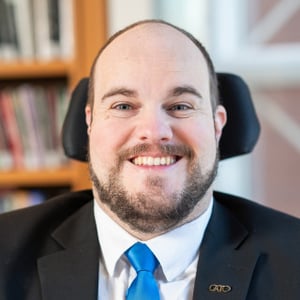
Director, Project on Criminal Justice, Cato Institute
Matthew Cavedon is the Director of the Cato Institute’s Project on Criminal Justice. He focuses on reforming plea-driven mass adjudication, ensuring police accountability, and defending constitutional criminal originalism. Cavedon’s scholarship has been published (or is forthcoming in) publications including the Arizona State Law Journal, Cato Supreme Court Review, Seattle University Law Review, and Georgetown Journal of Law and Public Policy. Formerly a Georgia public defender and fellow at the Institute for Justice, Cavedon has taught law school courses on criminal law and procedure, as well as the First Amendment. Cavedon clerked for a U.S. district court and the Supreme Court of Georgia. He came to Cato following a fellowship at the Emory University Center for the Study of Law and Religion.
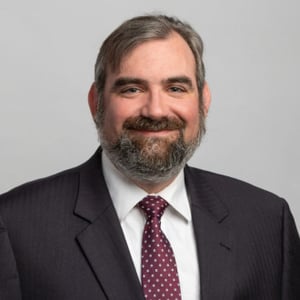
Senior Attorney, Institute for Justice
Robert Frommer serves as a senior attorney with the Institute for Justice. He joined the Institute in August 2008 and is currently litigating on behalf of SpeechNow.org, a group challenging the federal campaign finance laws regarding free speech.
Before joining IJ, Robert was an attorney with the Washington, D.C., office of Gibson, Dunn & Crutcher LLP, where he litigated both complex litigation and public-interest matters. He is a former law clerk to Judge Morris Sheppard Arnold of the U.S. Court of Appeals for the Eighth Circuit.
Robert received his law degree magna cum laude from the University of Michigan Law School in 2004, where he was elected to the Order of the Coif and served as both a book review editor for the Michigan Law Review and president of the Federalist Society student chapter. Before going to law school, Robert earned a master's degree in economics from George Mason University.
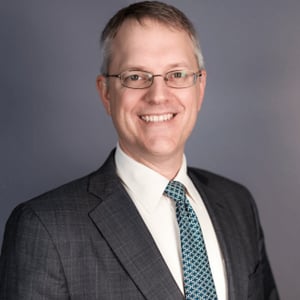
President and General Counsel, New Civil Liberties Alliance
NCLA’s President and General Counsel, Mark Chenoweth, has observed the administrative state up close and personal from perches in all four branches of the federal government. Mark served as the first chief of staff to Congressman Mike Pompeo, as legal counsel to Commissioner Anne Northup at the U.S. Consumer Product Safety Commission, as an attorney advisor in the Office of Legal Policy at the U.S. Department of Justice, and as a law clerk to the Hon. Danny J. Boggs on the U.S. Court of Appeals for the Sixth Circuit.
Mark has worked in several different roles in the private sector as well. He began his legal career in D.C. as a regulatory associate at Wilmer, Cutler & Pickering. He then returned to his home state of Kansas to serve as in-house counsel for Koch Industries. Most recently he spent over four years as general counsel of the Washington Legal Foundation.
Mark is a graduate of Yale College and the University of Chicago Law School, where he co-founded the Institute for Justice Clinic on Entrepreneurship and became a Tony Patiño Fellow. Mark has been widely quoted and/or published in newspapers and websites including the New York Times, San Francisco Chronicle, New Hampshire Union Leader, and Metropolitan Corporate Counsel. He has also had recurring op-eds in the Los Angeles Daily Journal, and at Forbes.com.
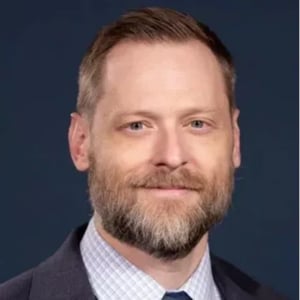
Litigation Director, Center for Individual Rights
Caleb Kruckenberg is CIR’s Litigation Director.
Caleb previously worked as a prosecutor, a public defender, a lobbyist for a national advocacy organization and, most recently, an impact litigator protecting the separation of powers at both the Pacific Legal Foundation and the New Civil Liberties Alliance. He has won major victories against numerous federal agencies, including the U.S. Department of Justice, Department of Labor, Bureau of Alcohol Tobacco and Firearms, and the Securities and Exchange Commission. He is also proud to have sued every U.S. attorney general, eight so far, since he has been litigating against the government on behalf of liberty-minded clients. Caleb has also argued more than 20 times in the U.S. Courts of Appeals, winning cases in 8 of the 12 regional circuit courts.
He graduated cum laude from Temple University Beasley School of Law in Philadelphia, where he was the lead articles editor for the Temple Law Review. Caleb also attended the Pennsylvania Academy of the Fine Arts, where he studied figurative painting.
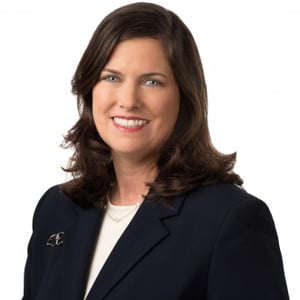
Partner, Nelson Mullins Riley & Scarborough LLP
Erika C. Birg is a partner based out of the Atlanta office of Nelson Mullins Riley & Scarborough LLP. She focuses her practice on helping companies protect their businesses before, during, and after litigation, with experience in resolving business-to-business disputes through litigation, alternative dispute resolution, and state and federal appeals involving business torts, contract disputes, trade secrets, misappropriation, computer fraud, and non-compete matters.

Recent Supreme Court Decisions: Implications for the Business World
Charles Bennett, Philip J. Loree
The U.S. Supreme Court continues to shape arbitration law through a strict interpretation of the...
Coinbase, Inc. v. Suski - Post-Decision SCOTUScast
Tamar Meshel
On May 23, 2024, the Supreme Court issued its ruling in Coinbase, Inc. v. Suski. At...
Challenges to Originalism VI: Originalism is Unjust
Lee J. Strang
The Federalist Society's Student Division & Georgetown Law Student Chapterpresent Challenges to Originalism VI:...
Third Parties and the Fourth Amendment [The FedSoc Films Podcast]
Amy Peikoff
In this episode of the FedSoc Films Podcast, Amy Peikoff, Chief Policy Officer at BitChute,...
New York v. New Jersey - Post-Decision SCOTUScast
Daniel Barnhizer
On April 18, 2023, the Supreme Court issued its ruling in New York v. New...
A Response to: Ten Years On: The America Invents Act and the role of the Patent Trial and Appeal Board in resolving patent disputes
Thomas D. Grant, F. Scott Kieff, Paul Redmond Michel
Join us on July 27 to hear three experts give a response to our April...
Litigation Update: Meriwether v. Hartop
Casey Mattox
In a decision issued on March 26, 2021, the Sixth Circuit held Professor Nicholas Meriwether,...
Courthouse Steps Decision Teleforum: Caniglia v. Strom
Matthew P. Cavedon, Robert Frommer
On May 17, 2021, the Supreme Court released its decision in Caniglia v. Strom, which focused...
Litigation Update: Brown v. Becerra
Mark Chenoweth, Caleb Kruckenberg
The U.S. Centers for Disease Control and Prevention (CDC) issued a moratorium on evictions nationwide...
Henry Schein Inc. v. Archer and White Sales Inc. - Post-Argument SCOTUSCast
Erika C. Birg
On December 18, 2020 the Supreme Court heard oral argument in Henry Schein Inc. v....