

Judge, United States Court of Appeals, Eighth Circuit
David Stras became a judge on the United States Court of Appeals for the Eighth Circuit on January 31, 2018. Before serving on the Eighth Circuit, Judge Stras was an Associate Justice of the Minnesota Supreme Court, a position he occupied from July 1, 2010 until his appointment to the Eighth Circuit.
Prior to becoming a judge, Stras was a member of the faculty of the University of Minnesota Law School from 2004 through 2010. He taught and wrote in the areas of federal courts and jurisdiction, constitutional law, criminal law, and law and politics.
Judge Stras received his Bachelor of Arts degree, with highest distinction, in 1995 and his Master of Business Administration in 1999, both from the University of Kansas. He also received his law degree from the University of Kansas School of Law in 1999, where he served as Editor-in-Chief of the Criminal Procedure Edition of the Kansas Law Review.
Following law school, Stras clerked for The Honorable Melvin Brunetti of the United States Court of Appeals for the Ninth Circuit and then for The Honorable J. Michael Luttig of the United States Court of Appeals for the Fourth Circuit.
From 2001 to 2002, he practiced white-collar criminal and appellate litigation with the Washington, D.C., office of Sidley Austin Brown & Wood. Following his year in practice, he clerked for The Honorable Clarence Thomas of the Supreme Court of the United States.
Michael Fox is a Legal Fellow in the Cato Institute's Project on Criminal Justice.
Michael Poon is an attorney in the Pacific Legal Foundation's Separation of Powers practice.
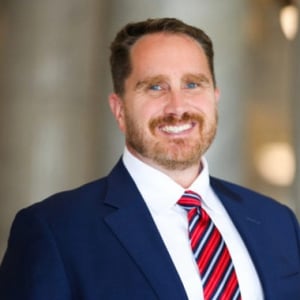
Criminal Deputy Attorney General, Utah Attorney General's Office
While in the U.S. Attorney’s Office in Utah, Stewart Young served as Senior Litigation Counsel and Training Officer. He also worked in the Financial Fraud Section, the Violent Crime Section, and the Narcotics Section. He has been lead or co-counsel on twenty felony jury trials and 22 appellate briefs. Young recently returned from Amman, Jordan, where he served as a counterterrorism prosecutor with the U.S. Department of Justice.
Young has investigated and prosecuted public corruption, bribery, mail/wire fraud, Ponzi schemes, criminal tax violations, narcotics trafficking, and continuing criminal enterprise. He has also trained federal prosecutors at the National Advocacy Center and been responsible for large-scale investigations involving multiple defendants relating to complex white-collar and securities violations, narcotics trafficking, and violent street gang-affiliated conspiracies.
Young, a Stanford Law School and Princeton University graduate, started his prosecutorial career as an Assistant U.S. Attorney in the Southern District of California. He spent several years as a tenure-track law professor at the University of Wyoming College of Law, teaching classes on criminal procedure, criminal adjudication, and border crimes. He also clerked at the U.S. Court of Appeals for the Ninth Circuit and for Judge Paul Cassell at the United States District Court for the District of Utah.
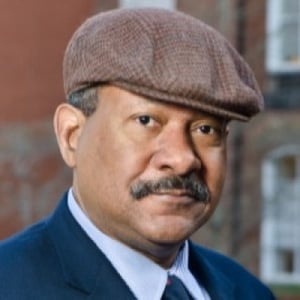
Harold Paul Green Research Professor of Law, George Washington University School of Law
Robert J. Cottrol joined the law school faculty in 1995 as a visiting professor of law of legal history. Previously, he taught at Rutgers University and Boston College, and had visited at the University of Virginia. As well as specializing in American legal history, Professor Cottrol has also taught torts and criminal law. His writings on law and history have appeared in the Yale Law Journal, Georgetown Law Journal, American Journal of Legal History, Law and Society Review, Slavery and Abolition: A Journal of Slave and Post-Slave Studies and American Quarterly, among others.
He is the author of The Afro-Yankees: Providence’s Black Community in the Antebellum Era (selected by Choice as an outstanding academic book for 1983), editor of Gun Control and the Constitution: Sources and Explorations on the Second Amendment (Book of the Month selection by the History Book Club), and From African to Yankee: Narratives of Slavery and Freedom in Antebellum New England (1998). Professor Cottrol’s book Brown v. Board of Education: Caste, Culture and the Constitution (2003) won the Langum Project Prize for Historical Literature in 2003 and was a “Book-of-the-Month” selection of the History Book Club. Most recently, he has authored The Long, Lingering Shadow: Slavery, Race, and Law in the American Hemisphere (2013).
He is currently doing research contrasting the role of law in the development of systems of slavery and racial hierarchy in the United States and Latin America. He has lectured on American law at the Federal Universities of Santa Catarina and Rio Grande do Sul in Brazil and the University of Buenos Aires and La Universidad del Museo Social in Argentina.
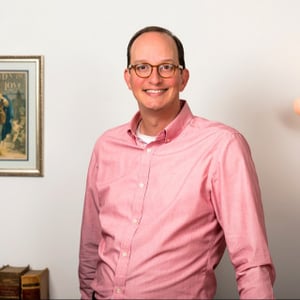
Jonathan Goldstein brings decades of experience as an entrepreneur and business owner to his law practice. Mr. Goldstein’s practice focuses on firearms law and election law as well as entrepreneurial business advising.
Mr. Goldstein is an NRA certified pistol instructor and a volunteer attorney for several firearms organizations including the National Rifle Association. He actively lectures on firearms law and firearms safety across Pennsylvania and is a frequent presenter for continuing legal education providers such as CAPE, NACLE and the Pennsylvania Bar Institute.
In May 2011, Mr. Goldstein was awarded the Defender of Justice Award by the National Rifle Association’s Institute of Legislative Action for his “tireless service to the Constitution and with particular emphasis on the protection and furtherance of the Second Amendment.”
Mr. Goldstein served for several years as a non-director member of the NRA board’s Legal Affairs Committee and was a member of the NRA’s 2016 Nominating Committee. In April 2025, he was elected to the NRA’s board and to the board’s Audit Committee. He currently chairs the NRA’s Finance Committee and serves as a member of the NRA’s Legal Affairs Committee as well as a trustee of the NRA’s Civil Rights Defense Fund.
A brief prepared by Mr. Goldstein on behalf of Black Guns Matter was cited favorably by Justice Alito in his Bruen concurrence.
Mr. Goldstein received his undergraduate degree from the University of Pennsylvania in 1993. He returned to the University of Pennsylvania for law school, earning his J.D. in 2005.
Mr. Goldstein is admitted to practice law in state and federal courts in Pennsylvania and New Jersey as well as Washington, D.C., several Circuit courts and the United States Supreme Court, where his firm argued a case in the 2023–2024 term.
In September 2025, Mr. Goldstein began teaching a course on Second Amendment law as an adjunct at the University of Pennsylvania Carey Law School. He regularly publishes scholarship on the 2nd Amendment:
https://hq.ssrn.com/
In addition to nearly a dozen scholarly articles on 2nd Amendment topics, he is the author of several books:
Essential Questions in Firearms Law: Why the Firearms Laws Are What They Are
https://www.amazon.com/
Pennsylvania Firearms Law: A Complete Overview
https://www.amazon.com/
Pennsylvania Hunting Law: A Complete Overview
https://www.amazon.com/dp/
In addition to practicing law, Mr. Goldstein is an active private equity investor purchasing and turning around small American manufacturing companies. Mr. Goldstein is also a licensed commercial pilot.
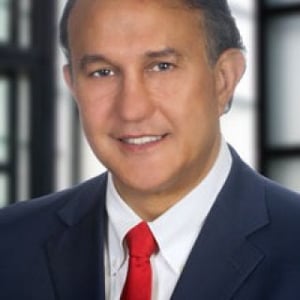
Francis Pileggi is the managing partner of the Wilmington office of Lewis Brisbois and is chair of the Directors & Officers Litigation Practice and a member of the Complex Business & Commercial Litigation Practice. His litigation practice emphasizes representation in high-stakes disputes of corporations, stockholders, members of boards of directors, members and managers of LLCs, and those with managerial or ownership interests in other forms of entities. He has extensive experience in matters involving fiduciary duties and corporate governance as well as summary proceedings under the Delaware General Corporation Law in the Delaware Court of Chancery. Francis has also been certified as a mediator.
He has been asked to testify as an expert witness on Delaware Corporate Law and Delaware LLC Law.
One of his law review articles on corporate law has been cited by both the Delaware Supreme Court and the Delaware Court of Chancery. The Delaware Superior Court also cited one of his articles. He has published over 1,000 articles in multiple publications on topics including corporate and commercial law as well as legal ethics and constitutional law. He also often speaks at seminars on those topics.
Francis created and maintains the Delaware Corporate and Commercial Litigation Blog at www.delawarelitigation.com, which was named one of LexisNexis’ Top 25 Business Law Blogs and was selected for inclusion in the ABA Journal’s Blog 100 in 2011 and 2012. In turn, he has been described as “a brand name in Delaware corporate litigation.”
He also has enjoyed success in litigating, in both federal and state appellate courts, groundbreaking Second Amendment cases and related constitutional issues on behalf of civil rights organizations. In 2015 and 2019, he was honored with The Chief Justice William Killen Award for Distinguished Second Amendment Appellate Advocacy.
Francis published a book entitled, American Legal Ethics: A Retrospective from 1997 to 2018 (Outskirts Press, 2018), available on Amazon.com.
Francis has represented townships in Delaware County and Chester County, Pennsylvania, as special counsel on litigation matters. He has also represented a school district in Delaware County and educational and nonprofit institutions in Pennsylvania and elsewhere on corporate governance, litigation, and related issues. He has represented governmental entities and private parties in connection with the Pennsylvania Right to Know Law, and he is the coeditor of a blog that provides commentary and insights on that law.
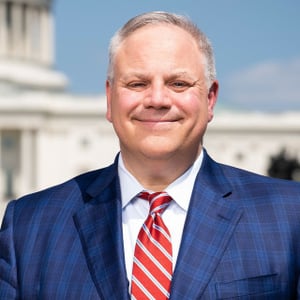
David Bernhardt served as the 53rd Secretary of the U.S. Department of the Interior. He was confirmed by the U.S. Senate on April 11, 2019 and took office on the same day. He began working for the United States Department of the Interior in 2001, and served as the department's solicitor from 2006 to 2009 and deputy secretary from 2017 to 2019.
David currently serves as the Chair of the Center for American Freedom at America First Policy Institute.
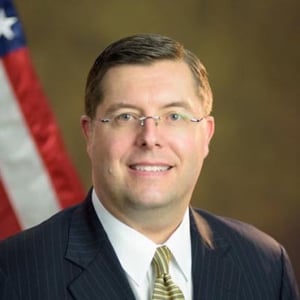
Chief Deputy Attorney General
Ryan Newman is currently Chief Deputy Attorney General for Florida Office of the Attorney General.
During the first Trump Administration, he served as Counselor to the United States Attorney General for national security and international affairs, Deputy General Counsel (Legal Counsel) for the Department of Defense, and Acting Assistant Attorney General for the Office of Legal Policy at the Department of Justice. Prior to serving in the Executive Branch, Ryan was Chief Counsel to United States Senator Ted Cruz during the 114th Congress.
Ryan served as a law clerk to the Honorable Samuel A. Alito, Jr. on the United States Supreme Court, the Honorable Richard J. Leon on the United States District Court for the District of Columbia, and the Honorable J.L. Edmondson on the United States Court of Appeals for the Eleventh Circuit.
Prior to law school, Ryan was an armor officer in the United States Army assigned to the 1st Squadron, 10th U.S. Cavalry Regiment (Buffalo Soldiers). He deployed to Iraq in 2003 for Operation Iraqi Freedom.
Ryan graduated from the United States Military Academy at West Point in 1998. He earned his law degree with high honors from The University of Texas School of Law in 2007.
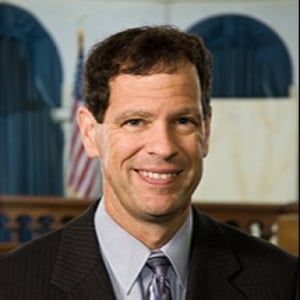
Warren Distinguished Professor of Law, University of San Diego School of Law
Michael D. Ramsey is Warren Distinguished Professor of Law at the University of San Diego School of Law, where he teaches and writes in the areas of Constitutional Law, Foreign Relations Law and International Law. He is the author of The Constitution’s Text in Foreign Affairs (Harvard University Press), co-editor of International Law in the U.S. Supreme Court: Continuity and Change (Cambridge University Press), and co-author of two casebooks, Transnational Law and Practice (2d ed., Aspen) and International Business Transactions: A Problem-Oriented Coursebook (14th ed., West). His scholarly articles have appeared in publications such as the Yale Law Journal, the University of Chicago Law Review, the Georgetown Law Journal and the American Journal of International Law. He received his B.A. magna cum laude from Dartmouth College and his J.D. summa cum laude from Stanford Law School. Prior to teaching, he served as a judicial clerk for Judge J. Clifford Wallace of the United States Court of Appeals for the Ninth Circuit and for Justice Antonin Scalia of the United States Supreme Court, and practiced law with the law firm of Latham & Watkins, where he specialized in international finance and investment. He has taught as a visiting professor at the University of California, San Diego, in the Department of Political Science and at the University of Paris – Sorbonne, in the Department of Comparative Law.

Partner, Clement & Murphy, PLLC
Erin Murphy is founding partner of Clement & Murphy, PLLC. She is widely recognized as one of the nation’s leading Supreme Court and appellate advocates. She has argued dozens of cases in appellate and trial courts throughout the country, including the Supreme Court and nearly all of the federal courts of appeals. Erin has long been ranked by Chambers & Partners rankings as a leading appellate practitioner, and the National Law Journal has named her one of the nation’s “Outstanding Women Lawyers.” Erin also has an active pro bono practice, through which she has successfully represented many religious organizations and adherents, criminal defendants, asylum applicants, adoptive parents, and more.
Erin is an adjunct professor at her alma mater the Georgetown University Law Center, a member and former officer of the Edward Coke Appellate Inn of Court, and a frequent speaker on topics relating to the Supreme Court and appellate advocacy. In her spare time, Erin serves on the board of directors of Street Law.
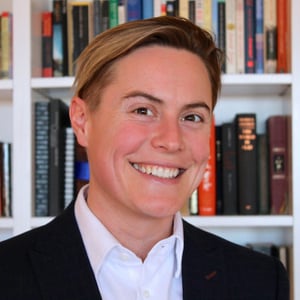
Associate Professor of Legal Studies & Business Ethics, The University of Pennsylvania Wharton School of Business
Amanda Shanor is an Assistant Professor at the University of Pennsylvania Wharton School, where her scholarship focuses on constitutional and administrative law, and in particular the First Amendment.
Shanor is a graduate of Yale Law School and Yale College, and a PhD candidate in law at Yale University. She served as a law clerk to Judges Cornelia T.L. Pillard and Judith W. Rogers on the D.C. Circuit, and Judge Robert W. Sweet in the Southern District of New York. She has taught at both Yale and Georgetown law schools and has published in the New York University Law Review, the Harvard Law Review Forum, and the Yale Law Journal Forum, among others. She is a contributor to Take Care and the co-author of a textbook on counterterrorism law.
Prior to joining the academy, Amanda worked in the National Legal Department of the American Civil Liberties Union on the organization’s Supreme Court litigation, including Masterpiece Cakeshop. Previously, she litigated a number of constitutional and national security cases with Professor David Cole, including Humanitarian Law Project v. Holder, while a fellow at Georgetown.
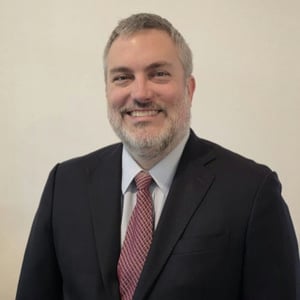
Host, The Prosecutors Podcast; Partner, Culper Law
Brett J. Talley is former a federal prosecutor (appellate chief in the Middle District of Alabama) and host of the true crime podcast "The Prosecutors." Brett has served as nominations chief and deputy assistant attorney general at the US Department of Justice, Advisor to the White House Counsel, speechwriter to Senator Rob Portman, a political and legal communications professional, deputy state solicitor general, staff writer for a presidential campaign, award-nominated horror fiction author (possibly related to the previous items on the list), US District and 11th Circuit judicial clerk, and adjunct law school professor. He is currently a partner ar Culper Law. Along the way, Brett has been involved at some level in the confirmation of a full majority of the sitting justices on the U.S. Supreme Court and scores of U.S. district and appellate court judges. A native Alabamian, Brett earned his undergraduate degree in History and Philosophy from the University of Alabama and JD from Harvard Law School. He lives in Montgomery with his wife Annie and their three small kids.
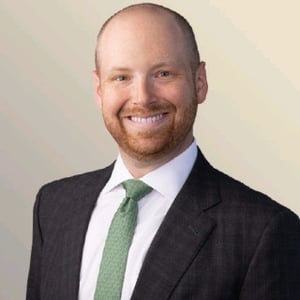
Solicitor General, Iowa Office of the Attorney General
Eric Wessan serves as Iowa’s Solicitor General in the Iowa Attorney General’s Office. In that role, Wessan leads Iowa’s litigation before State and federal appellate courts, including the Iowa and U.S. Supreme Courts. Before that role, Wessan worked on complex commercial litigation at two large law firms in Chicago. Wessan also served as a law clerk for the Honorable James C. Ho on the U.S. Court of Appeals for the Fifth Circuit and for the Honorable John F. Kness on the U.S. District Court for the Northern District of Illinois. Wessan is a graduate of the University of Chicago Law School, with honors, and of the University of Chicago.

Laurence H. Silberman Chair in Constitutional Governance, American Enterprise Institute; Executive Director, Antonin Scalia Law School’s C. Boyden Gray Center for the Study of the Administrative State
Adam J. White is the Laurence H. Silberman Chair in Constitutional Governance and senior fellow at the American Enterprise Institute, where he focuses on the Supreme Court and the administrative state. He also directs the Antonin Scalia Law School’s C. Boyden Gray Center for the Study of the Administrative State.
He writes on regulation and constitutional government for a variety of publications. He practiced law in Washington, D.C., after clerking for the D.C. Circuit's Judge David Sentelle. He also has been chairman of the ABA's Administrative Law Section.
In 2021, he served on the Presidential Commission on the Supreme Court of the United States, where he criticized “Court packing” and other efforts to restructure the Supreme Court.

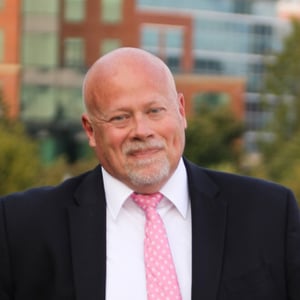
A Conversation With Judge Stras on the Law and the Courts
Arlington, VAFederal Overcriminalization and Originalism
Salt Lake City, UTThirteenth Annual Delaware Firearms Law Seminar
Delaware Lawyer Chapter
WIlmington, DENevada's Land Squeeze: Federal Land Disposal Unlocks the Door to Development
Las Vegas Lawyer Chapter
Las Vegas, NV2026 North Carolina Chapters Conference
Raleigh, NCSupreme Court Preview: What Is in Store for October Term 2026?
Erin E. Murphy, Amanda Shanor, Brett J. Talley, Eric Wessan, Adam White
Registration is now closed No registration is needed to view the live stream, which will be...
America 250: What Does It Mean to Be an American
Tallahassee Lawyer Chapter
Tallahassee, FL2026 Kentucky Chapters Conference
Lexington, KY2026 Texas Chapters Conference
Arlington, TX2026 — 2027 Supreme Court Roundup and Preview
Orange County Lawyer Chapter
Laguna Niguel, CA