
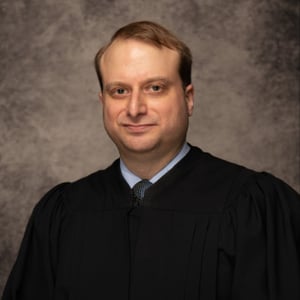
Judge, United States Court of Appeals, Second Circuit
Judge Menashi was appointed to the U.S. Court of Appeals for the Second Circuit on November 14, 2019. Previously, he served as special assistant and associate counsel to the President in the White House and as acting general counsel at the U.S. Department of Education. He was assistant professor of law at Scalia Law School, George Mason University, where he taught administrative law and civil procedure, and a research fellow at New York University School of Law and Georgetown University Law Center. He was also a partner at Kirkland & Ellis LLP in New York, where he practiced appellate and commercial litigation, and served as a law clerk to Justice Samuel Alito on the Supreme Court of the United States and to Judge Douglas Ginsburg on the U.S. Court of Appeals for the District of Columbia Circuit. He graduated from Stanford Law School, where he was elected to Order of the Coif and served as senior articles editor of the Stanford Law Review, and from Dartmouth College, where he was elected to Phi Beta Kappa.
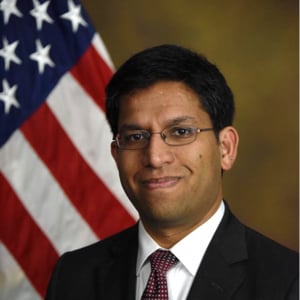
Partner, Jones Day
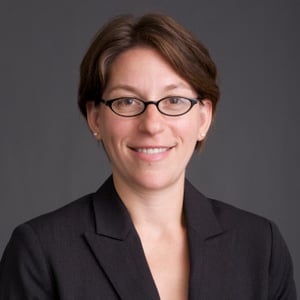
Professor of Law, Georgetown University Law Center
Eloise Pasachoff is Professor of Law, Anne Fleming Research Professor, and Associate Dean for Careers at the Georgetown University Law Center, where she specializes in the administrative law of federal funding. An award-winning teacher and scholar, she is a public member of the Administrative Conference of the United States and serves on the Academic Advisory Board of the Supreme Court Fellows program. She is a former law clerk to Justice Sotomayor (Supreme Court), Judge Robert A. Katzmann (Second Circuit), and Judge Jed S. Rakoff (Southern District of New York).
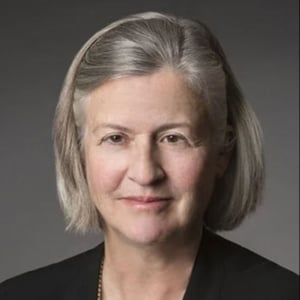
Partner, Sidley Austin LLP
Virginia Seitz is a partner in Sidley Austin’s Supreme Court and Appellate practice. On behalf of a wide range of clients, she has handled cases in the United States Supreme Court, in virtually all federal courts of appeals, and in state appellate courts. Virginia was counsel of record on the amicus brief on behalf of retired military officers in Grutter v. Bollinger, 539 U.S. 306 (2003), and Gratz v. Bollinger, 539 U.S. 244 (2003), which the Supreme Court cited at oral argument and in its opinion and which the New York Times piece noted “may have been the most influential amicus brief in the history of the Supreme Court.” She has handled an array of district court litigation involving important constitutional and federal law issues, including the Appropriations and Supremacy Clauses of the Constitution, the First Amendment, Title IX, Title VII, the Anti-Deficiency Act, ERISA, and federal labor laws.
Virginia returned to Sidley in 2014 after serving in the Senate-confirmed position of Assistant Attorney General for the Office of Legal Counsel in the Department of Justice. She was the first woman to be confirmed to that position. As the leader of that Office, Virginia was responsible for providing legal advice to the President and Executive Branch departments and agencies on issues of particular difficulty and importance. Virginia previously served as an appointee of the Chief Justice on the Advisory Committee on Civil Rules. In January 2017, she was elected to the American Law Institute. Earlier in her career, Virginia was confirmed by the Senate to the first Board of Directors of the Congressional Office of Compliance and served from May 1995 to 2000. Virginia has been recognized for her Appellate Law practice by Chambers USA, in The Legal 500 US in Litigation: Supreme Court and Appellate, and in The Best Lawyers in America.
Virginia clerked at the Supreme Court for Justice William J. Brennan, Jr., and before that for Judge Harry T. Edwards of the D.C. Circuit. She is a graduate of University at Buffalo Law School, received her M.A. from Oxford University where she was a Rhodes Scholar, and received her B.A. from Duke University, summa cum laude with distinction.
Partner, McGuireWoods LLP
Farnaz is a skilled litigator with extensive experience in representing employers and institutions of higher education, including academic medical centers, in breach of contract, constitutional, discrimination, and tort litigation. She has conducted investigations, advised clients on employment and education laws, and represented them before federal agencies, including the U.S. Department of Labor and U.S. Department of Education.
Farnaz successfully has defended employers, state agencies, government officials, and institutions of higher education in over 30 civil actions as first chair before federal and state courts as well as trial and appellate courts. Farnaz also has advised clients on investigations under civil rights laws such as Title VI of the Civil Rights Act of 1964 (discrimination based on race, color, or national origin), Title VII of the Civil Rights Act of 1964 (discrimination based on race, color, religion, sex, and national origin), and Title IX of the Education Amendments of 1972 (discrimination based on sex). Her deep knowledge of education laws and regulations includes the Higher Education Act of 1965, as amended; accreditation; borrower defense to repayment; gainful employment; financial responsibility standards; FERPA and other privacy laws; the Clery Act; and the Violence Against Women Act (VAWA).
Farnaz is experienced with student and employee disciplinary issues, including under Title IX, and has represented institutions in such matters in several of her previous roles. Representing institutions in Title IX cases requires a nuanced approach, as the institution must balance legal compliance with compassion and care, supporting victims while providing a fair process for both parties, including the accused. Farnaz strikes this balance and is a trusted resource for her clients.
Prior to joining McGuireWoods, Farnaz served as the Deputy General Counsel for Postsecondary Education at the U.S. Department of Education and also as in-house counsel at the University of Virginia. She advised the U.S. Department of Education on litigation strategy and worked closely with the U.S. Department of Justice in cases arising under federal antidiscrimination laws and the Administrative Procedure Act. Government officials also relied on her close counsel in preparation for congressional investigations and hearings. At the University of Virginia, she advised University officials on federal education and employment laws and represented the University and its academic medical center in litigation. She also drafted the University’s antidiscrimination and conduct policies, including free speech policies.
She began her legal career as a law clerk to the Honorable Eric G. Bruggink, Senior Judge, U.S. Court of Federal Claims, and later as a law clerk to the Honorable Leroy Rountree Hassell, Sr., the former Chief Justice, Supreme Court of Virginia.

Professor of Law, University of Michigan Law School
Professor Nicholas Bagley teaches and writes in the areas of administrative law, regulatory theory, and health law. Prior to joining the Law School faculty, he was an attorney with the appellate staff in the Civil Division at the U.S. Department of Justice, where he argued a dozen cases before the U.S. Courts of Appeals and acted as lead counsel in many more. Professor Bagley also served as a law clerk to Justice John Paul Stevens of the U.S. Supreme Court and to the Hon. David S. Tatel of the U.S. Court of Appeals, District of Columbia Circuit. Professor Bagley holds a BA in English from Yale University and received his JD, summa cum laude, from New York University School of Law. Before entering law school, he joined Teach For America and taught eighth-grade English at a public school in South Bronx. Professor Bagley's work has appeared in the Harvard Law Review, the Columbia Law Review, the Georgetown Law Journal, the New England Journal of Medicine, and the Journal of Health Politics, Policy, and Law. In 2012, he was the recipient of the Law School's L. Hart Wright Award for Excellence in Teaching. He is a frequent contributor to The Incidental Economist, a prominent health policy blog.
Maurice and Hilda Friedman Professor of Law, Columbia Law School; CEO, New Civil Liberties Alliance
Philip Hamburger is the Maurice and Hilda Friedman Professor of Law at Columbia Law School, and Chief Executive Officer at the New Civil Liberties Alliance. Before coming to Columbia, he was the John P. Wilson Professor at the University of Chicago Law School.
He writes on constitutional law and its history—with particular emphasis on religious liberty, freedom of speech and the press, judicial office, administrative power, and unconstitutional conditions.
His books are Separation of Church and State (Harvard 2002), Law and Judicial Duty (Harvard 2008), Is Administrative Law Unlawful? (Chicago 2014), The Administrative Threat (Encounter 2017), and Liberal Suppression: Section 501(c)(3) and the Taxation of Speech (Chicago 2018). A forthcoming book is Purchasing Submission: Conditions, Power, and Freedom (Harvard 2021).
He is a member of the American Academy of Arts and Sciences, and he has served on the board of directors of the American Society for Legal History. He has twice received the Sutherland Prize for the most significant contribution to English legal history, and has been awarded the Henry Paolucci - Walter Bagehot Book Award, the Hayek Book Prize, and the Bradley Prize.
Judge, U.S. Court of Appeals for the Third Circuit
Hon. Jennifer Mascott served as Associate Professor of Law and Director of the Separation of Powers Institute at The Catholic University of America’s Columbus School of Law before her appointment to the federal bench. On July 16, 2025, President Donald J. Trump nominated her to the U.S. Court of Appeals for the Third Circuit (Delaware), and she was confirmed on October 9, 2025.
Prior to her confirmation, Judge Mascott wrote extensively in administrative and constitutional law, statutory interpretation, and the separation of powers. Her scholarship—published in leading journals including the Stanford Law Review, Notre Dame Law Review, and Supreme Court Review—was cited by the U.S. Supreme Court and multiple federal courts. She also contributed Supreme Court commentary for NBC Universal.
Before joining Catholic Law, she was an Assistant Professor and Co-Director of The C. Boyden Gray Center at George Mason University’s Antonin Scalia Law School. In 2022 she became co-author of Beermann, Cass & Diver’s Administrative Law: Cases and Materials (9th ed.). In 2023 she received the Justice Joseph Story Award for excellence in scholarship, teaching, and advancing the rule of law.
Judge Mascott also served as a Council Member of the ABA’s Administrative Law Section and as a Public Member of the Administrative Conference of the United States. She frequently testified before Congress on executive power, regulatory reform, and judicial jurisdiction, and participated in multiple Supreme Court confirmation hearings.
From 2019 to 2021, she took leave from academia to serve as Deputy Assistant Attorney General in the Department of Justice’s Office of Legal Counsel and later as Associate Deputy Attorney General, where she argued federal cases and assisted with Justice Amy Coney Barrett’s confirmation. Earlier in her career, she clerked for Justice Clarence Thomas and for then-Judge Brett M. Kavanaugh on the D.C. Circuit.
Judge Mascott earned her J.D. summa cum laude from the George Washington University Law School and her B.A. from the same institution.
William K. Townsend Professor of Law, Yale Law School
Nicholas R. Parrillo is Townsend Professor of Law at Yale, with a secondary appointment as Professor of History. His research and teaching focus on administrative law and government bureaucracy and extend to legal history, remedies, and legislation. He has received the ABA’s award for the year’s best scholarship in administrative law and the Law and Society Association’s Hurst Prize for the year’s best book in legal history.
Parrillo’s Yale Law Journal article finding new originalist evidence of broad congressional delegations to agencies was discussed in the Solicitor General’s winning brief in the Supreme Court’s latest nondelegation case and in the en banc 5th Circuit opinion in that case. His Harvard Law Review article on how the judiciary handles the federal government’s disobedience to court orders has been discussed in The Washington Post, The Wall Street Journal, and The New York Times. Parrillo also authored a study that provided the empirical basis for best practices adopted by the Administrative Conference of the United States (ACUS) on the federal government’s ubiquitous but controversial use of guidance documents. Peer scholars at Jotwell, in selecting the “best new scholarship” in law, selected each of these three publications (one of them twice). Parrillo’s most recent article, invited for GW’s annual administrative law issue, reveals and analyzes dramatic variation among industries in their willingness to sue their federal health-and-safety regulators.
Parrillo has testified before Congress, been quoted by the Supreme Court, is a senior fellow of ACUS, and has been an instructor at the New York Historical Society’s graduate institute and an invited speaker before the 2nd Circuit Judicial Conference, the U.S. Department of Justice (in 2019 and again in 2024), the ACLU’s national legal staff, and the Federalist Society’s national convention (two times). He is a recipient of the Law School’s annual teaching award.
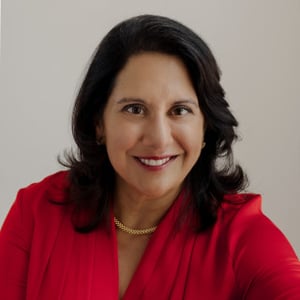
Judge, United States Court of Appeals, District of Columbia Circuit
Judge Rao was appointed to the United States Court of Appeals for the District of Columbia Circuit in March 2019. She graduated from Yale College in 1995 and the University of Chicago Law School in 1999. Following graduation, she served as a law clerk to Judge J. Harvie Wilkinson III of the U.S. Court of Appeals for the Fourth Circuit and, in the 2001 October Term, as law clerk to Justice Clarence Thomas of the U.S. Supreme Court. Between her clerkships, Judge Rao served as counsel for nominations and constitutional law to the U.S. Senate Committee on the Judiciary. In 2002, she joined the international arbitration group of Clifford Chance LLP in London, England. From 2005-2006, she served as Special Assistant and Associate White House Counsel to President George W. Bush. From 2006 to 2017, Judge Rao was a professor at the Antonin Scalia Law School at George Mason University, where she taught constitutional law, legislation and statutory interpretation, and the history and foundations of the administrative state. In 2014, she founded the Center for the Study of the Administrative State, a non-profit Center that promotes academic scholarship and public policy debates about administrative law. In July 2017, she was appointed to serve as the Administrator of the Office of Information and Regulatory Affairs in the Office of Management Budget. She served in this position until her appointment to the D.C. Circuit.
Judge, United States Court of Appeals, Second Circuit
Judge Menashi was appointed to the U.S. Court of Appeals for the Second Circuit on November 14, 2019. Previously, he served as special assistant and associate counsel to the President in the White House and as acting general counsel at the U.S. Department of Education. He was assistant professor of law at Scalia Law School, George Mason University, where he taught administrative law and civil procedure, and a research fellow at New York University School of Law and Georgetown University Law Center. He was also a partner at Kirkland & Ellis LLP in New York, where he practiced appellate and commercial litigation, and served as a law clerk to Justice Samuel Alito on the Supreme Court of the United States and to Judge Douglas Ginsburg on the U.S. Court of Appeals for the District of Columbia Circuit. He graduated from Stanford Law School, where he was elected to Order of the Coif and served as senior articles editor of the Stanford Law Review, and from Dartmouth College, where he was elected to Phi Beta Kappa.
Partner, Jones Day
Professor of Law, Georgetown University Law Center
Eloise Pasachoff is Professor of Law, Anne Fleming Research Professor, and Associate Dean for Careers at the Georgetown University Law Center, where she specializes in the administrative law of federal funding. An award-winning teacher and scholar, she is a public member of the Administrative Conference of the United States and serves on the Academic Advisory Board of the Supreme Court Fellows program. She is a former law clerk to Justice Sotomayor (Supreme Court), Judge Robert A. Katzmann (Second Circuit), and Judge Jed S. Rakoff (Southern District of New York).
Partner, Sidley Austin LLP
Virginia Seitz is a partner in Sidley Austin’s Supreme Court and Appellate practice. On behalf of a wide range of clients, she has handled cases in the United States Supreme Court, in virtually all federal courts of appeals, and in state appellate courts. Virginia was counsel of record on the amicus brief on behalf of retired military officers in Grutter v. Bollinger, 539 U.S. 306 (2003), and Gratz v. Bollinger, 539 U.S. 244 (2003), which the Supreme Court cited at oral argument and in its opinion and which the New York Times piece noted “may have been the most influential amicus brief in the history of the Supreme Court.” She has handled an array of district court litigation involving important constitutional and federal law issues, including the Appropriations and Supremacy Clauses of the Constitution, the First Amendment, Title IX, Title VII, the Anti-Deficiency Act, ERISA, and federal labor laws.
Virginia returned to Sidley in 2014 after serving in the Senate-confirmed position of Assistant Attorney General for the Office of Legal Counsel in the Department of Justice. She was the first woman to be confirmed to that position. As the leader of that Office, Virginia was responsible for providing legal advice to the President and Executive Branch departments and agencies on issues of particular difficulty and importance. Virginia previously served as an appointee of the Chief Justice on the Advisory Committee on Civil Rules. In January 2017, she was elected to the American Law Institute. Earlier in her career, Virginia was confirmed by the Senate to the first Board of Directors of the Congressional Office of Compliance and served from May 1995 to 2000. Virginia has been recognized for her Appellate Law practice by Chambers USA, in The Legal 500 US in Litigation: Supreme Court and Appellate, and in The Best Lawyers in America.
Virginia clerked at the Supreme Court for Justice William J. Brennan, Jr., and before that for Judge Harry T. Edwards of the D.C. Circuit. She is a graduate of University at Buffalo Law School, received her M.A. from Oxford University where she was a Rhodes Scholar, and received her B.A. from Duke University, summa cum laude with distinction.
Partner, McGuireWoods LLP
Farnaz is a skilled litigator with extensive experience in representing employers and institutions of higher education, including academic medical centers, in breach of contract, constitutional, discrimination, and tort litigation. She has conducted investigations, advised clients on employment and education laws, and represented them before federal agencies, including the U.S. Department of Labor and U.S. Department of Education.
Farnaz successfully has defended employers, state agencies, government officials, and institutions of higher education in over 30 civil actions as first chair before federal and state courts as well as trial and appellate courts. Farnaz also has advised clients on investigations under civil rights laws such as Title VI of the Civil Rights Act of 1964 (discrimination based on race, color, or national origin), Title VII of the Civil Rights Act of 1964 (discrimination based on race, color, religion, sex, and national origin), and Title IX of the Education Amendments of 1972 (discrimination based on sex). Her deep knowledge of education laws and regulations includes the Higher Education Act of 1965, as amended; accreditation; borrower defense to repayment; gainful employment; financial responsibility standards; FERPA and other privacy laws; the Clery Act; and the Violence Against Women Act (VAWA).
Farnaz is experienced with student and employee disciplinary issues, including under Title IX, and has represented institutions in such matters in several of her previous roles. Representing institutions in Title IX cases requires a nuanced approach, as the institution must balance legal compliance with compassion and care, supporting victims while providing a fair process for both parties, including the accused. Farnaz strikes this balance and is a trusted resource for her clients.
Prior to joining McGuireWoods, Farnaz served as the Deputy General Counsel for Postsecondary Education at the U.S. Department of Education and also as in-house counsel at the University of Virginia. She advised the U.S. Department of Education on litigation strategy and worked closely with the U.S. Department of Justice in cases arising under federal antidiscrimination laws and the Administrative Procedure Act. Government officials also relied on her close counsel in preparation for congressional investigations and hearings. At the University of Virginia, she advised University officials on federal education and employment laws and represented the University and its academic medical center in litigation. She also drafted the University’s antidiscrimination and conduct policies, including free speech policies.
She began her legal career as a law clerk to the Honorable Eric G. Bruggink, Senior Judge, U.S. Court of Federal Claims, and later as a law clerk to the Honorable Leroy Rountree Hassell, Sr., the former Chief Justice, Supreme Court of Virginia.
Professor of Law, University of Michigan Law School
Professor Nicholas Bagley teaches and writes in the areas of administrative law, regulatory theory, and health law. Prior to joining the Law School faculty, he was an attorney with the appellate staff in the Civil Division at the U.S. Department of Justice, where he argued a dozen cases before the U.S. Courts of Appeals and acted as lead counsel in many more. Professor Bagley also served as a law clerk to Justice John Paul Stevens of the U.S. Supreme Court and to the Hon. David S. Tatel of the U.S. Court of Appeals, District of Columbia Circuit. Professor Bagley holds a BA in English from Yale University and received his JD, summa cum laude, from New York University School of Law. Before entering law school, he joined Teach For America and taught eighth-grade English at a public school in South Bronx. Professor Bagley's work has appeared in the Harvard Law Review, the Columbia Law Review, the Georgetown Law Journal, the New England Journal of Medicine, and the Journal of Health Politics, Policy, and Law. In 2012, he was the recipient of the Law School's L. Hart Wright Award for Excellence in Teaching. He is a frequent contributor to The Incidental Economist, a prominent health policy blog.
Maurice and Hilda Friedman Professor of Law, Columbia Law School; CEO, New Civil Liberties Alliance
Philip Hamburger is the Maurice and Hilda Friedman Professor of Law at Columbia Law School, and Chief Executive Officer at the New Civil Liberties Alliance. Before coming to Columbia, he was the John P. Wilson Professor at the University of Chicago Law School.
He writes on constitutional law and its history—with particular emphasis on religious liberty, freedom of speech and the press, judicial office, administrative power, and unconstitutional conditions.
His books are Separation of Church and State (Harvard 2002), Law and Judicial Duty (Harvard 2008), Is Administrative Law Unlawful? (Chicago 2014), The Administrative Threat (Encounter 2017), and Liberal Suppression: Section 501(c)(3) and the Taxation of Speech (Chicago 2018). A forthcoming book is Purchasing Submission: Conditions, Power, and Freedom (Harvard 2021).
He is a member of the American Academy of Arts and Sciences, and he has served on the board of directors of the American Society for Legal History. He has twice received the Sutherland Prize for the most significant contribution to English legal history, and has been awarded the Henry Paolucci - Walter Bagehot Book Award, the Hayek Book Prize, and the Bradley Prize.
Judge, U.S. Court of Appeals for the Third Circuit
Hon. Jennifer Mascott served as Associate Professor of Law and Director of the Separation of Powers Institute at The Catholic University of America’s Columbus School of Law before her appointment to the federal bench. On July 16, 2025, President Donald J. Trump nominated her to the U.S. Court of Appeals for the Third Circuit (Delaware), and she was confirmed on October 9, 2025.
Prior to her confirmation, Judge Mascott wrote extensively in administrative and constitutional law, statutory interpretation, and the separation of powers. Her scholarship—published in leading journals including the Stanford Law Review, Notre Dame Law Review, and Supreme Court Review—was cited by the U.S. Supreme Court and multiple federal courts. She also contributed Supreme Court commentary for NBC Universal.
Before joining Catholic Law, she was an Assistant Professor and Co-Director of The C. Boyden Gray Center at George Mason University’s Antonin Scalia Law School. In 2022 she became co-author of Beermann, Cass & Diver’s Administrative Law: Cases and Materials (9th ed.). In 2023 she received the Justice Joseph Story Award for excellence in scholarship, teaching, and advancing the rule of law.
Judge Mascott also served as a Council Member of the ABA’s Administrative Law Section and as a Public Member of the Administrative Conference of the United States. She frequently testified before Congress on executive power, regulatory reform, and judicial jurisdiction, and participated in multiple Supreme Court confirmation hearings.
From 2019 to 2021, she took leave from academia to serve as Deputy Assistant Attorney General in the Department of Justice’s Office of Legal Counsel and later as Associate Deputy Attorney General, where she argued federal cases and assisted with Justice Amy Coney Barrett’s confirmation. Earlier in her career, she clerked for Justice Clarence Thomas and for then-Judge Brett M. Kavanaugh on the D.C. Circuit.
Judge Mascott earned her J.D. summa cum laude from the George Washington University Law School and her B.A. from the same institution.
William K. Townsend Professor of Law, Yale Law School
Nicholas R. Parrillo is Townsend Professor of Law at Yale, with a secondary appointment as Professor of History. His research and teaching focus on administrative law and government bureaucracy and extend to legal history, remedies, and legislation. He has received the ABA’s award for the year’s best scholarship in administrative law and the Law and Society Association’s Hurst Prize for the year’s best book in legal history.
Parrillo’s Yale Law Journal article finding new originalist evidence of broad congressional delegations to agencies was discussed in the Solicitor General’s winning brief in the Supreme Court’s latest nondelegation case and in the en banc 5th Circuit opinion in that case. His Harvard Law Review article on how the judiciary handles the federal government’s disobedience to court orders has been discussed in The Washington Post, The Wall Street Journal, and The New York Times. Parrillo also authored a study that provided the empirical basis for best practices adopted by the Administrative Conference of the United States (ACUS) on the federal government’s ubiquitous but controversial use of guidance documents. Peer scholars at Jotwell, in selecting the “best new scholarship” in law, selected each of these three publications (one of them twice). Parrillo’s most recent article, invited for GW’s annual administrative law issue, reveals and analyzes dramatic variation among industries in their willingness to sue their federal health-and-safety regulators.
Parrillo has testified before Congress, been quoted by the Supreme Court, is a senior fellow of ACUS, and has been an instructor at the New York Historical Society’s graduate institute and an invited speaker before the 2nd Circuit Judicial Conference, the U.S. Department of Justice (in 2019 and again in 2024), the ACLU’s national legal staff, and the Federalist Society’s national convention (two times). He is a recipient of the Law School’s annual teaching award.
Judge, United States Court of Appeals, District of Columbia Circuit
Judge Rao was appointed to the United States Court of Appeals for the District of Columbia Circuit in March 2019. She graduated from Yale College in 1995 and the University of Chicago Law School in 1999. Following graduation, she served as a law clerk to Judge J. Harvie Wilkinson III of the U.S. Court of Appeals for the Fourth Circuit and, in the 2001 October Term, as law clerk to Justice Clarence Thomas of the U.S. Supreme Court. Between her clerkships, Judge Rao served as counsel for nominations and constitutional law to the U.S. Senate Committee on the Judiciary. In 2002, she joined the international arbitration group of Clifford Chance LLP in London, England. From 2005-2006, she served as Special Assistant and Associate White House Counsel to President George W. Bush. From 2006 to 2017, Judge Rao was a professor at the Antonin Scalia Law School at George Mason University, where she taught constitutional law, legislation and statutory interpretation, and the history and foundations of the administrative state. In 2014, she founded the Center for the Study of the Administrative State, a non-profit Center that promotes academic scholarship and public policy debates about administrative law. In July 2017, she was appointed to serve as the Administrator of the Office of Information and Regulatory Affairs in the Office of Management Budget. She served in this position until her appointment to the D.C. Circuit.
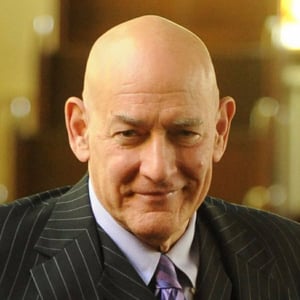
Raoul Berger Professor of Legal History at Northwestern University School of Law
Stephen Presser is a leading American legal historian and expert on shareholder liability for corporate debts. He is frequently an invited witness before committees of the U.S. Senate and House of Representatives on issues of constitutional law. He holds a joint appointment with the J. L. Kellogg Graduate School of Management and also teaches in Northwestern's history department.
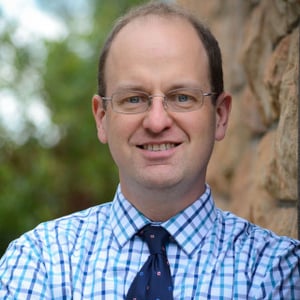
Professor of Law, University of Wyoming College of Law
George Mocsary is an expert in corporate and small-business law, and the law of firearms.
Currently, he is Professor of Law, Founder & Director of Firearms Research Center, and Director of the Business Planning Practicum and at the University of Wyoming College of Law.
Professor Mocsary teaches and writes about Agency & Partnership, Contracts, Corporations, Securities Regulation, the Second Amendment, and Firearms Law, including the intersection of Firearms Law and private law. He is a co-author of Firearms Law and the Second Amendment: Regulation, Rights, and Policy (3rd ed. 2021), the first casebook on this topic.
Prior to his appointment at Wyoming, he served as an Associate Professor of Law at the Southern Illinois University School of Law and spent two years as a Visiting Assistant Professor at the University of Connecticut School of Law. He practiced corporate and bankruptcy law at Cravath, Swaine and Moore in New York, and clerked for the Honorable Harris L. Hartz of the U.S. Court of Appeals for the Tenth Circuit.
Professor Mocsary holds a J.D. from Fordham Law School and an M.B.A. from the University of Rochester Simon School of Business. At Fordham, he graduated first in his class, and served as Notes and Articles Editor of the Fordham Law Review. He has published in the George Washington Law Review, George Mason Law Review, Fordham Law Review, Duke Law Journal Online, and other journals. His work has been cited by the Supreme Court of the United States, several U.S. Courts of Appeals, the Supreme Court of Illinois, the Delaware Court of Chancery, and other courts.
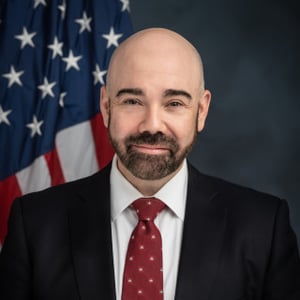
Assistant Secretary for Fair Housing and Equal Opportunity, United States Department of Housing and Urban Development
Craig Trainor is Assistant Secretary for Fair Housing and Equal Opportunity at the United States Department of Housing and Urban Development. President Trump nominated Mr. Trainor for this position on February 11, 2025, and the United States Senate confirmed him on October 7, 2025.
A “Day One” Trump-Vance Administration official, he previously served as Acting Assistant Secretary for Civil Rights and Principal Deputy Assistant Secretary for Civil Rights at the United States Department of Education, where he spearheaded the Department’s efforts to reorient America’s civil rights regime from an unjust spoils system to one that protects the rights of all Americans. Mr. Trainor’s February 14, 2025, “Dear Colleague” letter is widely considered the Trump Administration’s blueprint for enforcing civil rights laws and restoring the Constitution’s promise of equal protection.
Prior to serving in the Trump-Vance Administration, he was Senior Special Counsel with the United States House of Representatives Committee on the Judiciary under Chairman Jim Jordan (R-OH), and Senior Litigation Counsel with the America First Policy Institute under the Honorable Pam Bondi.
For over ten years, Mr. Trainor was a criminal defense and civil rights lawyer in New York City, litigating cases in New York state court and the United States District Court for the Southern and Eastern Districts of New York.
Prior to founding his law practice, he served as a New York City prosecutor, an associate attorney at a white collar criminal defense firm, and a law clerk to Chief Judge Frederick J. Scullin, Jr., United States District Court for the Northern District of New York.
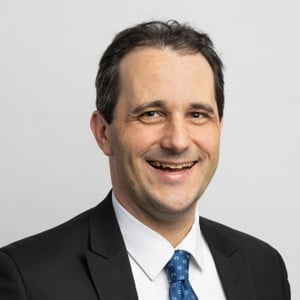
Director, Center for Judicial Engagement, Institute for Justice
Anthony Sanders is the Director of the Center for Judicial Engagement (CJE) at the Institute for Justice and a senior attorney. He joined IJ in 2010. As CJE’s director, he educates the public about the proper role of judges in enforcing constitutional limits on the size and scope of government. As a senior attorney he litigates cutting-edge constitutional cases protecting economic liberty, private property, freedom of speech and other individual liberties in both federal and state courts across the country.
One area of Anthony’s expertise is on using state constitutions to protect individual rights. He is the author of the book, published by University of Michigan Press, Baby Ninth Amendments: How Americans Embraced Unenumerated Rights and Why It Matters. He has also written several law review articles on state constitutional law, unenumerated rights, judicial review, economic liberty, property rights, international law, and other subjects. His work has appeared in publications such as the Iowa Law Review, Minnesota Law Review, American University Law Review, and Rutgers Law Review, and he has published opinion pieces in leading media outlets across the country. Further, he frequently speaks to various audiences on these matters and others, including judicial engagement, free speech, civil forfeiture, and the continuing importance of Magna Carta. Additionally, he hosts the weekly Short Circuit podcast, which often records live in front of law student audiences.
Anthony has litigated several cases in various state courts on state constitutional protections, as well as in federal courts on matters such as economic liberty, free speech, administrative law, and fines and fees abuse. Prior to joining IJ, Anthony served as a law clerk to Justice W. William Leaphart on the Montana Supreme Court. Anthony also worked for several years in private practice in Chicago where he was an active member of the Chicago Bar Association and chaired its Civil Rights Committee.
Anthony received his law degree cum laude from the University of Minnesota Law School in 2004, where he served as an articles submission editor for the Minnesota Law Review. He received his undergraduate degree from Hamline University in St. Paul, Minnesota, and his master’s degree from the University of Wisconsin-Madison. A dual U.S. and U.K. citizen, Anthony grew up on the islands of Vashon in Washington State, and Alderney in the British Channel Islands.

Is Faithful Execution being Devoured By Factional Execution?
Administrative Law & Regulation Practice Group
Is Faithful Execution being Devoured By Factional Execution?
Steven J. Menashi, Hashim M. Mooppan, Eloise Pasachoff, Virginia Seitz, Farnaz F. Thompson
Abrupt and complete reversals of position from one Administration to the next, whether by Executive...
Topics
State Judiciaries and the Anticommandeering Doctrine
In the 1992 case New York v. United States, the Supreme Court applied the anticommandeering...
Non-Delegation? Or No Divesting? Art. I, Sec. 1 at the Founding and Today
Administrative Law & Regulation and Federalism & Separation of Powers Practice Groups
Non-Delegation? Or No Divesting? Art. I, Sec. 1 at the Founding and Today
Nicholas Bagley, Philip A. Hamburger, Jenn L. Mascott, Nicholas R. Parrillo, Neomi Rao
Whether as the result of hyper-partisanship or as a residue of the constitutional design for...
If the Framers Despaired, Should We?
Stephen B. Presser
A review of Fears of a Setting Sun: The Disillusionment of America’s Founders, by Dennis...
State Court Docket Watch: State of Vermont v. Misch
George A. Mocsary
Note from the Editor: The Federalist Society takes no positions on particular legal and public...
Topics
Wearing, Bearing, or Carrying Arms
In D.C. v. Heller (2008), the Supreme Court recognized an individual right under the...
In the Rush to Reform, Prudence Is Among the Highest Duties: How to Responsibly Reform Cash Bail
Craig Trainor
Over the last two decades, the politics of American criminal law has made strange bedfellows....
Which Rights Are We Mediating?
Anthony Sanders
A review of How Rights Went Wrong: Why Our Obsession With Rights Is Tearing America...