

Chairman and Founder, Institute for Free Speech; Josiah H. Blackmore II/Shirley M. Nault Designated Professor of Law, Capital University Law School

Professor of Law, South Texas College of Law Houston
Josh Blackman is a national thought leader on constitutional law and the United States Supreme Court. Josh’s work was quoted during two presidential impeachment trials. He has testified before Congress and advises federal and state lawmakers. Josh regularly appears on TV, including NBC, CBS, ABC, Fox, and the BBC. Josh is also a frequent guest on NPR and other syndicated radio programs. He has published commentaries in the New York Times, Wall Street Journal, Washington Post, and leading national publications.
Since 2012, Josh has served as a professor at the South Texas College of Law Houston. He holds the Centennial Chair of Constitutional Law. Josh is an Adjunct Fellow at the Manhattan Institute. Josh has written more than seven dozen law review articles that have been cited more than a thousand times. Josh was selected as the Jurist of the Year by the Texas Journal of Law & Public Policy, received the inaugural Meese III Originalism Award, and was awarded the Inaugural Joseph Story Award. Josh was selected by Forbes Magazine for the “30 Under 30” in Law and Policy. Josh is the President of the Harlan Institute, and founded FantasySCOTUS, the Internet’s Premier Supreme Court Fantasy League. He blogs at the Volokh Conspiracyand posts@JoshMBlackman.

James G. Phillipp Professor of Law, University of Michigan Law School
Julian Davis Mortenson writes on constitutional and international law. His current book project—The Founders' President (under contract, Harvard University Press)—develops a comprehensive account of presidential power at the American Founding. He is also co-authoring a new constitutional law casebook, scheduled for publication by Foundation Press in 2020.
Professor Mortenson is an award-winning teacher and an active litigator. Representative constitutional matters include his work as lead counsel in a pre-Obergefell suit that required Michigan to recognize the marriages of more than 300 same-sex couples; his representation of discharged military service members challenging the "Don't Ask, Don't Tell" law; and his work as one of the principal drafters of the merits briefs in the landmark case Boumediene v. Bush, which secured the right of Guantanamo detainees to challenge their incarceration. He regularly litigates complex transnational matters in the U.S. courts, and has served as arbitrator, counsel, and expert witness in a wide variety of commercial and investor-state disputes.
Before joining the faculty, Professor Mortenson worked at the law firm WilmerHale, in the President's Office of the International Criminal Tribunal for the former Yugoslavia, and as a law clerk for both Justice David H. Souter and The Hon. J. Harvie Wilkinson III. Prior to law school, he was a management consultant with a client portfolio spanning the finance, manufacturing, oil and gas, and information technology industries. Professor Mortenson was salutatorian of his class at Stanford Law School and received an AB in history, summa cum laude, from Harvard College.
Publius comes from the pen name Alexander Hamilton, James Madison, and John Jay used when they wrote 85 publicly printed letters now known as the Federalist Papers. Hamilton chose “Publius” as a name that would represent friends of the newly proposed American republic - Publius Valeria Publicola was a Roman general who helped to found the Roman Republic. The Federalist Society continues the tradition of publishing things under the name Publius in celebration of our constitutional roots and recognition that author credit is not always necessary.
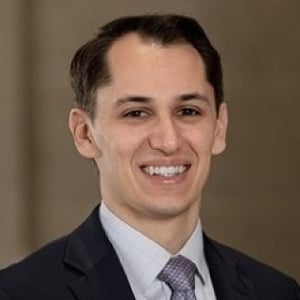
Assistant Professor of Law, Capital University Law School
Nathaniel M. Fouch is an Assistant Professor of Law at Capital University Law School in Columbus, Ohio. He previously clerked at every level of the state judiciary, including for Justice Pat DeWine of the Ohio Supreme Court. Professor Fouch was the founding president of both the Dayton Lawyers Chapter of the Federalist Society and the Dayton Catholic Lawyers Guild. He earned his B.A. from Berea College and his J.D. cum laude from the University of St. Thomas School of Law. His work on the Ohio Constitution and state constitutionalism has been cited by the Ohio Supreme Court. Professor Fouch lives in Dayton, Ohio, with his wife, Theresa, and their three young children.
Erin Gaide is an Assistant Attorney General in the Kansas Office of the Attorney General, where she is a member of the Special Litigation & Constitutional Issues Division. Before beginning with the Kansas Attorney General, Erin clerked for the Honorable Allison H. Eid of the U.S. Court of Appeals for the Tenth Circuit.
Erin earned her J.D., magna cum laude, from the College of Law William & Mary, where she was elected to the Order of the Coif. She earned her B.A., cum laude, in International Studies from the Ohio State University.

Director, Center for Judicial Engagement, Institute for Justice
Anthony Sanders is the Director of the Center for Judicial Engagement (CJE) at the Institute for Justice and a senior attorney. He joined IJ in 2010. As CJE’s director, he educates the public about the proper role of judges in enforcing constitutional limits on the size and scope of government. As a senior attorney he litigates cutting-edge constitutional cases protecting economic liberty, private property, freedom of speech and other individual liberties in both federal and state courts across the country.
One area of Anthony’s expertise is on using state constitutions to protect individual rights. He is the author of the book, published by University of Michigan Press, Baby Ninth Amendments: How Americans Embraced Unenumerated Rights and Why It Matters. He has also written several law review articles on state constitutional law, unenumerated rights, judicial review, economic liberty, property rights, international law, and other subjects. His work has appeared in publications such as the Iowa Law Review, Minnesota Law Review, American University Law Review, and Rutgers Law Review, and he has published opinion pieces in leading media outlets across the country. Further, he frequently speaks to various audiences on these matters and others, including judicial engagement, free speech, civil forfeiture, and the continuing importance of Magna Carta. Additionally, he hosts the weekly Short Circuit podcast, which often records live in front of law student audiences.
Anthony has litigated several cases in various state courts on state constitutional protections, as well as in federal courts on matters such as economic liberty, free speech, administrative law, and fines and fees abuse. Prior to joining IJ, Anthony served as a law clerk to Justice W. William Leaphart on the Montana Supreme Court. Anthony also worked for several years in private practice in Chicago where he was an active member of the Chicago Bar Association and chaired its Civil Rights Committee.
Anthony received his law degree cum laude from the University of Minnesota Law School in 2004, where he served as an articles submission editor for the Minnesota Law Review. He received his undergraduate degree from Hamline University in St. Paul, Minnesota, and his master’s degree from the University of Wisconsin-Madison. A dual U.S. and U.K. citizen, Anthony grew up on the islands of Vashon in Washington State, and Alderney in the British Channel Islands.

Topics
Lofstad v. Raimondo: Government Accountability and Constitutional Fidelity
Commercial fishing is a tough way to make a living. The industry is highly competitive;...
Citizens Divided: Is it Time to Amend the Constitution?
Temple Student Chapter
Philadelphia, PATopics
Does Collective Bargaining Violate Article II? How the Unitary Executive Theory Could Transform the Federal Workforce
On January 17, 2025, three days before the presidency changed hands, the American Federation of...
Nebraska Supreme Court Upholds Constitutionality of Felon Re-Enfranchisement
Publius
In State ex rel. Spung v. Evnen, the Nebraska Supreme Court rejected a constitutional...
Ohio Supreme Court Overrules “Lockstepping” Precedent, Finds State Constitution’s Open Courts Provision Applies to Juvenile Court Proceedings
Nathaniel M. Fouch
Since Ohio joined the Union in 1803, its state constitution has provided that “All...
Topics
“Pro-Worker” but Anti-Constitution: A New Labor Framework Raises Serious Legal Doubts
Last month, Sen. Josh Hawley released an ambitious proposal to reimagine federal labor law. Billed...
Immigration and Invasion Clause, Constitutional?
Michigan Student Chapter
Ann Arbor, MIIs Voting in Kansas a Fundamental Right? Kansas Supreme Court Weighs In
Erin Steinhilber
Those who do not spend their days thinking about election law may be surprised to...
No Standing in Challenge to Legislature’s Appropriation of Federal Funds to Private Schools Says Mississippi Supreme Court
Anthony Sanders
Midsouth Association of Independent Schools v. Parents for Public Schools was a challenge to...
Topics
Title IX Dear Colleague Letter from Education Department Puts Controversial Issue to Rest, For Now
American educational institutions finally have clarity on whether they are required to open sex-segregated facilities,...