
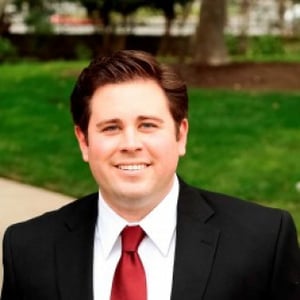
Managing Partner, Bigley Ranish, LLP
Sean M. Bigley is a national security attorney and managing partner of Bigley Ranish, LLP. Mr. Bigley’s practice primarily encompasses defending federal employees and contractors in security clearance denial cases. He also provides personnel security consulting to major international defense and aerospace corporations, and prosecutes intelligence community whistle-blower retaliation cases.
Since first opening his firm in 2013, Mr. Bigley has grown it from a solo practice to a five-attorney partnership with employees in three states. Bigley Ranish, LLP attorneys regularly appear before administrative tribunals at agencies ranging from the CIA to the Department of State, representing in excess of 200 American intelligence officers, diplomats, armed forces personnel, and other security clearance holders each year around the world. In 2016 alone, Mr. Bigley and his colleagues represented clients in roughly forty states and a dozen countries.
The idea for this unique practice was borne out of Mr. Bigley’s prior service as a federal background investigator. Prior to and during law school, Mr. Bigley was an investigator for the U.S. Office of Personnel Management, where he conducted some of that agency’s most sensitive security investigations in the Los Angeles metropolitan area. Mr. Bigley has also served on the faculty of Chapman University, teaching national security and criminal justice courses with an emphasis in U.S.-European security cooperation. Earlier in his career, Mr. Bigley worked for several years in the White House and Department of Homeland Security under President George W. Bush.
A recognized expert in national security law, Mr. Bigley’s commentary on the topic is frequently sought by major media outlets such as Fox News, The New York Times, and CNN. He is a contributing writer for Clearancejobs.com and GovExec.com.
Mr. Bigley earned his Juris Doctorate from Chapman University School of Law. He holds a Bachelor’s Degree from Washington D.C.’s American University and a Master’s Degree from Boston University.
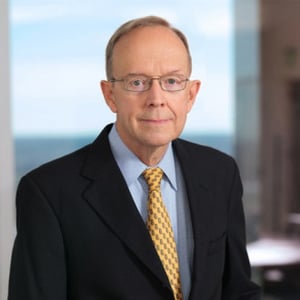
Former Deputy Attorney General for Virginia
Kennerly Davis has over forty years of experience in corporate management, public service, and the private practice of law. He has held senior executive positions in a Fortune 500 electric and gas company. He has served as Deputy Attorney General for the Commonwealth of Virginia, and as a legislative aide to a U.S. Senator and a U.S. Congressman. He practiced law for 25 years with Hunton Andrews Kurth LLP.
Davis is active in the Federalist Society as a member of the Regulatory Process Working Group of the Regulatory Transparency Project, and as a member of the Execuitve Committee of the Administrative Law and Regulation Practice Group. He is active in the national Alumni Free Speech Alliance, and involved in AFSA-chapter initiatives, including litigation, to publicize and correct the serious legal problems created by university Diversity, Equity, and Inclusion programs and the anonymous bias reporting systems used to enforce those DEI programs.
Davis writes and speaks on a wide variety of topics, including those related to the Founding of America, the natural rights foundation of our Republic, the constitutional rule of law, equal protection and free speech, DEI programs and bias reporting systems, capitalism, regulation and regulatory reform, and economic development. His articles have appeared in The Wall Street Journal, the Washington Examiner, the Richmond Times-Dispatch, The Federalist Society Review, the FedSoc Blog, Real Clear Energy, Townhall, the Daily Caller, reports of the Center for Strategic & International Studies, and other publications. He appears frequently on radio, podcasts, and television.
Davis graduated with honors from Cornell University with an A.B. degree in Government. He earned an M.A. degree from Pembroke College, Oxford, in Philosophy, Politics, and Economics. He was awarded a J.D. degree from Harvard Law School, and an M.B.A. degree from Virginia Commonwealth University.
Davis lives in Richmond, Virginia. He can be contacted by email: j.kendavis@verizon.net, and by phone: (804) 624-8525.
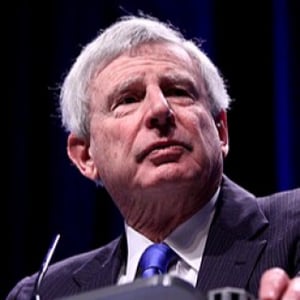
Senior Scholar, The Fund for American Studies
Donald J. Devine (born 1937) is an American political scientist and former government official, who has popularized fusionism as taught by Frank Meyer. He is associated to The Fund for American Studies and The Heritage Foundation. He is also a trustee of the Philadelphia Society.
Devine served as the Office of Personnel Management director of Ronald Reagan's first administration. During his tenure, he helped cut 100,000 federal jobs, and over $6 billion in benefits. He was labeled by The Washington Post as a "terrible swift sword of the civil service", by The New York Times as "the Grinch", and by Federal Times as the "Rasputin of the reduction in force".
Devine taught government and politics at the University of Maryland, and Western civilization at Bellevue University. He has written more than ten libertarian conservative books, and was a contributor to Project 2025.
Senior Scholar, The Fund for American Studies
Donald J. Devine (born 1937) is an American political scientist and former government official, who has popularized fusionism as taught by Frank Meyer. He is associated to The Fund for American Studies and The Heritage Foundation. He is also a trustee of the Philadelphia Society.
Devine served as the Office of Personnel Management director of Ronald Reagan's first administration. During his tenure, he helped cut 100,000 federal jobs, and over $6 billion in benefits. He was labeled by The Washington Post as a "terrible swift sword of the civil service", by The New York Times as "the Grinch", and by Federal Times as the "Rasputin of the reduction in force".
Devine taught government and politics at the University of Maryland, and Western civilization at Bellevue University. He has written more than ten libertarian conservative books, and was a contributor to Project 2025.
Attorney
Maya M. Noronha is a civil rights attorney.
As special counsel for external affairs at First Liberty Institute, Maya worked for the largest legal organization in the United States dedicated exclusively to defending religious liberty for all Americans.
Previously, Maya worked at the U.S. Department of Health and Human Services, as acting chief of staff of the Administration for Children and Families; principal advisor to the Commissioner of the Administration on Children, Youth, and Families; and senior advisor to the Director of the Office for Civil Rights and regulatory reform officer. She provided advice on federal civil rights laws that prohibit discrimination on the basis of conscience, religion, race, color, national origin, limited English proficiency, sex, disability, age, and health information in both health care and human services.
In the area of election law, Maya has advised officials elected to or candidates for President, U.S. Senate, U.S. House of Representatives, Governor, state legislature, city council, and magisterial district judge. She practiced law at Baker Hostetler LLP, where she was on the Political Law and Federal Advocacy Teams, advising clients on voting rights, redistricting, election integrity, campaign finance, financial reporting, ethics compliance, as well as conducting trial and appellate litigation. She also has delivered legislative testimony, planned continuing legal education conferences on election law, and published about voting rights and election administration.
In addition to addressing the Federalist Society, she has delivered remarks to the White House Initiative on Asian American Pacific Islanders, United States Senate, Women in Government Relations, Georgetown University, George Mason University School of Law, the Columbus School of Law at the Catholic University of America, and Arizona State University Cronkite School of Journalism.
Maya is in Phi Beta Kappa, a member of the Alpha Sigma Nu Jesuit Honor Society, and a John Carroll Scholar. Forbes Magazine recognized Maya as one of its 30 under 30 in Law and Public Policy.
She serves concurrently on the Federalist Society’s Free Speech & Election Law Executive Committee and the American Bar Association’s Standing Committee on Election Law.
Education
· J.D., Georgetown University Law Center, 2011
· A.B., Georgetown University, 2005

Presidential Nominees and Foreign Influence: Mitigating National Security Risks
Sean M. Bigley
Note from the Editor: This article describes the procedures involved in determining whether to grant...
Lunch with Dr. Devine
Montgomery, AlabamaThe Political Science Constitution—What It Implies For Your Future
Birmingham, AlabamaTopics
The Constitution Says Nothing About Behavioral Economics
Federalist Society member Todd Zywicki is in the Wall Street Journal: Behavioral economics has taken...
New Poll: Vast Majority of Americans Want SCOTUS Nominees Who Apply Constitution as Originally Written
A new poll conducted by The Marist Poll, and sponsored by the Knights of Columbus,...
When Enforcing the Constitution Means Rejecting Precedent: A Reply to Greg Weiner
Part bull, part man, and nourished by Athenian blood, the minotaur has been the stuff...
Topics
Silvester v. Harris: Watered-Down Intermediate Scrutiny
In Silvester v. Harris, the Ninth Circuit Court of Appeals upheld a California law requiring...
Deciding Unclear Originalist Cases: Towards Good-Faith Constitutional Construction
Interpreting a centuries-old document and applying it to factual circumstances unknown and perhaps inconceivable to...
Could a New Section 1983 Covering Federal Officials Curb Executive Branch Abuse of Constitutional Rights?
John Kennerly Davis
Note from the Editor: This article notes public distrust of the federal government in light...
Redistricting Tested in the Supreme Court
Teleforum