

Judge, United States Court of Appeals, Ninth Circuit
Judge Nelson was confirmed to the Ninth Circuit in October 2018, as the youngest Circuit Judge to serve from Idaho and he has chambers in his hometown of Idaho Falls. Prior to his confirmation, Judge Nelson served for nine years as General Counsel of Idaho Falls-based Melaleuca, Inc., a consumer goods company. He previously worked in Washington, DC, where he served in all three branches of the federal government, including as Special Counsel for Supreme Court nominations to the Ranking Member of the Senate Judiciary Committee; Deputy General Counsel to the White House Office of Management and Budget; Deputy Assistant Attorney General in the Environment and Natural Resources Division of the United States Department of Justice; and a law clerk to Judge Henderson of the United States Court of Appeals for the D.C. Circuit. He has argued in most of the federal courts of appeals and worked on dozens of Supreme Court briefs. He started in the Washington, DC office of Sidley Austin as an appellate lawyer, after clerking for Judges Mosk and Brower of the Iran-U.S. Claims Tribunal at The Hague, and for now-Judge Tom Griffith, then-Senate Legal Counsel, during the impeachment trial of President Clinton. Judge Nelson earned his B.A. from Brigham Young University and his J.D., with honors, from BYU Law School. Judge Nelson has been a member of the Federalist Society since 1998.
Vice President and Senior Counsel, The Becket Fund for Religious Liberty
Eric Rassbach is Vice President and Senior Counsel at the Becket Fund for Religious Liberty, where he has served since 2003. He has briefed over 90 cases at the United States Supreme Court and has led or been a part of Becket litigation teams in each of Becket’s pathbreaking victories there, including Hosanna-Tabor, Hobby Lobby, Holt v. Hobbs, Zubik v. Burwell, Agudath Israel of America v. Cuomo, and Fulton v. Philadelphia. In 2020, Eric argued Our Lady of Guadalupe School v. Morrissey-Berru to the Supreme Court, garnering a 7-2 win for his Catholic school clients. Eric has also briefed and argued cases in federal appeals courts and state supreme courts across the nation. Eric has also represented clients in appeals to the European Court of Human Rights in Strasbourg, France and in the highest courts of several other countries.
Eric believes passionately in the right of all people to the full measure of religious liberty and has represented members of almost every religious group present in the United States, including Buddhists, Christians, Hindus, Jains, Jews, Muslims, Native Americans, Santeros, and Sikhs, as well as many governmental entities targeted for accommodating religion.
Eric frequently comments on church-state issues in the media, including the New York Times, the Washington Post, the Wall Street Journal, and other major press outlets. He has published legal scholarship in the Harvard Law Review Forum, the Tennessee Law Review, the Illinois Law Review, the Cato Supreme Court Review, and other legal journals, and often speaks to law school audiences.
Before joining Becket, Eric worked at Baker Botts LLP in Houston, where he worked in international project finance. He also served as a law clerk to United States District Court Judge Lee Rosenthal in Houston, Texas.
Eric graduated from Haverford College with a degree in Comparative Literature, is a member of Fitzwilliam College, University of Cambridge, and is a graduate of Harvard Law School. Eric was a 2012-2013 Wasserstein Public Interest Fellow at Harvard Law School. He is Visiting Professor and Executive Director of The Hugh and Hazel Darling Foundation Religious Liberty Clinic at Pepperdine University Caruso School of Law in Malibu, where he leads students in litigating cases in American courts. He is also an Associated Scholar with the Centre for Religious Freedom at Jagiellonian University in Kraków, Poland. Eric is admitted in Texas, DC, California, and Ireland.

Judge, United States Court of Appeals, Ninth Circuit
Judge Carlos Bea serves as a judge on the United States Court of Appeals for the Ninth Circuit. He received his Bachelor's Degree from Stanford University in 1956 and his J.D. from Stanford Law School in 1958. Judge Bea was born in San Sebastian, Spain, and immigrated with his family to Cuba in 1939. In 1952, he represented Cuba on the Cuban National basketball team in the Helsinki Olympics. Judge Bea became a naturalized citizen of the United States in 1958. He engaged in private practice in San Francisco, principally in the area of civil trials (jury and non-jury), from 1959-75 at Dunne, Phelps & Mills and from 1975-90 at Carlos Bea, A Law Corporation. He taught courses in civil litigation advocacy at Hastings College of Law and Stanford Law School. From 1990 to 2003, Judge Bea served as a judge of the San Francisco Superior Court. He was nominated by President George W. Bush to the United States Court of Appeals for the Ninth Circuit and was confirmed in 2003.
Judge Bea and his wife Louise reside in San Francisco, where they raised their four sons, Sebastian, Alexander, Nicholas, and Dominic.
Justice, Wisconsin Supreme Court
Justice Rebecca Grassl Bradley, a Milwaukee native, was elected to the Supreme Court in 2016 after being appointed by Gov. Scott Walker in 2015. She is the first Wisconsin Supreme Court Justice to have served as an intermediate appellate court judge as well as a circuit court judge. Before joining the Supreme Court, Justice Bradley served as a District I Court of Appeals judge (appointed 2015), a Milwaukee County Circuit Court Judge (appointed 2012, elected 2013) and worked as an attorney in private practice (1996-2012), including serving as vice president of legal operations for a global software company.
Justice Bradley graduated from Marquette University in 1993 with an honors B.S. in Business Administration and Business Economics and received her juris doctor from the University of Wisconsin Law School in 1996.
Justice Bradley is a member of the Supreme Court Finance Committee and chairs the Supreme Court Legislative Committee as the Chief Justice's designee. She is a member of the Board of Advisors and past president of the Milwaukee Lawyers Chapter of the Federalist Society; serves on the Wisconsin State Advisory Committee of the U.S. Commission on Civil Rights; and is a member of the Bench and Bar Committee of the Wisconsin State Bar. She previously served on the Board of Governors of the St. Thomas More Lawyers Society; the Wisconsin Juvenile Jury Instructions Committee; the Wisconsin Juvenile Benchbook Committee; and as a member of the Milwaukee Trial Judges Association and the Wisconsin Trial Judges Association. While in private practice, Justice Bradley served as an American Arbitration Association Arbitrator and Chairman of the State Bar Business Law Section.
Justice Bradley's current term expires July 31, 2026.
Justice, Supreme Court of Pennsylvania
David N. Wecht is a Pennsylvania Supreme Court justice. Wecht is one of three Democrats elected to the Pennsylvania Supreme Court in November 2015. He was sworn in to office on January 7, 2016, for a term that expires on January 4, 2026.
Justice, Texas Supreme Court
Evan Young is a Justice of the Supreme Court of Texas. Governor Greg Abbott, who appointed Young to fill an unexpired term, swore him into office on November 10, 2021. Justice Young was elected to a full term in November 2022.
Young graduated summa cum laude from Duke University in 1999, where he was inducted into Phi Beta Kappa. He was a British Marshall Scholar at Oxford University, where he completed his studies in 2001 and earned a First Class Honours degree in Modern History, focusing on British constitutional history. He earned his law degree from Yale Law School in 2004.
Young then worked as a lawyer in the judicial and executive branches of the federal government. He first served as a law clerk to Judge J. Harvie Wilkinson III of the U.S. Court of Appeals for the Fourth Circuit, and then to Justice Antonin Scalia at the U.S. Supreme Court. In 2006, after his clerkship with Justice Scalia ended, Justice Young became Counsel to the Attorney General at the U.S. Department of Justice, serving in the Office of the Attorney General under Attorneys General Alberto R. Gonzales and Michael B. Mukasey. While on the Attorney General’s staff, he accepted a detail to the U.S. Embassy in Baghdad, Iraq, where he was the Deputy Rule of Law Coordinator. In that position he worked to assist the Iraqi government in its efforts to strengthen its legal regime, including, for example, its courts and prison system.
Young returned to Texas and joined the Austin office of Baker Botts L.L.P. in 2009. His practice focused on trial and appellate litigation. He argued cases before both the Supreme Court of the United States and the Supreme Court of Texas, as well as many federal and state appellate courts. He represented clients across the country before every level of the state and federal judiciary.
Before joining the Texas Supreme Court, Young was appointed in 2017 by Governor Abbott and confirmed by the Texas Senate to serve as a member of the Texas Judicial Council, which is the policy-making body for the Texas Judiciary. In 2015, the Texas Supreme Court appointed him to the Supreme Court Advisory Committee, which assists the Court in drafting the rules that govern litigation in Texas courts. He served on both until his elevation to the bench.
Justice Young is an elected member of the American Law Institute and a member of the Texas Philosophical Society. He has been an adjunct law professor for many years at the University of Texas School of Law, where he has frequently taught the Federal Courts and Religious Liberty courses. He also has been an adjunct professor at the Unversity of Austin (UATX) and at the University of Mississippi School of Law. He served as Chair of the State Bar of Texas Business Law Section, Chair of the National Center for Missing and Exploited Children's Texas Regional Office, and Trustee of the Texas Supreme Court Historical Society.
Justice Young and his wife, Tobi, live in Austin with their daughter.
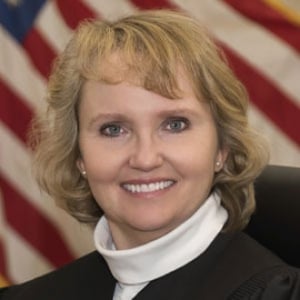
Judge, District II, Wisconsin Court of Appeals
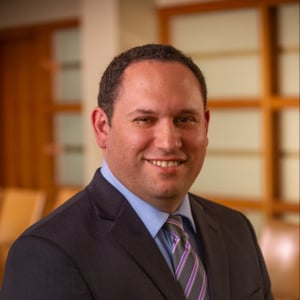
Partner, Stafford Rosenbaum, LLP
Jeff Mandell is a partner at Stafford Rosenbaum LLP, where he maintains a broad practice with specialties in election and political law, complex litigation and appeals, and issues related to the Wisconsin Fair Dealership Law. Jeff is also the co-founder and board president of Law Forward, a nonprofit, nonpartisan organization focused on defending and advancing democracy in Wisconsin. Jeff is a graduate of the University of Chicago Law School and, before entering practice, served as a judicial clerk for the Honorable A. Raymond Randolph of the U.S. Court of Appeals for the D.C. Circuit.
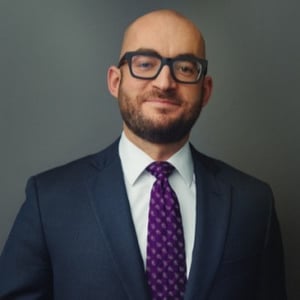
Partner, Eimer Stahl LLP
Ryan is a partner at Eimer Stahl LLP and is based in the firm’s Madison office. He focuses his practice on appellate and complex litigation in a wide variety of areas, including antitrust, constitutional law, corporate law, environmental, ERISA, products liability, and white collar. As part of his practice, Ryan devotes significant time to matters of legal strategy and the art of written and oral advocacy.
Ryan previously served as Chief Deputy Solicitor General of Wisconsin, securing numerous wins in the Supreme Court of the United States, in three federal courts of appeal, and in the state supreme court. Ryan built national, bipartisan coalitions of attorneys general and agencies in support of several lawsuits and briefing efforts, including a Wisconsin-led, 12-state coalition whose suit against the Federal Communications Commission prompted that agency to reverse a major new rule. When he left government, Ryan had a perfect win record in all of his cases to have reached final judgment.
Earlier in his career, Ryan worked in Washington D.C. as an associate in the appellate group of one of the world’s largest law firms.
Ryan also served as a law clerk on the U.S. Supreme Court for the Honorable Antonin Scalia and on the U.S. Court of Appeals for the Ninth Circuit for the Honorable Diarmuid F. O’Scannlain.
Ryan was named to Forbes’ “30 Under 30: Law and Policy” list in 2017. His briefing has won awards from the National Association of Attorneys General and the International Municipal Lawyers Association. He has also won a “best brief” accolade from the State Bar of Wisconsin in the civil category for his written work defending Wisconsin’s right-to-work law.
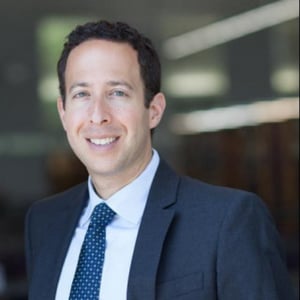
Associate Professor of Law, University of Wisconsin-Madison
Robert Yablon is an Associate Professor of Law and Faculty Co-Director of the State Democracy Research Initiative. His research interests include political and election law, constitutional law, federal and state courts, and statutory interpretation. He teaches Civil Procedure, Federal Jurisdiction, and the Law of Democracy.
Professor Yablon's recent publications have appeared in the NYU Law Review, Northwestern University Law Review, Minnesota Law Review, and Iowa Law Review. In 2018, UW Law students honored Professor Yablon with the Classroom Teacher of the Year Award, and in 2019 he received a University Distinguished Teaching Award.
Professor Yablon received his bachelor's degree in economics and political science from the University of Wisconsin-Madison and his master's degree in social policy from the University of Oxford, where he was a Rhodes Scholar. He then earned his J.D. at Yale Law School, where he was an Articles Editor of the Yale Law Journal.
Following law school, Professor Yablon served as a law clerk for Judge William Fletcher of the U.S. Court of Appeals for the Ninth Circuit and for U.S. Supreme Court Justices Ruth Bader Ginsburg and Sonia Sotomayor. He also worked in private practice at Orrick, Herrington & Sutcliffe LLP in San Francisco and Washington, D.C. He has been the principal author of dozens of appellate and trial-level briefs, and has argued in a number of state and federal courts, including the U.S. Supreme Court.
Judge, District II, Wisconsin Court of Appeals
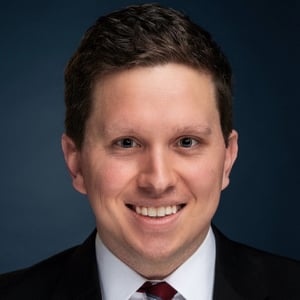
Deputy Counsel, Wisconsin Institute for Law & Liberty (WILL)
Anthony LoCoco is deputy counsel at the Wisconsin Institute for Law & Liberty, where he litigates in defense of individual liberties and the rule of law. Before joining WILL, Anthony served as law clerk to the Honorable Annette Kingsland Ziegler of the Wisconsin Supreme Court for two terms. He is an officer in the Milwaukee Chapter of The Federalist Society.
Anthony is a graduate of Harvard Law School and holds a B.A., summa cum laude, in economics from the University of Dallas. He resides outside Milwaukee with his wife and three children.
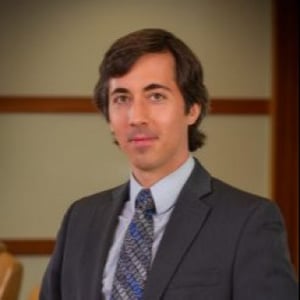
Partner, Stafford Rosenbaum LLP
Attorney Colin T. Roth is a partner in the Madison office of Stafford Rosenbaum LLP. His practice focuses on commercial litigation, appellate law, and election and political law. He litigates in both state and federal courts at both the trial and appellate levels, frequently in areas like voting rights, administrative rulemaking, constitutional challenges to state law, state taxation, environmental protection, and civil rights.
Colin has litigated some of the highest profile cases in recent memory before the Wisconsin Supreme Court. He handled briefing and oral argument in challenges to the Governor’s partial veto power (in Bartlett v. Evers and Wisconsin Small Business United, Inc. v. Brennan), the executive branch’s pandemic response powers (in Wisconsin Legislature v. Palm), and the 2020 general election recount (in Trump v. Biden). He has also litigated many appeals before the Seventh Circuit Court of Appeals and the Wisconsin Court of Appeals. Colin serves as co-chair of the firm’s appellate practice team with Attorney Jeff Mandell.
Colin also maintains an active commercial litigation practice at the trial court level. He has expertise representing clients in matters involving the Wisconsin Fair Dealership Law, breach of contract, securities fraud, trademark infringement, and defamation, among many other areas.
Colin also has substantial experience advising clients on state regulatory matters, having worked closely with state officials in the Governor’s office, the Department of Administration, the University of Wisconsin System, the Department of Revenue, and the Department of Natural Resources to answer complicated legal questions and map the path forward for complex regulatory programs.
Prior to joining Stafford Rosenbaum, Colin spent five years at the Wisconsin Department of Justice as an assistant attorney general, handling the state’s most important trial and appellate civil litigation and, before that, four years as an associate at Irell & Manella, a prominent law firm in Los Angeles.
Colin is admitted to practice in Wisconsin, the U.S. District Courts for the Eastern and Western District of Wisconsin, and the U.S. Court of Appeals for the Seventh Circuit.
Partner, Eimer Stahl LLP
Ryan is a partner at Eimer Stahl LLP and is based in the firm’s Madison office. He focuses his practice on appellate and complex litigation in a wide variety of areas, including antitrust, constitutional law, corporate law, environmental, ERISA, products liability, and white collar. As part of his practice, Ryan devotes significant time to matters of legal strategy and the art of written and oral advocacy.
Ryan previously served as Chief Deputy Solicitor General of Wisconsin, securing numerous wins in the Supreme Court of the United States, in three federal courts of appeal, and in the state supreme court. Ryan built national, bipartisan coalitions of attorneys general and agencies in support of several lawsuits and briefing efforts, including a Wisconsin-led, 12-state coalition whose suit against the Federal Communications Commission prompted that agency to reverse a major new rule. When he left government, Ryan had a perfect win record in all of his cases to have reached final judgment.
Earlier in his career, Ryan worked in Washington D.C. as an associate in the appellate group of one of the world’s largest law firms.
Ryan also served as a law clerk on the U.S. Supreme Court for the Honorable Antonin Scalia and on the U.S. Court of Appeals for the Ninth Circuit for the Honorable Diarmuid F. O’Scannlain.
Ryan was named to Forbes’ “30 Under 30: Law and Policy” list in 2017. His briefing has won awards from the National Association of Attorneys General and the International Municipal Lawyers Association. He has also won a “best brief” accolade from the State Bar of Wisconsin in the civil category for his written work defending Wisconsin’s right-to-work law.
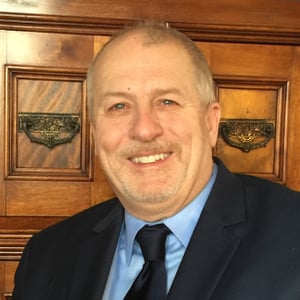
Founder, President, and General Counsel, Wisconsin Institute for Law & Liberty
Rick Esenberg is the founder and current President and General Counsel of the Wisconsin Institute for Law & Liberty, a rapidly expanding law and policy organization headquartered in Milwaukee. Under Rick’s leadership, WILL has grown into one of the more active state-based think tanks and litigation centers in the country. Rick is a frequent litigator in state and federal courts and nationally recognized scholar and commentator on constitutional law, particularly the First Amendment’s guarantees of freedom of speech and religion. He is one of the leading experts on the Wisconsin Constitution and a frequent advocate before the Wisconsin Supreme Court. Rick’s work seeks to advance the rule of law and individual liberty, formed by a robust civil society that forms individual and community character, preserving the wisdom of the past and an openness to the future.
Rick’s commentary has been featured in such outlets as the Wall Street Journal, National Review, Weekly Standard, Real Clear Politics, Milwaukee Journal Sentinel and Washington Examiner. Formerly on the faculty of Marquette University Law School, his scholarship has appeared in such publications as the Harvard Law Review, Harvard Journal of Law & Public Policy, Wake Forest Law Review and William & Mary Bill of Rights Journal. Back when they were a thing, he operated a blog called Shark and Shepherd where he tried to suggest something about the duality of man – “the Jungian thing.”
Rick holds a J.D., magna cum laude, from Harvard Law School, where he was an editor of the Harvard Law Review, and a B.A., summa cum laude, in political science from the University of Wisconsin-Milwaukee. In addition to service on the Marquette Faculty, he was formerly a litigation partner at Foley & Lardner and General Counsel of an international manufacturing firm headquartered in Wisconsin. He lives in Mequon Wisconsin with his wife Karen, golden retrievers Cooper and Riley and more books than he can find places for.
Deputy Counsel, Wisconsin Institute for Law & Liberty (WILL)
Anthony LoCoco is deputy counsel at the Wisconsin Institute for Law & Liberty, where he litigates in defense of individual liberties and the rule of law. Before joining WILL, Anthony served as law clerk to the Honorable Annette Kingsland Ziegler of the Wisconsin Supreme Court for two terms. He is an officer in the Milwaukee Chapter of The Federalist Society.
Anthony is a graduate of Harvard Law School and holds a B.A., summa cum laude, in economics from the University of Dallas. He resides outside Milwaukee with his wife and three children.
Founder, President, and General Counsel, Wisconsin Institute for Law & Liberty
Rick Esenberg is the founder and current President and General Counsel of the Wisconsin Institute for Law & Liberty, a rapidly expanding law and policy organization headquartered in Milwaukee. Under Rick’s leadership, WILL has grown into one of the more active state-based think tanks and litigation centers in the country. Rick is a frequent litigator in state and federal courts and nationally recognized scholar and commentator on constitutional law, particularly the First Amendment’s guarantees of freedom of speech and religion. He is one of the leading experts on the Wisconsin Constitution and a frequent advocate before the Wisconsin Supreme Court. Rick’s work seeks to advance the rule of law and individual liberty, formed by a robust civil society that forms individual and community character, preserving the wisdom of the past and an openness to the future.
Rick’s commentary has been featured in such outlets as the Wall Street Journal, National Review, Weekly Standard, Real Clear Politics, Milwaukee Journal Sentinel and Washington Examiner. Formerly on the faculty of Marquette University Law School, his scholarship has appeared in such publications as the Harvard Law Review, Harvard Journal of Law & Public Policy, Wake Forest Law Review and William & Mary Bill of Rights Journal. Back when they were a thing, he operated a blog called Shark and Shepherd where he tried to suggest something about the duality of man – “the Jungian thing.”
Rick holds a J.D., magna cum laude, from Harvard Law School, where he was an editor of the Harvard Law Review, and a B.A., summa cum laude, in political science from the University of Wisconsin-Milwaukee. In addition to service on the Marquette Faculty, he was formerly a litigation partner at Foley & Lardner and General Counsel of an international manufacturing firm headquartered in Wisconsin. He lives in Mequon Wisconsin with his wife Karen, golden retrievers Cooper and Riley and more books than he can find places for.

Courthouse Steps Oral Argument: Catholic Charities Bureau, Inc. v. Wisconsin Labor & Industry Review Commission
Ryan D. Nelson, Eric Rassbach
On March 31, 2025, the Supreme Court will hear oral arguments in Catholic Charities Bureau...
Are Changes Coming? A Panel Discussion on the Wisconsin Constitution with the Milwaukee Bar Association
Milwaukee Lawyers Chapter, The Milwaukee Bar Association, and the American Constitution Society
Milwaukee, WIThe Judiciary's Federalist Revival
Carlos T. Bea, Rebecca Bradley, David N. Wecht, Evan A. Young
In recent years, the U.S. Supreme Court has emphasized the federalist nature of our national...
Panel II: The Future of the Wisconsin Supreme Court
Shelley A. Grogan, Jeffrey A. Mandell, Ryan J. Walsh, Robert Yablon
Panelists will offer their diverse perspectives on the current state of the Wisconsin Supreme Court...
Originalism, Precedent, and the Wisconsin Constitution
Milwaukee Lawyers Chapter
Milwaukee, WIPanel One: The Modern Evolution of the Wisconsin Supreme Court
Shelley A. Grogan, Anthony LoCoco, Colin T. Roth, Ryan J. Walsh
Featuring: Anthony LoCoco, Deputy Counsel, Wisconsin Institute for Law & Liberty (WILL) Colin T. Roth,...
Election Law Update with Rick Esenberg
Milwaukee, WILitigation Update: Wisconsin Equal Protection and Race Based Scholarships
Rick M. Esenberg
A biracial Wisconsin couple—Konkanok Rabieba and Richard Freihoefer—is suing the state of Wisconsin over its Minority Grant...
State Court Docket Watch: State of Wisconsin v. Halverson
Anthony LoCoco
Note from the Editor: The Federalist Society takes no positions on particular legal and public...
Topics
Wisconsin Presidential Election Litigation: DNC et al. v. Bostelmann et al.
Ahead of the 2020 presidential election, and in the midst of the COVID-19 pandemic, election-related...