
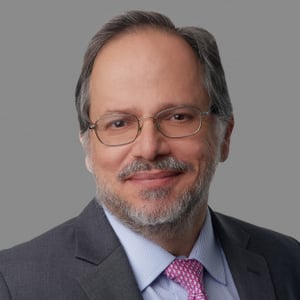
Director of Law & Policy, Environmental Integrity Project
Following Princeton and the University of Chicago Law School, David began practicing law at Paul, Weiss, Rifkind, Wharton & Garrison. Eventually tiring of litigation where the result was a wire transfer from Entity A to Entity B, in the early 1990’s David began his environmental law career at the Massachusetts Attorney General’s Office. Since then, he has litigated dozens of cases under all of the major environmental statutes including, as Sierra Club’s Chief Climate Counsel, initiating and managing Massachusetts v. EPA. Most recently, he has been busy challenging FERC’s permitting of natural gas pipelines and LNG export terminals. Apart from litigation, David has helped lead efforts on both greenhouse gas regulation and global warming legislation (and may be the only person ever invited to testify by both Barbara Boxer and James Inhofe).
He has drafted a range of federal climate legislation, advised states as to their greenhouse gas regulatory authority (and for many years has represented environmental groups defending state GHG regulations from dormant Commerce Clause challenges). David has designed and taught courses on “Environmental Litigation” at Georgetown University Law Center and “Environmental Law and Science” at the William and Mary Law School/Virginia Institute of Marine Science.
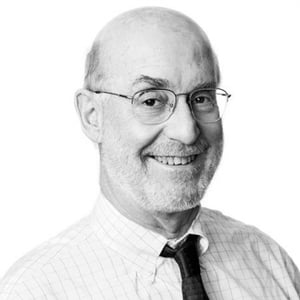
Director, Climate & Clean Air Program, Natural Resources Defense Council
David Doniger has been at the forefront of the battle against air pollution and global climate change since he joined NRDC in 1978. He helped formulate the Montreal Protocol, an international agreement designed to stop the depletion of the earth's ozone layer, as well as several essential amendments to the Clean Air Act. In 1993, he left NRDC to serve on the White House Council on Environmental Quality, followed by key posts at the U.S. Environmental Protection Agency. He rejoined NRDC in 2001 and has since been working to defend the Clean Air Act from assaults in Congress. He is based in Washington, D.C.
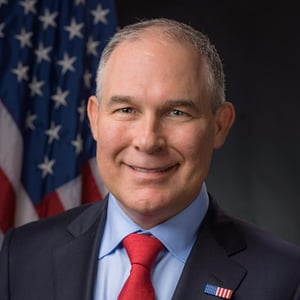
Former Administrator, U.S. Environmental Protection Agency
Scott Pruitt served as the 14th Administrator of the U.S. Environmental Protection Agency.
As Administrator, Mr. Pruitt’s overarching goal was to lead EPA in a way that our future generations inherit a better and healthier environment as he works with the thousands of dedicated public servants at EPA who have devoted their careers to helping realize this shared vision, while faithfully administering environmental laws.
Prior to the EPA, Pruitt served as the Attorney General for Oklahoma. Almost immediately upon taking office, he worked with his Democratic counterpart in Arkansas to reach agreement to study the water quality of the Illinois River, which crosses the border between the two states and has been enjoyed by generations of Oklahomans. The Statement of Joint Principles provides for a best science study using EPA-approved methods, with both states agreeing, for the first time, to be bound by the outcome.
Also during his tenure as Oklahoma’s Attorney General, Pruitt led an historic water rights settlement between Oklahoma, Oklahoma City and the Choctaw and Chickasaw Tribal Nations that preserved the ecosystems of scenic lakes and rivers on native lands. The agreement, which required Congressional approval, was enacted into Section 3608 of Public Law 114-322 and signed in December 2016. It provides a framework that fosters intergovernmental collaboration on significant water resource concerns with the settlement area, while at the same time protecting existing water rights and affirming the state’s role in water rights permitting and administration.
Water settlement cases can be lengthy, costly, divisive and disruptive; however under Pruitt’s forward-thinking leadership, the process was hailed by all parties as one of commitment, hard work, perseverance and cooperation.
Pruitt became a national leader through a career of advocating to keep power in the hands of hard-working Americans. He has a proven track record of working with others – including industry, farmers, ranchers, landowners and small business owners - who want to do the right thing by the environment.
He has dedicated his career to creating policy that serves the people. He strongly believes that environmental law, policy and progress are all based on cooperation between the states, cooperation between the states and EPA, and cooperation between regulators and the public. As Attorney General for Oklahoma, he led the state’s legal challenges against property rights intrusion, while protecting Oklahoma’s natural resources and environment.
He is recognized as a national leader in the cause to restore the proper balance between the states and federal government, and he established Oklahoma’s first federalism unit to combat unwarranted regulation and overreach by the federal government.
Before being elected attorney general, he served eight years in the Oklahoma State Senate where he was a leading voice for fiscal responsibility.
After earning his Bachelor’s Degree from Georgetown College and graduating from the University of Tulsa College of Law, Pruitt went into private legal practice, specializing in constitutional law.
In addition to his life as a civil servant, Pruitt is a successful entrepreneur. As a co-owner and managing general partner of Oklahoma City’s Triple-A minor league baseball affiliate, the Oklahoma City Redhawks, Mr. Pruitt took over the team’s marketing operations and helped the team become one of the minor league leaders in attendance and merchandise sales.
Pruitt is, first and foremost, a family man. He and Marlyn, his wife of 27 years, proudly raised their daughter, McKenna, and son, Cade, in Tulsa. Pruitt has made it a priority to pass on to his children the same principled family values with which he was raised.

Partner, Baker Hostetler LLP
David Rivkin is a member of the firm's litigation, international and environmental teams and is co-leader of the firm's national appellate practice. He has extensive experience in constitutional, administrative and international law litigation and has been involved in numerous high-profile cases. With his prior experience in the government sector, David draws on a wealth of knowledge when providing compliance advice to companies and handling enforcement proceedings before government agencies on issues arising out of multilateral and unilateral sanctions, the Foreign Corrupt Practices Act (FCPA), anti-boycott issues, bankruptcy and financial fraud matters, and environmental and energy issues.
David has developed and implemented legislative, regulatory and litigation initiatives for two presidential administrations. Over the years, he has published hundreds of articles, op-eds, book reviews and book chapters on a variety of international, legal, constitutional, defense, arms control, foreign policy, environmental and energy issues for various newspapers and magazines, including The Wall Street Journal, The Washington Post, The New York Times, USA Today and The Los Angeles Times, and has been a frequent commentator and guest on TV and radio shows including ABC, CBS, NBC, CNN, Fox News, NPR and PBS.
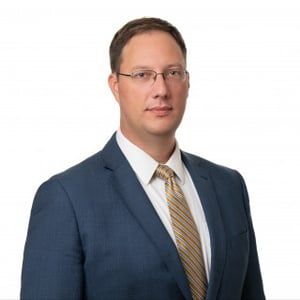
Laurence H. Silberman Chair in Constitutional Governance, American Enterprise Institute; Executive Director, Antonin Scalia Law School’s C. Boyden Gray Center for the Study of the Administrative State
Adam J. White is the Laurence H. Silberman Chair in Constitutional Governance and senior fellow at the American Enterprise Institute, where he focuses on the Supreme Court and the administrative state. He also directs the Antonin Scalia Law School’s C. Boyden Gray Center for the Study of the Administrative State.
He writes on regulation and constitutional government for a variety of publications. He practiced law in Washington, D.C., after clerking for the D.C. Circuit's Judge David Sentelle. He also has been chairman of the ABA's Administrative Law Section.
In 2021, he served on the Presidential Commission on the Supreme Court of the United States, where he criticized “Court packing” and other efforts to restructure the Supreme Court.
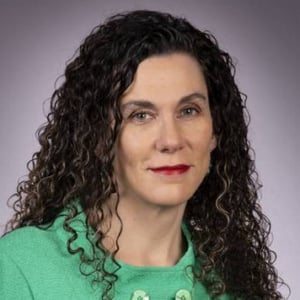
Associate Professor of Law, Center for Intellectual Property and Entrepreneurship, University of Missouri School of Law
Professor Lietzan researches, writes, and teaches primarily in the areas of food and drug regulation, intellectual property, and administrative law. Some of her recent scholarship has focused on the nature and purpose of the new drug approval system, federal regulation of fecal microbiota transplantation, federal regulation of products derived from cannabis, the political economy of the Hatch-Waxman (generic drug) statute, and incentives to study already approved drugs for new uses. She is an award-winning teacher, and she has been an elected member of the American Law Institute since 2006.
Professor Lietzan brings to her scholarship and teaching eighteen years of private practice experience, eight of them as a partner in the food and drug group at Covington & Burling in Washington, DC. In practice, she handled a wide range of complex legal problems and broader legislative and regulatory policy questions affecting FDA-regulated companies. This work included lifecycle management and strategy issues, regulatory strategy and advocacy, white collar defense, congressional investigations, briefing in products liability cases, and international regulatory policy work. She was involved in every major amendment to the Federal Food, Drug, and Cosmetic Act (FDCA) between 1997 and 2014 and was deeply immersed for more than a decade in the development of the Biologics Price Competition and Innovation Act of 2010. She has been consistently identified by her peers in private practice as a “Best Lawyer in America” in the categories of FDA law (since 2013) and Biotechnology Law (since 2007).
Professor Lietzan has held one leadership position or another at the Food and Drug Law Institute (FDLI) since 2004, including a stint on its Board of Directors from 2008 to 2012. She also held leadership positions in the American Bar Association’s Section of Science and Technology Law for fourteen years.
Professor Lietzan received a bachelor’s degree from the University of North Carolina, where she graduated with honors in history. She holds a master’s degree in history from UCLA and a law degree with high honors from Duke Law School.
Director of Law & Policy, Environmental Integrity Project
Following Princeton and the University of Chicago Law School, David began practicing law at Paul, Weiss, Rifkind, Wharton & Garrison. Eventually tiring of litigation where the result was a wire transfer from Entity A to Entity B, in the early 1990’s David began his environmental law career at the Massachusetts Attorney General’s Office. Since then, he has litigated dozens of cases under all of the major environmental statutes including, as Sierra Club’s Chief Climate Counsel, initiating and managing Massachusetts v. EPA. Most recently, he has been busy challenging FERC’s permitting of natural gas pipelines and LNG export terminals. Apart from litigation, David has helped lead efforts on both greenhouse gas regulation and global warming legislation (and may be the only person ever invited to testify by both Barbara Boxer and James Inhofe).
He has drafted a range of federal climate legislation, advised states as to their greenhouse gas regulatory authority (and for many years has represented environmental groups defending state GHG regulations from dormant Commerce Clause challenges). David has designed and taught courses on “Environmental Litigation” at Georgetown University Law Center and “Environmental Law and Science” at the William and Mary Law School/Virginia Institute of Marine Science.
Director, Climate & Clean Air Program, Natural Resources Defense Council
David Doniger has been at the forefront of the battle against air pollution and global climate change since he joined NRDC in 1978. He helped formulate the Montreal Protocol, an international agreement designed to stop the depletion of the earth's ozone layer, as well as several essential amendments to the Clean Air Act. In 1993, he left NRDC to serve on the White House Council on Environmental Quality, followed by key posts at the U.S. Environmental Protection Agency. He rejoined NRDC in 2001 and has since been working to defend the Clean Air Act from assaults in Congress. He is based in Washington, D.C.
Former Administrator, U.S. Environmental Protection Agency
Scott Pruitt served as the 14th Administrator of the U.S. Environmental Protection Agency.
As Administrator, Mr. Pruitt’s overarching goal was to lead EPA in a way that our future generations inherit a better and healthier environment as he works with the thousands of dedicated public servants at EPA who have devoted their careers to helping realize this shared vision, while faithfully administering environmental laws.
Prior to the EPA, Pruitt served as the Attorney General for Oklahoma. Almost immediately upon taking office, he worked with his Democratic counterpart in Arkansas to reach agreement to study the water quality of the Illinois River, which crosses the border between the two states and has been enjoyed by generations of Oklahomans. The Statement of Joint Principles provides for a best science study using EPA-approved methods, with both states agreeing, for the first time, to be bound by the outcome.
Also during his tenure as Oklahoma’s Attorney General, Pruitt led an historic water rights settlement between Oklahoma, Oklahoma City and the Choctaw and Chickasaw Tribal Nations that preserved the ecosystems of scenic lakes and rivers on native lands. The agreement, which required Congressional approval, was enacted into Section 3608 of Public Law 114-322 and signed in December 2016. It provides a framework that fosters intergovernmental collaboration on significant water resource concerns with the settlement area, while at the same time protecting existing water rights and affirming the state’s role in water rights permitting and administration.
Water settlement cases can be lengthy, costly, divisive and disruptive; however under Pruitt’s forward-thinking leadership, the process was hailed by all parties as one of commitment, hard work, perseverance and cooperation.
Pruitt became a national leader through a career of advocating to keep power in the hands of hard-working Americans. He has a proven track record of working with others – including industry, farmers, ranchers, landowners and small business owners - who want to do the right thing by the environment.
He has dedicated his career to creating policy that serves the people. He strongly believes that environmental law, policy and progress are all based on cooperation between the states, cooperation between the states and EPA, and cooperation between regulators and the public. As Attorney General for Oklahoma, he led the state’s legal challenges against property rights intrusion, while protecting Oklahoma’s natural resources and environment.
He is recognized as a national leader in the cause to restore the proper balance between the states and federal government, and he established Oklahoma’s first federalism unit to combat unwarranted regulation and overreach by the federal government.
Before being elected attorney general, he served eight years in the Oklahoma State Senate where he was a leading voice for fiscal responsibility.
After earning his Bachelor’s Degree from Georgetown College and graduating from the University of Tulsa College of Law, Pruitt went into private legal practice, specializing in constitutional law.
In addition to his life as a civil servant, Pruitt is a successful entrepreneur. As a co-owner and managing general partner of Oklahoma City’s Triple-A minor league baseball affiliate, the Oklahoma City Redhawks, Mr. Pruitt took over the team’s marketing operations and helped the team become one of the minor league leaders in attendance and merchandise sales.
Pruitt is, first and foremost, a family man. He and Marlyn, his wife of 27 years, proudly raised their daughter, McKenna, and son, Cade, in Tulsa. Pruitt has made it a priority to pass on to his children the same principled family values with which he was raised.
Partner, Baker Hostetler LLP
David Rivkin is a member of the firm's litigation, international and environmental teams and is co-leader of the firm's national appellate practice. He has extensive experience in constitutional, administrative and international law litigation and has been involved in numerous high-profile cases. With his prior experience in the government sector, David draws on a wealth of knowledge when providing compliance advice to companies and handling enforcement proceedings before government agencies on issues arising out of multilateral and unilateral sanctions, the Foreign Corrupt Practices Act (FCPA), anti-boycott issues, bankruptcy and financial fraud matters, and environmental and energy issues.
David has developed and implemented legislative, regulatory and litigation initiatives for two presidential administrations. Over the years, he has published hundreds of articles, op-eds, book reviews and book chapters on a variety of international, legal, constitutional, defense, arms control, foreign policy, environmental and energy issues for various newspapers and magazines, including The Wall Street Journal, The Washington Post, The New York Times, USA Today and The Los Angeles Times, and has been a frequent commentator and guest on TV and radio shows including ABC, CBS, NBC, CNN, Fox News, NPR and PBS.
Laurence H. Silberman Chair in Constitutional Governance, American Enterprise Institute; Executive Director, Antonin Scalia Law School’s C. Boyden Gray Center for the Study of the Administrative State
Adam J. White is the Laurence H. Silberman Chair in Constitutional Governance and senior fellow at the American Enterprise Institute, where he focuses on the Supreme Court and the administrative state. He also directs the Antonin Scalia Law School’s C. Boyden Gray Center for the Study of the Administrative State.
He writes on regulation and constitutional government for a variety of publications. He practiced law in Washington, D.C., after clerking for the D.C. Circuit's Judge David Sentelle. He also has been chairman of the ABA's Administrative Law Section.
In 2021, he served on the Presidential Commission on the Supreme Court of the United States, where he criticized “Court packing” and other efforts to restructure the Supreme Court.
Director of Law & Policy, Environmental Integrity Project
Following Princeton and the University of Chicago Law School, David began practicing law at Paul, Weiss, Rifkind, Wharton & Garrison. Eventually tiring of litigation where the result was a wire transfer from Entity A to Entity B, in the early 1990’s David began his environmental law career at the Massachusetts Attorney General’s Office. Since then, he has litigated dozens of cases under all of the major environmental statutes including, as Sierra Club’s Chief Climate Counsel, initiating and managing Massachusetts v. EPA. Most recently, he has been busy challenging FERC’s permitting of natural gas pipelines and LNG export terminals. Apart from litigation, David has helped lead efforts on both greenhouse gas regulation and global warming legislation (and may be the only person ever invited to testify by both Barbara Boxer and James Inhofe).
He has drafted a range of federal climate legislation, advised states as to their greenhouse gas regulatory authority (and for many years has represented environmental groups defending state GHG regulations from dormant Commerce Clause challenges). David has designed and taught courses on “Environmental Litigation” at Georgetown University Law Center and “Environmental Law and Science” at the William and Mary Law School/Virginia Institute of Marine Science.
Director, Climate & Clean Air Program, Natural Resources Defense Council
David Doniger has been at the forefront of the battle against air pollution and global climate change since he joined NRDC in 1978. He helped formulate the Montreal Protocol, an international agreement designed to stop the depletion of the earth's ozone layer, as well as several essential amendments to the Clean Air Act. In 1993, he left NRDC to serve on the White House Council on Environmental Quality, followed by key posts at the U.S. Environmental Protection Agency. He rejoined NRDC in 2001 and has since been working to defend the Clean Air Act from assaults in Congress. He is based in Washington, D.C.
Former Administrator, U.S. Environmental Protection Agency
Scott Pruitt served as the 14th Administrator of the U.S. Environmental Protection Agency.
As Administrator, Mr. Pruitt’s overarching goal was to lead EPA in a way that our future generations inherit a better and healthier environment as he works with the thousands of dedicated public servants at EPA who have devoted their careers to helping realize this shared vision, while faithfully administering environmental laws.
Prior to the EPA, Pruitt served as the Attorney General for Oklahoma. Almost immediately upon taking office, he worked with his Democratic counterpart in Arkansas to reach agreement to study the water quality of the Illinois River, which crosses the border between the two states and has been enjoyed by generations of Oklahomans. The Statement of Joint Principles provides for a best science study using EPA-approved methods, with both states agreeing, for the first time, to be bound by the outcome.
Also during his tenure as Oklahoma’s Attorney General, Pruitt led an historic water rights settlement between Oklahoma, Oklahoma City and the Choctaw and Chickasaw Tribal Nations that preserved the ecosystems of scenic lakes and rivers on native lands. The agreement, which required Congressional approval, was enacted into Section 3608 of Public Law 114-322 and signed in December 2016. It provides a framework that fosters intergovernmental collaboration on significant water resource concerns with the settlement area, while at the same time protecting existing water rights and affirming the state’s role in water rights permitting and administration.
Water settlement cases can be lengthy, costly, divisive and disruptive; however under Pruitt’s forward-thinking leadership, the process was hailed by all parties as one of commitment, hard work, perseverance and cooperation.
Pruitt became a national leader through a career of advocating to keep power in the hands of hard-working Americans. He has a proven track record of working with others – including industry, farmers, ranchers, landowners and small business owners - who want to do the right thing by the environment.
He has dedicated his career to creating policy that serves the people. He strongly believes that environmental law, policy and progress are all based on cooperation between the states, cooperation between the states and EPA, and cooperation between regulators and the public. As Attorney General for Oklahoma, he led the state’s legal challenges against property rights intrusion, while protecting Oklahoma’s natural resources and environment.
He is recognized as a national leader in the cause to restore the proper balance between the states and federal government, and he established Oklahoma’s first federalism unit to combat unwarranted regulation and overreach by the federal government.
Before being elected attorney general, he served eight years in the Oklahoma State Senate where he was a leading voice for fiscal responsibility.
After earning his Bachelor’s Degree from Georgetown College and graduating from the University of Tulsa College of Law, Pruitt went into private legal practice, specializing in constitutional law.
In addition to his life as a civil servant, Pruitt is a successful entrepreneur. As a co-owner and managing general partner of Oklahoma City’s Triple-A minor league baseball affiliate, the Oklahoma City Redhawks, Mr. Pruitt took over the team’s marketing operations and helped the team become one of the minor league leaders in attendance and merchandise sales.
Pruitt is, first and foremost, a family man. He and Marlyn, his wife of 27 years, proudly raised their daughter, McKenna, and son, Cade, in Tulsa. Pruitt has made it a priority to pass on to his children the same principled family values with which he was raised.
Partner, Baker Hostetler LLP
David Rivkin is a member of the firm's litigation, international and environmental teams and is co-leader of the firm's national appellate practice. He has extensive experience in constitutional, administrative and international law litigation and has been involved in numerous high-profile cases. With his prior experience in the government sector, David draws on a wealth of knowledge when providing compliance advice to companies and handling enforcement proceedings before government agencies on issues arising out of multilateral and unilateral sanctions, the Foreign Corrupt Practices Act (FCPA), anti-boycott issues, bankruptcy and financial fraud matters, and environmental and energy issues.
David has developed and implemented legislative, regulatory and litigation initiatives for two presidential administrations. Over the years, he has published hundreds of articles, op-eds, book reviews and book chapters on a variety of international, legal, constitutional, defense, arms control, foreign policy, environmental and energy issues for various newspapers and magazines, including The Wall Street Journal, The Washington Post, The New York Times, USA Today and The Los Angeles Times, and has been a frequent commentator and guest on TV and radio shows including ABC, CBS, NBC, CNN, Fox News, NPR and PBS.
Laurence H. Silberman Chair in Constitutional Governance, American Enterprise Institute; Executive Director, Antonin Scalia Law School’s C. Boyden Gray Center for the Study of the Administrative State
Adam J. White is the Laurence H. Silberman Chair in Constitutional Governance and senior fellow at the American Enterprise Institute, where he focuses on the Supreme Court and the administrative state. He also directs the Antonin Scalia Law School’s C. Boyden Gray Center for the Study of the Administrative State.
He writes on regulation and constitutional government for a variety of publications. He practiced law in Washington, D.C., after clerking for the D.C. Circuit's Judge David Sentelle. He also has been chairman of the ABA's Administrative Law Section.
In 2021, he served on the Presidential Commission on the Supreme Court of the United States, where he criticized “Court packing” and other efforts to restructure the Supreme Court.
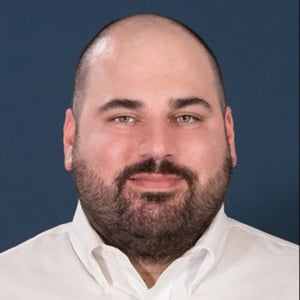
Senior Attorney, Pacific Legal Foundation
Chris Kieser practices in PLF’s property rights and equality before the law practice groups.
His property rights clients include Cedar Point Nursery, which challenged a California regulation requiring them to allow union organizers to invade their private property, as well as Randall and Kimberley Pavlock, who are fighting back against Indiana’s beachfront land grab along Lake Michigan.
Under equality before the law, Chris represents coalitions of Asian-American parents challenging discriminatory admissions policies for selective K-12 schools in New York City; Montgomery County, Maryland; and Fairfax County, Virginia. He also represents a parent organization in Connecticut challenging a racial quota that prevents many Black and Hispanic students from enrolling at the state’s magnet schools.
Chris has published law review articles in the William & Mary Environmental Law Review and the Federalist Society Review. His op-eds have appeared in the New York Daily News, National Review, The Blaze, the Daily Journal, and SCOTUSblog.
Chris clerked for the Honorable Daniel A. Manion of the United States Court of Appeals for the Seventh Circuit and the Honorable Thomas D. Schroeder of the United States District Court for the Middle District of North Carolina. He holds a B.A., cum laude, from the University of Notre Dame, and graduated magna cum laude from Notre Dame Law School in 2013. At Notre Dame, he was an articles editor of the Notre Dame Law Review.
Growing up on Long Island, Chris developed a deep passion for limited government and individual liberty, arguing with his more numerous progressive classmates. This experience made him deeply skeptical that government tinkering at the expense of individual rights ever works, whether it be denying a property owner the use of his land or a student a seat at her desired school because of her race. He chose PLF because it is the national leader in litigation that furthers individual liberty.
When he’s not working, you’re likely to find Chris rooting for the Mets and Fighting Irish or debating some arcane point of law (because apparently that doesn’t happen enough at work).
Chris is currently licensed to practice in California and admitted to practice before the Supreme Court of the United States, the United States Courts of Appeal for the Second, Seventh, and Ninth Circuits, and the U.S. District Courts for the Eastern and Central Districts of California, the Northern District of Indiana, and the Northern District of Illinois.
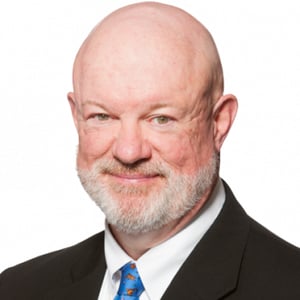
Senior Legal Fellow, the Meese Institute for the Rule of Law, Advancing American Freedom
Paul J. Larkin is a Senior Legal Fellow in the Meese Institute for the Rule of Law at Advancing American Freedom. Paul has held various positions in the federal and state governments throughout his career, such as being an attorney in the Organized Crime and Racketeering Section of the Criminal Division at the U.S. Department of Justice, an Assistant to the Solicitor General in the Office of the Solicitor General at the U.S. Department of Justice, Special Agent-in-Charge and Acting Director of the Criminal Investigation Division at the Environmental Protection Agency, and a member of the Parole Abolition and Sentencing Reform Commission and of the Juvenile Justice Reform Commission in the Office of Virginia Governor George Allen.
He has also worked at Verizon Communications and two law firms in Washington, D.C. His current research is principally in the fields of drug policy, criminal justice policy, and administrative law and policy. He has published numerous articles in law and public policy journals, both in print and online.
Olin-Darling Fellow, Stanford Law School
Lance Sorenson is currently the Olin-Darling Fellow at Stanford Law School.. He has a law degree from Pepperdine University and is a PhD candidate in Legal History at the University of Nevada Las Vegas. He is interested in legal systems and structures, particularly in the American West. His dissertation analyzes iterations of United States’ federalism as part of westward expansion.

Take heart voters: No matter who gets elected, the president can't destroy the republic
Federalist Society member Donald Kochan writes for the Los Angeles Times: The first installment of...
The Globe And The Gavel: Judicial Decision-making In the Age of Globalization
Honolulu, HawaiiA Second Look at the CREATES Act: What’s Not Being Said
Erika Lietzan
Note from the Editor: This article critically discusses the CREATES Act, which is currently pending...
Topics
Texas Chapters Conference panels rundown
The Texas Chapter of the Federalist Society held its second annual chapter conference on September...
The Clean Power Plan Goes to Court
David Bookbinder, David D. Doniger, Scott Pruitt, David B. Rivkin, Adam White
In August 2015 the President announced the Clean Power Plan, characterized by the Environmental Protection...
The Clean Power Plan Goes to Court
David Bookbinder, David D. Doniger, Scott Pruitt, David B. Rivkin, Adam White
In August 2015 the President announced the Clean Power Plan, characterized by the Environmental Protection...
The Clean Power Plan Goes to Court
Environmental Law & Property Rights Practice Group
Washington, DCFinding the Denominator in Regulatory Takings Cases: A Preview of Murr v. Wisconsin
Christopher M. Kieser
Note from the Editor: This article discusses Murr v. Wisconsin, a regulatory takings case that the...
The Justice Department’s Third-Party Payment Practice, the Antideficiency Act, and Legal Ethics
Paul James Larkin
Note from the Editor: This article argues that the Justice Department’s practice of distributing settlement...
Puerto Rico v. Sanchez Valle - Post-Decision SCOTUScast
Lance Sorenson
On June 9, 2016, the Supreme Court decided Puerto Rico v. Sanchez Valle. Sanchez Valle...