
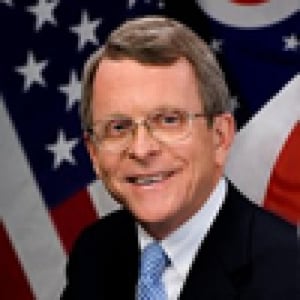
Ohio Attorney General
As Attorney General, Mike DeWine’s priority is protecting Ohio’s families.
To better protect our kids, Attorney General DeWine created a special Crimes Against Children Unit to help identify, arrest, and convict sexual predators. He has also increased training for law enforcement and educators to help improve school safety, as well as human trafficking, child abuse, missing children, bullying and the needs of foster youth.
Attorney General DeWine is working to rebuild Ohio’s neighborhoods, investing $75 million from the national mortgage settlement to help demolish abandoned and blighted properties. He has also made commitments to support anti-gun violence programs and community groups that are working to repair our hardest-hit communities.
On his first day in office, Attorney General DeWine joined in the federal lawsuit challenging the constitutionality of Obamacare. In addition he is working hard to make sure his office provides cutting-edge criminal investigation and law enforcement training services, is rooting out public corruption, and helping to create a legal climate in Ohio that encourages businesses to invest in the state and create jobs.
DeWine has also devoted resources to fighting Ohio’s prescription drug abuse and heroin problems, increased the number of criminal prosecutions in consumer fraud cases, and dramatically decreased the turn-around time for testing of DNA evidence. He has dedicated resources to testing all of Ohio’s old sexual assault kits, which is leading to the convictions of sexual predators.
Attorney General DeWine has a long and distinguished career in public service focusing on protecting Ohio children and families. DeWine served as Greene County Prosecuting Attorney, in the Ohio State Senate, in the United States House of Representatives, as Ohio Lieutenant Governor and in the United States Senate.
Mike DeWine grew up in Yellow Springs, Ohio and married his high school sweetheart, Frances Streuwing, while both were students at Miami University. The DeWines, who have resided in Cedarville Township since Mike graduated from law school, are the parents of eight children and 22 grandchildren.
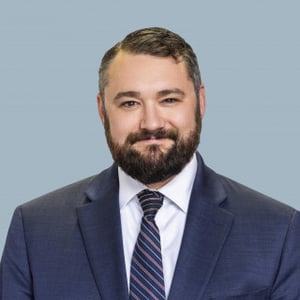
Partner, Ashbrook Byrne Kresge Flowers LLC
Ben Flowers, a partner at Ashbrook Byrne Kresge Flowers LLC, is an accomplished litigator with experience briefing, arguing, and winning high-stakes cases in courts throughout the country.
Before joining the law firm, Ben served as Ohio's 10th Solicitor General. In that role he regularly represented the State of Ohio before the Supreme Court of the United States, the United States Court of Appeals for the Sixth Circuit, and the Supreme Court of Ohio. Most prominently, in National Federation of Independent Business v. Department of Labor, Ben led a multi-state challenge to OSHA's vaccine mandate, ultimately prevailing before the Supreme Court.
Ben is a graduate of The Ohio State University and the University of Chicago Law School. Following law school, Ben clerked for Judge Sandra Ikuta of the U.S. Court of Appeals for the Ninth Circuit and for Justice Antonin Scalia of the Supreme Court of this United States. Ben lives in Upper Arlington, Ohio with his wife Denise and their three very active children.
Warren County Prosecutor, State of Ohio
David P. Fornshell was sworn-in as the 38th Prosecuting Attorney of Warren County on February 17, 2011. David comes to the Prosecutor's Office after most recently serving as a partner in the litigation department at Dinsmore & Shohl LLP in Cincinnati. David started his legal practice with Dinsmore in 1999 and still maintains an Of Counsel affiliation with the firm. From 1999-2007, David also served as Prosecuting Attorney for the City of Blue Ash, Ohio.
David is actively involved in the community and serves as a member of the FBI Joint Terrorism Task Force, Ohio Prosecuting Attorney’s Association Executive and Legislative Committees, Warren County Drug Task Force Policy Board, Child Advocacy Center of Warren County Steering Committee, Ralph J. Stolle Countryside YMCA Board of Directors, and various other volunteer boards and committees. David is also the former Chairman of the Warren County Board of Elections, former Chairman of the Warren County Republican Party, former Secretary of the Warren County Board of MR/DD, and former Admissions Committee Chairperson of the Warren County Bar Association.
Since becoming Warren County Prosecutor, David has expanded the Prosecutor’s Office’s community outreach efforts. Most recently, David developed and conducted training for board members, officers, and volunteers of charitable, church, booster, youth sports, and other not-for-profit organizations on how to protect against internal organizational theft. He has also developed and conducted age-appropriate presentations for numerous Warren County high school, junior high school, middle school, and elementary school students on topics such as school threats, sexting, date rape, and juvenile decision-making.
David has prosecuted cases receiving international and national attention, including cases profiled by the BBC documentary series Life and Death Row, Good Morning America, Fox News, CNN, MSNBC, The Washington Post, The New York Times, The UK Daily Mail, and numerous other international and national publications. David also served as a legal consultant for a network television series crime drama.
A seventh-generation Warren County resident, David grew up in the Lebanon/Turtlecreek Township area where he graduated from Lebanon High School. David graduated summa cum laude from Ohio University where he received degrees in Finance and Business Prelaw. David received his Juris Doctor from Pepperdine University School of Law in Malibu, California, finishing in the top 10% of his graduating class. While at Pepperdine, David served on the Pepperdine Law Review, Pepperdine Moot Court Board, and also worked as a legal research and writing teaching assistant. David also won the Best Advocate Award at both the 1998 National Moot Court Competition (Los Angeles) and the 1999 Sutherland Cup National Constitutional Law Competition (Washington, D.C.), and received the American Jurisprudence Award for Civil Procedure I and Civil Procedure II.
David and his wife Amy reside in the Lebanon area with their three children. Over the past decade, David has served as volunteer coach for Lebanon youth football, basketball, baseball, and fast-pitch softball organizations. He and his family are active in Lebanon Presbyterian Church.
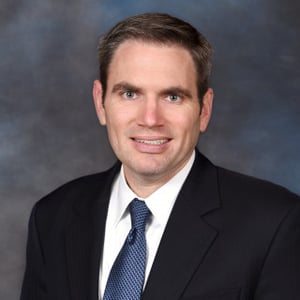
Judge, United States Court of Appeals, Sixth Circuit
Eric Murphy has been a Judge on the United States Court of Appeals for the Sixth Circuit since March 2019. He previously served as the ninth State Solicitor of Ohio. In that role, Eric briefed and argued appellate cases on behalf of Ohio and its state agencies and officers in the U.S. Supreme Court, the U.S. Court of Appeals for the Sixth Circuit, and the Ohio Supreme Court. Before his appointment as State Solicitor, Eric practiced appellate litigation at Jones Day. After graduation from law school, he served as a law clerk for Justice Anthony M. Kennedy of the Supreme Court of the United States, and Judge J. Harvie Wilkinson III of the United States Court of Appeals for the Fourth Circuit. He received his law degree from the University of Chicago and his undergraduate degree from Miami University.

Attorney General, State of Ohio
Dave Yost was re-elected as Ohio’s 51st attorney general on Nov. 8, 2022, receiving more votes than any other attorney general in the state’s history.
During his first term as the state’s chief legal officer, he quickly gained a national reputation as a fearless advocate for the rule of law — or, as he puts it, “the same rules for everybody.”
Yost’s goal is to “do big good” for the people of Ohio by protecting consumers, rooting out corruption, defending the environment, ensuring an open and competitive marketplace, and fulfilling the many other duties of the Ohio Attorney General’s Office.
Yost began his public-service career as Delaware County auditor, later winning election as that county’s prosecutor. From 2011 through 2018, he served as Ohio’s auditor of state and, in January 2019, began his first term as attorney general.
Yost earned his bachelor’s degree from The Ohio State University and law degree from Capital University. He and his wife, Darlene, live in Franklin County; they have three grown children and five grandchildren.
Ohio Attorney General
As Attorney General, Mike DeWine’s priority is protecting Ohio’s families.
To better protect our kids, Attorney General DeWine created a special Crimes Against Children Unit to help identify, arrest, and convict sexual predators. He has also increased training for law enforcement and educators to help improve school safety, as well as human trafficking, child abuse, missing children, bullying and the needs of foster youth.
Attorney General DeWine is working to rebuild Ohio’s neighborhoods, investing $75 million from the national mortgage settlement to help demolish abandoned and blighted properties. He has also made commitments to support anti-gun violence programs and community groups that are working to repair our hardest-hit communities.
On his first day in office, Attorney General DeWine joined in the federal lawsuit challenging the constitutionality of Obamacare. In addition he is working hard to make sure his office provides cutting-edge criminal investigation and law enforcement training services, is rooting out public corruption, and helping to create a legal climate in Ohio that encourages businesses to invest in the state and create jobs.
DeWine has also devoted resources to fighting Ohio’s prescription drug abuse and heroin problems, increased the number of criminal prosecutions in consumer fraud cases, and dramatically decreased the turn-around time for testing of DNA evidence. He has dedicated resources to testing all of Ohio’s old sexual assault kits, which is leading to the convictions of sexual predators.
Attorney General DeWine has a long and distinguished career in public service focusing on protecting Ohio children and families. DeWine served as Greene County Prosecuting Attorney, in the Ohio State Senate, in the United States House of Representatives, as Ohio Lieutenant Governor and in the United States Senate.
Mike DeWine grew up in Yellow Springs, Ohio and married his high school sweetheart, Frances Streuwing, while both were students at Miami University. The DeWines, who have resided in Cedarville Township since Mike graduated from law school, are the parents of eight children and 22 grandchildren.
Partner, Ashbrook Byrne Kresge Flowers LLC
Ben Flowers, a partner at Ashbrook Byrne Kresge Flowers LLC, is an accomplished litigator with experience briefing, arguing, and winning high-stakes cases in courts throughout the country.
Before joining the law firm, Ben served as Ohio's 10th Solicitor General. In that role he regularly represented the State of Ohio before the Supreme Court of the United States, the United States Court of Appeals for the Sixth Circuit, and the Supreme Court of Ohio. Most prominently, in National Federation of Independent Business v. Department of Labor, Ben led a multi-state challenge to OSHA's vaccine mandate, ultimately prevailing before the Supreme Court.
Ben is a graduate of The Ohio State University and the University of Chicago Law School. Following law school, Ben clerked for Judge Sandra Ikuta of the U.S. Court of Appeals for the Ninth Circuit and for Justice Antonin Scalia of the Supreme Court of this United States. Ben lives in Upper Arlington, Ohio with his wife Denise and their three very active children.
Warren County Prosecutor, State of Ohio
David P. Fornshell was sworn-in as the 38th Prosecuting Attorney of Warren County on February 17, 2011. David comes to the Prosecutor's Office after most recently serving as a partner in the litigation department at Dinsmore & Shohl LLP in Cincinnati. David started his legal practice with Dinsmore in 1999 and still maintains an Of Counsel affiliation with the firm. From 1999-2007, David also served as Prosecuting Attorney for the City of Blue Ash, Ohio.
David is actively involved in the community and serves as a member of the FBI Joint Terrorism Task Force, Ohio Prosecuting Attorney’s Association Executive and Legislative Committees, Warren County Drug Task Force Policy Board, Child Advocacy Center of Warren County Steering Committee, Ralph J. Stolle Countryside YMCA Board of Directors, and various other volunteer boards and committees. David is also the former Chairman of the Warren County Board of Elections, former Chairman of the Warren County Republican Party, former Secretary of the Warren County Board of MR/DD, and former Admissions Committee Chairperson of the Warren County Bar Association.
Since becoming Warren County Prosecutor, David has expanded the Prosecutor’s Office’s community outreach efforts. Most recently, David developed and conducted training for board members, officers, and volunteers of charitable, church, booster, youth sports, and other not-for-profit organizations on how to protect against internal organizational theft. He has also developed and conducted age-appropriate presentations for numerous Warren County high school, junior high school, middle school, and elementary school students on topics such as school threats, sexting, date rape, and juvenile decision-making.
David has prosecuted cases receiving international and national attention, including cases profiled by the BBC documentary series Life and Death Row, Good Morning America, Fox News, CNN, MSNBC, The Washington Post, The New York Times, The UK Daily Mail, and numerous other international and national publications. David also served as a legal consultant for a network television series crime drama.
A seventh-generation Warren County resident, David grew up in the Lebanon/Turtlecreek Township area where he graduated from Lebanon High School. David graduated summa cum laude from Ohio University where he received degrees in Finance and Business Prelaw. David received his Juris Doctor from Pepperdine University School of Law in Malibu, California, finishing in the top 10% of his graduating class. While at Pepperdine, David served on the Pepperdine Law Review, Pepperdine Moot Court Board, and also worked as a legal research and writing teaching assistant. David also won the Best Advocate Award at both the 1998 National Moot Court Competition (Los Angeles) and the 1999 Sutherland Cup National Constitutional Law Competition (Washington, D.C.), and received the American Jurisprudence Award for Civil Procedure I and Civil Procedure II.
David and his wife Amy reside in the Lebanon area with their three children. Over the past decade, David has served as volunteer coach for Lebanon youth football, basketball, baseball, and fast-pitch softball organizations. He and his family are active in Lebanon Presbyterian Church.
Judge, United States Court of Appeals, Sixth Circuit
Eric Murphy has been a Judge on the United States Court of Appeals for the Sixth Circuit since March 2019. He previously served as the ninth State Solicitor of Ohio. In that role, Eric briefed and argued appellate cases on behalf of Ohio and its state agencies and officers in the U.S. Supreme Court, the U.S. Court of Appeals for the Sixth Circuit, and the Ohio Supreme Court. Before his appointment as State Solicitor, Eric practiced appellate litigation at Jones Day. After graduation from law school, he served as a law clerk for Justice Anthony M. Kennedy of the Supreme Court of the United States, and Judge J. Harvie Wilkinson III of the United States Court of Appeals for the Fourth Circuit. He received his law degree from the University of Chicago and his undergraduate degree from Miami University.
Attorney General, State of Ohio
Dave Yost was re-elected as Ohio’s 51st attorney general on Nov. 8, 2022, receiving more votes than any other attorney general in the state’s history.
During his first term as the state’s chief legal officer, he quickly gained a national reputation as a fearless advocate for the rule of law — or, as he puts it, “the same rules for everybody.”
Yost’s goal is to “do big good” for the people of Ohio by protecting consumers, rooting out corruption, defending the environment, ensuring an open and competitive marketplace, and fulfilling the many other duties of the Ohio Attorney General’s Office.
Yost began his public-service career as Delaware County auditor, later winning election as that county’s prosecutor. From 2011 through 2018, he served as Ohio’s auditor of state and, in January 2019, began his first term as attorney general.
Yost earned his bachelor’s degree from The Ohio State University and law degree from Capital University. He and his wife, Darlene, live in Franklin County; they have three grown children and five grandchildren.
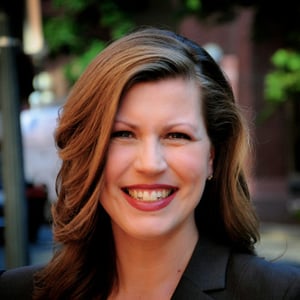
Senior Counsel, The Becket Fund for Religious Liberty
Senior Counsel Hannah Smith joined Becket in 2007 following two clerkships at the U.S. Supreme Court for Justices Clarence Thomas and Samuel A. Alito, Jr.
Ms. Smith was a member of the Becket legal team that secured victories in key U.S. Supreme Court religious liberty cases, including Holt v. Hobbs, 574 U.S. ___ (Jan. 20, 2015), where a unanimous Court held in an opinion authored by Justice Alito that the Religious Land Use and Institutionalized Persons Act requires prison officials to accommodate peaceful expressions of religious devotion; Burwell v. Hobby Lobby, 134 S. Ct. 2751 (June 30, 2014), where the Court held in a 5-4 opinion authored by Justice Alito that family-owned businesses enjoy religious liberty rights under the Religious Freedom Restoration Act and that the HHS mandate violated the Act; and Hosanna-Tabor Evangelical Lutheran Church and School v. EEOC, 132 S. Ct. 694 (2012), where a unanimous Court held in an opinion authored by Chief Justice Roberts that the “ministerial exception” under the First Amendment protects a church’s right to choose its own ministers.
Ms. Smith contributed to Becket's Supreme Court filings in Little Sisters of the Poor v. Burwell (2015); Houston Baptist University v. Burwell (2015); Stormans v. Wiesman (2015); Michigan Catholic Conference v. Burwell (2015); Obergefell v. Hodges (2015); University of Notre Dame v. Burwell (2014); Wheaton College v. Burwell, 134 S. Ct. 2806 (2014); Little Sisters of the Poor v. Sebelius, 134 S. Ct. 1022 (2014); Bronx Household of Faith v. New York City Board of Education (2014), Elmbrook School District v. Doe (2014), Big Sky Colony v. Montana Department of Labor and Industry (2013), Sossamon v. Texas (2011), Arizona Christian School Tuition Association v. Winn (2011), Bronx Household of Faith v. New York City Board of Education (2011), Utah Highway Patrol Association v. American Atheists (2011), Christian Legal Society v. Martinez (2010), and Salazar v. Buono (2010).
Ms. Smith has been featured on CNN, Fox News, The O'Reilly Factor, The Sean Hannity Show, C-Span, EWTN, Al Jazeera America, the Wall Street Journal, the Washington Post, the Los Angeles Times, U.S. News and World Report, the Associated Press, National Review Online, Bloomberg News, NPR, BBC, the Laura Ingraham Show, the Rush Limbaugh Show, the Hugh Hewitt Show, BYU Radio, and many other publications and radio shows. She has been invited to speak on religious liberty at Harvard Law School, Princeton University, Stanford Law School, University of Pennsylvania Law School, Southern Methodist University Law School, Brigham Young University Law School, American University Washington College of the Law, and Central European University. And she has given briefings on religious liberty issues at the U.S. Capitol, the State Department, the Heritage Foundation, the Ethics and Public Policy Center, the Federalist Society for Law and Public Policy Studies, the American Bar Association, and the National Constitution Center.
Ms. Smith received her B.A. from Princeton University, concentrating in the Woodrow Wilson School of Public and International Affairs. She graduated with honors from Brigham Young University Law School and was elected to the Order of the Coif. She served as Executive Editor of the BYU Law Review, as a research assistant for the BYU International Center for Law and Religion Studies, and as president of the BYU Federalist Society. BYU awarded her its Alumni Achievement Award for her work in the defense of religious freedom. Ms. Smith also received the J. Reuben Clark Law Society's Women-in-Law Leadership Award for her national leadership in defending religious liberty and advancing the contributions of Mormon women to the law.
Following law school and in between clerkships, she was an associate in private practice at Williams & Connolly and Sidley Austin in Washington D.C., representing clients before state and federal courts and the U.S. Supreme Court in civil, criminal, and constitutional cases. Her private practice religious liberty work included the U.S. Supreme Court petition for certiorari in Corporation of the Presiding Bishop of the Church of Jesus Christ of Latter-day Saints v. First Unitarian Church of Salt Lake City (2003), as well as matters on behalf of Brigham Young University, the Church of Jesus Christ of Latter-day Saints, and the Roman Catholic Archdiocese of Washington D.C.
Ms. Smith served as a full-time volunteer missionary for the Church of Jesus Christ of Latter-day Saints in France and Switzerland. She currently serves as a member of the J. Reuben Clark Law Society International Board and as a member of the Deseret News Editorial Advisory Board. She writes on religious liberty issues in the Deseret News. Hannah and her husband John are happily married with 4 wonderful children.
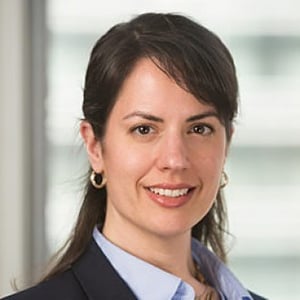
Counsel to Commissioner Hester M. Peirce, U.S. Securities and Exchange Commission
Thaya Brook Knight was associate director of financial regulation studies at the Cato Institute. She is an attorney with extensive experience in securities regulation, small business capital access, and capital markets. Before joining Cato, she co-founded and served as general counsel of CrowdCheck, a company providing due diligence and disclosure services in the online investing market. Following the recent financial crisis, she served as investigative counsel for the congressional oversight panel charged with overseeing the expenditure of Troubled Asset Relief Program funds. She also spent several years with the Washington office of the law firm WilmerHale, where her practice focused on securities litigation, securities enforcement defense, and corporate investigations.
She holds a BA from Middlebury College and a JD from the University of Michigan Law School.
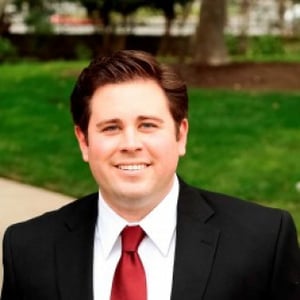
Managing Partner, Bigley Ranish, LLP
Sean M. Bigley is a national security attorney and managing partner of Bigley Ranish, LLP. Mr. Bigley’s practice primarily encompasses defending federal employees and contractors in security clearance denial cases. He also provides personnel security consulting to major international defense and aerospace corporations, and prosecutes intelligence community whistle-blower retaliation cases.
Since first opening his firm in 2013, Mr. Bigley has grown it from a solo practice to a five-attorney partnership with employees in three states. Bigley Ranish, LLP attorneys regularly appear before administrative tribunals at agencies ranging from the CIA to the Department of State, representing in excess of 200 American intelligence officers, diplomats, armed forces personnel, and other security clearance holders each year around the world. In 2016 alone, Mr. Bigley and his colleagues represented clients in roughly forty states and a dozen countries.
The idea for this unique practice was borne out of Mr. Bigley’s prior service as a federal background investigator. Prior to and during law school, Mr. Bigley was an investigator for the U.S. Office of Personnel Management, where he conducted some of that agency’s most sensitive security investigations in the Los Angeles metropolitan area. Mr. Bigley has also served on the faculty of Chapman University, teaching national security and criminal justice courses with an emphasis in U.S.-European security cooperation. Earlier in his career, Mr. Bigley worked for several years in the White House and Department of Homeland Security under President George W. Bush.
A recognized expert in national security law, Mr. Bigley’s commentary on the topic is frequently sought by major media outlets such as Fox News, The New York Times, and CNN. He is a contributing writer for Clearancejobs.com and GovExec.com.
Mr. Bigley earned his Juris Doctorate from Chapman University School of Law. He holds a Bachelor’s Degree from Washington D.C.’s American University and a Master’s Degree from Boston University.
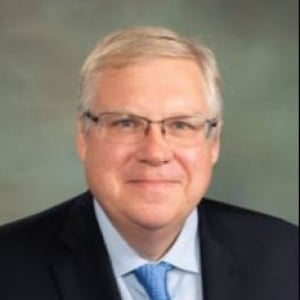
President and General Counsel, Public Interest Legal Foundation
J. Christian Adams is the President and General Counsel of the Public Interest Legal Foundation. He served from 2005 to 2010 in the Voting Section at the United States Department of Justice Voting Section. President Trump appointed Adams to the Presidential Advisory Commission on Election Integrity. President Trump also appointed Adams as a Commissioner to the United States Commission on Civil Rights where he also now serves with a term through 2025. He has been involved in election law lawsuits in 33 states and the territory of Guam. He has represented multiple presidential campaigns in election litigation. He has a law degree from the University of South Carolina School of Law. He is a member of the South Carolina and Virginia Bars.
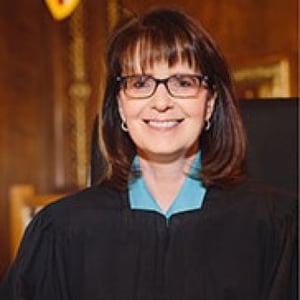
Justice, Ohio Supreme Court
Judi French became a justice of the Supreme Court of Ohio in January 2013 and was elected to her first full term on November 4, 2014. She has traveled throughout Ohio, visiting all 88 counties in her first two years on the bench. With a history of public service and special interest in civic education, Justice French is committed to serving as a resource for the people of Ohio.
A History of Public Service
For the past two decades, Justice French has dedicated her career to public service. In that time, she has served the State of Ohio as a lawyer for a state agency, an assistant attorney general, counsel to the Governor, and, finally, as a judge.
In 1993, she joined the Ohio Environmental Protection Agency as deputy director for legal affairs. From 1997 to 2002, she worked for Attorney General Betty Montgomery as an assistant attorney general, and later as chief counsel.
During her time in the Attorney General’s Office, Justice French argued two cases before the United States Supreme Court. One of those cases was the Cleveland School Vouchers case, in which she served as lead counsel. Her successful presentation of the state’s position helped ensure equitable educational opportunities for every Ohio student.
From 2002 to 2004, Justice French served as chief legal counsel to Governor Bob Taft. In that role, she served as the chair of the Sex Offender Registration and Notification Task Force, which made recommendations to the legislature for making Ohio’s sex-offender laws more effective.
In 2004, Justice French was elected as a judge on the Tenth District Court of Appeals, which hears appeals from Franklin County courts and state administrative agencies. While a judge on the court of appeals for eight years, she authored more than 800 legal opinions.
In December 2012, Governor John Kasich appointed Justice French to fill a vacancy on the Supreme Court of Ohio. She became the 155th justice of the Ohio Supreme Court on January 1, 2013.
A Wide Breadth of Legal Experience
Although her two decades of public service are critical to her understanding of state laws and the Ohio judicial system, Justice French also has the benefit of experience in the corporate and private-practice arenas. She began her career as an attorney with the Columbus law firm of Porter, Wright, Morris & Arthur, specializing in environmental law. Justice French also served as in-house counsel for a large manufacturing company.
A Commitment to Education
The daughter of a schoolteacher, Justice French appreciates her Ohio roots and education, and she is committed to being a part of civic education in Ohio. As an attorney, she served as a tutor and mentor in the Columbus Public Schools. As a justice, she speaks frequently to students from around Ohio, particularly those studying the Ohio Judicial system, whether it be in their classroom or a tour group visiting the Thomas J. Moyer Ohio Judicial Center.
Justice French grew up in Sebring, Ohio, a small town in Mahoning County. She graduated from Sebring McKinley High School in 1980, when she started her undergraduate studies at The Ohio State University.
She received three degrees from OSU: a B.A. in political science, an M.A. in history (with a concentration in military history and strategic studies), and a J.D., with honors. She currently serves her alma mater as a member of the Moritz College of Law National Council.
Justice Judi French currently resides in Grandview Heights, near Columbus, with her husband. They have two children.

Chief Judge, United States Court of Appeals, Sixth Circuit
JEFFREY S. SUTTON is the Chief Judge of the United States Court of Appeals for the Sixth Circuit. He has served as Chair of the Federal Judicial Conference Committee on Rules of Practice and Procedure, Chair of the Advisory Committee on Appellate Rules, and Chair of the Supreme Court Fellows Commission. He currently serves as Chair of the Executive Committee of the Judicial Conference of the United States. Since 1993, Chief Judge Sutton has been an adjunct professor at The Ohio State University College of Law, where he teaches seminars on State Constitutional Law, the United States Supreme Court, and Appellate Advocacy. He also teaches a class on State Constitutional Law at Harvard Law School. Among other publications, he is the author of Who Decides? States as Laboratories of Constitutional Experimentation and 51 Imperfect Solutions: States and the Making of American Constitutional Law. He is the co-author of a casebook, State Constitutional Law: The Modern Experience, as well as The Law of Judicial Precedent. He is also the co-editor of The Essential Scalia: On the Constitution, the Courts, and the Rule of Law. In 2006, Chief Judge Sutton was elected to the American Law Institute, and in 2017 he was elected to its Council.
Ohio Sixth District Court of Appeals (ret.)
Stephen Yarbrough was a judge for the Ohio Sixth District Court of Appeals. He was elected to the court in November 2010 and assumed office on February 9, 2011. His six-year term ended on February 8, 2017.
Yarbrough received his undergraduate, master's, and J.D. degrees from the University of Toledo.
Ohio Attorney General
As Attorney General, Mike DeWine’s priority is protecting Ohio’s families.
To better protect our kids, Attorney General DeWine created a special Crimes Against Children Unit to help identify, arrest, and convict sexual predators. He has also increased training for law enforcement and educators to help improve school safety, as well as human trafficking, child abuse, missing children, bullying and the needs of foster youth.
Attorney General DeWine is working to rebuild Ohio’s neighborhoods, investing $75 million from the national mortgage settlement to help demolish abandoned and blighted properties. He has also made commitments to support anti-gun violence programs and community groups that are working to repair our hardest-hit communities.
On his first day in office, Attorney General DeWine joined in the federal lawsuit challenging the constitutionality of Obamacare. In addition he is working hard to make sure his office provides cutting-edge criminal investigation and law enforcement training services, is rooting out public corruption, and helping to create a legal climate in Ohio that encourages businesses to invest in the state and create jobs.
DeWine has also devoted resources to fighting Ohio’s prescription drug abuse and heroin problems, increased the number of criminal prosecutions in consumer fraud cases, and dramatically decreased the turn-around time for testing of DNA evidence. He has dedicated resources to testing all of Ohio’s old sexual assault kits, which is leading to the convictions of sexual predators.
Attorney General DeWine has a long and distinguished career in public service focusing on protecting Ohio children and families. DeWine served as Greene County Prosecuting Attorney, in the Ohio State Senate, in the United States House of Representatives, as Ohio Lieutenant Governor and in the United States Senate.
Mike DeWine grew up in Yellow Springs, Ohio and married his high school sweetheart, Frances Streuwing, while both were students at Miami University. The DeWines, who have resided in Cedarville Township since Mike graduated from law school, are the parents of eight children and 22 grandchildren.
Partner, Ashbrook Byrne Kresge Flowers LLC
Ben Flowers, a partner at Ashbrook Byrne Kresge Flowers LLC, is an accomplished litigator with experience briefing, arguing, and winning high-stakes cases in courts throughout the country.
Before joining the law firm, Ben served as Ohio's 10th Solicitor General. In that role he regularly represented the State of Ohio before the Supreme Court of the United States, the United States Court of Appeals for the Sixth Circuit, and the Supreme Court of Ohio. Most prominently, in National Federation of Independent Business v. Department of Labor, Ben led a multi-state challenge to OSHA's vaccine mandate, ultimately prevailing before the Supreme Court.
Ben is a graduate of The Ohio State University and the University of Chicago Law School. Following law school, Ben clerked for Judge Sandra Ikuta of the U.S. Court of Appeals for the Ninth Circuit and for Justice Antonin Scalia of the Supreme Court of this United States. Ben lives in Upper Arlington, Ohio with his wife Denise and their three very active children.
Warren County Prosecutor, State of Ohio
David P. Fornshell was sworn-in as the 38th Prosecuting Attorney of Warren County on February 17, 2011. David comes to the Prosecutor's Office after most recently serving as a partner in the litigation department at Dinsmore & Shohl LLP in Cincinnati. David started his legal practice with Dinsmore in 1999 and still maintains an Of Counsel affiliation with the firm. From 1999-2007, David also served as Prosecuting Attorney for the City of Blue Ash, Ohio.
David is actively involved in the community and serves as a member of the FBI Joint Terrorism Task Force, Ohio Prosecuting Attorney’s Association Executive and Legislative Committees, Warren County Drug Task Force Policy Board, Child Advocacy Center of Warren County Steering Committee, Ralph J. Stolle Countryside YMCA Board of Directors, and various other volunteer boards and committees. David is also the former Chairman of the Warren County Board of Elections, former Chairman of the Warren County Republican Party, former Secretary of the Warren County Board of MR/DD, and former Admissions Committee Chairperson of the Warren County Bar Association.
Since becoming Warren County Prosecutor, David has expanded the Prosecutor’s Office’s community outreach efforts. Most recently, David developed and conducted training for board members, officers, and volunteers of charitable, church, booster, youth sports, and other not-for-profit organizations on how to protect against internal organizational theft. He has also developed and conducted age-appropriate presentations for numerous Warren County high school, junior high school, middle school, and elementary school students on topics such as school threats, sexting, date rape, and juvenile decision-making.
David has prosecuted cases receiving international and national attention, including cases profiled by the BBC documentary series Life and Death Row, Good Morning America, Fox News, CNN, MSNBC, The Washington Post, The New York Times, The UK Daily Mail, and numerous other international and national publications. David also served as a legal consultant for a network television series crime drama.
A seventh-generation Warren County resident, David grew up in the Lebanon/Turtlecreek Township area where he graduated from Lebanon High School. David graduated summa cum laude from Ohio University where he received degrees in Finance and Business Prelaw. David received his Juris Doctor from Pepperdine University School of Law in Malibu, California, finishing in the top 10% of his graduating class. While at Pepperdine, David served on the Pepperdine Law Review, Pepperdine Moot Court Board, and also worked as a legal research and writing teaching assistant. David also won the Best Advocate Award at both the 1998 National Moot Court Competition (Los Angeles) and the 1999 Sutherland Cup National Constitutional Law Competition (Washington, D.C.), and received the American Jurisprudence Award for Civil Procedure I and Civil Procedure II.
David and his wife Amy reside in the Lebanon area with their three children. Over the past decade, David has served as volunteer coach for Lebanon youth football, basketball, baseball, and fast-pitch softball organizations. He and his family are active in Lebanon Presbyterian Church.
Judge, United States Court of Appeals, Sixth Circuit
Eric Murphy has been a Judge on the United States Court of Appeals for the Sixth Circuit since March 2019. He previously served as the ninth State Solicitor of Ohio. In that role, Eric briefed and argued appellate cases on behalf of Ohio and its state agencies and officers in the U.S. Supreme Court, the U.S. Court of Appeals for the Sixth Circuit, and the Ohio Supreme Court. Before his appointment as State Solicitor, Eric practiced appellate litigation at Jones Day. After graduation from law school, he served as a law clerk for Justice Anthony M. Kennedy of the Supreme Court of the United States, and Judge J. Harvie Wilkinson III of the United States Court of Appeals for the Fourth Circuit. He received his law degree from the University of Chicago and his undergraduate degree from Miami University.
Attorney General, State of Ohio
Dave Yost was re-elected as Ohio’s 51st attorney general on Nov. 8, 2022, receiving more votes than any other attorney general in the state’s history.
During his first term as the state’s chief legal officer, he quickly gained a national reputation as a fearless advocate for the rule of law — or, as he puts it, “the same rules for everybody.”
Yost’s goal is to “do big good” for the people of Ohio by protecting consumers, rooting out corruption, defending the environment, ensuring an open and competitive marketplace, and fulfilling the many other duties of the Ohio Attorney General’s Office.
Yost began his public-service career as Delaware County auditor, later winning election as that county’s prosecutor. From 2011 through 2018, he served as Ohio’s auditor of state and, in January 2019, began his first term as attorney general.
Yost earned his bachelor’s degree from The Ohio State University and law degree from Capital University. He and his wife, Darlene, live in Franklin County; they have three grown children and five grandchildren.
President and General Counsel, Public Interest Legal Foundation
J. Christian Adams is the President and General Counsel of the Public Interest Legal Foundation. He served from 2005 to 2010 in the Voting Section at the United States Department of Justice Voting Section. President Trump appointed Adams to the Presidential Advisory Commission on Election Integrity. President Trump also appointed Adams as a Commissioner to the United States Commission on Civil Rights where he also now serves with a term through 2025. He has been involved in election law lawsuits in 33 states and the territory of Guam. He has represented multiple presidential campaigns in election litigation. He has a law degree from the University of South Carolina School of Law. He is a member of the South Carolina and Virginia Bars.

Fighting Federal Encroachment
Mike DeWine, Benjamin M. Flowers, David P. Fornshell, Eric E. Murphy, Dave Yost
In our nation's federalist system, the federal government's powers are limited to those that have...
Fighting Federal Encroachment
Mike DeWine, Benjamin M. Flowers, David P. Fornshell, Eric E. Murphy, Dave Yost
In our nation's federalist system, the federal government's powers are limited to those that have...
When a Pastor’s House Is a Church Home: Why the Parsonage Allowance Is Desirable Under the Establishment Clause
Daniel Benson, Hannah C. Smith
Note from the Editor: This article discusses the parsonage allowance, whereby the value of a...
Interpreting State Constitutions
Inaugural Ohio Chapters Conference
Columbus, OHFighting Federal Encroachment
Inaugural Ohio Chapters Conference
Columbus, OHTopics
SCOTUS Opinions and Orders update
Today the Supreme Court issued three opinions and a new Order List. A short summary follows:...
Bank of America Corp. v. City of Miami - Post-Argument SCOTUScast
Thaya Brook Knight
On November 8, 2016, the Supreme Court heard oral argument in Bank of America Corp....
Presidential Nominees and Foreign Influence: Mitigating National Security Risks
Sean M. Bigley
Note from the Editor: This article describes the procedures involved in determining whether to grant...
Right to Vote on Island of Guam Limited to Natives: A Litigation Update - Podcast
J. Christian Adams
Although a territory of the United States and subject to the Constitution’s guarantees of non-discrimination,...
Right to Vote on Island of Guam Limited to Natives: A Litigation Update
Civil Rights Practice Group Teleforum
Teleforum