

Senior Litigation Counsel, New Civil Liberties Alliance
Jacob Huebert is Senior Litigation Counsel at the New Civil Liberties Alliance. He previously served as President and Director of Litigation of the Liberty Justice Center, where he successfully litigated cases to protect constitutional rights, including the landmark Janus v. AFSCME case, in which the U.S. Supreme Court upheld government employees’ First Amendment right to choose for themselves whether to pay money to a union. Jacob was also previously a Senior Attorney at the Goldwater Institute, where he litigated cases on free speech, property rights, and the Second Amendment.
Jacob and his work have appeared in numerous national media outlets, including the Wall Street Journal, New York Times, and Fox News Channel. He is also the author of a book, Libertarianism Today.
Jacob holds a B.A. in economics from Grove City College and a J.D. from the University of Chicago Law School. After law school, he served as a clerk to Judge Deborah Cook of the U.S. Court of Appeals for the Sixth Circuit. Jacob has served as an adjunct law professor at several law schools, teaching courses in advanced appellate advocacy, the law of payments, legal writing, and jurisprudence. Before working in public interest law, Jacob was a litigator in private practice.

Vice President for Litigation & General Counsel, Goldwater Institute
Jon Riches is the Vice President for Litigation for the Goldwater Institute’s Scharf-Norton Center for Constitutional Litigation and General Counsel for the Institute. He litigates in federal and state trial and appellate courts in the areas of economic liberty, regulatory reform, free speech, taxpayer protections, public labor issues, government transparency, and school choice, among others.
Jon has developed and authored several pieces of legislation, including the landmark Right to Earn a Living Act, which provides some of the greatest protections in the country to job-seekers and entrepreneurs facing arbitrary licensing regulations. He also developed legislation eliminating deference to administrative agencies in Arizona—a first-of-its-kind regulatory reform that can serve as a model for the rest of the country.
His work at the Institute has been covered by national media, including the Wall Street Journal, New York Times, CBS This Morning, Bloomberg News, and Politico. Jon is also a member of the Federalist Society’s Regulatory Transparency Project: State and Local Working Group.
Prior to joining the Goldwater Institute, Jon served on active duty in the U.S. Navy Judge Advocate General’s (JAG) Corps. While on active duty, Jon represented hundreds of clients, litigated dozens of court-martial cases, and advised commanders on a vast array of legal issues.
He previously clerked for Sen. Jon Kyl on the U.S. Senate Judiciary Committee, worked for the Rules Committee in the Arizona State Senate, and clerked in the Office of Counsel to the President at the White House. Jon received his B.A. from Boston College, where he graduated magna cum laude and Phi Beta Kappa. He earned his J.D. from the University of Arizona, James E. Rogers College of Law.
Jon served as a presidentially appointed Panel Member on the Federal Service Impasses Panel. He is an officer in the U.S. Navy Reserve and an Adjunct Professor at Arizona State University School of Law. Jon is a native of Phoenix.

Counsel to the Firm, Cascadia Cross-Border Law
Margaret Stock focuses her practice on immigration and citizenship law. She is a nationally known expert on immigration and national security laws, and has testified regularly before Congressional committees on immigration, homeland security, and military matters. As a retired Lieutenant Colonel in the Military Police, U.S. Army Reserve, Margaret has extensive experience with U.S. military issues. She has also worked as a professor at the United States Military Academy at West Point, and she has served as an adjunct instructor at the University of Alaska. Margaret served as a member of the American Bar Association Commission on Immigration from 2008-2012. She regularly authors articles on military-related immigration issues, and is well-versed on “parole in place” for military family members and the Military Accessions Vital to the National Interest (“MAVNI”) Program. Margaret authored the book Immigration Law & the Military, which was published by the American Immigration Lawyers Association in 2012.
Publius comes from the pen name Alexander Hamilton, James Madison, and John Jay used when they wrote 85 publicly printed letters now known as the Federalist Papers. Hamilton chose “Publius” as a name that would represent friends of the newly proposed American republic - Publius Valeria Publicola was a Roman general who helped to found the Roman Republic. The Federalist Society continues the tradition of publishing things under the name Publius in celebration of our constitutional roots and recognition that author credit is not always necessary.
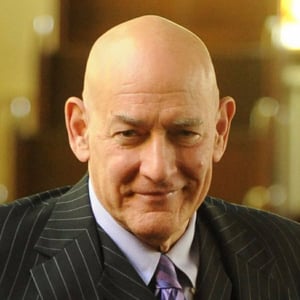
Raoul Berger Professor of Legal History at Northwestern University School of Law
Stephen Presser is a leading American legal historian and expert on shareholder liability for corporate debts. He is frequently an invited witness before committees of the U.S. Senate and House of Representatives on issues of constitutional law. He holds a joint appointment with the J. L. Kellogg Graduate School of Management and also teaches in Northwestern's history department.
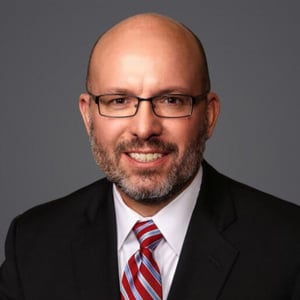
Shareholder, Ogletree, Deakins, Nash, Smoak & Stewart
Chris Murray is Co-Chair of the firm’s Arbitration and Alternative Dispute Resolution Practice Group. In this role, he assists attorneys throughout the firm and clients nationwide to create, roll out, and enforce effective employment arbitration agreements and other ADR programs. Mr. Murray has extensive experience with class/collective action waivers in employment arbitration. Mr. Murray was part of the Ogletree team that successfully defended the use of such waivers in the Fifth Circuit’s landmark decision in D.R. Horton, Inc. v. N.L.R.B. Since then, he has successfully defended the enforceability of class action waivers in numerous subsequent cases and submitted an amicus brief on the subject on behalf of several major employers’ associations in the Supreme Court’s Murphy Oil case. Mr. Murray assists clients and the Firm’s attorneys to draft or revise arbitration programs focused on a client’s specific needs and goals and in light of changing law and evolving best practices.
Founder & Partner, John L. Dodd and Associates
John L. Dodd has been in private practice for over 20 years, is a former staff attorney at the California Court of Appeal, and has handled over 1,000 appellate matters, including several landmark parental rights and adoption cases decided by the California Supreme Court. He has served as a member of the Orange County Bar Association Board of Directors, the California Commission on Judicial Nominees Evaluation and has Chaired the Committee of Bar Examiners of the State of California.

Mark Pulliam, a longtime member of the Federalist Society (and former President of the San Diego Lawyers Chapter), is a lawyer and writer in Austin, Texas. He is a contributing editor of Law and Liberty, and also writes for a variety of publications, including his blog, Misrule of Law.
Paula Stannard is a former deputy general counsel and acting general counsel of the U.S. Department of Health and Human Services (HHS), where she oversaw the Food and Drug, Civil Rights and Legislation divisions of the 450-attorney HHS Office of the General Counsel and provided legal advice and counsel to senior HHS officials, including the Secretary of the department, on the issues arising in their respective areas.
At Alston & Bird, Paula advises clients on regulatory questions that arise out of the on-going health care reform effort and focuses her practice on HIPAA and health information technology (including certified EHR and meaningful use issues), food and drug and other regulatory issues in the health care sector. Her HHS experience provides clients substantive knowledge of, and experience in, FDA, HIPAA, e-health and health IT, federal health insurance regulation, patient safety, and public health preparedness and emergency response issues.
Paula received her J.D. from Stanford Law School in 1990, where she was an executive editor of the Stanford Law Review, and her B.A., magna cum laude, in political science and Latin from Amherst College, where she was elected to Phi Beta Kappa. She clerked for the Honorable J.L. Edmondson of the United States Court of Appeals for the Eleventh Circuit.
Stanford University
(J.D., 1990)
Amherst College
(B.A., 1987)

State Court Docket Watch: State v. Arevalo
Jacob H. Huebert
People who want to challenge a state or federal law for violating their constitutional rights...
Topics
Affirming Free Speech in Arizona
In a refreshing and robust affirmation of free speech, the Arizona Supreme Court commenced its...
State v. Jean
Jonathan Riches
Does a passenger traveling with the owner of a private vehicle have a reasonable expectation...
Topics
Docket Watch: State v. Jean
Does a passenger traveling with the owner of a private vehicle have a reasonable expectation...
The States and the NLRB: A Study in Comparative Sovereignty
Under a system of government that diffuses power and makes institutional “[a]mbition . . ....
The Federal Government Responds to Arizona’s Enforcement of Federal Immigration Law
Margaret D. Stock
Brought to you by the International & National Security Law Practice GroupThe Federalist Society takes no position on...
The State of Eminent Domain Law
Publius
Introduction When Justice John Paul Stevens wrote the majority opinion in Kelo v. New London,...
The Case for Judicial Appointments
Stephen B. Presser, Christopher C. Murray, John L. Dodd, Mark S. Pulliam, Alfred W. Putnam, Paula M. Stannard
Views expressed in this paper are those of the authors only, and do not necessarily...