
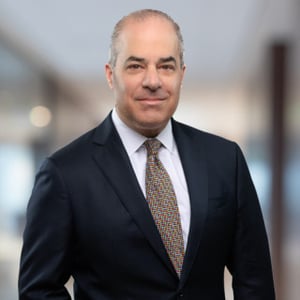
Partner, Foley & Lardner LLP
A trial and courtroom lawyer for over 30 years, Jason A. Levine is an antitrust and commercial litigation partner in the Washington, D.C. office of Foley & Lardner LLP.
Mr. Levine has served as lead counsel for clients in high-stakes and often multi-faceted business disputes. His diverse practice focuses on antitrust, complex contractual, and business tort suits. Mr. Levine tried 14 cases to judges and juries across the country, briefed and argued dozens of dispositive motions and several precedent-setting appeals, and has had an active amicus practice before the U.S. Supreme Court for nationwide trade associations. He was also lead counsel to defendants in several of the nation’s largest antitrust class actions and MDLs. Mr. Levine has perennially been recognized as a prominent litigator by Best Lawyers, SuperLawyers, Benchmark Litigation, and Global Competition Review. He also spent nearly four years as an Investment Manager at Omni Bridgeway, a global commercial litigation finance company, where he launched and led the Washington, D.C. office and led the U.S. antitrust strategy.
Mr. Levine received his B.A. summa cum laude (Phi Beta Kappa) from Brandeis University in 1991 and his J.D. cum laude from Harvard Law School in 1994, where he was Editor-in-Chief of the Harvard Journal of Law & Public Policy. Before entering private practice, Mr. Levine was a law clerk for Judge Randall Rader on the U.S. Court of Appeals for the Federal Circuit, where he focused on the court’s Takings and administrative cases.

Attorney, Pacific Legal Foundation
Jeff McCoy is an attorney at Pacific Legal Foundation. Jeff joined PLF in 2017. Since then, he has focused his litigation on separation of powers and private property rights. Jeff also leads PLF’s coastal land rights initiative, which seeks to strengthen and defend statutory and constitutional protections for coastal property owners across the country.
Throughout his career, Jeff has worked for various organizations that promote individual liberty and limited government. Prior to joining PLF, Jeff was a staff attorney at Mountain States Legal Foundation in Lakewood, Colorado, for five years. His work at Mountain States included helping secure victory for a Wyoming private property owner in U.S. Supreme Court case Marvin M. Brandt Revocable Trust v. United States. Besides Mountain States, Jeff worked as an intern for the Cato Institute during the spring of 2008, and after his first year of law school, he worked as a Charles G. Koch Summer Fellow at the Institute for Justice’s Seattle office.
Jeff received his B.A. degree in political science and philosophy from the University of Colorado in 2007 and his law degree, also from the University of Colorado, in 2011. During his time at law school, Jeff had the honor of working as a judicial extern for then-Judge Neil Gorsuch at the U.S. Court of Appeals for the Tenth Circuit.
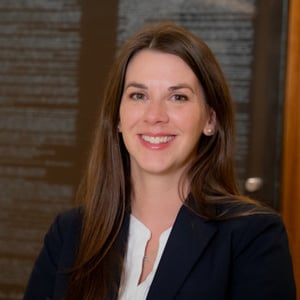
Vice President, Practice Groups, The Federalist Society
Vice President, Practice Groups, The Federalist Society
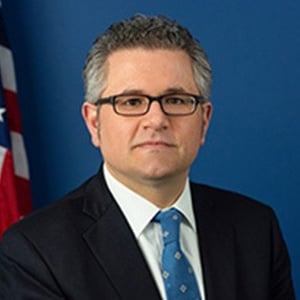
Director, Federal Housing Finance Agency
Mark Calabria is the Director of the Federal Housing Finance Agency.
He was formerly the chief economist for Vice President Mike Pence. Prior to that, he served as Director of Financial Regulation Studies at the Cato Institute. Before joining Cato in 2009, he spent six years as a member of the senior professional staff of the U.S. Senate Committee on Banking, Housing and Urban Affairs. In that position, Calabria handled issues related to housing, mortgage finance, economics, banking and insurance for Ranking Member Richard Shelby (R-AL). Prior to his service on Capitol Hill, Calabria served as Deputy Assistant Secretary for Regulatory Affairs at the U.S. Department of Housing and Urban Development, and also held a variety of positions at Harvard University’s Joint Center for Housing Studies, the National Association of Home Builders and the National Association of Realtors. Calabria has also been a Research Associate with the U.S. Census Bureau’s Center for Economic Studies.
He has extensive experience evaluating the impacts of legislative and regulatory proposals on financial and real estate markets, with particular emphasis on how policy changes in Washington affect low and moderate income households.
He holds a doctorate in economics from George Mason University.
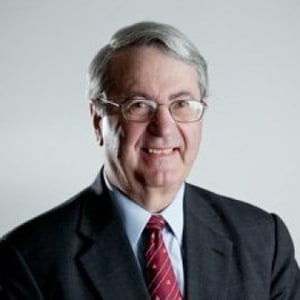
Resident Fellow and Director, AEI Housing Center, American Enterprise Institute
Edward J. Pinto is a resident fellow and the director of the AEI Housing Center at the American Enterprise Institute (AEI). He is currently researching how to increase the entry-level housing supply for first-time buyers and renters who earn hourly wages, as well as examining the current house price boom that began in 2012. This continues his previous work on the role of federal housing policy in the 2008 mortgage and financial crisis.
Along with AEI Resident Scholar Stephen Oliner, Mr. Pinto created the Wealth Building Home Mortgage, a new approach to home finance designed to provide a more reliable and effective way of building wealth than is available under existing policies. This mortgage allows home buyers to maintain a buying power similar to a 30-year loan. It is aimed at a broad range of homebuyers, including low-income, minority, and first-time buyers.
Before joining AEI, Mr. Pinto was an executive vice president and chief credit officer for Fannie Mae until the late 1980s. Today, he is frequently interviewed on radio and television and often testifies before Congress. His writings have been published in trade publications and the popular press, including in the American Banker, The Hill, RealClearPolitics, and The Wall Street Journal. In addition, as the director of the AEI Housing Center, he oversees the monthly publication of the AEI Housing Market Indicators, which has replaced AEI’s monthly Housing Risk Watch and AEI’s FHA Watch.
Mr. Pinto has a JD from Indiana University Maurer School of Law and a BA from the University of Illinois at Urbana-Champaign.

Senior Fellow, Mises Institute
Alex J. Pollock is a Senior Fellow with the Mises Institute, providing thought and policy leadership on financial issues and the study of financial systems. His work includes cycles of booms and busts, financial crises with their political responses, housing finance, government-sponsored enterprises, risk and uncertainty, central banking, banking and financial regulation, corporate governance, retirement finance, student loans, and the politics of finance.
He previously served as the Principal Deputy Director of the Office of Financial Research in the U.S. Treasury Department 2019-2021. He was a Distinguished Senior Fellow with the R Street Institute 2015-2019 and 2021, and a resident fellow at the American Enterprise Institute, 2004-2015. Among the many aspects of his AEI work, he developed the One Page Mortgage Form to give borrowers in clear form the key information they need in order to know what they are committing themselves to. He was President and CEO of the Federal Home Loan Bank of Chicago from 1991 to 2004. There he invented the Mortgage Partnership Finance program, which successfully created front-end mortgage credit risk sharing beginning in 1997. His decades of banking experience include being a Visiting Scholar at the Federal Reserve Bank of St. Louis, 1991.
Pollock was a director of the CME Group 2004-2019 and of Ascendium Education Group 1989-2019. He is a director and past-chairman of the Great Books Foundation and a past president of the International Union for Housing Finance.
He is the co-author of Surprised Again! - The COVID Crisis and the New Market Bubble (2022), and the author of Finance and Philosophy—Why We’re Always Surprised (2018) and Boom and Bust: Financial Cycles and Human Prosperity (2011), as well as numerous articles and Congressional testimony.
Pollock is a graduate of Williams College, the University of Chicago, and Princeton University.
His work is available on alexjpollock.com.

Senior Fellow, Arthur F. Burns Fellow in Financial Policy Studies, American Enterprise Institute
Peter J. Wallison holds the Arthur F. Burns Chair in Financial Policy Studies and is co-director of AEI’s program on Financial Policy Studies. Prior to joining AEI, he practiced banking, corporate and financial law at Gibson, Dunn & Crutcher in Washington, D.C., and New York. Mr. Wallison has held a number of government positions. From June 1981 to January 1985, he was General Counsel of the United States Treasury Department, where he had a significant role in the development of the Reagan Administration's proposals for deregulation in the financial services industry. During 1986 and 1987, Mr. Wallison was White House counsel to President Ronald Reagan, and between 1972 and 1976, he served first as Special Assistant to New York's Gov. Nelson A. Rockefeller and, subsequently, as counsel to Mr. Rockefeller as vice president of the United States.
Mr. Wallison was admitted to practice before the courts of New York and the District of Columbia, and is retired from practice in New York. He continues to be a member of the District of Columbia Bar Association. He received his undergraduate degree from Harvard College in 1963 and law degree from Harvard Law School in 1966.
Mr. Wallison is the author of Ronald Reagan: The Power of Conviction and the Success of His Presidency, published in December 2002 by Westview Press. On campaign finance, he is the author (with Joel Gora) of Better Parties, Better Government, (AEI Press 2009). On financial or regulatory matters, he is the author of Back From the Brink, a proposal for a private deposit insurance system, and co-author of Nationalizing Mortgage Risk: The Growth of Fannie Mae and Freddie Mac; The GAAP Gap: Corporate Disclosure in the Internet Age; Competitive Equity: A Better Way to Organize Mutual Funds; Bad History, Worse Policy: How a False Narrative about the Financial Crisis Led to the Dodd-Frank Act (AEI Press 2013); and Hidden In Plain Sight: What Caused the World’s Worst Financial Crisis and Why it Could Happen Again (Encounter Books 2015). His most recent book is Judicial Fortitude: The Last Chance to Rein in the Administrative State, published by Encounter Books in October 2018.
He testifies frequently before committees of Congress, and is a frequent contributor to the op-ed pages of the Wall Street Journal and other print and online journals. He has also been a speaker at many conferences on financial services, housing, the causes of the financial crisis, the Dodd-Frank Act, accounting, and corporate governance, and was a member of the Shadow Financial Regulatory Committee between 1995 and 2015. He was a member of the SEC Advisory Committee on Improvements to Financial Reporting (2008), co-Chair of the Pew Financial Reform Task Force (2009), and a member of the congressionally- appointed Financial Crisis Inquiry Commission (2009-2011). In May 2011, for his work in financial policy, Mr. Wallison received an honorary doctorate in Humane Letters from the University of Colorado.
Editor, Breitbart News
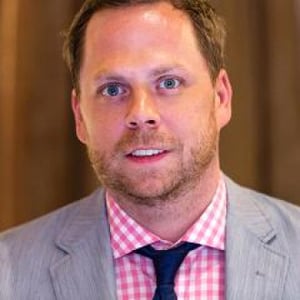
John Carney covers Wall Street and finance for CNBC.com, where he runs NetNet. John Carney was recently hired by Breitbart News, where he leads a new finance and economics section. Carney joined CNBC in 2010 after serving as managing editor of Business Insider's Wall Street and economics section. Prior to that he was Editor in Chief of DealBreaker.com.
He is a frequent guest on CNBC's "Power Lunch" and public radio's "Marketplace." His writing has appeared in The Wall Street Journal, The New York Times, The New York Sun, Page Six Magazine, the New York Post, Fortune, Gawker and New York magazine.
Mr. Carney received a law degree from the University of Pennsylvania and practiced corporate law at firms such as Skadden, Arps, Slate, Meagher & Flom and Latham & Watkins where he primarily represented banks, hedge funds and private equity firms.
Partner, Foley & Lardner LLP
A trial and courtroom lawyer for over 30 years, Jason A. Levine is an antitrust and commercial litigation partner in the Washington, D.C. office of Foley & Lardner LLP.
Mr. Levine has served as lead counsel for clients in high-stakes and often multi-faceted business disputes. His diverse practice focuses on antitrust, complex contractual, and business tort suits. Mr. Levine tried 14 cases to judges and juries across the country, briefed and argued dozens of dispositive motions and several precedent-setting appeals, and has had an active amicus practice before the U.S. Supreme Court for nationwide trade associations. He was also lead counsel to defendants in several of the nation’s largest antitrust class actions and MDLs. Mr. Levine has perennially been recognized as a prominent litigator by Best Lawyers, SuperLawyers, Benchmark Litigation, and Global Competition Review. He also spent nearly four years as an Investment Manager at Omni Bridgeway, a global commercial litigation finance company, where he launched and led the Washington, D.C. office and led the U.S. antitrust strategy.
Mr. Levine received his B.A. summa cum laude (Phi Beta Kappa) from Brandeis University in 1991 and his J.D. cum laude from Harvard Law School in 1994, where he was Editor-in-Chief of the Harvard Journal of Law & Public Policy. Before entering private practice, Mr. Levine was a law clerk for Judge Randall Rader on the U.S. Court of Appeals for the Federal Circuit, where he focused on the court’s Takings and administrative cases.

Founding Partner, Cooper & Kirk PLLC
Charles J. Cooper is a founding member and the chairman of Cooper & Kirk, PLLC, “one of the Nation’s leading litigation boutiques” (Above The Law 2017). The National Law Journal recently wrote that Mr. Cooper’s “brilliant legal career has so far spanned five decades and thrust Cooper into the spotlight in some of the most historic moments of the country’s modern history.” He has argued nine cases before the United States Supreme Court and scores of appeals before each of the 13 federal courts of appeals and several state supreme courts. He has been lead trial counsel in numerous complex, weeks-long trials in federal courts throughout the country. Named by the National Law Journal as one of the 10 best litigators in Washington D.C., Mr. Cooper’s work has been reported in numerous press accounts, and he has been called a “powerhouse attorney” (Fortune 2015), “a hard-nosed litigator” (Washington Post 2017), and “one of the country’s most in-demand civil litigators and a Washington legal institution unto himself” (The American Spectator 2014).
After graduating from the University of Alabama School of Law in 1977, where he ranked first in his class and served as Editor-in-Chief of the Alabama Law Review, Mr. Cooper began his career as a law clerk to Judge Paul Roney on the Fifth Circuit Court of Appeals and to Justice William H. Rehnquist in 1978–79. He then practiced law in Atlanta for two years before joining the Civil Rights Division of the U.S. Department of Justice, where he served as the Deputy Assistant Attorney General in charge of, among other things, appellate matters. In 1985 President Reagan appointed him to the position of Assistant Attorney General for the Office of Legal Counsel, which is the office responsible for providing legal opinions and advice to the White House, the Attorney General, and Executive Branch departments and agencies on issues covering the full spectrum of federal constitutional, statutory, and regulatory law.
In 1988 he returned to private practice as a litigation partner in the Washington, D.C. office of McGuireWoods. From 1990 until the founding of Cooper & Kirk in 1996, he was a partner at Shaw Pittman (now Pillsbury Winthrop Shaw Pittman), where he headed the firm’s Constitutional and Government Litigation Group.
Mr. Cooper has represented a wide range of public and private clients in highly complex constitutional, civil rights, antitrust, healthcare, banking, intellectual property, elections, campaign finance, administrative, commercial, and government contract cases. He has led trial teams in cases that have won judgments and settlements valued in the billions of dollars and that have established ground-breaking constitutional precedents.
Much of Mr. Cooper’s practice has involved representing high-profile clients in nationally prominent matters, including: the State of Florida in a First Amendment suit brought by the Disney Company concerning its autonomous regulatory authority over its Disney World property; the Commonwealth of Virginia in a suit seeking to enjoin the removal of noncitizens from its voter rolls; 38 members of the Duke Lacrosse team falsely accused of rape by officials of Duke University and the City of Durham; Harper Lee in a copyright dispute with the heirs of Gregory Peck; high-ranking former government officials such as former Attorneys General John Ashcroft, Jeff Sessions, and William Barr, and Ambassador John Bolton; several Governors and United States Senators; over 100 Members of Congress; and many state, territorial, and local government bodies and officials. He has also represented and advised government officials and public figures in connection with sensitive private issues that needed to be, and were, resolved discreetly without becoming matters of public record.
In 1998 Chief Justice Rehnquist appointed Mr. Cooper to the Standing Committee on Rules of Practice and Procedure of the Judicial Conference of the United States, where he served for three terms. He also served as a Public Member, appointed by President George H.W. Bush, of the National Commission on Judicial Discipline and Removal. He is a member of numerous professional associations, including the American Law Institute (since 1993) and the American Academy of Appellate Lawyers (since 1996). He is also an active member of the Federalist Society and the Republican National Lawyers Association, which in 2010 named him Republican Lawyer of the Year and in 2016 honored him with its Edwin Meese III Award.
Mr. Cooper has published scores of articles and spoken extensively on constitutional and legal policy topics. He has appeared before congressional committees on 26 occasions, testifying as an expert on a wide variety of legal issues, including the Chevron doctrine of judicial deference to administrative agencies, the diversity of citizenship jurisdiction of federal courts, statehood bills for Puerto Rico and the District of Columbia, and the impeachment of President Clinton.
Partner, Davis Polk & Wardwell LLP
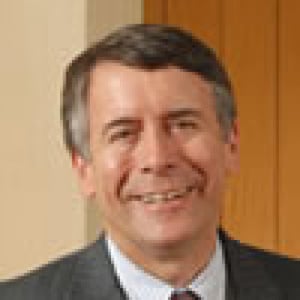
Mr. Douglas is a partner in Davis Polk’s Financial Institutions Group, heading the firm’s bank regulatory practice and focusing on bank restructuring and resolutions and other issues arising from the current banking and financial crisis. He has been involved in some of the most difficult and sensitive matters during the crisis, including advising the boards of directors of Indymac and Bank United, counseling Citigroup with respect to FDIC matters, advising various parties on the fallout from the failure of Washington Mutual and advising various private equity firms on proposed investments in troubled or failed banks.
Mr. Douglas was appointed General Counsel of the Federal Deposit Insurance Corporation in 1987 and continued in that capacity through 1989. This was a period of unprecedented stress on the financial system, and he was involved in the major bank failures and restructurings of the late 1980s, participated in the landmark Financial Institutions Regulatory Reform and Restructuring Act of 1989 and assisted in the organization of the Resolution Trust Corporation.
Mr. Douglas is regarded as one of the leading bank insolvency lawyers in the nation.

Chief Program Officer, National Community Reinvestment Coalition
David Berenbaum serves as The National Community Reinvestment Coalition’s Chief Program Officer. David is responsible for implementing NCRC’s legislative, research, compliance, community lending, minority business and civil rights programs. He testified in 2007 before the House Financial Services Committee on solutions to the current foreclosure crisis in America and before the Senate Banking Committee hearing on solutions to the current sub-prime mortgage melt-down. His current national public policy and regulatory focus includes initiatives to expand CRA to reach all financial service providers, Home Mortgage Disclosure Act analysis, RESPA reform, enactment of a meaningful national responsible lending bill and related consumer protections. Mr. Berenbaum has achieved a national reputation as a civil rights expert and advocate. He attained national recognition for fair housing and related consumer protection advocacy and has appeared as an expert on numerous national news magazine shows – including Dateline NBC, 48 Hours, The CBS Evening News, Bloomberg, CNBC, CNN and others. Recently, his work documenting fair lending compliance issues by mortgage brokers through mystery shopping in six cities and concerning about appraisal valuation practices was reported on by syndicated real estate columnist Ken Harney in two articles.
Mr. Berenbaum is responsible for coordinating NCRC’s fair housing and fair lending compliance initiatives, which in 2008 will be relaunched under the historic name “National Neighbors" and the establishment of NCRC’s new CDFI, which is a component of it’s National Homeownership Sustainability Fund. David is also one of the founders of NCRC’s Center for Responsible Appraisals and Valuations (CRAV). The CRAV celebrates appraisal best practices in cooperation with it’s stake holders, who include lenders, securitizers, appraisers, real estate professionals and other public and private sector leaders.

President, Cass & Associates, PC
Ronald A. Cass is Dean Emeritus of Boston University School of Law (where he was Dean from 1990-2004), President of Cass & Associates, PC, former Vice-Chairman and Commissioner of the U.S. International Trade Commission, former faculty member at Boston University School of Law and the University of Virginia Law School, and Distinguished Senior Fellow at the C. Boyden Gray Center for the Study of the Administrative State. Dean Cass also sits as an arbitrator for commercial, international, and intellectual property rights disputes, and is a former United States member of the Panel of Conciliators of the International Centre for Settlement of Investment Disputes. He is a member of the Council of the Administrative Conference of the United States and has received seven presidential appointments, spanning Presidents Ronald Reagan to Donald J. Trump.
As a law professor, lecturer, and scholar, Dean Cass has been teaching and writing about a wide array of legal issues on topics such as administrative law and regulation, antitrust, constitutional law, communications, intellectual property, international trade, separation of powers, and legal process. He has published more than 160 scholarly books, chapters, articles, and papers, including a leading casebook on administrative law. Dean Cass has taught judges as well as students in schools of law, economics, business, and public policy and has held academic appointments in the United States, Europe, and Latin America.
In addition to his academic work, Dean Cass has participated in numerous important legal cases as an amicus, consultant, or expert, and has advised businesses, law firms, investment funds, and government agencies on a range of trade, antitrust, intellectual property, and regulatory issues. He has a broad range of affiliations with professional groups, and has received numerous honors, fellowships and awards.
Dean Cass is a graduate of the University of Virginia and the University of Chicago Law School.
Senior Fellow, Mises Institute
Alex J. Pollock is a Senior Fellow with the Mises Institute, providing thought and policy leadership on financial issues and the study of financial systems. His work includes cycles of booms and busts, financial crises with their political responses, housing finance, government-sponsored enterprises, risk and uncertainty, central banking, banking and financial regulation, corporate governance, retirement finance, student loans, and the politics of finance.
He previously served as the Principal Deputy Director of the Office of Financial Research in the U.S. Treasury Department 2019-2021. He was a Distinguished Senior Fellow with the R Street Institute 2015-2019 and 2021, and a resident fellow at the American Enterprise Institute, 2004-2015. Among the many aspects of his AEI work, he developed the One Page Mortgage Form to give borrowers in clear form the key information they need in order to know what they are committing themselves to. He was President and CEO of the Federal Home Loan Bank of Chicago from 1991 to 2004. There he invented the Mortgage Partnership Finance program, which successfully created front-end mortgage credit risk sharing beginning in 1997. His decades of banking experience include being a Visiting Scholar at the Federal Reserve Bank of St. Louis, 1991.
Pollock was a director of the CME Group 2004-2019 and of Ascendium Education Group 1989-2019. He is a director and past-chairman of the Great Books Foundation and a past president of the International Union for Housing Finance.
He is the co-author of Surprised Again! - The COVID Crisis and the New Market Bubble (2022), and the author of Finance and Philosophy—Why We’re Always Surprised (2018) and Boom and Bust: Financial Cycles and Human Prosperity (2011), as well as numerous articles and Congressional testimony.
Pollock is a graduate of Williams College, the University of Chicago, and Princeton University.
His work is available on alexjpollock.com.

Collins v. Yellen - Post-Decision SCOTUScast
Jason Alan Levine, Jeffrey McCoy
On June 23rd, 2021 the Supreme Court decided Collins v. Yellen, a case which concerned...
Courthouse Steps Oral Argument Teleforum: Mnuchin v. Collins
Elizabeth Slattery
The case of Mnuchin v. Collins will have oral arguments before the Supreme Court on December 9,...
Collins v. Mnuchin- Post-Argument SCOTUScast
Elizabeth Slattery
On December 9, 2020 the Supreme Court heard oral argument in Collins v. Mnuchin (consolidated...
What's Next for Fannie, Freddie, and Housing Finance Reform?
Mark Calabria, Edward Pinto, Alex J. Pollock, Peter J. Wallison
On December 10, 2019, the Regulatory Transparency Project hosted an event at the National Press...
Freddie & Fannie Shareholder Litigation Update - Podcast
John Carney, Jason Alan Levine
During the 2008 financial crisis, Congress provided Fannie Mae and Freddie Mac with billions of...
Topics
Fairholme Funds, Inc. v. United States: Litigation Discovery and the Most Transparent Administration in History
On September 4, 2015, the U.S. Court of Federal Claims (Sweeney, J.) held a status...
Freddie and Fannie Shareholder Lawsuit - Podcast
Charles J. Cooper
Preferred and common shareholders of Freddie Mac and Fannie Mae have not recently received earnings...
Resolution Authority over Systemically Important Financial Companies
John L. Douglas
Brought to you by the Financial Services & E-Commerce Practice GroupOne of the key elements of...
Panel II: Reprivatizing Credit Risk: Where Do We Go From Here?
David Berenbaum, Ronald A. Cass, Jeb Hensarling, Alex J. Pollock, John Weicher
After discussing the extent to which credit risk has been nationalized directly or indirectly through...