
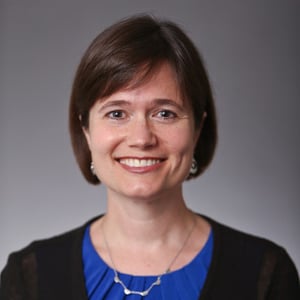
Senior Director, Liberty & National Security Program, Brennan Center for Justice at New York University Law School
Elizabeth (Liza) Goitein is senior director of the Brennan Center for Justice’s Liberty & National Security Program.
Goitein is a nationally-recognized expert on presidential emergency powers, government surveillance, and government secrecy. Her writing has been featured in major newspapers and magazines including the New York Times, Washington Post, Wall Street Journal, USA Today, Los Angeles Times, The Atlantic Magazine, and The New Republic, and she has appeared frequently on MSNBC, CNN, and NPR. She has testified on several occasions before the Senate and House Judiciary Committees.
Before coming to the Brennan Center, Goitein served as counsel to Senator Russ Feingold, chairman of the Constitution Subcommittee of the Senate Judiciary Committee, and as a trial attorney in the Federal Programs Branch of the Civil Division of the Department of Justice. Goitein graduated from Yale Law School and clerked for the Honorable Michael Daly Hawkins on the U.S. Court of Appeals for the Ninth Circuit. In 2021–22, she was a member of the inaugural class of Senior Practitioner Fellows at the University of Chicago’s Center for Effective Government.

Senior Adviser, International Security Program, CSIS
Glenn S. Gerstell served as the general counsel of the National Security Agency (NSA) from 2015 to 2020. A frequent guest commentator on CNN, MSNBC, and NPR, he has written and spoken widely about the intersections of technology and national security, with articles appearing in the New York Times, Washington Post, New Yorker, The Hill, Barron’s, and POLITICO. Prior to joining the NSA, Mr. Gerstell practiced law for almost 40 years at the international law firm of Milbank, LLP, where he focused on the global telecommunications industry and was the managing partner of the firm's Washington, D.C., Singapore, and Hong Kong offices. Mr. Gerstell served on the President's National Infrastructure Advisory Council, the Future of Encryption Committee for the National Academies of Sciences, Engineering and Medicine, and the District of Columbia Homeland Security Commission. A graduate of New York University and the Columbia University School of Law, Mr. Gerstell is an elected member of the American Academy of Diplomacy and a member of the Council on Foreign Relations. Earlier in his career, he was an adjunct law professor at the Georgetown University Law Center and New York Law School. He is a recipient of the National Intelligence Distinguished Service Medal, the Secretary of Defense Medal for Exceptional Civilian Service, and the NSA Distinguished Civilian Service Medal.
General Counsel, The Center for Individual Rights
Michael E. Rosman is CIR’s General Counsel. He graduated summa cum laude from the University of Rochester in 1981, majoring in economics and political science. He received his J.D. in 1984 from Yale Law School. Mr. Rosman worked as an associate at Rosenman & Colin in New York City from 1984-93.
Mr. Rosman joined CIR in March 1994. Mr. Rosman is the author of several articles, including: “Ambiguity and the First Amendment: Some Thoughts On All-White Advertising,” 61 Tenn. L. Rev. 289 (1993); and “Standing Alone: Standing Under The Fair Housing Act,” 60 Mo. L. Rev. 547 (1995), “Thoughts on Bakke and Its Effect on Race- Conscious Decision-Making,” 2002 U. Chi. Legal F. 45 Book Review of Kent Greenawalt’s Fighting Words, 13 Constitutional Commentary 317 (1996)
Mr. Rosman has litigated throughout the federal court system, and has argued many times in the federal courts of appeals. He also successfully argued on behalf of CIR client Tony Morrison in the United States Supreme Court in the landmark case of United States v. Morrison, 529 U.S. 598 (2000).
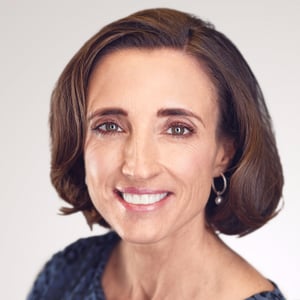
Senior Vice President, Strand Consult
Roslyn Layton, PhD is a leading international expert on technology policy. She is Senior Vice President of Strand Consult, an independent consultancy serving the global mobile telecom industry. She is also a Visiting Researcher at Aalborg University Copenhagen where she earned a doctoral thesis on network neutrality by measuring the outcome of the policy across 53 countries over 5 years. She served on the Presidential Transition Team for the Federal Communications Commission (FCC), and her work was critical to the FCC’s defense for the Restoring Internet Freedom Order. She has testified to the United States Senate and House on multiple topics including spectrum, broadband, mobile mergers, competition, and privacy. She founded the think tank China Tech Threat to study the problems of technology produced by the People’s Republic of China. She serves as the Program Chair for the Telecom Policy Research Conference, the leading interdisciplinary academic gathering. Her recent paper on rural broadband describes the empirical case for policy reform to recover network infrastructure costs from streaming video entertainment providers. She is a Senior Contributor to Forbes.
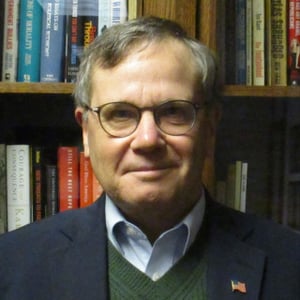
Senior Fellow in Constitutional Jurisprudence, Independence Institute
Professor Robert G. Natelson is a constitutional scholar and author.
Rob’s constitutional scholarship has been cited repeatedly by justices and parties at the U.S. Supreme Court—as well as by federal appeals courts, and at least 18 state supreme courts.
Rob’s research into the Constitution’s original meaning has carried him to libraries throughout the United States and in Britain, including four months at Oxford University. His books and articles span many different parts of the Constitution, including groundbreaking studies of the Necessary and Proper Clause, the Indian Commerce Clause, federalism, Founding-Era interpretation, regulation of elections, and the amendment process of Article V. He created the first-ever online bibliography for 18th century materials used in constitutional research. He is a contributing author to the Encyclopedia of the Supreme Court of the United States (on Magna Carta). He contributed eight essays to the third edition of the Heritage Guide to the Constitution: five on the amendment procedure and one each on the Guarantee Clause, the Postal Clause, and the Recess Appointments Clause.
U.S. Supreme Court justices have relied explicitly on Rob’s research in 41 citations in 13 separate cases.

Vice President of Law & Policy, Property and Environment Research Center
Jonathan Wood is vice president of law and policy at the Property and Environment Research Center (PERC). An attorney, Jonathan has litigated environmental and property-rights cases in the Supreme Court of the United States, federal and state appellate courts, and trial courts across the country. His writing has appeared in the Wall Street Journal, Washington Post, National Review, Reason, and other outlets. And his research has been published in journals such as Environmental Law Reporter, Yale Journal on Regulation Notice & Comment, Pace Environmental Law Review, and California Western Law Review.
Prior to coming to PERC, Jonathan was a senior attorney at Pacific Legal Foundation, where he litigated cases concerning the Endangered Species Act, Clean Water Act, and other federal environmental laws. He was co-counsel for forest landowners in Weyerhaeuser Co. v. U.S. Fish and Wildlife Service, in which the Supreme Court ruled unanimously that private land could not be arbitrarily regulated as critical habitat under the ESA. He also led a successful effort to reform regulation of threatened species to better align the incentives of private landowners with the interests of rare species.
Jonathan has testified before several congressional committees on wildlife conservation and endangered species topics. He has also appeared on national television and radio, including NPR’s All Things Considered, C-Span’s Washington Journal, Stossel, Fox News, and Hill.TV.
Jonathan has a law degree from the New York University School of Law, a masters degree in economic policy from the London School of Economics, and a bachelor’s degree in economics from the University of Texas. He is on the executive committee for the Federalist Society’s Environmental Law and Property Rights Practice Group and a steering committee member for the Environmental Law Institute’s Emerging Leaders Initiative.

Senior Fellow and Director of Constitutional Studies, Manhattan Institute
Ilya Shapiro is a senior fellow and director of constitutional studies at the Manhattan Institute and a contributing editor of City Journal. Previously he was executive director and senior lecturer at the Georgetown Center for the Constitution, and before that a vice president of the Cato Institute.
Shapiro is the author of Lawless: The Miseducation of America’s Elites (2025) and Supreme Disorder: Judicial Nominations and the Politics of America’s Highest Court (2020), coauthor of Religious Liberties for Corporations? (2014), and editor of 11 volumes of the Cato Supreme Court Review (2008-18). He has contributed to a variety of academic, popular, and professional publications, including the Wall Street Journal, Harvard Journal of Law & Public Policy, Washington Post, Los Angeles Times, USA Today, National Review, and Newsweek. He also regularly provides commentary for various media outlets, writes the Shapiro’s Gavel newsletter on Substack, and once appeared on the Colbert Report.
Shapiro has testified many times before Congress and state legislatures and has filed more than 500 amicus curiae “friend of the court” briefs in the Supreme Court. He lectures regularly on behalf of the Federalist Society, is a member of the board of fellows of the Jewish Policy Center, was an inaugural Washington Fellow at the National Review Institute, and has been an adjunct law professor at the George Washington University and University of Mississippi. He is also the chairman of the board of advisers of the Mississippi Justice Institute, a barrister in the Edward Coke Appellate Inn of Court, and a former member of the Virginia Advisory Committee to the U.S. Commission on Civil Rights.
Earlier in his career, Shapiro was a special assistant/adviser to the Multi-National Force in Iraq on rule-of-law issues and practiced at Patton Boggs and Cleary Gottlieb. Before entering private practice, he clerked for Judge E. Grady Jolly of the U.S. Court of Appeals for the Fifth Circuit. He holds an AB from Princeton University, an MSc from the London School of Economics, and a JD from the University of Chicago Law School.
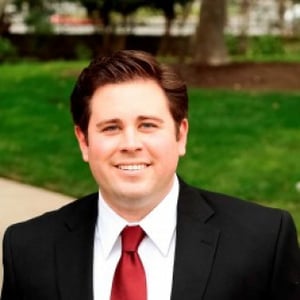
Managing Partner, Bigley Ranish, LLP
Sean M. Bigley is a national security attorney and managing partner of Bigley Ranish, LLP. Mr. Bigley’s practice primarily encompasses defending federal employees and contractors in security clearance denial cases. He also provides personnel security consulting to major international defense and aerospace corporations, and prosecutes intelligence community whistle-blower retaliation cases.
Since first opening his firm in 2013, Mr. Bigley has grown it from a solo practice to a five-attorney partnership with employees in three states. Bigley Ranish, LLP attorneys regularly appear before administrative tribunals at agencies ranging from the CIA to the Department of State, representing in excess of 200 American intelligence officers, diplomats, armed forces personnel, and other security clearance holders each year around the world. In 2016 alone, Mr. Bigley and his colleagues represented clients in roughly forty states and a dozen countries.
The idea for this unique practice was borne out of Mr. Bigley’s prior service as a federal background investigator. Prior to and during law school, Mr. Bigley was an investigator for the U.S. Office of Personnel Management, where he conducted some of that agency’s most sensitive security investigations in the Los Angeles metropolitan area. Mr. Bigley has also served on the faculty of Chapman University, teaching national security and criminal justice courses with an emphasis in U.S.-European security cooperation. Earlier in his career, Mr. Bigley worked for several years in the White House and Department of Homeland Security under President George W. Bush.
A recognized expert in national security law, Mr. Bigley’s commentary on the topic is frequently sought by major media outlets such as Fox News, The New York Times, and CNN. He is a contributing writer for Clearancejobs.com and GovExec.com.
Mr. Bigley earned his Juris Doctorate from Chapman University School of Law. He holds a Bachelor’s Degree from Washington D.C.’s American University and a Master’s Degree from Boston University.
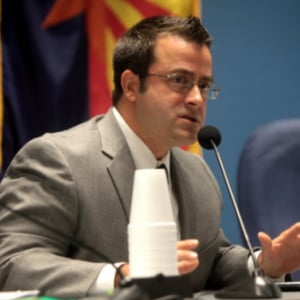
General Counsel, Prospera Group
Dranias serves as NeWay Capital LLC’s General Counsel, handling all corporate legal matters. Prior to this, he was Senior Litigation Counsel with the Government Accountability & Special Litigation Unit of the Arizona Attorney General. He also serves as Policy Advisor and Research Fellow with the Heartland Institute, as an expert and Speaker’s Bureau member with the Federalist Society, a Law and Civil Liberties Speaker for Students for Liberty, a Council of Scholars member with Compact for America Educational Foundation, as well as an Adjunct Instructor teaching Business Ethics and Law at Grand Canyon University.
Previously, Dranias served as President & Executive Director of Compact for America Educational Foundation where he led national efforts to organize the states to propose and ratify a federal Balanced Budget Amendment. Prior to that, Dranias was General Counsel, Policy Development Director and Constitutional Policy Director at the Goldwater Institute. Dranias led the Institute’s successful challenge to Arizona’s system of government campaign financing to the U.S. Supreme Court. Prior to that, he was an attorney with the Institute for Justice for three years and an attorney in private practice in Chicago for eight years, where he served as Young Lawyers Section co-editor of the Chicago Bar Association Record and earned the Oliver Wendell Holmes Award for his service.

Reforming Section 702: Should the FBI require a warrant to search its database for the communications of US persons?
Elizabeth Goitein, Glenn Gerstell
Section 702 of the Foreign Intelligence Surveillance Act (FISA) allows the government to collect non-content metadata from communications service providers. Advocates for renewal, including members of the US intelligence community, argue that it is a critical tool for national security and failure to renew it will leave the nation vulnerable. Critics claim Section 702 creates a loophole that allows for the collection of personal information without a warrant. In this Briefcase, two experts, Glenn Gerstell and Liza Goitein, debate a key issue of reform, whether the FBI should require a warrant to search its database for the communications of US persons.
Is It Time to Revisit the Constitutionality of Unauthorized Practice of Law Rules?
Michael E. Rosman
Note from the Editor: The Federalist Society takes no positions on particular legal and public...
The GDPR: What It Really Does and How the U.S. Can Chart a Better Course
Roslyn Layton, Julian McLendon
Note from the Editor: This article discusses the European Union’s new General Data Protection Rule...
“Advice” in the Constitution’s Advice and Consent Clause: New Evidence from Contemporaneous Sources
Robert G. Natelson
Note from the Editor: This article discusses the proper interpretation of the Constitution’s Advice and...
Christie v. NCAA: Anti-Commandeering or Bust
Jonathan Wood, Ilya Shapiro
Note from the Editor: This article argues that the Supreme Court should find unconstitutional the...
Presidential Nominees and Foreign Influence: Mitigating National Security Risks
Sean M. Bigley
Note from the Editor: This article describes the procedures involved in determining whether to grant...
Introducing “Article V 2.0”: The Compact for a Balanced Budget
Nicholas C. Dranias
This article discusses the use of interstate compacts to advance Article V amendments to the U.S....
Bar Watch Bulletin February 15, 2005
Today we report on Monday’s actions from the House of Delegates. A number of new...
Bar Watch Bulletin February 2005
The American Bar Association Midyear Meetings take place from Thursday, February 10 through Tuesday, February...