

Senior Fellow and Director of Constitutional Studies, Manhattan Institute
Ilya Shapiro is a senior fellow and director of constitutional studies at the Manhattan Institute and a contributing editor of City Journal. Previously he was executive director and senior lecturer at the Georgetown Center for the Constitution, and before that a vice president of the Cato Institute.
Shapiro is the author of Lawless: The Miseducation of America’s Elites (2025) and Supreme Disorder: Judicial Nominations and the Politics of America’s Highest Court (2020), coauthor of Religious Liberties for Corporations? (2014), and editor of 11 volumes of the Cato Supreme Court Review (2008-18). He has contributed to a variety of academic, popular, and professional publications, including the Wall Street Journal, Harvard Journal of Law & Public Policy, Washington Post, Los Angeles Times, USA Today, National Review, and Newsweek. He also regularly provides commentary for various media outlets, writes the Shapiro’s Gavel newsletter on Substack, and once appeared on the Colbert Report.
Shapiro has testified many times before Congress and state legislatures and has filed more than 500 amicus curiae “friend of the court” briefs in the Supreme Court. He lectures regularly on behalf of the Federalist Society, is a member of the board of fellows of the Jewish Policy Center, was an inaugural Washington Fellow at the National Review Institute, and has been an adjunct law professor at the George Washington University and University of Mississippi. He is also the chairman of the board of advisers of the Mississippi Justice Institute, a barrister in the Edward Coke Appellate Inn of Court, and a former member of the Virginia Advisory Committee to the U.S. Commission on Civil Rights.
Earlier in his career, Shapiro was a special assistant/adviser to the Multi-National Force in Iraq on rule-of-law issues and practiced at Patton Boggs and Cleary Gottlieb. Before entering private practice, he clerked for Judge E. Grady Jolly of the U.S. Court of Appeals for the Fifth Circuit. He holds an AB from Princeton University, an MSc from the London School of Economics, and a JD from the University of Chicago Law School.
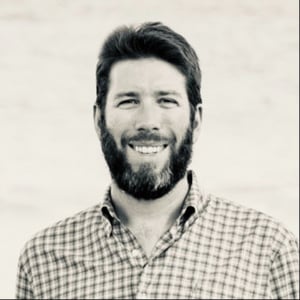
Senior Editor, National Review
Charles C. W. Cooke is a senior editor at National Review and the former editor of National Review Online. He is a graduate of the University of Oxford, at which he studied modern history and politics. His work has focused especially on Anglo-American history, British liberty, free speech, the Second Amendment, and American exceptionalism. He is the co-host of the Mad Dogs and Englishmen podcast, and is a regular guest on HBO's (Real Time with Bill Maher). He has written for the New York Times, the Washington Post, and the Los Angeles Times.
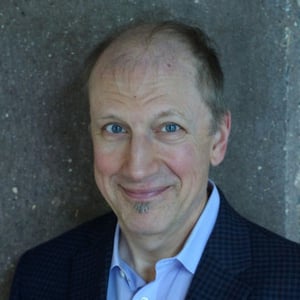
James L. Oberstar Professor of Law and Public Policy, University of St. Thomas School of Law
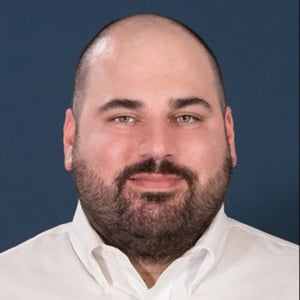
Senior Attorney, Pacific Legal Foundation
Chris Kieser practices in PLF’s property rights and equality before the law practice groups.
His property rights clients include Cedar Point Nursery, which challenged a California regulation requiring them to allow union organizers to invade their private property, as well as Randall and Kimberley Pavlock, who are fighting back against Indiana’s beachfront land grab along Lake Michigan.
Under equality before the law, Chris represents coalitions of Asian-American parents challenging discriminatory admissions policies for selective K-12 schools in New York City; Montgomery County, Maryland; and Fairfax County, Virginia. He also represents a parent organization in Connecticut challenging a racial quota that prevents many Black and Hispanic students from enrolling at the state’s magnet schools.
Chris has published law review articles in the William & Mary Environmental Law Review and the Federalist Society Review. His op-eds have appeared in the New York Daily News, National Review, The Blaze, the Daily Journal, and SCOTUSblog.
Chris clerked for the Honorable Daniel A. Manion of the United States Court of Appeals for the Seventh Circuit and the Honorable Thomas D. Schroeder of the United States District Court for the Middle District of North Carolina. He holds a B.A., cum laude, from the University of Notre Dame, and graduated magna cum laude from Notre Dame Law School in 2013. At Notre Dame, he was an articles editor of the Notre Dame Law Review.
Growing up on Long Island, Chris developed a deep passion for limited government and individual liberty, arguing with his more numerous progressive classmates. This experience made him deeply skeptical that government tinkering at the expense of individual rights ever works, whether it be denying a property owner the use of his land or a student a seat at her desired school because of her race. He chose PLF because it is the national leader in litigation that furthers individual liberty.
When he’s not working, you’re likely to find Chris rooting for the Mets and Fighting Irish or debating some arcane point of law (because apparently that doesn’t happen enough at work).
Chris is currently licensed to practice in California and admitted to practice before the Supreme Court of the United States, the United States Courts of Appeal for the Second, Seventh, and Ninth Circuits, and the U.S. District Courts for the Eastern and Central Districts of California, the Northern District of Indiana, and the Northern District of Illinois.
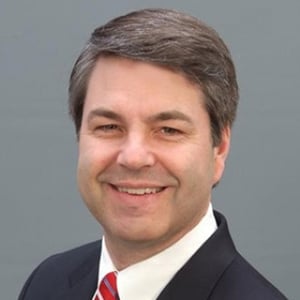
Partner and Co-Chair, Public Policy Group, Shook Hardy & Bacon LLP
Mark Behrens co-chairs Shook's Washington, DC-based Public Policy Practice Group and is a leading national expert on civil justice issues with over thirty years of experience. A substantial part of his practice is working to improve the civil litigation environment through state and federal legislation; in the courts through amicus curiae briefs; through legal scholarship and judicial education; and in the court of public opinion.
Mark is actively involved in civil justice reform efforts at the federal and state levels. He has testified before the U.S. Congress and most state legislatures on behalf of business and civil justice organizations. Mark also has an active amicus brief practice specializing in tort liability and civil justice issues. He has authored or co-authored over 150 amicus briefs in cases before the United States Supreme Court and federal and state appellate courts on behalf of business, civil justice, and defense lawyer organizations. In addition, Mark routinely files comments on behalf of business, civil justice, and defense lawyer organizations regarding potential changes to federal and state court rules. He chairs the International Association of Defense Counsel’s (IADC) Civil Justice Response Committee and serves on the Board of Directors of Lawyers for Civil Justice (LCJ).
Mark is a member of the American Law Institute (ALI). He received his J.D. in 1990 from Vanderbilt University Law School, where he was a member of the Vanderbilt Law Review. He received his B.A. in economics from the University of Wisconsin in 1987.
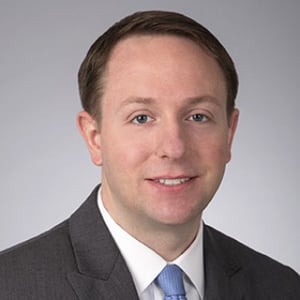
Of Counsel, Shook Hardy & Bacon LLP
Chris’ public policy work focuses on tort law and civil justice system reform. His work is generally divided among legislative efforts, appellate litigation, and liability counseling. Chris has drafted model legislation to be introduced on the state and federal level, testified on numerous legislative initiatives, and authored amicus briefs to state supreme courts and federal appellate courts, including the U.S. Supreme Court. He also serves as an adviser to various business groups and trade associations interested in tort liability issues and civil justice system reform.
In addition, Chris is an elected member of the American Law Institute (ALI), and has assisted in the development of a variety of ALI projects implicating liability law. He has also been a recurrent guest lecturer at the U.S. Department of Justice and Wake Forest University School of Law, as well as a speaker at numerous legal conferences and industry group meetings, on issues related to tort law. Chris has additionally produced significant scholarship in the area of liability law. He has authored more than 50 legal publications on a wide range of liability issues, including articles in the Harvard Journal of Law & Public Policy, UPenn Journal of Business Law, and Duke Journal of Constitutional Law & Public Policy, and has served as a contributor to tort casebooks.
Senior Fellow and Director of Constitutional Studies, Manhattan Institute
Ilya Shapiro is a senior fellow and director of constitutional studies at the Manhattan Institute and a contributing editor of City Journal. Previously he was executive director and senior lecturer at the Georgetown Center for the Constitution, and before that a vice president of the Cato Institute.
Shapiro is the author of Lawless: The Miseducation of America’s Elites (2025) and Supreme Disorder: Judicial Nominations and the Politics of America’s Highest Court (2020), coauthor of Religious Liberties for Corporations? (2014), and editor of 11 volumes of the Cato Supreme Court Review (2008-18). He has contributed to a variety of academic, popular, and professional publications, including the Wall Street Journal, Harvard Journal of Law & Public Policy, Washington Post, Los Angeles Times, USA Today, National Review, and Newsweek. He also regularly provides commentary for various media outlets, writes the Shapiro’s Gavel newsletter on Substack, and once appeared on the Colbert Report.
Shapiro has testified many times before Congress and state legislatures and has filed more than 500 amicus curiae “friend of the court” briefs in the Supreme Court. He lectures regularly on behalf of the Federalist Society, is a member of the board of fellows of the Jewish Policy Center, was an inaugural Washington Fellow at the National Review Institute, and has been an adjunct law professor at the George Washington University and University of Mississippi. He is also the chairman of the board of advisers of the Mississippi Justice Institute, a barrister in the Edward Coke Appellate Inn of Court, and a former member of the Virginia Advisory Committee to the U.S. Commission on Civil Rights.
Earlier in his career, Shapiro was a special assistant/adviser to the Multi-National Force in Iraq on rule-of-law issues and practiced at Patton Boggs and Cleary Gottlieb. Before entering private practice, he clerked for Judge E. Grady Jolly of the U.S. Court of Appeals for the Fifth Circuit. He holds an AB from Princeton University, an MSc from the London School of Economics, and a JD from the University of Chicago Law School.
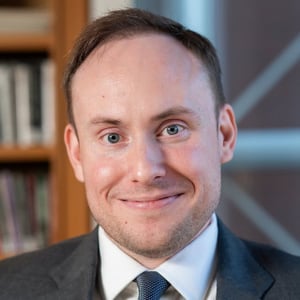
Director, Robert A. Levy Center for Constitutional Studies, Cato Institute
Thomas Berry is the director in the Cato Institute’s Robert A. Levy Center for Constitutional Studies and editor in chief of the Cato Supreme Court Review. Before joining Cato, he was an attorney at Pacific Legal Foundation and clerked for Judge E. Grady Jolly of the U.S. Court of Appeals for the Fifth Circuit. His academic work has appeared in NYU Journal of Law and Liberty, Washington and Lee Law Review Online, and Federalist Society Review. His popular writing has appeared in The Wall Street Journal, National Law Journal, Investor’s Business Daily, National Review Online, and The Hill Online. He has testified before the U.S. Senate, and his work has been cited by the U.S. District Court for the District of Columbia.
Berry holds a J.D. from Stanford Law School, where he was a senior editor on the Stanford Law and Policy Review and a Bradley Student Fellow in the Stanford Constitutional Law Center. He graduated with a B.A. in Liberal Arts from St. John’s College, Santa Fe.
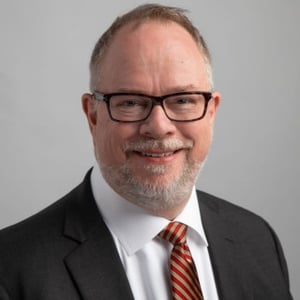
Managing Attorney of the Washington Office, Institute for Justice
William R. Maurer is the Managing Attorney of the Washington state office of the Institute for Justice, which engages in litigation in the areas of economic liberty, private property rights, educational choice, & freedom of speech.
Maurer is an advocate against the criminalization of poverty and the governmental use of the criminal and civil enforcement systems to raise revenue. He was lead counsel in a class action challenging the use of tickets to raise revenue in the city of Pagedale, Missouri. The suit resulted in a federal consent decree that reformed the city’s ticketing and municipal court system. He regularly speaks, teaches, and writes about the abuse of fines and fees in the criminal justice system. He was a participant in summits on taxation by citation put on by the White House and Department of Justice during the Obama Administration. His work on the issue includes serving as an advisory board member of the Fines and Fees Justice Center.
In addition to his work on criminal and civil justice reform, Maurer is a First Amendment litigator. In 2011, he successfully argued before the U.S. Supreme Court that Arizona’s punitive campaign financing regime was unconstitutional. Before the Washington Supreme Court, he successfully argued against efforts to classify radio commentary as a contribution under the state’s campaign finance law.
His cases and advocacy have been covered in the Washington Post, the New York Times, the Economist, the Wall Street Journal, and other major media outlets.
Maurer was named a “Washington Superlawyer” by Washington Law & Politics Magazine for several years. He is a chapter author in numerous legal reference works and has written several articles for law reviews and legal publications across the country.
Prior to joining IJ-WA, Maurer clerked for Washington Supreme Court Justice Richard Sanders and then practiced law at Perkins Coie LLP. Maurer received his law degree in 1994 from the University of Wisconsin – Madison, where he was an editor of the Wisconsin Law Review. He received his BA from Bard College in 1989.
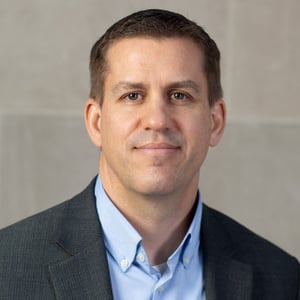
Clinical Professor, University of Texas at Austin School of Law
Steven T. Collis researches and teaches on religion and law and other First Amendment topics. He is the founding faculty director of the Bech-Loughlin First Amendment Center and of Texas's Law & Religion Clinic. On the topic of religious freedom law, he is a sought-after speaker to academic and lay audiences across the United States, including foreign diplomats from countries in Europe, the Middle East, Asia, and South America on behalf of the United States State Department. He has been interviewed by and quoted in various news and media outlets, including The Deseret News, Bloomberg, The Washington Times, Law360, The Salt Lake Tribune, PBS, The Denver Business Journal, Law Week Colorado, CBN News, and numerous podcasts and television shows. His scholarly work has appeared in The Michigan Law Review, The Nebraska Law Review, The University of Denver Law Review Online, and in his book Deep Conviction, which brings to life the history of free exercise law in the United States for lay audiences.
Prior to joining Texas, Steven was the Olin-Darling Research Fellow in the Constitutional Law Center at Stanford Law School.
Earlier in his career, he was an equity partner at Holland & Hart LLP, where he chaired the firm’s nationwide religious institutions and First Amendment practice group and was a member of the firm's complex civil litigation and employment practice groups. He also taught religious liberty law at the University of Denver Sturm College of Law and clerked for Chief Judge Timothy M. Tymkovich of the United States Court of Appeals for the Tenth Circuit.
Steven graduated magna cum laude from the University of Michigan Law School, where he was elected to the Order of the Coif and served as an editor on The Michigan Law Review and The Michigan Journal of Race and Law. He also holds an M.F.A. in creative writing from Virginia Commonwealth University, where he served as the associate editor of the literary journal Blackbird. He completed his undergraduate studies, with university honors, at Brigham Young University.

Presidential Politics - How Judicial Restraint Led to Our Populist Movement
Hartford, ConnecticutMeet and Greet -- CANCELED
Hartford, ConnecticutTrigger Warnings
Religious Exemptions and Third-Party Harms
Thomas C. Berg
Note from the Editor: This article discusses the effect that third-party harms should have on religious...
Legislators should address the need for more quality educational options so judges don't have to
Last week’s Connecticut court ruling in a school finance case went far beyond calling for...
Finding the Denominator in Regulatory Takings Cases: A Preview of Murr v. Wisconsin
Christopher M. Kieser
Note from the Editor: This article discusses Murr v. Wisconsin, a regulatory takings case that the...
2015 Civil Justice Update
Mark A. Behrens, Christopher Appel
This paper recaps key civil justice reforms that occurred in 2015. Part I focuses on...
Evenwel v. Abbott: The Court Shanks Its Punt on “One Person, One Vote”
Ilya Shapiro, Thomas Berry
Note from the Editor: This article criticizes the Supreme Court’s recent decision in Evenwel v....
Book Review: Dark Money and Plutocrats United
William R. Maurer
Note from the Editor: This book review takes a critical look at two recent books that...
Stormans v. Wiesman: Paths to Strict Scrutiny in Religious Free Exercise Cases
Steven T. Collis
Note from the Editor: This article is about Stormans v. Wiesman, a case from the 9th...