

Senior Vice President, Bipartisan Policy Center
G. William Hoagland is a BPC senior vice president. In this capacity, he helps direct and manage fiscal, health, and economic policy analyses.
Before joining BPC in September 2012, Hoagland served as vice president of public policy for CIGNA Corporation, working with business leaders, trade associations, business coalitions, and interest groups to develop CIGNA policy on health care reform issues at both the federal and state levels.
Prior to joining CIGNA, Hoagland completed 33 years of federal government service, including 25 years on the U.S. Senate staff. From 2003 to 2007, he served as the director of budget and appropriations in the office of Senate Majority Leader Bill Frist. He assisted in evaluating the fiscal impact of major legislation and helped to coordinate budget policy for the Senate leadership.
From 1982 to 2003, Hoagland served as a staff member and director of the Senate Budget Committee, reporting to U.S. Sen. Pete V. Domenici, chairman and ranking member of the committee during this period. He participated in major federal budget negotiations, including the 1985 Gramm-Rudman-Hollings Budget Deficit Reduction Act, the 1990 Omnibus Budget Reconciliation Act, and the historic 1997 Balanced Budget Agreement.
In 1981, he served as the administrator of the Department of Agriculture’s Food and Nutrition Service and as a special assistant to the Secretary of Agriculture. He was one of the first employees of the Congressional Budget Office in 1975, working with its first director, Alice Rivlin.
In both 1997 and 2005, National Journal listed him as one of the “Washington 100 Decision Makers” and referred to him as a “bottom-liner who is not a hard-liner.” Roll Call consistently named Hoagland as one of the top 50 Hill staffers. In 2002, he received the James L. Blum Award for Distinguished Service in Budgeting. The National Association of State Budget Officers honored him in 2004 with its Leadership in Budgeting Award, and in 2006 he was inducted as a fellow in the National Academy of Public Administration.
Hoagland is an affiliate professor of public policy at the George Mason University and a board member of the Committee for a Responsible Federal Budget, the National Academy of Social Insurance, and the National Advisory Committee to the Workplace Flexibility 2010 Commission. In 2009, he was appointed to the Peterson-Pew Commission on Budget Reform examining the overall structure of the budget, authorization, and appropriations process, and was a member of BPC’s Debt Reduction Task Force that published Restoring America’s Future in November 2010. He coordinated BPC’s 2013 report, A Bipartisan Rx for Patient-Centered Care and System-Wide Cost Containment. In April 2015, he co-chaired the National Academy of Social Insurance report, “Addressing Pricing Power in Health Care Markets.”
Hoagland attended the U.S. Merchant Marine Academy and holds degrees from Purdue University and The Pennsylvania State University. His family’s Indiana family farm was recognized as a “Hoosier Homestead” for having remained in the family for over a century.
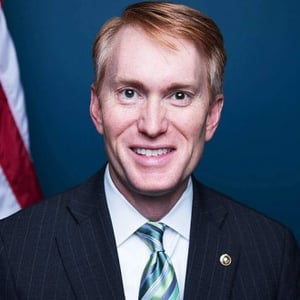
United States Senator from Oklahoma
Senator Lankford of Oklahoma served four years in the U.S. House of Representatives and was elected to the U.S. Senate to complete an unexpired term on November 4, 2014 and re-elected to a full six-year senate term on November 8, 2016.
As chairman of the Senate Subcommittee on Regulatory Affairs and Federal Management, Lankford fights unnecessary and burdensome regulation and advocates for a more restrained federal government.
Personal faith, local decision-making, and opportunity for every person, regardless of their background, are core values for Senator Lankford. Before his time in Congress, from 1995 to 2009, the Senator served as Director of Student Ministry at the Baptist Convention of Oklahoma and Director of the Falls Creek Youth Camp, the largest youth camp in the United States, with more than 51,000 individuals attending each summer.
Committee Assignments:

Associate Professor of Law, Emory University School of Law
Matthew B. Lawrence is associate professor of law. Lawrence researches and publishes on health care finance, administrative law, and addictions. He has written widely on these subjects with articles published or forthcoming in Columbia Law Review; Florida Law Review; Duke Law Journal; Harvard Law and Policy Review; the Journal of Law, Medicine, and Ethics; New York University Law Review; William & Mary Law Review; and Yale Law Journal, among other journals.
In addition to his teaching and scholarship, Lawrence possesses a wealth of experience in the federal government. He most recently served as a special legal advisor to the US House of Representatives Budget Committee (Majority). Previously, he worked on health care regulatory issues during the Obama and Trump Administrations as a trial attorney in the Department of Justice’s Federal Programs Branch and attorney advisor in the Office of Management and Budget’s Office of General Counsel in the Executive Office of the President. In 2016, he received an individual special commendation award for his defense of Affordable Care Act programs while serving as trial attorney in the US Department of Justice.
Before coming to Emory Law Lawrence was assistant professor of law at Pennsylvania State University (Dickinson Law), where he also held a courtesy appointment as assistant professor at Penn State College of Medicine in the Department of Surgery. He was recognized by the American Society for Law, Medicine, and Ethics as a 2017 Health Law Scholar, and is affiliate faculty at Harvard Law School’s Petrie-Flom Center for Health Law Policy, Bioethics, and Biotechnology, where he was previously a fellow.
Lawrence is a graduate of New York University School of Law and Brown University; and he served as a law clerk to the Honorable Douglas H. Ginsburg on the US Court of Appeals for the DC Circuit.

Senior Fellow - Governance Studies, Brookings Institution
Molly Reynolds is a senior fellow in Governance Studies at Brookings. She studies Congress, with an emphasis on how congressional rules and procedure affect domestic policy outcomes.
She is the author of the book, "Exceptions to the Rule: The Politics of Filibuster Limitations in the U.S. Senate," which explores creation, use, and consequences of the budget reconciliation process and other procedures that prevent filibusters in the U.S. Senate. Current research projects include work on oversight in the House of Representatives, congressional reform, and the congressional budget process. She also supervises the maintenance of "Vital Statistics on Congress," Brookings’s long-running resource on the first branch of government.
Reynolds received her Ph.D. in political science and public policy from the University of Michigan and her A.B. in government from Smith College, and previously served as a senior research coordinator in the Governance Studies program at Brookings. In addition, she has served as an instructor at George Mason University.

Senior Fellow and Director of Constitutional Studies, Manhattan Institute
Ilya Shapiro is a senior fellow and director of constitutional studies at the Manhattan Institute and a contributing editor of City Journal. Previously he was executive director and senior lecturer at the Georgetown Center for the Constitution, and before that a vice president of the Cato Institute.
Shapiro is the author of Lawless: The Miseducation of America’s Elites (2025) and Supreme Disorder: Judicial Nominations and the Politics of America’s Highest Court (2020), coauthor of Religious Liberties for Corporations? (2014), and editor of 11 volumes of the Cato Supreme Court Review (2008-18). He has contributed to a variety of academic, popular, and professional publications, including the Wall Street Journal, Harvard Journal of Law & Public Policy, Washington Post, Los Angeles Times, USA Today, National Review, and Newsweek. He also regularly provides commentary for various media outlets, writes the Shapiro’s Gavel newsletter on Substack, and once appeared on the Colbert Report.
Shapiro has testified many times before Congress and state legislatures and has filed more than 500 amicus curiae “friend of the court” briefs in the Supreme Court. He lectures regularly on behalf of the Federalist Society, is a member of the board of fellows of the Jewish Policy Center, was an inaugural Washington Fellow at the National Review Institute, and has been an adjunct law professor at the George Washington University and University of Mississippi. He is also the chairman of the board of advisers of the Mississippi Justice Institute, a barrister in the Edward Coke Appellate Inn of Court, and a former member of the Virginia Advisory Committee to the U.S. Commission on Civil Rights.
Earlier in his career, Shapiro was a special assistant/adviser to the Multi-National Force in Iraq on rule-of-law issues and practiced at Patton Boggs and Cleary Gottlieb. Before entering private practice, he clerked for Judge E. Grady Jolly of the U.S. Court of Appeals for the Fifth Circuit. He holds an AB from Princeton University, an MSc from the London School of Economics, and a JD from the University of Chicago Law School.

President, Hoppe Strategies
After serving 29 years on Capitol Hill, Dave Hoppe returned to the private sector as president of Hoppe Strategies, a strategic planning, lobbying and political consulting firm.
Hoppe brings a wealth of experience to this job, having dealt with legislative development and strategy at the highest levels on Capitol Hill. He directed Whip offices in both the House and Senate, and led the Senate Majority Leader’s office during the Clinton and Bush 43 administrations. Both positions oversaw and coordinated the flow of legislation through Congress, and both required working with political personalities on both sides of the aisle as well as the White House, to achieve passage for each bill. Hoppe recently reprised this role for Sen. Jon Kyl in the Senate Whip Office.
Additionally, Hoppe was the lead staff member on such historic Constitutional and structural events as the power shift in the Senate (when one Senator changed his party affiliation, throwing into chaos the entire Senate committee structure and requiring extensive negotiations between both parties), and the Senate impeachment trial of President Clinton. These events give him a unique perspective on the interaction of political agendas with legislative outcomes.
Other Hill positions held by Hoppe include Chief of Staff to Rep. Jack Kemp during his presidential bid, and Chief of Staff to Sen. Dan Coats who was appointed to replace former Senator Dan Quayle. Sen. Coats was required to conduct two statewide campaigns in a 4-year period in order to confirm his Senate appointment and then to retain the seat, unusual demands which impacted the work of his Senate office. Early in his Hill career, Hoppe served as energy and environmental policy analyst for the Republican Study Committee.
Among the highlights of Hoppe’s years on House leadership staff were the passage of the Economic Recovery Tax Act of 1981 and the Omnibus Budget Reconciliation Act of 1981, both key elements of the first Reagan administration. During his tenure with Rep. Jack Kemp, the Tax Reform Act of 1986 was passed and signed into law. He was also involved with the Balanced Budget Act of 1997, the Economic Growth and Tax Relief Reconciliation Act of 2001, the Individuals with Disabilities Education Act of 1997, and numerous other issues including welfare reform, tax policies and education reform.
In 2003, Hoppe left the Hill to work for the public affairs firm Quinn Gillespie & Associates, serving as President of QGA 2007-2011, when he returned briefly to the Senate to direct the Whip office for Sen. Kyl. Currently Hoppe is a Senior Policy Advisor at Squire Patton Boggs, he also serves as a Senior Advisor to the Bipartisan Policy Center, and is an advisor to the Jack Kemp Foundation. He is an emeritus member of the Board for Easter Seals of DC, Maryland and Northern Virginia, was Chairman of the Government Affairs Committee for the National Down Syndrome Society, and serves on the national board of SourceAmerica and of the Coalition to Promote Self Determination, a group of organizations working to empower disabled individuals to achieve greater independence.
He holds a B.A. in Government from the University of Notre Dame, and an M.A. in International Relations from Johns Hopkins School of Advanced International Studies. He is married and has three children.

Professor of Politics and Public Affairs, Princeton University
Frances E. Lee is jointly appointed in the Department of Politics and the Woodrow Wilson School of Public and International Affairs where she is Professor of Politics and Public Affairs.
Lee has broad interests in American politics, with a special focus on congressional politics, national policymaking, party politics, and representation. She is author of Insecure Majorities: Congress and the Perpetual Campaign (2016) and Beyond Ideology: Politics, Principles, and Partisanship in the U.S. Senate (2009). She is also coauthor of Sizing Up The Senate: The Unequal Consequences of Equal Representation (1999) and a textbook, Congress and Its Members (Sage / CQ Press). Her research has appeared in the American Political Science Review, American Journal of Political Science, Perspectives on Politics, Journal of Politics, Legislative Studies Quarterly, and other outlets.
Lee is editor of the Cambridge Elements Series in American Politics and a series editor for the Chicago Studies in American Politics. She was co-editor of Legislative Studies Quarterly from 2014 to 2019.
Lee earned her B.A. from the University of Southern Mississippi and her Ph.D. from Vanderbilt University. She is a fellow of the American Academy of Arts and Sciences.

Can Congress Improve Budget Transparency and Process?
G. William Hoagland, James Lankford, Matthew B. Lawrence, Molly Reynolds, Ilya Shapiro
Some experts argue that the first and most important place for congressional reform is its...
Necessary & Proper Episode 7: Best of 2017 Series - Funding the Government
David Hoppe, Frances E. Lee
This is the first in a three part series highlighting the best live panels the...