

Professor of Law, Stanford Law School
Orin S. Kerr is a Professor of Law at Stanford Law School, where he teaches and writes in the areas of criminal procedure and computer crime law. Kerr earned mechanical engineering degrees from Princeton University and Stanford University before graduating with a J.D. from Harvard Law School. He is a former law clerk to Justice Anthony M. Kennedy at the United States Supreme Court and Judge Leonard I. Garth of the U.S. Court of Appeals for the Third Circuit.
Adjunct Professor of Law, University of Pennsylvania Carey Law School
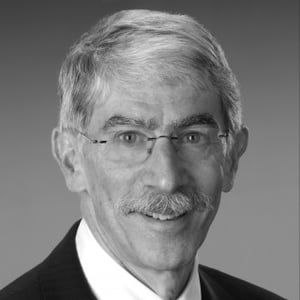
Michael Levy was an Assistant United States Attorney in the Eastern District of Pennsylvania for more than 37 years. From September 2001 until September 2017, he was the Chief of Computer Crimes at the United States Attorney’s Office. He is now retired from the Department of Justice.
He served in the U.S. Department of Justice from 1980 with two one-year excursions into private practice. He prosecuted fraud, drug, tax, and organized crime cases, as well as handling civil and criminal forfeiture actions. From 1991 to 1993, he was the Deputy Chief of the Criminal Division. From 1993 until 2001, he was the First Assistant United States Attorney. From April until September 2001 and from May 2009 until May 2010, he was appointed by the Attorney General to serve as interim United States Attorney until the confirmation of a presidentially appointed U.S. Attorney.
As Chief of Computer Crime, Mr. Levy prosecuted computer intrusion, computer fraud, theft of trade secrets, counterfeit goods, and federal crimes involving the sexual exploitation of children.
Before joining the U.S. Attorney’s office, Mr. Levy worked as a Public Defender and as an Assistant District Attorney in Philadelphia and as an Assistant Attorney General for the Commonwealth of Pennsylvania. He also had his own law practice for four years. He is a 1966 graduate (cum laude) of Brown University and a 1969 Penn Law graduate, where he was a finalist in the Keedy Cup Moot Court Competition.
Mr. Levy is a Fellow of the American College of Trial Lawyers.

Partner, King & Spalding
John Richter is a trial and investigations partner in the Special Matters and Investigations Practice Group, and represents and defends companies, Boards of Directors, Board committees, and individuals facing a variety of white-collar criminal and regulatory enforcement matters, parallel civil litigation, and internal corporate investigations. John previously served as the Acting Assistant Attorney General in charge of the Criminal Division at the U.S. Department of Justice and as the U.S. Attorney for the Western District of Oklahoma, having been nominated by President George W. Bush and confirmed by unanimous consent of the U.S. Senate.
President and CEO, The Buckeye Institute
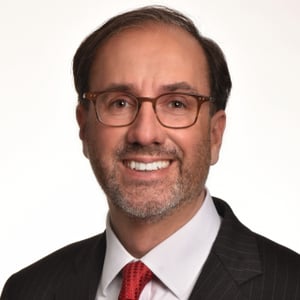
Robert Alt is the President and Chief Executive Officer of The Buckeye Institute where he has catalyzed exponential growth since he took the organization’s helm in 2012. He has since founded Buckeye’s renowned Economic Research Center and established its impactful Legal Center.
Alt is a distinguished scholar and attorney with particular expertise in legal policy, criminal justice, national security, and constitutional law. He previously worked for former U.S. Attorney General Edwin Meese III, regularly provides commentary on television and radio programs, and his writings have appeared in countless outlets.
In 2004, Alt spent five months in Iraq as an embedded war correspondent.
Alt has testified before Congress multiple times—including at the confirmation hearings for U.S. Supreme Court Justice Elena Kagan—the Federal Election Commission regarding matters of constitutional and administrative law, and numerous state legislatures.
Alt serves as an officer on the boards of The Philadelphia Society and the Federalist Society’s Columbus Lawyers Chapter. He taught national security law, criminal law, and legislation at Case Western Reserve University School of Law, as well as constitutional law and political parties and interest groups at Ashland University.
Alt earned his Doctor of Law degree from The University of Chicago Law School, where he was Symposium Editor and the winner of the Mulroy Prize for Excellence in Appellate Advocacy as well as research assistant to Professor Richard Epstein. Following law school, he clerked for Judge Alice Batchelder on the U.S. Court of Appeals for the Sixth Circuit. Alt graduated with his Bachelor of Arts in philosophy and political science magna cum laude from Azusa Pacific University where he also won the Outstanding Senior Award in Political Science.
Alt is an accomplished high-altitude alpinist and endurance athlete who has successfully climbed 6.75 of the famed Seven Summits of the World including Mount Everest. He is the creator of PROFOUND CLIMBING™ and a frequent speaker across the country and around the world on legal and public policy topics as well as effective leadership, management, decision-making, and teamwork in contexts ranging from extraordinary life/death situations to ordinary professional/business settings.
United States Attorney, Southern District of Ohio
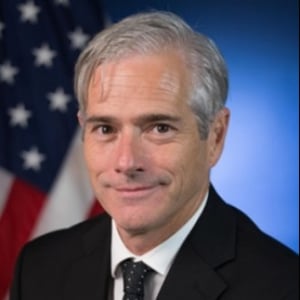
David DeVillers is the United States Attorney for the Southern District of Ohio since November 1, 2019. Prior to that he was an Assistant United States Attorney. He also served as Director of the Organized Crime/Gang Unit for the Franklin County Prosecutor’s Office in Columbus.
As an Assistant United States Attorney (AUSA) DeVillers has lead numerous task forces involving the FBI, ATF, DEA, IRS and the Columbus Division of Police in investigating and prosecuting organized crime. He also prosecuted numerous cases under federal murder statutes, including all seven murder trials prosecuted in the Southern District of Ohio since 2002.
In 2016, DeVillers prosecuted the largest federal murder case in Ohio’s history, charging 20 members of the Short North Posse with RICO and 14 separate murders. After a two-and-half month trial, each defendant was convicted of all counts.
DeVillers was sent to Iraq by the Department of Justice as a Prosecutor Advisor to Iraqi High Tribunal for the Anfal (Kurdish Genocide) trial of Saddam Hussein and other members of former Iraqi Regime from 2006 through 2007. He also investigated additional crimes against humanity perpetrated by the former Iraqi Regime while in Iraq.
DeVillers was sent to Iraq in 2004 by the Department of Justice to investigate a Foreign Terrorist Organization.
DeVillers continued his work overseas, most notably the Department of Justice’s Resident Legal Advisor to the Republic of Georgia, living in the capital city of Tbilisi from 2010 to 2012. He worked closely with the Georgian Ministry of Justice to combat trans-national crime, corruption and international money laundering. He also assisted in the drafting of Georgia’s Criminal Code and the introduction of jury trials in murder cases.
DeVillers has also traveled for the Department of Justice to countries including Ukraine, Albania, Bangladesh, Kyrgyzstan and Azerbaijan to combat terrorism, transnational crime and corruption.
DeVillers received the Mark Losey Distinguished Service Award by the Ohio Attorney General in 2018. He was awarded the J. Michael Bradford Memorial Award for the Nation’s Most Outstanding Assistant United States Attorney by The National Association of Former United States Attorneys in 2008. He was voted the Outstanding Assistant Prosecutor of the Year for 1999 by the Ohio Prosecuting Attorney’s Association.

Judge, United States Court of Appeals, Sixth Circuit
Judge Readler earned his undergraduate and law degrees from the University of Michigan. After graduating, he served as a law clerk to Judge Alan Norris of the United States Court of Appeals for the Sixth Circuit. Judge Readler then began practicing law in the Columbus office of the international law firm Jones Day, eventually spending ten years as a partner in the firm’s Issues and Appeals Practice Group. While at Jones Day, Judge Readler appeared in state and federal trial and appellate courts around the country, most frequently the Supreme Court of Ohio and the Sixth Circuit. Judge Readler also successfully argued before the United States Supreme Court in McQuiggin v. Perkins on behalf of an inmate claiming actual innocence. His other pro bono representations include representing capital defendants before the Tenth Circuit and the Supreme Court of Ohio, as well as representing defendants sentenced to life in prison before the Sixth Circuit. While at Jones Day, Judge Readler traveled to Nairobi with Lawyers Without Borders to train Kenyan lawyers in prosecuting domestic violence cases, and he was also a recipient of the American Marshall Memorial Fellowship awarded by the German Marshall Fund of the United States. Following his career in private practice, Judge Readler served as Acting Assistant Attorney General for the Civil Division of the United States Department of Justice from 2017 to 2019. In that role, Judge Readler led and supervised over 1,000 lawyers in the Department’s largest litigating division, briefing and arguing several cases on behalf of the United States in federal courts across the country, including high-profile cases significant to the Administration and the Department. In March 2019, Judge Readler was confirmed to serve as a Circuit Judge on the Sixth Circuit. He resides in Columbus.

Professorial Lecturer in Law, The George Washington University
Paul Rosenzweig is an accomplished writer and speaker with a national reputation in cyber security and homeland security. He is the founder of Red Branch Consulting PLLC, a homeland security consulting company. He is also a Senior Advisor to The Chertoff Group. Mr. Rosenzweig formerly served as Deputy Assistant Secretary for Policy in the Department of Homeland Security.
He is a Professorial Lecturer in Law at George Washington University, and a Senior Fellow in the Tech, Law & Security Program at the American University, Washington College of Law. He serves as an advisor to and former member of the American Bar Association Standing Committee on Law and National Security, and a Contributing Editor of the Lawfare blog. He is a member of the ABA Cybersecurity Legal Task Force and of the United States Court of Appeals for the District of Columbia Circuit Advisory Committee on Admissions and Grievances. He serves, as well, as a Hearing Committee Member of the District of Columbia Board of Professional Responsibility. In 2011 he was a Carnegie Fellow in National Security Journalism at the Medill School of Journalism, Northwestern University.
Mr. Rosenzweig is a cum laude graduate of the University of Chicago Law School. He has an M.S. in Chemical Oceanography from the Scripps Institution of Oceanography, University of California at San Diego and a B.A from Haverford College. Following graduation from law school he served as a law clerk to the Honorable R. Lanier Anderson, III of the United States Court of Appeals for the Eleventh Circuit.
He is the author of Cyber Warfare: How Conflicts in Cyberspace are Challenging America and Changing the World and of three video lecture series from The Great Courses, Thinking About Cybersecurity: From Cyber Crime to Cyber Warfare; The Surveillance State: Big Data, Freedom, and You; and Investigating American Presidents.
He is the co-author (with James Jay Carafano) of Winning the Long War: Lessons from the Cold War for Defeating Terrorism and Preserving Freedom and co-editor (with Jill D. Rhodes and Robert S. Litt) of the Cybersecurity Handbook (3rd ed.). He is also co-editor (with Timothy McNulty and Ellen Shearer) of two books, Whistleblowers, Leaks and the Media: The First Amendment and National Security, and National Security Law in the News: A Guide for Journalists, Scholars, and Policymakers. Mr. Rosenzweig is a member of the Literary Society of Washington.
Principal Technologist and Senior Policy Analyst, Speech, Privac, American Civil Liberties Union
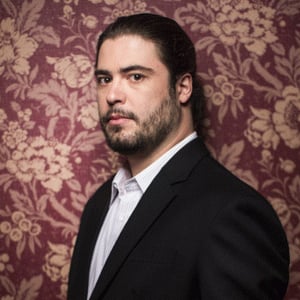
Chris Soghoian is the Principal Technologist and a Senior Policy Analyst with the ACLU Speech, Privacy and Technology Project. He completed his Ph.D. at Indiana University in 2012, which focused on the role that third party service providers play in facilitating law enforcement surveillance of their customers. Between 2009 and 2010, he was the first ever in-house technologist at the Federal Trade Commission's Division of Privacy and Identity Protection, where he worked on investigations of Facebook, Twitter, MySpace, and Netflix. Prior to joining the FTC, he co-created the Do Not Track privacy anti-tracking mechanism now adopted by all of the major web browsers.?

Fellow, National Security Institute, Antonin Scalia Law School, George Mason University
Vince Vitkowsky chaired the Executive Committee of the Federalist Society’s International and National Security Law and Policy Practice Group for over a decade. He is also a Fellow at the National Security Institute of George Mason University Law School. Vince spent 45 years in private practice, primarily in AmLaw 100/200 firms and their spin-offs. His practice included domestic and international commercial arbitration and litigation, as well as cyber risks and liabilities. Vince's current focus is on national security policy, artificial intelligence, cybersecurity, and counterterrorism. He has often written and spoken on national security and other public policy issues. Among other affiliations, Vince has been an Adjunct Fellow at the Center for Law and Counterterrorism of the Foundation for the Defense of Democracies, a member of the Executive Committee of the American Branch of the International Law Association, and Co-Chair of the Committee on Interventions and Trial Observations of the International Bar Association’s Human Rights Institute. He received his B.A. from Northwestern University and his J.D. from Cornell Law School.
Professor of Law, Stanford Law School
Orin S. Kerr is a Professor of Law at Stanford Law School, where he teaches and writes in the areas of criminal procedure and computer crime law. Kerr earned mechanical engineering degrees from Princeton University and Stanford University before graduating with a J.D. from Harvard Law School. He is a former law clerk to Justice Anthony M. Kennedy at the United States Supreme Court and Judge Leonard I. Garth of the U.S. Court of Appeals for the Third Circuit.

President and Executive Director, Electronic Privacy Information Center
Marc Rotenberg is President and Executive Director of the Electronic Privacy Information Center (EPIC) in Washington, DC. He teaches information privacy law at Georgetown University Law Center and frequently testifies before Congress on emerging privacy and civil liberties issues. He testified before the 9-11 Commission on "Security and Liberty: Protecting Privacy, Preventing Terrorism." He has served on several national and international advisory panels, including the expert panels on Cryptography Policy and Computer Security for the OECD, the Legal Experts on Cyberspace Law for UNESCO, and the Countering Spam program of the ITU. He chairs the ABA Committee on Privacy and Information Protection. He is a founding board member and former Chair of the Public Interest Registry, which manages the .ORG domain. He is editor of "The Privacy Law Sourcebook," and co-editor of "Information Privacy Law" (Aspen Publishing 2006) and "Litigation Under the Federal Open Government Laws" (EPIC 2010). He is a graduate of Harvard College and Stanford Law School. He served as Counsel to Senator Patrick J. Leahy on the Senate Judiciary Committee after graduation from law school. He is the recipient of several awards, including the World Technology Award in Law, the American Lawyer Award for Top Lawyers Under 45, the Norbert Weiner Award for Social and Professional Responsibility, and the Vicennial medal from Georgetown University.

Senior Vice President, Chief Legal Officer and General Counsel, Ryan LLC
John Smith is the Senior Vice President, Chief Legal Officer and General Counsel at Ryan, LLC. Based at Ryan’s global headquarters in Dallas, Texas, John Smith brings more than 20 years of experience as a proven leader in the legal, business, and national security communities, including all three branches of the United States Government.
Prior to joining Ryan, Mr. Smith spent 12 years in Texas and Virginia at Raytheon Technologies, an American multinational aerospace and defense corporation. He pioneered roles as the company’s first cybersecurity lawyer and first privacy lawyer. During the last seven years, as a divisional Vice President and General Counsel, Mr. Smith led the legal departments of the two Raytheon divisions focused primarily on services.
Before Raytheon, Mr. Smith served as Associate Counsel to U.S. President George W. Bush. He was the lead lawyer for the White House Homeland Security Council staff. He began his legal career by clerking for Judge Samuel Alito, a few years before Alito’s elevation to the U.S. Supreme Court, and then by practicing at the international law firm of Covington & Burling.
Mr. Smith served a decade as a U.S. Army reservist and two years as a missionary in Ukraine and Russia, a few years after the collapse of the Soviet Union. He graduated with high honors from both Princeton University and Brigham Young University Law School.

Partner, Steptoe & Johnson LLP
Michael A. Vatis is a partner in the New York office of Steptoe & Johnson LLP. His practice focuses on Internet, e-commerce, and technology matters, providing legal advice and strategic counsel on matters involving privacy, security, encryption, intelligence, law enforcement, Internet gambling, and international regulation of Internet content. He also is an experienced appellate litigator, representing clients before the US Supreme Court and federal courts of appeals.
Mr. Vatis has spent most of his career addressing cutting edge issues at the intersection of law, policy, and technology. He was the founding director of the National Infrastructure Protection Center at the FBI, the first government organization responsible for detecting, warning of, and responding to cyber attacks, including computer crimes, cyber terrorism, cyber espionage, and information warfare. Before that, Mr. Vatis served as Associate Deputy Attorney General and Deputy Director of the Executive Office for National Security in the Department of Justice, where he advised the Attorney General and Deputy Attorney General and coordinated the Department’s activities involving counterterrorism, intelligence, encryption, and cyber crime. In that capacity, he also helped lead the development of the nation’s first policies regarding critical infrastructure protection. Mr. Vatis served as Special Counsel at the Department of Defense, where he handled sensitive legal and policy issues for the Secretary and Deputy Secretary of Defense and the General Counsel, receiving the Secretary of Defense Award for Excellence.
After leaving the government in 2001, Mr. Vatis served as the first Director of the Institute for Security Technology Studies at Dartmouth, a federally funded counterterrorism and cyber security research institute. He was simultaneously the founding Chairman of the Institute for Information Infrastructure Protection (I3P). I3P, a consortium of leading cyber security research organizations, worked with industry, government, and academia to develop a comprehensive research and development agenda to improve the security of the nation’s computer and communications networks. Mr. Vatis also served as the Executive Director of the Markle Task Force on National Security in the Information Age, a highly influential group of technology company executives, former government officials, and civil libertarians that recommended ways the government could more effectively use information and technology to combat terrorism while preserving civil liberties. Mr. Vatis was the principal author of the group’s second report, whose recommendations were adopted by the 9/11 Commission and included in the 2004 Intelligence Reform Act.
Mr. Vatis has been a Senior Fellow at New York University Law School’s Center on Law and Security and a member of numerous expert working groups on counterterrorism, intelligence, and technology issues. He is currently a member of the National Academy of Science/National Research Council Committee on the Policy Consequences and Legal/Ethical Implications of Offensive Information Warfare and served on the Commission on Cyber Security for the 44th Presidency, an independent group of cyber security experts who examined existing and potential cyber security threats and developed recommendations for the US government and private businesses. Mr. Vatis has also regularly testified before congressional committees on counterterrorism, intelligence, and cyber security issues. He is also interviewed frequently on television, radio, and in print media, and has been a guest lecturer at many prestigious law schools and universities and a speaker at industry conferences worldwide.
Fellow, National Security Institute, Antonin Scalia Law School, George Mason University
Vince Vitkowsky chaired the Executive Committee of the Federalist Society’s International and National Security Law and Policy Practice Group for over a decade. He is also a Fellow at the National Security Institute of George Mason University Law School. Vince spent 45 years in private practice, primarily in AmLaw 100/200 firms and their spin-offs. His practice included domestic and international commercial arbitration and litigation, as well as cyber risks and liabilities. Vince's current focus is on national security policy, artificial intelligence, cybersecurity, and counterterrorism. He has often written and spoken on national security and other public policy issues. Among other affiliations, Vince has been an Adjunct Fellow at the Center for Law and Counterterrorism of the Foundation for the Defense of Democracies, a member of the Executive Committee of the American Branch of the International Law Association, and Co-Chair of the Committee on Interventions and Trial Observations of the International Bar Association’s Human Rights Institute. He received his B.A. from Northwestern University and his J.D. from Cornell Law School.

Recent DOJ Policy for Charging Cases under the Computer Fraud and Abuse Act: Fair or Foul?
Orin S. Kerr, Michael Levy, John C. Richter
The Justice Department recently announced the issuance of a revised internal policy for charging cases...
An Inside Look at the Department of Justice
Robert Alt, David DeVillers, Chad A. Readler
On January 21, 2021, the Federalist Society's Columbus, Cincinnati, and Cleveland lawyers chapters hosted a...
Beyond Heartbleed: Encryption, Zero-Day Exploits, and The NSA - Podcast
Paul Rosenzweig, Chris Soghoian, Vincent Vitkowsky
The recent discussion of whether the National Security Agency knew about and exploited the Heartbleed...
Panel Two: Economic Security
Orin S. Kerr, Marc Rotenberg, John Smith, Michael Vatis, Vincent Vitkowsky
Both President Bush and President Obama directed comprehensive reviews of America's cyber security strategy. The...