
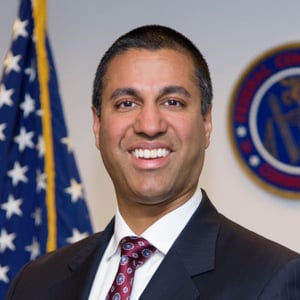
Nonresident Fellow, American Enterprise Institute
Ajit Pai, a former chairman of the Federal Communications Commission (FCC), is a nonresident fellow at the American Enterprise Institute, where he focuses on issues pertaining to technology and innovation, telecommunications regulatory policy, and market-based incentives for investment in broadband deployment. Concurrently, he is a partner at Searchlight Capital Partners, a global investment firm.
Mr. Pai’s distinguished career at the FCC includes two leadership roles following presidential appointments. He was appointed commissioner by President Barack Obama in 2012, designated chairman by President Donald Trump in 2017, and twice confirmed by the US Senate. While at the helm of the FCC, Mr. Pai had a transformative impact on the future of US technology and communications policy, implementing major initiatives to help close the digital divide; advance US leadership in 5G and other wireless technologies; promote innovation; protect consumers, public safety, and national security; and make the agency itself more open, transparent, and data-driven.
Earlier in his career, Mr. Pai served in various public-sector positions in the FCC’s Office of General Counsel, the US Department of Justice, the US Senate Judiciary Committee, and the US District Court for the Eastern District of Louisiana. He also worked as a partner at Jenner & Block and associate general counsel at Verizon Communications.
Mr. Pai graduated with honors from Harvard University, where he received a bachelor’s degree, and from the University of Chicago Law School, where he received a law degree and was an editor on the University of Chicago Law Review.

Managing Partner, Wilkinson Barker Knauer LLP
Bryan Tramont, the firm’s managing partner, offers strategic counsel to Fortune 100 companies and trade associations, as well as small and mid-sized telecommunications and media companies, on all aspects of communications law and regulation. He is regularly called on to advise companies as they develop and evaluate new business opportunities in the technology, media, and telecommunications sectors. Mr. Tramont also designs and leads the execution of the firm’s strategic plan and directs client management and development. Mr. Tramont has been recognized by leading publications like Legal 500, Chambers USA, and Washingtonian as one of the nation’s top communications lawyers. In 2017, he was named to the inaugural Legal 500 Hall of Fame List, which highlights individuals who have received constant praise by their clients and who have been recognized by the Legal 500 as an elite leading lawyer for six consecutive years. He has been awarded The Best Lawyers in America © 2017 “Lawyer of the Year” for Media Law and “Lawyer of the Year" in Communications Law in 2016. In 2016, he was also named one of the Top 10 Washington, DC Super Lawyers.
Mr. Tramont serves on the Commerce Spectrum Management Advisory Committee (CSMAC), advising the Assistant Secretary of Commerce for Communications and Information at NTIA. Appointed under the Bush and Obama Administrations, he also served as the committee’s Co-Chairman from 2008-2010. In addition, Mr. Tramont is active in the Federal Communications Bar Association, where he served in a variety of leadership roles, including as President from 2010-11 and has been awarded the organization’s Distinguished Service Award. Mr. Tramont chairs the Federalist Society’s Telecommunications Practice Group Executive Committee, serves on the International Institute of Communications Canada Board of Directors, and previously served on the Governing Committee of the ABA Forum on Communications Law. Mr. Tramont currently is an adjunct law professor at The Catholic University of America as part of the Communications Law Institute, is a senior adjunct fellow at the University of Colorado, Boulder, has served as the Syracuse University Law School’s Practitioner in Residence, and is on the Board of Trustees at William Woods University. Mr. Tramont is the author of numerous articles on communications policy and is a frequent speaker and lecturer at academic and industry events. Prior to joining Wilkinson Barker Knauer, Mr. Tramont served as Chief of Staff of the Federal Communications Commission under Chairman Michael Powell. As Chief of Staff, Mr. Tramont managed all aspects of the agency’s operations and directed FCC staff in implementing all components of the agency’s policy portfolio including media, broadband, mobility, and traditional telephone services. Before being elevated to Chief of Staff, Mr. Tramont was Chairman Powell’s Senior Legal Advisor, advising him on strategic policy matters and on wireless, international, technology, satellite, and consumer issues. Mr. Tramont also served as Senior Legal Advisor to Commissioner Kathleen Abernathy and, before that, to Commissioner Harold Furchtgott-Roth. He also served as a law clerk for the Honorable Duane Benton on the Supreme Court for his home state of Missouri. In addition, Mr. Tramont has served as an expert witness in a number of communications-related litigation matters.
Bryan Tramont graduated summa cum laude from The George Washington University with a degree in political science. He earned his law degree from Yale Law School, where he served as editor of the Yale Law & Policy Review.

Partner, Wiley Rein, LLP
Megan L. Brown is a partner at Wiley Rein LLP. She has significant litigation, appellate and regulatory experience before state and federal courts and agencies.
Ms. Brown helps businesses respond to federal, state and local regulation and investigations raising administrative law, statutory interpretation, and constitutional issues, including the First Amendment.
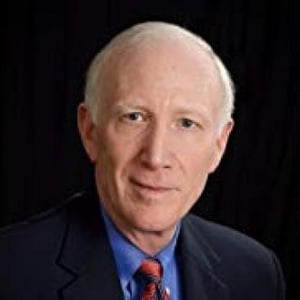
President, The Free State Foundation
Randolph J. May is Founder and President of The Free State Foundation. The Free State Foundation is an independent, non-profit free market-oriented think tank founded in 2006.
From October 1999-May 2006, May was a Senior Fellow and Director of Communications Policy Studies at The Progress & Freedom Foundation, a Washington, DC-based think tank. Prior to joining PFF, he practiced communications, administrative, and regulatory law as a partner at major national law firms. From 1978 to 1981, May served as Assistant General Counsel and Associate General Counsel at the Federal Communication Commission.
May has held numerous leadership positions in bar associations. He is a past Chair of the American Bar Association’s Section of Administrative Law and Regulatory Practice. He is a Fellow of the National Academy of Public Administration. Mr. May also has served as a Public Member of the Administrative Conference of the United States and currently is a Senior Fellow at ACUS.
Mr. May has published more than two hundred articles and essays on communications, administrative and constitutional law topics. He is author of A Call for a Radical New Communications Policy: Proposals for Free Market Reform, and co-author of #CommActUpdate: A Communications Law Fit for the Digital Age and The Constitutional Foundations of Intellectual Property. Mr. May is editor of two books, Communications Law and Policy in the Digital Age: The Next Five Years and New Directions in Communications Policy. In addition, he is the co-editor of two other books, Net Neutrality or Net Neutering: Should Broadband Internet Services Be Regulated? and Communications Deregulation and FCC Reform. In the past, Mr. May has written regular columns on legal and regulatory affairs for Legal Times and the National Law Journal, leading national legal periodicals.
He received his A.B. from Duke University and his J.D. from Duke Law School, where he serves as a member of the Board of Visitors.

Professor of Law and Associate Dean, Boston College Law School; Nonresident Senior Fellow, American Enterprise Institute, Boston College Law School
Professor Lyons is a Professor and Associate Dean at Boston College Law School. He specializes in telecommunications and tech policy, energy, and administrative law. Before joining the faculty, he practiced at the firm of Munger, Tolles and Olson in Los Angeles. He also clerked for the Judge Cynthia Holcomb Hall of the Ninth Circuit Court of Appeals.
Professor Lyons is also a Nonresident Senior Fellow at the American Enterprise Institute, where he has written over 250 blog posts on tech policy issues, including net neutrality, telecommunications regulation, First Amendment issues with tech regulation, and generative AI.

Vice President, Public Knowledge
Michael Weinberg is a Vice President at Public Knowledge. He oversees PK Thinks, Public Knowledge's place to explore long term trends and anticipate policy challenges. He also focuses on the policy implications of emerging technologies such as 3D printing and open source hardware.
Mr. Weinberg is the author of a number of whitepapers including “It Will Be Awesome if They Don't Screw it Up: 3D Printing, Intellectual Property, and the Fight Over the Next Great Disruptive Technology” and “What's the Deal with Copyright and 3D Printing?” He regularly discusses the policy implications of emerging technologies in the press and at speaking events.
Mr. Weinberg received his J.D. from The George Washington University Law School and his B.A. from Claremont McKenna College. Mr. Weinberg was born and raised in and around Washington, D.C. and looks forward to having his heart broken by the Washington football team both on and off the field every fall.
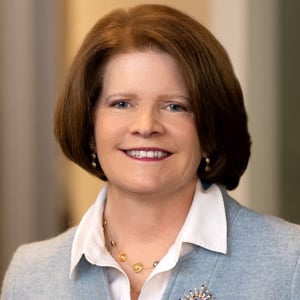
Partner, Antitrust and Competition, Wilson Sonsini Goodrich & Rosati
Maureen Ohlhausen is a partner in the Washington, D.C., office of Wilson Sonsini Goodrich & Rosati, where she advises industry-leading clients on complex antitrust and litigation matters, with a focus on high-profile cases. Sought after for her depth of experience on antitrust and Federal Trade Commission (FTC)-related issues, Maureen is known for her relationships with officials in the U.S. and abroad.
After finishing law school and clerking at the U.S. Court of Appeals for the D.C. Circuit, Maureen joined the FTC in 1997. She held a series of roles at the agency over the next 12 years, rising to the position of Director of the FTC Office of Policy Planning, where she led the agency’s work on e-commerce and headed the FTC’s Internet Access Task Force, which produced an influential report analyzing competition and consumer protection legal issues in the broadband and internet sectors. She then went into private practice at a leading telecommunications law firm, where she headed the FTC practice group.
In 2012, Maureen was confirmed by the Senate as a Commissioner of the FTC and was appointed Acting Chairman in January 2017, a role she held until May 2018. As Acting Chairman, Maureen directed all aspects of the agency’s antitrust work, including merger review, conduct enforcement, and all consumer protection enforcement, with an emphasis on privacy and technology issues. Under her leadership, the FTC won several influential merger challenges in court and reached a number of key digital privacy settlements.
To date, Maureen is the only FTC Commissioner to have received the Robert Pitofsky Lifetime Achievement Award in recognition of her contributions to the FTC.
Following the end of her term at the FTC, and immediately prior to joining Wilson Sonsini, Maureen was chair of the global antitrust and competition practice at Baker Botts, based in that firm’s Washington, D.C., office.
A recognized thought leader, Maureen is a frequent author and speaker, and is often quoted by leading print and broadcast media on antitrust, FTC, and privacy and data security matters. She has published dozens of articles on antitrust, privacy, intellectual property, regulation, FTC litigation, telecommunications, and international law issues in prestigious publications. During her tenure at the FTC and in private practice, she testified more than two dozen times before Congress, including before the Senate Commerce Committee and the House Energy and Commerce Antitrust Sub-Committee. She also testified before the Antitrust Modernization Commission.
President, The Free State Foundation
Randolph J. May is Founder and President of The Free State Foundation. The Free State Foundation is an independent, non-profit free market-oriented think tank founded in 2006.
From October 1999-May 2006, May was a Senior Fellow and Director of Communications Policy Studies at The Progress & Freedom Foundation, a Washington, DC-based think tank. Prior to joining PFF, he practiced communications, administrative, and regulatory law as a partner at major national law firms. From 1978 to 1981, May served as Assistant General Counsel and Associate General Counsel at the Federal Communication Commission.
May has held numerous leadership positions in bar associations. He is a past Chair of the American Bar Association’s Section of Administrative Law and Regulatory Practice. He is a Fellow of the National Academy of Public Administration. Mr. May also has served as a Public Member of the Administrative Conference of the United States and currently is a Senior Fellow at ACUS.
Mr. May has published more than two hundred articles and essays on communications, administrative and constitutional law topics. He is author of A Call for a Radical New Communications Policy: Proposals for Free Market Reform, and co-author of #CommActUpdate: A Communications Law Fit for the Digital Age and The Constitutional Foundations of Intellectual Property. Mr. May is editor of two books, Communications Law and Policy in the Digital Age: The Next Five Years and New Directions in Communications Policy. In addition, he is the co-editor of two other books, Net Neutrality or Net Neutering: Should Broadband Internet Services Be Regulated? and Communications Deregulation and FCC Reform. In the past, Mr. May has written regular columns on legal and regulatory affairs for Legal Times and the National Law Journal, leading national legal periodicals.
He received his A.B. from Duke University and his J.D. from Duke Law School, where he serves as a member of the Board of Visitors.
Partner, Antitrust and Competition, Wilson Sonsini Goodrich & Rosati
Maureen Ohlhausen is a partner in the Washington, D.C., office of Wilson Sonsini Goodrich & Rosati, where she advises industry-leading clients on complex antitrust and litigation matters, with a focus on high-profile cases. Sought after for her depth of experience on antitrust and Federal Trade Commission (FTC)-related issues, Maureen is known for her relationships with officials in the U.S. and abroad.
After finishing law school and clerking at the U.S. Court of Appeals for the D.C. Circuit, Maureen joined the FTC in 1997. She held a series of roles at the agency over the next 12 years, rising to the position of Director of the FTC Office of Policy Planning, where she led the agency’s work on e-commerce and headed the FTC’s Internet Access Task Force, which produced an influential report analyzing competition and consumer protection legal issues in the broadband and internet sectors. She then went into private practice at a leading telecommunications law firm, where she headed the FTC practice group.
In 2012, Maureen was confirmed by the Senate as a Commissioner of the FTC and was appointed Acting Chairman in January 2017, a role she held until May 2018. As Acting Chairman, Maureen directed all aspects of the agency’s antitrust work, including merger review, conduct enforcement, and all consumer protection enforcement, with an emphasis on privacy and technology issues. Under her leadership, the FTC won several influential merger challenges in court and reached a number of key digital privacy settlements.
To date, Maureen is the only FTC Commissioner to have received the Robert Pitofsky Lifetime Achievement Award in recognition of her contributions to the FTC.
Following the end of her term at the FTC, and immediately prior to joining Wilson Sonsini, Maureen was chair of the global antitrust and competition practice at Baker Botts, based in that firm’s Washington, D.C., office.
A recognized thought leader, Maureen is a frequent author and speaker, and is often quoted by leading print and broadcast media on antitrust, FTC, and privacy and data security matters. She has published dozens of articles on antitrust, privacy, intellectual property, regulation, FTC litigation, telecommunications, and international law issues in prestigious publications. During her tenure at the FTC and in private practice, she testified more than two dozen times before Congress, including before the Senate Commerce Committee and the House Energy and Commerce Antitrust Sub-Committee. She also testified before the Antitrust Modernization Commission.
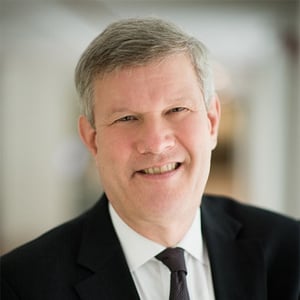
Senior Fellow and Director, Center for the Economics of the Internet, Hudson Institute
Harold Furchtgott-Roth is a senior fellow and director of the Center for the Economics of the Internet at Hudson Institute.
Mr. Furchtgott-Roth founded Furchtgott-Roth Economic Enterprises in 2003. He frequently comments on issues related to the communications sector of the economy. From 2001 to 2003, he was a visiting fellow at the American Enterprise Institute where he published A Tough Act to Follow, chronicling the difficulties implementing the Telecommunications Act of 1996.
From 1997 through 2001, Mr. Furchtgott-Roth served as a commissioner of the Federal Communications Commission. In that capacity, he served on the Joint Board on Universal Service. He is one of the few economists to have served as a federal regulatory commissioner, and the only one to have served on the Federal Communications Commission.
Before his appointment to the FCC, he was chief economist for the House Committee on Commerce and a principal staff member on the Telecommunications Act of 1996. Earlier in his career, he was a senior economist with Economists Incorporated and a research analyst with the Center for Naval Analyses.
Mr. Furchtgott-Roth is a member of the Washington Legal Foundation’s Legal Policy Advisory Board. He is the coauthor of three books: Cable TV: Regulation or Competition, with R.W. Crandall; Economics of A Disaster: The Exxon Valdez Oil Spill, with B.M. Owen et al; and International Trade in Computer Software, with S.E. Siwek.
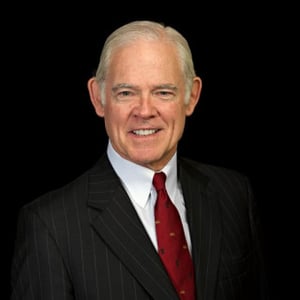
Founding Partner, Cooper & Kirk PLLC
Charles J. Cooper is a founding member and the chairman of Cooper & Kirk, PLLC, “one of the Nation’s leading litigation boutiques” (Above The Law 2017). The National Law Journal recently wrote that Mr. Cooper’s “brilliant legal career has so far spanned five decades and thrust Cooper into the spotlight in some of the most historic moments of the country’s modern history.” He has argued nine cases before the United States Supreme Court and scores of appeals before each of the 13 federal courts of appeals and several state supreme courts. He has been lead trial counsel in numerous complex, weeks-long trials in federal courts throughout the country. Named by the National Law Journal as one of the 10 best litigators in Washington D.C., Mr. Cooper’s work has been reported in numerous press accounts, and he has been called a “powerhouse attorney” (Fortune 2015), “a hard-nosed litigator” (Washington Post 2017), and “one of the country’s most in-demand civil litigators and a Washington legal institution unto himself” (The American Spectator 2014).
After graduating from the University of Alabama School of Law in 1977, where he ranked first in his class and served as Editor-in-Chief of the Alabama Law Review, Mr. Cooper began his career as a law clerk to Judge Paul Roney on the Fifth Circuit Court of Appeals and to Justice William H. Rehnquist in 1978–79. He then practiced law in Atlanta for two years before joining the Civil Rights Division of the U.S. Department of Justice, where he served as the Deputy Assistant Attorney General in charge of, among other things, appellate matters. In 1985 President Reagan appointed him to the position of Assistant Attorney General for the Office of Legal Counsel, which is the office responsible for providing legal opinions and advice to the White House, the Attorney General, and Executive Branch departments and agencies on issues covering the full spectrum of federal constitutional, statutory, and regulatory law.
In 1988 he returned to private practice as a litigation partner in the Washington, D.C. office of McGuireWoods. From 1990 until the founding of Cooper & Kirk in 1996, he was a partner at Shaw Pittman (now Pillsbury Winthrop Shaw Pittman), where he headed the firm’s Constitutional and Government Litigation Group.
Mr. Cooper has represented a wide range of public and private clients in highly complex constitutional, civil rights, antitrust, healthcare, banking, intellectual property, elections, campaign finance, administrative, commercial, and government contract cases. He has led trial teams in cases that have won judgments and settlements valued in the billions of dollars and that have established ground-breaking constitutional precedents.
Much of Mr. Cooper’s practice has involved representing high-profile clients in nationally prominent matters, including: the State of Florida in a First Amendment suit brought by the Disney Company concerning its autonomous regulatory authority over its Disney World property; the Commonwealth of Virginia in a suit seeking to enjoin the removal of noncitizens from its voter rolls; 38 members of the Duke Lacrosse team falsely accused of rape by officials of Duke University and the City of Durham; Harper Lee in a copyright dispute with the heirs of Gregory Peck; high-ranking former government officials such as former Attorneys General John Ashcroft, Jeff Sessions, and William Barr, and Ambassador John Bolton; several Governors and United States Senators; over 100 Members of Congress; and many state, territorial, and local government bodies and officials. He has also represented and advised government officials and public figures in connection with sensitive private issues that needed to be, and were, resolved discreetly without becoming matters of public record.
In 1998 Chief Justice Rehnquist appointed Mr. Cooper to the Standing Committee on Rules of Practice and Procedure of the Judicial Conference of the United States, where he served for three terms. He also served as a Public Member, appointed by President George H.W. Bush, of the National Commission on Judicial Discipline and Removal. He is a member of numerous professional associations, including the American Law Institute (since 1993) and the American Academy of Appellate Lawyers (since 1996). He is also an active member of the Federalist Society and the Republican National Lawyers Association, which in 2010 named him Republican Lawyer of the Year and in 2016 honored him with its Edwin Meese III Award.
Mr. Cooper has published scores of articles and spoken extensively on constitutional and legal policy topics. He has appeared before congressional committees on 26 occasions, testifying as an expert on a wide variety of legal issues, including the Chevron doctrine of judicial deference to administrative agencies, the diversity of citizenship jurisdiction of federal courts, statehood bills for Puerto Rico and the District of Columbia, and the impeachment of President Clinton.
Nonresident Fellow, American Enterprise Institute
Ajit Pai, a former chairman of the Federal Communications Commission (FCC), is a nonresident fellow at the American Enterprise Institute, where he focuses on issues pertaining to technology and innovation, telecommunications regulatory policy, and market-based incentives for investment in broadband deployment. Concurrently, he is a partner at Searchlight Capital Partners, a global investment firm.
Mr. Pai’s distinguished career at the FCC includes two leadership roles following presidential appointments. He was appointed commissioner by President Barack Obama in 2012, designated chairman by President Donald Trump in 2017, and twice confirmed by the US Senate. While at the helm of the FCC, Mr. Pai had a transformative impact on the future of US technology and communications policy, implementing major initiatives to help close the digital divide; advance US leadership in 5G and other wireless technologies; promote innovation; protect consumers, public safety, and national security; and make the agency itself more open, transparent, and data-driven.
Earlier in his career, Mr. Pai served in various public-sector positions in the FCC’s Office of General Counsel, the US Department of Justice, the US Senate Judiciary Committee, and the US District Court for the Eastern District of Louisiana. He also worked as a partner at Jenner & Block and associate general counsel at Verizon Communications.
Mr. Pai graduated with honors from Harvard University, where he received a bachelor’s degree, and from the University of Chicago Law School, where he received a law degree and was an editor on the University of Chicago Law Review.
Managing Partner, Wilkinson Barker Knauer LLP
Bryan Tramont, the firm’s managing partner, offers strategic counsel to Fortune 100 companies and trade associations, as well as small and mid-sized telecommunications and media companies, on all aspects of communications law and regulation. He is regularly called on to advise companies as they develop and evaluate new business opportunities in the technology, media, and telecommunications sectors. Mr. Tramont also designs and leads the execution of the firm’s strategic plan and directs client management and development. Mr. Tramont has been recognized by leading publications like Legal 500, Chambers USA, and Washingtonian as one of the nation’s top communications lawyers. In 2017, he was named to the inaugural Legal 500 Hall of Fame List, which highlights individuals who have received constant praise by their clients and who have been recognized by the Legal 500 as an elite leading lawyer for six consecutive years. He has been awarded The Best Lawyers in America © 2017 “Lawyer of the Year” for Media Law and “Lawyer of the Year" in Communications Law in 2016. In 2016, he was also named one of the Top 10 Washington, DC Super Lawyers.
Mr. Tramont serves on the Commerce Spectrum Management Advisory Committee (CSMAC), advising the Assistant Secretary of Commerce for Communications and Information at NTIA. Appointed under the Bush and Obama Administrations, he also served as the committee’s Co-Chairman from 2008-2010. In addition, Mr. Tramont is active in the Federal Communications Bar Association, where he served in a variety of leadership roles, including as President from 2010-11 and has been awarded the organization’s Distinguished Service Award. Mr. Tramont chairs the Federalist Society’s Telecommunications Practice Group Executive Committee, serves on the International Institute of Communications Canada Board of Directors, and previously served on the Governing Committee of the ABA Forum on Communications Law. Mr. Tramont currently is an adjunct law professor at The Catholic University of America as part of the Communications Law Institute, is a senior adjunct fellow at the University of Colorado, Boulder, has served as the Syracuse University Law School’s Practitioner in Residence, and is on the Board of Trustees at William Woods University. Mr. Tramont is the author of numerous articles on communications policy and is a frequent speaker and lecturer at academic and industry events. Prior to joining Wilkinson Barker Knauer, Mr. Tramont served as Chief of Staff of the Federal Communications Commission under Chairman Michael Powell. As Chief of Staff, Mr. Tramont managed all aspects of the agency’s operations and directed FCC staff in implementing all components of the agency’s policy portfolio including media, broadband, mobility, and traditional telephone services. Before being elevated to Chief of Staff, Mr. Tramont was Chairman Powell’s Senior Legal Advisor, advising him on strategic policy matters and on wireless, international, technology, satellite, and consumer issues. Mr. Tramont also served as Senior Legal Advisor to Commissioner Kathleen Abernathy and, before that, to Commissioner Harold Furchtgott-Roth. He also served as a law clerk for the Honorable Duane Benton on the Supreme Court for his home state of Missouri. In addition, Mr. Tramont has served as an expert witness in a number of communications-related litigation matters.
Bryan Tramont graduated summa cum laude from The George Washington University with a degree in political science. He earned his law degree from Yale Law School, where he served as editor of the Yale Law & Policy Review.
Professor of Law and Associate Dean, Boston College Law School; Nonresident Senior Fellow, American Enterprise Institute, Boston College Law School
Professor Lyons is a Professor and Associate Dean at Boston College Law School. He specializes in telecommunications and tech policy, energy, and administrative law. Before joining the faculty, he practiced at the firm of Munger, Tolles and Olson in Los Angeles. He also clerked for the Judge Cynthia Holcomb Hall of the Ninth Circuit Court of Appeals.
Professor Lyons is also a Nonresident Senior Fellow at the American Enterprise Institute, where he has written over 250 blog posts on tech policy issues, including net neutrality, telecommunications regulation, First Amendment issues with tech regulation, and generative AI.
President, The Free State Foundation
Randolph J. May is Founder and President of The Free State Foundation. The Free State Foundation is an independent, non-profit free market-oriented think tank founded in 2006.
From October 1999-May 2006, May was a Senior Fellow and Director of Communications Policy Studies at The Progress & Freedom Foundation, a Washington, DC-based think tank. Prior to joining PFF, he practiced communications, administrative, and regulatory law as a partner at major national law firms. From 1978 to 1981, May served as Assistant General Counsel and Associate General Counsel at the Federal Communication Commission.
May has held numerous leadership positions in bar associations. He is a past Chair of the American Bar Association’s Section of Administrative Law and Regulatory Practice. He is a Fellow of the National Academy of Public Administration. Mr. May also has served as a Public Member of the Administrative Conference of the United States and currently is a Senior Fellow at ACUS.
Mr. May has published more than two hundred articles and essays on communications, administrative and constitutional law topics. He is author of A Call for a Radical New Communications Policy: Proposals for Free Market Reform, and co-author of #CommActUpdate: A Communications Law Fit for the Digital Age and The Constitutional Foundations of Intellectual Property. Mr. May is editor of two books, Communications Law and Policy in the Digital Age: The Next Five Years and New Directions in Communications Policy. In addition, he is the co-editor of two other books, Net Neutrality or Net Neutering: Should Broadband Internet Services Be Regulated? and Communications Deregulation and FCC Reform. In the past, Mr. May has written regular columns on legal and regulatory affairs for Legal Times and the National Law Journal, leading national legal periodicals.
He received his A.B. from Duke University and his J.D. from Duke Law School, where he serves as a member of the Board of Visitors.
Partner, Antitrust and Competition, Wilson Sonsini Goodrich & Rosati
Maureen Ohlhausen is a partner in the Washington, D.C., office of Wilson Sonsini Goodrich & Rosati, where she advises industry-leading clients on complex antitrust and litigation matters, with a focus on high-profile cases. Sought after for her depth of experience on antitrust and Federal Trade Commission (FTC)-related issues, Maureen is known for her relationships with officials in the U.S. and abroad.
After finishing law school and clerking at the U.S. Court of Appeals for the D.C. Circuit, Maureen joined the FTC in 1997. She held a series of roles at the agency over the next 12 years, rising to the position of Director of the FTC Office of Policy Planning, where she led the agency’s work on e-commerce and headed the FTC’s Internet Access Task Force, which produced an influential report analyzing competition and consumer protection legal issues in the broadband and internet sectors. She then went into private practice at a leading telecommunications law firm, where she headed the FTC practice group.
In 2012, Maureen was confirmed by the Senate as a Commissioner of the FTC and was appointed Acting Chairman in January 2017, a role she held until May 2018. As Acting Chairman, Maureen directed all aspects of the agency’s antitrust work, including merger review, conduct enforcement, and all consumer protection enforcement, with an emphasis on privacy and technology issues. Under her leadership, the FTC won several influential merger challenges in court and reached a number of key digital privacy settlements.
To date, Maureen is the only FTC Commissioner to have received the Robert Pitofsky Lifetime Achievement Award in recognition of her contributions to the FTC.
Following the end of her term at the FTC, and immediately prior to joining Wilson Sonsini, Maureen was chair of the global antitrust and competition practice at Baker Botts, based in that firm’s Washington, D.C., office.
A recognized thought leader, Maureen is a frequent author and speaker, and is often quoted by leading print and broadcast media on antitrust, FTC, and privacy and data security matters. She has published dozens of articles on antitrust, privacy, intellectual property, regulation, FTC litigation, telecommunications, and international law issues in prestigious publications. During her tenure at the FTC and in private practice, she testified more than two dozen times before Congress, including before the Senate Commerce Committee and the House Energy and Commerce Antitrust Sub-Committee. She also testified before the Antitrust Modernization Commission.
Vice President, Public Knowledge
Michael Weinberg is a Vice President at Public Knowledge. He oversees PK Thinks, Public Knowledge's place to explore long term trends and anticipate policy challenges. He also focuses on the policy implications of emerging technologies such as 3D printing and open source hardware.
Mr. Weinberg is the author of a number of whitepapers including “It Will Be Awesome if They Don't Screw it Up: 3D Printing, Intellectual Property, and the Fight Over the Next Great Disruptive Technology” and “What's the Deal with Copyright and 3D Printing?” He regularly discusses the policy implications of emerging technologies in the press and at speaking events.
Mr. Weinberg received his J.D. from The George Washington University Law School and his B.A. from Claremont McKenna College. Mr. Weinberg was born and raised in and around Washington, D.C. and looks forward to having his heart broken by the Washington football team both on and off the field every fall.
Senior Democratic Counsel, Communications and Technology Policy, U.S. House Committee on Energy and Commerce
Shawn Chang is currently Senior Democratic Counsel on Communications and Technology Policy for the Committee on Energy and Commerce of the U.S. House of Representatives serving Ranking Member Henry Waxman (D-CA).
Prior to joining Ranking Member Waxman’s staff, Shawn served as the deputy policy director of Free Press. He also served as legislative assistant to Rep. Tammy Baldwin (D-Wis.), Rep. Diane E. Watson (D-Calif.) and, Rep Patsy T. Mink (D-Hawaii). He holds his bachelor’s degree from the Georgetown University School of Foreign Service and received his J.D. from George Washington University Law School.
President, The Free State Foundation
Randolph J. May is Founder and President of The Free State Foundation. The Free State Foundation is an independent, non-profit free market-oriented think tank founded in 2006.
From October 1999-May 2006, May was a Senior Fellow and Director of Communications Policy Studies at The Progress & Freedom Foundation, a Washington, DC-based think tank. Prior to joining PFF, he practiced communications, administrative, and regulatory law as a partner at major national law firms. From 1978 to 1981, May served as Assistant General Counsel and Associate General Counsel at the Federal Communication Commission.
May has held numerous leadership positions in bar associations. He is a past Chair of the American Bar Association’s Section of Administrative Law and Regulatory Practice. He is a Fellow of the National Academy of Public Administration. Mr. May also has served as a Public Member of the Administrative Conference of the United States and currently is a Senior Fellow at ACUS.
Mr. May has published more than two hundred articles and essays on communications, administrative and constitutional law topics. He is author of A Call for a Radical New Communications Policy: Proposals for Free Market Reform, and co-author of #CommActUpdate: A Communications Law Fit for the Digital Age and The Constitutional Foundations of Intellectual Property. Mr. May is editor of two books, Communications Law and Policy in the Digital Age: The Next Five Years and New Directions in Communications Policy. In addition, he is the co-editor of two other books, Net Neutrality or Net Neutering: Should Broadband Internet Services Be Regulated? and Communications Deregulation and FCC Reform. In the past, Mr. May has written regular columns on legal and regulatory affairs for Legal Times and the National Law Journal, leading national legal periodicals.
He received his A.B. from Duke University and his J.D. from Duke Law School, where he serves as a member of the Board of Visitors.

Founder and President, Salt Point Strategies
David Redl is the Founder and President of Salt Point Strategies, a strategic advising firm focused on the technology and telecom sectors. David is an attorney and former government executive with experience in both the legislative and executive branches of the U.S. government in the telecommunications, media, and technology fields.
David previously served as Assistant Secretary of Commerce for Communications and Information and the Administrator of the National Telecommunications and Information Administration. During his tenure, he led U.S. efforts to ensure American leadership in 5G, to bring broadband to more rural Americans, and to promote a free, open, and secure Internet around the world.
David also represented the United States in international forums, including leading U.S. efforts before the Internet Corporation for Assigned Names and Numbers, the Inter-American Telecommunication Commission, the Organisation for Economic Co-operation and Development, and the International Telecommunication Union.
In the legislative branch, David served as Chief Counsel for Communications and Technology on the majority staff of the U.S. House of Representatives Committee on Energy and Commerce. While at Energy and Commerce, he worked extensively on telecommunications, media, and technology laws, including the successful passage of laws authorizing the first-ever spectrum incentive auction, the creation of the First Responder Network Authority, and reauthorization of the satellite television laws.
Prior to his government service, David started his career as Director of Regulatory Affairs at CTIA, an international trade association of the wireless communications industry.
Mr. Redl received his B.A. in Journalism and his B.A. in Political Science from the Pennsylvania State University and his J.D. from the Catholic University of America with a certificate from the Institute for Communications Law Studies. He is a member of the New York and District of Columbia Bars.

Commissioner Ajit Pai on Net Neutrality - Podcast
Ajit V. Pai, Bryan N. Tramont
FCC Commissioner Ajit Pai spoke to Telecommunications & Electronic Media Practice Group Chairman Bryan Tramont...
Commissioner Ajit Pai on Net Neutrality
TeleforumT-Mobile South, LLC v. City of Roswell - Post-Argument SCOTUScast
Megan L. Brown
On November 10, 2014, the Supreme Court heard oral argument in T-Mobile South, LLC v....
Congress Begins to Consider a New Communications Act
Randolph May
Introduction On December 3, 2013, House of Representative Energy and Commerce Committee Chairman Fred...
Net Neutrality: The Power to Act - Podcast
Daniel Lyons, Michael Weinberg, Maureen K. Ohlhausen, Randolph May
After suffering two judicial setbacks already, most recently in the D.C. Circuit’s Verizon v. FCC...
Net Neutrality: The Power to Act
TeleforumCommunications Act Reform
TeleforumNet Neutrality vs. Net Reality: Why an Evidence-Based Approach to Enforcement, And Not More Regulation, Could Protect Innovation on the Web
Maureen K. Ohlhausen
Related Links: Senate Committee on Commerce, Science, and Transportation, Hearing on “Network Neutrality” (testimony of...
Assessing Competition in the Wireless Sector: How DoJ Can Clear Away the Fog from Proposed Mergers
Harold W. Furchtgott-Roth
I. Introduction and Background Over the past twenty years, the American wireless sector has grown...
An Attack on Separation of Powers and Federal Judicial Power? An Analysis of the Constitutionality of Section 18 of the America Invents Act
Charles J. Cooper, Vincent J. Colatriano
Note from the Editor: This paper analyzes constitutional challenges to Section 18 of the recently...