
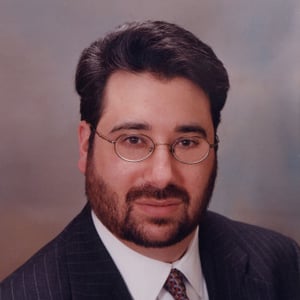
President, Phoenix Center for Advanced Legal and Economic Public Policy Studies
Lawrence J. Spiwak is President of the Phoenix Center for Advanced Legal & Economic Public Policy Studies, a non-profit 501(c)(3) organization that studies broad public-policy issues related to governance, social and economic conditions, with a particular emphasis on the law and economics of the digital age. Mr. Spiwak is a prolific scholar whose work is frequently cited by policymakers, major news media and academic journals around the world, and is in the top 1.3%of authors downloaded on the Social Science Research Network. Mr. Spiwak currently serves as the co-chair of the Federal Communications Bar Association’s (FCBA) committee responsible for overseeing the FEDERAL COMMUNICATIONS LAW JOURNAL and is a member of the program committee of the Telecommunications Policy Research Conference (“TPRC”). Mr. Spiwak is also the recipient of the FCBA’s Distinguished Service Award. Prior to joining the Phoenix Center, Mr. Spiwak was a Senior Attorney with the Competition Division in the FCC’s Office of General Counsel from 1994-1998. While in college, Mr. Spiwak was accepted into the Presidential Stay-In School program where he was responsible for delivering classified and confidential material among senior White House and Reagan Administration officials and received a full FBI security clearance. Mr. Spiwak received his B.A. with Special Honors from the George Washington University and his J.D. from the Benjamin N. Cardozo School of Law. Mr. Spiwak is a member in good standing of the bars of New York, Massachusetts, the District of Columbia, and the U.S. Court of Appeals for the D.C. Circuit.

Professor of the Practice of Economics, Duke University
Michelle P. Connolly is Professor of the Practice in the Economics Department at Duke University. She was the Economics Director of Duke in New York: Financial Markets and Institutions Program for 2007-2009 and the Director of EcoTeach for several years. She currently serves as the Director of the Honors Program in Economics and a member of the Duke Alumni Association Board.
In 2011, Professor Connolly won the Howard D. Johnson Trinity College Teaching Prize and was named among the top five percent of Duke University Undergraduate Instructors in 2009, 2010 and 2011.
Professor Connolly previously served as Chief Economist of the Federal Communications Commission in 2006-2007 and 2008-2009, and as an Economist for the International Research Function for the Federal Reserve Bank of New York from 1996 to 1997. She graduated Phi Beta Kappa and Summa Cum Laude from Yale University in 1990, and went on to earn her M.A. and M.Phil in economics. Professor Connolly received her Ph.D. in economics from Yale University in 1996.
Professor Connolly’s research and teaching focus specifically on international trade, telecommunications policy, media policy, education, growth, and development. She has received funding for her research from the National Science Foundation, the Duke Arts and Sciences Research Council Grants, the Spencer Grant, and the Teagle Grant.
Professor Connolly has published in numerous journals, including the American Economic Review, the American Economic Journal: Macroeconomics, the Journal of Development Economics, the Journal of Economic History, the Journal of Economic Growth, the Review of Industrial Organization, and Current Issues in Economics and Finance.
In 2011, Professor Connolly testified before Congress and participated in a White House panel on Spectrum Issues. She has been presenting her work at university seminars and international conferences since 1996. Some of her appearances were at the ACLP Advanced Communications 2009 Summit, where she was a panelist and moderator, at the conference on “Wireless Technologies: Enabling Innovation and Economic Growth”, where she served as a keynote panelist, and at the Martin H. Crego Lecture in Economics, an all college Lecture at Vassar College. In 2013 Professor Connolly was awarded a National Science Foundation Secure and Trustworthy Cyberspace Grant, “Dollars for Hertz: Making Trustworthy Spectrum Sharing Technically and Economically Viable.”
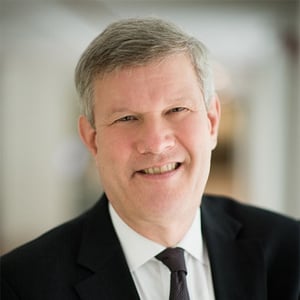
Senior Fellow and Director, Center for the Economics of the Internet, Hudson Institute
Harold Furchtgott-Roth is a senior fellow and director of the Center for the Economics of the Internet at Hudson Institute.
Mr. Furchtgott-Roth founded Furchtgott-Roth Economic Enterprises in 2003. He frequently comments on issues related to the communications sector of the economy. From 2001 to 2003, he was a visiting fellow at the American Enterprise Institute where he published A Tough Act to Follow, chronicling the difficulties implementing the Telecommunications Act of 1996.
From 1997 through 2001, Mr. Furchtgott-Roth served as a commissioner of the Federal Communications Commission. In that capacity, he served on the Joint Board on Universal Service. He is one of the few economists to have served as a federal regulatory commissioner, and the only one to have served on the Federal Communications Commission.
Before his appointment to the FCC, he was chief economist for the House Committee on Commerce and a principal staff member on the Telecommunications Act of 1996. Earlier in his career, he was a senior economist with Economists Incorporated and a research analyst with the Center for Naval Analyses.
Mr. Furchtgott-Roth is a member of the Washington Legal Foundation’s Legal Policy Advisory Board. He is the coauthor of three books: Cable TV: Regulation or Competition, with R.W. Crandall; Economics of A Disaster: The Exxon Valdez Oil Spill, with B.M. Owen et al; and International Trade in Computer Software, with S.E. Siwek.
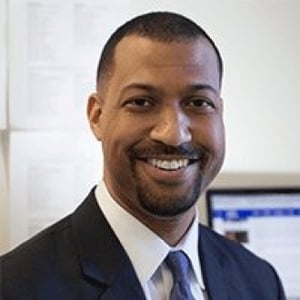
President & CEO, Public Knowledge
Chris Lewis has served as President and CEO at Public Knowledge since July 2019. Prior to being elevated to President and CEO, Chris served seven years as PK’s Vice President for Government Affairs, leading the organization’s day-to-day advocacy and political strategy on Capitol Hill and at government agencies. During that time he also served as a local elected official, serving two terms on the Alexandria City Public School Board in Virginia.
Before joining Public Knowledge, Chris worked in the Federal Communications Commission Office of Legislative Affairs, including as its Deputy Director. He is a former U.S. Senate staffer and an experienced political organizer and advocate in both the nonprofit world and political campaigns from local to the presidential level. Chris graduated from Harvard University with a Bachelors degree in Government and lives in Alexandria, VA where he continues to volunteer and advocate on local civic issues.
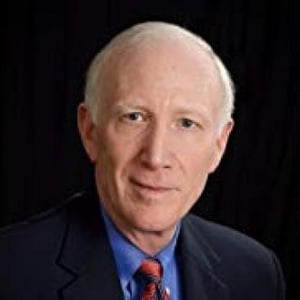
President, The Free State Foundation
Randolph J. May is Founder and President of The Free State Foundation. The Free State Foundation is an independent, non-profit free market-oriented think tank founded in 2006.
From October 1999-May 2006, May was a Senior Fellow and Director of Communications Policy Studies at The Progress & Freedom Foundation, a Washington, DC-based think tank. Prior to joining PFF, he practiced communications, administrative, and regulatory law as a partner at major national law firms. From 1978 to 1981, May served as Assistant General Counsel and Associate General Counsel at the Federal Communication Commission.
May has held numerous leadership positions in bar associations. He is a past Chair of the American Bar Association’s Section of Administrative Law and Regulatory Practice. He is a Fellow of the National Academy of Public Administration. Mr. May also has served as a Public Member of the Administrative Conference of the United States and currently is a Senior Fellow at ACUS.
Mr. May has published more than two hundred articles and essays on communications, administrative and constitutional law topics. He is author of A Call for a Radical New Communications Policy: Proposals for Free Market Reform, and co-author of #CommActUpdate: A Communications Law Fit for the Digital Age and The Constitutional Foundations of Intellectual Property. Mr. May is editor of two books, Communications Law and Policy in the Digital Age: The Next Five Years and New Directions in Communications Policy. In addition, he is the co-editor of two other books, Net Neutrality or Net Neutering: Should Broadband Internet Services Be Regulated? and Communications Deregulation and FCC Reform. In the past, Mr. May has written regular columns on legal and regulatory affairs for Legal Times and the National Law Journal, leading national legal periodicals.
He received his A.B. from Duke University and his J.D. from Duke Law School, where he serves as a member of the Board of Visitors.
Professor of the Practice of Economics, Duke University
Michelle P. Connolly is Professor of the Practice in the Economics Department at Duke University. She was the Economics Director of Duke in New York: Financial Markets and Institutions Program for 2007-2009 and the Director of EcoTeach for several years. She currently serves as the Director of the Honors Program in Economics and a member of the Duke Alumni Association Board.
In 2011, Professor Connolly won the Howard D. Johnson Trinity College Teaching Prize and was named among the top five percent of Duke University Undergraduate Instructors in 2009, 2010 and 2011.
Professor Connolly previously served as Chief Economist of the Federal Communications Commission in 2006-2007 and 2008-2009, and as an Economist for the International Research Function for the Federal Reserve Bank of New York from 1996 to 1997. She graduated Phi Beta Kappa and Summa Cum Laude from Yale University in 1990, and went on to earn her M.A. and M.Phil in economics. Professor Connolly received her Ph.D. in economics from Yale University in 1996.
Professor Connolly’s research and teaching focus specifically on international trade, telecommunications policy, media policy, education, growth, and development. She has received funding for her research from the National Science Foundation, the Duke Arts and Sciences Research Council Grants, the Spencer Grant, and the Teagle Grant.
Professor Connolly has published in numerous journals, including the American Economic Review, the American Economic Journal: Macroeconomics, the Journal of Development Economics, the Journal of Economic History, the Journal of Economic Growth, the Review of Industrial Organization, and Current Issues in Economics and Finance.
In 2011, Professor Connolly testified before Congress and participated in a White House panel on Spectrum Issues. She has been presenting her work at university seminars and international conferences since 1996. Some of her appearances were at the ACLP Advanced Communications 2009 Summit, where she was a panelist and moderator, at the conference on “Wireless Technologies: Enabling Innovation and Economic Growth”, where she served as a keynote panelist, and at the Martin H. Crego Lecture in Economics, an all college Lecture at Vassar College. In 2013 Professor Connolly was awarded a National Science Foundation Secure and Trustworthy Cyberspace Grant, “Dollars for Hertz: Making Trustworthy Spectrum Sharing Technically and Economically Viable.”
Senior Fellow and Director, Center for the Economics of the Internet, Hudson Institute
Harold Furchtgott-Roth is a senior fellow and director of the Center for the Economics of the Internet at Hudson Institute.
Mr. Furchtgott-Roth founded Furchtgott-Roth Economic Enterprises in 2003. He frequently comments on issues related to the communications sector of the economy. From 2001 to 2003, he was a visiting fellow at the American Enterprise Institute where he published A Tough Act to Follow, chronicling the difficulties implementing the Telecommunications Act of 1996.
From 1997 through 2001, Mr. Furchtgott-Roth served as a commissioner of the Federal Communications Commission. In that capacity, he served on the Joint Board on Universal Service. He is one of the few economists to have served as a federal regulatory commissioner, and the only one to have served on the Federal Communications Commission.
Before his appointment to the FCC, he was chief economist for the House Committee on Commerce and a principal staff member on the Telecommunications Act of 1996. Earlier in his career, he was a senior economist with Economists Incorporated and a research analyst with the Center for Naval Analyses.
Mr. Furchtgott-Roth is a member of the Washington Legal Foundation’s Legal Policy Advisory Board. He is the coauthor of three books: Cable TV: Regulation or Competition, with R.W. Crandall; Economics of A Disaster: The Exxon Valdez Oil Spill, with B.M. Owen et al; and International Trade in Computer Software, with S.E. Siwek.
President & CEO, Public Knowledge
Chris Lewis has served as President and CEO at Public Knowledge since July 2019. Prior to being elevated to President and CEO, Chris served seven years as PK’s Vice President for Government Affairs, leading the organization’s day-to-day advocacy and political strategy on Capitol Hill and at government agencies. During that time he also served as a local elected official, serving two terms on the Alexandria City Public School Board in Virginia.
Before joining Public Knowledge, Chris worked in the Federal Communications Commission Office of Legislative Affairs, including as its Deputy Director. He is a former U.S. Senate staffer and an experienced political organizer and advocate in both the nonprofit world and political campaigns from local to the presidential level. Chris graduated from Harvard University with a Bachelors degree in Government and lives in Alexandria, VA where he continues to volunteer and advocate on local civic issues.
President, The Free State Foundation
Randolph J. May is Founder and President of The Free State Foundation. The Free State Foundation is an independent, non-profit free market-oriented think tank founded in 2006.
From October 1999-May 2006, May was a Senior Fellow and Director of Communications Policy Studies at The Progress & Freedom Foundation, a Washington, DC-based think tank. Prior to joining PFF, he practiced communications, administrative, and regulatory law as a partner at major national law firms. From 1978 to 1981, May served as Assistant General Counsel and Associate General Counsel at the Federal Communication Commission.
May has held numerous leadership positions in bar associations. He is a past Chair of the American Bar Association’s Section of Administrative Law and Regulatory Practice. He is a Fellow of the National Academy of Public Administration. Mr. May also has served as a Public Member of the Administrative Conference of the United States and currently is a Senior Fellow at ACUS.
Mr. May has published more than two hundred articles and essays on communications, administrative and constitutional law topics. He is author of A Call for a Radical New Communications Policy: Proposals for Free Market Reform, and co-author of #CommActUpdate: A Communications Law Fit for the Digital Age and The Constitutional Foundations of Intellectual Property. Mr. May is editor of two books, Communications Law and Policy in the Digital Age: The Next Five Years and New Directions in Communications Policy. In addition, he is the co-editor of two other books, Net Neutrality or Net Neutering: Should Broadband Internet Services Be Regulated? and Communications Deregulation and FCC Reform. In the past, Mr. May has written regular columns on legal and regulatory affairs for Legal Times and the National Law Journal, leading national legal periodicals.
He received his A.B. from Duke University and his J.D. from Duke Law School, where he serves as a member of the Board of Visitors.

Topics
FCC’s Indemnification Proposal Violates Nondelegation
As the space economy develops, the problem of orbital debris becomes more significant and more...
A Change in Direction for the Federal Trade Commission?
Lawrence J. Spiwak
While antitrust and regulation are supposed to be two sides of the same coin,[1] there...
Topics
The Arrival of the Federal Computer Commission?
Should “Big Tech” be required to contribute to the Universal Service Fund (USF) in order...
Topics
In Response to Lawrence Spiwak
Recently, the Federalist Society published Mr. Lawrence Spiwak’s blog post aptly titled “In Response to...
Topics
In Response to Joel Thayer
Recently, the Federalist Society posted a blog by Joel Thayer entitled The FCC’s Legal Authority...
Topics
The FCC's Legal Authority to Regulate Platforms as Common Carriers
In the net neutrality debate, there have been a wide array of articles outlining the...
The Telecommunications Act at 25 Years: A Panel Discussion
Michelle P. Connolly, Harold W. Furchtgott-Roth, Chris Lewis, Randolph May
On February 8, 1996, President Bill Clinton signed into law the landmark Telecommunications Act of...
Topics
The Biden Administration Subjects the Internet to a “Death by 50 State Cuts”
Over the past two decades, the Federal Communications Commission has taken a mixed approach towards...
The Telecommunications Act at 25 Years: A Panel Discussion
TeleforumTopics
Section 230 Legal Issues: The FCC's Authority and the First Amendment
That's Debatable is a new blog initiative bringing together legal and policy experts with differing perspectives...