
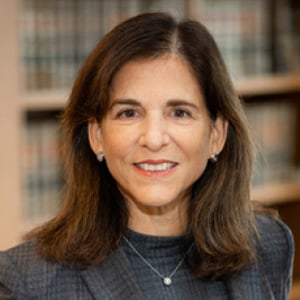
Professor of Clinical Law, Director of Sports Law Programs, Brooklyn Law School
Jodi S. Balsam is Professor of Clinical Law at Brooklyn Law School and a nationally recognized expert on Sports Law. She directs the BLS Sports Law Clinic and Sports Law Externship Program, and is the Director of Sports Law Programs for the Grubman Institute for Entertainment, Media, Technology and Sports Law. She teaches Sports Law at both BLS and NYU School of Law, and has also taught the subject at New York Law School, University of New Hampshire School of Law, Bucerius Law School in Hamburg, Germany, Mathias Corvinus Collegium in Budapest, Hungary, and the MESGO Executive Masters Program in Global Sport Governance. Professor Balsam has served as an arbitrator for the National Collegiate Athletic Association on complex infractions cases, and now serves as a neutral for FAIR Sports, which hears cases involving college athletics.
Professor Balsam frequently writes and speaks on sports law topics, including as co-author of Weiler’s Sports and the Law, a leading casebook in the field. Her publications and presentations have addressed antitrust challenges to sports leagues and organizing bodies, sports trademarks, athletes’ rights of free expression and name/image/likeness exploitation, sports gambling and integrity, sports league governance, and the role of the sports agent. She frequently appears in the media on legal issues in sports, including NBC Sports/The Golf Channel, ESPN, Law360 Sports and Betting, The Athletic, Front Office Sports, USA Today, and the Wall Street Journal. She is on the editorial boards of Law360-Sports & Betting, the Journal of Legal Aspects of Sport, and the international sports law newsletter LawInSport.
Before joining academia, Professor Balsam was the National Football League's Counsel for Operations and Litigation, where she managed litigation in all areas of law, oversaw a variety of policy and operational matters, negotiated and drafted contracts for League special events including the Super Bowl, and administered the League's internal dispute resolution processes and compliance program. Prior to the NFL she was a litigator with the New York office of Simpson Thacher & Bartlett, where she represented sports and entertainment clients in antitrust matters and complex commercial litigation. She served as a law clerk for Judge Dennis Jacobs of the U.S. Court of Appeals for the Second Circuit and for Judge Charles Brieant of the U.S. District Court for the Southern District of New York. A graduate of Yale College, Professor Balsam received her law degree from NYU School of Law.
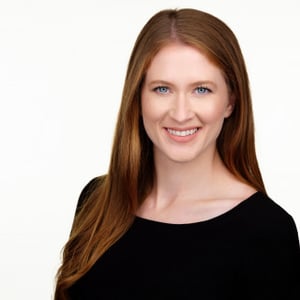
Associate, Baker McKenzie
Kaitlyn Barry is an Associate at Baker McKenzie. Prior to joining the firm, she served as a trial attorney at the United States Department of Justice's Antitrust Division. She previously clerked for Judge Kurt Engelhardt at the Fifth Circuit Court of Appeals and Judge Ron Clark at the United States District Court for the Eastern District of Texas. Kaitlyn is a 2019 graduate of the University of Houston Law Center. She earned her Bachelor of Science degree from the University of Texas at Austin, where she was an NCAA Division I varsity student-athlete on the Longhorns cross country and track teams.
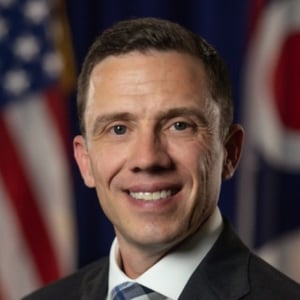
Ohio Deputy Attorney General for Major Litigation, Office of the Ohio Attorney General
Erik Clark oversees major litigation in the Office of Ohio Attorney General Dave Yost, the State's chief law-enforcement officer. He also oversees the Office's antitrust, charitable-law, constitutional-offices, and consumer-protection sections.
As part of his role, Erik personally appears in court on behalf of the State of Ohio in select cases. He also advises the Attorney General on critical matters.
Previously, Erik was a partner for over ten years at Organ Law LLP, a Columbus litigation boutique. There, he frequently served as special counsel to the Ohio Attorney General, representing state-government clients. His cases included a challenge (by ECOT) to Ohio's school-funding system for virtual charter schools, a challenge to The Ohio State University's rules governing students' possession of firearms, a First-Amendment challenge to a law prohibiting targeted picketing at public officials' homes, and a challenge to congressional and Statehouse redistricting following the 2020 census.
Erik also represented large and small businesses and individuals in litigation, arbitration, and mediation. Among other matters, he represented Uber in cases brought by authorities seeking city-wide injunctions that would have blocked Uber from operating its then-nascent ride-sharing service in several major cities, including Columbus, St. Louis, and Tampa.
Erik has argued several appeals in federal and state appellate courts, including three cases in the Ohio Supreme Court. He has served as lead counsel in dozens of trial-court cases (including bench and jury trials), administrative hearings, and arbitrations.
Erik graduated summa cum laude from The Ohio State University Moritz College of Law, where he was Editor-in-Chief of the Ohio State Law Journal.
After law school, he clerked for Chief Judge Jeffrey S. Sutton on the U.S. Court of Appeals for the Sixth Circuit.
Erik then served as the Simon Karas Fellow in the Ohio Attorney General’s Office, where he worked with the Ohio State Solicitor on high-profile appeals before the Ohio Supreme Court, the Sixth Circuit, and the United States Supreme Court.
Before joining Organ Cole LLP in 2012, Erik was a business litigator at Jones Day, one of the largest law firms in the world.
Partner, Wilkinson Stekloff LLP
Rakesh specializes in delivering favorable results to clients at every stage of litigation. Since joining Wilkinson Stekloff, Rakesh has played a leading, stand-up role in high-profile trial victories for Bayer and the NCAA, obtained major summary judgment victories for Bayer and Georgia-Pacific, secured full dismissal of a groundbreaking enforcement action by the Consumer Financial Protection Bureau before any discovery was taken, and successfully defended a sitting federal judge in mandamus proceedings in the D.C. Circuit.
Equally adept in courtrooms and boardrooms, Rakesh is called upon to develop winning strategies in his clients’ most significant litigation matters. He is currently playing a lead strategic role in five high-stakes class actions or mass torts involving products liability, antitrust, and civil RICO claims, including serving as lead trial counsel for a sovereign Indian nation in a putative consumer class action in the Eastern District of Virginia.
Before joining the firm, Rakesh was a Special Assistant to the President and Associate Counsel in the Office of White House Counsel, where he provided legal advice and strategic counseling to the Obama Administration on its domestic policy agenda. He also helped to develop and implement the government’s litigation strategy in cases arising under the Affordable Care Act and the Fair Labor Standards Act. Rakesh began his career clerking for Justice Elena Kagan on the U.S. Supreme Court and Judge J. Harvie Wilkinson III on the U.S. Court of Appeals for the Fourth Circuit.
Rakesh is also active in the legal community. He sits on the Board of the Legal Aid Society for the District of Columbia, and is an editor of the Green Bag and a member of The American Lawyer’s Young Lawyer Editorial Board. He also serves on the Nominations Committee of the Asian Pacific American Bar Association-DC, and previously served as a Director of APABA-DC’s Education Fund.
Professor of Law, Pepperdine University
Professor Babette Boliek is a Professor of Law at Pepperdine University. She recently served as Chief Economist of the Federal Communications Commission in Washington, D.C.
Professor Boliek earned her BA with distinction from California State University, Chico, her JD from Columbia University School of Law and her PhD in Economics from the University of California, Davis. While at Columbia, she was both a Harlan Fiske Stone Scholar and a John M. Olin Fellow for Law and Economics. Her doctoral, and much of her subsequent research, focuses on the theoretical and quantitative analysis of legal issues of the U.S. communications industry. Professor Boliek's scholarly research also focuses on issues in administrative, antitrust, and communications and sports law. Professor Boliek clerked for the Honorable Michael B. Mukasey of the U.S. District Court for the Southern District of New York and is admitted to practice in the State of New York.
Prior to joining the Pepperdine Law faculty in 2009, Professor Boliek served as a Senior Fellow at the Information Economy Project at George Mason University School of Law, where she integrated her background in law and applied economics to analyze media, Internet, and telecommunications issues. Professor Boliek's work at George Mason followed and echoed her experience as a Fellow for the Center for Communication Law and Policy, a joint research venture of the University of Southern California Gould School of Law and the Annenberg School of Communication. In addition to her scholarly research at Pepperdine, Professor Boliek is a Visiting Scholar for the American Enterprise Institute and blogs regularly for AEI.org on a variety of technology and telecommunications related issues.
Attorney, Spiro Moss LLP
Mr. Leviant is a civil litigation attorney with over 11 years of experience (10 as an attorney) handling complex and class action matters. Over the last five years, Mr. Leviant litigated class actions at several large plaintiffs' firms. Before that, Mr. Leviant worked at the small civil litigation firm Stanbury & Fishelman, Inc., where he handled increasingly sophisticated matters, including complex commercial litigations, class actions, appellate matters and civil trials.
Mr. Leviant has obtained several published appellate decisions, including Ghazaryan v. Diva Limousine, Ltd. 169 Cal. App. 4th 1524 (2009), which reversed a denial of class certification and obtained an Order of the Court of Appeal directing certification of the proposed class, Laliberte v. Pacific Mercantile Bank, 147 Cal. App. 4th 1 (2007), which reversed an adverse trial court ruling and reaffirmed the expansive nature of the “community of interest” concept in California class actions, andJohnson v. Glaxosmithkline, Inc., 166 Cal. App. 4th 1497 (2008), as modified (October 14, 2008), rev. denied, which reversed an adverse trial court ruling and questioned the rationale and viability of Alvarez v. May Dept. Stores Co., 143 Cal. App. 4th 1223 (2006).
Mr. Leviant is also the founder, primary author and Editor-in-Chief of The Complex Litigator, a legal blog focusing on developments in the areas of class action practice, complex litigation, and technology for small firms. In addition to his blog, Mr. Leviant has authored or co-authored various published articles.
Mr. Leviant is in his third year of service on the Board of Governors for the Consumer Attorneys of California.
Mr. Leviant is admitted to practice before the United States Supreme Court, the United States Court of Appeals for the Eighth and Ninth Circuits, the United States District Courts for the Central, Southern and Northern Districts of California and all California Courts.
Mr. Leviant received his undergraduate degree from Occidental College. Graduating cum laude, Mr. Leviant majored in economics and received a “minor” emphasis in mathematics. Along with his study of economics and mathematics, he also had an emphasis in physics. This combination of scientific and economic education has been of assistance during his litigation of complex civil actions. Mr. Leviant received his law degree from the University of Southern California Law Center.
University of San Diego School of Law
Former San Diego Superior Court Judge
Hon. Michael B. Orfield (Ret.) was a jurist for 20 years, mostly as a civil independent calendar judge. His experience and expertise as a civil judge spread widely across such diverse areas as catastrophic personal injury, medical and legal malpractice, product and construction defects, breach of warranties, easements, breach of contract, wrongful death and a variety of business disputes. His strength as a mediator "...comes from being able to call upon a broad plain of knowledge, coupled with an attention to detail, empathy for the participants, and a conviction that the resolution should be their own."
Judge Orfield retired as a member of the statewide Continuing Judicial Education Committee, and still has a passion for teaching. He currently teaches "Trying the Complicated Case: From Trial Readiness to Verdict" as well as the LexisNexis Jury Instruction computer program for both civil and criminal jury instructions. He has also taught "Leading Organizational Change" as well as the week long "Civil Overview for Judges".
Judge Orfield was appointed by Chief Justice Ronald George to the original Task Force on Civil Jury Instructions and then to the Advisory Committee on Civil Jury Instructions. Justice George also appointed him a member of the prestigious Judicial Council of the State of California. Judge Orfield has served as a member of the Judicial Council Presiding Judges and Court Executives Advisory Committee and the Judicial Needs Advisory Committee.
Judge Orfield has served on the Board of the San Diego Humane Society and chaired the North County "Bridging the Gap" program for new lawyers. Before transferring to the Vista Courthouse, he co-moderated the San Diego County Bar Association Bridging the Gap program.
In 1972, Judge Orfield earned his Bachelor of Arts degree in Biology from the University of California at San Diego, and obtained his law degree from California Western School of Law in 1977. Judge Orfield also completed one year of graduate study in Microbiology and Immunology at Duke University in 1974.
Partner, Horvitz & Levy LLP
Jeremy Rosen is nationally renowned for his proficiency in numerous issues arising under the First Amendment and California’s anti-SLAPP law. Using that knowledge, Jeremy has helped a wide variety of clients – including churches, private businesses, and individuals – defeat lawsuits that seek to impose liability on clients for exercising their rights of petition, free speech, and free exercise of religion. He has also handled hundreds of appeals in numerous appellate courts, including the Ninth Circuit Court of Appeals, the California Supreme Court, and California’s intermediate appellate courts. In addition to First Amendment and anti-SLAPP cases, his cases have involved numerous important issues regarding anti-trust, class actions, wage and hour law, employment law, breach of contract, California’s Unfair Competition Law, CEQA, the enforceability of arbitration clauses, hospital peer review, the scope of public employee whistleblower protection, and the application of the primary assumption of risk doctrine.
Jeremy is a partner at the firm, which he joined in 2001. He is a California State Bar Certified Appellate Specialist and a member of the California Academy of Appellate Lawyers.
Jeremy directed the Pepperdine University School of Law Ninth Circuit Appellate Advocacy Clinic for 6 years. The Clinic represents individuals in the Ninth Circuit who are identified by the court as needing pro bono counsel. Jeremy also previously served a three-year term where he was appointed by the Ninth Circuit to serve as one of 18 appellate lawyer representatives to the court.
Jeremy is a member of the National Chamber Litigation Center’s California Litigation Advisory Committee. Before joining the firm, Jeremy was a Litigation Associate with Munger, Tolles & Olson.
Partner, Morrison & Foerster LLP

Antitrust in the College Sports Arena
Jodi S. Balsam, Kaitlyn Barry, Erik J. Clark, Rakesh Kilaru
In 2020, several collegiate athletes filed suit against the National Collegiate Athletic Association (NCAA) arguing...
The Evolution of Antitrust Laws Relating to College Athletics
Babette E. Boliek
NCAA rules for student-athletes are based on the assumption that the rules protect the amateur...
California’s 17200 – Its Use and Abuse
Scott Leviant, Shaun P. Martin, Michael Orfield, Jeremy B. Rosen, William L. Stern, Adam Van Susteren
Prop 64, also known as California 17200, was adopted by initiative in 2004 and was...