

Director, Project on Criminal Justice, Cato Institute
Matthew Cavedon is the Director of the Cato Institute’s Project on Criminal Justice. He focuses on reforming plea-driven mass adjudication, ensuring police accountability, and defending constitutional criminal originalism. Cavedon’s scholarship has been published (or is forthcoming in) publications including the Arizona State Law Journal, Cato Supreme Court Review, Seattle University Law Review, and Georgetown Journal of Law and Public Policy. Formerly a Georgia public defender and fellow at the Institute for Justice, Cavedon has taught law school courses on criminal law and procedure, as well as the First Amendment. Cavedon clerked for a U.S. district court and the Supreme Court of Georgia. He came to Cato following a fellowship at the Emory University Center for the Study of Law and Religion.

Interim Executive Director, Foundation Against Intolerance and Racism

Public Policy Director, Southern Center for Human Rights
Tiffany Williams Roberts is Director of the Public Policy Unit at Southern Center for Human Rights. She joined the organization in April 2018 as the Community Engagement & Movement Building Counsel. She has practiced criminal defense since 2008, first as a public defender with the Atlanta Judicial Circuit Public Defender and later as a solo practitioner. As a public defender, Tiffany represented hundreds of indigent clients facing felony prosecution and graduated from Gideon’s Promise trial advocacy training program. She expanded her private practice to include civil rights litigation for victims of police abuse.
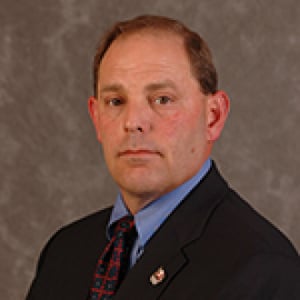
President, Fraternal Order of Police
Chuck Canterbury began serving as President of the Fraternal Order of Police in January 2003 after the death of President Steve Young. He has been reelected seven times.
President Canterbury joined the Fraternal Order of Police in 1984 when he, along with eleven other officers, chartered their Local Lodge. He served as Local Lodge President for 13 years, during which time he was instrumental in starting the Lodge Legal Defense Plan, purchasing the first lodge building, and starting the Lodge insurance program.
He went on to serve as State Lodge President from 1990 to 1998. During his tenure he was instrumental in establishing the State Lodge lobbying program, initiating the political endorsement program and implementing the State Lodge Legal Defense Plan. He led the effort to hire a full time Executive Director for the State Lodge to manage these programs.
He began his service on the Grand Lodge Executive Board in 1995 when he was elected to the first of three terms as the Second Vice President. In 2001, he was elected Vice President. During this time, he has worked to expand the police labor movement in the areas of our country who do not have collective bargaining rights. Improving the quality of life for police officers has been his foremost goal. During his tenure he has brought a best business practice model to the FOP.
President Canterbury retired in January 2004 from the Horry County Police Department, Conway, South Carolina, where he most recently had oversight of the Operations Bureau. He began his police career in 1978 and over his 26-year career he worked in the Patrol Division, the Criminal Investigations Division and served as the Training Division Supervisor, during which he was certified as an Instructor in basic law enforcement, firearms, chemical weapons, and pursuit driving.
He has been appointed by President George Bush to serve on the Medal of Valor Board and also serves on our Nation's Homeland Security Council. Chuck has also been appointed to the Congressional Badge of Bravery Awards committee. Chuck is also on the Board of Directors of the National Center for Missing and Exploited Children. He also serves as Treasurer of the International Council of Police Representatives Association. This group represents over 1.4 million of our world's law enforcement officers.
He earned a Bachelor of Arts degree from Coastal Carolina University.

President, Leadership Conference on Civil and Human Rights
Vanita Gupta is the President of The Leadership Conference on Civil and Human Rights. She previously served as the acting Principal Deputy Assistant Attorney General for the Civil Rights Division and the top civil rights prosecutor for the United States Department of Justice. Before her work at the DOJ she was a civil rights lawyer and the Deputy Legal Director of the American Civil Liberties Union (ACLU), where she oversaw the ACLU's national criminal justice reform efforts. She is a graduate of Yale and New York University Law School.
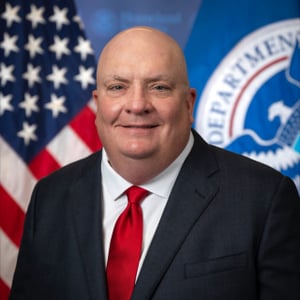
Acting Assistant Commissioner of Customs and Border Protection, Office of Professional Responsibility, U.S. Department of Homeland Security
Brian M. Fish is currently the Senior Advisor to the General Counsel at the Department of Homeland Security where he works on immigration and law enforcement issues. Previously, he was a trial attorney with the United States Immigration and Customs Enforcement, where he represented the Department of Homeland Security in removal hearings before the U.S. Immigration Court. Additionally, he was a Special Assistant United States Attorney and a Baltimore City homicide prosecutor. He is a member of the Federalist Society's Criminal Law & Procedure Practice Group Executive Committee and the President of its Baltimore Lawyers Chapter. He earned his B.A. from LaSalle University in 1992 and his J.D. from Loyola University New Orleans School of Law in 1998.

Public Defenders and Political Advocacy: What Is a Public Defender's Role?
Matthew P. Cavedon, Maud Maron, Tiffany Williams Roberts
Over the past several years, a debate has erupted within the world of indigent defense:...
Federal Oversight of Local Police Departments - Podcast
Chuck Canterbury, Vanita Gupta, Brian M. Fish
Under Attorney Generals Eric Holder and Loretta Lynch, the Department of Justice entered into a...