
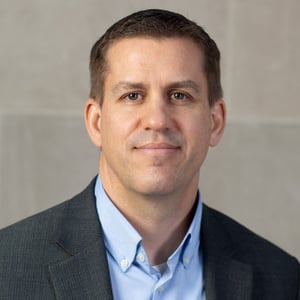
Clinical Professor, University of Texas at Austin School of Law
Steven T. Collis researches and teaches on religion and law and other First Amendment topics. He is the founding faculty director of the Bech-Loughlin First Amendment Center and of Texas's Law & Religion Clinic. On the topic of religious freedom law, he is a sought-after speaker to academic and lay audiences across the United States, including foreign diplomats from countries in Europe, the Middle East, Asia, and South America on behalf of the United States State Department. He has been interviewed by and quoted in various news and media outlets, including The Deseret News, Bloomberg, The Washington Times, Law360, The Salt Lake Tribune, PBS, The Denver Business Journal, Law Week Colorado, CBN News, and numerous podcasts and television shows. His scholarly work has appeared in The Michigan Law Review, The Nebraska Law Review, The University of Denver Law Review Online, and in his book Deep Conviction, which brings to life the history of free exercise law in the United States for lay audiences.
Prior to joining Texas, Steven was the Olin-Darling Research Fellow in the Constitutional Law Center at Stanford Law School.
Earlier in his career, he was an equity partner at Holland & Hart LLP, where he chaired the firm’s nationwide religious institutions and First Amendment practice group and was a member of the firm's complex civil litigation and employment practice groups. He also taught religious liberty law at the University of Denver Sturm College of Law and clerked for Chief Judge Timothy M. Tymkovich of the United States Court of Appeals for the Tenth Circuit.
Steven graduated magna cum laude from the University of Michigan Law School, where he was elected to the Order of the Coif and served as an editor on The Michigan Law Review and The Michigan Journal of Race and Law. He also holds an M.F.A. in creative writing from Virginia Commonwealth University, where he served as the associate editor of the literary journal Blackbird. He completed his undergraduate studies, with university honors, at Brigham Young University.
John Sullivan has specialized in disparity studies since 1990. In that time he has served as expert witness in six challenges to racial preference programs in public contracting. He has published widely on disparity studies in law and public policy journals and in the Wall Street Journal and the Christian Science Monitor. He testified before a Congressional subcommittee on the only federal government-wide disparity study.
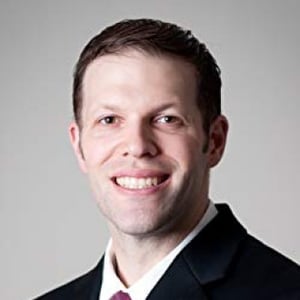
Director of Policy Studies & Senior Fellow, The Free State Foundation
Seth L. Cooper is Director of Policy Studies & Senior Fellow at The Free State Foundation. His work on federal communications and technology policy at the Free State Foundation began in 2009.
With Randolph May, Mr. Cooper is the co-author of Modernizing Copyright Law for the Digital Age: Constitutional Foundations for Reform (2020) and Constitutional Foundations of Intellectual Property: A Natural Rights Perspective (2015), both published by Carolina Academic Press. Along with Mr. May, Mr. Cooper also co-authored A Reader on Net Neutrality and Restoring Internet Freedom (2018) and #CommActUpdate: A Communications Law Fit for the Digital Age (2017), both published by Free State Foundation Press. He previously contributed to two chapters in Communications Law and Policy in the Digital Age (2012), published by Carolina Academic Press. Mr. Cooper's work has also appeared in such publications as CommLaw Conspectus, the San Jose Mercury News, Forbes.com, the Des Moines Register, the Baltimore Sun, the Washington Examiner, and the Washington Times.
Mr. Cooper previously served as Director to the Telecommunications and Information Technology Task Force at the American Legislative Exchange Council (ALEC). Mr. Cooper served as judicial clerk to the Honorable James Johnson at the Washington State Supreme Court. His co-writings about the Washington Supreme Court have appeared in the Gonzaga Law Review and in Federalist Society publications. He has worked in law and policy staff positions at the Washington State Senate and at the Discovery Institute's Center for Science & Culture. Mr. Cooper is a 2009 Lincoln Fellow at the Claremont Institute. He also has worked in private practice in the State of Washington, handling civil legal matters involving personal injuries, small business, contracts, and wills, trusts, and estates.
Mr. Cooper earned his B.A. degree in Political Science from Pacific Lutheran University and received his J.D. from Seattle University School of Law.
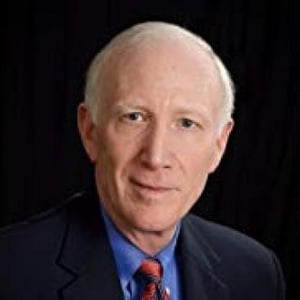
President, The Free State Foundation
Randolph J. May is Founder and President of The Free State Foundation. The Free State Foundation is an independent, non-profit free market-oriented think tank founded in 2006.
From October 1999-May 2006, May was a Senior Fellow and Director of Communications Policy Studies at The Progress & Freedom Foundation, a Washington, DC-based think tank. Prior to joining PFF, he practiced communications, administrative, and regulatory law as a partner at major national law firms. From 1978 to 1981, May served as Assistant General Counsel and Associate General Counsel at the Federal Communication Commission.
May has held numerous leadership positions in bar associations. He is a past Chair of the American Bar Association’s Section of Administrative Law and Regulatory Practice. He is a Fellow of the National Academy of Public Administration. Mr. May also has served as a Public Member of the Administrative Conference of the United States and currently is a Senior Fellow at ACUS.
Mr. May has published more than two hundred articles and essays on communications, administrative and constitutional law topics. He is author of A Call for a Radical New Communications Policy: Proposals for Free Market Reform, and co-author of #CommActUpdate: A Communications Law Fit for the Digital Age and The Constitutional Foundations of Intellectual Property. Mr. May is editor of two books, Communications Law and Policy in the Digital Age: The Next Five Years and New Directions in Communications Policy. In addition, he is the co-editor of two other books, Net Neutrality or Net Neutering: Should Broadband Internet Services Be Regulated? and Communications Deregulation and FCC Reform. In the past, Mr. May has written regular columns on legal and regulatory affairs for Legal Times and the National Law Journal, leading national legal periodicals.
He received his A.B. from Duke University and his J.D. from Duke Law School, where he serves as a member of the Board of Visitors.
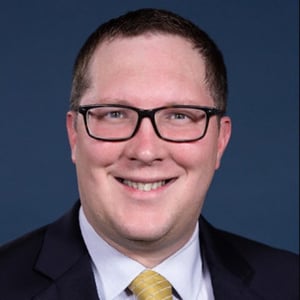
Attorney, Pacific Legal Foundation
Luke A. Wake is an attorney at the Pacific Legal Foundation. Prior to joining PLF, he was a senior staff attorney at the NFIB Small Business Legal Center.
Wake has particular expertise on environmental and land use issues, and has worked on numerous other constitutional issues and matters of importance to small business owners. He is an ardent defender of private property rights, which he believes are essential to the free enterprise system and the foundation of American liberty. As a strong advocate of individual rights and economic liberties, he has built his career defending small business interests.
Wake has focused on a whole host of issues, from employment law matters to regulatory compliance. In addition to serving as a resource for small business owners, Wake is committed to ensuring that the voice of small business is heard in the nation’s courts. As an appellate practitioner, Wake has focused particularly on informing the courts on matters of administrative law and on issues under the Fifth Amendment’s Takings Clause. He is also working to advance small business interests in law review articles, and was recently published in the Berkeley Journal of Law & Ecology. See R.S. Radford & Luke A. Wake, Deciphering and Extrapolating: Searching for Sense in Penn Central, 38 Ecology L.Q. 731, 746-747 (2011).
Before joining the Legal Center’s team, Wake completed a prestigious two-year fellowship as an attorney in the Pacific Legal Foundation’s College of Public Interest Law. Wake is a graduate of Case Western Reserve University School of Law in Cleveland Ohio, and is a member of the California Bar. He completed his undergraduate studies at Elon University in North Carolina in 2006 where he focused on political theory and corporate communications.
Senior Counsel, Vice President of Allied Legal Affairs, Alliance Defending Freedom
Brett Harvey serves as senior counsel and vice president of Allied Legal Affairs with Alliance Defending Freedom.
Since joining ADF in 2000, Harvey has coordinated the efforts of the volunteer network of attorneys who collaborate with ADF. In 2002, his role expanded to direct the grant program. To date, Harvey and his team have awarded approximately $54 million in grant funds to thousands of legal projects and cases, many of which have set national and multinational precedents.
Harvey leads the Allied Legal Affairs team, which is dedicated to creating opportunities for attorneys aligned with the ADF mission to actively engage in the protection and promotion of religious liberty. Harvey and his team focus on recruitment, professional engagement, and integration of allies into ADF’s advocacy efforts, including coordinating amicus efforts at state supreme courts, circuit courts, and the U.S. Supreme Court.
Harvey has also litigated in a variety of state and federal courts, focusing on the protection of life and religious freedom. Most notably, he successfully spearheaded a national litigation strategy culminating in Town of Greece v. Galloway, in which the U.S. Supreme Court upheld the freedom of Americans to pray at public meetings.
Harvey earned his J.D. in 1995 from the Walter F. George School of Law at Mercer University in Georgia. He is admitted to the bar in the states of Arizona, Colorado, Florida, Georgia, and Virginia. He has also been admitted to practice before the U.S. District Court in Colorado, the U.S. Courts of Appeals for the 4th, 6th, 9th, 10th, and 11th Circuits, and the U.S. Supreme Court.
Senior Counsel, Alliance Defending Freedom
Joel L. Oster serves as senior legal counsel with Alliance Defending Freedom at its Kansas City Regional Service Center in Kansas, where he plays a significant role in litigation efforts defending church autonomy. Before joining Alliance Defending Freedom in 2004, he earned his J.D. from the University of Kansas School of Law. Oster is admitted to the bar in Kansas, Missouri, Florida, and numerous federal courts, and has practiced law since 1997.
Alex W. Smith Professor of Law, University of Georgia School of Law
Peter A. Appel joined the University of Georgia School of Law faculty in 1997 and teaches in the areas of property, natural resources law and environmental law. In 2011, he was named the Alex W. Smith Professor of Law.
Appel’s research spans three primary areas: the use of law to promote sustainable commerce, wilderness preservation and the courts, and more traditional doctrinal scholarship in environmental and natural resources law. His work has appeared in the Stanford Environmental Law Journal(forthcoming 2010), the Boston College Environmental Affairs Review, the Minnesota Law Review, the Washington University Law Quarterly and the Encyclopedia of the Supreme Court of the United States (Macmillan Reference, 2008). In addition to these articles focusing on the environmental and natural resources areas, Appel has addressed more traditional topics in property law such as the rule against perpetuities (Journal of Legal Education, 2004), Roman law and its relation to American civil procedure (Georgia Journal of International and Comparative Law, 2002) and the role of the entailment in Jane Austen's Pride and Prejudice (Law and Literature Association of Australia Conference, November 2002).
In addition to his teaching at UGA, Appel has also served as an instructor to senior members of federal agencies. He has been invited to train federal wilderness managers at the Arthur Carhart National Wilderness Training Center, a facility in Missoula, Mont., run jointly by all federal agencies responsible for wilderness management. He also taught environmental laws and regulations to employees of the United States Army Corps of Engineers.
Appel developed a practical understanding of environmental issues through his six years of service as an attorney with the Environment and Natural Resources Division of the U.S. Department of Justice. Prior to holding that position, he clerked for Chief Judge Gilbert S. Merritt of the U.S. Court of Appeals for the 6th Circuit.
From 1999 to 2001, Appel served as a Lilly Teaching Fellow at the University of Georgia. The campus-wide program offers support and discussion to a select few UGA professors who show strong promise in both teaching and scholarship. Lilly Fellows also receive funds to develop new instructional programs over their two-year fellowship.
Appel earned his bachelor's and law degrees from Yale University, where he served on the notes editing committee of the Yale Law Journal and was a member of the Yale Law and Policy Review.

Executive Vice President, The Federalist Society
Dean Reuter is Executive Vice President at the Federalist Society for Law and Public Policy Studies. He has served in two federal government agency Offices of the Inspector General, as Counsel to the Inspector General and Deputy Inspector General, responsible for policing the use of federal funds granted and contracted through those agencies. As such, he helped conduct and oversee criminal investigations across the country. He is the principal author of the non-fiction book, The Hidden Nazi: The Untold Story of America's Deal with the Devil, and editor of Liberty’s Nemesis: The Unchecked Expansion of the State and Confronting Terror: 9/11 and the Future of American National Security. He was appointed by the President and served as Vice-Chairman of the Board of Directors of the Corporation for National and Community Service, and recently served as an appointee on the U.S. Commission on Presidential Scholars. He is a graduate of Hood College (BA with Honors) and the University of Maryland School of Law.
General Counsel, Prospera Group
Dranias serves as NeWay Capital LLC’s General Counsel, handling all corporate legal matters. Prior to this, he was Senior Litigation Counsel with the Government Accountability & Special Litigation Unit of the Arizona Attorney General. He also serves as Policy Advisor and Research Fellow with the Heartland Institute, as an expert and Speaker’s Bureau member with the Federalist Society, a Law and Civil Liberties Speaker for Students for Liberty, a Council of Scholars member with Compact for America Educational Foundation, as well as an Adjunct Instructor teaching Business Ethics and Law at Grand Canyon University.
Previously, Dranias served as President & Executive Director of Compact for America Educational Foundation where he led national efforts to organize the states to propose and ratify a federal Balanced Budget Amendment. Prior to that, Dranias was General Counsel, Policy Development Director and Constitutional Policy Director at the Goldwater Institute. Dranias led the Institute’s successful challenge to Arizona’s system of government campaign financing to the U.S. Supreme Court. Prior to that, he was an attorney with the Institute for Justice for three years and an attorney in private practice in Chicago for eight years, where he served as Young Lawyers Section co-editor of the Chicago Bar Association Record and earned the Oliver Wendell Holmes Award for his service.
Boochever and Bird Chair for the Study and Teaching of Freedom a, UC-Davis School of Law
Alan Brownstein, a nationally recognized Constitutional Law scholar, teaches Constitutional Law, Law and Religion, and Torts at UC Davis School of Law. While the primary focus of his scholarship relates to church-state issues and free exercise and establishment clause doctrine, he has also written extensively on freedom of speech, privacy and autonomy rights, and other constitutional law subjects. His articles have been published in numerous academic journals including the Stanford Law Review, Cornell Law Review, UCLA Law Review and Constitutional Commentary. Brownstein received the UC Davis School of Law's Distinguished Teaching Award in 1995 and the UC Davis Distinguished Scholarly Public Service Award in 2008. He is a member of the American Law Institute.
Professor Brownstein has testified on several occasions before various California Senate Committees on legislation promoting religious liberty and bills that raise Establishment Clause concerns. His assistance is often sought by advocacy groups on issues relating to religious liberty and equality. He is a frequent invited lecturer at academic conferences and regularly participates as a speaker or panelist in law related programs before civic, legal, religious, and educational groups. He is the co-author of dozens of Findlaw columns discussing a range of legal issues.
A graduate of Antioch College and Harvard Law School (where he served as a Case Editor of the Harvard Law Review), Brownstein was an attorney in general litigation and corporate practice with the law firm of Tuttle & Taylor in Los Angeles before joining the UC Davis law faculty. From 1977-78, he clerked for the Honorable Frank M. Coffin, Chief Judge of the U.S. District Court of Appeals for the 1st Circuit in Portland, Maine.
"Most lawyers do not practice constitutional law," Brownstein notes, "but members of the Bar bear a special responsibility for understanding constitutional doctrine and communicating its meaning to non-lawyers. The role that constitutional law plays in our society depends in part on the interplay between courts and the political culture. If judicial decisions are unintelligible to the polity and no group accepts responsibility for explaining the Constitution's evolving meaning to the polity, we undermine part of the foundation of the constitutional scheme of things."
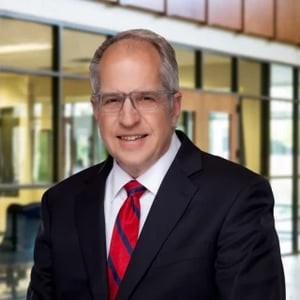
Senior Counsel, First Liberty Institute
Jordan Lorence is Senior Counsel in FLI’s Washington, D.C. office, where he represents First Liberty in strategic efforts promoting religious liberty, and works on important First Amendment projects and litigation, including those at the U.S. Supreme Court.
Lorence has a long career of litigating religious liberty cases since 1984. He has worked for many public interest law firms, including Alliance Defending Freedom, Home School Legal Defense Association, the North Star Legal Center and Concerned Women for America.
He has worked on important religious liberty cases. Lorence worked on school choice cases at the Supreme Court, such as Witters v. Washington Department of Services for the Blind (1986), and Trinity Lutheran (2016), which laid the foundation for First Liberty’s crucial win in Carson v. Makin (2022), requiring Maine to include religious schools in its school choice program.
Lorence argued before the U.S. Supreme Court in Regents of the University of Wisconsin v. Southworth (2000). He represented prolife Christian law students from the University of Wisconsin Law School who objected to the University’s requirement that they pay a mandatory student fee that funded the advocacy of student pro-abortion groups. Other Supreme Court cases Lorence has worked on include NIFLA v. Becerra (2018), protecting prolife pregnancy centers from a California statute requiring them to post signs explaining how pregnant women could obtain state-funded abortions; Masterpiece Cakeshop (2017), involving a Christian cake artist sued by the State of Colorado for declining to design a case celebrating the wedding of a same-sex couple and other cases such as Christian Legal Society v. Martinez (2012), Rosenberger v. University of Virginia (1995), Hurley v. GLIB (1995) and Lamb’s Chapel v. Center Moriches Center Moriches School District (1993).
Churches and other religious groups in New York City obtained the right to rent vacant public schools on weekends to conduct worship services after Lorence’s tenacious 20 years of litigation in Bronx Household of Faith. Lorence won protection for churches facing eviction from discriminatory zoning ordinances in Minnesota in Cornerstone Bible Church v. City of Hastings, Minnesota (1991). He also argued at the New Mexico Supreme Court one of the first cases in the nation defending a Christian wedding photographer charged by the State of New Mexico with discrimination for declining to create photos celebrating the commitment ceremony of a lesbian couple in Elane Photography v. Willock (2013).
Lorence defended home schooling families from intrusive school officials during his time working at Home School Legal Defense Association (HSLDA) in the 1980s and 1990s. HSLDA also tasked Lorence with establishing a sister organization in Canada to protect home schooling families there. He traveled extensively in Canada from British Columbia to Prince Edward Island speaking to families how they could protect their right to home school under relevant Canadian law.
Lorence earned his undergraduate degree in journalism from Stanford University and his law degree from the University of Minnesota, his home state. Lorence was born and raised in Minnesota, where he worked one summer building Mighty Dump trucks at Tonka Toys in Mound, Minnesota. For two years immediately after he graduated from law school, Lorence served as the head administrator for a Minnesota Senate committee.
He speaks extensively on First Amendment and other legal issues. Lorence has spoken at least 75 law schools and many legal conferences. Prominent publications such as the Wall Street Journal, the Washington Post and others have printed his opinion pieces on key legal issues involving religious liberty and freedom of speech. He has appeared on such media outlets as Fox News, CNN, National Public Radio, NBC’s Today Show, BBC radio and many others.
Lorence and his wife Marilyn have been married 40 years. They live in the Washington, D.C. area where they raised their seven children.
Alex W. Smith Professor of Law, University of Georgia School of Law
Peter A. Appel joined the University of Georgia School of Law faculty in 1997 and teaches in the areas of property, natural resources law and environmental law. In 2011, he was named the Alex W. Smith Professor of Law.
Appel’s research spans three primary areas: the use of law to promote sustainable commerce, wilderness preservation and the courts, and more traditional doctrinal scholarship in environmental and natural resources law. His work has appeared in the Stanford Environmental Law Journal(forthcoming 2010), the Boston College Environmental Affairs Review, the Minnesota Law Review, the Washington University Law Quarterly and the Encyclopedia of the Supreme Court of the United States (Macmillan Reference, 2008). In addition to these articles focusing on the environmental and natural resources areas, Appel has addressed more traditional topics in property law such as the rule against perpetuities (Journal of Legal Education, 2004), Roman law and its relation to American civil procedure (Georgia Journal of International and Comparative Law, 2002) and the role of the entailment in Jane Austen's Pride and Prejudice (Law and Literature Association of Australia Conference, November 2002).
In addition to his teaching at UGA, Appel has also served as an instructor to senior members of federal agencies. He has been invited to train federal wilderness managers at the Arthur Carhart National Wilderness Training Center, a facility in Missoula, Mont., run jointly by all federal agencies responsible for wilderness management. He also taught environmental laws and regulations to employees of the United States Army Corps of Engineers.
Appel developed a practical understanding of environmental issues through his six years of service as an attorney with the Environment and Natural Resources Division of the U.S. Department of Justice. Prior to holding that position, he clerked for Chief Judge Gilbert S. Merritt of the U.S. Court of Appeals for the 6th Circuit.
From 1999 to 2001, Appel served as a Lilly Teaching Fellow at the University of Georgia. The campus-wide program offers support and discussion to a select few UGA professors who show strong promise in both teaching and scholarship. Lilly Fellows also receive funds to develop new instructional programs over their two-year fellowship.
Appel earned his bachelor's and law degrees from Yale University, where he served on the notes editing committee of the Yale Law Journal and was a member of the Yale Law and Policy Review.
General Counsel, Prospera Group
Dranias serves as NeWay Capital LLC’s General Counsel, handling all corporate legal matters. Prior to this, he was Senior Litigation Counsel with the Government Accountability & Special Litigation Unit of the Arizona Attorney General. He also serves as Policy Advisor and Research Fellow with the Heartland Institute, as an expert and Speaker’s Bureau member with the Federalist Society, a Law and Civil Liberties Speaker for Students for Liberty, a Council of Scholars member with Compact for America Educational Foundation, as well as an Adjunct Instructor teaching Business Ethics and Law at Grand Canyon University.
Previously, Dranias served as President & Executive Director of Compact for America Educational Foundation where he led national efforts to organize the states to propose and ratify a federal Balanced Budget Amendment. Prior to that, Dranias was General Counsel, Policy Development Director and Constitutional Policy Director at the Goldwater Institute. Dranias led the Institute’s successful challenge to Arizona’s system of government campaign financing to the U.S. Supreme Court. Prior to that, he was an attorney with the Institute for Justice for three years and an attorney in private practice in Chicago for eight years, where he served as Young Lawyers Section co-editor of the Chicago Bar Association Record and earned the Oliver Wendell Holmes Award for his service.

Stormans v. Wiesman: Paths to Strict Scrutiny in Religious Free Exercise Cases
Steven T. Collis
Note from the Editor: This article is about Stormans v. Wiesman, a case from the 9th...
Topics
Motives, Perception, and the Right to Assemble
Heffernan v. City of Paterson involves a New Jersey police officer who was demoted after...
Anecdotes as Evidence: Proving Public Contracting Discrimination in a Strict Scrutiny World
John Sullivan
Note from the Editor: This article is about the use of anecdotal evidence to justify...
FCC Preemption of State Restrictions on Government-owned Broadband Networks: An Affront to Federalism
Seth L. Cooper, Randolph May
Note from the Editor: This article is about the Federal Communications Commission’s Order preempting state...
Minnesota Supreme Court Holds Municipality Cannot Revoke Right to Maintain an Existing Commercial Land Use
Luke A. Wake
A difficult and recurring question of municipal law is how, and when, can an existing land-use...
Worker Centers: Charities or Labor Organizations Masquerading as Charities?—and the Impact of an IRS
Heidi Abegg
Note from the Editor: This article is a discussion about worker centers and their status...
Who Said That?: A Simple Question That May Change the Way Courts View Legislative Prayer
Brett Harvey, Joel Oster
Related Opinions & Briefs: • Petition for Writ of Certiorari, Town of Greece v. Galloway:...
Water Access Rights: City of Tombstone v. USA, et al - Podcast
Peter Appel, Dean Reuter, Nicholas C. Dranias
Tombstone, Arizona, calls itself “the town too tough to die," but it’s gone to court...
Using the Schools After Hours? Not a Prayer
Water Access Rights: City of Tombstone v. USA, et al
Environmental Law & Property Rights Practice Group Teleforum
Teleforum