

Judge, United States Court of Appeals, District of Columbia Circuit
Judge Katsas was appointed to the D.C. Circuit in December 2017. He graduated from Princeton University and Harvard Law School, where he was an executive editor on the Harvard Law Review. Between 1989 and 1992, he served as a law clerk to Judge Edward Becker on the Third Circuit, to then-Judge Clarence Thomas on the D.C. Circuit, and to Justice Thomas on the Supreme Court. Between 1992 and 2001, he was an associate and then partner in the Washington office of Jones Day, where he specialized in appellate and complex civil litigation. Between 2001 and 2009, he served in many senior positions in the Department of Justice, including as Assistant Attorney General for the Civil Division and as Acting Associate Attorney General. In 2009, he returned to Jones Day. From January to December 2017, he served as Deputy Assistant to the President and Deputy Counsel to the President.
Before joining the bench, Judge Katsas argued more than 75 appeals, including three cases in the Supreme Court, 13 cases in the D.C. Circuit, and cases in every other federal court of appeals. By appointment of the Chief Justice, he served on the Advisory Committee on Appellate Rules from 2013 to 2017. In 2016, he was elected to membership in the American Academy of Appellate Lawyers.
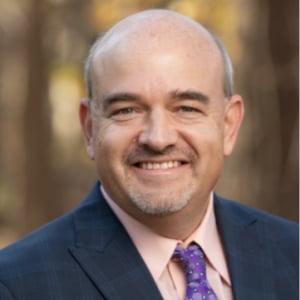
Newton D. Baker-Baker & Hostetler Chair in Law, Moritz College of Law, The Ohio State University
Professor Douglas A. Berman is Newton D. Baker-Baker & Hostetler Chair in Law and Executive Director of the Drug Enforcement and Policy Center, housed in the Moritz College of Law. Berman’s principal teaching and research focus is in the area of criminal law and criminal sentencing, though he also has teaching and practice experience in the fields of legislation and intellectual property. He has taught Criminal Law, Criminal Punishment and Sentencing, Criminal Procedure – Investigation, Marijuana Law, Policy & Reform Seminar, Federal and State Clemency Decision-making, The Death Penalty, Legislation, Introduction to Intellectual Property, Second Amendment Seminar, and the Legislation Clinic.
Professor Berman attended Princeton University and Harvard Law School. In law school, he was an editor and developments office chair of the Harvard Law Review and also served as a teaching assistant for a Harvard University philosophy course. After graduation from law school in 1993, Professor Berman served as a law clerk for Judge Jon O. Newman and then for Judge Guido Calabresi, both on the United States Court of Appeals for the Second Circuit. After clerking, Professor Berman was a litigation associate at the law firm of Paul, Weiss, Rifkind, Wharton, and Garrison in New York City.
Professor Berman is the co-author of two casebooks. Sentencing Law and Policy: Cases, Statutes and Guidelines, published by Aspen Publishers, is now in its fifth edition. Marijuana Law and Policy was released by Carolina Academic Press in 2020. In addition to authoring numerous articles on topics ranging from capital punishment to the federal sentencing guidelines, Professor Berman has served as a managing editor of the Federal Sentencing Reporter for more than twenty five years, and also serves as an editor of the Ohio State Journal of Criminal Law.
Professor Berman is the sole creator and author of the widely-read and widely-cited blog, Sentencing Law and Policy. The blog often receives nearly 50,000 page views per month (and had over 20,000 hits the day of the Supreme Court’s major sentencing decision in United States v. Booker). Professor Berman’s work on the Sentencing Law and Policy blog, which he describes as a form of “scholarship in action,” has been profiled or discussed at length in articles appearing in the Wall Street Journal, Legal Affairs magazine, Lawyers Weekly USA, Legal Times, Columbus Monthly, and in numerous other print and online publications.
In addition, Sentencing Law and Policy has the distinction of being the first blog cited by the U.S. Supreme Court (for a document appearing exclusively on the site), and substantive analysis in particular blog posts has been cited in numerous appellate and district court rulings, in many briefs submitted to federal and state courts around the country, and in hundreds of law review articles.
Professor Berman is a member of the Council on Criminal Justice and frequently is consulted by national and state policymakers, sentencing commissioners, and public policy groups concerning sentencing law and policy reforms. He has testified before the U.S. House of Representatives and before numerous sentencing commissions. He also is frequently contacted by national and local media concerning sentencing and marijuana reform developments.
Professor Berman has appeared on national television, radio and podcast news programs and has been extensively quoted in newspaper articles appearing in nearly every major national paper and many local papers, including The New York Times, The Washington Post, The Wall Street Journal, Legal Times, and in pieces from the Associated Press, Reuters, and Knight-Ridder news services.
Professor Berman sometimes serves as a consultant to lawyers working on important or interesting sentencing cases. In most instances, Professor Berman’s consulting has been on an ad hoc and pro bono basis, and it usually involves a quick review of draft briefs and other court filings and then providing general advice on litigation strategies. On some occasions, however, Professor Berman has been formally retained to play a more sustained role in certain cases, including being retained by law firms to provide consulting service on various cutting-edge federal sentencing issues.

Chief Judge, United States Court of Appeals, Sixth Circuit
JEFFREY S. SUTTON is the Chief Judge of the United States Court of Appeals for the Sixth Circuit. He has served as Chair of the Federal Judicial Conference Committee on Rules of Practice and Procedure, Chair of the Advisory Committee on Appellate Rules, and Chair of the Supreme Court Fellows Commission. He currently serves as Chair of the Executive Committee of the Judicial Conference of the United States. Since 1993, Chief Judge Sutton has been an adjunct professor at The Ohio State University College of Law, where he teaches seminars on State Constitutional Law, the United States Supreme Court, and Appellate Advocacy. He also teaches a class on State Constitutional Law at Harvard Law School. Among other publications, he is the author of Who Decides? States as Laboratories of Constitutional Experimentation and 51 Imperfect Solutions: States and the Making of American Constitutional Law. He is the co-author of a casebook, State Constitutional Law: The Modern Experience, as well as The Law of Judicial Precedent. He is also the co-editor of The Essential Scalia: On the Constitution, the Courts, and the Rule of Law. In 2006, Chief Judge Sutton was elected to the American Law Institute, and in 2017 he was elected to its Council.
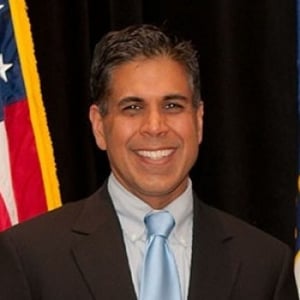
Judge, United States Court of Appeals, Sixth Circuit
Amul R. Thapar serves as a judge on the United States Court of Appeals for the Sixth Circuit. His judicial career began in 2007 when President George W. Bush nominated him to serve on the Eastern District of Kentucky, making him the first South Asian Article III judge in American history. In 2017, he became President Donald J. Trump’s first appellate court nominee.
Before joining the bench, Judge Thapar served as the United States Attorney for the Eastern District of Kentucky. While United States Attorney, Judge Thapar worked on the Attorney General’s Advisory Committee (“AGAC”) and chaired the AGAC’s Controlled Substances and Asset Forfeiture subcommittee. He also served on the Terrorism and National Security subcommittee, the Violent Crime subcommittee, and the Child Exploitation working group.
Judge Thapar has worked in private practice, at Williams & Connolly in Washington, D.C., and Squire, Sanders & Dempsey in Cincinnati, Ohio. He also served as an Assistant United States Attorney in both the Southern District of Ohio and the District of Columbia.
Judge Thapar received his undergraduate degree from Boston College and his law degree from the University of California, Berkeley. After graduating, Judge Thapar worked as a law clerk to the Honorable S. Arthur Spiegel of the United States District Court for the Southern District of Ohio, and the Honorable Nathaniel R. Jones of the United States Court of Appeals for the Sixth Circuit.
Judge Thapar has also published in the Yale Law Journal, Michigan Law Review, and Catholic University Law Review. He teaches courses on originalism, the Federalists and Anti-Federalists, and legal writing at Notre Dame Law School, the University of Virginia School of Law, and Vanderbilt Law School.
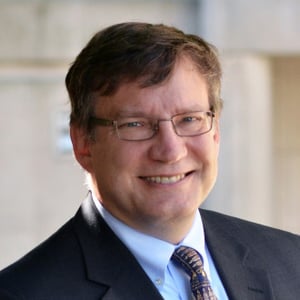
Chairman and Founder, Institute for Free Speech; Josiah H. Blackmore II/Shirley M. Nault Designated Professor of Law, Capital University Law School
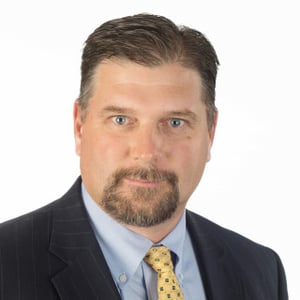
Executive Director, Ohio Dental Association
David J. Owsiany is the executive director of the Ohio Dental Association and a past president of the Columbus Lawyers Chapter of the Federalist Society.
He has served as CEO of a statewide health care association, president of the Buckeye Institute, chief of policy for the Ohio Department of Insurance, judicial law clerk for the Illinois Appellate Court, and staffer on the United State Senate Judiciary Committee.
Mr. Owsiany has written dozens of articles on legal and public policy issues for various publications, including the University of Toledo Law Review, the Federalist Society's State Court Docket Watch, Columbus Dispatch, Cincinnati Enquirer, Crain’s Cleveland Business, and Akron Beacon Journal.
Owsiany received his J.D. from Washington University School of Law in St. Louis and B.A. from the University of Michigan in Ann Arbor.
Executive Director, Ohio Dental Association
David J. Owsiany is the executive director of the Ohio Dental Association and a past president of the Columbus Lawyers Chapter of the Federalist Society.
He has served as CEO of a statewide health care association, president of the Buckeye Institute, chief of policy for the Ohio Department of Insurance, judicial law clerk for the Illinois Appellate Court, and staffer on the United State Senate Judiciary Committee.
Mr. Owsiany has written dozens of articles on legal and public policy issues for various publications, including the University of Toledo Law Review, the Federalist Society's State Court Docket Watch, Columbus Dispatch, Cincinnati Enquirer, Crain’s Cleveland Business, and Akron Beacon Journal.
Owsiany received his J.D. from Washington University School of Law in St. Louis and B.A. from the University of Michigan in Ann Arbor.
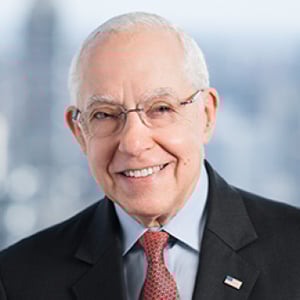
Former United States Attorney General
Michael B. Mukasey is the former Attorney General of the United States, the nation’s chief law enforcement officer. As Attorney General from November 2007 to January 2009, he oversaw the U.S. Department of Justice and advised on critical issues of domestic and international law.
From 1988 to 2006, Judge Mukasey served as a district judge in the United States District Court for the Southern District of New York, becoming Chief Judge in 2000.
From 1972 to 1976, Judge Mukasey served as an Assistant United States Attorney for the Southern District of New York, and as Chief of the Official Corruption Unit from 1975 to 1976. His practice consisted of criminal litigation on behalf of the government, including investigation and prosecution of narcotics, bank robbery, interstate theft, securities fraud, fraud on the government and bribery. From 1976 to 1987 and from 2006 to 2007 he was in private practice.
Judge Mukasey has received numerous honors, including the Federal Bar Council’s Learned Hand Medal for Excellence in Federal Jurisprudence. He served as Chairman of the Committee on Public Access to Information and Proceedings of the New York Bar Association from 1984 to 1987. He served on the Federal Courts Committee of the Association of the Bar of the City of New York from 1979 to 1982 and its Communications Law Committee from 1983 to 1986. Judge Mukasey was also a part-time lecturer at Columbia School of Law from January 1993 to May 2007, teaching trial advocacy.
He received his LL.B. from Yale Law School in 1967 and his B.A. from Columbia College in 1963.

A Discussion Concerning the Constitutionality of the Individual Mandate and "ObamaCare"
Cincinnati Lawyers Chapter Presents Senator Shannon Jones and Representative Peter Stautberg
Federal Sentencing Issues
The Fall Terms of the United States Supreme Court & the Ohio Supreme Court
Citizens United v. Federal Election Commission
U.S. Supreme Court Appointments: Perspectives on the Sotomayor Nomination
The Rise and Fall of Lead Paint Litigation in Ohio
David J. Owsiany
Over the last four years, Ohio has experienced a significant amount of activity related to...
The Rise and Fall of Lead Paint Litigation in Ohio
David J. Owsiany
Over the last four years, Ohio has experienced a significant amount of activity related to...
How Recent Changes in the Legislature May Affect the Judiciary in Tennessee
Keynote Address by U.S. Attorney General Michael B. Mukasey - Prepared Remarks
Michael B. Mukasey
Thank you for that introduction and for the opportunity to address this group. I have...