
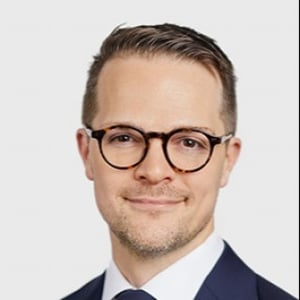
Vice President of Regulatory and Corporate Affairs, Cogeco Inc.
Paul Beaudry is Vice President, Regulatory and Corporate Affairs at Cogeco Inc. He leads Cogeco’s regulatory function in Canada and the United States, and represents the company in proceedings before the CRTC, the Federal Communications Commission and other government departments and regulatory agencies. He also oversees compliance with regulatory requirements imposed on the company at each level of government, in both countries. In addition, Paul leads Cogeco’s Sustainability team and the strategy for public disclosure of ESG matters. He joined Cogeco in November 2020 and has since held progressively larger leadership roles within the organization.
Prior to joining Cogeco, Paul served as Director of Regulatory Affairs at TELUS in Calgary. He also practiced competition and foreign investment law at Stikeman Elliott LLP and Ogilvy Renault LLP (now Norton Rose Fulbright) and served as a senior policy advisor to Canada’s Minister of Industry.
Paul is a graduate of the University of Montreal Faculty of Law and is a member of the Quebec Bar. He serve on the boards of the Institut national de santé publique du Québec, the Cable Public Affairs Channel (CPAC), La Fondation La Rue des Femmes and the Canadian chapter of the International Institute of Communications. He also sits on the Governors Council of Golf Canada.

Principal, MHRyan Law
Michael H. Ryan is a lawyer specialising in international telecommunications, Internet and media law and regulation, withexperience in policy analysis and regulatory economics.

Senior Policy Counsel and Director, Government Affairs, Telecommunications Industry Association (TIA)
Dileep Srihari is Senior Policy Counsel and Director, Government Affairs at the Telecommunications Industry Association (TIA). He represents information and communications technology companies – those that manufacture chips, routers, switches, cell phones, base stations, and more – through policy development and advocacy before Congress and the FCC.
Srihari currently focuses on spectrum and broadband infrastructure deployment issues, including topics ranging from millimeter-wave spectrum for 5G to regulatory reform and funding for broadband deployment. He also provide counsel and supervise others on work spanning across TIA's Government Affairs department, including leading projects on national security issues related to the ICT supply chain as well as Internet of Things issues.
Srihari was previously an associate at law firm WilmerHale where he was a member of the firm’s Communications practice group. His work involved regulatory advocacy and appellate litigation on topics including wireless interference protections, television program access, and process safety management. He also previously worked on Capitol Hill for a somewhat-recognizable U.S. senator.
He holds a J.D. from Georgetown and a B.S. in Electrical Engineering and Computer Science from Cornell.

Professor, University of Southern California Gould School of Law
Jonathan Barnett is the Torrey H. Webb Professor of Law at the Gould School of Law, University of Southern California. He founded and currently directs the USC Media, Entertainment and Technology Law Program. Barnett specializes in intellectual property, contracts, antitrust, and corporate law. Barnett has published in the Harvard Law Review, Yale Law Journal, Journal of Legal Studies, Review of Law & Economics, Journal of Corporation Law and other scholarly journals.
He joined USC Law in fall 2006 and was a visiting professor at New York University School of Law in fall 2010. Prior to academia, Barnett practiced corporate law as a senior associate at Cleary Gottlieb Steen & Hamilton in New York, specializing in private equity and mergers and acquisitions transactions. He was also a visiting assistant professor at Fordham University School of Law in New York. A magna cum laude graduate of University of Pennsylvania, Barnett received a MPhil from Cambridge University and a JD from Yale Law School.
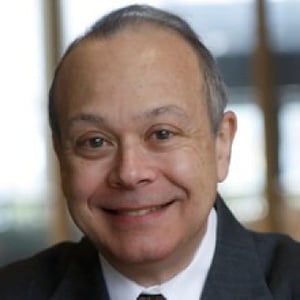
Taft, Stettinius & Hollister Professor of Law, University of Minnesota Law School
Professor Thomas F. Cotter joined the University of Minnesota Law School faculty in 2006. He received his B.S. and M.S. degrees in economics from the University of Wisconsin-Madison, and in 1987 graduated magna cum laude from the University of Wisconsin Law School, where he served as Senior Articles Editor of the Wisconsin Law Review and was elected to the Order of the Coif.
From 1987-89, Professor Cotter clerked for the Honorable Lawrence W. Pierce, United States Court of Appeals for the Second Circuit. He practiced law at Cravath, Swaine & Moore in New York City from 1988-90, and at Jenner & Block in Chicago from 1990-94. From 1994-2005, he taught at the University of Florida College of Law, where he held a University of Florida Research Foundation Professorship and directed the school’s Intellectual Property Law Program. From 2005-06, he was a Professor of Law at Washington and Lee University School of Law. In 2007, he was named to a two-year Solly Robins Distinguished Research Fellowship at the University of Minnesota Law School, and in 2008 was named to the Taft, Stettinius & Hollister Chair in Law.
Professor Cotter’s principal research and teaching interests are in the fields of domestic and international intellectual property law, antitrust, and law and economics. He is the author of six books—Patent Wars: How Patents Impact Our Daily Lives (Oxford Univ. Press, 2018); Trademarks, Unfair Competition, and Business Torts (with Barton Beebe, Mark A. Lemley, Peter S. Menell, and Robert P. Merges) (Wolters Kluwer 2d ed., 2016; 1st ed., 2011); Law and Economics: Positive, Normative, and Behavioral Perspectives (with Jeffrey L. Harrison) (3d ed., Thomson West, 2013); Comparative Patent Remedies: A Legal and Economic Analysis (Oxford University Press, 2013); and Intellectual Property: Economic and Legal Dimensions of Rights and Remedies (with Roger D. Blair) (Cambridge University Press 2005).
Altogether he has authored or coauthored over 60 other scholarly works, including articles in the California Law Review, the Georgetown Law Journal, the Iowa Law Review, the Minnesota Law Review, and the University of Illinois Law Review. He also publishes a blog, ComparativePatentRemedies.com, on the law (both foreign and domestic) and economics of patent remedies. Most recently, the Innovators Network Foundation, in partnership with ACT|The App Association, appointed Professor Cotter to a one-year Intellectual Property Fellowship.

Associate Dean for Academic Affairs, Austin E. Owen Research Scholar & Professor of Law, The University of Richmond School of Law
Dean Kristen Jakobsen Osenga teaches and writes in the areas of patent law, antitrust, and legislation and regulation. Some of her recent scholarship focuses on standard development organizations, patent eligible subject matter, patent licensing firms, litigation and remedies for patent infringement, and patent law reform. She has written numerous law review articles on these and other topics, as well as book chapters and op eds on various aspects of patent law. Additionally, she has spoken on these issues at many academic conferences and bar events. Dean Osenga is Chief Policy Counselor for the Inventors Defense Alliance, as well as an active member of the Federal Circuit Bar Association and the American Intellectual Property Law Association.
Dean Osenga received a B.S. degree in Biomedical Engineering from the University of Iowa, an M.S. degree in Electrical Engineering from Southern Illinois University – Carbondale, and a J.D. from the University of Illinois College of Law, where she graduated magna cum laude. After law school, she practiced at the law firm of Finnegan, Henderson, Farabow, Garrett, & Dunner LLP, (now Finnegan) where she did patent prosecution and litigation. She then clerked for the Judge Richard Linn of the U.S. Court of Appeals for the Federal Circuit. After clerking, she entered academia, teaching first at Chicago-Kent College of Law and then at the University of Richmond, where she has been since 2006. She has also been a Visiting Professor at Emory University School of Law and at William & Mary School of Law.
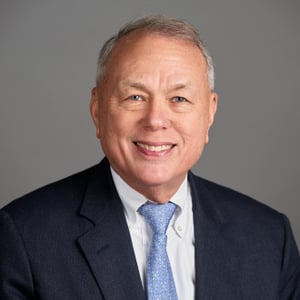
Lawyer and Consultant on Issues Relating to International Postal Policy
James "Jim" Campbell is a lawyer and consultant in Washington, D.C. He is a long time adviser to Federal Express Corporation on U.S. postal reform and international postal policy. In addition, in recent years he has co-authored, with the German Wissenschaftliches Institute für Kommunikationsdienste, several major studies of European and international postal laws and practices for the European Commission and a review of the history and development of postal law and the postal monopoly in the United States for the Postal Regulatory Commission.
Mr. Campbell began his career as a staff attorney for the Subcommittee on Administrative Practice and Procedure of United States Senate working, in particular, on a review of regulation of the airline industry by the Civil Aeronautics Board that led to airline deregulation. In 1976 he joined DHL and led efforts to reform national and international postal, customs, and aviation regulations that impeded the development of the then fledgling international express industry.
Mr. Campbell was born in Baltimore, Maryland. He graduated from Princeton University and Georgetown University Law Center. He is the author of many articles on postal policy and a book on postal policy and the express industry.
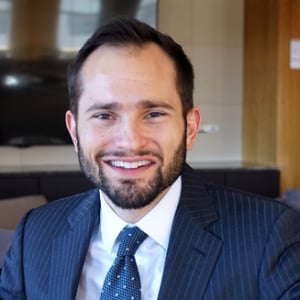
Vice President for Labor, Legal and Regulatory Policy, National Association of Manufacturers
Patrick Hedren is Vice President for Labor, Legal and Regulatory Policy at the National Association of Manufacturers. Mr. Hedren leads the NAM’s advocacy before Congress and the executive branch on smarter regulations, common-sense legal reform, and labor and employment policies that fit the modern manufacturing workforce.
Prior to his work at the NAM, Mr. Hedren served as Senior Counsel for a Fortune 15 manufacturing company where he helped to grow and manage the company’s Regulatory Advocacy Practice, a multi-business and multi-disciplinary group that enabled business units to provide effective input into the regulatory process and adjust to new regulations. Prior to that role, he worked as a litigation attorney for a regulated financial services company, and for two Members of Congress in campaign and policy roles.
Mr. Hedren is a recognized expert on good regulatory practices and has advised foreign governments on how to improve their regulatory systems. He has also advised multiple U.S. presidential campaigns on regulatory policy topics. He speaks frequently on emerging issues in administrative law and regulatory reform.
A native of Minnesota, he received both his law degree, magna cum laude, and his B.A. in Political Science from the University of Minnesota. He is an alumnus and Advisory Board member of the Atlantic Council’s Emerging Leaders in Environmental & Energy Policy (ELEEP) program.
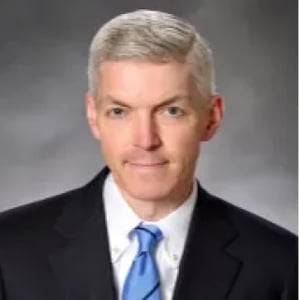
Executive Vice President, Chief Legal Officer, Gates Corporation
Matthew R. A. Heiman joined the Company in May 2026 and has served as the Company’s Chief Legal Officer and Corporate Secretary since June 2026. As Chief Legal Officer, Mr. Heiman is responsible for all legal functions for Gates, including securities and corporate governance, M&A, litigation, commercial, regulatory, compliance, patents and trademarks, real estate, employment and labor, sustainability and environmental matters. Prior to joining Gates, Mr. Heiman held senior legal leadership roles at Waystar, where he served as Chief Legal & Administrative Officer from 2023 to 2025 and as General Counsel and Corporate Secretary from 2020 to 2023. Prior to that, he was with Johnson Controls, where he served as Vice President, Corporate Secretary, and Associate General Counsel. Mr. Heiman has been a Senior Fellow for the National Security Institute at George Mason University’s Antonin Scalia School of Law since 2018.
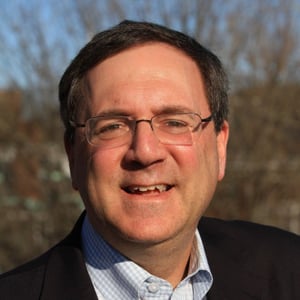
David E. Sanger is national security correspondent for the New York Times and bestselling author of The Inheritance and Confront and Conceal. He has been a member of three teams that won the Pulitzer Prize, including in 2017 for international reporting. A regular contributor to CNN, he also teaches national security policy at Harvard’s Kennedy School of Government.
Professor, University of Southern California Gould School of Law
Jonathan Barnett is the Torrey H. Webb Professor of Law at the Gould School of Law, University of Southern California. He founded and currently directs the USC Media, Entertainment and Technology Law Program. Barnett specializes in intellectual property, contracts, antitrust, and corporate law. Barnett has published in the Harvard Law Review, Yale Law Journal, Journal of Legal Studies, Review of Law & Economics, Journal of Corporation Law and other scholarly journals.
He joined USC Law in fall 2006 and was a visiting professor at New York University School of Law in fall 2010. Prior to academia, Barnett practiced corporate law as a senior associate at Cleary Gottlieb Steen & Hamilton in New York, specializing in private equity and mergers and acquisitions transactions. He was also a visiting assistant professor at Fordham University School of Law in New York. A magna cum laude graduate of University of Pennsylvania, Barnett received a MPhil from Cambridge University and a JD from Yale Law School.
Taft, Stettinius & Hollister Professor of Law, University of Minnesota Law School
Professor Thomas F. Cotter joined the University of Minnesota Law School faculty in 2006. He received his B.S. and M.S. degrees in economics from the University of Wisconsin-Madison, and in 1987 graduated magna cum laude from the University of Wisconsin Law School, where he served as Senior Articles Editor of the Wisconsin Law Review and was elected to the Order of the Coif.
From 1987-89, Professor Cotter clerked for the Honorable Lawrence W. Pierce, United States Court of Appeals for the Second Circuit. He practiced law at Cravath, Swaine & Moore in New York City from 1988-90, and at Jenner & Block in Chicago from 1990-94. From 1994-2005, he taught at the University of Florida College of Law, where he held a University of Florida Research Foundation Professorship and directed the school’s Intellectual Property Law Program. From 2005-06, he was a Professor of Law at Washington and Lee University School of Law. In 2007, he was named to a two-year Solly Robins Distinguished Research Fellowship at the University of Minnesota Law School, and in 2008 was named to the Taft, Stettinius & Hollister Chair in Law.
Professor Cotter’s principal research and teaching interests are in the fields of domestic and international intellectual property law, antitrust, and law and economics. He is the author of six books—Patent Wars: How Patents Impact Our Daily Lives (Oxford Univ. Press, 2018); Trademarks, Unfair Competition, and Business Torts (with Barton Beebe, Mark A. Lemley, Peter S. Menell, and Robert P. Merges) (Wolters Kluwer 2d ed., 2016; 1st ed., 2011); Law and Economics: Positive, Normative, and Behavioral Perspectives (with Jeffrey L. Harrison) (3d ed., Thomson West, 2013); Comparative Patent Remedies: A Legal and Economic Analysis (Oxford University Press, 2013); and Intellectual Property: Economic and Legal Dimensions of Rights and Remedies (with Roger D. Blair) (Cambridge University Press 2005).
Altogether he has authored or coauthored over 60 other scholarly works, including articles in the California Law Review, the Georgetown Law Journal, the Iowa Law Review, the Minnesota Law Review, and the University of Illinois Law Review. He also publishes a blog, ComparativePatentRemedies.com, on the law (both foreign and domestic) and economics of patent remedies. Most recently, the Innovators Network Foundation, in partnership with ACT|The App Association, appointed Professor Cotter to a one-year Intellectual Property Fellowship.
Associate Dean for Academic Affairs, Austin E. Owen Research Scholar & Professor of Law, The University of Richmond School of Law
Dean Kristen Jakobsen Osenga teaches and writes in the areas of patent law, antitrust, and legislation and regulation. Some of her recent scholarship focuses on standard development organizations, patent eligible subject matter, patent licensing firms, litigation and remedies for patent infringement, and patent law reform. She has written numerous law review articles on these and other topics, as well as book chapters and op eds on various aspects of patent law. Additionally, she has spoken on these issues at many academic conferences and bar events. Dean Osenga is Chief Policy Counselor for the Inventors Defense Alliance, as well as an active member of the Federal Circuit Bar Association and the American Intellectual Property Law Association.
Dean Osenga received a B.S. degree in Biomedical Engineering from the University of Iowa, an M.S. degree in Electrical Engineering from Southern Illinois University – Carbondale, and a J.D. from the University of Illinois College of Law, where she graduated magna cum laude. After law school, she practiced at the law firm of Finnegan, Henderson, Farabow, Garrett, & Dunner LLP, (now Finnegan) where she did patent prosecution and litigation. She then clerked for the Judge Richard Linn of the U.S. Court of Appeals for the Federal Circuit. After clerking, she entered academia, teaching first at Chicago-Kent College of Law and then at the University of Richmond, where she has been since 2006. She has also been a Visiting Professor at Emory University School of Law and at William & Mary School of Law.
Associate Dean for Academic Affairs, Austin E. Owen Research Scholar & Professor of Law, The University of Richmond School of Law
Dean Kristen Jakobsen Osenga teaches and writes in the areas of patent law, antitrust, and legislation and regulation. Some of her recent scholarship focuses on standard development organizations, patent eligible subject matter, patent licensing firms, litigation and remedies for patent infringement, and patent law reform. She has written numerous law review articles on these and other topics, as well as book chapters and op eds on various aspects of patent law. Additionally, she has spoken on these issues at many academic conferences and bar events. Dean Osenga is Chief Policy Counselor for the Inventors Defense Alliance, as well as an active member of the Federal Circuit Bar Association and the American Intellectual Property Law Association.
Dean Osenga received a B.S. degree in Biomedical Engineering from the University of Iowa, an M.S. degree in Electrical Engineering from Southern Illinois University – Carbondale, and a J.D. from the University of Illinois College of Law, where she graduated magna cum laude. After law school, she practiced at the law firm of Finnegan, Henderson, Farabow, Garrett, & Dunner LLP, (now Finnegan) where she did patent prosecution and litigation. She then clerked for the Judge Richard Linn of the U.S. Court of Appeals for the Federal Circuit. After clerking, she entered academia, teaching first at Chicago-Kent College of Law and then at the University of Richmond, where she has been since 2006. She has also been a Visiting Professor at Emory University School of Law and at William & Mary School of Law.
Lawyer and Consultant on Issues Relating to International Postal Policy
James "Jim" Campbell is a lawyer and consultant in Washington, D.C. He is a long time adviser to Federal Express Corporation on U.S. postal reform and international postal policy. In addition, in recent years he has co-authored, with the German Wissenschaftliches Institute für Kommunikationsdienste, several major studies of European and international postal laws and practices for the European Commission and a review of the history and development of postal law and the postal monopoly in the United States for the Postal Regulatory Commission.
Mr. Campbell began his career as a staff attorney for the Subcommittee on Administrative Practice and Procedure of United States Senate working, in particular, on a review of regulation of the airline industry by the Civil Aeronautics Board that led to airline deregulation. In 1976 he joined DHL and led efforts to reform national and international postal, customs, and aviation regulations that impeded the development of the then fledgling international express industry.
Mr. Campbell was born in Baltimore, Maryland. He graduated from Princeton University and Georgetown University Law Center. He is the author of many articles on postal policy and a book on postal policy and the express industry.
Vice President for Labor, Legal and Regulatory Policy, National Association of Manufacturers
Patrick Hedren is Vice President for Labor, Legal and Regulatory Policy at the National Association of Manufacturers. Mr. Hedren leads the NAM’s advocacy before Congress and the executive branch on smarter regulations, common-sense legal reform, and labor and employment policies that fit the modern manufacturing workforce.
Prior to his work at the NAM, Mr. Hedren served as Senior Counsel for a Fortune 15 manufacturing company where he helped to grow and manage the company’s Regulatory Advocacy Practice, a multi-business and multi-disciplinary group that enabled business units to provide effective input into the regulatory process and adjust to new regulations. Prior to that role, he worked as a litigation attorney for a regulated financial services company, and for two Members of Congress in campaign and policy roles.
Mr. Hedren is a recognized expert on good regulatory practices and has advised foreign governments on how to improve their regulatory systems. He has also advised multiple U.S. presidential campaigns on regulatory policy topics. He speaks frequently on emerging issues in administrative law and regulatory reform.
A native of Minnesota, he received both his law degree, magna cum laude, and his B.A. in Political Science from the University of Minnesota. He is an alumnus and Advisory Board member of the Atlantic Council’s Emerging Leaders in Environmental & Energy Policy (ELEEP) program.
Executive Vice President, Chief Legal Officer, Gates Corporation
Matthew R. A. Heiman joined the Company in May 2026 and has served as the Company’s Chief Legal Officer and Corporate Secretary since June 2026. As Chief Legal Officer, Mr. Heiman is responsible for all legal functions for Gates, including securities and corporate governance, M&A, litigation, commercial, regulatory, compliance, patents and trademarks, real estate, employment and labor, sustainability and environmental matters. Prior to joining Gates, Mr. Heiman held senior legal leadership roles at Waystar, where he served as Chief Legal & Administrative Officer from 2023 to 2025 and as General Counsel and Corporate Secretary from 2020 to 2023. Prior to that, he was with Johnson Controls, where he served as Vice President, Corporate Secretary, and Associate General Counsel. Mr. Heiman has been a Senior Fellow for the National Security Institute at George Mason University’s Antonin Scalia School of Law since 2018.
David E. Sanger is national security correspondent for the New York Times and bestselling author of The Inheritance and Confront and Conceal. He has been a member of three teams that won the Pulitzer Prize, including in 2017 for international reporting. A regular contributor to CNN, he also teaches national security policy at Harvard’s Kennedy School of Government.
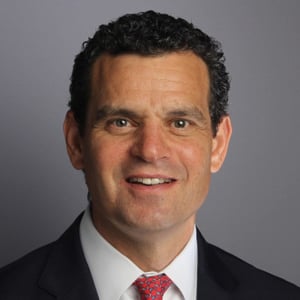
Partner, Wilmer Cutler Pickering Hale and Dorr LLP
David Cohen, who leads the firm's Financial and Business Integrity Group, provides clients with anti-money laundering, financial and trade sanctions advice; represents US and foreign-based clients in matters implicating national security, including CFIUS and cybersecurity; conducts internal investigations; and defends clients facing government investigations. His practice has a strong emphasis on disputes involving US and foreign regulators and enforcement agencies, often involving cross-border issues, as well as proceedings in US and foreign adjudicative venues.
Before rejoining the firm in 2017, Mr. Cohen served for eight years in senior presidentially appointed positions. From 2015–2017, Mr. Cohen was Deputy Director of the Central Intelligence Agency (CIA), where he helped manage the Agency's domestic and worldwide operations, oversee its strategic modernization, and lead foreign intelligence collection, all-source analysis, covert action, counter-intelligence and foreign liaison relationships. Mr. Cohen also directed special projects on the impact of new technologies on the Agency and on how best to work with US companies to advance the CIA's mission. At the conclusion of his tenure, Mr. Cohen was awarded the Distinguished Intelligence Medal, the CIA's highest honor.
Previously, Mr. Cohen served for four years in the US Department of the Treasury as Under Secretary for Terrorism and Financial Intelligence, where he managed the department's policy, regulatory, enforcement and intelligence functions aimed at combating illicit finance, including money laundering and other financial crime, and disrupting financial support to nations, organizations and individuals posing a threat to national security. He directly supervised the Office of Foreign Assets Control (OFAC), which implements financial and economic sanctions, and the Financial Crimes Enforcement Network (FinCEN), the anti-money laundering regulatory and enforcement agency. Mr. Cohen was instrumental in developing and implementing sanctions against Iran, Russia, North Korea, ISIS, al Qa'ida and other terrorist organizations, for which he was described as “President Obama's favorite combatant commander” and as the administration's “financial Batman.”
Mr. Cohen previously served for two years as Assistant Secretary of the Treasury for Terrorist Financing, overseeing policy development related to sanctions and money laundering. Earlier in his career, Mr. Cohen served in Treasury's general counsel's office, where he helped craft legislation that formed the basis of Title III of the USA PATRIOT Act, the post-9/11 legislation that provided new tools to prevent money laundering and the financing of terrorism.
Prior to his most recent government service, Mr. Cohen practiced law in Washington DC for nearly 20 years, including as a partner at WilmerHale. His practice at WilmerHale focused on complex civil litigation, white-collar criminal defense, internal investigations, and anti-money laundering and sanctions compliance advice.
Executive Vice President, Chief Legal Officer, Gates Corporation
Matthew R. A. Heiman joined the Company in May 2026 and has served as the Company’s Chief Legal Officer and Corporate Secretary since June 2026. As Chief Legal Officer, Mr. Heiman is responsible for all legal functions for Gates, including securities and corporate governance, M&A, litigation, commercial, regulatory, compliance, patents and trademarks, real estate, employment and labor, sustainability and environmental matters. Prior to joining Gates, Mr. Heiman held senior legal leadership roles at Waystar, where he served as Chief Legal & Administrative Officer from 2023 to 2025 and as General Counsel and Corporate Secretary from 2020 to 2023. Prior to that, he was with Johnson Controls, where he served as Vice President, Corporate Secretary, and Associate General Counsel. Mr. Heiman has been a Senior Fellow for the National Security Institute at George Mason University’s Antonin Scalia School of Law since 2018.
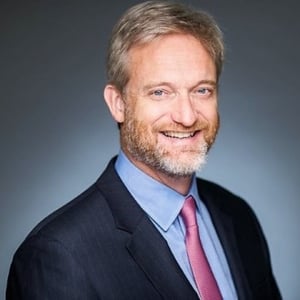
Principal in the International, BGR Group
Lester Munson is a Principal in the International at BGR Group, a leading government relations firm in Washington, D.C., where he consults with foreign governments, corporations and advocacy groups. He also serves as adjunct faculty at Johns Hopkins University and speaks regularly on the foreign policy role of Congress and on U.S. foreign assistance issues. He is a member of the Executive Committee of the Modernizing Foreign Assistance Network, a Visiting Fellow at George Mason’s National Security Institute and a commentator on Fox News Channel and the China Global Television Network.
Mr. Munson joined BGR Group in November 2015 after a 26-year career on Capitol Hill and in the Executive Branch. He was most recently Staff Director of the Senate Foreign Relations Committee, where he led policy, oversight, legislative and communications efforts for a staff of 25 and negotiated committee priorities with the White House, the State Department and Congressional leadership.
Previously, Mr. Munson was Chief of Staff for Senator Mark Kirk of Illinois. During his tenure, Senator Kirk became the leading Republican voice in the Senate on Iran and other national security issues.
During the Bush Administration, Mr. Munson served as Deputy Assistant Administrator at the U.S. Agency for International Development, where he focused on legislative affairs as well as global health issues. He led legislative efforts to develop and implement the President’s Emergency Plan for AIDS Relief (PEPFAR) and won an award for his contribution to the creation of the President’s Malaria Initiative.
Mr. Munson is a 1989 graduate of the University of Chicago and holds a Master’s degree from St. John’s College in Annapolis. He is married with two children.

Supply-chain Security in a 5G World: What to do about Huawei and ZTE?
TeleforumDispatches from the Patent Wars: The High-Stakes Battle Between Qualcomm and Apple
Jonathan Barnett, Thomas F. Cotter, Kristen Osenga
American patent law has witnessed a number of high-profile patent wars throughout history and today...
Dispatches from the Patent Wars: The High-Stakes Battle Between Qualcomm and Apple
A Teleforum Sponsored by the Intellectual Property Practice Group
TeleforumWhat Happened to the Public’s Interest in Patent Law?
Kristen Osenga
Note from the Editor: This article discusses the role of the concept of the public...
Return to Sender? The U.S. Challenge to the Universal Postal Union’s Status Quo
James I. Campbell, Patrick Hedren, Matthew R. A. Heiman
A few weeks ago, the Trump Administration initiated the process to withdraw from the 144...
Return to Sender? The U.S. Challenge to the Universal Postal Union’s Status Quo
TeleforumThe Perfect Weapon: War, Sabotage, and Fear in the Cyber Age
David E. Sanger
In 2015, Russian hackers tunneled deep into the computer systems of the Democratic National Committee,...
The Perfect Weapon: War, Sabotage, and Fear in the Cyber Age
TeleforumTopics
Liberty Month Revisited: National Standards Are Essential to the Success of U.S. Environmental Law
This month we are sharing a selection of paired pieces from The Federalist Society's Liberty...
The JCPOA Withdrawal
David S. Cohen, Matthew R. A. Heiman, Lester Munson
In 2015, the United States, along with China, France, Germany, Russia, the United Kingdom, and...