

Senior Fellow and Director of Constitutional Studies, Manhattan Institute
Ilya Shapiro is a senior fellow and director of constitutional studies at the Manhattan Institute and a contributing editor of City Journal. Previously he was executive director and senior lecturer at the Georgetown Center for the Constitution, and before that a vice president of the Cato Institute.
Shapiro is the author of Lawless: The Miseducation of America’s Elites (2025) and Supreme Disorder: Judicial Nominations and the Politics of America’s Highest Court (2020), coauthor of Religious Liberties for Corporations? (2014), and editor of 11 volumes of the Cato Supreme Court Review (2008-18). He has contributed to a variety of academic, popular, and professional publications, including the Wall Street Journal, Harvard Journal of Law & Public Policy, Washington Post, Los Angeles Times, USA Today, National Review, and Newsweek. He also regularly provides commentary for various media outlets, writes the Shapiro’s Gavel newsletter on Substack, and once appeared on the Colbert Report.
Shapiro has testified many times before Congress and state legislatures and has filed more than 500 amicus curiae “friend of the court” briefs in the Supreme Court. He lectures regularly on behalf of the Federalist Society, is a member of the board of fellows of the Jewish Policy Center, was an inaugural Washington Fellow at the National Review Institute, and has been an adjunct law professor at the George Washington University and University of Mississippi. He is also the chairman of the board of advisers of the Mississippi Justice Institute, a barrister in the Edward Coke Appellate Inn of Court, and a former member of the Virginia Advisory Committee to the U.S. Commission on Civil Rights.
Earlier in his career, Shapiro was a special assistant/adviser to the Multi-National Force in Iraq on rule-of-law issues and practiced at Patton Boggs and Cleary Gottlieb. Before entering private practice, he clerked for Judge E. Grady Jolly of the U.S. Court of Appeals for the Fifth Circuit. He holds an AB from Princeton University, an MSc from the London School of Economics, and a JD from the University of Chicago Law School.
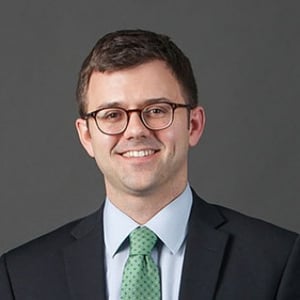
Partner, Consovoy McCarthy Park PLLC
Mr. Connolly represents clients in discovery, motions practice, trials, and appeals in state and federal courts across the country. He has litigated in a diverse range of subject areas, including civil rights litigation, challenges to administrative actions, contractual and employment disputes, and election law. Mr. Connolly has particular expertise in litigation involving the Federal Arbitration Act, the Voting Rights Act, the Communications Act, the Civil Rights Act, and the Freedom of Information Act. Mr. Connolly recently argued in the U.S. Court of Appeals for the D.C. Circuit on behalf of a trade industry and served on the trial team in a high-profile, three-week trial in the U.S. District Court for the District of Massachusetts.
Mr. Connolly is a former law clerk to Judge Jerome A. Holmes of the United States Court of Appeals for the Tenth Circuit. Mr. Connolly is also the director of the Free Speech Clinic at the Antonin Scalia Law School at George Mason University.
Mr. Connolly earned his B.A. from the University of Kansas, where he graduated with distinction and his J.D. from New York University School of Law. Mr. Connolly is a member of the Virginia and District of Columbia bars.

Head of AI Policy, Abundance Institute
Neil Chilson is the Head of AI Policy at the Abundance Institute. Prior to this position, he served as a Senior Research Fellow at the Center for Growth and Opportunity. Chilson is a lawyer, computer scientist, and author of the book “Getting Out of Control: Emergent Leadership in a Complex World.”
Chilson was previously the senior research fellow for Technology and Innovation at Stand Together, where he guided efforts to understand and promote the legal and cultural paradigms that best enable people to discover, innovate, and improve all our lives.
Before Stand Together, Chilson was the Chief Technologist at the Federal Trade Commission, where he focused on the economics of privacy and blockchain-related issues. Previously, he was an attorney advisor to Acting FTC Chairman Maureen K. Ohlhausen. In both roles he advised Chairman Ohlhausen and worked with staff on nearly every major technology-related case, report, workshop, or other FTC proceeding since January 2014. Neil joined the FTC from telecom firm Wilkinson Barker Knauer. Neil is frequently quoted by the press and his work has appeared in numerous news outlets, including The Wall Street Journal, The Washington Post, USAToday, and Newsweek. Neil has a J.D. from The George Washington Law School, a M.S. in computer science from University of Illinois, Urbana-Champaign, and a B.S. in computer science from Harding University.
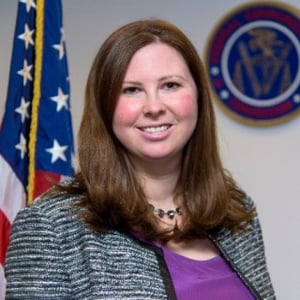
Legislative Director for Senator Marsha Blackburn, U.S. Senate
Jamie Susskind is the Legislative Director for Senator Marsha Blackburn (R-TN). Prior to becoming Legislative Director, she served for two years as the Senator’s Technology Policy Advisor. In that role, she advised on issues such as data privacy, cybersecurity, broadband, spectrum, content moderation, and antitrust, in addition to staffing the Senator on the Senate Commerce Subcommittee on Consumer Protection, Product Safety, and Data Security. Susskind previously worked on the Hill as Chief Counsel to Senator Deb Fischer (R-NE) and as an FCC Detailee for the Senate Committee on Commerce, Science, and Transportation. She also served as Chief of Staff to FCC Commissioner Brendan Carr and as Vice President of Policy and Regulatory Affairs at the Consumer Technology Association. A native Michigander, Susskind earned a Juris Doctor from the Antonin Scalia Law School and a Bachelor of Arts degree from the University of Michigan (Go Blue!).

Director for Cybersecurity and Privacy Policy, Global Government, Cisco
Eric Wenger serves as the Director for Cybersecurity and Privacy on Cisco’s Global Government Affairs team in Washington. Mr. Wenger leads Cisco's work on cybersecurity policy globally, as well as on privacy matters relating to the U.S. government, including on issues related to government surveillance and the Internet of Everything.
Mr. Wenger came to Cisco from Microsoft, where he served as Policy Counsel in the Legal and Corporate Affairs Department. His portfolio covered a range of cybersecurity, cybercrime, data breach, and privacy issues, including efforts to reform U.S. surveillance laws.
Prior to Microsoft, Mr. Wenger worked as a Trial Attorney in the Department of Justice’s Computer Crime and Intellectual Property Section. He also worked as an Attorney in the Federal Trade Commission’s Bureau of Consumer Protection and an Assistant Attorney General in New York State, where he started the first statewide law enforcement unit in the country focused on e-commerce.
Partner, Wilkinson Barker Knauer LLP
Kelly Donohue has worked on media and broadcast matters for over a decade, with a particular emphasis on broadcast law. She routinely files pleadings on behalf of clients in application and rulemaking proceedings, and handles matters relating to new station licensing, renewals, changes in communities of license, ownership and attribution, assignments and transfers, facility changes, EEO compliance, sponsorship identification and contest rules. Prior to joining the firm, Ms. Donohue spent seven years at the Federal Communications Commission, where she served as an Assistant Division Chief in the Audio Division of the FCC’s Media Bureau and as Special Counsel in the Enforcement Bureau, Office of the Bureau Chief.
Ms. Donohue also manages a growing trademark practice, counseling clients on the selection and clearance of trademarks, and preparing, filing and prosecuting federal trademark and service mark applications. She also negotiates trademark licensing, settlement and consent agreements. Ms. Donohue is well-versed in other intellectual property matters as well, and has counseled clients on issues relating to music licensing, fair use principles under copyright law, and DMCA takedown provisions.
More recently, Ms. Donohue has discovered her passion for working with start-ups and tech companies, ranging from app developers to creators of connected devices (i.e. Internet of Things). It is in this space that Ms. Donohue brings together her broad legal experience, creative "can do" thinking and strong communications skills to find innovative, cost-effective solutions to the legal hurdles new companies often face. She has provided both formal and informal guidance to dozens of companies on issues relating to intellectual property, privacy, regulatory compliance, and corporate structure/governance.
Ms. Donohue herself has an entrepreneurial spirit. She began her career as a professional musician and continues to write music and perform regularly with her “kindie” rock band, Here Comes Trouble. She has won numerous awards for her songwriting and vocal arrangements, including placements in the Mid-Atlantic Songwriting Contest and International Songwriting Competition.
Retired
Tom Gede retired in 2023 as a principal in Morgan Lewis Consulting LLC and of counsel to the firm. He currently consults on a variety of legal and policy matters for both public and private clients. Tom has a national reputation and distinguished background in federal Indian law. Prior to retirement, he represented clients in complex governmental matters in litigation, administrative and regulatory proceedings, including high-profile matters involving state governments. A former senior deputy in the California Attorney General’s office, Tom was amicus coordinator and Supreme Court counsel, and argued cases in the US Supreme Court, the California Supreme Court, and numerous state and federal appellate courts.
Tom also served as executive director of the Conference of Western Attorneys General (CWAG), coordinating activities on key legal and policy issues, such as federal Indian law, energy, environmental, public lands, financial services, and telecommunications, for the attorneys general of 18 western states and territories. In 2016, Tom was elected as a Member of the American Law Institute (ALI), and served as an Adviser on the Restatement of the Law Third - The Law of American Indians. Tom also taught federal Indian law as an adjunct law professor at the University of the Pacific - McGeorge School of Law. He served as an assistant editor for and the author of the Indian gaming chapter in CWAG’s American Indian Law Deskbook (2d & 3d eds.). He has been engaged in Indian gaming and Indian law matters for more than three decades, having focused on the gaming compacts with Indian tribes, as well as complex civil and criminal jurisdiction, land, natural resources, water and law enforcement issues in Indian country. He has testified before Congress on American Indian and Native Alaskan issues. In 2012 he was appointed by Speaker John Boehner to serve on the United States Indian Law and Order Commission, where he examined criminal justice issues in Indian country and Alaska, resulting in the issuance of an important report to the President and Congress.
Principal, Morgan Lewis Consulting; Of Counsel, Morgan, Lewis & Bockius LLP; and Former California Governor
Pete Wilson’s more than 30 years of dedicated public service as governor of California, US senator, mayor of San Diego, and California state assemblyman uniquely equip him to counsel and negotiate for clients at all levels of today’s activist regulatory environment. His deep knowledge of policies, people, and processes of government make him an ideal and effective advocate for Morgan Lewis Consulting’s philosophy that today’s successful business must understand and be understood and respected by governments — not only in Washington, DC — but on a state-by-state basis.
As governor of California from 1991 to 1999, Pete is credited with leading California from the depths of recession to prosperous economic recovery. Insisting on strict budget discipline and rehabilitation of the state’s then-hostile environment toward investment and job creation, Pete provided for market-based unsubsidized health coverage for employees of small businesses and obtained anti-fraud measures that drove down workers’ compensation premiums by 40 percent. Under his leadership, California also enacted sweeping welfare reforms and historic education reforms.
After leaving office, Pete spent two years as a managing director of Pacific Capital Group, a merchant bank based in Los Angeles. He serves as a director of the Irvine Company, U.S. Telepacific Corporation Inc., and National Information Consortium Inc. He has also served as a director of IDT Entertainment and as a member of the board of advisers of Thomas Weisel Partners, a San Francisco merchant bank. He was chairman of the Japan Task Force of the Pacific Council on International Policy, which produced an analysis of Japanese economic and national security prospects over the next decade titled “Can Japan Come Back?”

Judge, United States Court of Appeals, Ninth Circuit
Judge Carlos Bea serves as a judge on the United States Court of Appeals for the Ninth Circuit. He received his Bachelor's Degree from Stanford University in 1956 and his J.D. from Stanford Law School in 1958. Judge Bea was born in San Sebastian, Spain, and immigrated with his family to Cuba in 1939. In 1952, he represented Cuba on the Cuban National basketball team in the Helsinki Olympics. Judge Bea became a naturalized citizen of the United States in 1958. He engaged in private practice in San Francisco, principally in the area of civil trials (jury and non-jury), from 1959-75 at Dunne, Phelps & Mills and from 1975-90 at Carlos Bea, A Law Corporation. He taught courses in civil litigation advocacy at Hastings College of Law and Stanford Law School. From 1990 to 2003, Judge Bea served as a judge of the San Francisco Superior Court. He was nominated by President George W. Bush to the United States Court of Appeals for the Ninth Circuit and was confirmed in 2003.
Judge Bea and his wife Louise reside in San Francisco, where they raised their four sons, Sebastian, Alexander, Nicholas, and Dominic.

Professor of Economics, University of California, San Diego
Julian Betts is a Professor in (and former Chair of) the Department of Economics at the University of California, San Diego. He is also the Executive Director of the San Diego Education Research Alliance at UCSD (sandera.ucsd.edu), a Research Associate at the National Bureau of Economic Research and a Bren Fellow at the Public Policy Institute of California (PPIC).
His research focuses on the economics of education. He has written extensively on the link between student outcomes and measures of public school spending including class size, teachers' salaries, and teachers' level of education. He has also examined the role that standards and expectations play in student achievement. Examples of his work include a theoretical analysis of the impact of educational standards published in the American Economic Review (1998), the book “Taking Measure of Charter Schools: Better Assessments, Better Policymaking, Better Schools,” co-edited with Paul Hill, the book “Getting Choice Right: Ensuring Equity and Efficiency in Education Policy” (Brookings Institution Press 2005) co-edited with Tom Loveless, and the co-authored books “Predicting Success, Preventing Failure: An Investigation of the California High School Exit Exam” (PPIC 2008), “Does School Choice Work?” (PPIC 2006), “From Blueprint to Reality: San Diego’s Education Reforms” (PPIC 2005), “Determinants of Student Achievement: New Evidence from San Diego” (PPIC 2003) and “Equal Resources, Equal Outcomes? The Distribution of School Resources and Student Achievement in California” (PPIC, 2000). Current research includes studies of school choice, California’s Mathematics Diagnostic Testing Project, and San Diego’s controversial Blueprint for Student Success.
His other main areas of research include higher education; immigration; technology, skills, and the labor market; and the economics of unions.
Betts is Principal Investigator on a multi-year study of magnet elementary schools funded by the U.S. Department of Education. This project, which is examining the impact of magnet schools on the achievement of both local and non-local enrollees, is joint with the American Institutes of Research (AIR) and Berkeley Policy Associates (BPA). He was also Principal Investigator of a three-year study for the U.S. Department of Education of the effects of career and technical education on students’ academic trajectories. Betts has served on two National Academy of Sciences panels, including (from 2005-2008) the congressionally mandated “Committee on Evaluation of Teacher Certification by the National Board for Professional Teaching Standards (NBPTS)”. Betts became a council member of the California Council on Science and Technology in 2007. Betts has also served on several technical review panels for the U.S. Department of Education, and the national advisory committees for the National Charter School Research Center at the University of Washington. In 2001-2003 Betts served on the National Working Commission on Choice in K-12 Education. He is a member of the editorial board of Education Finance and Policy, published by MIT Press.
At UCSD Betts is a professor in the Department of Economics, where he served as Department Chair from 2008 through 2011. Within the Department of Economics Betts has also served as Computing Director and more recently as Vice Chair, Graduate Studies, for the Department between 2004 and 2007. Betts was a member of the UCSD Admissions Committee from 1999 to 2003, serving as both Chair and Vice Chair in various years. In 2001 he served on the University’s Gender Equity Taskforce. Between 1999 and 2008 he also served on the Board of Directors of the Preuss School at UCSD, a
charter school on the UCSD campus that admits disadvantaged students from the local area. Betts also serves as UCSD campus director of the UC Educational Evaluation Center.
Betts obtained a Bachelor's degree in chemistry from McGill University, the M.Phil. in economics from Oxford University, Oxford, England, and a Ph.D. in economics from Queen's University, Kingston, Ontario, Canada.
Justice, Supreme Court of Arizona
Clint Bolick was appointed by Governor Doug Ducey in January 2016 to serve on the Arizona Supreme Court and was retained by the voters in 2018 and 2024.
Prior to joining the Court, Justice Bolick litigated constitutional cases in state and federal courts from coast to coast, including the U.S. Supreme Court. Among other positions, he served as Vice President for Litigation at the Goldwater Institute and as Co-founder and Vice President for Litigation at the Institute for Justice. He has litigated in support of school choice, freedom of enterprise, private property rights, freedom of speech, and federalism, and against racial classifications and government subsidies.
Justice Bolick received his Juris Doctor degree from the University of California at Davis, where he has been recognized as a distinguished alumnus, and his Bachelor of Arts degree magna cum laude from Drew University. He serves as a research fellow with the Hoover Institution. Among other honors, he was named one of the 90 Greatest DC Lawyers in the Last 30 Years by Legal Times in 2008, received a Bradley Prize in 2006, and was recognized as one of the nation’s three lawyers of the year by American Lawyer in 2002 for his successful defense of school vouchers in Zelman v. Simmons-Harris.
Justice Bolick is a prolific author of a dozen books and hundreds of articles. Among his most recent books are Unshackled: Freeing America’s K-12 Education System: Immigration Wars: Forging an American Solution, co-authored with former Florida Governor Jeb Bush; and David’s Hammer: The Case for an Activist Judiciary. Bolick serves as an adjunct professor of constitutional law at Arizona State University’s Sandra Day O’Connor School of Law and has served as a lecturer at Harvard University’s John F. Kennedy School of Government.
Professor of Education and Public Policy, University of Californ, Berkeley
Working inside policy organizations and the academy over the past three decades, Bruce Fuller has asked how public action best strengthens families and schools. He helped to design policy reforms for a free-thinking California governor, and advised opposition leaders on education reform as democracy emerged in southern Africa. Professor Fuller has studied child care programs arising at the grassroots or state run in Latin America. A fundamental question continues to motivate this array of research and writings: How can central governments enrich families and schools when situated in colorfully pluralistic societies? In short, what happens when government confronts culture?
Trained in political sociology, Professor Fuller's recent projects center on small-scale organizations that sprout across diverse communities, such as charter schools and preschools, which often spread in response to the clumsy or gray character of central states. Yet, decentralized institutions can disempower central governments, a worrisome scenario for those concerned with equity. Professor Fuller's current research delves into how young children are socialized in diverse Mexican-American homes, and what neighborhood organizations effectively advance their development. His recent book, Standardized Childhood: The Political and Cultural Struggle over Early Education, examines how elite reformers often push for state incorporation of community programs, even eroding the authority and resources spread across diverse ethnic leaders.
Professor Fuller also looks into fields that have become hyper-centralized, exemplified by his critical work on No Child Left Behind. A college dropout, he eventually received his Ph.D. from Stanford University. Before coming to Berkeley, Professor Fuller was a research sociologist at the World Bank and taught at Harvard's School of Education.

Co-Chairman, The Federalist Society for Law and Public Policy Studies
Leonard is Co-Chairman and former Executive Vice President of the Federalist Society, joining the organization over 25 years ago. Since that time he has been instrumental in helping the organization top 70,000, focusing on the growth of lawyers membership, operations and activities advancing limited, constitutional government. In addition to his work at the Society, Leonard has advised President Trump on judicial selection, assisted with the Gorsuch and Kavanaugh Supreme Court selection and confirmation process, and served as a member of the transition team. He also organized the outside coalition efforts in support of the Roberts and Alito U.S. Supreme Court confirmations. Leonard was appointed by President George W. Bush to three terms to the U.S. Commission on International Religious Freedom as chairman. He was also a U.S. Delegate to the UN Council and UN Commission on Human Rights during the Bush Administration. Leonard was the recipient of the 2009 Bradley Prize, along with the other founders and directors of the Federalist Society, for his work in advancing freedom and the rule of law. He is the coeditor of Presidential Leadership: Rating the Best and the Worst in the White House, as well as the author of opinion editorials in the New York Times,The Wall Street Journal, and Washington Post. Leonard holds degrees from Cornell University and Cornell Law School. He presently resides in Northern Virginia, where he and his wife Sally have raised their seven children.
Managing Attorney of the Washington Office, Institute for Justice
William R. Maurer is the Managing Attorney of the Washington state office of the Institute for Justice, which engages in litigation in the areas of economic liberty, private property rights, educational choice, & freedom of speech.
Maurer is an advocate against the criminalization of poverty and the governmental use of the criminal and civil enforcement systems to raise revenue. He was lead counsel in a class action challenging the use of tickets to raise revenue in the city of Pagedale, Missouri. The suit resulted in a federal consent decree that reformed the city’s ticketing and municipal court system. He regularly speaks, teaches, and writes about the abuse of fines and fees in the criminal justice system. He was a participant in summits on taxation by citation put on by the White House and Department of Justice during the Obama Administration. His work on the issue includes serving as an advisory board member of the Fines and Fees Justice Center.
In addition to his work on criminal and civil justice reform, Maurer is a First Amendment litigator. In 2011, he successfully argued before the U.S. Supreme Court that Arizona’s punitive campaign financing regime was unconstitutional. Before the Washington Supreme Court, he successfully argued against efforts to classify radio commentary as a contribution under the state’s campaign finance law.
His cases and advocacy have been covered in the Washington Post, the New York Times, the Economist, the Wall Street Journal, and other major media outlets.
Maurer was named a “Washington Superlawyer” by Washington Law & Politics Magazine for several years. He is a chapter author in numerous legal reference works and has written several articles for law reviews and legal publications across the country.
Prior to joining IJ-WA, Maurer clerked for Washington Supreme Court Justice Richard Sanders and then practiced law at Perkins Coie LLP. Maurer received his law degree in 1994 from the University of Wisconsin – Madison, where he was an editor of the Wisconsin Law Review. He received his BA from Bard College in 1989.
State Director, Democrats for Education Reform and former California State Senator
Former California State Senator Gloria Romero is the State Director of Democrats for Education Reform and has been a forceful advocate for education reform and civil rights.
She brings to the post not only a great passion for quality education opportunities for all children, but a keen knowledge of the legislative and political process. She was elected to the 24th Senate District in 2001, representing East Los Angeles and the greater San Gabriel Valley. Upon her election she was recognized as one of the hardest working members of the Legislature and quickly rose in leadership positions. She was elected by her peers to serve as Senate Democratic Caucus Chair and as Senate Majority Leader -- the first woman to ever hold that leadership position in the history of the California State Senate.
Romero served as Chair of both the Education Committee and the Senate Budget and Fiscal Review Subcommittee on Education, making her one of the most influential voices on education policy in California. She believes that education is the civil rights issue of our time. States Romero, "My mother had a sixth grade education; I have a PhD. I understand the transformational power of education and the key it holds to accessing the American Dream".
Professor of Law, University of Notre Dame Law School
Emily Bremer teaches and writes in the areas of administrative law, regulatory process, and civil procedure. Her scholarship focuses primarily on matters of procedural design, with a recent focus on the history and interpretation of the Administrative Procedure Act (APA). She is a recipient of the AALS’s award for the year’s best administrative law scholarship by a junior scholar and the AALL’s Joseph L. Andrew’s Legal Literature Award for her contribution to the Bremer-Kovacs Collection of Historical Documents Related to the APA (HeinOnline). Bremer’s articles include a defense forthcoming in the Virginia Law Review of the constitutionality of the APA’s regime for ensuring the competence and impartiality of Administrative Law Judges; a plea in the Yale Journal on Regulation for administrative law to take greater account of the on-the-ground reality of administration; twin articles uncovering the intellectual foundation and meaning of the APA’s adjudication and rulemaking provisions; and three separate studies that served as the basis of recommendations of the Administrative Conference of the United States (ACUS) on the subjects of agency declaratory orders, incorporation by reference, and statutory limitations on the jurisdiction of the Court of Federal Claims. Bremer serves as a Senior Fellow of ACUS, a co-editor of the administrative law section of Jotwell, and a regular contributor to the Yale Journal on Regulation’s Notice & Comment blog.

Protecting Eligible Voters: Evenwel v. Abbott and the Future of Redistricting - Podcast
Ilya Shapiro, J. Michael Connolly
In Evenwel v. Abbott, the Supreme Court held that the Constitution’s one-person, one-vote rule allows...
Trillions of Dollars at Stake: The Internet of Things - Podcast
Neil Chilson, Jamie Susskind, Eric Wenger, Kelly A. Donohue
Cisco and other industry leaders estimate that the Internet of Things (the “IoT”) has the...
Keynote Address by Governor Pete Wilson
Thomas F. Gede, Pete Wilson
Former California Governor Pete Wilson delivered the Keynote Address at the 2016 Annual Western Chapters...
Panel One: Are Vouchers and Charter Schools Viable Alternatives to Public Schools?
Carlos T. Bea, Julian R. Betts, Clint Bolick, Bruce Fuller, Leonard A. Leo, William R. Maurer, Gloria Romero
Parental and community support for school choice has increased dramatically in recent years, with vouchers,...
City of Arlington v. FCC - Post-Argument SCOTUScast
Emily Bremer
On January 16, 2013, the Supreme Court heard oral argument in City of Arlington v. FCC....