
UC Foundation Assistant Professor, U.T. Chattanooga

Milton R. Underwood Chair in Free Enterprise, Vanderbilt University Law School
Brian Fitzpatrick is the Milton R. Underwood Chair in Free Enterprise and Professor of Law at Vanderbilt Law School, where his research focuses on class action litigation, federal courts, judicial selection, and constitutional law. He is best known for his empirical studies of class action settlements as well as his book The Conservative Case for Class Actions (University of Chicago Press, 2019). Professor Fitzpatrick joined Vanderbilt's law faculty in 2007 after serving as the John M. Olin Fellow at New York University School of Law. He graduated first in his class from Harvard Law School and went on to clerk for Judge Diarmuid O'Scannlain on the U.S. Court of Appeals for the Ninth Circuit and Justice Antonin Scalia on the U.S. Supreme Court. After his clerkships, Professor Fitzpatrick practiced commercial and appellate litigation for several years at Sidley Austin in Washington, D.C., and served as Special Counsel for Supreme Court Nominations to U.S. Senator John Cornyn. Before earning his law degree, Fitzpatrick graduated summa cum laude with a bachelor's of science in chemical engineering from the University of Notre Dame. He has received the Hall-Hartman Outstanding Professor Award, which recognizes excellence in classroom teaching, for his Civil Procedure and Federal Courts courses.
Chief Judge, United States Court of Appeals, Sixth Circuit
JEFFREY S. SUTTON is the Chief Judge of the United States Court of Appeals for the Sixth Circuit. He has served as Chair of the Federal Judicial Conference Committee on Rules of Practice and Procedure, Chair of the Advisory Committee on Appellate Rules, and Chair of the Supreme Court Fellows Commission. He currently serves as Chair of the Executive Committee of the Judicial Conference of the United States. Since 1993, Chief Judge Sutton has been an adjunct professor at The Ohio State University College of Law, where he teaches seminars on State Constitutional Law, the United States Supreme Court, and Appellate Advocacy. He also teaches a class on State Constitutional Law at Harvard Law School. Among other publications, he is the author of Who Decides? States as Laboratories of Constitutional Experimentation and 51 Imperfect Solutions: States and the Making of American Constitutional Law. He is the co-author of a casebook, State Constitutional Law: The Modern Experience, as well as The Law of Judicial Precedent. He is also the co-editor of The Essential Scalia: On the Constitution, the Courts, and the Rule of Law. In 2006, Chief Judge Sutton was elected to the American Law Institute, and in 2017 he was elected to its Council.

Distinguished Senior Fellow and Antonin Scalia Chair in Constitutional Studies, Ethics and Public Policy Center
Edward Whelan is a Distinguished Senior Fellow of the Ethics and Public Policy Center and holds EPPC’s Antonin Scalia Chair in Constitutional Studies. He is the longest-serving President in EPPC’s history, having held that position from March 2004 through January 2021.
Mr. Whelan directs EPPC’s program on The Constitution, the Courts, and the Culture. His areas of expertise include constitutional law and the judicial confirmation process. As a contributor to National Review Online’s Bench Memos blog, he has been a leading commentator on nominations to the Supreme Court and the lower courts and on issues of constitutional law. He has written essays and op-eds for leading newspapers—including the Wall Street Journal, the New York Times, and the Washington Post—opinion journals, and academic symposia and law reviews. The National Law Journal has named Mr. Whelan among its “Champions and Visionaries” in the practice of law in D.C.
Mr. Whelan is co-editor of three volumes of Supreme Court Justice Antonin Scalia’s work: Scalia Speaks: Reflections on Law, Faith, and Life Well Lived (Crown Forum, 2017), a New York Times bestselling collection of speeches by Justice Scalia; On Faith: Lessons from an American Believer (Crown Forum, 2019), a collection of Justice Scalia’s writings on faith and religion; and The Essential Scalia: On the Constitution, the Courts, and the Rule of Law (Crown Forum, 2020), a collection of Justice Scalia’s views on legal issues.
Mr. Whelan, a lawyer and a former law clerk to Justice Scalia, has served in positions of responsibility in all three branches of the federal government. From just before the terrorist attacks of September 11, 2001, until joining EPPC in 2004, Mr. Whelan was the Principal Deputy Assistant Attorney General for the Office of Legal Counsel in the U.S. Department of Justice. In that capacity, he advised the White House Counsel’s Office, the Attorney General and other senior DOJ officials, and departments and agencies throughout the executive branch on difficult and sensitive legal questions. Mr. Whelan previously served on Capitol Hill as General Counsel to the U.S. Senate Committee on the Judiciary. In addition to clerking for Justice Scalia, he was a law clerk to Judge J. Clifford Wallace of the U.S. Court of Appeals for the Ninth Circuit.
In 1981 Mr. Whelan graduated with honors from Harvard College and was inducted into Phi Beta Kappa. He received his J.D. magna cum laude in 1985 from Harvard Law School, where he was a member of the Board of Editors of the Harvard Law Review.
For more on Mr. Whelan’s background, see this interview.
UC Foundation Assistant Professor, U.T. Chattanooga
Paul J. Schierl Professor of Law, University of Notre Dame Law School
Professor Richard W. Garnett teaches and writes in the areas of constitutional law, criminal law, the First Amendment, and law and religion. He is a leading authority on questions and debates regarding religious freedom and church-state relations, and is the founding director of Notre Dame Law School’s Program on Church, State, and Society.
Garnett clerked for the late Chief Justice of the United States, William H. Rehnquist, and also for the late Chief Judge of the United States Court of Appeals for the Eighth Circuit, Richard S. Arnold. He earned his J.D. from Yale Law School in 1995 and his B.A., summa cum laude, from Duke University in 1990. He joined the faculty in 1999 after practicing law in Washington, D.C. with Miller, Cassidy, Larroca & Lewin.
Judge, United States Court of Appeals, Sixth Circuit
John K. Bush is a Circuit Judge on the United States Court of Appeals for the Sixth Circuit.
His chambers are in Louisville, Kentucky. Prior to joining the court, Judge Bush was a partner in the
Louisville office of the firm Bingham Greenebaum Doll (now Dentons Bingham Greenebaum),
where he also was co-chair of the firm’s litigation department. He began his legal practice in the
Washington, D.C. office of Gibson Dunn & Crutcher.
Judge Bush served as a law clerk for Judge J. Smith Henley of the United States Court of
Appeals for the Eighth Circuit. He was graduated summa cum laude from Vanderbilt University,
and cum laude from Harvard Law School. He is an adjunct lecturer at The George Washington
University Law School and the Brandeis School of Law at the University of Louisville.
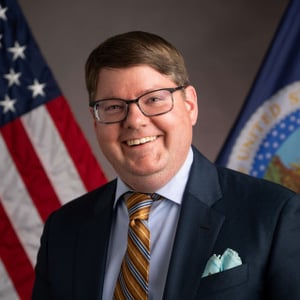
Deputy Secretary of Agriculture, U.S. Department of Agriculture
Judge Stephen Alexander Vaden was appointed as the Deputy Secretary of the U.S. Department of Agriculture on July 7, 2025. Alongside Secretary Brooke L. Rollins, Deputy Secretary Vaden leads the Department’s operations and implements policies that support America’s food and farm systems. A native of Union City, Tennessee, Deputy Secretary Vaden brings expertise in agricultural policy, law, and rural development. Previously, he served as a judge on the U.S. Court of International Trade and as General Counsel of USDA. Throughout Deputy Secretary Vaden’s time as General Counsel, he led successful Supreme Court litigation, advanced regulatory reform, and supported the implementation of the 2018 Farm Bill. He is a graduate of Yale Law School and Vanderbilt University. A public servant with strong agricultural roots, Deputy Secretary Vaden is committed to revitalizing rural America and ensuring an abundant, affordable, and safe U.S. food supply.
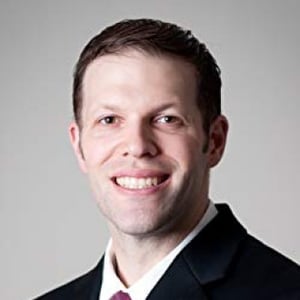
Director of Policy Studies & Senior Fellow, The Free State Foundation
Seth L. Cooper is Director of Policy Studies & Senior Fellow at The Free State Foundation. His work on federal communications and technology policy at the Free State Foundation began in 2009.
With Randolph May, Mr. Cooper is the co-author of Modernizing Copyright Law for the Digital Age: Constitutional Foundations for Reform (2020) and Constitutional Foundations of Intellectual Property: A Natural Rights Perspective (2015), both published by Carolina Academic Press. Along with Mr. May, Mr. Cooper also co-authored A Reader on Net Neutrality and Restoring Internet Freedom (2018) and #CommActUpdate: A Communications Law Fit for the Digital Age (2017), both published by Free State Foundation Press. He previously contributed to two chapters in Communications Law and Policy in the Digital Age (2012), published by Carolina Academic Press. Mr. Cooper's work has also appeared in such publications as CommLaw Conspectus, the San Jose Mercury News, Forbes.com, the Des Moines Register, the Baltimore Sun, the Washington Examiner, and the Washington Times.
Mr. Cooper previously served as Director to the Telecommunications and Information Technology Task Force at the American Legislative Exchange Council (ALEC). Mr. Cooper served as judicial clerk to the Honorable James Johnson at the Washington State Supreme Court. His co-writings about the Washington Supreme Court have appeared in the Gonzaga Law Review and in Federalist Society publications. He has worked in law and policy staff positions at the Washington State Senate and at the Discovery Institute's Center for Science & Culture. Mr. Cooper is a 2009 Lincoln Fellow at the Claremont Institute. He also has worked in private practice in the State of Washington, handling civil legal matters involving personal injuries, small business, contracts, and wills, trusts, and estates.
Mr. Cooper earned his B.A. degree in Political Science from Pacific Lutheran University and received his J.D. from Seattle University School of Law.
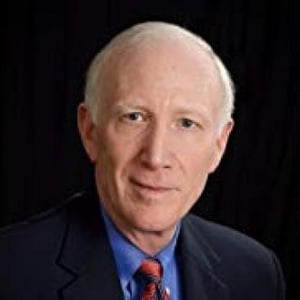
President, The Free State Foundation
Randolph J. May is Founder and President of The Free State Foundation. The Free State Foundation is an independent, non-profit free market-oriented think tank founded in 2006.
From October 1999-May 2006, May was a Senior Fellow and Director of Communications Policy Studies at The Progress & Freedom Foundation, a Washington, DC-based think tank. Prior to joining PFF, he practiced communications, administrative, and regulatory law as a partner at major national law firms. From 1978 to 1981, May served as Assistant General Counsel and Associate General Counsel at the Federal Communication Commission.
May has held numerous leadership positions in bar associations. He is a past Chair of the American Bar Association’s Section of Administrative Law and Regulatory Practice. He is a Fellow of the National Academy of Public Administration. Mr. May also has served as a Public Member of the Administrative Conference of the United States and currently is a Senior Fellow at ACUS.
Mr. May has published more than two hundred articles and essays on communications, administrative and constitutional law topics. He is author of A Call for a Radical New Communications Policy: Proposals for Free Market Reform, and co-author of #CommActUpdate: A Communications Law Fit for the Digital Age and The Constitutional Foundations of Intellectual Property. Mr. May is editor of two books, Communications Law and Policy in the Digital Age: The Next Five Years and New Directions in Communications Policy. In addition, he is the co-editor of two other books, Net Neutrality or Net Neutering: Should Broadband Internet Services Be Regulated? and Communications Deregulation and FCC Reform. In the past, Mr. May has written regular columns on legal and regulatory affairs for Legal Times and the National Law Journal, leading national legal periodicals.
He received his A.B. from Duke University and his J.D. from Duke Law School, where he serves as a member of the Board of Visitors.

Natural Law and the American Founding
Huntsville Lawyers Chapter
Huntsville, ALThe Essential Scalia: On the Constitution, the Courts, and the Rule of Law
Tennessee Lawyers Chapters - Online Event
The Supreme Court and Religious Liberty: Recent Cases
Chattanooga Lawyers Chapter - Online Event
CANCELLED: Dinner with Sixth Circuit Judge Bush
Chattanooga Lawyers Chapter
Chattanooga, TNArticle: No Workplace Cooperation Allowed
In the National Review, Thomas M. Johnson, Jr. writes about a fascinating labor issue at a...
Tennessee Trial Court Strikes Down State’s Tort Reform Act
Stephen Alexander Vaden
In the latest battle on the state level between the plaintiffs’ and defense bars, a...
FCC Preemption of State Restrictions on Government-owned Broadband Networks: An Affront to Federalism
Seth L. Cooper, Randolph May
Note from the Editor: This article is about the Federal Communications Commission’s Order preempting state...
Out From the Penumbra: The Story of Planned Parenthood v. Sundquist and Amendment 1
Nashville, TennesseeHow Recent Changes in the Legislature May Affect the Judiciary in Tennessee