
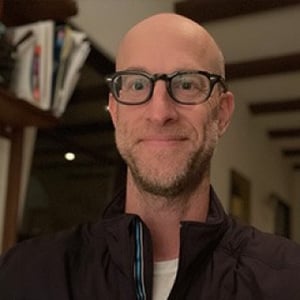
General Counsel, Associate
Jordan Gimbel manages the Open Innovation Team at Microsoft. Prior to joining Microsoft in March 2024, Jordan served as the Deputy General Counsel at Twitch managing teams responsible for global litigation, enforcement and compliance initiatives, government inquiries, product advice, trust & safety initiatives, advertising matters, and the privacy program. Before that, Jordan served as the Head of Global Brand Protection, Domains, and Copyright at Yahoo!.
After law studies, Jordan worked at Jones Day as a member of its intellectual property group focusing on litigation matters ranging from copyright (served as a member of the trial team in the Shepard Fairey v. AP case) to patent. He would also moonlight on the IP transactional team assisting the corporate team on a deal or negotiating a research and development agreement. As part of Jordan's post-law studies Jordan participated in two LLM programs at Stockholm University on IT and European IP law as a Fulbright Scholar in Sweden.

U.S. Court of Federal Claims and Jurist-In-Residence Professor of Law, The University of Akron School of Law
Judge Ryan T. Holte was sworn in as a judge on the United States Court of Federal Claims in July 2019. Prior to confirmation he served as the David L. Brennan Professor of Law and Director of the Center for Intellectual Property Law and Technology at The University of Akron School of Law (2017-2019) and an assistant professor of law at Southern Illinois University School of Law (2013-2017). Judge Holte has written and presented widely on patent law subjects and empirical legal studies of Federal Circuit and district court patent law cases. His most recent articles were published in the Iowa Law Review (2019), George Mason Law Review (2018), and Washington Law Review (2017).
In practice, Judge Holte served for six years as general counsel and partner of an electrical engineering technology company and is co-inventor of multiple patents related to Systems and Methods for Countering Satellite-Navigated Munitions. Prior to entering academia, Judge Holte practiced as a litigation attorney at the Federal Trade Commission and an associate in the Intellectual Property Practice Group at Jones Day. Prior to practice, he served as a law clerk to Judge Stanley F. Birch, Jr. on the United States Court of Appeals for the Eleventh Circuit and as a law clerk to Judge Loren A. Smith on the United States Court of Federal Claims.
Judge Holte received his JD from the University of California Davis School of Law and his BS, magna cum laude, in engineering from the California Maritime Academy where he was a First Class graduate of the Corps of Cadets Third Engineering Division and sailed as a U.S. Merchant Marine oiler.
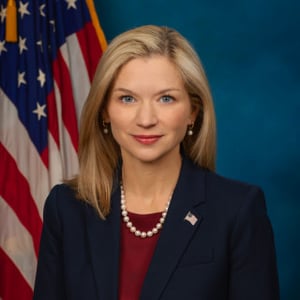
U.S. Attorney, U.S. Attorney's Office for the District of Utah
Melissa Holyoak was nominated by President Trump to serve as U.S. Attorney for the District of Utah on January 29, 2026. Holyoak was appointed on November 17, 2025 by Attorney General Pam Bondi to serve as Interim U.S. Attorney for the District of Utah.
Prior to that, Holyoak served as a Commissioner of the Federal Trade Commission from March 25, 2024 until her appointment as U.S. Attorney. During her FTC tenure, Commissioner Holyoak strove to vigorously enforce the antitrust and consumer protection laws while acting within the agency’s constitutional and statutory remit. She spoke widely about a range of FTC priorities, including improving competition enforcement, effectively applying existing laws to emerging trends in technology, and protecting children and teens online. She also published numerous statements about FTC matters.
Holyoak brings extensive experience as a litigator and leader. She served as Solicitor General with the Utah Attorney General’s Office where she oversaw the civil appeals, criminal appeals, constitutional defense and special litigation, and antitrust and data privacy divisions. She also managed multistate matters including those involving consumer protection and antitrust claims.
Before taking on that role, she served as president and general counsel of Hamilton Lincoln Law Institute, a Washington, D.C.-based public interest law firm and in other public interest attorney positions with the Competitive Enterprise Institute and the Center for Class Action Fairness. Holyoak represented class members challenging unfair class actions and consumers fighting regulatory abuse in federal district courts and appellate courts across the country.
Holyoak has argued in the Fifth, Seventh, Eighth, Ninth, Tenth and D.C. Circuits. She is a former prosecutor and attorney with O’Melveny & Myers LLP. She graduated from the University of Utah S.J. Quinney College of Law in 2003 as a member of the Order of the Coif and the Law Review. Holyoak is a member of the bars of Utah, D.C., and Missouri (inactive). Her husband Dr. Joshua Holyoak is a urologist and together they have four beautiful children.
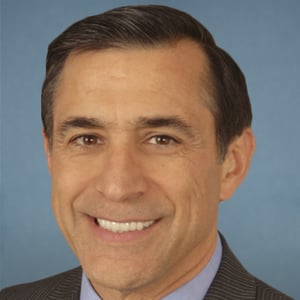
R-CA 48th District, United States House of Representatives
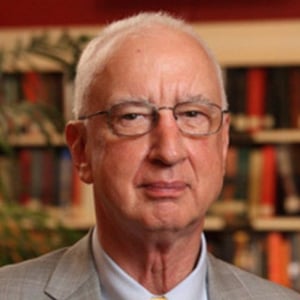
Former Chief Judge, United States Court of Appeals for the Federal Circuit
Judge Michel served for more than 22 years on the Federal Circuit, retiring on May 31, 2010. From December 25, 2004 until his retirement, he also discharged the duties of Chief Judge of this national court, serving simultaneously on the U.S. Judicial Conference -- the Judiciary's governing body -- and by appointment of the Chief Justice on its seven-judge Executive Committee.
He judged several thousand appeals and authored more than 800 opinions, one third concerning intellectual property law. Intellectual Asset Management magazine inducted him into its Hall of Fame and he was designated one of the 50 most influential leaders in intellectual property law in the world. His contributions were also recognized by lifetime achievement and similar awards by the American Intellectual Property Law Association (AIPLA); Intellectual Property Owners Education Foundation (IPO); the American Bar Association's Intellectual Property Section; Managing Intellectual Property magazine; the Sedona Conference; the Patent and Trademark Office Society (PTOS); the New York, Chicago, Philadelphia, and Los Angeles Intellectual Property Law Associations; and the William C. Connor, the Giles S. Rich, and the Richard Linn Intellectual Property American Inns of Court. In 2010 the Los Angeles IP Inn was renamed in his honor as the Paul R. Michel IP Inn.
Judge Michel received the Jefferson Medal, the Eli Whitney Award, and the Katz-Kiley Prize as well as Honorary Doctor of Law degrees from the Catholic University of America and the John Marshall Law School. He is a lifetime Member of Honore of FICPI, the international association of private practitioners of intellectual property law. Williams College granted him the Kellogg Award for "outstanding leadership in law and public service."
Judge Michel has written numerous articles on patent law and advocacy, taught related courses and master classes at George Washington University, the University of Akron, and John Marshall law schools, serving as well on their IP advisory boards and on counterpart boards at the universities of California (Berkley), Washington, and Maryland. He co-authored a casebook, Patent Litigation and Strategy (West, 1999) and an August 2010 editorial in the New York Times on strengthening the patent system to promote prosperity and create new jobs.
A frequent speaker at conferences and law schools during his judicial tenure and since, he retired from a lifetime appointment to be free to speak out on the national need for better patent policy and protection of intellectual property and the vital, unmet resource needs of the courts, the PTO, the International Trade Commission, and other IP-related agencies. He was appointed Distinguished Scholar in Residence by IPO, following his retirement. Judge Michel also consults for law firms and their clients in intellectual property litigations, conducting moot courts, mock trials, case evaluations, editing briefs, advising on strategy and providing mediation and arbitration services.
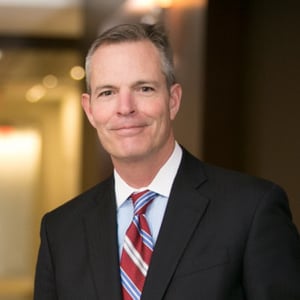
Partner, Balch & Bingham LLP
General Counsel to the Mississippi Manufacturers Association, Pepper Crutcher advises and advocates for a wide range of Southeast U.S., private sector employers. Pepper regularly defends employment litigation, including class and collective actions, and both defends and prosecutes unfair competition claims. Pepper’s labor law practice involves all types of NLRB proceedings, labor contract negotiation and arbitration. Pepper also helps employers, insurers, brokers, administrators and providers achieve Affordable Care Act compliance and appeal ACA tax assessments.
Mr. Crutcher has been rated "AV" by Martindale Hubbell and since 2004 has been selected to be included in Chambers USA America's Leading Lawyers for Business: The Client's Guide (Employment, Mississippi). He is also listed in The Best Lawyers in America for Intellectual Property Law and Labor & Employment Law.
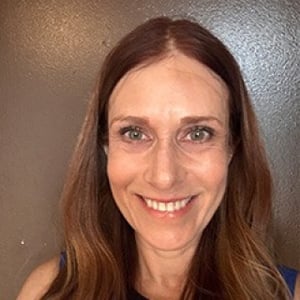
Labor-Management Relations Consultant, People Results
Rebecca Dormon is an experienced traditional labor and employment law specialist with over 25 years of experience managing and supervising employees. She is well-versed in training managers, supervisors, employees, and outside parties on various aspects of labor relations and labor law, and has successfully negotiated agreements between employers and unions. Rebecca is also skilled at engaging with employees to identify low morale issues or other problems, and helping employers develop programs or other solutions to proactively address employees’ issues with managers and other aspects of their workplace.
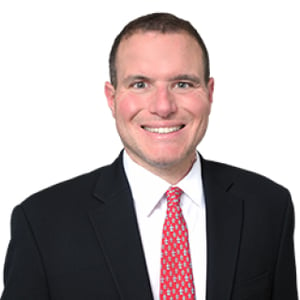
Shareholder, Littler
Bradford J. Kelley has a broad practice representing employers in employment anti-discrimination and wage and hour matters. He focuses on advising clients about emerging technologies, including artificial intelligence (AI), and their impact in the workplace.
Brad is an internationally recognized workplace AI authority. He advises clients on how to maximize the benefits of using AI in the workplace while minimizing potential legal and business risks. His deep background in this area provides employers with the tools and insights they need to develop, deploy, and monetize AI and other emerging technologies to bolster business operations and efficiency.

Judge, United States Court of Appeals, Sixth Circuit
Judge Readler earned his undergraduate and law degrees from the University of Michigan. After graduating, he served as a law clerk to Judge Alan Norris of the United States Court of Appeals for the Sixth Circuit. Judge Readler then began practicing law in the Columbus office of the international law firm Jones Day, eventually spending ten years as a partner in the firm’s Issues and Appeals Practice Group. While at Jones Day, Judge Readler appeared in state and federal trial and appellate courts around the country, most frequently the Supreme Court of Ohio and the Sixth Circuit. Judge Readler also successfully argued before the United States Supreme Court in McQuiggin v. Perkins on behalf of an inmate claiming actual innocence. His other pro bono representations include representing capital defendants before the Tenth Circuit and the Supreme Court of Ohio, as well as representing defendants sentenced to life in prison before the Sixth Circuit. While at Jones Day, Judge Readler traveled to Nairobi with Lawyers Without Borders to train Kenyan lawyers in prosecuting domestic violence cases, and he was also a recipient of the American Marshall Memorial Fellowship awarded by the German Marshall Fund of the United States. Following his career in private practice, Judge Readler served as Acting Assistant Attorney General for the Civil Division of the United States Department of Justice from 2017 to 2019. In that role, Judge Readler led and supervised over 1,000 lawyers in the Department’s largest litigating division, briefing and arguing several cases on behalf of the United States in federal courts across the country, including high-profile cases significant to the Administration and the Department. In March 2019, Judge Readler was confirmed to serve as a Circuit Judge on the Sixth Circuit. He resides in Columbus.
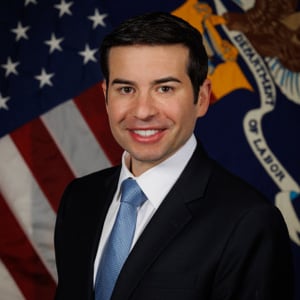
Deputy Secretary of Labor, U.S. Department of Labor
Keith E. Sonderling was confirmed by the U.S. Senate on March 12, 2025 to be the 38th United States Deputy Secretary of Labor.
As the United States Deputy Secretary of Labor, Sonderling is the second-highest-ranking official and serves as the Department's Chief Operating Officer, overseeing the agency’s $14 billion dollar budget and 16,000 employees. The Deputy Secretary oversees key operational functions such as: strategic planning; budget formulation; financial management; information technology; and human resource management. Additionally, the Deputy Secretary provides the leadership and management of DOL’s agencies necessary to support the Secretary and the Department’s mission.
Prior to becoming Deputy Secretary, he was previously confirmed by the United States Senate to serve as the Commissioner of the U.S. Equal Employment Opportunity Commission (EEOC) from September 2020 until August 2024. He also served as the Commission’s Vice-Chair from 2020-2021.
During his tenure at the EEOC, one of Sonderling’s highest priorities was ensuring that artificial intelligence and workplace technologies are designed and deployed consistent with long-standing laws. He published numerous articles on the benefits and potential harms of using artificial intelligence-based technology in the workplace and spoke globally on artificial intelligence’s impact on the workplace.
Sonderling previously served at the US Department of Labor as the Acting and Deputy Administrator of the U.S. Department of Labor’s Wage and Hour Division from 2017-2020. During his tenure, the Division accomplished back-to-back record-breaking enforcement collections and educational outreach events. Sonderling also oversaw the development and publication of large-scale deregulatory rules and authored numerous Opinion Letters, Field Assistance Bulletins, and All Agency Memorandums. Additionally, he was instrumental in developing the Division’s first comprehensive self-audit program, which collected more than $7 million for nearly eleven thousand workers.
Before his government service, Sonderling was a partner at one of Florida’s oldest and largest law firms, Gunster. At Gunster, he counseled employers and litigated labor and employment disputes. In 2012, then-Governor Rick Scott appointed Sonderling to serve as the Chair of the Judicial Nominating Committee for appellate courts in South Florida. Sonderling was also active in the community, serving on the Board of Directors for Morse Life Health System, the Boca Raton Chamber of Commerce, and Leadership Florida.
Sonderling also serves as a Professional Lecturer in the Law (Adjunct Professor) at George Washington University Law School, teaching employment discrimination.
Sonderling received his B.S., magna cum laude, from the University of Florida and his J.D., magna cum laude, from Nova Southeastern University.

Partner, Steptoe & Johnson LLP
Stewart Baker is a partner in the law firm of Steptoe & Johnson in Washington, D.C. From 2005 to 2009, he was the first Assistant Secretary for Policy at the Department of Homeland Security. His law practice covers cybersecurity, data protection, homeland security, and travel and foreign investment regulation; he has been awarded one patent.
Mr. Baker has been General Counsel of the National Security Agency and General Counsel of the commission that investigated WMD intelligence failures prior to the Iraq war. He is the author of Skating on Stilts, a book on terrorism, cybersecurity, and other technology issues; he also hosts the weekly Cyberlaw Podcast.

Global Technology Counsel, Sony Corporation of America
Christopher Ekren is Global Technology Counsel for Sony. Based out of Silicon Valley, he is currently the lead US in house counsel for key Sony advanced technology initiatives in the areas of Artificial Intelligence (Sony AI, Inc.) , Gene Therapy (Sony Biotechnology Inc.), Satellite Communications (Sony Space Communications Inc.), Semiconductor and Component Technologies (Sony Semiconductor Solutions of America), Sony’s Research Labs US operations, as well as engineering and product development activities part of Sony’s North American core electronics business. He has concurrent global roles supporting Sony’s technology standards, open source software and special technology projects.
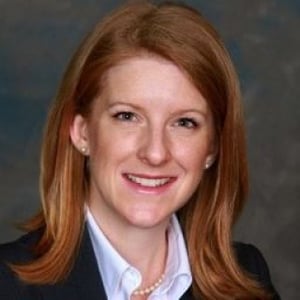
Director of United States Public Policy, Meta

Deputy Secretary of Agriculture, U.S. Department of Agriculture
Judge Stephen Alexander Vaden was appointed as the Deputy Secretary of the U.S. Department of Agriculture on July 7, 2025. Alongside Secretary Brooke L. Rollins, Deputy Secretary Vaden leads the Department’s operations and implements policies that support America’s food and farm systems. A native of Union City, Tennessee, Deputy Secretary Vaden brings expertise in agricultural policy, law, and rural development. Previously, he served as a judge on the U.S. Court of International Trade and as General Counsel of USDA. Throughout Deputy Secretary Vaden’s time as General Counsel, he led successful Supreme Court litigation, advanced regulatory reform, and supported the implementation of the 2018 Farm Bill. He is a graduate of Yale Law School and Vanderbilt University. A public servant with strong agricultural roots, Deputy Secretary Vaden is committed to revitalizing rural America and ensuring an abundant, affordable, and safe U.S. food supply.

Emanuel S. Heller Professor of Law, University of California at Berkeley; Thomas Smith Senior Research Fellow, The Civitas Institute, University of Texas at Austin
John Yoo is the Emanuel Heller Professor of Law at the University of California at Berkeley. He is also the Thomas Smith Senior Research Fellow, Civitas Institute, at the University of Texas at Austin. He is also a Nonresident Senior Fellow at the American Enterprise Institute.
His most recent book, The Politically Incorrect Guide to the Supreme Court, co-authored with Robert Delahunty, was published in 2023. Professor Yoo’s other books include Defender-in-Chief: Trump’s Fight for Presidential Power; Striking Power: How Cyber, Robots, and Space Weapons Change the Rules for War; Point of Attack: Preventive War, International Law, and Global Welfare; and Crisis and Command: A History of Executive Power from George Washington to George Bush.
He is a co-author of volumes 1 and 2 of R. Rossum, G. Tarr, V. Munoz & J. Yoo American Constitution Law (Routledge, 2026), and a co-editor of the eight-volume series on the 250th anniversary of the American Revolution, We Hold These Truths, with Yuval Levin and Adam White of the American Enterprise Institute.
Professor Yoo has published more than 100 articles in academic journals on subjects including national security, constitutional law, international law, and the Supreme Court. He also regularly contributes to the editorial pages of the Wall Street Journal, New York Times, Washington Post, Los Angeles Times, and National Review, among others.
Professor Yoo has served in all three branches of government. He was an official in the U.S. Department of Justice, where he worked on national security and terrorism issues after the 9/11 attacks. He served as general counsel of the U.S. Senate Judiciary Committee. He has been a law clerk for Supreme Court Justice Clarence Thomas and federal appeals Judge Laurence Silberman. He has been a visiting professor at the University of Texas at Austin’s School of Civic Leadership, Seoul National University, the Interdisciplinary Center Herzliya, Keio University, Trento University, the University of Chicago, and the Free University of Amsterdam.
Professor Yoo supervises the Public Law and Policy Program and the California Constitution Center. He also serves on the boards of Founding Forward, the Washington Legal Foundation, the Pacific Legal Foundation, the Ulysses Grant Institute, the Federalist Society’s Separation of Powers and Federalism Division, the Universidad Cientifica del Sur Law School, and the Asia-Pacific Law Institute at Seoul National University. He is a winner of the Federalist Society’s Paul Bator award and the Heritage Foundation’s Edwin Meese III Originalism Lectureship.
Professor Yoo graduated from Yale Law School and summa cum laude from Harvard College.
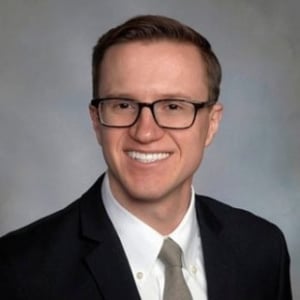
Chief Counsel for the Administrative State, Regulatory Reform, and Antitrust, House Committee on the Judiciary
Adam Cella is currently the Chief Counsel for the Administrative State, Regulatory Reform, and Antitrust at the House Committee on the Judiciary. Formerly, he was an attorney-advisor at the U.S. Federal Trade Commission. Prior to joining the FTC, he was an associate at Axinn, Veltrop & Harkrider LLP.
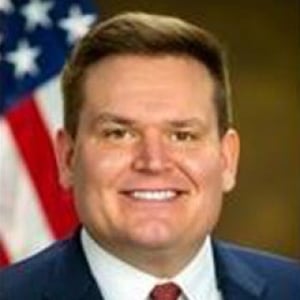
Chief Counsel, Senate Judiciary Committee
Thomas DeMatteo is Chief Counsel on the Senate Judiciary Committee to Senator Mike Lee. He previously served as counsel to the Assistant Attorney General of the Department of Justice Antitrust Division, where he worked closely with leadership and staff on civil merger and non-merger matters across numerous industries including, large technology platforms, defense, finance, and consumer products.
Mr. DeMatteo joined the Antitrust Division through the Attorney General’s Honors Program as a Trial Attorney and previously worked at an international law firm, where he advised clients on antitrust and competition matters. He is a graduate of Washington and Lee University School of Law and the University of Rochester, where he was a member of the football team and selected to the Liberty League All-Academic Team.

Chief Judge, United States Court of Appeals, Fifth Circuit
Jennifer Walker Elrod is the Chief Judge of the United States Court of Appeals for the Fifth Circuit. She was nominated to the Fifth Circuit in 2007, and she served as a Circuit Judge on the court until assuming the role of Chief Judge in October 2024. Prior to serving as a Circuit Judge, Chief Judge Elrod was appointed and then twice elected Judge of the 190th District Court of Harris County, Texas, where she spent over five years presiding over more than 200 jury and non-jury trials.
Chief Judge Elrod graduated cum laude from Harvard Law School, where she was an active member of the Harvard Federalist Society, an Ames Moot Court finalist, and a Senior Editor of the Harvard Journal of Law & Public Policy. She clerked for the Honorable Sim Lake in the Southern District of Texas. Before serving as a judge, Chief Judge Elrod worked in private practice, focusing on civil litigation, antitrust, and employment matters.
She has been repeatedly recognized for her work as a jurist, as well as for her pro bono work and contributions to the community. She has been named the 2022 Texas Review of Law & Politics’ Jurist of the Year, the 2018 Harvard Federalist Society’s Alumni of the Year, the 2016–17 Texas Association of Civil Trial and Appellate Specialists’ Appellate Judge of the Year, and the 2008 Mexican-American Bar Association of Texas’s Judge of the Year.
Chief Judge Elrod is actively engaged in the academic and legal communities. Chief Judge Elrod currently serves on the Board of Directors and as the Jurist-in-Residence at the South Texas College of Law, where she teaches civil procedure and First Amendment law. She is also a member of the American Law Institute and of the Board of Advisors for the Harvard Journal of Law & Public Policy, and she is a former member of the Board of Regents of her alma mater, Baylor University, and the Board of Visitors at Brigham Young University Law School. She previously served as the Chair of the Codes of Conduct Committee for the Judicial Conference of the United States. She has also served as the M.D. Anderson Visiting Public Service Professor at the Texas Tech University School of Law and as Jurist-in-Residence at Brigham Young University Law School, and she has taught legal writing at the University of Houston Law Center. She presented the Lewis F. Powell, Jr. Distinguished Lecture at the Washington and Lee University School of Law and is a frequent speaker on the topics of trial and appellate procedure, ethics, employment law, and constitutional law. Chief Judge Elrod also serves on the board of the Garland R. Walker Inn of Court, and co-produces an annual musical CLE, for which her pupilage group has won multiple national awards.
Chief Judge Elrod’s publications include: Trial by Siri: AI Comes to the Courtroom; Don’t Mess with Texas Judges: In Praise of the State Judiciary; For Good: Enriching Your Practice and Your Life Through Pro Bono and Community Service; Is the Jury Still Out?: A Case for the Continued Viability of the American Jury; and W(h)ither the Jury? The Diminishing Role of the Jury Trial in our Legal System.
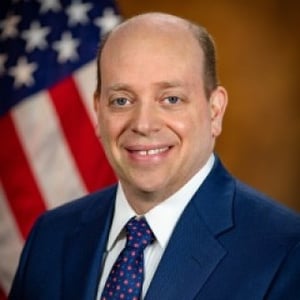
Deputy Assistant Attorney General, Antitrust Division, United States Department of Justice
Michael Kades is a Deputy Assistant Attorney General for the Antitrust Division with a focus on civil enforcement.
Prior to coming to the US Department of Justice, Michael was director for markets and competition policy at the Washington Center for Equitable Growth. His research focused on competition and antitrust enforcement, with an emphasis on consumers, wages, equality, and innovation. He testified before Congress multiple times and authored several reports and articles on antitrust policy.
Prior to joining Equitable Growth, Michael worked as antitrust counsel for Sen. Amy Klobuchar (D-MN), on detail to the from the Federal Trade Commission. He worked on the CREATES Act, the Holocaust Expropriated Art Recovery Act, and the Trade Secrets Protection Act, all of which Congress enacted. He was also the primary staffer on the Merger Filing Fee Modernization Act and the Consolidation Prevention and Competition Protection Act.
Michael spent 20 years investigating and litigating antitrust actions as an attorney at the Federal Trade Commission. From 2013-15, he was the Deputy Chief Trial Counsel for the Bureau of Competition where he participated in a number of merger investigations and litigations. From 2006-2013, served as attorney advisor to Chairman Jon Leibowitz. He oversaw the Commission’s strategy to address anticompetitive patent settlements, worked on the 2010 horizontal merger guidelines, and advised the Chairman on antitrust issues. From 1997-2006, he was an attorney in the Health Care Products Services. He argued In re Schering Plough and In re South Carolina Board of Dentistry before the Commission as well as appearing in federal court. He played a leading role in FTC v. Mylan in which the Commission obtained $100 million in disgorgement. While at the Commission, he received the Chairman’s Award and the Paul Rand Dixon Award.
Kades is a graduate of Yale University and the University of Wisconsin Law School.
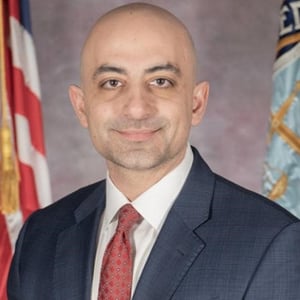
Director, Bureau of Consumer Protection, Federal Trade Commission
Chris Mufarrige served in the first Trump Administration as a Senior Adviser to the Director and Deputy Director of the Consumer Financial Protection Bureau, advising on enforcement, rulemaking, and supervisory exams relating to the country’s largest banks and nonbank financial institutions. Most recently, he was Commissioner Melissa Holyoak’s Chief of Staff and Attorney Adviser. He has also worked at private law firms and as an in-house lawyer. In his free time, Mufarrige taught a class on financial services and consumer protection at George Mason University’s Antonin Scalia Law School.
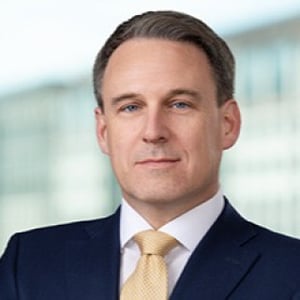
Chair, Global Antitrust Law Practice Group, Morrison Foerster
Alex Okuliar is Co-Chair of Morrison Foerster’s Global Antitrust Law Practice Group. He is the former Deputy Assistant Attorney General for Civil Antitrust Enforcement at the U.S. Department of Justice and a former advisor at the Federal Trade Commission.
Alex’s practice spans merger review, civil litigation, and criminal investigations. Over his twenty-five-year career, Alex has worked on nearly one thousand deals. He has deep experience guiding clients through the complex global merger clearance process and has litigated agency merger challenges through trial. He has also helped clients succeed in a wide range of federal and state cases, including class actions and private party disputes alleging price fixing, monopolization, group boycotts, market allocation, and tying. His understanding of the agency processes from the inside allows him to offer expert, timely, and practical advice to clients navigating merger and conduct investigations by the U.S. Department of Justice, the Federal Trade Commission, state Attorneys General, and foreign agencies. Alex’s work has been recognized by leading industry publications such as Chambers, The Legal 500 U.S., and Global Competition Review.
Outside of client work, Alex is a prolific thought leader and was recognized as a 2024 Top Author for Antitrust & Trade Regulation by JD Supra’s Readers’ Choice Awards. He currently serves as the co-chair of the ABA Antitrust Law Section’s Joint Conduct Committee and is the former chair of the Section’s Intellectual Property Committee and co-chair of the 2023 Antitrust Fall Forum on Artificial Intelligence. He is also a member of the Corporations, Securities & Antitrust Executive Committee of The Federalist Society for Law and Public Policy Studies.
Before law school, Alex co-founded and sold an online technology company. Alex received his B.S. in economics and B.A. with distinction in history from the Wharton School of the University of Pennsylvania and his J.D. from Vanderbilt University Law School.

Founder & CEO, Edelson PC
Jay Edelson is the founder of Edelson PC. He is considered one of the nation’s leading plaintiff’s lawyers, with his firm having helped secure over $45 billion in settlements and verdicts on behalf of classes, individuals, and governmental entities. Law360 described Jay as a “Titan of the Plaintiff’s Bar.” Jay has been recognized as one of “America’s top trial lawyers” in the mass action arena. LawDragon named him one of the top Plaintiff Financial Lawyers in the country. He has been called “probably the best known, and most innovative, consumer privacy lawyer on the planet,” with he and his firm holding records for the largest trial verdict in a consumer privacy case ($925m), the largest consumer privacy settlement ($650m) and the largest TCPA settlement ($76m).
Jay has been appointed to represent state and local regulators on some of the largest issues of the day, ranging from opioids suits against pharmaceutical companies, to environmental actions against polluters, to breaches of trust against energy companies and for-profit hospitals, to privacy suits against Google, Facebook, and others.

Richard and Frances Mallery Professor of Law and Faculty Director, Constitutional Law Center, Stanford Law School
Michael W. McConnell is the Richard and Frances Mallery Professor and Faculty Director of the Constitutional Law Center at Stanford Law School, and a Senior Fellow at the Hoover Institution. From 2002 to 2009, he served as a Circuit Judge on the United States Court of Appeals for the Tenth Circuit. He was nominated by President George W. Bush, a Republican, and confirmed by a Democratic Senate by unanimous consent. McConnell has previously held chaired professorships at the University of Chicago and the University of Utah, and visiting professorships at Harvard and NYU. He teaches courses on constitutional law, constitutional history, First Amendment, and interpretive theory. He has published widely in the fields of constitutional law and theory, especially church and state, equal protection, and separation of powers. His book, “The President Who Would Not Be King: Executive Power Under the Constitution,” was published by Princeton University Press in 2020, based on the Tanner Lectures in Human Values, which he delivered at Princeton in 2019. His latest book, co-authored with Nathan Chapman, “Agreeing to Disagree: How the Establishment Clause Protects Religious Diversity and Freedom of Conscience,” was published by Oxford University Press in mid-2023. McConnell has argued sixteen cases in the United States Supreme Court, most recently Carney v. Adams (2020). defending a provision of the Delaware Constitution requiring political balance on that state’s courts. More recently, he was co-counsel in Gonzalez v. Google. He earned his B.A. from Michigan State University and his J.D. from the University of Chicago, and has received honorary degrees from Notre Dame University and Michigan State. He served as law clerk to Supreme Court Justice William J. Brennan, Jr. and D.C. Circuit Chief Judge J. Skelly Wright. He has been Assistant General Counsel of the Office of Management & Budget, Assistant to the Solicitor General of the Department of Justice, and a member of the President’s Intelligence Oversight Board. He is Senior of Counsel to the law firm Wilson, Sonsini, Goodrich & Rosati, and is co-chair of Meta’s Oversight Review Board.

Judge, United States Court of Appeals, Second Circuit
Judge Menashi was appointed to the U.S. Court of Appeals for the Second Circuit on November 14, 2019. Previously, he served as special assistant and associate counsel to the President in the White House and as acting general counsel at the U.S. Department of Education. He was assistant professor of law at Scalia Law School, George Mason University, where he taught administrative law and civil procedure, and a research fellow at New York University School of Law and Georgetown University Law Center. He was also a partner at Kirkland & Ellis LLP in New York, where he practiced appellate and commercial litigation, and served as a law clerk to Justice Samuel Alito on the Supreme Court of the United States and to Judge Douglas Ginsburg on the U.S. Court of Appeals for the District of Columbia Circuit. He graduated from Stanford Law School, where he was elected to Order of the Coif and served as senior articles editor of the Stanford Law Review, and from Dartmouth College, where he was elected to Phi Beta Kappa.
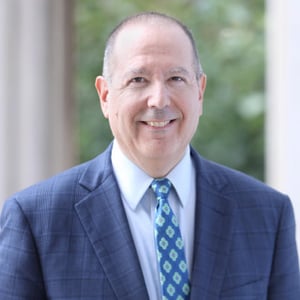
Dean Emeritus and Harvey R. Miller Professor of Law & Economics, Columbia Law School
David Schizer is Dean Emeritus and Harvey R. Miller Professor of Law & Economics at Columbia Law School. He served as Dean from 2004 to 2014, and as CEO of the American Jewish Joint Distribution Committee, a global Jewish humanitarian organization, from 2017 to 2019. He is the author of How to Save the World in Six (Not So Easy) Steps: Bringing Out the Best in Nonprofits. Schizer serves on the Board of Visitors of the Federalist Society. He is Second Vice Chair of the Tax Section of the New York State Bar Association, a co-founder and co-chair of the Richman Center for Law, Business, and Public Policy at Columbia University, and a co-founder and co-chair of the Center for Israeli Legal Studies at Columbia Law School. Schizer served as a law clerk to Justice Ruth Bader Ginsburg on the U.S. Supreme Court and Judge Alex Kozinski on the U.S. Court of Appeals for the Ninth Circuit.
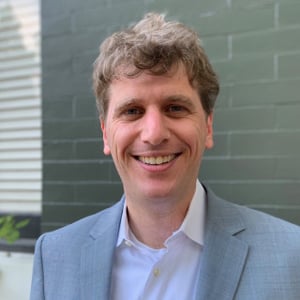
Director of Research, American Economic Liberties Project
Matt Stoller is a public intellectual who writes about the American anti-monopoly
tradition. He is the author of the Simon and Schuster book Goliath: The Hundred Year
War Between Monopoly Power and Democracy. Stoller is the Director of Research at
the American Economic Liberties Project. He publishes an email newsletter called BIG.
Stoller is a former policy advisor to the Senate Budget Committee, and worked in the House of Representatives on the Dodd–Frank Wall Street Reform Act.
He has lectured on competition policy and media at Columbia University, Harvard Law, Duke Law, Bertelsmann Foundation, Vrije Universiteit Brussel, West Point and the National Communications Commission of Taiwan. His writing has appeared in the Washington Post, the New York Times, Fast Company, Foreign Policy, the Guardian, Vice, The American Conservative, and the Baffler.
He has also produced for MSNBC and starred in a short-lived television show on FX called Brand X with Russell Brand.
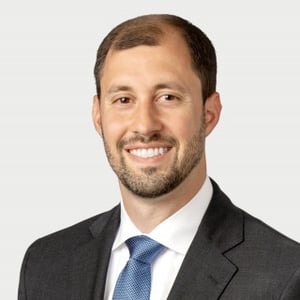
Partner, Gibson, Dunn & Crutcher LLP
Russell Balikian is a partner in the Washington, D.C. office of Gibson, Dunn & Crutcher. He practices in the firm’s Appellate & Constitutional Law Group and Administrative Law & Regulatory Practice Group. He represents clients in high-stakes litigation before the Supreme Court of the United States and other federal and state courts across the country, as well as in major proceedings before administrative agencies. Russell was named “One to Watch” in Appellate Practice by Best Lawyers in 2023 and a “Rising Star” in Telecommunications by Law360 in 2024.
Russell has extensive experience in administrative law, especially in the telecom and technology sectors. He regularly represents clients challenging or supporting agency rules and orders, and he defends companies against enforcement actions by federal regulators, such as the Federal Communications Commission (FCC) and the Consumer Financial Protection Bureau (CFPB). Russell brings the capabilities of an appellate attorney to all stages of the case, from building the record before the agency to litigating the case in court.
Russell also has nationwide experience litigating appeals and dispositive motions in high-profile matters, including putative class actions, major commercial disputes, and mass-tort cases. He has represented clients at every level of the federal and state judiciary. Russell also advises clients on appellate strategy and critical legal issues.
Russell clerked for Justice Clarence Thomas on the Supreme Court of the United States, Judge Gregory G. Katsas of the U.S. Court of Appeals for the D.C. Circuit, and Judge Diane S. Sykes of the U.S. Court of Appeals for the Seventh Circuit. He received his law degree from Yale Law School, where he was Co-Editor-in-Chief of the Yale Law & Policy Review. He graduated summa cum laude from Taylor University with a bachelor’s degree in both Political Science and Biblical Literature.
Russell is admitted to practice law in the District of Columbia.
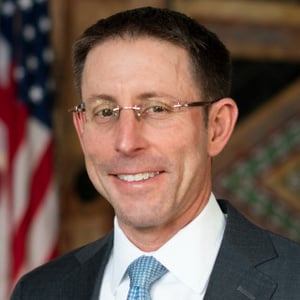
Judge, United States Court of Appeals, Ninth Circuit
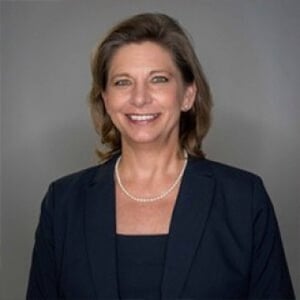
General Counsel, Senior Litigation Counsel, New Civil Liberties Alliance
Zhonette brings a quarter-century of litigation experience to NCLA. After a federal clerkship, she spent many years litigating at large law firms in Washington, D.C., and Denver, Colorado, before beginning public interest litigation in 2018.
Zhonette has litigated in state, federal, and international venues and in matters ranging from pro bono custody issues to multi-district and class action cases for Fortune 100 companies. Zhonette spent the first part of her career focused on high-stakes complex commercial litigation and white-collar defense. Since changing her legal practice to taming the Administrative State, Zhonette has focused on the Administrative Procedure Act, natural resources, takings issues and other constitutional claims.
Zhonette is a graduate of Georgetown University Law Center and is admitted to practice in the District of Columbia, the State of Colorado, the Commonwealth of Virginia, and various federal courts.
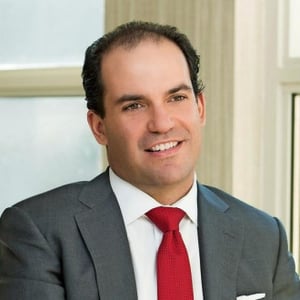
Partner, Latham & Watkins LLP
Roman Martinez is a partner in the Washington, D.C. office of Latham & Watkins. As a member of the firm’s Supreme Court and Appellate Practice, he focuses primarily on appeals in the Supreme Court of the United States, the United States Courts of Appeals, and state appellate courts. Mr. Martinez has handled civil and criminal matters involving a wide range of constitutional, statutory, and administrative law issues, and he has argued cases in the Supreme Court and the D.C., Sixth, Ninth, and Federal Circuits, among other courts.
Mr. Martinez’s appellate practice encompasses civil and criminal matters spanning virtually all areas of law. He recently rejoined Latham after serving as an Assistant to the Solicitor General at the US Department of Justice. In that role, he represented the United States in litigation before the Supreme Court and advised the Solicitor General on the government’s appellate litigation throughout the country.
Mr. Martinez has personally argued seven cases in the Supreme Court, including important cases in the fields of patent law, criminal law, civil rights, and civil procedure. He has filed over 75 briefs in the Supreme Court involving a wide range of legal issues, including administrative, tax, securities, intellectual property, criminal, environmental, education, civil rights, immigration, and First Amendment law.
Over the past year, Mr. Martinez has led Latham appellate teams in cases involving the Administrative Procedure Act, securities, ERISA, products liability, and employment law. Earlier this year, he successfully persuaded the Supreme Court to reject the State of Connecticut’s high-profile effort to reinstate the murder conviction of Michael Skakel. He frequently consults with clients to develop creative approaches to difficult legal questions that arise in and out of litigation.
Mr. Martinez’s extensive pro bono practice focuses chiefly on administrative law challenges to unlawful agency action by the Department of Veterans Affairs, as well as on criminal defense appeals. In 2018, he persuaded the Supreme Court to grant certiorari on behalf of a veteran seeking judicial review of an unlawful regulation promulgated by the Department of Veterans Affairs.
Before joining Latham, Mr. Martinez served as a law clerk to Chief Justice John G. Roberts of the Supreme Court of the United States and to then Judge Brett M. Kavanaugh of the D.C. Circuit.
From 2002 to 2005, Mr. Martinez served as an advisor on the Iraqi political and constitutional process, in various roles at the White House, at the US Embassy and Coalition Provisional Authority in Iraq, and at the Department of Defense. He received the Secretary of Defense Medal for the Global War on Terrorism and the US Department of Defense Distinguished Public Service Award for his service in Iraq.
Mr. Martinez is a member of the Edward Coke Appellate Inn of Court, and he serves on the US Chamber of Commerce's Administrative Law & Government Litigation Advisory Committee. He previously served as a member of the D.C. Circuit’s Advisory Committee on Procedures, and he now serves on the US District Court for the District of Columbia’s Committee on Grievances. His writing has appeared in The Wall Street Journal, The Washington Post, and other publications. He has appeared as a guest on the PBS NewsHour and other television programs to discuss the Supreme Court.
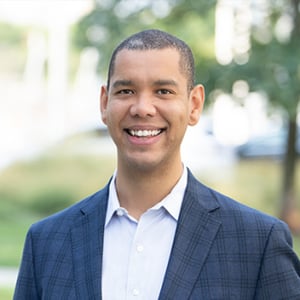
Partner, Williams & Connolly
Luke McCloud’s practice focuses on complex civil matters, with an emphasis on patent litigation. Luke has tried cases to judgment in federal and state courts. His clients have included global pharmaceutical and medical device manufacturers, leading technology companies, financial institutions, law firms, and individuals. In 2023, Luke was recognized as a “Leading Lawyer” by The Legal 500, a “Rising Star” by Law360 and The National Law Journal, and among Bloomberg Law’s “40 Under 40” list. He has also been named a “Rising Star—General Commercial Disputes” by The Legal 500 (2020-2022), and a Managing IP “Rising Star” (2020).
Luke is also an experienced appellate advocate. He has argued twice in the U.S. Supreme Court and in multiple federal courts of appeals, and has filed dozens of briefs in high-stakes cases throughout the federal system. His appellate oral advocacy was praised by The Recorder as “poised and polished.” In the October Term 2014, Luke served as a law clerk to Justice Sonia M. Sotomayor on the Supreme Court of the United States. He previously clerked for then Judge Brett M. Kavanaugh of the United States Court of Appeals for the District of Columbia Circuit and Judge Paul V. Niemeyer of the United States Court of Appeals for the Fourth Circuit.
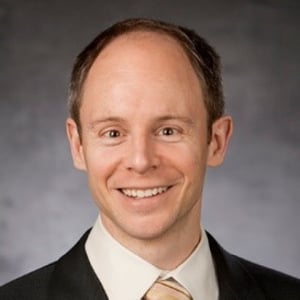
Professor of Computer Science & Director, Foundations of Cooperative AI Lab (FOCAL), Carnegie Mellon University
Vincent Conitzer is the Director of the Foundations of Cooperative AI Lab (FOCAL) and a Professor of Computer Science with affiliate appointments in Machine Learning and Philosophy. Prior to this he was the Kimberly J. Jenkins Distinguished University Professor of New Technologies and Professor of Computer Science, Professor of Economics, and Professor of Philosophy at Duke University. He is also Head of Technical AI Engagement at the Institute for Ethics in AI, and Professor of Computer Science and Philosophy, at the University of Oxford. He received Ph.D. (2006) and M.S. (2003) degrees in Computer Science from Carnegie Mellon University, and an A.B. (2001) degree in Applied Mathematics from Harvard University. Conitzer works on artificial intelligence (AI). Much of his work has focused on AI and game theory, for example designing algorithms for the optimal strategic placement of defensive resources. More recently, he has started to work on AI and ethics: how should we determine the objectives that AI systems pursue, when these objectives have complex effects on various stakeholders?
Conitzer has received the 2021 ACM/SIGAI Autonomous Agents Research Award, the Social Choice and Welfare Prize, a Presidential Early Career Award for Scientists and Engineers (PECASE), the IJCAI Computers and Thought Award, an NSF CAREER award, the inaugural Victor Lesser dissertation award, an honorable mention for the ACM dissertation award, and several awards for papers and service at the AAAI and AAMAS conferences. He has also been named a Guggenheim Fellow, a Sloan Fellow, a Kavli Fellow, a Bass Fellow, an ACM Fellow, a AAAI Fellow, and one of AI's Ten to Watch. He has served as program and/or general chair of the AAAI, AAMAS, AIES, COMSOC, and EC conferences. Conitzer and Preston McAfee were the founding Editors-in-Chief of the ACM Transactions on Economics and Computation (TEAC).
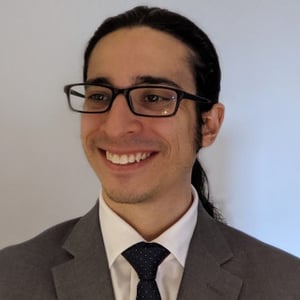
Senior Policy Counsel, Public Knowledge
Nicholas P. Garcia is a Senior Policy Counsel at Public Knowledge, focusing on emerging technologies, intellectual property, and closing the digital divide.
Before joining Public Knowledge, Nick served as an Assistant District Attorney in the Investigations Division of the Bronx County District Attorney’s Office, where he investigated and prosecuted cybercrime, fraud, grand larceny, and organized crime. He previously worked as a Legal Intern at Public Knowledge and as a Student Attorney for the Communications & Technology Law Clinic at Georgetown University Law Center’s Institute for Public Representation.
Nick received his J.D. from Georgetown University Law Center, his M.A. in Ethics and Society from Fordham University’s Center for Ethics Education, and his B.A. in cursu honorum in Philosophy from Fordham University, where he was a member of the Phi Sigma Tau Honor Society.
Nick is a native New Yorker, and an unabashed nerd who loves video games, science fiction, and tabletop RPGs.
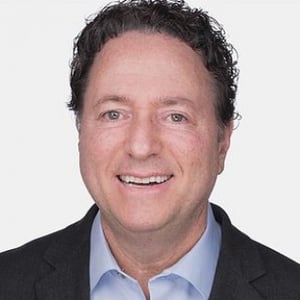
President, Committee for Justice
Curt Levey is President of the Committee For Justice, an organization devoted to advancing constitutionally limited government and individual liberty. He is a veteran of Supreme Court and other judicial confirmation battles and serves on the executive committee of the Federalist Society's Civil Rights Practice Group.
After graduating Harvard Law School with honors and clerking for the U.S. Court of Appeals for the Sixth Circuit, Mr. Levey served as Director of Legal & Public Affairs at the Center for Individual Rights (CIR). There he worked on landmark Supreme Court cases, including the University of Michigan affirmative action cases and the successful constitutional challenge to the Violence Against Women Act. After CIR, Mr. Levey headed the Title IX policy group at the U.S. Department of Education.
Before attending law school, Mr. Levey earned an M.S. and B.A. in computer science from Brown University and worked in the field of artificial intelligence (AI). He invented a new type of AI technology, for which he wrote a successful patent application.

Founder, Chairman, and CEO, Louis D. Brandeis Center for Human Rights Under Law
Hon. Kenneth L. Marcus is an internationally recognized expert in civil and human rights, as well as a leader in the fight against anti-Semitism on and off university campuses. He is the Founder, Chairman, and CEO of The Louis D. Brandeis Center for Human Rights Under Law, the leading civil rights legal organization fighting against anti-Semitism. The New York Times has called him “The Man Who Helped Redefine Campus Anti-Semitism.” He been described, in that paper, as “the single most effective and respected force” to combat anti-Semitism.
During his public service career, Marcus served as Assistant U.S. Secretary of Education for Civil Rights; Staff Director at the U.S. Commission on Civil Rights; and General Deputy Assistant U.S. Secretary of Housing and Urban Development for Fair Housing and Equal Opportunity.
In academia, he serves as Professorial Lecturer in Law at George Washington University. He formerly held the Lillie and Nathan Ackerman Chair in Equality and Justice in America at the City University of New York’s Bernard M. Baruch College, served as Visiting Research Professor of Political Science at Yeshiva University, and was a Board of Visitors member George Mason University and Distinguished Senior Fellow at that university’s law school. He is a member of the editorial board of the Journal of Contemporary Antisemitism and previously served as Associate Editor of the Journal for the Study of Anti-Semitism.
Marcus is also author of The Definition of Anti-Semitism (Oxford University Press) and Jewish Identity and Civil Rights in America (Cambridge University Press). He has published widely in academic journals as well as in more popular venues such as The Wall Street Journal, Washington Post, Newsweek, USA Today, and Politico. He is a graduate of Williams College and the University of California at Berkeley School of Law.
Earlier in his career, he was a litigation partner in two major law firms, where he conducted complex commercial and constitutional litigation. He also serves as Chairman emeritus of the Executive Committee of the Federalist Society for Law & Public Policy Civil Rights Practice Group.
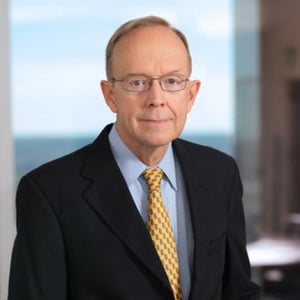
Former Deputy Attorney General for Virginia
Kennerly Davis has over forty years of experience in corporate management, public service, and the private practice of law. He has held senior executive positions in a Fortune 500 electric and gas company. He has served as Deputy Attorney General for the Commonwealth of Virginia, and as a legislative aide to a U.S. Senator and a U.S. Congressman. He practiced law for 25 years with Hunton Andrews Kurth LLP.
Davis is active in the Federalist Society as a member of the Regulatory Process Working Group of the Regulatory Transparency Project, and as a member of the Execuitve Committee of the Administrative Law and Regulation Practice Group. He is active in the national Alumni Free Speech Alliance, and involved in AFSA-chapter initiatives, including litigation, to publicize and correct the serious legal problems created by university Diversity, Equity, and Inclusion programs and the anonymous bias reporting systems used to enforce those DEI programs.
Davis writes and speaks on a wide variety of topics, including those related to the Founding of America, the natural rights foundation of our Republic, the constitutional rule of law, equal protection and free speech, DEI programs and bias reporting systems, capitalism, regulation and regulatory reform, and economic development. His articles have appeared in The Wall Street Journal, the Washington Examiner, the Richmond Times-Dispatch, The Federalist Society Review, the FedSoc Blog, Real Clear Energy, Townhall, the Daily Caller, reports of the Center for Strategic & International Studies, and other publications. He appears frequently on radio, podcasts, and television.
Davis graduated with honors from Cornell University with an A.B. degree in Government. He earned an M.A. degree from Pembroke College, Oxford, in Philosophy, Politics, and Economics. He was awarded a J.D. degree from Harvard Law School, and an M.B.A. degree from Virginia Commonwealth University.
Davis lives in Richmond, Virginia. He can be contacted by email: j.kendavis@verizon.net, and by phone: (804) 624-8525.
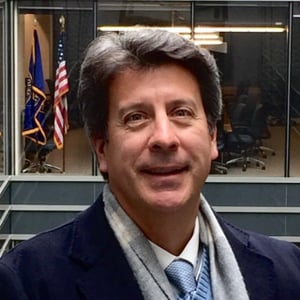
Senior Counsel, Committee on Oversight and Government Reform, U.S. House of Representatives
Daniel Flores is a Senior Counsel on the Republican staff of the Committee on Oversight and Government Reform, U.S. House of Representatives. Prior to his current position, he served in the House as Chief Counsel for the House Judiciary Committee's Subcommittee on Regulatory Reform, Commercial and Antitrust Law. Before coming to the House, he served as an Acting Associate Deputy General Counsel for the U.S. Environmental Protection Agency and in other roles in EPA's Office of General Counsel, as a Senior Trial Attorney for the U.S. Department of Justice, Environment and Natural Resources Division, and as an attorney in private practice in Washington, D.C. He serves as a House liaison to the Administrative Conference of the United States and has served on the Council of the American Bar Association’s Section on Administrative Law & Regulatory Practice.

Founder & CEO, Norm AI
John Nay is the founder of Norm Ai after a decade of research at the intersection of AI & Law, most recently at Stanford. He was also the founding CEO of Brooklyn Investment Group, an AI-powered investment software platform and SEC Registered Investment Adviser, where he is now Chairman.
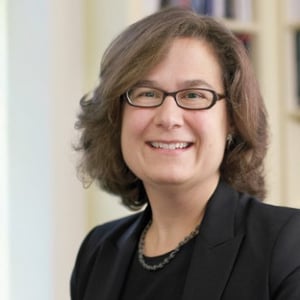
Segal Family Professor of Regulatory Law and Policy, New York University School of Law
Catherine Sharkey is the Segal Family Professor of Regulatory Law and Policy at NYU School of Law. She is a leading authority on torts, products liability, artificial intelligence in federal administrative agencies, public nuisance, punitive damages, and federal preemption of state tort law. She is a Senior Fellow of the Administrative Conference of the United States (ACUS), a member of its Roundtable on Artificial Intelligence in Federal Agencies, author of Algorithmic Tools in Retrospective Review (2023) and co-author of Government by Algorithm: Artificial Intelligence in Federal Administrative Agencies (2020). Sharkey is co-author of Cases and Materials on Torts (13th edition, 2024) and Business, Defamation, and Privacy Torts (1st ed., forthcoming 2025), and co-editor of Foundations of Tort Law (2nd edition, 2009). She is an elected member of the American Law Institute and an adviser to the Restatement Third, Torts: Liability for Economic Harm and Restatement Third, Torts: Remedies projects.

Head of AI Policy, Abundance Institute
Neil Chilson is the Head of AI Policy at the Abundance Institute. Prior to this position, he served as a Senior Research Fellow at the Center for Growth and Opportunity. Chilson is a lawyer, computer scientist, and author of the book “Getting Out of Control: Emergent Leadership in a Complex World.”
Chilson was previously the senior research fellow for Technology and Innovation at Stand Together, where he guided efforts to understand and promote the legal and cultural paradigms that best enable people to discover, innovate, and improve all our lives.
Before Stand Together, Chilson was the Chief Technologist at the Federal Trade Commission, where he focused on the economics of privacy and blockchain-related issues. Previously, he was an attorney advisor to Acting FTC Chairman Maureen K. Ohlhausen. In both roles he advised Chairman Ohlhausen and worked with staff on nearly every major technology-related case, report, workshop, or other FTC proceeding since January 2014. Neil joined the FTC from telecom firm Wilkinson Barker Knauer. Neil is frequently quoted by the press and his work has appeared in numerous news outlets, including The Wall Street Journal, The Washington Post, USAToday, and Newsweek. Neil has a J.D. from The George Washington Law School, a M.S. in computer science from University of Illinois, Urbana-Champaign, and a B.S. in computer science from Harding University.

Senior Legal Fellow, The Future of Free Speech, Vanderbilt University
Ashkhen Kazaryan is a renowned expert in First Amendment law and technology policy, specializing in digital free speech, artificial intelligence, and the intersection of constitutional rights with emerging technologies. As a Senior Legal Fellow at the Future of Free Speech at Vanderbilt University, she leads initiatives to protect free expression and shape policies that uphold the First Amendment in the digital age.
Previously, Ashkhen was the lead for North and Latin America on the content regulation team at Meta, where she also served as the company’s policy lead on Section 230. She has also been a Senior Fellow at Stand Together and the Director of Civil Liberties at TechFreedom, where she worked extensively on platform liability, free speech, and internet governance. She is currently Fellow for the First Amendment at the Freedom Forum.
Ashkhen earned her specialist in law degree summa cum laude from Lomonosov Moscow State University in 2012 and later received a master of law degree from Yale Law School in 2016. During her time at Yale, she contributed as an articles editor for the Yale Journal of Law and Feminism, a senior editor for the Yale Law and Policy Review, and an editor for the Yale Journal of Law and Technology, while also serving as co-chair of the Public Interest Fellowship.
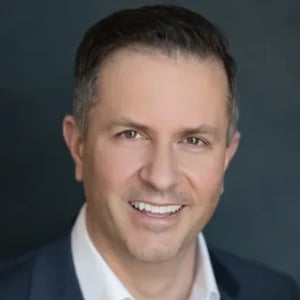
Founder and CEO, Chamber of Progress
Adam Kovacevich (Kuh-VACK-uh-VITCH) is the Founder and CEO of Chamber of Progress, a center-left tech industry policy coalition promoting technology’s progressive future.
Chamber of Progress – which Adam founded in March 2021 – works to ensure that all Americans benefit from technological leaps, and that the tech industry operates responsibly and fairly. It has been called “one of the most powerful tech lobby groups,” (New York Times), “one of the tech industry’s most prominent allies in Washington,” (Washington Post) and “a significant voice in the progressive movement” (Washingtonian).
Adam is a veteran Democratic tech industry leader who has had a front row seat for more than 20 years in the tech industry’s political maturation. He is an expert in helping lead technology companies through today’s challenging political environment.

Senior Fellow, R Street Institute
Prior to R Street, Adam spent 12 years as a senior fellow at the Mercatus Center at George Mason University. Before the Mercatus Center, he served as the president of the Progress and Freedom Foundation. Adam has also worked for the Adam Smith Institute, the Heritage Foundation and the Cato Institute.
Adam has published 10 books on a wide range of topics, including online child safety, internet governance, intellectual property, telecommunications policy, media regulation and federalism.
In 2008, Adam received the Family Online Safety Institute’s “Award for Outstanding Achievement.”

Intellectual Property: Intellectual Property Rights with the Emergence of AI
Jordan Gimbel, Ryan T. Holte, Melissa Holyoak, Darrell Issa, Paul Redmond Michel
Artificial Intelligence is now part of daily life. AI has improved efficiency, predicted outcomes with...
Labor & Employment Law: Agency Exuberance: A Flaw or Feature in Labor and Employment Law?
R. Pepper Crutcher, Rebecca A. Dormon, Bradford J. Kelley, Chad A. Readler, Keith E. Sonderling
Featuring: Ms. Rebecca Dormon, Labor Consultant, People Results Mr. Pepper Crutcher, Partner, Balch & Bingham LLP...
Practice Groups: Data, Algorithmic Integrity and AI
Stewart A. Baker, Christopher Ekren, Victoria L. Jeffries, Stephen Alexander Vaden, John C. Yoo
Much has been made of the promise and concerns around AI technical advances, and guardrails...
Corporations, Securities, & Antitrust: The Future of Antitrust
Adam Cella, Thomas DeMatteo, Jennifer Walker Elrod, Michael Kades, Christopher Mufarrige, Alexander P. Okuliar
Critics have raised concerns about the inadequacy of the consumer welfare standard for the 21st...
Showcase Panel II: How Should the Law Discourage Tribalism, Polarization, Racism, Religious Enmity, and Antisemitism in the United States?
Jay Edelson, Michael W. McConnell, Steven J. Menashi, David M. Schizer, Matt Stoller
Most would agree that all of these [tribalism, polarization, racism, religious enmity, and antisemitism] are...
Federalism & Separation of Powers: A Revival of the Separation of Powers at the Supreme Court?
Russell Balikian, Daniel Bress, Zhonette M. Brown, Roman Martinez, Luke McCloud
The Supreme Court’s most recent term was one of significance with respect to the separation...
Is AI Woke, in What Ways, and Should We Worry?
Vincent Conitzer, Nicholas P. Garcia, Curt Levey, Kenneth L. Marcus
Discussions of the dangers of Artificial Intelligence (AI) have long included concerns about AI systems’...
How Does AI Affect Rulemaking?
John Kennerly Davis, Daniel M. Flores, John Nay, Catherine M. Sharkey
A panel of experts will engage in a legal discussion about the implications of using...
What Should the Next Administration Do About AI?
Neil Chilson, Ashkhen Kazaryan, Adam Kovacevich, Adam Thierer
This virtual event explored the potential trajectories of AI policy under the upcoming shift in presidential...
The FCC's Proposal to Regulate Political Ads Using Artificial Intelligence
The Federal Communications Commission (FCC) has initiated a proceeding that proposes to require radio and...