

Partner, Clement & Murphy, PLLC
Paul served as the 43rd Solicitor General of the United States from June 2005 until June 2008. Before his confirmation as Solicitor General, he served as Acting Solicitor General for nearly a year and as Principal Deputy Solicitor General for over three years.
Paul has argued over 100 cases before the United States Supreme Court, including McConnell v. FEC, Tennessee v. Lane, United States v. Booker, MGM v. Grokster, Hobby Lobby v. Burwell, Epic Systems Corp. v. Lewis, Rucho v. Common Cause, Facebook v. Duguid, and TransUnion v. Ramirez. Paul has argued more Supreme Court cases since 2000 than any lawyer in or out of government. He has also argued many important cases in the lower courts, including Walker v. Cheney, United States v. Moussaoui and NFL v. Brady.
Paul’s practice focuses on appellate matters, constitutional litigation and strategic counseling. He represents a broad array of clients in the Supreme Court and in federal and state appellate courts. Last year, for example, he successfully argued Supreme Court cases involving significant issues of energy regulation, statutory interpretation, state sovereign immunity and Article III standing, and successfully argued a trademark appeal in the Fourth Circuit, and a constitutional appeal before the en banc Eleventh Circuit.
Paul focuses on high-stakes appeals. In recent years, he successfully defended a $1.2 billion jury verdict for clients in a Tenth Circuit case, while securing the reversal of an over $2 billion jury verdict for another client in the Seventh Circuit and the approval of a nearly $1 billion dollar class action settlement in the Third Circuit. He has initiated major administrative law challenges and constitutional litigation against the federal government, such as the successful challenge to the HHS drug-pricing rule and threatened challenges that led to the withdrawal of the Treasury Department’s proposed cryptocurrency regulations. He also counsels clients on a variety of strategic legal questions, whether arising from pending legislation, government inquiries or ongoing litigation.
Paul has undertaken substantial pro bono engagements in the Supreme Court, such as twice successfully representing the defendant in Bond v. United States and successfully representing the Omaha Tribe in Nebraska v. Parker, the guardian ad litem in Adoptive Couple v. Baby Girl, the defendant in Sekhar v. United States, a high school football coach in Kennedy v. Bremerton, and the Little Sisters of the Poor. Paul’s pro bono representation also precipitated the federal government’s confession of error in United States v. Rojas.
Following law school, Paul clerked for Judge Laurence H. Silberman of the U.S. Court of Appeals for the D.C. Circuit and for Associate Justice Antonin Scalia of the U.S. Supreme Court. After his clerkships, he went on to serve as Chief Counsel of the U.S. Senate Subcommittee on the Constitution, Federalism and Property Rights.
Paul is a Distinguished Lecturer in Law at the Georgetown University Law Center, where he has taught in various capacities since 1998. He also serves as a Senior Fellow of the Law Center’s Supreme Court Institute. He is the Justice Joseph Story Distinguished Practitioner in Residence at the Gray Center at Scalia Law School.
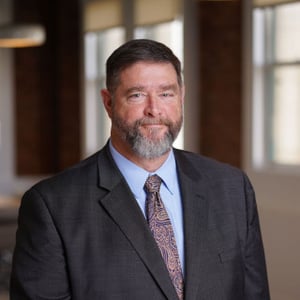
Partner, Briscoe Prows Kao Ivester & Bazel LLP
Tony Francois is experienced in Water and Real Property Law, Land Use and Zoning, Environmental Regulation, Natural Resources Development, Agricultural Law, and Constitutional Law. He has represented homeowners, builders, farmers and ranchers, trade associations, and water districts in administrative, civil, and criminal proceedings before state and federal administrative agencies and state and federal trial and appellate courts. He is a member of the California State Bar and the Northern, Eastern, and Central Districts of California and the Districts of New Mexico and North Dakota, and has litigated cases in federal courts in California, Oregon, Washington, Idaho, Montana, Nevada, Arizona, New Mexico, Colorado, North and South Dakota, Minnesota, Massachusetts, Maryland, South Carolina, and the District of Columbia, as well as the Sixth, Eighth, Ninth, and Tenth Circuit Courts of Appeals. He has appeared before the Supreme Courts of California, Idaho, Nevada, and the United States.
Prior to attending law school, he served as an infantry officer in the United States Army, and was stationed in the former West Germany during the fall of the Berlin Wall.
Tony was an Attorney at Pacific Legal Foundation from 2012 to 2021. He was a lobbyist for 10 years, first with California Farm Bureau Federation from 2003 to 2007, and then with KP Public Affairs from 2007 to 2012. He was an attorney at McQuaid, Bedford & Van Zandt in San Francisco from 1999 – 2003.
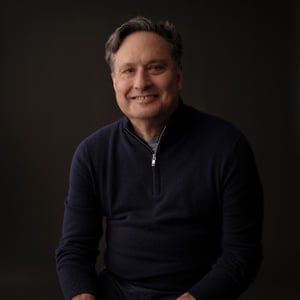
Chief Legal Officer, Airbnb
Ron Klain oversees Airbnb’s global legal and ethics functions and community policy team.
Ron served as the 30th White House Chief of Staff, from January 2021 to February 2023 – the longest tenure of any Democratic President’s first chief of staff.
Ron’s career in public service began as a law clerk to Supreme Court Justice Byron White for the Court’s 1987 and 1988 Terms. Following his time clerking at the Supreme Court, Ron was Chief Counsel of the Senate Judiciary Committee, Staff Director of the Senate Democratic Leadership Committees, Associate Counsel for Judicial Selection under President Clinton, Chief of Staff to Vice President Al Gore, Chief of Staff and Counselor to the US Attorney General, and Chief of Staff to Vice President Joe Biden. In the Obama administration, Ron served as White House Ebola Response Coordinator, to tackle the West African Ebola epidemic of 2014-15.
In the private sector, Ron has served as Partner and National Practice Group Chair at the law firm of O’Melveny & Myers, from 1999-2004 and again in 2023. Earlier he was General Counsel for the technology investment firm Revolution LLC from 2005 to 2020.

Professor of Law and Executive Director, Law and Economics Center, Antonin Scalia Law School, George Mason University
Donald Kochan is Professor of Law and Executive Director of the Law & Economics Center (LEC). Professor Kochan is an elected member of the American Law Institute (ALI) and serves as an Adviser to ALI's Restatement of the Law Fourth, Property project. Professor Kochan is a Nonresident Scholar at the Center for the Constitution at Georgetown University Law Center, where he was a Visiting Scholar in residence during Fall 2018. Before joining the Antonin Scalia Law School faculty, he was the Parker S. Kennedy Professor in Law at Chapman University’s Dale E. Fowler School of Law from 2004 to 2020. From 2003 to 2004, Professor Kochan was an Olin Fellow at the University of Virginia School of Law. During 2002-2003, he was a Visiting Assistant Professor of Law at George Mason’s Scalia Law School.
Professor Kochan’s scholarship focuses on areas of property law, constitutional law, administrative law, local government law, natural resources and environmental law, and law & economics. He has published several books and more than 50 scholarly articles and essays in well-regarded law journals. His work has been cited in more than a dozen state and federal court opinions, in more than 75 briefs filed in state and federal courts including more than 25 filed in the U.S. Supreme Court, in dozens of books and treatises, and in more than 800 scholarly articles.
Professor Kochan received his JD from Cornell Law School, where he was a John M. Olin Scholar in Law and Economics and managing editor of the Cornell International Law Journal. During law school, he also served as editor and executive editor of the Harvard Journal of Law & Public Policy symposium issues in 1997 and 1998. He received his BA from Western Michigan University, magna cum laude, with majors in both political science and philosophy, where he studied as the John W. Gill Medallion Scholar and was honored as the Presidential Scholar (awarded to the top graduate in the political science department).
After graduating from law school, Professor Kochan was a law clerk to The Honorable Richard F. Suhrheinrich of the United States Court of Appeals for the Sixth Circuit. Following his clerkship, Professor Kochan was an associate with the firm of Crowell & Moring LLP in Washington, D.C., where he specialized in natural resources & environmental law as well as tort, products, and consumer civil litigation & legislative affairs.
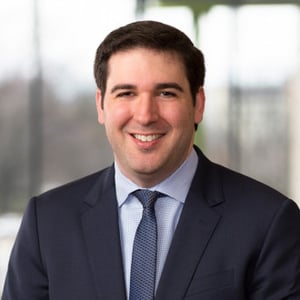
Jones Day, Partner
Yaakov Roth's goal is to strategically develop and effectively present the key legal arguments that will secure victory for clients through appellate advocacy and dispositive motions. He has represented clients in high-profile Supreme Court cases, argued appeals in the federal Courts of Appeals, and prepared motions to dismiss and for summary judgment across a range of substantive areas.
Yaakov's most recent Supreme Court experience includes vindicating former Virginia Gov. Bob McDonnell from political corruption charges, narrowing the geographic scope of private civil RICO lawsuits, and pursuing a major challenge to the Affordable Care Act from inception through high court review. At the appellate level, Yaakov's oral advocacy has included pressing a First Amendment challenge to an Ohio law prohibiting "false" campaign statements, seeking disclosure of a Justice Department policy manual concerning criminal discovery, and protecting the religious freedom rights of Death Row inmates. He has successfully defended his clients against defamation, antitrust, Title VII, and ERISA claims — including nationwide class actions — and pursued a host of challenges to federal, state, and local regulations. His ERISA experience also includes a series of withdrawal liability arbitrations and related litigation.
Yaakov speaks and writes about the Supreme Court and First Amendment issues and maintains an active pro bono practice centered around religious freedom and criminal justice.

Judge, United States Court of Appeals, Third Circuit
Stephanos Bibas is a judge on the U.S. Court of Appeals for the Third Circuit. Judge Bibas was previously a professor of law and criminology at the University of Pennsylvania Law School. As director of the Penn Law Supreme Court Clinic, he argued six cases before the Supreme Court of the United States and filed briefs in dozens of others. He graduated summa cum laude and Phi Beta Kappa from Columbia University in 1989 with a B.A. in political theory and from Oxford University in 1991 with a B.A. in jurisprudence. He then earned his J.D. from Yale Law School in 1994.
After graduating from Yale Law, Judge Bibas clerked for Judge Patrick Higginbotham of the U.S. Court of Appeals for the Fifth Circuit and Justice Anthony Kennedy on the Supreme Court and was a litigation associate at Covington & Burling LLP in Washington, D.C. Thereafter, Judge Bibas served as an Assistant U.S. Attorney in the Southern District of New York, where he successfully prosecuted the world’s leading expert in Tiffany stained glass for hiring a grave robber to steal priceless Tiffany windows from cemeteries. Before his tenure at Penn Law, Judge Bibas taught at the University of Chicago Law School and the University of Iowa College of Law and was a research fellow at Yale Law School. He has published two books and seventy scholarly articles.
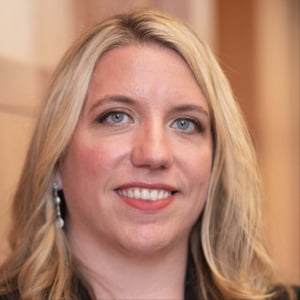
Louis D. Brandeis Professor of Law and Deputy Dean, Harvard Law School
Molly Brady is the Louis D. Brandeis Professor of Law at Harvard Law School, where she teaches property law and related subjects. Her scholarship uses historical analyses of property institutions and land use doctrines to explore broader theoretical questions. Her current research projects involve the relationship between covenants and zoning, the persistence of community knowledge in property doctrine, and the uses of history in state constitutional law. She is also an Associate Reporter for the American Law Institute’s Fourth Restatement of Property.
Previously, Professor Brady taught at the University of Virginia School of Law, where she received the 2019 UVA Student Council Distinguished Teaching Award, the 2018 Z Society Distinguished Faculty Award for “one outstanding member of the University’s faculty who has positively impacted the student body,” and an invitation to the Seven Society 27th Annual Monticello Dinner Series for “exemplary scholarship and transformative instruction of students.” Her recent article, “The Forgotten History of Metes and Bounds,” won both the Association of American Law Schools’ Scholarly Papers Prize for junior faculty members in their first five years of law teaching and the American Society for Legal History’s William Nelson Cromwell Article Prize for the year’s best paper by an early-career scholar.
Professor Brady received an AB summa cum laude in history from Harvard College, where she was elected to Phi Beta Kappa and was awarded the Harvard-Radcliffe Foundation for Women’s Athletics Prize for the top female scholar-athlete. Professor Brady then obtained her JD from Yale Law School, where she was the two-time recipient of the Parker Prize for legal history scholarship and was awarded the Quintin Johnstone Prize in Real Property Law, the Jewell Prize for an outstanding contribution to a Yale Law School journal, and the Cullen Prize for the best paper written by a first-year student. Following graduation, she served as a clerk to Judge Bruce M. Selya on the US Court of Appeals for the First Circuit and practiced at Ropes and Gray in Boston as a corporate associate focusing on intellectual property transactions. After leaving practice, she was in the first graduating class of the PhD in Law program at Yale University.
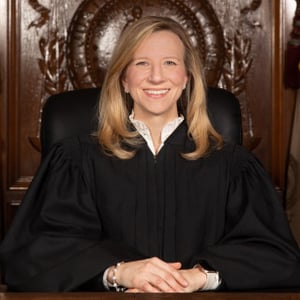
Justice, Supreme Court of Tennessee
Justice Sarah Campbell was confirmed to the Tennessee Supreme Court in 2022. She previously served as an Associate Solicitor General in the Tennessee Attorney General’s Office and as an associate at the law firm of Williams & Connolly LLP in Washington, DC. Justice Campbell earned her law degree from Duke University School of Law, a Master of Public Policy degree from Duke University, and her undergraduate degree from the University of Tennessee, where she received the Torchbearer Award. She served as a law clerk for Justice Samuel A. Alito, Jr. on the United States Supreme Court and Judge William H. Pryor Jr. on the U.S. Court of Appeals for the Eleventh Circuit.
Lecturer, Harvard Law School
James E. Tierney is the former Attorney General of Maine and a Lecturer at Harvard Law School where he teaches a course on the role of state attorneys general while directing the Harvard Attorney General clinic. For thirteen years he was the Director of the National State Attorneys General Program at Columbia Law School, and he has also taught courses at Boston College Law School, Northeastern Law School and the University of Maine School of Law.
Mr. Tierney served as the Attorney General of Maine from 1980 until 1990. During his ten years as Attorney General of Maine, Mr. Tierney played an active role in the National Association of Attorneys General (NAAG) and has instructed newly elected state Attorneys General on the effective performance of their office. Mr. Tierney has also served as a Special Prosecutor in Florida, Pennsylvania, Minnesota and Vermont and, on behalf of NAAG, has authored an analysis of the operations of state grand jury practice throughout the United States. He travels regularly to visit in offices of attorney general where he conducts ethics seminars for incumbent attorneys general and their staffs.
Tierney has served on the Board of both the American Judicature Society and was a member of the Board of Commentators of the Courtroom Television Network. In April of 2006, Professor Tierney was selected as the Columbia Law School Public Interest Professor of the Year. This award, which is given to the faculty member or administrator who has most supported and inspired a significant portion of the public interest law student community, is selected by a vote of students.
Tierney is married to Maine author Elizabeth Strout. He has five children and eight grandchildren.
Alston & Bird Professor of Law, Duke University School of Law
Professor Young teaches constitutional law, federal courts, and foreign relations law. He is one of the nation's leading authorities on the constitutional law of federalism, having written extensively on the Rehnquist Court's "Federalist Revival" and the difficulties confronting courts as they seek to draw lines between national and state authority. He also is an active commentator on foreign relations law, where he focuses on the interaction between domestic and supranational courts and the application of international law by domestic courts. Professor Young also writes on constitutional interpretation and constitutional theory. He has been known to dabble in maritime law and comparative constitutional law.
A native of Abilene, Texas, Professor Young joined the Duke Law faculty in 2008, after serving as the Charles Alan Wright Chair in Federal Courts at the University of Texas at Austin School of Law, where he had taught since 1999. He graduated from Dartmouth College in 1990 and Harvard Law School in 1993. After law school, he served as a law clerk to Judge Michael Boudin of the 1st U.S. Circuit Court of Appeals (1993-94) and to Justice David Souter of the U.S. Supreme Court (1995-96). Professor Young practiced law at Cohan, Simpson, Cowlishaw, & Wulff in Dallas, Texas (1994-95) and at Covington & Burling in Washington, D.C. (1996-98), where he specialized in appellate litigation. He has also been a visiting professor at Harvard Law School (2004-05) and Villanova University School of Law (1998-99), as well as an adjunct professor at Georgetown University Law Center (1997).
Elected to the American Law Institute in 2006, Professor Young is an active participant in both public and private litigation in his areas of interest. He has been the principal author of amicus briefs on behalf of leading constitutional scholars in several recent Supreme Court cases, including Medellin v. Texas(concerning presidential power and the authority of the International Court of Justice over domestic courts) and Gonzales v. Raich (concerning federal power to regulate medical marijuana).
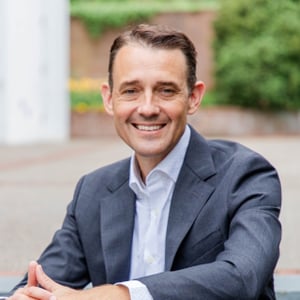
Senior Vice President, Strategic Initiatives & Special Counsel to the President, Alliance Defending Freedom
Ryan Bangert serves as senior vice president for strategic initiatives and special counsel to the president at Alliance Defending Freedom. He oversees ADF’s Blackstone Legal Fellowship and Research & Innovation Team. He also advises executive leadership on strategic initiatives.
Before joining ADF, Bangert served as deputy first assistant attorney general and deputy for legal counsel in the office of the Texas attorney general, and as deputy for civil litigation for Missouri Attorney General Josh Hawley. Prior to his government service, Bangert was a litigation partner at Baker Botts L.L.P., where he was a member of the firm’s commercial litigation and appellate practice sections.
Bangert has been published at First Things, Civitas Outlook, Law & Liberty, National Review, Daily Wire, The Hill, Washington Examiner, The Federalist, Fox News, and the American Reformer. He speaks nationally on constitutional, cultural, and religious liberty issues. He also serves as Visiting Faculty in Law at the University of Austin.
He earned his J.D. from Southern Methodist University, where he was a Hatton Sumners scholar and graduated first in his class. Following law school, he clerked for the Honorable Patrick E. Higginbotham on the Fifth Circuit Court of Appeals.
General Counsel, xAI and X

John S. Battle Professor of Law, University of Virginia School of Law
Julia D. Mahoney teaches courses in property, government finance, constitutional law and nonprofit organizations. A graduate of Yale Law School, she joined the University of Virginia faculty as an associate professor in 1999 and is now John S. Battle Professor of Law. She has also taught at the University of Southern California Law School and the University of Chicago Law School, and before entering the legal academy, practiced law at the New York firm Wachtell, Lipton, Rosen & Katz. Her scholarly articles include works on land preservation, eminent domain, health care reform and property rights in human biological materials.
New York Alumni Chancellor's Chair in Law, Vanderbilt University Law School
Ganesh Sitaraman teaches and writes about constitutional law, the regulatory state, economic policy, democracy and foreign affairs. He joined the Vanderbilt Law faculty in 2011 and was named to the New York Alumni Chancellor's Chair in Law in 2021.
Sitaraman’s most recent book is The Great Democracy: How to Fix Our Politics, Unrig the Economy, and Unite America (Basic Books, 2019). He is also the co-author, with Anne Alstott, of The Public Option (Harvard Univ. Press, 2019), and the author of The Crisis of the Middle-Class Constitution: Why Economic Inequality Threatens Our Republic (Alfred A. Knopf, 2017), which was one of The New York Times’ 100 notable books of 2017, and The Counterinsurgent’s Constitution: Law in the Age of Small Wars (Oxford University Press, 2012), which won the 2013 Palmer Civil Liberties Prize.
Sitaraman is a public member of the Administrative Conference of the United States, a member of the American Law Institute, a senior fellow at the Center for American Progress, and a co-founder of the Great Democracy Initiative. He serves on the boards of The American Prospect, the American Constitution Society, and Foreign Policy for America. Sitaraman was also a longtime adviser to Elizabeth Warren, including serving as a senior adviser on her 2020 presidential campaign, her senior counsel in the Senate, and her policy director during her 2012 Senate campaign. He has been profiled in The New York Times and Politico for his work at the nexus of politics and ideas.
In 2018, Sitaraman was awarded an Andrew Carnegie Fellowship, and at Vanderbilt, he has been awarded a Chancellor’s Award for Research and a Chancellor’s Faculty Fellowship. In 2016, he was a visiting assistant professor at Yale Law School. Before joining Vanderbilt, Sitaraman was the Public Law Fellow and a lecturer at Harvard Law School, a research fellow at the Counterinsurgency Training Center – Afghanistan in Kabul, and a law clerk for Judge Stephen F. Williams on the U.S. Court of Appeals for the D.C. Circuit.
An Eagle Scout and a Truman Scholar, he earned his A.B. in government magna cum laude from Harvard College, a master’s degree in political thought from Emmanuel College, Cambridge, where he was the Lionel de Jersey Harvard Scholar, and his J.D. magna cum laude from Harvard Law School, where he was an editor of the Harvard Law Review.
Professor of Law, Fordham Law School
Zephyr Teachout is a Professor at Law at Fordham Law School where she focuses on the intersection of corporate power and political power. She teaches corporations, election law, antitrust, and prosecuting white collar crime. Her most recent book, Break 'em Up (2020), makes a case for reimagining the relationship between democracy and antimonopoly law. Her prior book, Corruption in America (2014), argued that the American constitutional system has an embedded anti-corruption principle that has been discarded by the modern Court. Her public writings have appeared in the New York Times, Foreign Affairs, New York Review of Books, Washington Post, The Nation and The New Republic. In 2021, she took a leave to work as Special Advisor and Senior Counsel for Economic Justice at the New York Attorney General's Office. Before Law School, Zephyr Teachout had a career as a digital consultant and nonprofit entrepreneur, and represented clients on death row in North Carolina. She was a Law Clerk to then-Chief Judge Edward R. Becker., of the U.S. Court of Appeals for the Third Circuit.
Director of Equality and Opportunity Litigation, Pacific Legal Foundation
Joshua directs the litigation for PLF’s Equality and Opportunity Program, where he fights to dismantle unconstitutional barriers to opportunity, freeing individuals to rise based on their choices, character, and ability.
Joshua joined PLF as an attorney in 2007. His litigation practice has covered all PLF subject areas with a particular focus on equality and opportunity. Joshua argued PLF’s 13th case before the United States Supreme Court, Cedar Point Nursery v. Hassid, where the court ruled that a California regulation that allowed union organizers onto private property violated the Fifth Amendment’s Takings Clause. Other litigation highlights of his include ending a decades-long racial quota in Hartford, Connecticut, lifting a ban on boys’ dancing in Minnesota, and vindicating an entrepreneur’s right to start a moving business in Kentucky.
Joshua’s writings have been published by the USA Today, Wall Street Journal, and Washington Post. And his research has been published in journals such as Texas Review of Law & Politics, Alabama Civil Rights & Civil Liberties Law Review, Journal of Civil Rights & Economic Development, and Northern Illinois University Law Review. He has appeared on national television and radio, including PBS Newshour, NPR’s All things Considered, Stossel, and Univision.
Joshua earned his BA with distinction from the University of Wisconsin-Madison with a triple major in political science, international relations, and German. He earned his JD cum laude from Michigan State College of Law where he was on the law review and trial practice institute. Joshua lives in Sacramento, California with his wife and three children. He loves playing chess and rooting for Wisconsin sports teams.
Joshua is a member of the bar only in the state of California.
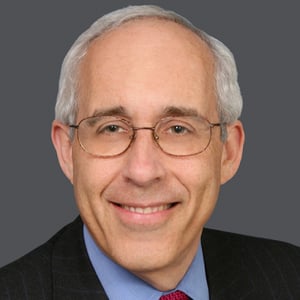
Partner, Mayer Brown LLP
Andrew Pincus is a partner in Mayer Brown LLP resident in Washington, D.C. His practice focuses on Supreme Court and appellate litigation.
Andy has argued 29 cases in the Supreme Court of the United States, including Lamps Plus, Inc. v. Varela and Frank v. Gaos in the October 2018 Term; as well as his recent victories in Impression Products, Inc. v. Lexmark International, Inc. (2017); Kindred Nursing Home Centers Limited Partnership v. Clark (2017); and Spokeo, Inc. v. Robins (2016). Law360 ranked Andy’s victory in AT&T Mobility v. Concepcion (2011), as the most important Supreme Court class action decision of the last 15 years.
Andy appears regularly before federal and state appellate courts and federal district courts. His practice also includes written and oral advocacy before Congress, other legislative bodies, and regulatory agencies regarding a variety of policy and legal issues.
A former Assistant to the Solicitor General in the United States Department of Justice (1984-1988), Andy co-founded and serves as co-director of the Yale Law School's Supreme Court Advocacy Clinic (2006-present), which provides pro bono representation in 10-15 Supreme Court cases each year.
While serving as General Counsel of the United States Department of Commerce (1997-2000), Andy had principal responsibility for the Digital Millennium Copyright Act and the Electronic Signatures in Global and National Commerce Act. He also participated in formulation of policy concerning privacy, domain name management, taxation of electronic commerce, export controls, international trade, and consumer protection.
Andy is a graduate of Yale College and Columbia Law School, where he was a Notes & Comments Editor of the Columbia Law Review. He served as Law Clerk to the Honorable Harold H. Greene, United States District Court for the District of Columbia (1981-1982).
Partner, Briscoe Prows Kao Ivester & Bazel LLP
Tony Francois is experienced in Water and Real Property Law, Land Use and Zoning, Environmental Regulation, Natural Resources Development, Agricultural Law, and Constitutional Law. He has represented homeowners, builders, farmers and ranchers, trade associations, and water districts in administrative, civil, and criminal proceedings before state and federal administrative agencies and state and federal trial and appellate courts. He is a member of the California State Bar and the Northern, Eastern, and Central Districts of California and the Districts of New Mexico and North Dakota, and has litigated cases in federal courts in California, Oregon, Washington, Idaho, Montana, Nevada, Arizona, New Mexico, Colorado, North and South Dakota, Minnesota, Massachusetts, Maryland, South Carolina, and the District of Columbia, as well as the Sixth, Eighth, Ninth, and Tenth Circuit Courts of Appeals. He has appeared before the Supreme Courts of California, Idaho, Nevada, and the United States.
Prior to attending law school, he served as an infantry officer in the United States Army, and was stationed in the former West Germany during the fall of the Berlin Wall.
Tony was an Attorney at Pacific Legal Foundation from 2012 to 2021. He was a lobbyist for 10 years, first with California Farm Bureau Federation from 2003 to 2007, and then with KP Public Affairs from 2007 to 2012. He was an attorney at McQuaid, Bedford & Van Zandt in San Francisco from 1999 – 2003.
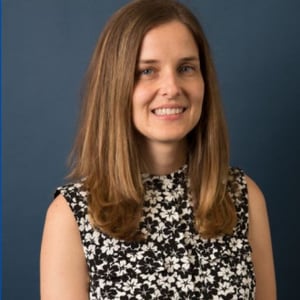
Senior Attorney, Pacific Legal Foundation
Christina Martin is a Senior Attorney at Pacific Legal Foundation where she leads its initiative to end home equity theft—predatory tax-foreclosure laws that allow the government to take valuable homes and all equity in those homes as payment for debts as small as $8.
Christina's victories as lead counsel include Tyler v. Hennepin County in the U.S. Supreme Court, Hall v. Meisner in the Sixth Circuit, Rafaeli, LLC v. Oakland County in the Michigan Supreme Court, and New Mexico Farm & Livestock Bureau v. U.S. Department of the Interior in the Tenth Circuit. She also served as second chair in Knick v. Township of Scott, a landmark Supreme Court case that opened up the federal courthouse doors to takings plaintiffs.
Christina is admitted to the state bars of Washington, Oregon, and Florida, as well as a number of federal courts, including the Supreme Court of the United States. She earned a Bachelor of Science in Physics and a Bachelor of Arts in Communication from the University of Washington. She earned her J.D. from Ave Maria School of Law, where she was an editor of the Ave Maria Law Review.
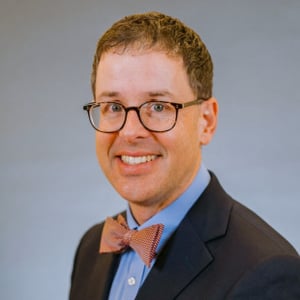
Senior Counsel and VP, Appellate Advocacy, Alliance Defending Freedom
John Bursch is senior counsel and vice president of appellate advocacy with Alliance Defending Freedom. Bursch has argued 12 U.S. Supreme Court cases and more than 30 state supreme court cases since 2011, and a recent study concluded that among all frequent Supreme Court advocates who did not work for the federal government, he had the 3rd highest success rate for persuading justices to adopt his legal position.
Bursch served as solicitor general for the state of Michigan from 2011-2013. He has argued multiple Michigan Supreme Court cases in eight of the last ten terms and has successfully litigated hundreds of matters nationwide, including six with at least $1 billion at stake. As part of his private firm, Bursch Law PLLC, he has represented Fortune 500 companies, foreign and domestic governments, top public officials, and industry associations in high-profile cases, primarily on appeal. He was inducted into the American Academy of Appellate Lawyers and serves as a member of the American Law Institute. His work has resulted in repeated listings in Michigan Super Lawyers and Best Lawyers.
Before entering private practice, Bursch served as a law clerk to the Honorable James B. Loken on the U.S. Court of Appeals for the 8th Circuit. He received his J.D. magna cum laude in 1997 from the University of Minnesota Law School, where he served as Chief Note & Comment Editor for the Minnesota Law Review. Prior to that, he attended Western Michigan University, where he received degrees in mathematics and music performance summa cum laude.
Partner, Briscoe Prows Kao Ivester & Bazel LLP
Tony Francois is experienced in Water and Real Property Law, Land Use and Zoning, Environmental Regulation, Natural Resources Development, Agricultural Law, and Constitutional Law. He has represented homeowners, builders, farmers and ranchers, trade associations, and water districts in administrative, civil, and criminal proceedings before state and federal administrative agencies and state and federal trial and appellate courts. He is a member of the California State Bar and the Northern, Eastern, and Central Districts of California and the Districts of New Mexico and North Dakota, and has litigated cases in federal courts in California, Oregon, Washington, Idaho, Montana, Nevada, Arizona, New Mexico, Colorado, North and South Dakota, Minnesota, Massachusetts, Maryland, South Carolina, and the District of Columbia, as well as the Sixth, Eighth, Ninth, and Tenth Circuit Courts of Appeals. He has appeared before the Supreme Courts of California, Idaho, Nevada, and the United States.
Prior to attending law school, he served as an infantry officer in the United States Army, and was stationed in the former West Germany during the fall of the Berlin Wall.
Tony was an Attorney at Pacific Legal Foundation from 2012 to 2021. He was a lobbyist for 10 years, first with California Farm Bureau Federation from 2003 to 2007, and then with KP Public Affairs from 2007 to 2012. He was an attorney at McQuaid, Bedford & Van Zandt in San Francisco from 1999 – 2003.
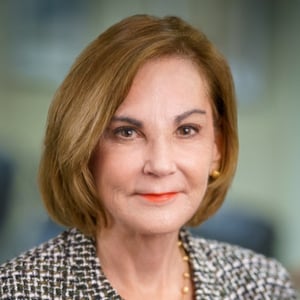
Partner, Marzulla Law
Ms. Marzulla served as an Attorney-Advisor and as a trial lawyer prosecuting employment violations in the Civil Rights Division at the U.S. Department of Justice. Later, Nancie joined the law firm of Verner, Liipfert (now DLA Piper), where she litigated complex airline and other civil matters. In 1991, She founded Defenders of Property Rights, where she was involved in high profile takings cases in the Supreme Court, federal courts of appeal, and trial courts. Ms. Marzulla also worked at the International Labor Organization in Geneva, Switzerland doing comparative legal research.
Nancie G. Marzulla is a founding partner of Marzulla Law, ranked as one of the nation’s “Best Law Firms,” and a “Tier One” environmental litigation firm by the U.S. News and World Report. Nancie’s litigation practice concentrates on water rights, takings, and contract claims in the U.S. Court of Federal Claims. She also has extensive experience in handling matters involving property, water, environmental law, Indian tribal claims, development, and natural resources in trial courts, courts of appeal, the Supreme Court, and in international tribunals. Nancie also represents corporate clients in enforcement or permitting disputes with federal regulatory agencies.

Property & Personal Rights: A Discussion of Short-Term Rental Regulations
Paul D. Clement, Tony Francois, Ron Klain, Donald J. Kochan
Short-term rentals—popularized by Airbnb and Vrbo—have been given modern platforms for the customary alternative to...
Litigation Update: Merck et al. v. Becerra et al.
Yaakov M. Roth
Pharmaceutical company Merck & Co., Inc. (Merck) filed a lawsuit against the U.S. Department of...
Panel I: Federalism and the Separation of Powers
Stephanos Bibas, Maureen Brady, Sarah Keeton Campbell, James E. Tierney, Ernest Young
It has been said that American-style split sovereignty provides the people a “double security” for...
NetChoice and the Future of State Regulation of Big Tech
Ryan L. Bangert, James M. Burnham, Julia D. Mahoney, Ganesh Sitaraman, Zephyr Teachout
A panel of experts from a variety of political perspectives will discuss the range of...
Topics
Does Modern Labor Law Violate the Fifth Amendment?
In December, the U.S. Department of labor closed the public-comment period for new regulations under...
Litigation Update: Alliance for Fair Board Recruitment v. Weber
Joshua Paul Thompson
Alliance for Fair Board Recruitment v. Weber is a challenge to California’s Assembly Bill 979...
Litigation Update: New York's "Rent Stabilization Act" Part III
Andrew J. Pincus
Does New York’s “rent stabilization” law violate the federal Constitution? The law, which regulates approximately...
Courthouse Steps Decision: Tyler v. Hennepin County, Minnesota
Tony Francois
On Thursday, May 25, 2023, the Supreme Court issued a unanimous decision in Tyler v....
Courthouse Steps Oral Argument: Tyler v. Hennepin County
Tony Francois, Christina Martin
On Wednesday, April 26th, the Supreme Court heard oral argument in Tyler v. Hennepin County, Minnesota. ...
Courthouse Steps Preview: Tyler v. Hennepin County
John J. Bursch, Tony Francois, Nancie G. Marzulla
Geraldine Tyler, a ninety-three-year-old homeowner, owed Hennepin County, Minnesota, nearly $12,700 in delinquent property taxes,...