
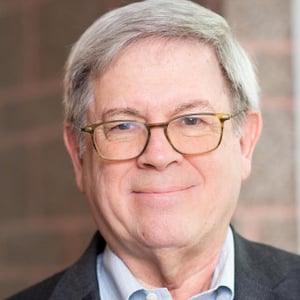
Senior Fellow, Cato Institute
Walter Olson is a senior fellow at the Cato Institute’s Robert A. Levy Center for Constitutional Studies and is known for his writing on the American legal system. His books include The Rule of Lawyers, on mass litigation, The Excuse Factory, on lawsuits in the workplace, and most recently Schools for Misrule, on the state of the law schools. His first book, The Litigation Explosion, was one of the most widely discussed general-audience books on law of its time. It led the Washington Post to dub him “intellectual guru of tort reform.” Active on social media, he is known as the founder and principal writer of what is generally considered the oldest blog on law as well as one of the most popular, Overlawyered.com. He has advised many public officials from the White House to town councils and in 2015 was named by Gov. Larry Hogan to be co-chair of the Maryland Redistricting Reform Commission, which issued its report recommendations later that year to acclaim across the state.
Before joining Cato, Olson was a senior fellow at the Manhattan Institute and an editor at the magazine Regulation, then edited by future Supreme Court Justice Antonin Scalia. Olson’s more than 400 broadcast appearances include all the major networks, NPR, the BBC, The Diane Rehm Show, and Oprah.

Senior Fellow and Director of Constitutional Studies, Manhattan Institute
Ilya Shapiro is a senior fellow and director of constitutional studies at the Manhattan Institute and a contributing editor of City Journal. Previously he was executive director and senior lecturer at the Georgetown Center for the Constitution, and before that a vice president of the Cato Institute.
Shapiro is the author of Lawless: The Miseducation of America’s Elites (2025) and Supreme Disorder: Judicial Nominations and the Politics of America’s Highest Court (2020), coauthor of Religious Liberties for Corporations? (2014), and editor of 11 volumes of the Cato Supreme Court Review (2008-18). He has contributed to a variety of academic, popular, and professional publications, including the Wall Street Journal, Harvard Journal of Law & Public Policy, Washington Post, Los Angeles Times, USA Today, National Review, and Newsweek. He also regularly provides commentary for various media outlets, writes the Shapiro’s Gavel newsletter on Substack, and once appeared on the Colbert Report.
Shapiro has testified many times before Congress and state legislatures and has filed more than 500 amicus curiae “friend of the court” briefs in the Supreme Court. He lectures regularly on behalf of the Federalist Society, is a member of the board of fellows of the Jewish Policy Center, was an inaugural Washington Fellow at the National Review Institute, and has been an adjunct law professor at the George Washington University and University of Mississippi. He is also the chairman of the board of advisers of the Mississippi Justice Institute, a barrister in the Edward Coke Appellate Inn of Court, and a former member of the Virginia Advisory Committee to the U.S. Commission on Civil Rights.
Earlier in his career, Shapiro was a special assistant/adviser to the Multi-National Force in Iraq on rule-of-law issues and practiced at Patton Boggs and Cleary Gottlieb. Before entering private practice, he clerked for Judge E. Grady Jolly of the U.S. Court of Appeals for the Fifth Circuit. He holds an AB from Princeton University, an MSc from the London School of Economics, and a JD from the University of Chicago Law School.
Senior Fellow and Director of Constitutional Studies, Manhattan Institute
Ilya Shapiro is a senior fellow and director of constitutional studies at the Manhattan Institute and a contributing editor of City Journal. Previously he was executive director and senior lecturer at the Georgetown Center for the Constitution, and before that a vice president of the Cato Institute.
Shapiro is the author of Lawless: The Miseducation of America’s Elites (2025) and Supreme Disorder: Judicial Nominations and the Politics of America’s Highest Court (2020), coauthor of Religious Liberties for Corporations? (2014), and editor of 11 volumes of the Cato Supreme Court Review (2008-18). He has contributed to a variety of academic, popular, and professional publications, including the Wall Street Journal, Harvard Journal of Law & Public Policy, Washington Post, Los Angeles Times, USA Today, National Review, and Newsweek. He also regularly provides commentary for various media outlets, writes the Shapiro’s Gavel newsletter on Substack, and once appeared on the Colbert Report.
Shapiro has testified many times before Congress and state legislatures and has filed more than 500 amicus curiae “friend of the court” briefs in the Supreme Court. He lectures regularly on behalf of the Federalist Society, is a member of the board of fellows of the Jewish Policy Center, was an inaugural Washington Fellow at the National Review Institute, and has been an adjunct law professor at the George Washington University and University of Mississippi. He is also the chairman of the board of advisers of the Mississippi Justice Institute, a barrister in the Edward Coke Appellate Inn of Court, and a former member of the Virginia Advisory Committee to the U.S. Commission on Civil Rights.
Earlier in his career, Shapiro was a special assistant/adviser to the Multi-National Force in Iraq on rule-of-law issues and practiced at Patton Boggs and Cleary Gottlieb. Before entering private practice, he clerked for Judge E. Grady Jolly of the U.S. Court of Appeals for the Fifth Circuit. He holds an AB from Princeton University, an MSc from the London School of Economics, and a JD from the University of Chicago Law School.
Senior Fellow and Director of Constitutional Studies, Manhattan Institute
Ilya Shapiro is a senior fellow and director of constitutional studies at the Manhattan Institute and a contributing editor of City Journal. Previously he was executive director and senior lecturer at the Georgetown Center for the Constitution, and before that a vice president of the Cato Institute.
Shapiro is the author of Lawless: The Miseducation of America’s Elites (2025) and Supreme Disorder: Judicial Nominations and the Politics of America’s Highest Court (2020), coauthor of Religious Liberties for Corporations? (2014), and editor of 11 volumes of the Cato Supreme Court Review (2008-18). He has contributed to a variety of academic, popular, and professional publications, including the Wall Street Journal, Harvard Journal of Law & Public Policy, Washington Post, Los Angeles Times, USA Today, National Review, and Newsweek. He also regularly provides commentary for various media outlets, writes the Shapiro’s Gavel newsletter on Substack, and once appeared on the Colbert Report.
Shapiro has testified many times before Congress and state legislatures and has filed more than 500 amicus curiae “friend of the court” briefs in the Supreme Court. He lectures regularly on behalf of the Federalist Society, is a member of the board of fellows of the Jewish Policy Center, was an inaugural Washington Fellow at the National Review Institute, and has been an adjunct law professor at the George Washington University and University of Mississippi. He is also the chairman of the board of advisers of the Mississippi Justice Institute, a barrister in the Edward Coke Appellate Inn of Court, and a former member of the Virginia Advisory Committee to the U.S. Commission on Civil Rights.
Earlier in his career, Shapiro was a special assistant/adviser to the Multi-National Force in Iraq on rule-of-law issues and practiced at Patton Boggs and Cleary Gottlieb. Before entering private practice, he clerked for Judge E. Grady Jolly of the U.S. Court of Appeals for the Fifth Circuit. He holds an AB from Princeton University, an MSc from the London School of Economics, and a JD from the University of Chicago Law School.
Senior Fellow, Cato Institute
Doug Bandow is a senior fellow at the Cato Institute, specializing in foreign policy and civil liberties. He worked as special assistant to President Reagan and editor of the political magazine Inquiry. He writes regularly for leading publications such as Fortune magazine, National Interest, Wall Street Journal, and Washington Times. Bandow speaks frequently at academic conferences, on college campuses, and to business groups. Bandow has been a regular commentator on ABC, CBS, NBC, CNN, Fox News Channel, and MSNBC. He holds a J.D. from Stanford University.
Senior Fellow, Cato Institute
Doug Bandow is a senior fellow at the Cato Institute, specializing in foreign policy and civil liberties. He worked as special assistant to President Reagan and editor of the political magazine Inquiry. He writes regularly for leading publications such as Fortune magazine, National Interest, Wall Street Journal, and Washington Times. Bandow speaks frequently at academic conferences, on college campuses, and to business groups. Bandow has been a regular commentator on ABC, CBS, NBC, CNN, Fox News Channel, and MSNBC. He holds a J.D. from Stanford University.
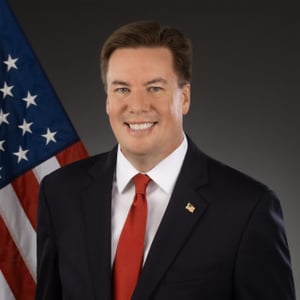
Associate Professor of Lawyering Process, Florida Coastal School of Law
James J. Woodruff II, Esq. is currently an Associate Professor of Lawyering Process at Florida Coastal School of Law. He has also been appointed to serve on the Florida Bar's Small Claims Rules Committee (2010-2013).
Professor Woodruff is a graduate of Texas A&M University and South Texas College of Law. While at South Texas College of Law he served as Editor-in-Chief of Currents: the International Trade Law Journal. He also won the Chester James Taylor Memorial Award for Writing Excellence. Professor Woodruff is a member of Phi Delta Phi (Legal Honors Fraternity).
He has accumulated years of experience in litigation (insurance, consumer, personal injury and commercial) and business law. Professor Woodruff has handled cases at both the trial and appellate levels during his career. His current legal practice focuses on Political law.
Professor Woodruff has published articles in various legal journals including the Tulane Maritime Law Journal and theCorporate Counsel Review. His articles have examined constitutional law, maritime law and international litigation. He is a member of the Florida Bar, the State Bar of Texas, the Jacksonville Bar Association,the United States District Court for the Middle District of Florida, the United States District Court for the Southern District of Texas and the Fifth Circuit Court of Appeals of the United States.
Senior Fellow, Cato Institute
Doug Bandow is a senior fellow at the Cato Institute, specializing in foreign policy and civil liberties. He worked as special assistant to President Reagan and editor of the political magazine Inquiry. He writes regularly for leading publications such as Fortune magazine, National Interest, Wall Street Journal, and Washington Times. Bandow speaks frequently at academic conferences, on college campuses, and to business groups. Bandow has been a regular commentator on ABC, CBS, NBC, CNN, Fox News Channel, and MSNBC. He holds a J.D. from Stanford University.
Associate Professor of Lawyering Process, Florida Coastal School of Law
James J. Woodruff II, Esq. is currently an Associate Professor of Lawyering Process at Florida Coastal School of Law. He has also been appointed to serve on the Florida Bar's Small Claims Rules Committee (2010-2013).
Professor Woodruff is a graduate of Texas A&M University and South Texas College of Law. While at South Texas College of Law he served as Editor-in-Chief of Currents: the International Trade Law Journal. He also won the Chester James Taylor Memorial Award for Writing Excellence. Professor Woodruff is a member of Phi Delta Phi (Legal Honors Fraternity).
He has accumulated years of experience in litigation (insurance, consumer, personal injury and commercial) and business law. Professor Woodruff has handled cases at both the trial and appellate levels during his career. His current legal practice focuses on Political law.
Professor Woodruff has published articles in various legal journals including the Tulane Maritime Law Journal and theCorporate Counsel Review. His articles have examined constitutional law, maritime law and international litigation. He is a member of the Florida Bar, the State Bar of Texas, the Jacksonville Bar Association,the United States District Court for the Middle District of Florida, the United States District Court for the Southern District of Texas and the Fifth Circuit Court of Appeals of the United States.
Senior Fellow, Cato Institute
Doug Bandow is a senior fellow at the Cato Institute, specializing in foreign policy and civil liberties. He worked as special assistant to President Reagan and editor of the political magazine Inquiry. He writes regularly for leading publications such as Fortune magazine, National Interest, Wall Street Journal, and Washington Times. Bandow speaks frequently at academic conferences, on college campuses, and to business groups. Bandow has been a regular commentator on ABC, CBS, NBC, CNN, Fox News Channel, and MSNBC. He holds a J.D. from Stanford University.
Associate Professor of Lawyering Process, Florida Coastal School of Law
James J. Woodruff II, Esq. is currently an Associate Professor of Lawyering Process at Florida Coastal School of Law. He has also been appointed to serve on the Florida Bar's Small Claims Rules Committee (2010-2013).
Professor Woodruff is a graduate of Texas A&M University and South Texas College of Law. While at South Texas College of Law he served as Editor-in-Chief of Currents: the International Trade Law Journal. He also won the Chester James Taylor Memorial Award for Writing Excellence. Professor Woodruff is a member of Phi Delta Phi (Legal Honors Fraternity).
He has accumulated years of experience in litigation (insurance, consumer, personal injury and commercial) and business law. Professor Woodruff has handled cases at both the trial and appellate levels during his career. His current legal practice focuses on Political law.
Professor Woodruff has published articles in various legal journals including the Tulane Maritime Law Journal and theCorporate Counsel Review. His articles have examined constitutional law, maritime law and international litigation. He is a member of the Florida Bar, the State Bar of Texas, the Jacksonville Bar Association,the United States District Court for the Middle District of Florida, the United States District Court for the Southern District of Texas and the Fifth Circuit Court of Appeals of the United States.

Contrasting Constitutional Perspectives
ColumbusThe Rule of Lawyers
Colorado Student Chapter
Boulder, COImmigration Reform
Supreme Court Review
Healthcare for All…or Else: The Constitution and Obamacare
The Debt Crisis
TSA Procedures
The Patient Protection and Affordable Care Act
Doug Bandow, James J. Woodruff
On March 10, 2011, the Jacksonville Lawyers Chapter and the Florida Coastal Student Chapter co-hosted...
The Patient Protection and Affordable Care Act
Doug Bandow, James J. Woodruff
On March 10, 2011, the Jacksonville Lawyers Chapter and the Florida Coastal Student Chapter co-hosted...
The Patient Protection and Affordable Care Act
Jacksonville Lawyers Chapter & Florida Coastal Student Chapter
Jacksonville, FL