
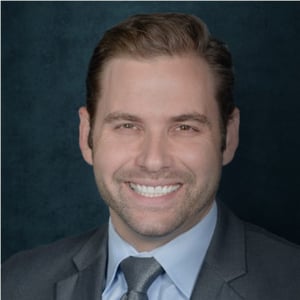
Vice President for the Program on Technology, Criminal Justice and Civil Liberties, Lincoln Network
Arthur Rizer is the Vice President for the Program on Technology, Criminal Justice and Civil Liberties at Lincoln Network. In addition to his work at Lincoln, Arthur is a visiting lecturer at University College London, and an adjunct professor at George Mason University’s Antonin Scalia Law School. Arthur is also a member of Columbia University Justice Lab’s Executive Session for the Future of Justice Policy, the Federalist Society’s Executive Committee of the Criminal Law Practice Group, the Virginia Advisory Committee to the U.S. Commission on Civil Rights, and other advisory bodies.
Before joining Lincoln, Arthur was founding director of the R Street Institute’s program on criminal justice and civil liberties. Prior to that, Arthur taught at West Virginia University’s College of Law, and was a visiting professor at Georgetown University Law Center. He also served as a trial attorney with the U.S. Justice Department, primarily as a federal prosecutor in the Criminal Division, where he targeted command-and-control drug cartel leaders and narco-terrorists. He also served as a prosecutor in the U.S. Attorney’s Office for the Southern District of California and in the civil division. Earlier in his career, Arthur served in the U.S. Army, originally enlisting as a private before later receiving a commission. He served as an armor officer, later becoming the commander of a military police company and a Reserve Officers’ Training Corps assistant professor. He deployed to Fallujah, Iraq, with the mission to train the Iraqi Infantry and served as an MP acting battalion commander and executive officer. He retired as a lieutenant colonel from the U.S. Army (WVNG). During his Army career, Arthur received the Bronze Star, Purple Heart, Meritorious Service and Iraq Campaign medals.
Arthur is the author of three books: Lincoln’s Counsel (2010); The National Security Implications of Immigration Law (2013); and Jefferson’s Pen: The Art of Persuasion (2016).
Arthur earned his bachelor’s degree in political science from Pacific Lutheran University; a master of laws, with distinction, from Georgetown University’s Law Center; and his JD, magna cum laude, from Gonzaga University School of Law. He is also a graduate of the U.S. Marine Corps’ Command Staff College. He is in the final stages of a doctorate at the University of Oxford, Faculty of Law, Centre of Criminology that focuses on policing.
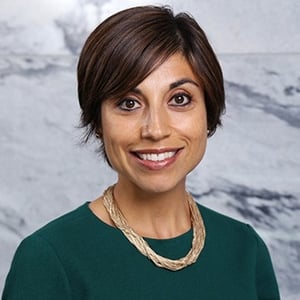
Professor of Law, UC Irvine School of Law
Mehrsa Baradaran is a Professor of Law at UC Irvine School of Law.
Previously, she was the Robert Cotten Alston Chair in Corporate Law and Associate Dean for strategic initiatives with a focus on diversity and inclusion efforts and national and international faculty scholarship recognition at the University of Georgia School of Law.
Baradaran writes about banking law, financial inclusion, inequality, and the racial wealth gap. Her scholarship includes the books How the Other Half Banks and The Color of Money: Black Banks and the Racial Wealth Gap, both published by the Harvard University Press. The Color of Money: Black Banks and the Racial Wealth Gap was awarded the Best Book of the Year by the Urban Affairs Association, the PROSE Award Honorable Mention in the Business, Finance & Management category. Baradaran was also selected as a finalist at the 2018 Georgia Author of the Year Awards for the book in the category of history/biography.
Baradaran has also published articles including "Jim Crow Credit" in the Irvine Law Review, "Regulation by Hypothetical" in the Vanderbilt Law Review, "It's Time for Postal Banking" in the Harvard Law Review Forum, "Banking and the Social Contract" in the Notre Dame Law Review, "How the Poor Got Cut Out of Banking" in the Emory Law Journal, "Reconsidering the Separation of Banking and Commerce" in the George Washington Law Review and "The ILC and the Reconstruction of U.S. Banking" in the SMU Law Review. Of note, her article "The New Deal with Black America" was selected for presentation at the 2017 Stanford/Harvard/Yale Junior Faculty Forum.
Baradaran and her books have received significant national and international media coverage and have been featured in the New York Times, the Atlantic, Slate, American Banker, the Wall Street Journal and Financial Times; on National Public Radio’s “Marketplace,” C-SPAN’s “Washington Journal” and Public Broadcasting Service’s “NewsHour;” and as part of TEDxUGA. She has advised U.S. Senators and Congressmen on policy, testified before the U.S. Congress, and spoken at national and international forums like the U.S. Treasury and the World Bank.
She earned her bachelor's degree cum laude from Brigham Young University and her law degree cum laude from NYU, where she served as a member of the New York University Law Review.
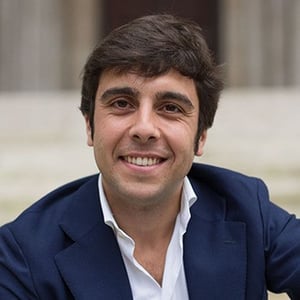
Executive Director, Government Affairs, Goldman Sachs
Diego Zuluaga serves as Executive Director, Government Affairs at Goldman Sachs.
Previously Zuluaga served as a Principal at Fingleton. Prior to joining Fingleton, Zuluaga was an associate director of financial regulation studies at the Cato Institute’s Center for Monetary and Financial Alternatives, where he covered financial technology and consumer credit. Before joining Cato, Zuluaga was Head of Financial Services and Tech Policy at the Institute of Economic Affairs in London. While at the IEA, he wrote on international capital mobility, multi-sided platform regulation, and price controls on consumer credit, among other subjects.
Zuluaga is the author of “Should Cryptocurrencies Be Regulated like Securities?” and “The Community Reinvestment Act in the Age of Fintech and Bank Competition.” He has previously testified on the impact of restrictions on short-term lending before the House Subcommittee on Consumer Protection and Financial Institutions. Zuluaga's work has featured in print and broadcast media, such as Politico, the Wall Street Journal, Newsweek, American Banker, the London Times, and the Daily Telegraph. Zuluaga is a prolific public speaker as well as a former lecturer in economics at the University of Buckingham.
Originally from Bilbao in northern Spain, Zuluaga holds a BA in economics and history from McGill University, and an MSc in financial economics from the University of Oxford.
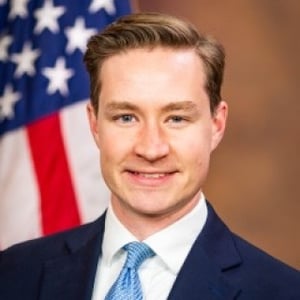
Assistant Attorney General, Office of Legal Counsel, U.S. Department of Justice
T. Elliot Gaiser is the Office of Legal Counsel’s 27th Assistant Attorney General. He was nominated by President Donald Trump on April 29, 2025, confirmed by the United States Senate on July 30, 2025, and sworn in as AAG by Attorney General Pam Bondi on August 4, 2025.
Prior to joining the Office of Legal Counsel, Mr. Gaiser served as the 11th Solicitor General of Ohio. In that role, he represented his home state and its agencies before the Supreme Court of the United States, the United States Court of Appeals for the Sixth Circuit, the Supreme Court of Ohio, and other state and federal courts. He also advised Ohio Attorney General Dave Yost on significant legal and constitutional matters important to the people of Ohio.
Mr. Gaiser clerked for Justice Samuel A. Alito, Jr. of the Supreme Court of the United States, Judge Neomi Rao of the United States Court of Appeals for the D.C. Circuit, and Judge Edith H. Jones of the United States Court of Appeals for the Fifth Circuit. In the private sector, Mr. Gaiser worked at the law firms Jones Day, Boyden Gray, and Gibson Dunn. He graduated from the University of Chicago Law School and Hillsdale College. He is also a husband and father.

Senior Vice President for Legal Studies, Cato Institute
Clark Neily is senior vice president for legal studies at the Cato Institute. His areas of interest include constitutional law, overcriminalization, civil forfeiture, police accountability, and gun rights. Neily is the author of Terms of Engagement: How Our Courts Should Enforce the Constitution’s Promise of Limited Government. His writing has appeared in the Wall Street Journal, Forbes, and National Review Online, as well as various law reviews, including the Harvard Journal of Law and Public Policy, George Mason Law Review, Georgetown Journal of Law and Public Policy, NYU Journal of Law and Liberty, and Texas Review of Law and Politics. Neily is a frequent guest speaker and lecturer for the Federalist Society, Institute for Humane Studies, and American Constitution Society.
Before joining Cato in 2017, Neily was a senior attorney and constitutional litigator at the Institute for Justice and director of the Institute’s Center for Judicial Engagement. He is also an adjunct professor at the University of Texas School of Law, where he teaches constitutional litigation and public-interest law.
Neily served as co-counsel in District of Columbia v. Heller, the historic case in which the Supreme Court held for the first time that the Second Amendment protects an individual right to own a gun for self-defense.
Neily began his legal career as a law clerk to Judge Royce Lamberth on the U.S. District Court for the District of Columbia. After that he spent four years in the trial department of the Dallas-based firm Thompson & Knight. Neily received his undergraduate and law degrees from the University of Texas, where he was Chief Articles Editor of the Texas Law Review.
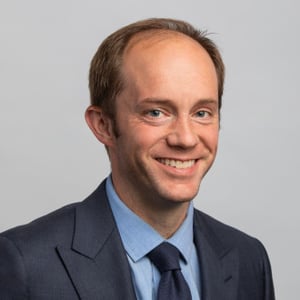
Attorney, Institute for Justice
Jeffrey Redfern joined the Institute for Justice in 2016, and he litigates constitutional cases protecting property rights and free speech.
Before joining IJ, Jeffrey was a member of the appellate group at Mayer Brown LLP, where he authored briefs on various constitutional issues in the U.S. Supreme Court and in lower federal and state courts. He has argued cases before the First and Seventh Circuits. Jeffrey clerked for Judge Laurence Silberman of the U.S. Court of Appeals for the D.C. Circuit.
Jeffrey earned his J.D., cum laude, from Harvard Law School in 2012. Between his first and second years of law school, he clerked at IJ’s Minnesota office. That experience inspired him to file his own pro se constitutional lawsuit against the government while still in school. (After over two years of litigation, the government finally provided the relief he requested.)
Before law school, Jeffrey taught English at a prep school in Southern California. He earned his MA in humanities from the University of Chicago in 2006 and his BA in English, magna cum laude, from Carleton College in 2005. Jeffrey enjoys competitive distance running, and he has a marathon personal best of 2 hours and 30 minutes.
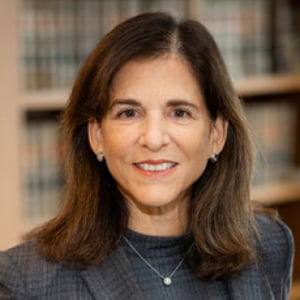
Professor of Clinical Law, Brooklyn Law School
Jodi S. Balsam is Professor of Clinical Law at Brooklyn Law School and a nationally recognized expert on Sports Law. She directs the BLS Sports Law Clinic and Sports Law Externship Program. She teaches Sports Law at both BLS and NYU School of Law, and has also taught the subject at New York Law School, University of New Hampshire School of Law, Bucerius Law School in Hamburg, Germany, Mathias Corvinus Collegium in Budapest, Hungary, and the MESGO Executive Masters Program in Global Sport Governance. Professor Balsam has served as an arbitrator for the National Collegiate Athletic Association on complex infractions cases, and now serves as a neutral for FAIR Sports, which hears cases involving college athletics.
Professor Balsam frequently writes and speaks on sports law topics, including as co-author of Weiler’s Sports and the Law, a leading casebook in the field. Her publications and presentations have addressed antitrust challenges to sports leagues and organizing bodies, sports trademarks, athletes’ rights of free expression and name/image/likeness exploitation, sports gambling and integrity, sports league governance, and the role of the sports agent. She frequently appears in the media on legal issues in sports, including NBC Sports/The Golf Channel, ESPN, Law360 Sports and Betting, The Athletic, Front Office Sports, USA Today, and the Wall Street Journal. She is on the editorial boards of Law360-Sports & Betting, the Journal of Legal Aspects of Sport, and the international sports law newsletter LawInSport.
Before joining academia, Professor Balsam was the National Football League's Counsel for Operations and Litigation, where she managed litigation in all areas of law, oversaw a variety of policy and operational matters, negotiated and drafted contracts for League special events including the Super Bowl, and administered the League's internal dispute resolution processes and compliance program. Prior to the NFL she was a litigator with the New York office of Simpson Thacher & Bartlett, where she represented sports and entertainment clients in antitrust matters and complex commercial litigation. She served as a law clerk for Judge Dennis Jacobs of the U.S. Court of Appeals for the Second Circuit and for Judge Charles Brieant of the U.S. District Court for the Southern District of New York. A graduate of Yale College, Professor Balsam received her law degree from NYU School of Law.
Senior Vice President for Legal Studies, Cato Institute
Clark Neily is senior vice president for legal studies at the Cato Institute. His areas of interest include constitutional law, overcriminalization, civil forfeiture, police accountability, and gun rights. Neily is the author of Terms of Engagement: How Our Courts Should Enforce the Constitution’s Promise of Limited Government. His writing has appeared in the Wall Street Journal, Forbes, and National Review Online, as well as various law reviews, including the Harvard Journal of Law and Public Policy, George Mason Law Review, Georgetown Journal of Law and Public Policy, NYU Journal of Law and Liberty, and Texas Review of Law and Politics. Neily is a frequent guest speaker and lecturer for the Federalist Society, Institute for Humane Studies, and American Constitution Society.
Before joining Cato in 2017, Neily was a senior attorney and constitutional litigator at the Institute for Justice and director of the Institute’s Center for Judicial Engagement. He is also an adjunct professor at the University of Texas School of Law, where he teaches constitutional litigation and public-interest law.
Neily served as co-counsel in District of Columbia v. Heller, the historic case in which the Supreme Court held for the first time that the Second Amendment protects an individual right to own a gun for self-defense.
Neily began his legal career as a law clerk to Judge Royce Lamberth on the U.S. District Court for the District of Columbia. After that he spent four years in the trial department of the Dallas-based firm Thompson & Knight. Neily received his undergraduate and law degrees from the University of Texas, where he was Chief Articles Editor of the Texas Law Review.
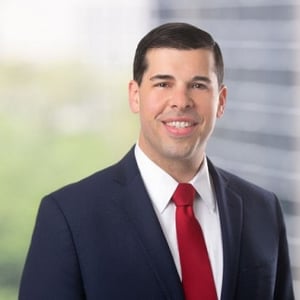
Partner, Boies Schiller Flexner LLP
Jesse, the former third-ranking official at the U.S. Department of Justice, helps clients with their most difficult litigation and regulatory issues─whether that means defending against an enforcement action, pursuing high-stakes litigation and appeals, navigating regulatory thickets at federal and state agencies, or crafting a comprehensive strategy to manage a crisis. He approaches these problems with the knowledge gained both from his broad private-practice experience and from having served at the highest levels of federal and state government.
Jesse has experience across a range of substantive and regulatory areas. He has sued the federal government and has also been one of its top law-enforcement officials; he has represented states and has also navigated their regulatory agencies on behalf of clients; and he has represented companies in business disputes, both as defendants and plaintiffs.
Before joining the firm, Jesse was the Acting Associate Attorney General at the United States Department of Justice. In that role, he oversaw the civil and criminal work of the Antitrust, Civil, Civil Rights, Environment and Natural Resources, and Tax Divisions. During Jesse’s tenure, the Associate’s office closely managed the Department’s most significant litigation, including matters involving large financial institutions, healthcare companies, automakers, energy companies, and state and local governments. In addition, Jesse served as Chair of DOJ’s Regulatory Reform Task Force and Vice Chair of DOJ’s Task Force on Market Integrity and Consumer Fraud. Jesse regularly provided legal and strategic advice to the highest-level decision makers in the federal government, including the Attorney General and Deputy Attorney General, general counsels across the spectrum of federal agencies, and White House officials.
Jesse served for three years as the secretary of Florida’s labor, economic-development, and land-use agency, the Florida Department of Economic Opportunity. Before that, he served as Governor (now Senator) Rick Scott’s general counsel.
Jesse maintains offices in both Washington D.C. and Florida. From Washington, he focuses on federal litigation and crisis management. In Florida, in addition to federal litigation, Jesse employs his knowledge of state government and regulation to help clients in courts across the state, from trial through the Florida Supreme Court.
Jesse currently serves on the Florida Supreme Court Judicial Nominating Commission, the body that provides the governor with nominees for appointment to the Florida Supreme Court. Jesse is also a fellow at the Center for the Study of the Administrative State at the Scalia Law School at George Mason University, where he writes and speaks about administrative law.

Co-Founder and Co-CEO, Institute for Progress
Caleb Watney is the co-founder and co-CEO of the Institute for Progress.
Caleb manages the metascience and immigration policy teams at IFP. His research focuses on policy levers the U.S. could use to rebuild state capacity and increase long-term rates of innovation.
Previously, Caleb worked as the director of innovation policy at the Progressive Policy Insitute, a technology policy fellow at the R Street Institute, and a graduate research fellow at the Mercatus Center. His commentary has been published in The Washington Post, The Atlantic, Politico, Lawfare, and the National Review. He has also been cited in the New York Times, The Economist, Vox, Ars Technica, and the National Journal. He received his master’s in economics from George Mason University and a bachelor of business administration from Sterling College.

Head of Tech & Innovation, Centre for Policy Studies
Matthew Feeney is Head of Tech & Innovation at Centre for Policy Studies. Before joining CPS, Matthew was the director of Cato Institute’s Project on Emerging Technologies. His writing has appeared in The New York Times, The Washington Post, City A.M., and others. He received both his BA and MA in philosophy from the University of Reading.

Senior Legal Fellow, The Future of Free Speech, Vanderbilt University
Ashkhen Kazaryan is a renowned expert in First Amendment law and technology policy, specializing in digital free speech, artificial intelligence, and the intersection of constitutional rights with emerging technologies. As a Senior Legal Fellow at the Future of Free Speech at Vanderbilt University, she leads initiatives to protect free expression and shape policies that uphold the First Amendment in the digital age.
Previously, Ashkhen was the lead for North and Latin America on the content regulation team at Meta, where she also served as the company’s policy lead on Section 230. She has also been a Senior Fellow at Stand Together and the Director of Civil Liberties at TechFreedom, where she worked extensively on platform liability, free speech, and internet governance. She is currently Fellow for the First Amendment at the Freedom Forum.
Ashkhen earned her specialist in law degree summa cum laude from Lomonosov Moscow State University in 2012 and later received a master of law degree from Yale Law School in 2016. During her time at Yale, she contributed as an articles editor for the Yale Journal of Law and Feminism, a senior editor for the Yale Law and Policy Review, and an editor for the Yale Journal of Law and Technology, while also serving as co-chair of the Public Interest Fellowship.
Professor of Law, UC Irvine School of Law
Mehrsa Baradaran is a Professor of Law at UC Irvine School of Law.
Previously, she was the Robert Cotten Alston Chair in Corporate Law and Associate Dean for strategic initiatives with a focus on diversity and inclusion efforts and national and international faculty scholarship recognition at the University of Georgia School of Law.
Baradaran writes about banking law, financial inclusion, inequality, and the racial wealth gap. Her scholarship includes the books How the Other Half Banks and The Color of Money: Black Banks and the Racial Wealth Gap, both published by the Harvard University Press. The Color of Money: Black Banks and the Racial Wealth Gap was awarded the Best Book of the Year by the Urban Affairs Association, the PROSE Award Honorable Mention in the Business, Finance & Management category. Baradaran was also selected as a finalist at the 2018 Georgia Author of the Year Awards for the book in the category of history/biography.
Baradaran has also published articles including "Jim Crow Credit" in the Irvine Law Review, "Regulation by Hypothetical" in the Vanderbilt Law Review, "It's Time for Postal Banking" in the Harvard Law Review Forum, "Banking and the Social Contract" in the Notre Dame Law Review, "How the Poor Got Cut Out of Banking" in the Emory Law Journal, "Reconsidering the Separation of Banking and Commerce" in the George Washington Law Review and "The ILC and the Reconstruction of U.S. Banking" in the SMU Law Review. Of note, her article "The New Deal with Black America" was selected for presentation at the 2017 Stanford/Harvard/Yale Junior Faculty Forum.
Baradaran and her books have received significant national and international media coverage and have been featured in the New York Times, the Atlantic, Slate, American Banker, the Wall Street Journal and Financial Times; on National Public Radio’s “Marketplace,” C-SPAN’s “Washington Journal” and Public Broadcasting Service’s “NewsHour;” and as part of TEDxUGA. She has advised U.S. Senators and Congressmen on policy, testified before the U.S. Congress, and spoken at national and international forums like the U.S. Treasury and the World Bank.
She earned her bachelor's degree cum laude from Brigham Young University and her law degree cum laude from NYU, where she served as a member of the New York University Law Review.
Assistant Attorney General, Office of Legal Counsel, U.S. Department of Justice
T. Elliot Gaiser is the Office of Legal Counsel’s 27th Assistant Attorney General. He was nominated by President Donald Trump on April 29, 2025, confirmed by the United States Senate on July 30, 2025, and sworn in as AAG by Attorney General Pam Bondi on August 4, 2025.
Prior to joining the Office of Legal Counsel, Mr. Gaiser served as the 11th Solicitor General of Ohio. In that role, he represented his home state and its agencies before the Supreme Court of the United States, the United States Court of Appeals for the Sixth Circuit, the Supreme Court of Ohio, and other state and federal courts. He also advised Ohio Attorney General Dave Yost on significant legal and constitutional matters important to the people of Ohio.
Mr. Gaiser clerked for Justice Samuel A. Alito, Jr. of the Supreme Court of the United States, Judge Neomi Rao of the United States Court of Appeals for the D.C. Circuit, and Judge Edith H. Jones of the United States Court of Appeals for the Fifth Circuit. In the private sector, Mr. Gaiser worked at the law firms Jones Day, Boyden Gray, and Gibson Dunn. He graduated from the University of Chicago Law School and Hillsdale College. He is also a husband and father.
Executive Director, Government Affairs, Goldman Sachs
Diego Zuluaga serves as Executive Director, Government Affairs at Goldman Sachs.
Previously Zuluaga served as a Principal at Fingleton. Prior to joining Fingleton, Zuluaga was an associate director of financial regulation studies at the Cato Institute’s Center for Monetary and Financial Alternatives, where he covered financial technology and consumer credit. Before joining Cato, Zuluaga was Head of Financial Services and Tech Policy at the Institute of Economic Affairs in London. While at the IEA, he wrote on international capital mobility, multi-sided platform regulation, and price controls on consumer credit, among other subjects.
Zuluaga is the author of “Should Cryptocurrencies Be Regulated like Securities?” and “The Community Reinvestment Act in the Age of Fintech and Bank Competition.” He has previously testified on the impact of restrictions on short-term lending before the House Subcommittee on Consumer Protection and Financial Institutions. Zuluaga's work has featured in print and broadcast media, such as Politico, the Wall Street Journal, Newsweek, American Banker, the London Times, and the Daily Telegraph. Zuluaga is a prolific public speaker as well as a former lecturer in economics at the University of Buckingham.
Originally from Bilbao in northern Spain, Zuluaga holds a BA in economics and history from McGill University, and an MSc in financial economics from the University of Oxford.

Director of Litigation and Senior Attorney, Hamilton Lincoln Law Institute
Theodore H. Frank is director at the Hamilton Lincoln Law Institute and the Center for Class Action Fairness. Frank founded and ran CCAF as a non-profit, public interest law firm in 2009.
Frank has won several landmark appeals and tens of millions of dollars for consumers and other plaintiffs through his class action work. Adam Liptak of The New York Times calls Frank “the leading critic of abusive class action settlements” and the American Lawyer Litigation Daily referred to him as “the indefatigable scourge of underwhelming class action settlements.”
Previously, Frank clerked for the Honorable Frank H. Easterbrook on the Seventh Circuit Court of Appeals, and was a litigator at firms in Washington and Los Angeles and a resident fellow at the American Enterprise Institute. Frank is a frequent public speaker and has testified before Congress multiple times on legal issues. He has been profiled by The Wall Street Journal, Forbes, GQ, and the ABA Journal, among other publications.
In 2008, Frank was elected to membership in the American Law Institute. He also serves on the Executive Committee of the Federalist Society Litigation Practice Group. Frank graduated from The University of Chicago Law School in 1994 with high honors and as a member of the Order of the Coif and the Law Review. He is a member of the District of Columbia Bar and the state bars of California and Illinois.
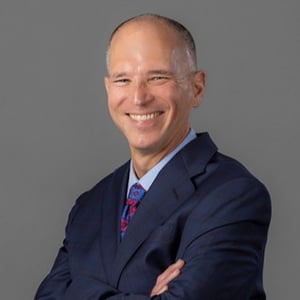
George Mason University Foundation Professor of Law, Antonin Scalia Law School, George Mason University
TODD J. ZYWICKI is George Mason University Foundation Professor of Law at Antonin Scalia Law School at George Mason University and Research Fellow of the George Mason Law and Economics Center. During the Fall 2023 semester he served as the Visiting Scholar in Conservative Thought and Policy for the Bruce Benson Center for the Study of Western Civilization at the University of Colorado-Boulder. From 2020-2021 he was Chair of the Consumer Financial Protection Bureau Taskforce on Federal Consumer Financial Law. In 2021 he was inducted to the American College of Consumer Financial Services Lawyers. He is also a Senior Fellow of the F.A. Hayek Program for the Advanced Study of Politics, Philosophy, and Economics at George Mason University and a former Senior Fellow of the Cato Institute. From 2015-2017 he was Executive Director of the George Mason Law and Economics Center. He served as Co-Editor of the Supreme Court Economic Review from 2006-2017. From 2003-2004, Professor Zywicki served as the Director of the Office of Policy Planning at the Federal Trade Commission. He has also taught at Vanderbilt University Law School, Georgetown University Law Center, Boston College Law School, Mississippi College School of Law, and China University of Political Science and Law.
Professor Zywicki clerked for Judge Jerry E. Smith of the U.S. Court of Appeals for the Fifth Circuit and worked as an associate at Alston & Bird in Atlanta, Georgia, where he practiced bankruptcy and commercial law. He received his J.D. from the University of Virginia, where he was executive editor of the Virginia Tax Review and John M. Olin Scholar in Law and Economics. Professor Zywicki also received an M.A. in Economics from Clemson University and an A.B. cum Laude with high honors in his major from Dartmouth College.
Professor Zywicki is also a Lone Mountain Fellow of the Property and Environment Research Center, a Fellow of the International Centre for Economic Research in Turin, Italy, and a former Senior Fellow of the Goldwater Institute. During the Fall 2008 Semester Professor Zywicki was the Searle Fellow of the George Mason University School of Law and was a 2008-09 W. Glenn Campbell and Rita Ricardo-Campbell National Fellow and the Arch W. Shaw National Fellow at the Hoover Institution on War, Revolution and Peace. He has lectured and consulted with government officials around the world, including Iceland, Italy, Japan, and Guatemala. In 2006 Professor Zywicki served as a Member of the United States Department of Justice Study Group on “Identifying Fraud, Abuse and Errors in the United States Bankruptcy System.”
Professor Zywicki is the author of more than 130 articles in leading law reviews and peer-reviewed economics journals. He is one of the Top 10 most-cited law professors in the field of Commercial Law and one of the Top 25 law professors on Twitter as measured by engagement levels. He is one of the Top 50 Most Downloaded Law Authors at the Social Science Research Network. He has testified multiple times before Congress on issues of consumer bankruptcy law and consumer credit and is a frequent commentator on legal issues in the print and broadcast media, including the Wall Street Journal, New York Times, The Washington Post, The Washington Times, Nightline, The Newshour with Jim Lehrer, Neil Cavuto Show, Fox & Friends, Smerconish, Fox News @ Night with Shannon Bream, Fox Business, CNN, CNBC, Bloomberg News, BBC, The Diane Rehm Show, Lou Dobbs Show, Jerry Doyle Show, and The Laura Ingraham Show.
Professor Zywicki is former Chairman and a current member of the Board of Directors of the Competitive Enterprise Institute, and is a member of the Board of Directors of the Institute for Humane Studies, Bill of Rights Institute, the Executive Committee for the Federalist Society's Financial Institutions and E-Commerce Practice Group, the Board of Trustees of the Foundation for Research on Economics and the Environment. He formerly served on the Governing Board and the Advisory Council for the Financial Services Research Program at George Washington University School of Business. He is currently the Chair of the Academic Advisory Council for the following organizations: The Bill of Rights Institute, the film “We the People in IMAX,” and the McCormick-Tribune Foundation “Freedom Museum” in Chicago, Illinois. He is a member of the Board of Visitors of Ralston College and was a member of the Board of Trustees of Yorktown University. From 2005-2009 he served as an elected Alumni Trustee of the Dartmouth College Board of Trustees.
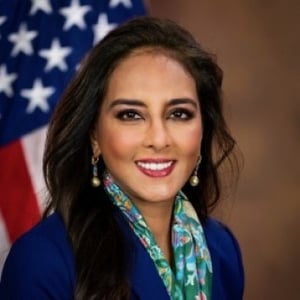
Assistant Attorney General for Civil Rights, U.S. Department of Justice
Harmeet K. Dhillon is the Assistant Attorney General for Civil Rights at the U.S. Department of Justice. She was nominated by President Donald Trump in December 2024. She was confirmed by the U.S. Senate on April 3, 2025, and sworn in as AAG by Attorney General Pam Bondi on April 7, 2025.
Prior to joining the Division, Ms. Dhillon founded both the Dhillon Law Group, Inc., a successful legal practice with offices in California, Florida, Virginia, and New Jersey; and the Center for American Liberty, a nonprofit organization dedicated to pursuing civil liberties legal claims. Her law practice focused on First Amendment / free speech, civil rights, and campaign and election law issues. Among her many notable cases, Ms. Dhillon brought legal challenges against the University of California, Berkeley over its free speech policy, against an Antifa organization for an assault on a conservative journalist, against several states for their restrictive responses to Covid-19, and against various large tech companies for a host of civil rights issues.
Assistant Attorney General Dhillon was born in Chandigarh, India, and lived in London before moving to The Bronx, New York. Her family ultimately settled in rural Smithfield, North Carolina. After graduating high school at age 16, Ms. Dhillon attended Dartmouth College where she became editor-in-chief of The Dartmouth Review. After earning her bachelor’s degree in Classical Studies, she attended the University of Virginia School of Law and served on the editorial board of the Virginia Law Review. She later clerked for the Honorable Paul V. Niemeyer of the United States Court of Appeals for the Fourth Circuit in Baltimore, Maryland.

Senior Fellow and Director of Constitutional Studies, Manhattan Institute
Ilya Shapiro is a senior fellow and director of constitutional studies at the Manhattan Institute and a contributing editor of City Journal. Previously he was executive director and senior lecturer at the Georgetown Center for the Constitution, and before that a vice president of the Cato Institute.
Shapiro is the author of Lawless: The Miseducation of America’s Elites (2025) and Supreme Disorder: Judicial Nominations and the Politics of America’s Highest Court (2020), coauthor of Religious Liberties for Corporations? (2014), and editor of 11 volumes of the Cato Supreme Court Review (2008-18). He has contributed to a variety of academic, popular, and professional publications, including the Wall Street Journal, Harvard Journal of Law & Public Policy, Washington Post, Los Angeles Times, USA Today, National Review, and Newsweek. He also regularly provides commentary for various media outlets, writes the Shapiro’s Gavel newsletter on Substack, and once appeared on the Colbert Report.
Shapiro has testified many times before Congress and state legislatures and has filed more than 500 amicus curiae “friend of the court” briefs in the Supreme Court. He lectures regularly on behalf of the Federalist Society, is a member of the board of fellows of the Jewish Policy Center, was an inaugural Washington Fellow at the National Review Institute, and has been an adjunct law professor at the George Washington University and University of Mississippi. He is also the chairman of the board of advisers of the Mississippi Justice Institute, a barrister in the Edward Coke Appellate Inn of Court, and a former member of the Virginia Advisory Committee to the U.S. Commission on Civil Rights.
Earlier in his career, Shapiro was a special assistant/adviser to the Multi-National Force in Iraq on rule-of-law issues and practiced at Patton Boggs and Cleary Gottlieb. Before entering private practice, he clerked for Judge E. Grady Jolly of the U.S. Court of Appeals for the Fifth Circuit. He holds an AB from Princeton University, an MSc from the London School of Economics, and a JD from the University of Chicago Law School.
Senior Vice President for Legal Studies, Cato Institute
Clark Neily is senior vice president for legal studies at the Cato Institute. His areas of interest include constitutional law, overcriminalization, civil forfeiture, police accountability, and gun rights. Neily is the author of Terms of Engagement: How Our Courts Should Enforce the Constitution’s Promise of Limited Government. His writing has appeared in the Wall Street Journal, Forbes, and National Review Online, as well as various law reviews, including the Harvard Journal of Law and Public Policy, George Mason Law Review, Georgetown Journal of Law and Public Policy, NYU Journal of Law and Liberty, and Texas Review of Law and Politics. Neily is a frequent guest speaker and lecturer for the Federalist Society, Institute for Humane Studies, and American Constitution Society.
Before joining Cato in 2017, Neily was a senior attorney and constitutional litigator at the Institute for Justice and director of the Institute’s Center for Judicial Engagement. He is also an adjunct professor at the University of Texas School of Law, where he teaches constitutional litigation and public-interest law.
Neily served as co-counsel in District of Columbia v. Heller, the historic case in which the Supreme Court held for the first time that the Second Amendment protects an individual right to own a gun for self-defense.
Neily began his legal career as a law clerk to Judge Royce Lamberth on the U.S. District Court for the District of Columbia. After that he spent four years in the trial department of the Dallas-based firm Thompson & Knight. Neily received his undergraduate and law degrees from the University of Texas, where he was Chief Articles Editor of the Texas Law Review.
Attorney, Institute for Justice
Jeffrey Redfern joined the Institute for Justice in 2016, and he litigates constitutional cases protecting property rights and free speech.
Before joining IJ, Jeffrey was a member of the appellate group at Mayer Brown LLP, where he authored briefs on various constitutional issues in the U.S. Supreme Court and in lower federal and state courts. He has argued cases before the First and Seventh Circuits. Jeffrey clerked for Judge Laurence Silberman of the U.S. Court of Appeals for the D.C. Circuit.
Jeffrey earned his J.D., cum laude, from Harvard Law School in 2012. Between his first and second years of law school, he clerked at IJ’s Minnesota office. That experience inspired him to file his own pro se constitutional lawsuit against the government while still in school. (After over two years of litigation, the government finally provided the relief he requested.)
Before law school, Jeffrey taught English at a prep school in Southern California. He earned his MA in humanities from the University of Chicago in 2006 and his BA in English, magna cum laude, from Carleton College in 2005. Jeffrey enjoys competitive distance running, and he has a marathon personal best of 2 hours and 30 minutes.
Professor of Clinical Law, Brooklyn Law School
Jodi S. Balsam is Professor of Clinical Law at Brooklyn Law School and a nationally recognized expert on Sports Law. She directs the BLS Sports Law Clinic and Sports Law Externship Program. She teaches Sports Law at both BLS and NYU School of Law, and has also taught the subject at New York Law School, University of New Hampshire School of Law, Bucerius Law School in Hamburg, Germany, Mathias Corvinus Collegium in Budapest, Hungary, and the MESGO Executive Masters Program in Global Sport Governance. Professor Balsam has served as an arbitrator for the National Collegiate Athletic Association on complex infractions cases, and now serves as a neutral for FAIR Sports, which hears cases involving college athletics.
Professor Balsam frequently writes and speaks on sports law topics, including as co-author of Weiler’s Sports and the Law, a leading casebook in the field. Her publications and presentations have addressed antitrust challenges to sports leagues and organizing bodies, sports trademarks, athletes’ rights of free expression and name/image/likeness exploitation, sports gambling and integrity, sports league governance, and the role of the sports agent. She frequently appears in the media on legal issues in sports, including NBC Sports/The Golf Channel, ESPN, Law360 Sports and Betting, The Athletic, Front Office Sports, USA Today, and the Wall Street Journal. She is on the editorial boards of Law360-Sports & Betting, the Journal of Legal Aspects of Sport, and the international sports law newsletter LawInSport.
Before joining academia, Professor Balsam was the National Football League's Counsel for Operations and Litigation, where she managed litigation in all areas of law, oversaw a variety of policy and operational matters, negotiated and drafted contracts for League special events including the Super Bowl, and administered the League's internal dispute resolution processes and compliance program. Prior to the NFL she was a litigator with the New York office of Simpson Thacher & Bartlett, where she represented sports and entertainment clients in antitrust matters and complex commercial litigation. She served as a law clerk for Judge Dennis Jacobs of the U.S. Court of Appeals for the Second Circuit and for Judge Charles Brieant of the U.S. District Court for the Southern District of New York. A graduate of Yale College, Professor Balsam received her law degree from NYU School of Law.
Senior Vice President for Legal Studies, Cato Institute
Clark Neily is senior vice president for legal studies at the Cato Institute. His areas of interest include constitutional law, overcriminalization, civil forfeiture, police accountability, and gun rights. Neily is the author of Terms of Engagement: How Our Courts Should Enforce the Constitution’s Promise of Limited Government. His writing has appeared in the Wall Street Journal, Forbes, and National Review Online, as well as various law reviews, including the Harvard Journal of Law and Public Policy, George Mason Law Review, Georgetown Journal of Law and Public Policy, NYU Journal of Law and Liberty, and Texas Review of Law and Politics. Neily is a frequent guest speaker and lecturer for the Federalist Society, Institute for Humane Studies, and American Constitution Society.
Before joining Cato in 2017, Neily was a senior attorney and constitutional litigator at the Institute for Justice and director of the Institute’s Center for Judicial Engagement. He is also an adjunct professor at the University of Texas School of Law, where he teaches constitutional litigation and public-interest law.
Neily served as co-counsel in District of Columbia v. Heller, the historic case in which the Supreme Court held for the first time that the Second Amendment protects an individual right to own a gun for self-defense.
Neily began his legal career as a law clerk to Judge Royce Lamberth on the U.S. District Court for the District of Columbia. After that he spent four years in the trial department of the Dallas-based firm Thompson & Knight. Neily received his undergraduate and law degrees from the University of Texas, where he was Chief Articles Editor of the Texas Law Review.
Partner, Boies Schiller Flexner LLP
Jesse, the former third-ranking official at the U.S. Department of Justice, helps clients with their most difficult litigation and regulatory issues─whether that means defending against an enforcement action, pursuing high-stakes litigation and appeals, navigating regulatory thickets at federal and state agencies, or crafting a comprehensive strategy to manage a crisis. He approaches these problems with the knowledge gained both from his broad private-practice experience and from having served at the highest levels of federal and state government.
Jesse has experience across a range of substantive and regulatory areas. He has sued the federal government and has also been one of its top law-enforcement officials; he has represented states and has also navigated their regulatory agencies on behalf of clients; and he has represented companies in business disputes, both as defendants and plaintiffs.
Before joining the firm, Jesse was the Acting Associate Attorney General at the United States Department of Justice. In that role, he oversaw the civil and criminal work of the Antitrust, Civil, Civil Rights, Environment and Natural Resources, and Tax Divisions. During Jesse’s tenure, the Associate’s office closely managed the Department’s most significant litigation, including matters involving large financial institutions, healthcare companies, automakers, energy companies, and state and local governments. In addition, Jesse served as Chair of DOJ’s Regulatory Reform Task Force and Vice Chair of DOJ’s Task Force on Market Integrity and Consumer Fraud. Jesse regularly provided legal and strategic advice to the highest-level decision makers in the federal government, including the Attorney General and Deputy Attorney General, general counsels across the spectrum of federal agencies, and White House officials.
Jesse served for three years as the secretary of Florida’s labor, economic-development, and land-use agency, the Florida Department of Economic Opportunity. Before that, he served as Governor (now Senator) Rick Scott’s general counsel.
Jesse maintains offices in both Washington D.C. and Florida. From Washington, he focuses on federal litigation and crisis management. In Florida, in addition to federal litigation, Jesse employs his knowledge of state government and regulation to help clients in courts across the state, from trial through the Florida Supreme Court.
Jesse currently serves on the Florida Supreme Court Judicial Nominating Commission, the body that provides the governor with nominees for appointment to the Florida Supreme Court. Jesse is also a fellow at the Center for the Study of the Administrative State at the Scalia Law School at George Mason University, where he writes and speaks about administrative law.

The Evolution of Modern Use-of-Force Policies and the Need for Professionalism in Policing
Arthur Rizer, Emily Mooney
Note from the Editor: The Federalist Society takes no positions on particular legal and public...
Deep Dive Episode 110 – Community Reinvestment Act: Remedy or Relic?
Mehrsa Baradaran, Diego Zuluaga, T. Elliot Gaiser
Congress passed the Community Reinvestment Act in 1977, intending to encourage depository institutions to help...
Is There a "Police Power" Exception to the Fifth Amendment's Just Compensation Clause?
Clark Neily, Jeffrey H. Redfern
Police in Greenwood Village, CO, chased a shoplifting suspect into a home belonging to Leo...
Deep Dive Episode 110 – Community Reinvestment Act: Remedy or Relic?
Regulatory Transparency Project Teleforum
TeleforumTed Frank vs. Todd Zywicki: Acceptable Risk in Times of Pandemic
New Jersey Lawyers Chapter - Online Event
Emergency Powers and Constitutional Rights during Pandemics
Jefferson City Lawyers Chapter - Online Event
Is There a "Police Power" Exception to the Fifth Amendment's Just Compensation Clause?
TeleforumEx-Prosecutors And The Federal Judiciary
Jodi S. Balsam, Clark Neily, Jesse Panuccio
Amongst the many studies of the makeup of the Federal Judiciary, one particularly noticeable characteristic is the...
Ex-Prosecutors And The Federal Judiciary
Professional Responsibilities & Legal Education Practice Group Teleforum
TeleforumTech Roundup Episode 8 – The Future of Facial Recognition
Caleb Watney, Matthew Feeney, Ashkhen Kazaryan
In this episode, Matthew Feeney hosts a discussion with Ashkhen Kazaryan and Caleb Watney on...