
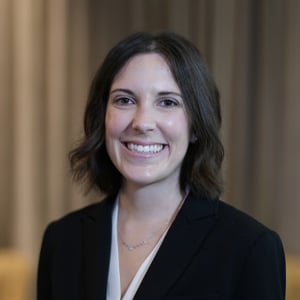
Director, Faculty Relations, The Federalist Society
Katie McClendon is the Director of Faculty Relations at the Federalist Society, where she has worked since 2015.
Katie holds a J.D. from the University of Pennsylvania Law School and a B.A. in Political Science from Biola University, where she was a member of the Torrey Honors Institute. She is a fellow of the John Jay Institute and the Blackstone Legal Fellowship. Katie is originally from Los Angeles, and she now lives with her husband and four children in Atlanta.

Board Member, Center for Equal Opportunity
Roger Clegg is a Board Member at and former President and General Counsel of the Center for Equal Opportunity. He focuses on legal issues arising from civil rights laws--including the regulatory impact on business and the problems in higher education created by affirmative action. A former Deputy Assistant Attorney General in the Reagan and Bush administrations, Clegg held the second highest positions in both the Civil Rights Division (1987-91) and in the Environment and Natural Resources Division (1991-93). He has held several other positions at the U.S. Justice Department, including Assistant to the Solicitor General (1985-87), Associate Deputy Attorney General (1984-85), and Acting Assistant Attorney General in the Office of Legal Policy (1984). Clegg is a graduate of Yale University Law School (1981).
John W. Wade Professor of Law, Pepperdine University School of Law
Richard L. Cupp, Jr. serves as the John W. Wade Professor of Law at Pepperdine Law School. He loves teaching and working with students. He is widely recognized as a leading scholar and commentator in the fields of torts and products liability law. He has authored more than 20 significant scholarly articles and numerous shorter articles. Professor Cupp is an elected member of the American Law Institute, and he has served as chair of the Association of American Law Schools Section on Torts and Compensation Systems.
In addition to his work in torts and products liability, Professor Cupp writes and speaks extensively about the legal and moral status of animals. He has advised many organizations on these subjects, including the National Academy of Sciences Committee on Science, Technology and Law, the National Academy of Sciences Committee on Neuroscience, the American Veterinary Medical Association, the National Association for Biomedical Research, the Animal Health Institute, and the American Animal Hospital Association.

Judge, United States Court of Appeals, D.C. Circuit
Judge Randolph was confirmed by the Senate and appointed to the United States Court of Appeals for the District of Columbia Circuit by President George H. W. Bush in July 1990.
Judge Randolph received his B.S. degree in 1966 from Drexel University, majoring in economics and basic engineering. At Drexel, he was president of the debate society, vice president of the Student Senate, and a member of the varsity wrestling squad. In 1969, he received his J.D. from the University of Pennsylvania, summa cum laude. Judge Randolph ranked first in his law school class all three years and was managing editor of the Law Review.
After graduation, Judge Randolph served as a law clerk to Judge Henry J. Friendly of the United States Court of Appeals for the Second Circuit in New York.
Admitted to the California Bar in 1970 (and to the District of Columbia bar in 1973), Judge Randolph worked as Assistant to the Solicitor General, U.S. Department of Justice, in Washington, D.C., 1970-1973.
After two years in private practice, Judge Randolph was named Deputy Solicitor General of the United States, a position he held from 1975-1977.
In 1979, Judge Randolph was appointed Special Counsel to the Committee on Standards of Official Conduct (the Ethics Committee) of the United States House of Representatives, remaining in this position until 1980.
In the 1980s, Judge Randolph held a number of positions while in private practice, including Special Assistant Attorney General for the states of New Mexico (1985 90), Utah (1986-1990) and Montana (1983-1990). He also served as a Member of the Advisory Panel of the Federal Courts Study Committee.
From 1971-1990, Judge Randolph argued 23 times in the United States Supreme Court, winning 20 of his cases.
As an Adjunct Professor of Law at Georgetown University Law Center from 1974-1978 he taught courses in civil procedure and injunctions. In 1992 he taught a course in constitutional law. He is a Distinguished Adjunct Professor of Law at George Mason School of Law and for the past ten years has been teaching First Amendment law. He also serves on the Judicial Advisory Board of the George Mason University Law and Economics Center.
From 1993 through 1995 Judge Randolph was a member of the Committee on Codes of Conduct of the Judicial Conference of the United States, and from 1995 to 1998 served as the Committee's chairman. He also served as the judicial liaison to the American Bar Association’s Administrative Law Section.
Judge Randolph is a member of the Board of Visitors at Drexel University Law School and was named to the “Drexel One Hundred” as a leading alumnus. In 2002 he was presented the James Wilson Award by the University of Pennsylvania Law School. In November 2005 he delivered the Fifth Annual Barbara K. Olson Memorial Lecture at the Annual Lawyers Convention of the Federalist Society. He has published numerous articles, the most recent of which is in the June 2006 issue of the Harvard Journal of Law and Public Policy.
Judge Randolph is married to the Honorable Eileen J. O’Connor, formerly Assistant Attorney General, Tax Division, U.S. Department of Justice. His son John Trevor Randolph is an investment banker in New York. His daughter Cynthia Lee Randolph is an artist living in San Francisco.
President, Nonhuman Rights Project, Inc.
Steven M. Wise is President of the Nonhuman Rights Project, Inc. He holds a J.D. from Boston University Law School and a B.S. in Chemistry from the College of William and Mary. He has practiced animal protection law for 30 years throughout the United States and is admitted to the Massachusetts Bar. Steve teaches “Animal Rights Jurisprudence” at the Vermont, Lewis and Clark, University of Miami, and St. Thomas Law Schools, and has taught “Animal Rights Law” at the Harvard Law School and John Marshall Law School.
Journalist/Author
Trevor W. Coleman is a national award-winning journalist and author who served s Chief Speechwriter to Michigan Gov. Jennifer M. Granholm and as Director of Communications for the Michigan Department of Civil Rights and the Governor’s Southeast Michigan office. Coleman was also a long time member of the editorial board of the Detroit Free Press where he won numerous awards for editorial and column writing prior to his appointment to the Granholm administration. He is currently working fulltime on the authorized biography of legendary federal Judge Damon J. Keith. Its working title is “Crusader for Justice: The Life and Amazing Times of Federal Judge Damon J. Keith.”
As the Director of Communications for the Michigan Department of Civil Rights, he was responsible for crafting a global communications strategy which included developing all internal and external communications policies, managing media relations and executive speechwriting responsibilities. Because of his unique joint appointment, he was also required to establish an effective external communications strategy for the Governor’s Office for SE Michigan. In that position he also served as the official liaison to the Governor’s Advisory Council on Arab and Chaldean Affairs and the Governor’s Advisory Council on Asian and Pacific Islander Affairs.
As Chief Speechwriter for Governor Granholm, Coleman wrote or contributed to all major public policy speeches including in the areas of international relations, automotive industry, education, economics, budgetary, race relations, and health, poverty and gender issues. He wrote major commencement addresses and contributed to State of the State address. Coleman also wrote the Governor’s guest OPEDS for state and regional newspapers as well as articles for public policy and other niche magazines. This included the Detroit News, Detroit Free Press, Detroit Crain’s Business, Detroit Magazine, the Michigan Chronicle and others. He also helped develop the Governor’s communication strategy for her “One Michigan” tour and campaign to unite citizens.
As a member of the editorial board of the Detroit Free Press, Coleman specialized in writing on education, health care and urban policy. He also frequently wrote on civil rights, civil liberties and the U.S. criminal justice system. He was the editorial board’s senior foreign affairs writer for three years. Prior to joining the Free Press, Coleman was an urban affairs and civil rights reporter for The Detroit News, an editorial writer for the Cincinnati Enquirer, reporter and columnist for the Hartford Courant and city desk reporter for the Times-Leader in Wilkes-Barre, Pennsylvania. He was also a contributing editor and writer for Emerge Magazine, Black Enterprise and the NAACP Crisis Magazine. Coleman also wrote a Sunday column for several years for his hometown newspaper, The Hudson Register Star.
Among his many journalism awards are a 2001 American Diabetes Association Award of Merit for a series of editorials urging the state to expand medical coverage for diabetics; a 1999 Michigan Press Association Award for column writing; a 1999 National Association of Black Journalist Award for Commentary; the 1998 Detroit Press Foundation Michigan Journalism Award for Commentary; the 1993 Detroit Press Foundation Journalism Award for News Reporting, 1993 Best of Gannett Award for News Reporting and the 1993 and 1999 Lincoln University Unity Awards for coverage of minority and social issues. Coleman is listed in “Who’s Who among African-Americans,” and in 2010 was listed in the “Who’s Who of Black Detroiters.”
Among his many honors have been a 2009 Michigan Department of Civil Rights Dedicated Service Award, 2008 Brown Chapel AME Church Civil Rights Leadership Award, 2004 Macomb County NAACP Freedom Fund Leadership Award, 2004 Over Comers Ministries Inc. Leadership Award, 2002 Wayne Community College District Award for Community Service and the 1993 Distinguished Alumni Award, from the Kappa Chapter of Alpha Phi Alpha Fraternity at The Ohio State University.
He has been a guest speaker at many colleges and universities across the nation; among them Harvard Law School, The Ohio State University, the University of Michigan and University of Michigan School of Law, Michigan State University, Wayne State University, The University of Toledo Law School, Delaware State University, Schoolcraft College, Wayne Community College and many others. He has also appeared on numerous television and radio talk and public affairs programs.
A native of New York, he received his undergraduate degree in communications from The Ohio State University and is a fellow at the Knight Center for Specialized Journalism at the University of Maryland. He is also is a graduate of the American Press Institute in Reston, VA and Poynter Institute in Fla. Coleman resides in Bloomfield Hills and is the divorced father of two children Sydnie, a college junior and TJ, a high school junior.
Attorney (of counsel), Witte Law Offices
Matthew G. Davis practices in the areas of appellate law, civil rights (including alleged violations of the First and Second Amendments), election law, campaign finance, and defamation. Mr. Davis is also experienced in general civil litigation.
Mr. Davis graduated from the The Ohio State University with a bachelors of arts in journalism in 1990 and earned his juris doctorate from Thomas M. Cooley Law School in 2005. He started his legal career in the pre-hearing division of the Michigan Court of Appeals before becoming law clerk for Judge Brian K. Zahra. Following his clerkship, Mr. Davis joined Witte Law Offices as an associate.
Prior to his legal career, Mr. Davis spent approximately twelve years as a reporter for various daily newspapers, including the Columbus ( Ohio ) Dispatch, the St. Paul (Minn. ) Pioneer Press, and the Detroit Free Press, where he covered the state Legislature in Lansing. Mr. Davis left newspapers to attend the Thomas M. Cooley Law School and, concomitantly, serve as director of communications for the Michigan Department of Corrections and the Michigan Department of Attorney General. Mr. Davis led the creation and development of the Offender Tracking Information System at the MDOC, which allows Internet access of offender information.
Racial Justice Staff Attorney, ACLU of Michigan
Through his work as the attorney for the Racial Justice Project of the ACLU of Michigan, Mark P. Fancher addresses: racially disproportionate rates of incarceration; racial discrimination against public school students of color, racial profiling, public defender system reform, attacks on affirmative action and juvenile sentencing issues.
Fancher was formerly the Senior Staff Attorney for the Sugar Law Center for Economic and Social Justice where he specialized in workers' rights. He served on the staff of the State Bar of Michigan from 1998 to 2000 where he coordinated projects to encourage greater pro bono participation by Michigan's lawyers. He was a visiting assistant clinical professor at the University of Michigan Law School from 1996 through 1998.
Before moving to Michigan, Fancher was the Director of Litigation for Camden Regional Legal Services in New Jersey. He has also been in private practice where he specialized in employment discrimination and community economic development. Fancher is a graduate of Rutgers University School of Law - Camden. He received a Bachelor of Science Degree from the University of Tennessee.
Fancher has played a leadership role in the National Conference of Black Lawyers (NCBL) for numerous years. He is a past chair of the organization’s International Affairs Section, and he served as NCBL’s national co-chair from 1995-1998. He is also a member of the State Bar of Michigan Pro Bono Initiative.
Fancher has lectured across the country and written extensively on issues that include: self-determination for Africa and the African Diaspora; indigenous peoples’ land and resource rights; and political repression in the U.S.

Co-Founder, XIV Foundation
Jennifer Gratz is a modern-day civil rights leader. In 1997 she challenged race preferences (also known as affirmative action) at the University of Michigan and was victorious at the U.S. Supreme Court.
Ms. Gratz was the lead plaintiff in the landmark case Gratz v. Bollinger which challenged affirmative action at the University of Michigan. On June 23, 2003 the U.S. Supreme Court ruled that Ms. Gratz was discriminated against and U-M’s admission policy was unconstitutional. However, in a companion case decided the same day (Grutter v. Bollinger), the Supreme Court allowed race preferences to continue at U-M’s law school. Ms. Gratz called the split decision flawed and continued the fight for equality in her home state. She spearheaded the Michigan Civil Rights Initiative (MCRI), a state constitutional amendment that made race and gender preferences unconstitutional in public education, employment and contracting. In Nov 2006 Michigan voters approved MCRI by a 16-point landslide.
At CPAC following the Michigan vote, Ms. Gratz was honored with the prestigious Ronald Reagan Award from the American Conservative Union for leadership. Jennifer has spent many years working to end programs that grant preferential treatment based on race or sex and because of Ms. Gratz’s leadership eight states have now banned race and gender preferences.
Recently, Ms. Gratz co-founded the XIV Foundation (XIV) and Equal Protection Advocates (EPA). XIV, named after the 14th amendment, is a not-for-profit 501c3 dedicated to teaching the personal and societal advantages of fair and equal treatment. EPA is a 501c4 dedicated to advocating for fair and equal treatment without regard to race or gender for all Americans.
Ms. Gratz’s story and work has been featured in nearly every major media outlet – Fox News, CNN, MSNBC, Dateline, 60 Minutes, The Today Show, Wall Street Journal, NY Times, Washington Post, Washington Times, LA Times, Detroit Free Press, Detroit News, National Review, US News and World Report, Newsweek, Time Magazine, People Magazine, Glamour Magazine – to name a few.

Editorial Cartoonist, Editorial Writer, and Weekly Columnist, The Detroit News
Henry Payne is an editorial cartoonist, editorial writer, and weekly columnist The Detroit News.
A Pulitzer-Prize nominated cartoonist, Payne produces five local editorial cartoons a week for The News. He also writes and draws a weekly column, “Payne & Ink.” Additionally, Payne draws five cartoons a week on national and international subjects for United Feature Syndicate in Kansas City which distributes his cartoons to 40 newspaper clients worldwide. His work is reprinted in USA Today, National Review,Townhall.com and other publications.
Payne has been voted Best Editorial Cartoonist in Michigan by the Associated Press. He has been a runner-up for both the Pulitzer and Mencken awards.
As a writer, Payne reports regularly on economic, consumer and environmental issues. His articles have appeared in The Wall Street Journal, The Weekly Standard magazine, National Review, Reason, Scripps Howard News Service and newspapers around the country. He also is a correspondent for National Review’s popular “Planet Gore” blog.
Payne came to The Detroit News in 1999 after 13 years as an editorial cartoonist, writer, and editor forScripps Howard News Service in Washington, DC .
Payne published his first book, “Payne & Ink: The Cartoons and Commentary of Henry Payne, 2000-2001,” in 2002. He has also illustrated two children’s books for Random House: “Where did Daddy’s Hair Go?” (by Joe O’Connor) in 2006, and Dr. Seuss’ “The Ear Book” in 2007. In 1998, Payne created “Hub & Axel,” a comic panel distributed by the Tribune Company Syndicate about an American family and its very American passion for the automobile.
Born in 1962 in Charleston, West Virginia, Payne received a degree in history from Princeton University in 1984. As editorial cartoonist for two student newspapers, The Daily Princetonian and the Nassau Weekly, Payne won the College Media Advisers Cartoon Contest and the Tribune Company Syndicate’s National College Cartoonist’s Contest. Upon graduation from Princeton, Payne began his newspaper career as staff artist and editorial cartoonist with the Charleston (WV) Daily Mail. In 1986 he joined Scripps Howard News Service and began syndication with United Feature in 1987.
Payne is an active race car driver, tennis and squash player. He is the father of two boys and lives with wife, Talbot, in Bloomfield Hills, Michigan.

Senior Legal Fellow, Edwin Meese III Institute for the Rule of Law, Advancing American Freedom

President, Thomas M. Cooley Student Chapter
Penelope holds a Political Science and Pre-Law undergraduate degree from the University of Texas at El Paso. She also received a Master of Science degree in Intelligence and National Security Studies with focus on Latino Immigration from the University of Texas at El Paso. Penelope has worked in several projects within the Latino Community such the LSPI Pre-Law Institute at UTEP as an outreach minority coordinator for recruitment of young Latino and underrepresented minorities to participate in the pre-law institute and later access IVY league Law Schools all across the country. Under the Kauffman Initiative she worked as an outreach specialist for the Hispanic Entrepreneur Center at UTEP She is now a J.D Law candidate 2014 at Thomas M. Cooley Law School.

Engage, Volume 16, Issue 3
Katie McClendon
Administrative Law & Regulation REINING in the Agencies: Oversight of Executive Branch Rulemaking in the...
Topics
Fed Soc Book Round-Up
At the Federalist Society, we pride ourselves on featuring content from a wide array of the...
Topics
A Conflict of Principles: The Battle Over Affirmative Action at the University of Michigan
Carl Cohen's book, A Conflict of Principles: The Battle Over Affirmative Action at the University of...
A Conflict of Principles: The Battle Over Affirmative Action at the University of Michigan
Roger B. Clegg
Note from the Editor: This book review discusses the contentious issue of affirmative action. The Federalist...
Human Responsibility, Not Legal Personhood, For Nonhuman Animals
Richard L. Cupp
Introduction We should focus on human legal accountability for responsible treatment of nonhuman animals rather...
Animal Personhood: A Debate
Richard L. Cupp, A. Raymond Randolph, Steven Wise
The Federalist Society does not authorize the use or transcription of these recordings, in part...
The Twilight of Race-Based Preferences in College Admissions
Trevor W. Coleman, Matthew G. Davis, Mark Fancher, Jennifer Gratz, Henry Payne, Hans A. Von Spakovsky, Penelope S. Williams
The Michigan Lawyers Chapter hosted this event on February 12, 2014, at Thomas M. Cooley...