
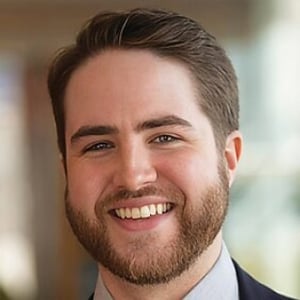
Nicholas Anthony is a policy analyst at the Cato Institute’s Center for Monetary and Financial Alternatives, a fellow at the Human Rights Foundation (HRF), and a member of the Economic Inclusion Group’s Advisory Board. Anthony’s research covers a wide range of topics within the field of monetary and financial economics, including central bank digital currency (CBDC), financial privacy, cryptocurrency, and the use of money in society. Anthony is the author of Digital Currency or Digital Control? Decoding CBDC and the Future of Money and his work has been published in the Wall Street Journal, MarketWatch, Business Insider, and numerous other outlets. Anthony has testified before Congress and maintains the HRF CBDC Tracker, which documents CBDC development and civil liberties concerns around the world.
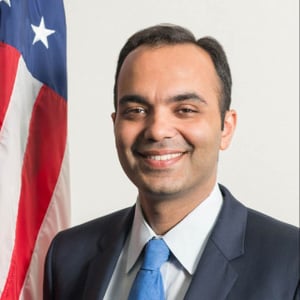
Director, Consumer Financial Protection Bureau
Rohit Chopra is Director of the Consumer Financial Protection Bureau. The CFPB is a unit of the Federal Reserve System charged with protecting families and honest businesses from illegal practices by financial institutions, and ensuring that markets for consumer financial products and services are fair, transparent, and competitive. As Director, Chopra is also a member of the Board of Directors of the Federal Deposit Insurance Corporation and the Financial Stability Oversight Council.
In 2018, Chopra was unanimously confirmed by the U.S. Senate as a Commissioner on the Federal Trade Commission, where he served until assuming office as CFPB Director. During his tenure at the FTC, he successfully worked to strengthen sanctions against repeat offenders, to reverse the agency’s reliance on no-money, no-fault settlements in fraud cases, and to halt abuses of small businesses. He also led efforts to revitalize dormant authorities, such as those to protect the Made in USA label and to promote competition.
The Director previously served at the CFPB from 2010 to 2015. In 2011, the Secretary of the Treasury designated him as the agency’s student loan ombudsman, where he led the Bureau’s efforts on student lending issues. Prior to his government service, Chopra worked at McKinsey & Company, the global management consultancy, where he worked in the financial services, health care, and consumer technology sectors.
Chopra holds a BA from Harvard University and an MBA from the Wharton School at the University of Pennsylvania.
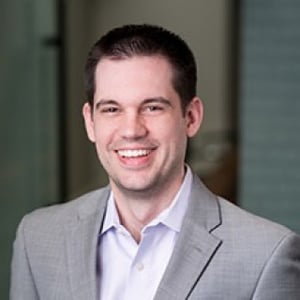
Executive Director, Consumers’ Research
Will Hild is the Executive Director of Consumers’ Research. Will has a decade of non-profit, legal and public policy experience. Prior to joining CR, Will served as the Deputy Director of the Regulatory Transparency Project. Before that, he worked at the Philanthropy Roundtable as the Director of External Affairs for the Culture of Freedom Initiative, and as the Chief Operating Officer of that Initiative when it grew to become a separate organization. He helped co-found the public interest law firm, Cause of Action, and served as the firm’s acting communications director for nearly a year.
Will received his J.D. from Georgetown University Law Center, and a B.A. in Political Science from the University of Florida. He is licensed to practice law in the Commonwealth of Virginia.
Will resides in Bethesda, MD, with his wife Cheryl, a practicing OB/GYN, and their son Liam.
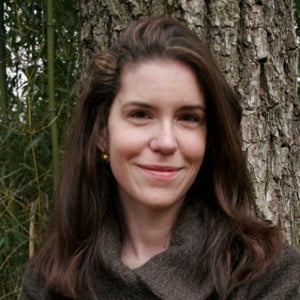
Columnist, Washington Post
Megan McArdle is a Washington Post columnist and the author of "The Up Side of Down: Why Failing Well Is the Key to Success."

George Mason University Foundation Professor of Law, Antonin Scalia Law School, George Mason University
TODD J. ZYWICKI is George Mason University Foundation Professor of Law at Antonin Scalia Law School at George Mason University and Research Fellow of the George Mason Law and Economics Center. During the Fall 2023 semester he served as the Visiting Scholar in Conservative Thought and Policy for the Bruce Benson Center for the Study of Western Civilization at the University of Colorado-Boulder. From 2020-2021 he was Chair of the Consumer Financial Protection Bureau Taskforce on Federal Consumer Financial Law. In 2021 he was inducted to the American College of Consumer Financial Services Lawyers. He is also a Senior Fellow of the F.A. Hayek Program for the Advanced Study of Politics, Philosophy, and Economics at George Mason University and a former Senior Fellow of the Cato Institute. From 2015-2017 he was Executive Director of the George Mason Law and Economics Center. He served as Co-Editor of the Supreme Court Economic Review from 2006-2017. From 2003-2004, Professor Zywicki served as the Director of the Office of Policy Planning at the Federal Trade Commission. He has also taught at Vanderbilt University Law School, Georgetown University Law Center, Boston College Law School, Mississippi College School of Law, and China University of Political Science and Law.
Professor Zywicki clerked for Judge Jerry E. Smith of the U.S. Court of Appeals for the Fifth Circuit and worked as an associate at Alston & Bird in Atlanta, Georgia, where he practiced bankruptcy and commercial law. He received his J.D. from the University of Virginia, where he was executive editor of the Virginia Tax Review and John M. Olin Scholar in Law and Economics. Professor Zywicki also received an M.A. in Economics from Clemson University and an A.B. cum Laude with high honors in his major from Dartmouth College.
Professor Zywicki is also a Lone Mountain Fellow of the Property and Environment Research Center, a Fellow of the International Centre for Economic Research in Turin, Italy, and a former Senior Fellow of the Goldwater Institute. During the Fall 2008 Semester Professor Zywicki was the Searle Fellow of the George Mason University School of Law and was a 2008-09 W. Glenn Campbell and Rita Ricardo-Campbell National Fellow and the Arch W. Shaw National Fellow at the Hoover Institution on War, Revolution and Peace. He has lectured and consulted with government officials around the world, including Iceland, Italy, Japan, and Guatemala. In 2006 Professor Zywicki served as a Member of the United States Department of Justice Study Group on “Identifying Fraud, Abuse and Errors in the United States Bankruptcy System.”
Professor Zywicki is the author of more than 130 articles in leading law reviews and peer-reviewed economics journals. He is one of the Top 10 most-cited law professors in the field of Commercial Law and one of the Top 25 law professors on Twitter as measured by engagement levels. He is one of the Top 50 Most Downloaded Law Authors at the Social Science Research Network. He has testified multiple times before Congress on issues of consumer bankruptcy law and consumer credit and is a frequent commentator on legal issues in the print and broadcast media, including the Wall Street Journal, New York Times, The Washington Post, The Washington Times, Nightline, The Newshour with Jim Lehrer, Neil Cavuto Show, Fox & Friends, Smerconish, Fox News @ Night with Shannon Bream, Fox Business, CNN, CNBC, Bloomberg News, BBC, The Diane Rehm Show, Lou Dobbs Show, Jerry Doyle Show, and The Laura Ingraham Show.
Professor Zywicki is former Chairman and a current member of the Board of Directors of the Competitive Enterprise Institute, and is a member of the Board of Directors of the Institute for Humane Studies, Bill of Rights Institute, the Executive Committee for the Federalist Society's Financial Institutions and E-Commerce Practice Group, the Board of Trustees of the Foundation for Research on Economics and the Environment. He formerly served on the Governing Board and the Advisory Council for the Financial Services Research Program at George Washington University School of Business. He is currently the Chair of the Academic Advisory Council for the following organizations: The Bill of Rights Institute, the film “We the People in IMAX,” and the McCormick-Tribune Foundation “Freedom Museum” in Chicago, Illinois. He is a member of the Board of Visitors of Ralston College and was a member of the Board of Trustees of Yorktown University. From 2005-2009 he served as an elected Alumni Trustee of the Dartmouth College Board of Trustees.
Distinguished University Chair and Professor of Law, University of St. Thomas School of Law
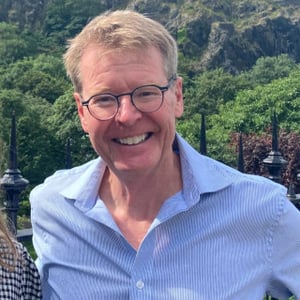
Michael Stokes Paulsen is Distinguished University Chair & Professor of Law at the University of St. Thomas, where he has taught since 2007. Professor Paulsen was previously the McKnight Presidential Professor of Law & Public Policy and Associate Dean at the University of Minnesota Law School, where he taught from 1991-2007. He is a graduate of Northwestern University, Yale Law School, and Yale Divinity School. He has served as a federal prosecutor, as Attorney-Advisor in the Office of Legal Counsel of the U.S. Department of Justice, and as counsel for the Center for Law & Religious Freedom.
Paulsen has taught as a visiting professor at Princeton University, Pepperdine University, Georgetown University, Bethel University, Uppsala University (Sweden), Daystar University (Kenya), and University of the Andes (Chile). He has been a guest lecturer at universities around the nation, including Harvard, Yale, Columbia, Princeton, Penn, NYU, Georgetown, Virginia, Stanford, Berkeley, Michigan, University of Chicago, and Northwestern.
Professor Paulsen is the author of more than ninety scholarly articles and book chapters on a wide variety of constitutional law topics, published in law journals including the Harvard Law Review, the Yale Law Journal, the Stanford Law Review, the University of Chicago Law Review, the Michigan Law Review, the Georgetown Law Journal, and the Northwestern University Law Review. He is the author or co-author of three books, including The Constitution: An Introduction (Basic Books, 2015) (co-authored with Luke Paulsen) and the casebook The Constitution of the United States, now in its fifth edition with Foundation Press, co-authored with Michael McConnell, Samuel Bray, and Will Baude.
Knights of Columbus Professor of Law and the Catholic Tradition, The Catholic University of America Columbus School of Law
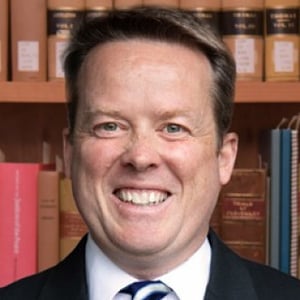
Kevin C. Walsh teaches and writes in the areas of federal jurisdiction, constitutional law, and the U.S. Supreme Court. His scholarship explores the doctrines that define—and delimit—the scope of federal judicial power.
Professor Walsh graduated from Harvard Law School, where he was Articles Chair for Volume 115 of the Harvard Law Review. After graduation, he clerked for Judge Paul V. Niemeyer of the United States Court of Appeals for the Fourth Circuit and Associate Justice Antonin Scalia of the Supreme Court of the United States. He then practiced law at Hunton & Williams LLP and taught as a visiting assistant professor at Villanova University School of Law. Walsh received his A.B. from Dartmouth College, and an M.A. in Theological Studies from the University of Notre Dame. He taught at the University of Richmond School of Law for thirteen years prior to joining The Catholic University of America, where he currently resides.
In early 2011, Professor Walsh filed two amicus curiae briefs addressing jurisdictional issues in the State challenges to the individual mandate in the federal healthcare reform legislation: a brief in Virginia v. Sebelius (United States Court of Appeals for the Fourth Circuit), and a brief in Florida v. HHS (United States Court of Appeals for the Eleventh Circuit).
Senior Fellow, Center for Energy and Environment, Competitive Enterprise Institute
Christopher C. Horner serves as a Senior Fellow at CEI. As an attorney in Washington, DC Horner has represented CEI as well as scientists and Members of the U.S. House and Senate on matters of environmental policy in the federal courts including the Supreme Court. He has written on numerous topics in publications ranging from law reviews to legal and industrial trade journals to print and online opinion pages, and is the author of two best-selling books: Red Hot Lies: How Global Warming Alarmists Use Threats, Fraud and Deception to Keep You Misinformed (Regnery, 2008) and The Politically Incorrect Guide to Global Warming and Environmentalism (Regnery, 2007), which spent half of 2007 on the New York Times bestseller list.
Horner has testified before the United States Senate Committees on Foreign Relations and Environment and Public Works, and works on a legal and policy level with numerous think tanks and policy organizations throughout the world. He has given numerous addresses to audiences in the European Parliament in Strasbourg and Brussels, and before policymakers in European capitals including London, Rome, Prague, Copenhagen, Madrid and Warsaw, on topics ranging from rail deregulation and unfunded pension liability to all manner of energy and environment issues. Horner serves on the international law practice group’s executive committee for an internationally respected assembly of lawyers, and has provided counsel and work product on other matters including intellectual property, WTO proceedings and treaty law and policy.
Greenpeace has repeatedly targeted Mr. Horner, by stealing his garbage on a weekly basis, issuing press releases announcing with whom he dines and including him in various other hysterical publications including most recently "A Field Guide to Climate Criminals" distributed at the UN climate meeting in Montreal in December 2005.
Mr. Horner has provided legal, policy and political commentary several hundred times each on both television and radio, in the United States, Europe, Canada, and Australia, including scores of visits each on the Fox News Channel, Court TV, MSNBC with repeat visits on The News Hour with Jim Lehrer, BBC, CNN, CNN International, ITN, CBC, Bloomberg and Reuters Television. Mr. Horner has also been a guest on The Daily Show with Jon Stewart. He has guest hosted television commentary programs and makes weekly appearances on and regularly guest hosts nationally and regionally syndicated radio shows in America.
He has been a frequent contributor in the Washington Times, National Review Online and TechCentralStation.com opinion pages, is a guest columnist for United Press International and OpinionEditorials.com, and has regularly contributed to the Brussels legislative news magazine EU Reporter .
Horner also regularly writes for Energy Tribune and Spain's Actualidad Economica.
He received his Juris Doctorate from Washington University in St. Louis where he received the Judge Samuel Breckenridge Award for Advocacy.

Frozen Out: Debanking Practice and Policy in the New Administration
Nicholas Anthony, Rohit Chopra, Will Hild, Megan McArdle, Todd J. Zywicki
Financial institutions have faced growing scrutiny for debanking customers, with no explanation. While debanking is sometimes legally necessary...
The Constitution: An Introduction - Podcast
Michael Stokes Paulsen, Kevin C. Walsh
In their new book, The Constitution: An Introduction, constitutional scholar Michael Stokes Paulsen and his...
An Assessment of the June 2012 Rio+20 UN Conference on Sustainable Development
Christopher C. Horner
By its Resolution A/RES/64/236 of December 24, 2009,1 the United Nations General Assembly blessed preparations...