
Eric Criss is an independent scholar who recently published The Boss of New Orleans: Martin Behrman and Machine Politics in the Crescent City with the LSU Press. He taught advanced public policy at Florida State University, where he earned his PhD in history. Eric earned his MA in Government at John's Hopkins University and BA in Political Science at the University of Florida. Eric began his career with U.S. Senators Don Nickles of Oklahoma and Phil Gramm of Texas at the National Republican Senatorial Committee in Washington, D.C. He later served as staff member or consultant to Fortune 500 corporations, political parties, and presidential, congressional, and gubernatorial campaigns.
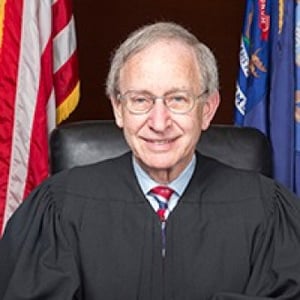
Justice, Michigan Supreme Court
Stephen Markman was appointed Justice of the Michigan Supreme Court on October 1, 1999. He served as the Chief Justice from 2017-2019. Before his appointment, he served as Judge on the Michigan Court of Appeals from 1995-1999. Prior to this, he practiced law with the firm of Miller, Canfield, Paddock & Stone in Detroit.
From 1989-1993, Justice Markman served as United States Attorney, or federal prosecutor, in Michigan, after having been nominated by President George H. W. Bush and confirmed by the United States Senate. From 1985-1989, he served as Assistant Attorney General of the United States, after having been nominated by President Ronald Reagan and confirmed by the United States Senate. In that position, he headed the Department of Justice’s Office of Legal Policy, which served as the principal policy development office within the Department, and which coordinated the federal judicial selection process. Prior to this, he served for seven years as Chief Counsel of the United States Senate Subcommittee on the Constitution, and as Deputy Chief Counsel of the United States Senate Judiciary Committee.
Justice Markman has authored articles for such publications as the University of Michigan Journal of Law Reform, the Detroit College of Law Review, the Stanford Law Review, the University of Chicago Law Review, the American Criminal Justice Law Review, the Barrister’s Law Journal, the Harvard Journal of Law & Public Policy, and the American University Law Review. He has also served as a contributing editor of National Review magazine, and has authored chapters in such books as “In the Name of Justice: The Aims of the Criminal Law,” “Still the Law of the Land,” and “Originalism: A Quarter Century of Debate.”
Justice Markman has taught constitutional law at Hillsdale College since 1993. He has served on the Board of Directors of the Western Michigan University Thomas M. Cooley Law School. He traveled to Ukraine on two occasions on behalf of the State Department, to provide assistance in the development of that nation’s post-Soviet constitution. He is a Fellow of the Michigan Bar Foundation, a Master of the Bench of the Inns of Court, and a member of the One Hundred Club. He has spoken before hundreds of youth, civic, charitable, and legal groups throughout Michigan and nationally, and has coached Little League baseball and basketball. He lives with his wife Mary Kathleen in Mason, and has two sons, James and Charles.
Justice Markman was re-elected to the Supreme Court in 2000, 2004, and 2012. His present term expires January 1, 2021.
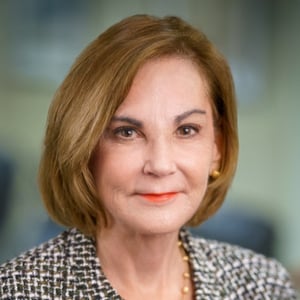
Partner, Marzulla Law
Ms. Marzulla served as an Attorney-Advisor and as a trial lawyer prosecuting employment violations in the Civil Rights Division at the U.S. Department of Justice. Later, Nancie joined the law firm of Verner, Liipfert (now DLA Piper), where she litigated complex airline and other civil matters. In 1991, She founded Defenders of Property Rights, where she was involved in high profile takings cases in the Supreme Court, federal courts of appeal, and trial courts. Ms. Marzulla also worked at the International Labor Organization in Geneva, Switzerland doing comparative legal research.
Nancie G. Marzulla is a founding partner of Marzulla Law, ranked as one of the nation’s “Best Law Firms,” and a “Tier One” environmental litigation firm by the U.S. News and World Report. Nancie’s litigation practice concentrates on water rights, takings, and contract claims in the U.S. Court of Federal Claims. She also has extensive experience in handling matters involving property, water, environmental law, Indian tribal claims, development, and natural resources in trial courts, courts of appeal, the Supreme Court, and in international tribunals. Nancie also represents corporate clients in enforcement or permitting disputes with federal regulatory agencies.
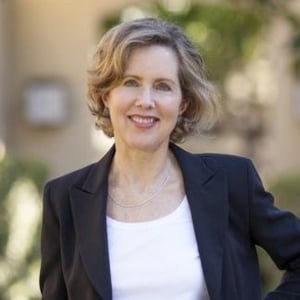
Thomas W. Smith Fellow; Contributing Editor, City Journal, Manhattan Institute
Heather Mac Donald is the Thomas W. Smith Fellow at the Manhattan Institute, a contributing editor of City Journal, and a New York Times bestselling author. She is a recipient of the 2005 Bradley Prize. Mac Donald’s work at City Journal has covered a range of topics, including higher education, immigration, policing, homelessness and homeless advocacy, criminal-justice reform, and race relations. Her writing has appeared in the Wall Street Journal, Washington Post, New York Times, Los Angeles Times, The New Republic, and The New Criterion. Mac Donald's newest book, The Diversity Delusion: How Race and Gender Pandering Corrupt the University and Undermine Our Culture (2018), argues that toxic ideas first spread by higher education have undermined humanistic values, fueled intolerance, and widened divisions in our larger culture.
Mac Donald’s The War on Cops (2016), a New York Times bestseller, warns that raced-based attacks on the criminal-justice system, from the White House on down, are eroding the authority of law and putting lives at risk. Other previous works include The Burden of Bad Ideas (2001), a collection of Mac Donald’s City Journal essays, details the effects of the 1960s counterculture’s destructive march through America’s institutions. In The Immigration Solution: A Better Plan than Today’s (2007), coauthored with Victor Davis Hanson and Steven Malanga, she chronicles the effects of broken immigration laws and proposes a practical solution to securing the country’s porous borders. In Are Cops Racist? (2010), another City Journal anthology, Mac Donald investigates the workings of the police, the controversy over so-called racial profiling, and the anti-profiling lobby’s harmful effects on black Americans.
A nonpracticing lawyer, Mac Donald clerked for the Honorable Stephen Reinhardt, U.S. Court of Appeals for the Ninth Circuit, and was an attorney-advisor in the Office of the General Counsel of the U.S. Environmental Protection Agency and a volunteer with the Natural Resources Defense Council. She has frequently testified before U.S. House and Senate Committees. In 1998, Mac Donald was appointed to Mayor Rudolph Giuliani’s task force on the City University of New York. She has received numerous awards for her writing:
A frequent guest on Fox News and other TV and radio programs, Mac Donald holds a B.A. in English from Yale University, graduating with a Mellon Fellowship to Cambridge University, where she earned an M.A. in English and studied in Italy through a Clare College study grant. She holds a J.D. from Stanford University Law School.
At the Criminal Justice Legal Foundation's 2018 annual meeting in downtown Los Angeles, U.S. Attorney General Jeff Sessions called Mac Donald, “the greatest thinker on criminal justice in America today.”
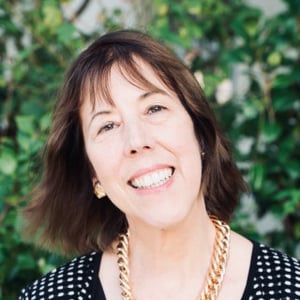
Professor of Law, University of San Diego School of Law (Retired)
Gail Heriot is a recently retired law professor from the University of San Diego. She also served as a member of the U.S. Commission on Civil Rights from 2007 to 2025. She is also the chairman of the board of the American Civil Rights Project and the chair emerita of the Civil Rights practice group at the Federalist Society for Law & Public Policy.
Professor Heriot is a prolific writer in the area of civil rights. She is the author of many law review articles. She is also the editor (along with Maimon Schwarzschild) of the 2021 anthology, A Dubious Expediency: How Race Preferences Damage Higher Education. Her upcoming book is entitled, Why We Walk on Eggshell: How Our Civil Rights Laws Helped Bring About the Woke Era—And the Trump Era, Too.
Her writings for a general audience have appeared in the Wall Street Journal, the San Diego Union-Tribune, the National Review and many other newspapers and magazines.
In 1996, she co-chaired the successful “Yes on Proposition 209” campaign, which amended the California Constitution to prohibit state-sponsored discrimination or preferential treatment based on race, sex, color, ethnicity or national origin. In 2020, she co-chaired the “No on Proposition 16” campaign, which successfully prevented Proposition 209’s repeal.

Partner, Horovitz & Levy LLP
Major media, technology, fitness, and insurance companies rely on Eric Boorstin’s significant experience handling high stakes tort and business matters. Eric has served as lead appellate counsel in an array of areas including trademark, copyright, employment, contract, defamation, wrongful death, and professional responsibility. He has appeared as amicus counsel for trade associations in state and federal court, addressing a variety of institutionally important legal issues.
Eric is a partner at Horvitz & Levy, where he has represented clients such as The Regents of the University of California, Viasat, Inc., 24 Hour Fitness USA, Inc., and the Chamber of Commerce of the United States of America. Before joining the firm, Eric was a litigator at Covington & Burling LLP and Mitchell Silberberg & Knupp LLP.
Eric is a member of the Board of Governors of the Los Angeles Chapter of the Association of Business Trial Lawyers and serves as co-editor of its publication about legal developments and civil practice issues, the ABTL Report. Eric also serves on the Los Angeles County Bar Association’s State Appellate Judicial Evaluation Committee. In 2021, the Daily Journal recognized Eric as one of the Top 40 Under 40 attorneys in California.
Partner, Gibson, Dunn & Crutcher
Bradley J. Hamburger is a litigation partner in the Los Angeles office of Gibson, Dunn & Crutcher. His practice focuses on class actions and complex litigation in both trial courts and on appeal. He is a member of the firm’s Class Actions, Appellate and Constitutional Law, and Labor and Employment practice groups.
Mr. Hamburger has represented clients in class actions and appeals across many areas of law, including employment, insurance, antitrust, consumer fraud, products liability, legal malpractice, and administrative law. He has briefed dozens of appeals, including cases in the United States Supreme Court, the Ninth Circuit, and the California Supreme Court, and has argued before the Ninth Circuit and the California Court of Appeal.
Mr. Hamburger has significant expertise in seeking interlocutory appellate review of class certification orders under Federal Rule of Civil Procedure 23(f), obtaining enforcement of arbitration agreements, and defending clients against representative actions under California’s Labor Code Private Attorneys General Act. Mr. Hamburger also regularly represents technology companies, and he has substantial experience litigating the application of Section 230 of the Communications Decency Act.
In 2023, Mr. Hamburger was ranked in the California Appellate Litigation category of the Chambers USA guide. In 2022, Law360 recognized Mr. Hamburger as a Rising Star in the Class Action category; BTI Consulting Group included him on its Client Service All-Stars list; and the Los Angeles Business Journal named him to its “Thriving In Their 40’s: LA’s Leaders of Influence” list. The Daily Journal named Mr. Hamburger as one of the top 40 lawyers in California under 40 in 2021. Mr. Hamburger also was part of the team that obtained one of the Daily Journal’s Top Appellate Reversals of 2021, Magadia v. Wal-Mart Associates, Inc., 999 F.3d 668 (9th Cir. 2021).

Professor, University of Minnesota Law School
Ilan Wurman is the Julius E. Davis Professor of Law at the University of Minnesota, where he teaches administrative law and constitutional law. He previously taught at Arizona State University. He writes primarily on the Fourteenth Amendment, administrative law, separation of powers, and constitutionalism. His academic writing has appeared in the Yale Law Journal, the Stanford Law Review, the University of Chicago Law Review, the University of Pennsylvania Law Review, the Virginia Law Review, the Duke Law Journal, the Minnesota Law Review, the Notre Dame Law Review, and the Texas Law Review among other journals.
Professor Wurman is the author of a casebook, Administrative Law Theory and Fundamentals: An Integrated Approach (Foundation Press 2d ed. 2024). He is also the author of A Debt Against the Living: An Introduction to Originalism (Cambridge 2017), and The Second Founding: An Introduction to the Fourteenth Amendment (Cambridge 2020). His next book, The Constitution of 1789: A New Introduction, is also forthcoming with Cambridge University Press.
Professor Wurman practices law with the firm Tully Bailey. He has litigated a variety of administrative law and constitutional law cases, including cases involving COVID-19 restrictions, transmission lines, and Appointments Clause challenges. He also devised winning public nuisance theories to force city governments to address the increasingly challenging public camping crises throughout the country.

Integrity or Interference?: Evaluating the Constitutionality of Georgia's Election Integrity Act
Eric Criss
Recent political earthquakes such as the assassination attempt against former president Donald Trump and President...
Topics
Quibbling while the West burns
This year is shaping up to be a doozy for wildfires. Already, more acres have...
Supreme Court Roundup
Sacramento Lawyers Chapter, Pacific Legal Foundation, and America's Future
Sacramento, CATopics
In Rahimi, Gun Control Advocates Score a Minor (And Mostly Hollow) Victory
In an 8-1 opinion by Chief Justice Roberts, the Supreme Court in United States v....
When Critical Race Theory Comes to the Courts
Orange County Lawyers Chapter
Irvine, CAThey Just Can't Stop
San Diego Lawyers Chapter
San Diego, CAToward a More Confident State Constitutionalism
Steve J. Markman
This article is adapted from a speech Justice Markman delivered to the Florida Annual Education...
Sheetz v. County of El Dorado, California - Post-Decision SCOTUScast
Nancie G. Marzulla
On April 12, 2024, the Supreme Court issued its ruling in Sheetz v. County of...
Grants Pass: Can Local Government Regulate Homeless Encampments?
Los Angeles Lawyers Chapter
Los Angeles, CATopics
Fast Food, Minimum Wages, and the Pervasive Myth of Benevolent Unions: Why the Labor Movement Pushes for Stricter Labor Laws
Starting this month, California’s fast-food workers will earn a minimum of $20 an hour. The...