
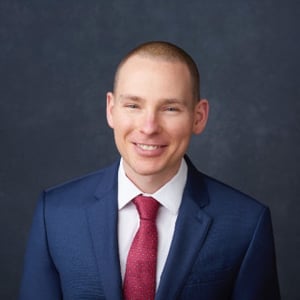
Shareholder & Co-Chair of the Workplace Policy Institute, Littler Mendelson P.C.
Alexander T. MacDonald advises employers on all aspects of the employment and labor landscape, focusing on emerging legislation and regulation. He has extensive experience advising businesses on worker classification, arbitration, the administrative and regulatory process, and the future of work. He frequently writes, publishes, and speaks on these subjects. His work has been cited by scholars and appellate courts. He is a recognized voice for the management perspective.
Alexander is a co-chair of the Workplace Policy Institute (WPI) team. With WPI, he advises employers on legislative, administrative, and regulatory developments at the state and federal level. He advocates for employers in the regulatory and administrative process. He also helps employers protect their businesses by understanding and anticipating cutting-edge legal developments.
Alexander also has extensive experience in traditional labor law. He represents management in all aspects of labor-management relations, including unfair labor practice charges, grievance arbitrations, representation elections, contract negotiations, and related litigation, including litigation in the U.S. courts of appeals.
Before joining Littler, Alexander served as the director, future of work, for a major technology company. He also worked in a national labor and employment law firm and a major public-sector general counsel’s office. He was a law clerk to the senior judges in the District of Columbia Court of Appeals.
He is also a veteran of the U.S. Air Force. He served in Operations Enduring Freedom and Iraqi Freedom. In law school, he graduated first in his class
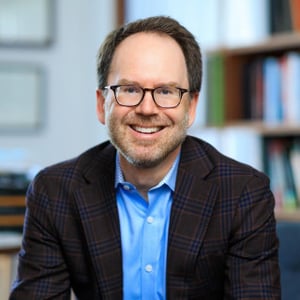
Kestnbaum Professor of Labor and Industry, Harvard Law School
Benjamin Sachs is the Kestnbaum Professor of Labor and Industry at Harvard Law School and a leading expert in the field of labor law and labor relations. He is also faculty director of the Center for Labor and a Just Economy. Professor Sachs teaches courses in labor law, employment law, and law and social change, and his writing focuses on union organizing and unions in American politics. Prior to joining the Harvard faculty in 2008, Professor Sachs was the Joseph Goldstein Fellow at Yale Law School. From 2002-2006, he served as Assistant General Counsel of the Service Employees International Union (SEIU) in Washington, D.C., and from 1999-2002 he was an attorney at Make the Road by Walking, a membership-based community organization in Brooklyn, NY. Professor Sachs graduated from Yale Law School in 1998, and served as a judicial law clerk to the Honorable Stephen Reinhardt of the United States Court of Appeals for the Ninth Circuit. His writing has appeared in the Harvard Law Review, the Yale Law Journal, the Columbia Law Review, the New York Times and elsewhere. In 2007, Professor Sachs received the Yale Law School teaching award. He is also the 2013 recipient of the Sacks-Freund Award for Teaching Excellence at Harvard Law School, and the 2015 winner of the Charles Fried Intellectual Diversity Award.
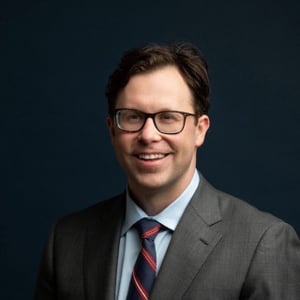
Staff Attorney, National Right to Work Foundation
Aaron Solem is a staff attorney at the National Right to Work Legal Defense Foundation, where he represents both private and public sector employees in state and federal courts, as well as before administrative agencies.
Aaron was co-counsel in Janus v. AFSCME, Council 31, 138 S. Ct. 2448 (2018), a major Supreme Court case establishing that it violates the First Amendment to force public sector employees to pay compulsory fees. Additionally, Aaron’s track record in federal court includes being co-counsel in Stewart v. NLRB, 851 F.3d 21 (D.C. Cir. 2017); Tamosiunas v. NLRB, 892 F.3d 422 (D.C. Cir. 2018); and UNAP v. NLRB, 975 F.3d 34 (1st Cir. 2020). He was also lead counsel in Sands v. NLRB, 825 F.3d 778 (D.C. Cir. 2016), where he successfully vacated an unfavorable NLRB decision.
Aaron is also experienced in representing employees before the National Labor Relations Board. Aaron won a major victory in NABET, Local 51, 371 NLRB No. 15 (2021), establishing the unlawfulness of threatening evidence preservation letters under the National Labor Relations Act. He also frequently represents and advises decertification petitioners, including the decertification petitioners in Americold Logistics, 362 NLRB 493 (2015); Pinnacle Foods Grp., 368 NLRB No. 97 (2019); and Geodis Logistics, 371 NLRB No. 102 (2022).
Aaron earned his law degree with honors from the University of Notre Dame Law School and currently resides in Bethesda, Maryland.
Shareholder & Co-Chair of the Workplace Policy Institute, Littler Mendelson P.C.
Alexander T. MacDonald advises employers on all aspects of the employment and labor landscape, focusing on emerging legislation and regulation. He has extensive experience advising businesses on worker classification, arbitration, the administrative and regulatory process, and the future of work. He frequently writes, publishes, and speaks on these subjects. His work has been cited by scholars and appellate courts. He is a recognized voice for the management perspective.
Alexander is a co-chair of the Workplace Policy Institute (WPI) team. With WPI, he advises employers on legislative, administrative, and regulatory developments at the state and federal level. He advocates for employers in the regulatory and administrative process. He also helps employers protect their businesses by understanding and anticipating cutting-edge legal developments.
Alexander also has extensive experience in traditional labor law. He represents management in all aspects of labor-management relations, including unfair labor practice charges, grievance arbitrations, representation elections, contract negotiations, and related litigation, including litigation in the U.S. courts of appeals.
Before joining Littler, Alexander served as the director, future of work, for a major technology company. He also worked in a national labor and employment law firm and a major public-sector general counsel’s office. He was a law clerk to the senior judges in the District of Columbia Court of Appeals.
He is also a veteran of the U.S. Air Force. He served in Operations Enduring Freedom and Iraqi Freedom. In law school, he graduated first in his class
Kestnbaum Professor of Labor and Industry, Harvard Law School
Benjamin Sachs is the Kestnbaum Professor of Labor and Industry at Harvard Law School and a leading expert in the field of labor law and labor relations. He is also faculty director of the Center for Labor and a Just Economy. Professor Sachs teaches courses in labor law, employment law, and law and social change, and his writing focuses on union organizing and unions in American politics. Prior to joining the Harvard faculty in 2008, Professor Sachs was the Joseph Goldstein Fellow at Yale Law School. From 2002-2006, he served as Assistant General Counsel of the Service Employees International Union (SEIU) in Washington, D.C., and from 1999-2002 he was an attorney at Make the Road by Walking, a membership-based community organization in Brooklyn, NY. Professor Sachs graduated from Yale Law School in 1998, and served as a judicial law clerk to the Honorable Stephen Reinhardt of the United States Court of Appeals for the Ninth Circuit. His writing has appeared in the Harvard Law Review, the Yale Law Journal, the Columbia Law Review, the New York Times and elsewhere. In 2007, Professor Sachs received the Yale Law School teaching award. He is also the 2013 recipient of the Sacks-Freund Award for Teaching Excellence at Harvard Law School, and the 2015 winner of the Charles Fried Intellectual Diversity Award.
Staff Attorney, National Right to Work Foundation
Aaron Solem is a staff attorney at the National Right to Work Legal Defense Foundation, where he represents both private and public sector employees in state and federal courts, as well as before administrative agencies.
Aaron was co-counsel in Janus v. AFSCME, Council 31, 138 S. Ct. 2448 (2018), a major Supreme Court case establishing that it violates the First Amendment to force public sector employees to pay compulsory fees. Additionally, Aaron’s track record in federal court includes being co-counsel in Stewart v. NLRB, 851 F.3d 21 (D.C. Cir. 2017); Tamosiunas v. NLRB, 892 F.3d 422 (D.C. Cir. 2018); and UNAP v. NLRB, 975 F.3d 34 (1st Cir. 2020). He was also lead counsel in Sands v. NLRB, 825 F.3d 778 (D.C. Cir. 2016), where he successfully vacated an unfavorable NLRB decision.
Aaron is also experienced in representing employees before the National Labor Relations Board. Aaron won a major victory in NABET, Local 51, 371 NLRB No. 15 (2021), establishing the unlawfulness of threatening evidence preservation letters under the National Labor Relations Act. He also frequently represents and advises decertification petitioners, including the decertification petitioners in Americold Logistics, 362 NLRB 493 (2015); Pinnacle Foods Grp., 368 NLRB No. 97 (2019); and Geodis Logistics, 371 NLRB No. 102 (2022).
Aaron earned his law degree with honors from the University of Notre Dame Law School and currently resides in Bethesda, Maryland.
Shareholder & Co-Chair of the Workplace Policy Institute, Littler Mendelson P.C.
Alexander T. MacDonald advises employers on all aspects of the employment and labor landscape, focusing on emerging legislation and regulation. He has extensive experience advising businesses on worker classification, arbitration, the administrative and regulatory process, and the future of work. He frequently writes, publishes, and speaks on these subjects. His work has been cited by scholars and appellate courts. He is a recognized voice for the management perspective.
Alexander is a co-chair of the Workplace Policy Institute (WPI) team. With WPI, he advises employers on legislative, administrative, and regulatory developments at the state and federal level. He advocates for employers in the regulatory and administrative process. He also helps employers protect their businesses by understanding and anticipating cutting-edge legal developments.
Alexander also has extensive experience in traditional labor law. He represents management in all aspects of labor-management relations, including unfair labor practice charges, grievance arbitrations, representation elections, contract negotiations, and related litigation, including litigation in the U.S. courts of appeals.
Before joining Littler, Alexander served as the director, future of work, for a major technology company. He also worked in a national labor and employment law firm and a major public-sector general counsel’s office. He was a law clerk to the senior judges in the District of Columbia Court of Appeals.
He is also a veteran of the U.S. Air Force. He served in Operations Enduring Freedom and Iraqi Freedom. In law school, he graduated first in his class
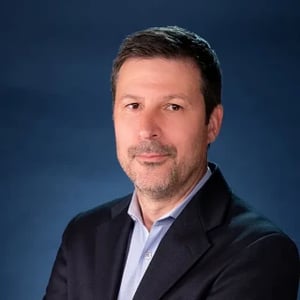
Senior Fellow; Senior Adviser, American Worker Project, Center for American Progress
David Madland is a senior fellow and the senior adviser to the American Worker Project at American Progress. He has been called “one of the nation’s wisest” labor scholars by Washington Post columnist E.J. Dionne Jr. His work “is creating a North Star for how we increase workers’ power in the economy and democracy,” according to Mary Kay Henry, former president of the Service Employees International Union.
Madland is the author of Re-Union: How Bold Labor Reforms Can Repair, Revitalize, and Reunite the United States (Cornell University Press, 2021), which helped put sectoral bargaining on the political agenda, and Hollowed Out: Why the Economy Doesn’t Work without a Strong Middle Class (University of California Press, 2015), a pioneering critique of trickle-down economics that has helped policymakers understand that the economy grows from the middle out and the bottom up, not from the top down.
He is frequently featured on television and radio programs, including appearances on PBS, CNN, MSNBC, Fox, and NPR. His work has been cited in numerous publications, including The New York Times, The Wall Street Journal, The Washington Post, and The New Yorker. He has testified before Congress as well as several state legislatures.
Madland received his doctorate in government from Georgetown University and his bachelor’s degree from the University of California, Berkeley. His research about the decline of the U.S. pension system received the “Best Dissertation Award” from the Labor and Employment Relations Association. Madland previously worked on economic policy for Rep. George Miller (D-CA).
Vice President and Legal Director, National Right to Work Legal Defense and Education Foundation, Inc.
William Messenger is Foundation Vice President and Legal Director. He was a staff attorney for over twenty years and, during that time, represented individuals in numerous cases that sought to expand worker freedom of choice. This includes acting as lead counsel in three cases before the United States Supreme Court. In 2018, Messenger argued Janus v. AFSCME Council 31, where the Supreme Court held it violates the First Amendment for governments and unions to compel individuals to financially support unions and their speech. Originally from Youngstown Ohio, Messenger attended Ohio University as an undergraduate and then the George Washington University School of Law.
Shareholder & Co-Chair of the Workplace Policy Institute, Littler Mendelson P.C.
Alexander T. MacDonald advises employers on all aspects of the employment and labor landscape, focusing on emerging legislation and regulation. He has extensive experience advising businesses on worker classification, arbitration, the administrative and regulatory process, and the future of work. He frequently writes, publishes, and speaks on these subjects. His work has been cited by scholars and appellate courts. He is a recognized voice for the management perspective.
Alexander is a co-chair of the Workplace Policy Institute (WPI) team. With WPI, he advises employers on legislative, administrative, and regulatory developments at the state and federal level. He advocates for employers in the regulatory and administrative process. He also helps employers protect their businesses by understanding and anticipating cutting-edge legal developments.
Alexander also has extensive experience in traditional labor law. He represents management in all aspects of labor-management relations, including unfair labor practice charges, grievance arbitrations, representation elections, contract negotiations, and related litigation, including litigation in the U.S. courts of appeals.
Before joining Littler, Alexander served as the director, future of work, for a major technology company. He also worked in a national labor and employment law firm and a major public-sector general counsel’s office. He was a law clerk to the senior judges in the District of Columbia Court of Appeals.
He is also a veteran of the U.S. Air Force. He served in Operations Enduring Freedom and Iraqi Freedom. In law school, he graduated first in his class
Senior Fellow; Senior Adviser, American Worker Project, Center for American Progress
David Madland is a senior fellow and the senior adviser to the American Worker Project at American Progress. He has been called “one of the nation’s wisest” labor scholars by Washington Post columnist E.J. Dionne Jr. His work “is creating a North Star for how we increase workers’ power in the economy and democracy,” according to Mary Kay Henry, former president of the Service Employees International Union.
Madland is the author of Re-Union: How Bold Labor Reforms Can Repair, Revitalize, and Reunite the United States (Cornell University Press, 2021), which helped put sectoral bargaining on the political agenda, and Hollowed Out: Why the Economy Doesn’t Work without a Strong Middle Class (University of California Press, 2015), a pioneering critique of trickle-down economics that has helped policymakers understand that the economy grows from the middle out and the bottom up, not from the top down.
He is frequently featured on television and radio programs, including appearances on PBS, CNN, MSNBC, Fox, and NPR. His work has been cited in numerous publications, including The New York Times, The Wall Street Journal, The Washington Post, and The New Yorker. He has testified before Congress as well as several state legislatures.
Madland received his doctorate in government from Georgetown University and his bachelor’s degree from the University of California, Berkeley. His research about the decline of the U.S. pension system received the “Best Dissertation Award” from the Labor and Employment Relations Association. Madland previously worked on economic policy for Rep. George Miller (D-CA).
Vice President and Legal Director, National Right to Work Legal Defense and Education Foundation, Inc.
William Messenger is Foundation Vice President and Legal Director. He was a staff attorney for over twenty years and, during that time, represented individuals in numerous cases that sought to expand worker freedom of choice. This includes acting as lead counsel in three cases before the United States Supreme Court. In 2018, Messenger argued Janus v. AFSCME Council 31, where the Supreme Court held it violates the First Amendment for governments and unions to compel individuals to financially support unions and their speech. Originally from Youngstown Ohio, Messenger attended Ohio University as an undergraduate and then the George Washington University School of Law.
Senior Counsel, Litigation, Defense of Freedom Institute
Don Daugherty is Senior Counsel, Litigation, at the Defense of Freedom Institute for Policy Studies. He previously served as a Senior Counsel at the Institute for Free Speech and the Wisconsin Institute for Law & Liberty. Before that, he was a partner at three of Wisconsin’s largest firms, with nearly 30 years of trial and appellate litigation experience. He has been consistently recognized as among the “Best Lawyers in America,” as well as Wisconsin’s “Super Lawyers.” He received his B.A. from the University of Virginia and his J.D. from Northwestern University Law School. After law school, he served as a clerk to the Honorable Roger J. Miner of the United States Court of Appeals for the Second Circuit.
Don is on the Board of Advisors for the Milwaukee Lawyers’ Chapter of the Federalist Society, and on the Executive Committee of the Federalist Society’s Litigation Practice Group.
David C. Tryon is the director of litigation at The Buckeye Institute. In this role, he supervises all litigation and outside litigation counsel and actively participates in Buckeye’s cases in both state and federal court.
Immediately prior to joining Buckeye, Tryon served as deputy solicitor general in the West Virginia Attorney General’s office, where he handled both trials and appellate matters, including preparing amicus curiae briefs. Many of the matters either challenged federal laws and regulations that infringed on state’s rights or defended the validity of West Virginia laws against constitutional challenges.
Tryon served as the deputy assistant secretary for policy and development in the Office for Civil Rights in the U.S. Department of Education from 2019-2020. While there, he assisted with developing and implementing new policies and guidance and was responsible for the Civil Rights Data Collection, which covers all primary and secondary schools receiving federal funds.
Nominated as the chief counsel for advocacy at the U.S. Small Business Administration, Tryon was favorably voted out of the Senate Committee on Small Business and Entrepreneurship. In connection with his nomination, he had numerous meetings with small business organizations to learn the concerns and needs of small businesses.
Tryon has had more than 30 years of commercial litigation experience in state and federal courts, including trials and appeals. Several of these cases involved the U.S. Constitution or the Ohio Constitution. In Arnold v. City of Cleveland, he was successful in having the Ohio Supreme Court declare the right to bear arms a fundamental right under the Ohio Constitution.
Tryon has dedicated much of his time to civic affairs. He served on the local school board for four years, two of those as school board president. During his nine years on the Executive Board for the Greater Cleveland Council of the Boy Scouts of America, he organized two major parades, created a personnel committee for leadership training of professional staff, and was involved in restructuring the Council. From 2015 to 2020, he served on the Ohio Advisory Committee to the United States Commission on Civil Rights. He was part of a select group to participate in Leadership Cleveland, Class of 2016. He also led the Cleveland Lawyers Chapter of the Federalist Society for nearly 20 years.
Tryon received a Bachelor of Science Degree (magna cum laude) from Brigham Young University and his Juris Doctorate (cum laude) from the University of Michigan.
District Judge, United States District Court for the Southern District of Florida
Judge Ed Artau is a United States District Judge for the Southern District of
Florida. He was nominated by President Donald Trump for appointment to
the United States District Court in May of 2025, and confirmed by the United
States Senate in September of 2025. Prior to his confirmation, Judge Artau
was appointed by Governor Ron DeSantis to the Fourth District Court of
Appeal of Florida, where he served as an appellate judge from 2020 until
2025. Prior to being an appellate judge, Judge Artau was appointed by
Governor Rick Scott to the Fifteenth Judicial Circuit in Palm Beach County,
Florida, where he served as a trial judge from 2014 until 2020.
Judge Artau is also an Adjunct Professor at St. Thomas University College of
Law and has served as the Dean of the Advanced Judicial Studies College
and on the faculty of both the Florida Judicial College and the Advanced
Judicial Studies College.
Judge Artau has previously served as the Chair of the Fifteenth Circuit
Judicial Nominating Commission, Vice Chair of the Fourth District Court of
Appeal Judicial Nominating Commission, Parliamentarian of the Appellate
Court Rules Committee, Vice Chair of the Judicial Nominating Procedures
Committee, and as a representative on the Florida Court Education Council.
Before his appointment to the bench, Judge Artau served as General Counsel
to the South Florida Water Management District, where he commenced his
public service as a senior litigation attorney. Prior to this role, Judge Artau
managed his own law firm after having served in the litigation departments of
the law firms of Proskauer Rose, L.L.P. and Hodgson Russ, L.L.P.
Judge Artau is a graduate of the Georgetown University Law Center where he
served as a law review editor and Vice-President of the Georgetown Student
Chapter of the Federalist Society. Judge Artau completed his undergraduate
studies at Nova Southeastern University, where he graduated cum laude and
was later awarded a Doctor of Laws, honoris causa, for his commitment to
public service, academia, and the law.
Judge Artau is a founder of the first Lawyers Chapter of the Federalist
Society in Florida and is the 2025 recipient of the Good Shepherd Award,
presented by the Florida Chapters of the Federalist Society in recognition of his “Commitment to the Rule of Law and the Ideals of the Federalist Society.”
Senior Legal Counsel, Pacific Legal Foundation
Before becoming an attorney, James had been a productive member of society working as an exploration geologist in the late 1970s throughout the southwestern United States. However, after several years of dealing with irrational government bureaucrats and environmental policies untethered from reality, James decided that what the world needs is more lawyers — if they are willing to fight for rationality in regulatory regimes, property rights, and liberty.
James attended the University of Arizona College of Law in Tucson, where he served as an editor for the Law Review and received a J.D. degree in 1983. He had previously received a Masters degree in geological sciences from Brown University and an undergraduate degree from Hamilton College in New York. James received the Professional Achievement Award from the University of Arizona Alumni Association in 2018.
James has worked with Pacific Legal Foundation since 1983, litigating cases from Alaska to Florida. He is a member of the Federalist Society’s Environmental Law and Property Rights Practice Group’s Executive Committee, a member of the American College of Real Estate Lawyers, and an honorary member of Owners Counsel of America, an organization comprised of eminent domain attorneys who represent property owners. The Owners Counsel awarded James its Crystal Eagle award in 2013. In 2022, James was awarded the Brigham-Kanner Property Rights Prize at the William & Mary College of Law. The prize is awarded annually to an individual whose work has advanced the cause of property rights and has contributed to the overall awareness of the important role property rights occupy in the broader scheme of individual liberty.
In 2001, James successfully argued a major property rights case, Palazzolo v. Rhode Island, before the United States Supreme Court, a case which affirmed that rights in regulated property do not disappear when land is bought and sold. He has written extensively on all aspects of property rights and environmental law and frequently speaks on these subjects throughout the nation.
When James is not suing the government he enjoys skiing faster than he should, bicycling, hiking, swimming, and spending quality time with his wife, family, and grandchild.
Mr. Burling’s book Nowhere to Live: The Hidden Story of America’s Housing Crisis is available now on Amazon.
James is a member of the bar only in the states of Alaska and California.
John Hampton Baumgartner, Jr. Professor of Real Property Law; Faculty Director, Georgetown Environmental Law and Policy Program; Faculty Director, Georgetown Climate Resource Center, Georgetown Law Center
Professor Byrne joined the Law Center faculty in 1985. After graduation from the University of Virginia law school, he served as a law clerk to Judge Frank Coffin and U.S. Supreme Court Justice Lewis Powell and then worked as an associate with the D.C. firm of Covington & Burling. He teaches and writes in the areas of Property, Land Use, Constitutional Law, and Higher Education Law and Policy. He served as Associate Dean for the JD Program from 1997 to 2000. He was John Carroll Research Professor in 1996-97.

Professor of Law, Antonin Scalia Law School, George Mason University
ILYA SOMIN is Professor of Law at George Mason University and the B. Kenneth Simon Chair in Constitutional Studies at the Cato Institute. His research focuses on constitutional law, property law, democratic theory, federalism, and migration rights. He is the author of Free to Move: Foot Voting, Migration, and Political Freedom (Oxford University Press, revised and expanded edition, 2022), Democracy and Political Ignorance: Why Smaller Government is Smarter (Stanford University Press, revised and expanded second edition, 2016), and The Grasping Hand: Kelo v. City of New London and the Limits of Eminent Domain (University of Chicago Press, 2015, rev. paperback ed., 2016), coauthor of A Conspiracy Against Obamacare: The Volokh Conspiracy and the Health Care Case (Palgrave Macmillan, 2013), and co-editor of Eminent Domain: A Comparative Perspective (Cambridge University Press, 2017). Democracy and Political Ignorance has been translated into Italian and Japanese.
Somin’s work has appeared in numerous scholarly journals, including the Yale Law Journal, Stanford Law Review, Northwestern University Law Review, Georgetown Law Journal, Critical Review, and others. Somin has also published articles in a variety of popular press outlets, including the New York Times, Washington Post, Wall Street Journal, Los Angeles Times, CNN, NBC, The Atlantic, USA Today, Boston Globe, US News and World Report, South China Morning Post, National Law Journal and Reason. He has been quoted or interviewed by the New York Times, Washington Post, Wall Street Journal, Time, Newsweek, The Economist, the Christian Science Monitor, the Financial Times, The Guardian, the Associated Press, CBS, MSNBC, NPR, BBC, Reuters, the Canadian Broadcasting Corporation, the Australian Broadcasting Corporation, Radio Free Europe/Radio Liberty, Al Jazeera, and the Voice of America, among other media.
Somin’s writings have been cited in decisions by the United States Supreme Court, multiple state supreme courts and lower federal courts, and the Supreme Court of Israel. He is co-counsel for the plaintiffs in VOS Selections, Inc. v. Trump, a case challenging the constitutionality of President Trump’s “Liberation Day” tariffs. Somin has testified on the use of drones for targeted killing in the War on Terror before the US Senate Judiciary Subcommittee on the Constitution, Civil Rights, and Human Rights. In 2009, he testified on property rights issues at the United States Senate Judiciary Committee confirmation hearings for Supreme Court Justice Sonia Sotomayor. Somin writes regularly for the popular Volokh Conspiracy law and politics blog, now affiliated with Reason magazine (previously affiliated with the Washington Post from 2014 to 2017). From 2006 to 2013, he served as Co-Editor of the Supreme Court Economic Review, one of the country’s top-rated law and economics journals.
Somin has served as a visiting professor at the University of Pennsylvania Law School. He has also been a visiting professor or scholar at the Georgetown University Law Center, the University of Hamburg, Germany, the University of Torcuato Di Tella in Buenos Aires, Argentina, Uriel Reichman University in Israel, and Zhengzhou University in China. He is a University Affiliate of the Schar School of Policy and Government at George Mason University, and an affiliated faculty member of the George Mason University Institute for Immigration Research. Before joining the faculty at George Mason, Somin was the John M. Olin Fellow in Law at Northwestern University Law School in 2002-2003. In 2001-2002, he clerked for the Hon. Judge Jerry E. Smith of the U.S. Court of Appeals for the Fifth Circuit. Professor Somin earned his B.A., Summa Cum Laude, at Amherst College, M.A. in Political Science from Harvard University, and J.D. from Yale Law School.
Freda H. Alverson Professor of Law, George Washington University School of Law; Founder, National Zoning Atlas
Sara C. Bronin is a Mexican-American architect, attorney, George Washington University professor, and changemaker whose interdisciplinary work focuses on how law and policy can foster more equitable, sustainable, well-designed, and connected places. She wrote Key to the City: How Zoning Shapes Our World, and she founded and leads the National Zoning Atlas and National Preservation Atlas, which illuminate land use rules influencing our economy, society, health, and happiness. She also served in a Presidentially-appointed, Senate-confirmed role chairing the federal historic preservation agency.
Shareholder & Co-Chair of the Workplace Policy Institute, Littler Mendelson P.C.
Alexander T. MacDonald advises employers on all aspects of the employment and labor landscape, focusing on emerging legislation and regulation. He has extensive experience advising businesses on worker classification, arbitration, the administrative and regulatory process, and the future of work. He frequently writes, publishes, and speaks on these subjects. His work has been cited by scholars and appellate courts. He is a recognized voice for the management perspective.
Alexander is a co-chair of the Workplace Policy Institute (WPI) team. With WPI, he advises employers on legislative, administrative, and regulatory developments at the state and federal level. He advocates for employers in the regulatory and administrative process. He also helps employers protect their businesses by understanding and anticipating cutting-edge legal developments.
Alexander also has extensive experience in traditional labor law. He represents management in all aspects of labor-management relations, including unfair labor practice charges, grievance arbitrations, representation elections, contract negotiations, and related litigation, including litigation in the U.S. courts of appeals.
Before joining Littler, Alexander served as the director, future of work, for a major technology company. He also worked in a national labor and employment law firm and a major public-sector general counsel’s office. He was a law clerk to the senior judges in the District of Columbia Court of Appeals.
He is also a veteran of the U.S. Air Force. He served in Operations Enduring Freedom and Iraqi Freedom. In law school, he graduated first in his class
Kestnbaum Professor of Labor and Industry, Harvard Law School
Benjamin Sachs is the Kestnbaum Professor of Labor and Industry at Harvard Law School and a leading expert in the field of labor law and labor relations. He is also faculty director of the Center for Labor and a Just Economy. Professor Sachs teaches courses in labor law, employment law, and law and social change, and his writing focuses on union organizing and unions in American politics. Prior to joining the Harvard faculty in 2008, Professor Sachs was the Joseph Goldstein Fellow at Yale Law School. From 2002-2006, he served as Assistant General Counsel of the Service Employees International Union (SEIU) in Washington, D.C., and from 1999-2002 he was an attorney at Make the Road by Walking, a membership-based community organization in Brooklyn, NY. Professor Sachs graduated from Yale Law School in 1998, and served as a judicial law clerk to the Honorable Stephen Reinhardt of the United States Court of Appeals for the Ninth Circuit. His writing has appeared in the Harvard Law Review, the Yale Law Journal, the Columbia Law Review, the New York Times and elsewhere. In 2007, Professor Sachs received the Yale Law School teaching award. He is also the 2013 recipient of the Sacks-Freund Award for Teaching Excellence at Harvard Law School, and the 2015 winner of the Charles Fried Intellectual Diversity Award.
Staff Attorney, National Right to Work Foundation
Aaron Solem is a staff attorney at the National Right to Work Legal Defense Foundation, where he represents both private and public sector employees in state and federal courts, as well as before administrative agencies.
Aaron was co-counsel in Janus v. AFSCME, Council 31, 138 S. Ct. 2448 (2018), a major Supreme Court case establishing that it violates the First Amendment to force public sector employees to pay compulsory fees. Additionally, Aaron’s track record in federal court includes being co-counsel in Stewart v. NLRB, 851 F.3d 21 (D.C. Cir. 2017); Tamosiunas v. NLRB, 892 F.3d 422 (D.C. Cir. 2018); and UNAP v. NLRB, 975 F.3d 34 (1st Cir. 2020). He was also lead counsel in Sands v. NLRB, 825 F.3d 778 (D.C. Cir. 2016), where he successfully vacated an unfavorable NLRB decision.
Aaron is also experienced in representing employees before the National Labor Relations Board. Aaron won a major victory in NABET, Local 51, 371 NLRB No. 15 (2021), establishing the unlawfulness of threatening evidence preservation letters under the National Labor Relations Act. He also frequently represents and advises decertification petitioners, including the decertification petitioners in Americold Logistics, 362 NLRB 493 (2015); Pinnacle Foods Grp., 368 NLRB No. 97 (2019); and Geodis Logistics, 371 NLRB No. 102 (2022).
Aaron earned his law degree with honors from the University of Notre Dame Law School and currently resides in Bethesda, Maryland.
Partner, Ashbrook Byrne Kresge Flowers LLC
Ben Flowers, a partner at Ashbrook Byrne Kresge Flowers LLC, is an accomplished litigator with experience briefing, arguing, and winning high-stakes cases in courts throughout the country.
Before joining the law firm, Ben served as Ohio's 10th Solicitor General. In that role he regularly represented the State of Ohio before the Supreme Court of the United States, the United States Court of Appeals for the Sixth Circuit, and the Supreme Court of Ohio. Most prominently, in National Federation of Independent Business v. Department of Labor, Ben led a multi-state challenge to OSHA's vaccine mandate, ultimately prevailing before the Supreme Court.
Ben is a graduate of The Ohio State University and the University of Chicago Law School. Following law school, Ben clerked for Judge Sandra Ikuta of the U.S. Court of Appeals for the Ninth Circuit and for Justice Antonin Scalia of the Supreme Court of this United States. Ben lives in Upper Arlington, Ohio with his wife Denise and their three very active children.
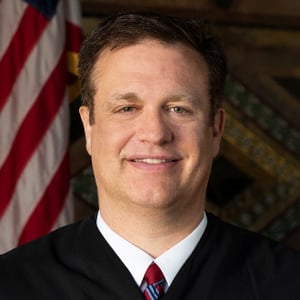
Judge, United States Court of Appeals, Ninth Circuit
Judge Nelson was confirmed to the Ninth Circuit in October 2018, as the youngest Circuit Judge to serve from Idaho and he has chambers in his hometown of Idaho Falls. Prior to his confirmation, Judge Nelson served for nine years as General Counsel of Idaho Falls-based Melaleuca, Inc., a consumer goods company. He previously worked in Washington, DC, where he served in all three branches of the federal government, including as Special Counsel for Supreme Court nominations to the Ranking Member of the Senate Judiciary Committee; Deputy General Counsel to the White House Office of Management and Budget; Deputy Assistant Attorney General in the Environment and Natural Resources Division of the United States Department of Justice; and a law clerk to Judge Henderson of the United States Court of Appeals for the D.C. Circuit. He has argued in most of the federal courts of appeals and worked on dozens of Supreme Court briefs. He started in the Washington, DC office of Sidley Austin as an appellate lawyer, after clerking for Judges Mosk and Brower of the Iran-U.S. Claims Tribunal at The Hague, and for now-Judge Tom Griffith, then-Senate Legal Counsel, during the impeachment trial of President Clinton. Judge Nelson earned his B.A. from Brigham Young University and his J.D., with honors, from BYU Law School. Judge Nelson has been a member of the Federalist Society since 1998.
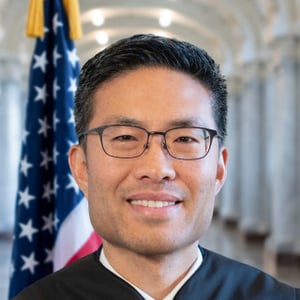
Judge, United States Court of Appeals for the Ninth Circuit
Judge Tung was nominated for the judgeship on July 15, 2025, and had his hearing before the U.S. Senate Judiciary Committee on July 30. His nomination was reported to the Senate floor on September 11.
Tung has been a partner at Jones Day in Los Angeles. He has clerked twice on the U.S. Supreme Court—for the Honorable Neil M. Gorsuch during October Term 2017 and for the Honorable Antonin G. Scalia during October Term 2012. Tung also served in the U.S. Department of Justice in several different roles: as counsel in the Office of Legal Policy in 2017, during which time he received the Attorney General’s Distinguished Service Award; as an assistant U.S. attorney in the Office of the U.S. Attorney for the Central District of California from 2016 to 2017; and as a Bristow Fellow in the Office of the Solicitor General from 2011 to 2012. Prior to his service in the executive branch, Tung was an attorney at Munger, Tolles & Olson LLP in Los Angeles, from 2014 to 2016, and clerked for then-Judge Gorsuch, of the U.S. Court of Appeals for the 10th Circuit, from 2010 to 2011.
Tung graduated with a Bachelor of Arts from Yale University in 2006 and earned his Juris Doctor, with high honors and Order of the Coif, in 2010 from The University of Chicago Law School, where he was managing editor of the Law Review

New York, California, and the NLRA: The Future of American Labor Law
Alexander T. MacDonald, Benjamin I. Sachs, Aaron Becket Solem
Last year was a tumultuous one for labor law. Not only was the National Labor...
New York, California, and the NLRA: The Future of American Labor Law
Alexander T. MacDonald, Benjamin I. Sachs, Aaron Becket Solem
Last year was a tumultuous one for labor law. Not only was the National Labor...
New York, California, and the NLRA: The Future of American Labor Law
A Union for Every Driver: Sectoral Bargaining Comes to the Rideshare Industry
Alexander T. MacDonald, David Madland, William L. Messenger
Two state laws could transform labor relations in the United States. In both California and...
A Union for Every Driver: Sectoral Bargaining Comes to the Rideshare Industry
Alexander T. MacDonald, David Madland, William L. Messenger
Two state laws could transform labor relations in the United States. In both California and...
A Tribute to Judge Sandra Ikuta (1954 - 2025)
Pasadena, CAStructure Over Spectacle: The Supreme Court's 2024 Term
Donald A. Daugherty, David C. Tryon
After several years of headline-grabbing decisions that reshaped national political debate—from abortion and affirmative action...
Transporting Abortifacients Across State Lines: Prospects for Indictment and Extradition
Paul Linton
On January 31, 2025, a Louisiana grand jury indicted a New York physician—Dr. Margaret Carpenter—for...
Socialism or Sensible Protections? Zoning, Rent Control, and the Roots of the Housing Crisis
From Zohran Mamdani's mayoral campaign promise to remake New York housing and California Governor Gavin...
Socialism or Sensible Protections? Zoning, Rent Control, and the Roots of the Housing Crisis
Ed Artau, James S. Burling, J. Peter Byrne, Ilya Somin, Sara Bronin
CLE credit for this event is available at On-Demand CLE. From Zohran Mamdani's mayoral campaign promise...