
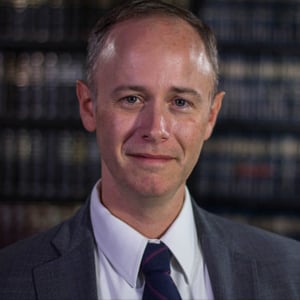
Vice President and Legal Director, National Right to Work Legal Defense and Education Foundation, Inc.
William Messenger is Foundation Vice President and Legal Director. He was a staff attorney for over twenty years and, during that time, represented individuals in numerous cases that sought to expand worker freedom of choice. This includes acting as lead counsel in three cases before the United States Supreme Court. In 2018, Messenger argued Janus v. AFSCME Council 31, where the Supreme Court held it violates the First Amendment for governments and unions to compel individuals to financially support unions and their speech. Originally from Youngstown Ohio, Messenger attended Ohio University as an undergraduate and then the George Washington University School of Law.
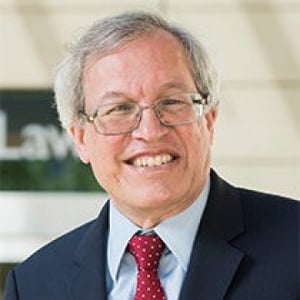
Dean and Jesse H. Choper Distinguished Professor of Law, UC Berkeley School of Law
Erwin Chemerinsky became the 13th Dean of Berkeley Law on July 1, 2017, when he joined the faculty as the Jesse H. Choper Distinguished Professor of Law.
Prior to assuming this position, from 2008-2017, he was the founding Dean and Distinguished Professor of Law, and Raymond Pryke Professor of First Amendment Law, at University of California, Irvine School of Law, with a joint appointment in Political Science. Before that he was the Alston and Bird Professor of Law and Political Science at Duke University from 2004-2008, and from 1983-2004 was a professor at the University of Southern California Law School, including as the Sydney M. Irmas Professor of Public Interest Law, Legal Ethics, and Political Science. He also has taught at DePaul College of Law and UCLA Law School.
He is the author of eleven books, including leading casebooks and treatises about constitutional law, criminal procedure, and federal jurisdiction. His most recent books are, We the People: A Progressive Reading of the Constitution for the Twenty-First Century (Picador Macmillan) published in November 2018, and two books published by Yale University Press in 2017, Closing the Courthouse Doors: How Your Constitutional Rights Became Unenforceable and Free Speech on Campus (with Howard Gillman).
He also is the author of more than 200 law review articles. He writes a regular column for the Sacramento Bee, monthly columns for the ABA Journal and the Daily Journal, and frequent op-eds in newspapers across the country. He frequently argues appellate cases, including in the United States Supreme Court.
In 2016, he was named a fellow of the American Academy of Arts and Sciences. In 2017, National Jurist magazine again named Dean Chemerinsky as the most influential person in legal education in the United States.

Partner, BakerHostetler, Adjunct Fellow, The Manhattan Institute
Andrew Grossman leads BakerHostetler’s Appellate and Major Motion team. He has appeared before the U.S. Supreme Court, nearly all the federal courts of appeals, as well as some state appellate courts, litigating high-profile and complex commercial, administrative and constitutional issues.
Andrew works with practice groups across BakerHostetler to identify and tackle complex issues, advise on administrative law and strategy, tee up issues for appeal and tackle appeals. He has developed and implemented litigation and administrative strategies for clients in several fields and industries.
In addition to his practice, Andrew advises members of Congress on matters of constitutional and administrative law, having testified more than a dozen times before the House and Senate Judiciary Committees. He has been a frequent legal commentator on radio and television, having appeared on Fox News, CNN, MSNBC, CNBC, NPR and its affiliates, CBN and elsewhere. His legal commentary has also appeared in dozens of magazines and newspapers, including The Wall Street Journal, USA Today, The Washington Post, The Washington Times and many others.
Andrew is a Senior Legal Fellow at the Buckeye Institute, an Adjunct Fellow the Manhattan Institute and a member of the leadership of the Federalist Society. He previously served as an adjunct scholar at the Cato Institute’s Robert A. Levy Center for Constitutional Studies and a legal fellow at the Heritage Foundation’s Meese Center for Legal and Judicial Studies. He clerked for Judge Edith H. Jones on the U.S. Court of Appeals for the Fifth Circuit.
Professor of Law, University of Michigan Law School
Prof. Samuel Bagenstos, who serves as professor of law, specializes in civil rights law, public law, and litigation. From 2009-2011, he was a political appointee in the U.S. Department of Justice, where he served as the Principal Deputy Assistant Attorney General for Civil Rights, the number-two official in the Civil Rights Division. His accomplishments included the promulgation of the 2010 Americans with Disabilities Act regulations—the first comprehensive update of those regulations since they were first promulgated in 1991—and the reinvigoration of the Civil Rights Division's enforcement of the Supreme Court's decision in Olmstead v. L.C., which guarantees people with disabilities the right to live and receive services in the most integrated setting appropriate. He led the negotiations of significant Olmstead v. L.C., which guarantees people with disabilities the right to live and receive services in the most integrated setting appropriate. He led the negotiations of significant Olmsteadsettlements with the states of Delaware and Georgia, which guarantee appropriate, community-based services to thousands of people with disabilities. He also personally argued major cases in federal district courts and courts of appeals.
As an academic, Prof. Bagenstos has published articles in journals such as the Yale Law Journal, the Columbia Law Review, the California Law Review, the Virginia Law Review, and many others. He also has published two books: Law and the Contradictions of the Disability Rights Movement (2009, Yale University Press); and Disability Rights Law: Cases and Materials (2010, Foundation Press). In his "spare time," Prof. Bagenstos remains an active appellate and Supreme Court litigator in civil rights and federalism cases. In one of the most notable cases he has argued, United States v. Georgia, 546 U.S. 151 (2006), the U.S. Supreme Court upheld, as applied to his client's case, the constitutionality of Title II of the Americans with Disabilities Act. Prof. Bagenstos has also testified before Congress on several occasions, including in support of the Fair Pay Restoration Act, the ADA Amendments Act, the Employment Non-Discrimination Act, and the Convention on the Elimination of All Forms of Discrimination Against Women, as well as on the application of the ADA to advancing technology and the problem of mental illness in prisons.
Prior to joining the Michigan Law faculty, Prof. Bagenstos was a professor of law, and, from 2007 to 2008, also associate dean for research and faculty development at Washington University School of Law. He has been on the faculty of Harvard Law School, and was a visiting professor at UCLA School of Law. He clerked for Judge Stephen Reinhardt on the Ninth Circuit for one year, and then joined the Civil Rights Division of the U.S. Department of Justice. Following that position, he served as law clerk for Justice Ruth Bader Ginsburg of the U.S. Supreme Court. In 1993, Prof. Bagenstos earned his JD, magna cum laude, from Harvard, where he received the Fay Diploma and was articles office co-chair for the Harvard Law Review.
Partner, BakerHostetler, Adjunct Fellow, The Manhattan Institute
Andrew Grossman leads BakerHostetler’s Appellate and Major Motion team. He has appeared before the U.S. Supreme Court, nearly all the federal courts of appeals, as well as some state appellate courts, litigating high-profile and complex commercial, administrative and constitutional issues.
Andrew works with practice groups across BakerHostetler to identify and tackle complex issues, advise on administrative law and strategy, tee up issues for appeal and tackle appeals. He has developed and implemented litigation and administrative strategies for clients in several fields and industries.
In addition to his practice, Andrew advises members of Congress on matters of constitutional and administrative law, having testified more than a dozen times before the House and Senate Judiciary Committees. He has been a frequent legal commentator on radio and television, having appeared on Fox News, CNN, MSNBC, CNBC, NPR and its affiliates, CBN and elsewhere. His legal commentary has also appeared in dozens of magazines and newspapers, including The Wall Street Journal, USA Today, The Washington Post, The Washington Times and many others.
Andrew is a Senior Legal Fellow at the Buckeye Institute, an Adjunct Fellow the Manhattan Institute and a member of the leadership of the Federalist Society. He previously served as an adjunct scholar at the Cato Institute’s Robert A. Levy Center for Constitutional Studies and a legal fellow at the Heritage Foundation’s Meese Center for Legal and Judicial Studies. He clerked for Judge Edith H. Jones on the U.S. Court of Appeals for the Fifth Circuit.

Senior Attorney, Institute for Justice
Paul Avelar is the Managing Attorney of the Institute for Justice Arizona Office. He joined the Institute in March 2010 and litigates free speech, property rights, economic liberty, school choice and other constitutional cases in federal and state courts.
As the head of IJ’s national Braiding Freedom Initiative, Paul represents natural hair braiders across the country to protect their right to earn an honest living. The Initiative uses lawsuits, activism and research to remove laws that require potential braiders to undergo hundreds of costly training hours just to braid hair. Since IJ launched the Braiding Freedom Initiative in 2014, 12 additional states have freed braiders from unnecessary licensing burdens. Paul drafted the model Natural Hair Braiding Protection Act, which has been adopted in Arkansas, Indiana, Iowa, Kentucky, Nebraska, New Hampshire, Texas and South Dakota. He is currently representing braiders in Missouri, where state laws infringe upon their right to earn an honest living.
In his free speech work, Paul has challenged numerous laws that trample First Amendment rights. In Arizona Freedom Club PAC v. Bennett, he represented candidates and independent groups in a successful U.S. Supreme Court challenge to the “matching funds” provision of Arizona’s publicly financed elections system. He represented grassroots groups and individuals in Arizona, Mississippi and Washington, where state laws burdened their political speech by requiring them to register with the government, to navigate complex regulations and to face fines and possible criminal penalties merely because they talked about political issues. In Washington, Paul protected a lawyer’s right to defend, pro-bono, the First Amendment rights of political speakers. Through litigation and legislation, Paul leads the fight against abusive civil forfeiture laws in Arizona and elsewhere.
Paul also co-authored the most comprehensive published study of economic liberty protections in the Arizona Constitution. The Chief Justice of the Arizona Supreme Court appointed Paul to the Task Force on the Review of the Role and Governance Structure of the State Bar of Arizona, where he dissented from the majority report and called on leaders to substantially reform the Bar and state regulation of the practice of law. He often speaks at law schools across the country about constitutional issues and his work at IJ.
Prior to joining IJ-AZ, Paul worked as an attorney in Philadelphia. He clerked for Judge Roger Miner on the 2nd U.S. Circuit Court of Appeals, Justice Andrew Hurwitz on the Arizona Supreme Court, and Judge Daniel Barker on the Arizona Court of Appeals.
Paul graduated manga cum laude from the Arizona State University College of Law in 2004 and was elected to the Order of the Coif. He received his undergraduate degree from Princeton University in 2000.
Co-Founder, Trustee, and Legal Advisor, Reason Foundation and Ge, Individual Rights Foundation
Manuel "Manny" Klausner was one of the founding partners in Reason Enterprises, which began publishing Reason magazine in 1971, three years after the publication's creation. He became editor in the summer of 1972 and a senior editor in June 1978. In 1978 he co-founded the Reason Foundation with Tibor Machan and Bob Poole. He remains on the board of the Reason Foundation today, is a stalwart supporter of the Federalist Society, and a libertarian lawyer extraordinaire.
Superior Court of California for the County of Los Angeles
Carolyn Barbara Kuhl is a judge on the Superior Court of California for the County of Los Angeles and a former nominee to the United States Court of Appeals for the Ninth Circuit. After receiving her law degree in 1977 from Duke Law School, she clerked for future Supreme Court Justice, Anthony M. Kennedy, from 1977–78. From 1981–86, she served in the United States Department of Justice. She worked as a partner in the Los Angeles law firm of Munger, Tolles & Olson, focusing on civil business litigation with a specialty in appellate litigation, from 1986–95. She became a judge on the Superior Court of California for the County of Los Angeles in 1995 and was nominated to a seat on the United States Court of Appeals for the Ninth Circuit on June 22, 2001 by President George W. Bush.

Former President & CEO, The Federalist Society for Law and Public Policy Studies
Eugene B. Meyer, former President and CEO of the Federalist Society, has served as Executive Director, CEO, and/or President of the organization for more than 40 years. He is responsible for shepherding the organization from a small group of law students to a community of 90,000 lawyers, law students, academics, judges, and others interested in the rule of law. The Society now includes a Student Chapter at nearly every ABA-accredited law school in the country and Lawyers Chapters in 220 major cities across the nation. Gene earned his B.A. in history at Yale in 1975 and his M.A. in political science from the London School of Economics in 1976. Gene currently serves on the boards of the U.S. Chess Center, the Holman Foundation, the Sarah Scaife Foundation, and the advisory board of the Adam Smith Society. He holds the title of International Chess Master.
Executive Director, First Amendment Coalition
A lawyer and journalist, Scheer was editor and publisher of The Recorder, a daily legal newspaper in San Francisco, publisher of Legal Times, a Washington, DC-based weekly on law and lobbying, and CEO of callaw.com and law.com. Scheer practiced appellate law in Washington, DC, both in the U.S. Justice Department and in private practice. He was a partner in the Washington, DC firm of Onek, Klein & Farr, and was general counsel to the National Security Archive. Scheer has argued appellate cases in most of the federal courts of appeal and in the U.S. Supreme Court.
Scheer has received the Eugene S. Pulliam First Amendment Award (from the national Sigma Delta Chi Foundation) and the James Madison Freedom of Information Award (from the Society of Professional Journalists). Scheer’s articles on First Amendment issues and related issues have appeared in numerous publications, both print and online, including the Sacramento Bee, Slate.com, Huffington Post, San Jose Mercury News, Salon.com, Orange County Register, San Francisco Chronicle, the San Diego Union-Tribune and the Los Angeles Daily Journal.
Scheer received his JD in 1978 from Harvard Law School, where he was a member of the Harvard Law Review. He received his BA at Amherst College, graduating magna cum laude and Phi Beta Kappa.

Senior Legal Fellow, Edwin Meese III Institute for the Rule of Law, Advancing American Freedom
Partner, Gibson Dunn & Crutcher LLP
Theodore J. Boutrous, Jr. is a partner in the Los Angeles office of Gibson Dunn and one of the nation’s leading litigators. He is a member of the American Law Institute and a Fellow of the American Academy of Appellate Lawyers.
As The New York Times has noted, Mr. Boutrous has “a long history of pushing the courts and the public to see the bigger picture on heated issues.” The American Lawyer named Mr. Boutrous the 2019 “Litigator of the Year, Grand Prize Winner” and the Los Angeles and San Francisco Daily Journals in 2021 named him a “Top Lawyer of the Decade.” According to The National Law Journal, which in 2013 named him one of the “100 Most Influential Lawyers in America,” he “is known for his wise, strategic advice to clients in crisis and is a media law star.”
Mr. Boutrous has represented clients in federal and state appellate courts throughout the nation in a wide spectrum of cases, and he is currently serving as Co-Chair of the firm's First Amendment and Free Expression Practice Group. He has argued hundreds of appeals, including before the Supreme Court of the United States, 12 different federal circuit courts of appeals, and 12 different state supreme courts (including 14 arguments in the California Supreme Court), and he has led a multitude of other complex civil, constitutional and criminal matters. Mr. Boutrous has successfully persuaded courts to overturn some of the largest jury verdicts and class actions in history, and prevailed in many cutting-edge cases. In 2011, he successfully represented Walmart before the Supreme Court of the United States in the Dukes case, which unanimously reversed what had been the largest employment class action in history and established important standards governing class actions (Wal-Mart Stores, Inc. v. Dukes). In 2013, he successfully represented the prevailing party in obtaining a unanimous Supreme Court decision enforcing the Class Action Fairness Act (Standard Fire Insurance Co. v. Knowles). Also in 2013, Mr. Boutrous successfully represented plaintiffs in the Supreme Court in a case invalidating California’s prohibition on same-sex marriage, Proposition 8 (Hollingsworth v. Perry), in which he also served as one of the lead trial lawyers and architects of the legal strategy that led to this landmark victory. In 2018, Mr. Boutrous successfully represented CNN and its reporter Jim Acosta in bringing First Amendment and due process claims against then-President Donald Trump and other White House officials, forcing the White House to restore Mr. Acosta’s press credentials. “Litigators of the Week: Gibson Dunn’s Two Teds Score for the Free Press,” The AmLaw Litigation Daily (November 30, 2018). And in 2021, he secured a major victory for Hewlett-Packard Company when the California Court of Appeal affirmed a more than $3 billion verdict in HP’s long-running contract dispute with Oracle Corporation. “Litigators of the Week: Gibson Dunn Protects Its $3B Trial Win for HP Against Oracle on Appeal,” The AmLaw Litigation Daily (June 18, 2021).
As both a crisis management strategist and a seasoned appellate and media lawyer, Mr. Boutrous has extensive experience handling high-profile litigation, media relations and media legal issues. He routinely advises clients in planning how to respond, and in responding, to crises and other especially significant legal problems that attract the media spotlight.
Mr. Boutrous has also received the 2021 Freedom of the Press Award from the Reporters Committee for Freedom of the Press and the Distinguished Leadership Award from PEN America in 2019 for his leadership in advancing First Amendment rights and protecting freedom of expression. As The Hollywood Reporter noted in naming him to its 2022 “Power Lawyers” list, “When issues of free speech are in play, Boutrous is the attorney on speed dial.” Hollywood’s Top 100 Attorneys (March 2022). Mr. Boutrous was also named a “First Amendment Rights Trailblazer” by The National Law Journal in 2020.
Numerous profiles of Mr. Boutrous and his practice have appeared in the media. Prominent mentions include: “Mr. Boutrous, You Have 4 Minutes’: On Rebuttal With Ted Boutrous of Gibson Dunn,” The AmLaw Litigation Daily (August 25, 2022); “Litigator of the Week: How Gibson Dunn Helped Hit Print on Mary Trump’s Best-Seller,” The AmLaw Litigation Daily (July 17, 2020); “Litigation Department of the Year,” The American Lawyer (January 2020); “Litigator of the Week: Gibson Dunn’s Theodore Boutrous Jr. Scores Another Win for the Fourth Estate,”The AmLaw Litigation Daily (September 6, 2019); “Lawyer of the week: Theodore Boutrous Jr, attorney in White House press pass victory,” The Times of London (November 29, 2018); Ted Boutrous, CNN’s Champion, Is Fired Up,” Law.com (November 30, 2018); “Litigator of the Week: From Zero to Hero in Seven Days” The AmLaw Litigation Daily (April 27, 2017); “Litigator of the Week” The AmLaw Litigation Daily (September 8, 2016); “Practice Group Performs In Spotlight and Under Pressure,” Los Angeles and San Francisco Daily Journal (March 14, 2012); “Litigator of the Week,” The AmLaw Litigation Daily (June 23, 2011); “Lawyer of the Week,” The Times of London (June 30, 2011); “Appellate Lawyer of the Week,” National Law Journal (March 23, 2011); “Litigation Department of the Year,” The American Lawyer (January 2016); “Litigation Department of the Year,” The American Lawyer (January 2012); “Litigation Department of the Year,” The American Lawyer (January 2010); and “He’s a Hired Gun of the Highest Caliber,” The Los Angeles Times (June 24, 2007).
In 2025, The Daily Journal recognized Mr. Boutrous with its inaugural Distinguished Counsel award, which honors lawyers “whose consistent excellence and enduring influence in California’s legal community have earned them a place among the Top 100 lawyers for 15 years or more,” and has repeatedly named him to its list of “Top 100 Lawyers” and “Leading Commercial Litigators” in California for over two decades. The Hollywood Reporter, featuring him in Power Lawyers 2021: Hollywood’s Top 100 Attorneys, declared that “Boutrous is there when an industry’s future rides on a big argument.” He has been named a California “Litigation Star” in Benchmark Litigation, as well as a “National Practice Area Star.” Chambers USA ranks him as a leading lawyer in five different categories, describing him as “an absolute star,” with clients praising his skills as “an amazing orator” and his “incredible knack of picking the winning argument and his oral advocacy skills are peerless. He picks the right point in response to every question without even blinking.” The Legal 500 named Mr. Boutrous a “Leading Lawyer” for Supreme Court and Appellate litigation, calling him a “renowned advocate” and “the preeminent authority on punitive damages defenses in the U.S.” Lawdragon recognizes Mr. Boutrous as one of its distinguished "Lawdragon Legends," an honor reserved for those who have appeared in Lawdragon's guide at least ten times since its inception in 2005. Over the years, he has been named to the following Lawdragon lists: 500 Leading Litigators in America, Leading Global Litigators, 500 Leading Lawyers in America, 500 Leading Global Entertainment, Sports & Media Lawyers, 500 Global Leaders in Crisis Management, and 100 Leading AI & Tech Legal Advisors.
Mr. Boutrous is a frequent commentator on legal issues. His articles include: Spare the ‘Dreamers’ a Nightmare by According Them Due Process,” The Wall Street Journal (May 2, 2017); “Poor Children Need a New Brown v. Board of Education,” The Wall Street Journal (August 28, 2016); “A First Amendment Blind Spot,” The Wall Street Journal (May 27, 2014); “California Kids Go to Court to Demand a Good Education,” The Wall Street Journal (January 28, 2014); “A Radical Departure on Press Freedom,” The Wall Street Journal (May 23, 2013); “A Killer’s Notebook, a Reporter’s Rights,” The New York Times (April 9, 2013); and “Broadcast ‘Indecency’ on Trial,” The Wall Street Journal (January 17, 2012).
Mr. Boutrous is a member of the Steering Committee of the Reporters Committee for Freedom of the Press and was a recipient of its 2021 Freedom of the Press Awards. He also sits on the Advisory Board of the International Women’s Media Foundation, which named him its 2015 Leadership Honoree. In addition, he is a member of the Advisory Board of the United States Court of Appeals for the Ninth Circuit, which advises the Chief Judge on matters related to the effective administration of the courts in the Ninth Circuit.
Mr. Boutrous received his law degree, summa cum laude, from the University of San Diego School of Law in 1987, where he was Valedictorian and Editor-in-Chief of the San Diego Law Review.
Mr. Boutrous is admitted to practice in California, New York, and the District of Columbia.
United States District Court, Central District of California
Andrew Guilford is a federal judge for the United States District Court for the Central District of California. He joined the court in 2006 after being nominated by President George W. Bush.
Born in Santa Monica, California, Guilford graduated from the University of California-Los Angeles with his Bachelor's Degree in 1972 and his Juris Doctor degree in 1975.
Former President & CEO, The Federalist Society for Law and Public Policy Studies
Eugene B. Meyer, former President and CEO of the Federalist Society, has served as Executive Director, CEO, and/or President of the organization for more than 40 years. He is responsible for shepherding the organization from a small group of law students to a community of 90,000 lawyers, law students, academics, judges, and others interested in the rule of law. The Society now includes a Student Chapter at nearly every ABA-accredited law school in the country and Lawyers Chapters in 220 major cities across the nation. Gene earned his B.A. in history at Yale in 1975 and his M.A. in political science from the London School of Economics in 1976. Gene currently serves on the boards of the U.S. Chess Center, the Holman Foundation, the Sarah Scaife Foundation, and the advisory board of the Adam Smith Society. He holds the title of International Chess Master.
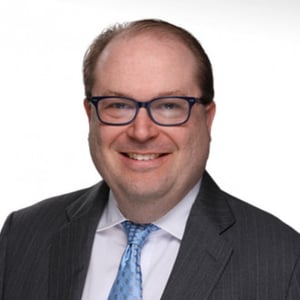
Partner, Horvitz & Levy LLP
Jeremy Rosen is nationally renowned for his proficiency in numerous issues arising under the First Amendment and California’s anti-SLAPP law. Using that knowledge, Jeremy has helped a wide variety of clients – including churches, private businesses, and individuals – defeat lawsuits that seek to impose liability on clients for exercising their rights of petition, free speech, and free exercise of religion. He has also handled hundreds of appeals in numerous appellate courts, including the Ninth Circuit Court of Appeals, the California Supreme Court, and California’s intermediate appellate courts. In addition to First Amendment and anti-SLAPP cases, his cases have involved numerous important issues regarding anti-trust, class actions, wage and hour law, employment law, breach of contract, California’s Unfair Competition Law, CEQA, the enforceability of arbitration clauses, hospital peer review, the scope of public employee whistleblower protection, and the application of the primary assumption of risk doctrine.
Jeremy is a partner at the firm, which he joined in 2001. He is a California State Bar Certified Appellate Specialist and a member of the California Academy of Appellate Lawyers.
Jeremy directed the Pepperdine University School of Law Ninth Circuit Appellate Advocacy Clinic for 6 years. The Clinic represents individuals in the Ninth Circuit who are identified by the court as needing pro bono counsel. Jeremy also previously served a three-year term where he was appointed by the Ninth Circuit to serve as one of 18 appellate lawyer representatives to the court.
Jeremy is a member of the National Chamber Litigation Center’s California Litigation Advisory Committee. Before joining the firm, Jeremy was a Litigation Associate with Munger, Tolles & Olson.
Partner, Trygstad, Schwab & Trygstad
Mr. Schwab is a partner at Trygstad, Schwab & Trygstad A Law Corporation in Los Angeles, CA.
Education Law; Employee Benefits; Criminal Law; Civil Rights; Administrative Law; Appellate Practice; Civil Practice; Federal Practice; Labor and Employment

Judge, United States Court of Appeals, Ninth Circuit
Judge Carlos Bea serves as a judge on the United States Court of Appeals for the Ninth Circuit. He received his Bachelor's Degree from Stanford University in 1956 and his J.D. from Stanford Law School in 1958. Judge Bea was born in San Sebastian, Spain, and immigrated with his family to Cuba in 1939. In 1952, he represented Cuba on the Cuban National basketball team in the Helsinki Olympics. Judge Bea became a naturalized citizen of the United States in 1958. He engaged in private practice in San Francisco, principally in the area of civil trials (jury and non-jury), from 1959-75 at Dunne, Phelps & Mills and from 1975-90 at Carlos Bea, A Law Corporation. He taught courses in civil litigation advocacy at Hastings College of Law and Stanford Law School. From 1990 to 2003, Judge Bea served as a judge of the San Francisco Superior Court. He was nominated by President George W. Bush to the United States Court of Appeals for the Ninth Circuit and was confirmed in 2003.
Judge Bea and his wife Louise reside in San Francisco, where they raised their four sons, Sebastian, Alexander, Nicholas, and Dominic.
Professor of Economics, University of California, San Diego
Julian Betts is a Professor in (and former Chair of) the Department of Economics at the University of California, San Diego. He is also the Executive Director of the San Diego Education Research Alliance at UCSD (sandera.ucsd.edu), a Research Associate at the National Bureau of Economic Research and a Bren Fellow at the Public Policy Institute of California (PPIC).
His research focuses on the economics of education. He has written extensively on the link between student outcomes and measures of public school spending including class size, teachers' salaries, and teachers' level of education. He has also examined the role that standards and expectations play in student achievement. Examples of his work include a theoretical analysis of the impact of educational standards published in the American Economic Review (1998), the book “Taking Measure of Charter Schools: Better Assessments, Better Policymaking, Better Schools,” co-edited with Paul Hill, the book “Getting Choice Right: Ensuring Equity and Efficiency in Education Policy” (Brookings Institution Press 2005) co-edited with Tom Loveless, and the co-authored books “Predicting Success, Preventing Failure: An Investigation of the California High School Exit Exam” (PPIC 2008), “Does School Choice Work?” (PPIC 2006), “From Blueprint to Reality: San Diego’s Education Reforms” (PPIC 2005), “Determinants of Student Achievement: New Evidence from San Diego” (PPIC 2003) and “Equal Resources, Equal Outcomes? The Distribution of School Resources and Student Achievement in California” (PPIC, 2000). Current research includes studies of school choice, California’s Mathematics Diagnostic Testing Project, and San Diego’s controversial Blueprint for Student Success.
His other main areas of research include higher education; immigration; technology, skills, and the labor market; and the economics of unions.
Betts is Principal Investigator on a multi-year study of magnet elementary schools funded by the U.S. Department of Education. This project, which is examining the impact of magnet schools on the achievement of both local and non-local enrollees, is joint with the American Institutes of Research (AIR) and Berkeley Policy Associates (BPA). He was also Principal Investigator of a three-year study for the U.S. Department of Education of the effects of career and technical education on students’ academic trajectories. Betts has served on two National Academy of Sciences panels, including (from 2005-2008) the congressionally mandated “Committee on Evaluation of Teacher Certification by the National Board for Professional Teaching Standards (NBPTS)”. Betts became a council member of the California Council on Science and Technology in 2007. Betts has also served on several technical review panels for the U.S. Department of Education, and the national advisory committees for the National Charter School Research Center at the University of Washington. In 2001-2003 Betts served on the National Working Commission on Choice in K-12 Education. He is a member of the editorial board of Education Finance and Policy, published by MIT Press.
At UCSD Betts is a professor in the Department of Economics, where he served as Department Chair from 2008 through 2011. Within the Department of Economics Betts has also served as Computing Director and more recently as Vice Chair, Graduate Studies, for the Department between 2004 and 2007. Betts was a member of the UCSD Admissions Committee from 1999 to 2003, serving as both Chair and Vice Chair in various years. In 2001 he served on the University’s Gender Equity Taskforce. Between 1999 and 2008 he also served on the Board of Directors of the Preuss School at UCSD, a
charter school on the UCSD campus that admits disadvantaged students from the local area. Betts also serves as UCSD campus director of the UC Educational Evaluation Center.
Betts obtained a Bachelor's degree in chemistry from McGill University, the M.Phil. in economics from Oxford University, Oxford, England, and a Ph.D. in economics from Queen's University, Kingston, Ontario, Canada.

Justice, Supreme Court of Arizona
Clint Bolick was appointed by Governor Doug Ducey in January 2016 to serve on the Arizona Supreme Court and was retained by the voters in 2018 and 2024.
Prior to joining the Court, Justice Bolick litigated constitutional cases in state and federal courts from coast to coast, including the U.S. Supreme Court. Among other positions, he served as Vice President for Litigation at the Goldwater Institute and as Co-founder and Vice President for Litigation at the Institute for Justice. He has litigated in support of school choice, freedom of enterprise, private property rights, freedom of speech, and federalism, and against racial classifications and government subsidies.
Justice Bolick received his Juris Doctor degree from the University of California at Davis, where he has been recognized as a distinguished alumnus, and his Bachelor of Arts degree magna cum laude from Drew University. He serves as a research fellow with the Hoover Institution. Among other honors, he was named one of the 90 Greatest DC Lawyers in the Last 30 Years by Legal Times in 2008, received a Bradley Prize in 2006, and was recognized as one of the nation’s three lawyers of the year by American Lawyer in 2002 for his successful defense of school vouchers in Zelman v. Simmons-Harris.
Justice Bolick is a prolific author of a dozen books and hundreds of articles. Among his most recent books are Unshackled: Freeing America’s K-12 Education System: Immigration Wars: Forging an American Solution, co-authored with former Florida Governor Jeb Bush; and David’s Hammer: The Case for an Activist Judiciary. Bolick serves as an adjunct professor of constitutional law at Arizona State University’s Sandra Day O’Connor School of Law and has served as a lecturer at Harvard University’s John F. Kennedy School of Government.
Professor of Education and Public Policy, University of Californ, Berkeley
Working inside policy organizations and the academy over the past three decades, Bruce Fuller has asked how public action best strengthens families and schools. He helped to design policy reforms for a free-thinking California governor, and advised opposition leaders on education reform as democracy emerged in southern Africa. Professor Fuller has studied child care programs arising at the grassroots or state run in Latin America. A fundamental question continues to motivate this array of research and writings: How can central governments enrich families and schools when situated in colorfully pluralistic societies? In short, what happens when government confronts culture?
Trained in political sociology, Professor Fuller's recent projects center on small-scale organizations that sprout across diverse communities, such as charter schools and preschools, which often spread in response to the clumsy or gray character of central states. Yet, decentralized institutions can disempower central governments, a worrisome scenario for those concerned with equity. Professor Fuller's current research delves into how young children are socialized in diverse Mexican-American homes, and what neighborhood organizations effectively advance their development. His recent book, Standardized Childhood: The Political and Cultural Struggle over Early Education, examines how elite reformers often push for state incorporation of community programs, even eroding the authority and resources spread across diverse ethnic leaders.
Professor Fuller also looks into fields that have become hyper-centralized, exemplified by his critical work on No Child Left Behind. A college dropout, he eventually received his Ph.D. from Stanford University. Before coming to Berkeley, Professor Fuller was a research sociologist at the World Bank and taught at Harvard's School of Education.

Co-Chairman, The Federalist Society for Law and Public Policy Studies
Leonard is Co-Chairman and former Executive Vice President of the Federalist Society, joining the organization over 25 years ago. Since that time he has been instrumental in helping the organization top 70,000, focusing on the growth of lawyers membership, operations and activities advancing limited, constitutional government. In addition to his work at the Society, Leonard has advised President Trump on judicial selection, assisted with the Gorsuch and Kavanaugh Supreme Court selection and confirmation process, and served as a member of the transition team. He also organized the outside coalition efforts in support of the Roberts and Alito U.S. Supreme Court confirmations. Leonard was appointed by President George W. Bush to three terms to the U.S. Commission on International Religious Freedom as chairman. He was also a U.S. Delegate to the UN Council and UN Commission on Human Rights during the Bush Administration. Leonard was the recipient of the 2009 Bradley Prize, along with the other founders and directors of the Federalist Society, for his work in advancing freedom and the rule of law. He is the coeditor of Presidential Leadership: Rating the Best and the Worst in the White House, as well as the author of opinion editorials in the New York Times,The Wall Street Journal, and Washington Post. Leonard holds degrees from Cornell University and Cornell Law School. He presently resides in Northern Virginia, where he and his wife Sally have raised their seven children.
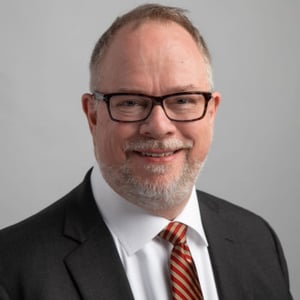
Managing Attorney of the Washington Office, Institute for Justice
William R. Maurer is the Managing Attorney of the Washington state office of the Institute for Justice, which engages in litigation in the areas of economic liberty, private property rights, educational choice, & freedom of speech.
Maurer is an advocate against the criminalization of poverty and the governmental use of the criminal and civil enforcement systems to raise revenue. He was lead counsel in a class action challenging the use of tickets to raise revenue in the city of Pagedale, Missouri. The suit resulted in a federal consent decree that reformed the city’s ticketing and municipal court system. He regularly speaks, teaches, and writes about the abuse of fines and fees in the criminal justice system. He was a participant in summits on taxation by citation put on by the White House and Department of Justice during the Obama Administration. His work on the issue includes serving as an advisory board member of the Fines and Fees Justice Center.
In addition to his work on criminal and civil justice reform, Maurer is a First Amendment litigator. In 2011, he successfully argued before the U.S. Supreme Court that Arizona’s punitive campaign financing regime was unconstitutional. Before the Washington Supreme Court, he successfully argued against efforts to classify radio commentary as a contribution under the state’s campaign finance law.
His cases and advocacy have been covered in the Washington Post, the New York Times, the Economist, the Wall Street Journal, and other major media outlets.
Maurer was named a “Washington Superlawyer” by Washington Law & Politics Magazine for several years. He is a chapter author in numerous legal reference works and has written several articles for law reviews and legal publications across the country.
Prior to joining IJ-WA, Maurer clerked for Washington Supreme Court Justice Richard Sanders and then practiced law at Perkins Coie LLP. Maurer received his law degree in 1994 from the University of Wisconsin – Madison, where he was an editor of the Wisconsin Law Review. He received his BA from Bard College in 1989.
State Director, Democrats for Education Reform and former California State Senator
Former California State Senator Gloria Romero is the State Director of Democrats for Education Reform and has been a forceful advocate for education reform and civil rights.
She brings to the post not only a great passion for quality education opportunities for all children, but a keen knowledge of the legislative and political process. She was elected to the 24th Senate District in 2001, representing East Los Angeles and the greater San Gabriel Valley. Upon her election she was recognized as one of the hardest working members of the Legislature and quickly rose in leadership positions. She was elected by her peers to serve as Senate Democratic Caucus Chair and as Senate Majority Leader -- the first woman to ever hold that leadership position in the history of the California State Senate.
Romero served as Chair of both the Education Committee and the Senate Budget and Fiscal Review Subcommittee on Education, making her one of the most influential voices on education policy in California. She believes that education is the civil rights issue of our time. States Romero, "My mother had a sixth grade education; I have a PhD. I understand the transformational power of education and the key it holds to accessing the American Dream".
Partner, Gibson Dunn & Crutcher LLP
Daniel M. Kolkey is a partner in the San Francisco office of Gibson, Dunn & Crutcher. A member of the Litigation Department, he is co-chair of the Appellate and Constitutional Law Practice Group. Mr. Kolkey returned to the firm in November 2003 after five years as an Associate Justice on the California Court of Appeal, Third Appellate District, in Sacramento.
Recognized in 2005 and 2007 by California Lawyermagazine as an Attorney of the Year in the fields of Government/Public Policy and Appellate law, respectively, and ranked in the first tier for California Appellate Litigation by Chambers USA in 2010, 2011, 2012, and 2013, Mr. Kolkey's practice focuses on appellate litigation. He has also advised four different governors on legal issues, and served as Governor Pete Wilson’s and Governor Arnold Schwarzenegger's lead negotiator for tribal-state compacts under the Indian Gaming Regulatory Act. He was named in 2004, 2005, and 2006 by the Daily Journal as one of the top 100 attorneys in California. And in May 2010, he was appointed by the California Chief Justice to the California Judicial Council’s Appellate Advisory Committee for a three-year term.
Prior to being appointed as an Associate Justice on the California Court of Appeal, Mr. Kolkey served as Legal Affairs Secretary and counsel to Governor Pete Wilson for four years. As such, he was responsible for all of the legal advice within the Governor's Office; approving all state agency appeals; supervising and directing litigation strategy with respect to lawsuits brought against the Governor in his official capacity; drafting the Governor's civil justice reform legislation; and negotiating tribal-state compacts under the Indian Gaming Regulatory Act.
Before serving Governor Wilson, Mr. Kolkey was a partner at Gibson Dunn, where he handled litigation at both the trial and appellate levels, including commercial disputes, political law litigation, and international arbitration.
As a litigator (before and after his government service from 1995 to 2003), Mr. Kolkey has handled class and shareholder actions; construction, real estate, employment, and contract disputes; unfair competition litigation; and political law litigation, including ballot litigation, Voting Rights Act claims, and redistricting matters.
Former President & CEO, The Federalist Society for Law and Public Policy Studies
Eugene B. Meyer, former President and CEO of the Federalist Society, has served as Executive Director, CEO, and/or President of the organization for more than 40 years. He is responsible for shepherding the organization from a small group of law students to a community of 90,000 lawyers, law students, academics, judges, and others interested in the rule of law. The Society now includes a Student Chapter at nearly every ABA-accredited law school in the country and Lawyers Chapters in 220 major cities across the nation. Gene earned his B.A. in history at Yale in 1975 and his M.A. in political science from the London School of Economics in 1976. Gene currently serves on the boards of the U.S. Chess Center, the Holman Foundation, the Sarah Scaife Foundation, and the advisory board of the Adam Smith Society. He holds the title of International Chess Master.
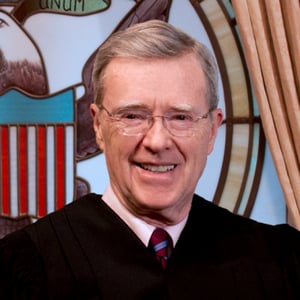
Judge, United States Court of Appeals, Ninth Circuit
Judge O’Scannlain was appointed United States Circuit Judge for the Ninth Circuit by President Reagan on September 26, 1986. He received a J.D. degree in 1963 from Harvard Law School and a B.A. in 1957 from St. John’s University. He also earned the LL.M. (Judicial Process) degree at University of Virginia Law School in 1992. He was awarded the LL.D. (honoris causa) degree by the University of Notre Dame in 2002, the LL.D. (honoris causa) degree by Lewis & Clark College in 2003 and the LL.D. (honoris causa) degree by the University of Portland in 2011.
As a judge on the U.S. Court of Appeals for the Ninth Circuit, Judge O’Scannlain has participated in over 6,000 federal cases and has written hundreds of published opinions on a broad range of subjects including constitutional law, international law, securities law, administrative law, and criminal law. He hears appeals in San Francisco (court headquarters), as well as in Los Angeles (Pasadena), Portland, Seattle, Anchorage and Honolulu. The late Chief Justice Rehnquist appointed Judge O'Scannlain to the Federal Judicial Center's Advisory Committee on Appellate Judge Education. In 2009, Chief Justice Roberts appointed Judge O’Scannlain to the International Judicial Relations Committee of the U.S. Judicial Conference and subsequently appointed him Chairman in 2010.
President George W. Bush appointed Judge O’Scannlain to the Board of Trustees of the James Madison Memorial Fellowship Foundation in 2004. Pope Benedict XVI conferred the Order of Saint Gregory the Great on Judge and Mrs. O’Scannlain in 2007.
Judge O’Scannlain’s professional interests also include judicial administration and reform, and continuing legal education. Judge O’Scannlain is former Chair of the Judicial Division of the American Bar Association and has previously chaired the ABA’s Appellate Judges Conference, its Committee on Appellate Practice, and its 9th Appellate Practice Institute. He has testified before the Senate Judiciary Committee on several occasions, the House Judiciary Subcommittee on Courts and Intellectual Property, and the Commission on Structural Alternatives for the Federal Courts of Appeals on the subject of court reorganization. In addition to serving as a faculty member at numerous federal appellate practice seminars for judges and attorneys, including New York University Law School’s Institute for Judicial Administration, Judge O’Scannlain is an Adjunct Professor at Lewis & Clark Law School where he teaches a seminar on the Supreme Court. He has served as a Moot Court Judge at distinguished law schools across the United States including Harvard, Yale Stanford, Boalt Hall (Berkeley Law), Virginia, Cornell, Notre Dame, Fordham, Alabama, University of Southern California, King Hall (U.C. Davis) and Loyola Marymount University and in China at Xiamen and Renmin Universities.
Between graduation from Harvard and investiture as a federal judge, Judge O’Scannlain was primarily engaged in private law practice. Between 1969 and 1974, he was consecutively the Deputy Attorney General of Oregon, the Public Utility Commissioner of Oregon, and Director of the Oregon Department of Environmental Quality. He retired from the U.S. Army Reserve in 1978 as a Major after 23 years Reserve and National Guard service, including four years as an enlisted man.
A first generation Irish-American son of immigrant parents from Sligo and Derry, Judge O’Scannlain is married to the former Maura Nolan and has eight children: Sean, Jane, Brendan, Kevin, Megan, Christopher, Anne, and Kate, and nineteen grandchildren. His chambers are in the Pioneer Courthouse in Portland, Oregon.

Partner, Holland & Hart LLP
A longtime litigator and project team leader, Tom Sansonetti helps clients permit and develop projects with potential obstacles in mind.
Long before a lawsuit can threaten a project, he counsels clients on how to develop effective plans of action that will meet government environmental permitting requirements and stand up to judicial scrutiny when those clients' projects are challenged in court.
Tom joined Holland & Hart in 1993 and has built a nationally recognized practice in natural resources and environmental law. Considered an expert in natural resources and environmental matters, Tom has served as one of the top leaders in the Department of Justice and also has held the third-ranking position in the Department of the Interior. He has argued before the U.S. Supreme Court and in several Federal Circuit Courts of Appeal, and has served as a federal prosecutor in environmental crimes cases. Tom’s appellate experience highlights his ability to argue cases at all levels of the federal court system.

Senior Scholar, Manhattan Institute; Professor of Law Emerita, University of San Diego
Gail Heriot is a Senior Scholar at the Manhattan Institute, a Professor of Law Emerita at the University of San Diego and the Chairman of the Board of the American Civil Rights Project. She served on the U.S. Commission on Civil Rights for 18 years. Her new book is entitled “Why We Walk on Eggshells: How Our Civil Rights Laws Stifle Our Public Discourse.”
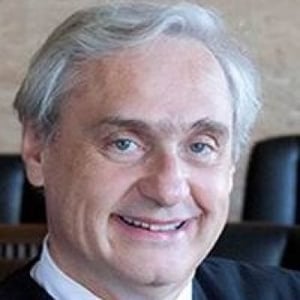
Former Judge, United States Court of Appeals, Ninth Circuit
Judge Kozinski served as a United States Circuit Judge for the Ninth Circuit from November 1985 until December 2017. He served as Chief Judge from 2007 to 2014. He graduated from UCLA, receiving an A.B. degree in 1972, and from UCLA Law School, receiving a J.D. degree in 1975.
Prior to his appointment to the appellate bench, Judge Kozinski served as Chief Judge of the United States Claims Court, 1982-85; Special Counsel, Merit Systems Protection Board, 1981-82; Assistant Counsel, Office of Counsel to the President, 1981; Deputy Legal Counsel, Office of President-Elect Reagan, 1980-81; Attorney, Covington & Burling, 1979-81; Attorney, Forry Golbert Singer & Gelles, 1977-79; Law Clerk to Chief Justice Warren E. Burger, 1976-77; and Law Clerk to Circuit Judge Anthony M. Kennedy, 1975-76.
Judge Kozinski is married to Marcy Jane Tiffany and has three children: Yale, Wyatt and Clayton, and three grandchildren: Quinn, Owen and Anna.
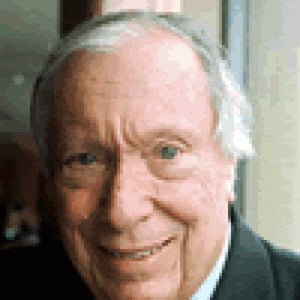
U.S. Court of Appeals, Ninth Circuit
Stephen Roy Reinhardt is a federal appeals judge with the United States Court of Appeals for the Ninth Circuit in San Francisco. He joined the Court in 1980 after being nominated by President Jimmy Carter.
Born in New York City, New York, Reinhardt graduated from Pomona College with his Bachelor's degree in 1951 and later received a Bachelors of Laws degree, LL.B, from Yale Law School in 1954. Reinhardt served in the U.S. Air Force from 1954 to 1956 before becoming a law clerk for the Honorable Luther Youngdahl in the United States District Court for the District of Columbia until 1957. Reinhardt was a private practice attorney in the State of California from 1957 to 1980. Reinhardt was nominated to the United States Court of Appeals for the Ninth Circuit by President Jimmy Carter on November 30, 1979, to a new seat created by 92 Stat. 1629, which was approved by Congress. Reinhardt was confirmed by the U.S. Senate on September 11, 1980 and received commission on September 11, 1980.

Thomas M. Siebel Senior Fellow, The Hoover Institution, Stanford University; Gary T. Schwartz Distinguished Professor of Law Emeritus, UCLA School of Law
Eugene Volokh is the Thomas M. Siebel Senior Fellow at the Hoover Institution (Stanford), as well as the Gary T. Schwartz Distinguished Professor of Law Emeritus and Distinguished Research Professor at UCLA School of Law. He recently retired from teaching at UCLA, after 30 years there, and is now focusing on research.
Volokh is the author of the textbooks The First Amendment and Related Statutes (8th ed. 2023), and Academic Legal Writing (5th ed. 2016), as well as over 100 academic law journal articles, mostly on First Amendment law. He is a member of The American Law Institute; the editor-in-chief of the Journal of Free Speech Law; and the creator and coauthor of The Volokh Conspiracy, a leading legal blog founded in 2002 (hosted at the Washington Post from 2014 to 2017 and now at Reason Magazine).
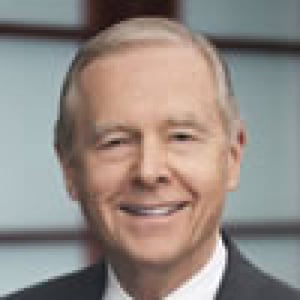
Principal, Morgan Lewis Consulting; Of Counsel, Morgan, Lewis & Bockius LLP; and Former California Governor
Pete Wilson’s more than 30 years of dedicated public service as governor of California, US senator, mayor of San Diego, and California state assemblyman uniquely equip him to counsel and negotiate for clients at all levels of today’s activist regulatory environment. His deep knowledge of policies, people, and processes of government make him an ideal and effective advocate for Morgan Lewis Consulting’s philosophy that today’s successful business must understand and be understood and respected by governments — not only in Washington, DC — but on a state-by-state basis.
As governor of California from 1991 to 1999, Pete is credited with leading California from the depths of recession to prosperous economic recovery. Insisting on strict budget discipline and rehabilitation of the state’s then-hostile environment toward investment and job creation, Pete provided for market-based unsubsidized health coverage for employees of small businesses and obtained anti-fraud measures that drove down workers’ compensation premiums by 40 percent. Under his leadership, California also enacted sweeping welfare reforms and historic education reforms.
After leaving office, Pete spent two years as a managing director of Pacific Capital Group, a merchant bank based in Los Angeles. He serves as a director of the Irvine Company, U.S. Telepacific Corporation Inc., and National Information Consortium Inc. He has also served as a director of IDT Entertainment and as a member of the board of advisers of Thomas Weisel Partners, a San Francisco merchant bank. He was chairman of the Japan Task Force of the Pacific Council on International Policy, which produced an analysis of Japanese economic and national security prospects over the next decade titled “Can Japan Come Back?”
Dean and Jesse H. Choper Distinguished Professor of Law, UC Berkeley School of Law
Erwin Chemerinsky became the 13th Dean of Berkeley Law on July 1, 2017, when he joined the faculty as the Jesse H. Choper Distinguished Professor of Law.
Prior to assuming this position, from 2008-2017, he was the founding Dean and Distinguished Professor of Law, and Raymond Pryke Professor of First Amendment Law, at University of California, Irvine School of Law, with a joint appointment in Political Science. Before that he was the Alston and Bird Professor of Law and Political Science at Duke University from 2004-2008, and from 1983-2004 was a professor at the University of Southern California Law School, including as the Sydney M. Irmas Professor of Public Interest Law, Legal Ethics, and Political Science. He also has taught at DePaul College of Law and UCLA Law School.
He is the author of eleven books, including leading casebooks and treatises about constitutional law, criminal procedure, and federal jurisdiction. His most recent books are, We the People: A Progressive Reading of the Constitution for the Twenty-First Century (Picador Macmillan) published in November 2018, and two books published by Yale University Press in 2017, Closing the Courthouse Doors: How Your Constitutional Rights Became Unenforceable and Free Speech on Campus (with Howard Gillman).
He also is the author of more than 200 law review articles. He writes a regular column for the Sacramento Bee, monthly columns for the ABA Journal and the Daily Journal, and frequent op-eds in newspapers across the country. He frequently argues appellate cases, including in the United States Supreme Court.
In 2016, he was named a fellow of the American Academy of Arts and Sciences. In 2017, National Jurist magazine again named Dean Chemerinsky as the most influential person in legal education in the United States.
Vice President and Legal Director, National Right to Work Legal Defense and Education Foundation, Inc.
William Messenger is Foundation Vice President and Legal Director. He was a staff attorney for over twenty years and, during that time, represented individuals in numerous cases that sought to expand worker freedom of choice. This includes acting as lead counsel in three cases before the United States Supreme Court. In 2018, Messenger argued Janus v. AFSCME Council 31, where the Supreme Court held it violates the First Amendment for governments and unions to compel individuals to financially support unions and their speech. Originally from Youngstown Ohio, Messenger attended Ohio University as an undergraduate and then the George Washington University School of Law.

Friedrichs v. California Teachers Association - Podcast
William L. Messenger, Erwin Chemerinsky
On June 30, 2015, the Supreme Court decided to revisit whether the First Amendment permits...
Friedrichs v. California Teachers Association
TeleforumCompulsory Union Dues: First Amendment Violation Or Legitimate Fair Share?
Cleveland, OhioHarris v. Quinn - Post-Decision SCOTUScast
Andrew Grossman
On June 30, 2014, the Supreme Court heard oral argument in Harris v. Quinn. The...
Unionizing Domestic Workers?: Harris v. Quinn Decided - Podcast
Samuel R. Bagenstos, Andrew Grossman
Is Harris v. Quinn a landmark in labor law? The case asked the Court to decide...
Panel Two: How do we balance disclosure with maintaining the privacy of participants in contentious issues?
Paul Avelar, Manuel S. Klausner, Carolyn B. Kuhl, Eugene B. Meyer, Peter Scheer, Hans A. Von Spakovsky
Supporters of Proposition 8 have invoked NAACP v. Alabama to support their claims for anonymity,...
Panel Two: Recent Lawsuits Challenging Tenure and Pure-Seniority Based Layoffs
Theodore J. Boutrous, Andrew J. Guilford, Eugene B. Meyer, Jeremy B. Rosen, Richard J. Schwab
Recent lawsuits have been filed in California challenging the state’s system of tenure and pure-seniority...
Panel One: Are Vouchers and Charter Schools Viable Alternatives to Public Schools?
Carlos T. Bea, Julian R. Betts, Clint Bolick, Bruce Fuller, Leonard A. Leo, William R. Maurer, Gloria Romero
Parental and community support for school choice has increased dramatically in recent years, with vouchers,...
Roundtable Discussion: How Comfortably Does Tribal Sovereignty Fit With American Democratic Ideals?
Carole Goldberg, Daniel M. Kolkey, Joe Matel, Eugene B. Meyer, Diarmuid F. O'Scannlain, Thomas Sansonetti, Alexander Skibine
Prof. Carole Goldberg, UCLA School of Law Dan Kolkey, Gibson, Dunn, & Crutcher LLP Joe...
Panel III: The Courts and the Legislature vs. the People: Who is in Charge?
Gail L. Heriot, Alex Kozinski, Stephen Reinhardt, Arnie Steinberg, Eugene Volokh, Pete Wilson
The Federalist Society presented this panel during the Second Annual Western Conference at The Ronald...