
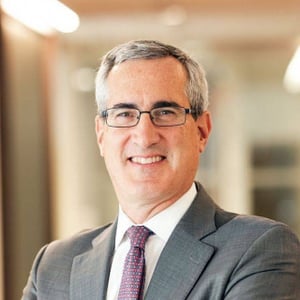
Partner and Chair, Appellate & Supreme Court Practice, Jenner & Block LLP
Ian Gershengorn is chair of Jenner & Block’s Appellate and Supreme Court Practice and is one of the nation’s premier Supreme Court and appellate advocates, having argued before the U.S. Supreme Court 16 times. Before rejoining the firm in 2017, he served in the Office of the Solicitor General during the Obama Administration, first as Principal Deputy Solicitor General and then as Acting Solicitor General of the United States. While there, Ian supervised the federal government’s briefing in a range of high-profile cases, including those involving the Affordable Care Act, Dodd-Frank, election law and redistricting, immigration reform, Title VII, and same-sex marriage.
Since leaving the federal government and returning to Jenner & Block, Ian has advised clients on a range of complex litigation and strategy problems, and he has appeared regularly in the state and federal appellate courts, representing arguing on behalf of corporate clients such as the Recording Industry Association of America, FirstTrust Bank, General Dynamics, Tsubaki, and Charter Communications.
Ian currently teaches a seminar on The Roberts Court at Harvard Law School.
Ian graduated Harvard College, magna cum laude, and Harvard Law School, magna cum laude, where he was a member of the Harvard Law Review. He served as a law clerk for Judge Amalya L. Kearse of the U.S. Court of Appeals for the Second Circuit and then for Associate Justice John Paul Stevens of the U.S. Supreme Court.

Judge, United States Court of Appeals, Fifth Circuit
Edith Jones graduated from Alamo Heights High School, where she was a National Merit Scholar. In 1971, she received her B.A. in Economics from Cornell University, graduating with honors. In 1974, she was awarded her J.D. at the University of Texas Law School, where she was a law review editor and received the Order of the Coif.
Judge Jones was the first female partner at Andrews, Kurth, Campbell & Jones (now Hunton Andrews Kurth) where she practiced various types of litigation and bankruptcy cases. Judge Jones went on the federal bench on June 1, 1985.
Judge Jones served as a former member of the National Bankruptcy Review Commission, and as a member of the Judicial Conference Commission on Bankruptcy Rules. Judge Jones served on the White House Fellows Commission. Judge Jones served on the board of the Sam Houston Area Council of the Boy Scouts of America. She has been a member of the Garland Walker Inn of Court in Houston for more than 20 years and its President for at least ten years. Judge Jones is also on the Board of the Calvin Coolidge Presidential Foundation.

Judge, U.S. Court of Appeals for the Third Circuit
Hon. Jennifer Mascott served as Associate Professor of Law and Director of the Separation of Powers Institute at The Catholic University of America’s Columbus School of Law before her appointment to the federal bench. On July 16, 2025, President Donald J. Trump nominated her to the U.S. Court of Appeals for the Third Circuit (Delaware), and she was confirmed on October 9, 2025.
Prior to her confirmation, Judge Mascott wrote extensively in administrative and constitutional law, statutory interpretation, and the separation of powers. Her scholarship—published in leading journals including the Stanford Law Review, Notre Dame Law Review, and Supreme Court Review—was cited by the U.S. Supreme Court and multiple federal courts. She also contributed Supreme Court commentary for NBC Universal.
Before joining Catholic Law, she was an Assistant Professor and Co-Director of The C. Boyden Gray Center at George Mason University’s Antonin Scalia Law School. In 2022 she became co-author of Beermann, Cass & Diver’s Administrative Law: Cases and Materials (9th ed.). In 2023 she received the Justice Joseph Story Award for excellence in scholarship, teaching, and advancing the rule of law.
Judge Mascott also served as a Council Member of the ABA’s Administrative Law Section and as a Public Member of the Administrative Conference of the United States. She frequently testified before Congress on executive power, regulatory reform, and judicial jurisdiction, and participated in multiple Supreme Court confirmation hearings.
From 2019 to 2021, she took leave from academia to serve as Deputy Assistant Attorney General in the Department of Justice’s Office of Legal Counsel and later as Associate Deputy Attorney General, where she argued federal cases and assisted with Justice Amy Coney Barrett’s confirmation. Earlier in her career, she clerked for Justice Clarence Thomas and for then-Judge Brett M. Kavanaugh on the D.C. Circuit.
Judge Mascott earned her J.D. summa cum laude from the George Washington University Law School and her B.A. from the same institution.

Charles Evans Hughes Professor of Law, Columbia Law School
THOMAS W. MERRILL is the Charles Evans Hughes Professor of Law at Columbia Law School. He previously taught at Northwestern University School of Law and Yale Law School. He has undergraduate degrees from Grinnell College and Oxford University, where he studied as a Rhodes Scholar, and a law degree from the University of Chicago. He clerked on the D.C. Circuit (for Chief Judge David Bazelon) and the U.S. Supreme Court (for Justice Harry Blackmun). From 1987-1990 he served as Deputy Solicitor General, U.S. Department of Justice. Professor Merrill’s writings related to property include Property: Principles and Policies (Foundation Press Second Edition, 2012) (with Henry E. Smith); Property: The Oxford Introductions to U.S. Law (Oxford U. Press, 2010); Property: Takings (Foundation Press, 2002)(with David Dana); and numerous articles, including “The Economics of Public Use” (Cornell Law Review 1986); “The Landscape of Constitutional Property” (Virginia Law Review 2000); and “The Character of the Governmental Action” (Vermont Law Review 2012). He is a member of the American Academy of Arts and Sciences.
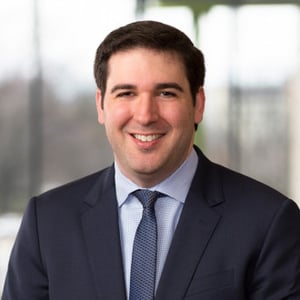
Jones Day, Partner
Yaakov Roth's goal is to strategically develop and effectively present the key legal arguments that will secure victory for clients through appellate advocacy and dispositive motions. He has represented clients in high-profile Supreme Court cases, argued appeals in the federal Courts of Appeals, and prepared motions to dismiss and for summary judgment across a range of substantive areas.
Yaakov's most recent Supreme Court experience includes vindicating former Virginia Gov. Bob McDonnell from political corruption charges, narrowing the geographic scope of private civil RICO lawsuits, and pursuing a major challenge to the Affordable Care Act from inception through high court review. At the appellate level, Yaakov's oral advocacy has included pressing a First Amendment challenge to an Ohio law prohibiting "false" campaign statements, seeking disclosure of a Justice Department policy manual concerning criminal discovery, and protecting the religious freedom rights of Death Row inmates. He has successfully defended his clients against defamation, antitrust, Title VII, and ERISA claims — including nationwide class actions — and pursued a host of challenges to federal, state, and local regulations. His ERISA experience also includes a series of withdrawal liability arbitrations and related litigation.
Yaakov speaks and writes about the Supreme Court and First Amendment issues and maintains an active pro bono practice centered around religious freedom and criminal justice.
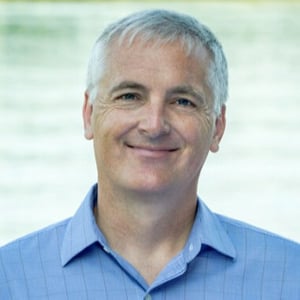
Partner, Donahue & Goldberg LLP
Sean H. Donahue's practice is focused on appellate litigation, including environmental cases in federal and state appellate courts, legal counseling, and helping clients communicate effectively to courts, agencies, and other audiences. He is a member of the bars of the District of Columbia and the State of California.
A 1992 graduate of University of Chicago Law School, Sean served as law clerk to Ruth Bader Ginsburg, then of the U.S. Court of Appeals for the D.C. Circuit, and to Justice John Paul Stevens. He entered private practice at Jenner & Block's Washington office, where he worked on civil matters including in telecommunications and First Amendment law. He then spent four years at the Department of Justice, Environmental and Natural Resources Division, Appellate Section, briefing and arguing cases in the United States Courts of Appeals, and state supreme courts concerning federal environmental and natural resources law, federal property law, takings, and Indian law.
Sean has argued approximately 50 cases in federal and state appellate courts. Since first establishing his own practice in 2002, he has represented environmental and public health organization parties in numerous major environmental and clean energy cases in the Supreme Court and the courts of appeals. His current practice includes representation of public interest organizations, governmental bodies, and private entities in environmental, energy, natural resources, and other cases. Sean has taught courses in environmental law, civil procedure, constitutional law and other subjects at Washington & Lee University School of Law, Iowa College of Law, and Georgetown University Law Center, and currently teaches climate change law and policy as a lecturer at Stanford Law School. He has given presentations at law schools including Berkeley, Columbia, Fordham, Harvard, Duke, Georgetown, Maryland, NYU, Northwestern, Stanford, University of Chicago, University of Florida, Vermont Law School, and Washington & Lee.
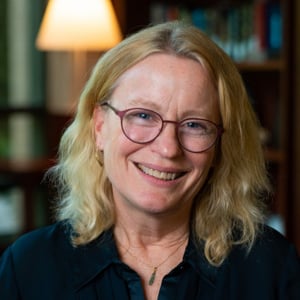
Justice William J. Brennan, Jr., Professor of Law, Georgetown University Law Center
Lisa Heinzerling is the Justice William J. Brennan, Jr. Professor of Law at Georgetown University. Her primary specialties are administrative law and environmental law. She is the author of several books, including Priceless: On Knowing the Price of Everything and the Value of Nothing, a critique of the use of cost-benefit analysis in environmental policy. Professor Heinzerling has received the Georgetown University President's Award for Distinguished Scholar-Teachers, the faculty teaching award at Georgetown Law, and several awards related to her scholarship and advocacy in environmental law. She was the lead author of the winning briefs in Massachusetts v. EPA, in which the Supreme Court held that the Clean Air Act gives EPA the authority to regulate greenhouse gases. From January 2009 to July 2009, Heinzerling served as Senior Climate Policy Counsel to the Administrator of the Environmental Protection Agency and then, from July 2009 to December 2010, she served as Associate Administrator of EPA’s Office of Policy. She was a law clerk to Judge Richard A. Posner of the U.S. Court of Appeals for the Seventh Circuit and Justice William J. Brennan, Jr. of the U.S. Supreme Court.

Executive Vice President, The Heritage Foundation
Derrick Morgan has thirty years’ experience in business, government, law, politics, and policy and now serves as the Executive Vice President of The Heritage Foundation, overseeing policy and government relations.
In business, Morgan led the American Fuel and Petrochemical Manufacturers’ (AFPM) advocacy efforts, testified before Congress, and wrote and spoke widely on fuels issues including energy security, fuel prices, and regulatory burdens such as the Renewable Fuel Standard. At AFPM and on the Hill, he opposed electric vehicle mandates and subsidies and warned against conventional wisdom, predicting EV adoption would be far from universal.
In government, law, and politics, Morgan served in all three branches of government including four senators and one representative in roles including campaign aide, counsel to the Senate Republican Policy Committee, and chief of staff to Senator Ben Sasse of Nebraska. In addition, he served as assistant, special counsel, and staff secretary for Vice President Richard B. Cheney, where he traveled frequently with the Vice President as a member of his senior staff and was the final substantive stop for all papers, remarks, and statements. As a leadership staffer for Senator Thune on Capitol Hill, Morgan helped organize opposition to “Card Check” legislation that would have eliminated the secret ballot for workers in union elections and harmful climate legislation like cap-and-trade and carbon taxes. Following law school and between stints at Gibson, Dunn & Crutcher LLP, Morgan clerked for a federal district judge in Texas.
In policy, Morgan previously worked at Heritage, first as Chief of Staff to the organization’s Founder and President, Ed Feulner, and later as Vice President of Domestic Policy. At Heritage, Morgan was privileged to fight “comprehensive” immigration reform that included amnesty for illegal immigrants when the Beltway political class overwhelmingly supported it.
A longtime movement leader on energy, the economy, and immigration, he has appeared on radio and television outlets including Fox News, Fox Business, Newsmax, CNN, CNBC, and C-SPAN. His commentary has been published widely including in The Wall Street Journal, The New York Times, Los Angeles Times, Politico, Real Clear Politics, and USA Today.
Morgan received his undergraduate degree at the University of Texas at Dallas, where he gave the honors commencement address and later received a Distinguished Alumni Award. He holds a JD from The Georgetown University Law Center.
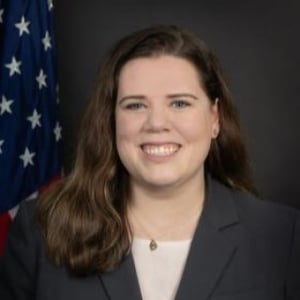
Commissioner, Federal Energy Regulatory Commission
Lindsay S. See joined the Federal Energy Regulatory Commission as a Commissioner in June 2024. Before her current role, Commissioner See served as the Solicitor General of West Virginia, where she managed appellate and high-stakes litigation for the State. With a particular focus on energy and administrative law, her work included leading multi-state and multi-interest coalitions on a variety of national issues. She argued twice before the U.S. Supreme Court, filed multi-state comments in dozens of agency rulemakings, and routinely appeared before the Supreme Court of Appeals of West Virginia and the federal courts of appeals.
Commissioner See previously practiced appellate and administrative law for several years with Gibson, Dunn & Crutcher in Washington, D.C. She graduated magna cum laude from Harvard Law School and clerked for the Hon. Thomas B. Griffith on the U.S. Court of Appeals for the D.C. Circuit. Originally from Michigan, See now considers herself both a proud Michigander and Mountaineer.
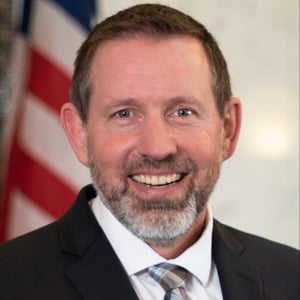
Judge, United States Court of Appeals, Ninth Circuit
Lawrence VanDyke serves as a circuit judge on the U.S. Court of Appeals for the Ninth Circuit. Prior to that appointment in January 2020, he served as a Deputy Assistant Attorney General in the Environment and Natural Resources Division of the United States Department of Justice. Before that, he served consecutively as the Solicitor General of two western states – Nevada and Montana. At the beginning of his legal career, he worked as an attorney in the Appellate and Constitutional Issues practice group at Gibson Dunn & Crutcher, LLP.
Judge VanDyke received his law degree magna cum laude from Harvard Law School, where he was an editor on the Harvard Law Review. He has engineering and theology undergraduate degrees and a masters degree in engineering management. He served as a law clerk to the Honorable Janice Rogers Brown of the United States Court of Appeals for the District of Columbia Circuit. Judge VanDyke and his wife Cheryl live in Reno, Nevada, and they have three children.
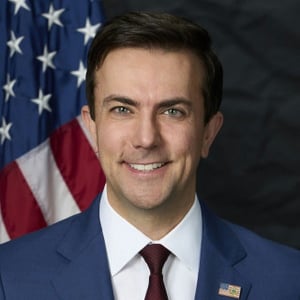
Deputy Administrator, United States Environmental Protection Agency
David Fotouhi was sworn in as Deputy Administrator of the United States Environmental Protection Agency on June 16, 2025.
Fotouhi is an experienced environmental attorney who previously served in senior roles at EPA. During the first term of the Trump Administration, Fotouhi served as EPA’s Acting General Counsel and Principal Deputy General Counsel. Prior to rejoining the agency, Fotouhi was a partner in the Washington, D.C. office of Gibson, Dunn & Crutcher LLP practicing environmental law.
Fotouhi grew up in Oklahoma and holds a B.A. from Vanderbilt University and a J.D. from Harvard Law School. Before entering private legal practice, Fotouhi served as a law clerk to the Honorable Raymond W. Gruender of the U.S. Court of Appeals for the Eighth Circuit.
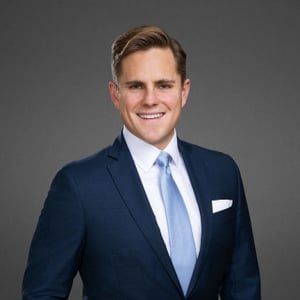
Deputy General Counsel, U.S. Environmental Protection Agency
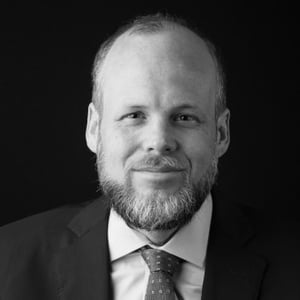
Founder, CGCN Law, PLLC
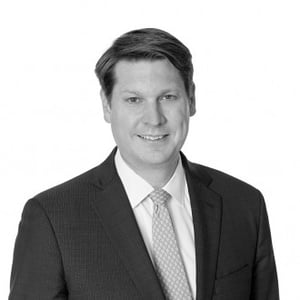
Former Acting Assistant Attorney General, United States Department of Justice; Partner, Winston & Strawn LLP
Jonathan “Jon” Brightbill is a trial and appellate lawyer in Winston’s Washington, D.C. office, and a partner in the firm’s Litigation and White Collar, Regulatory Defense, and Investigations Practices. He represents public and private companies, corporate officers, and other individuals across white collar, regulatory defense, and government and internal investigation matters and rulemaking challenges, as well as complex commercial disputes, citizen suits, and class actions. His commercial litigation experience encompasses business disputes, false advertising, consumer protection and fraud, FCA, and extensive class action defense work; antitrust and unfair competition matters; and intellectual property litigation, such as trademarks, patents, and trade secrets.
Jon served as the Nation’s lead environmental civil and criminal enforcement official and litigator, as Acting Assistant Attorney General for the Environment & Natural Resources Division (“ENRD”) of the U.S. Department of Justice (DOJ). Jon led ENRD’s 425 lawyers, overseeing 6,500 active matters and managing an annual budget of more than $150 million. Jon brings highly experienced executive leadership from among the most senior level of DOJ on white collar and regulatory enforcement, as well as on federal policymaking and rulemaking development and challenges. He speaks with authority on government decision-making processes, and the arguments and perspectives that move regulators and enforcers, best advising and positioning clients to deal with challenges.
Jon argued many of the government’s most significant cases during his time with the DOJ. This included the Navigable Waters Protection Rule and Clean Water Rule Repeal (10th Cir., district courts), the Affordable Clean Energy Rule and Clean Power Plan Repeal (D.C. Cir), defense of EPA actions on pesticide tolerances under FIFRA and the FDCA (9th Cir. en banc), among numerous others. Jon represented the United States in trial courts in both enforcement and defensive cases, including federal enforcement action against Jeffrey Lowe and the Tiger King Park, of Netflix fame, securing a first-of-its-kind injunction for violations of the Endangered Species Act and Animal Welfare Act. Jon directed the litigation and briefing of scores of additional federal cases nationwide, covering all of the major environmental and natural resources statutes, such as the Clean Air Act, the Clean Water Act, FIFRA (pesticides), FDCA (food safety), TSCA (toxics), CERCLA (land remediation), RCRA (waste), National Environmental Policy Act, Federal Land Policy and Management Act, and numerous other land- and resource-management statutes.
Jon has unmatched experience litigating legal and technical issues relating to climate change. He argued in the courts of appeals, including the D.C. Circuit, regarding the most significant climate change regulations by EPA, as well as the preemptive scope of the Clean Air Act. Jon also litigated climate change-related credit and trading schemes and international agreements in district court. During Jon’s time in leadership at ENRD, it successfully defeated one of the most wide-ranging lawsuits regarding climate change to date—obtaining a stay pending interlocutory appeal and dismissal just weeks before a scheduled three-month trial on federal government liability for climate change.
An accomplished trial lawyer, prior to working at DOJ, Jon was a partner in the Washington, D.C. office of another global law firm. He not only represents clients in court, but creatively counsels corporations on balancing business needs and realities with a broad range of litigation risks and compliance obligations. Jon is also an Adjunct Professor at Georgetown University Law Center. He served on the American Bar Association’s E-Discovery Working Group for Bankruptcy Practice, and was a frequent lecturer for District of Columbia Bar Association Continuing Legal Education Programs.
Jon served as an appellate clerk for the Honorable D. Brooks Smith, U.S. Court of Appeals for the Third Circuit, after graduating magna cum laude from the Georgetown University Law Center. He worked in state government as an Executive Policy Specialist for air, waste, land remediation, and radiation matters at the Pennsylvania Department of Environmental Protection.
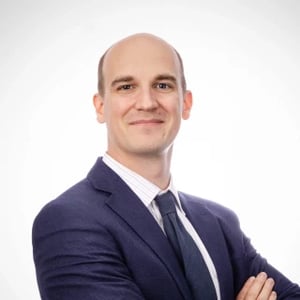
Managing Partner, Boyden Gray PLLC
Michael Buschbacher is the managing partner of Boyden Gray PLLC. He represents public and private companies, trade associations, non-profits, and individuals in high-stakes litigation and administrative proceedings, with a particular focus on environmental and energy matters.
In addition to trial-level work, Mr. Buschbacher maintains an active appellate practice, both as merits counsel and as counsel for amici curiae. He has written amicus briefs quoted by the Seventh and Ninth Circuits. And his Supreme Court advocacy has been cited by The New Yorker, The New York Times, and E&E News. Mr. Buschbacher’s commentary on legal issues has been published in The Wall Street Journal, Newsweek, and The American Conservative.
Before joining the firm, Mr. Buschbacher served at the U.S. Department of Justice as counsel to the Assistant Attorney General for the Environment and Natural Resources Division. There, he advised senior Department leadership, served as the lead attorney on several lawsuits, and helped draft policy memoranda for the Department on the proper scope and procedure for environmental enforcement. Prior to serving in the government, Mr. Buschbacher was an associate in the D.C. office of Sidley Austin.
Mr. Buschbacher is a former clerk to Judge Alice M. Batchelder of the U.S. Court of Appeals for the Sixth Circuit and to Magistrate Judge Paul R. Cherry of the U.S. District Court for the Northern District of Indiana.
Mr. Buschbacher holds a B.A. in Music and Germanic Studies from Indiana University and a J.D., magna cum laude, from Notre Dame Law School.

Robert A. Schroeder Distinguished Professor of Law, University of Kansas School of Law
Robin Kundis Craig joined the KU Law faculty in July 2024 and serves as the Robert A. Schroeder Distinguished Professor of Law.
Craig specializes in all things water, including the relationships between climate change and water; the water-energy-food nexus; the Clean Water Act; the intersection of water issues and land issues; ocean and coastal law; marine biodiversity and marine protected areas; water law; ecological resilience and the law; climate change adaptation, and the relationships between environmental law and public health. She is the author, co-author, or editor of 12 books, including Re-Envisioning the Anthropocene Ocean (University of Utah Press, 2024, co-edited with Jeffrey M. McCarthy); The End of Sustainability (Kansas University Press 2017, with Melinda Harm Benson); Contemporary Issues in Climate Change Law and Policy (Environmental Law Institute 2016, with Stephen Miller); Comparative Ocean Governance: Place- Based Protections in an Era of Climate Change (Edward Elgar 2012); and The Clean Water Act and the Constitution (Environmental Law Institute 2nd Ed. 2009), as well as textbooks for Environmental Law, Water Law and Toxic Torts. She has also written more than100 law review articles and book chapters in both legal and scientific publications.
In recognition of her work on these topics, Craig was elected to membership in the American Law Institute (2015) and the American College of Environmental Lawyers (2019) and has been appointed to the International Union for the Conservation of Nature’s World Commission on Environmental Law and to the Center for Progressive Reform. She has served on six National Academy of Sciences committees that evaluated Florida Everglades restoration, implementation of the Edwards Aquifer Habitat Conservation Plan and application of the Clean Water Act to the Mississippi River. She has consulted on water quality issues with the government of Victoria, Australia, and the Council on Environmental Cooperation in Montreal, Quebec, Canada, and she was one of 12 marine educators chosen to participate in a 2010 program in the Papahanamokuakea Marine National Monument, spending a week on Midway Atoll. She was also a principal researcher in a four-year grant project on Adaptive Water Governance sponsored by the National Social-Ecological Synthesis Center with money from the National Science Foundation. In 2018, Craig was named a William Evans Visiting Research Fellow at the University of Otago, Dunedin, New Zealand. In 2017, the Rockefeller Foundation awarded her a Bellagio Center Writing Residency fellowship, allowing her to spend four weeks on Lake Como, Italy, working on a new book project on Re-Envisioning the Anthropocene Oceans, and in 2016 she was a Research Fellow at the University of Tasmania, Hobart, Australia.
Craig is an active participant in several national organizations, including the American Bar Association Section on Environment, Energy and Resources (ABA SEER), where she currently serves on the editorial board of Natural Resources & Environment; the Foundation for Natural Resources and Environmental Law, where she co-chairs the Natural Resources Law Teachers Committee; and the Association of American Law Schools (AALS), where she has chaired the Maritime Law Section, the Natural Resources Law Section and the Environmental Law Section. She has also served as a consultant to the Environmental Defense Fund and the River Network’s Nutrient Task Force. Craig serves on the Editorial Boards of Coastal and Ocean Management and Ecology & Society, as a Specialty Chief Editor of Frontiers Climate: Climate Law and Policy and as a Guest Associate Editor for Frontiers Climate: Risk Management on the topic of “Climate Change Adaptation as Risk Management.”
Craig earned her J.D. summa cum laude in 1996 from the Lewis & Clark School of Law in Portland, Oregon, with a Certificate in Environmental Law; her Ph.D. in English/Literature and Science in 1993 from the University of California, Santa Barbara; her M.A. in Writing About Science in 1986 from the Johns Hopkins University; and her B.A. cum laude in English/Writing in 1985 from Pomona College in Claremont, California. While in law school, she worked for the Oregon Department of Justice in its General Counsel Division, Natural Resources Section, representing the state’s environmental and natural resources agencies. After law school, she clerked for Judge Robert E. Jones at the U.S. District Court for the District of Oregon before starting her law teaching career as a Visiting Assistant Professor at the Lewis & Clark School of Law. Before arriving at KU in 2024, Craig held tenure-track positions at the Western New England College School of Law, Indiana University—Indianapolis School of Law (where she first received tenure), the Florida State University School of Law, the University of Utah S.J. Quinney School of Law and USC’s Gould School of Law. She has visited at the Lewis & Clark School of Law, Vermont Law School, the University of Hawaii School of Law and the University of Tasmania Faculty of Law. At Kansas, Craig teaches Environmental Law, Water Law, Ocean & Coastal Law, Toxic Torts and Civil Procedure.

Laurence A. Tisch Professor of Law and Director, Classical Liberal Institute, New York University School of Law; Senior Fellow, The Civitas Institute, University of Texas at Austin
Richard A. Epstein is the inaugural Laurence A. Tisch Professor of Law at NYU School of Law. Prior to his joining the faculty, he was a visiting law professor at NYU from 2007 through 2009. He served as the Peter and Kirstin Bedford Senior Fellow at the Hoover Institution from 2000 to 2024. Since 2024 to the present he is a senior lecturer at the Civitas Institute at the University of Texas—Austin. Epstein is also the James Parker Hall Distinguished Service Professor of Law Emeritus and a senior lecturer at the University of Chicago. His initial law school appointment was at the University of Southern California from 1968 to 1972. Epstein received an LL.D., h.c. from the University of Ghent, 2003. He has been a member of the American Academy of Arts and Sciences since 1985 and was a Senior Fellow of the Center for Clinical Medical Ethics at the University of Chicago Division of Biological Sciences, also from 1983. to 2022 He served as editor of the Journal of Legal Studies from 1981 to 1991, and of the Journal of Law and Economics from 1991-2001. From 2001 to 2010 he was a director of the John M. Olin Program in Law and Economics at the University of Chicago.
His newest book, The Myth of Birthright Citizenship: What the Fourteenth Amendment Really Says was published in 2026 (Encounter Books). Prior to that he has published many books including, The Dubious Morality of the Modern Administrative State (Roman & Littlefield 2020).Earlier he published th Classical Liberal Constitution: The Uncertain Quest for Limited Government (Harvard 2014) iHis previous books include Design for Liberty: Private Property, Public Administration and the Rule of Law (Harvard 2011); The Case Against the Employee Free Choice Act (Hoover 2009); Supreme Neglect: How to Revive the Constitutional Protection of Property Rights (Oxford 2008); Antitrust Decrees in Theory and Practice: Why Less is More (AEI 2007); Overdose: How Excessive Government Regulation Stifles Pharmaceutical Innovation (Yale University Press. 2006); How Progressives Rewrote the Constitution (Cato 2006); Cases and Materials on Torts (Aspen Law & Business; 8th ed. 2004); Skepticism and Freedom: A Modern Case for Classical Liberalism (University of Chicago, 2003); Torts (Aspen Law & Business 1999); Principles for a Free Society: Reconciling Individual Liberty with the Common Good (Perseus Books, 1998): Mortal Peril: Our Inalienable Rights to Health Care (Addison-Wesley, 1997); Simple Rules for a Complex World (Harvard, 1995); Bargaining With the State (Princeton, 1993); Forbidden Grounds: The Case Against Employment Discrimination Laws (Harvard , 1992); Takings: Private Property and the Power of Eminent Domain (Harvard, 1985); and Modern Products Liability Law (Greenwood Press, 1980). He has also edited(with Catherine M. Sharkey) Cases and Materials on the Law of Torts (10th edition 2012).
Professor Epstein has written numerous articles on a wide range of legal and interdisciplinary subjects. He has taught courses in administrative law, antitrust law, civil procedure, communications, constitutional law, contracts, corporations, criminal law, employment discrimination law, environmental law, food and drug law health law and policy, legal history, labor law, property, real estate development and finance, jurisprudence, labor law; land use planning, patents, individual, estate and corporate taxation, Roman Law; torts, and workers' compensation.
Professor Epstein also writes a regular column for Civitas Institute, which also sponsors his podcast, The Libertarian with Charles C.W. Cooke, and Law Talk, with Cooke and John Yoo. He also does a podcast with John Batchelor. And appears regularly on the Freedom File with Judge Andrew Napolitano.

Professor of Law, University of Michigan Law School
Christopher J. Walker is a Professor of Law at the University of Michigan. Prior to joining Michigan law faculty in 2022, he spent a decade teaching at The Ohio State University Moritz College of Law. He previously clerked for Justice Anthony Kennedy of the U.S. Supreme Court, worked on the Civil Appellate Staff at the U.S. Department of Justice, and served on the Senate Judiciary Committee staff for the Gorsuch Supreme Court confirmation. Professor Walker’s research focuses on administrative law, regulation, and law and policy at the agency level. Outside the law school, he chaired the American Bar Association’s Section of Administrative Law and Regulatory Practice in 2020-21 and served as one of forty Public Members of the Administrative Conference of the United States from 2016-2022, and he continues to serve in both organizations in various capacities. He also works of counsel at the U.S. Chamber Litigation Center. In 2022, he received the Federalist Society’s Joseph Story Award.
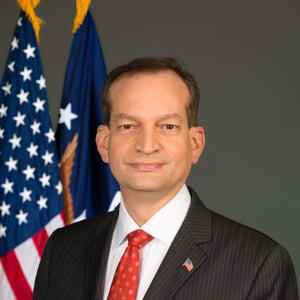
Former Secretary; U.S. Department of Labor
Rene Alexander Acosta is an American attorney and politician, who served as the 27th United States Secretary of Labor from 2017 to 2019.
Secretary Acosta is the son of Cuban refugees, a native of Miami, and first-generation college graduate. He earned his undergraduate and law degrees from Harvard University.
Following law school, he worked as a law clerk for Justice Samuel A. Alito, Jr., at the U.S. Court of Appeals for the Third Circuit. He then worked at the law firm of Kirkland & Ellis and went on to teach at George Mason University’s Antonin Scalia School of Law.
Secretary Acosta has served in three presidentially appointed, Senate-confirmed positions. In 2002, he was appointed to serve as a member of the National Labor Relations Board, where he participated in or authored more than 125 opinions. In 2003, he was appointed Assistant Attorney General for the Civil Rights Division of the U.S. Department of Justice, and from 2005 to 2009 he served as the U.S. Attorney for the Southern District of Florida.
Prior to his tenure at the Department of Labor, Secretary Acosta served as the dean of the FIU College of Law.
Secretary Acosta has twice been named one of the nation’s 50 most influential Hispanics by Hispanic Business magazine. He was also named to the list of 100 most influential individuals in business ethics in 2008. In 2013, the South Florida Hispanic Chamber of Commerce presented him with the Chairman’s Higher Education Award in recognition of his “outstanding achievements, leadership and determination throughout a lifetime of caring and giving back to the community.”
Secretary Acosta and his wife enjoy spending time together as a family, raising their two daughters.

Judge, United States Court of Appeals, District of Columbia Circuit
Judge Katsas was appointed to the D.C. Circuit in December 2017. He graduated from Princeton University and Harvard Law School, where he was an executive editor on the Harvard Law Review. Between 1989 and 1992, he served as a law clerk to Judge Edward Becker on the Third Circuit, to then-Judge Clarence Thomas on the D.C. Circuit, and to Justice Thomas on the Supreme Court. Between 1992 and 2001, he was an associate and then partner in the Washington office of Jones Day, where he specialized in appellate and complex civil litigation. Between 2001 and 2009, he served in many senior positions in the Department of Justice, including as Assistant Attorney General for the Civil Division and as Acting Associate Attorney General. In 2009, he returned to Jones Day. From January to December 2017, he served as Deputy Assistant to the President and Deputy Counsel to the President.
Before joining the bench, Judge Katsas argued more than 75 appeals, including three cases in the Supreme Court, 13 cases in the D.C. Circuit, and cases in every other federal court of appeals. By appointment of the Chief Justice, he served on the Advisory Committee on Appellate Rules from 2013 to 2017. In 2016, he was elected to membership in the American Academy of Appellate Lawyers.
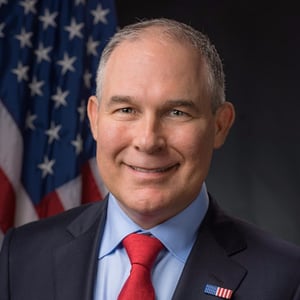
Former Administrator, U.S. Environmental Protection Agency
Scott Pruitt served as the 14th Administrator of the U.S. Environmental Protection Agency.
As Administrator, Mr. Pruitt’s overarching goal was to lead EPA in a way that our future generations inherit a better and healthier environment as he works with the thousands of dedicated public servants at EPA who have devoted their careers to helping realize this shared vision, while faithfully administering environmental laws.
Prior to the EPA, Pruitt served as the Attorney General for Oklahoma. Almost immediately upon taking office, he worked with his Democratic counterpart in Arkansas to reach agreement to study the water quality of the Illinois River, which crosses the border between the two states and has been enjoyed by generations of Oklahomans. The Statement of Joint Principles provides for a best science study using EPA-approved methods, with both states agreeing, for the first time, to be bound by the outcome.
Also during his tenure as Oklahoma’s Attorney General, Pruitt led an historic water rights settlement between Oklahoma, Oklahoma City and the Choctaw and Chickasaw Tribal Nations that preserved the ecosystems of scenic lakes and rivers on native lands. The agreement, which required Congressional approval, was enacted into Section 3608 of Public Law 114-322 and signed in December 2016. It provides a framework that fosters intergovernmental collaboration on significant water resource concerns with the settlement area, while at the same time protecting existing water rights and affirming the state’s role in water rights permitting and administration.
Water settlement cases can be lengthy, costly, divisive and disruptive; however under Pruitt’s forward-thinking leadership, the process was hailed by all parties as one of commitment, hard work, perseverance and cooperation.
Pruitt became a national leader through a career of advocating to keep power in the hands of hard-working Americans. He has a proven track record of working with others – including industry, farmers, ranchers, landowners and small business owners - who want to do the right thing by the environment.
He has dedicated his career to creating policy that serves the people. He strongly believes that environmental law, policy and progress are all based on cooperation between the states, cooperation between the states and EPA, and cooperation between regulators and the public. As Attorney General for Oklahoma, he led the state’s legal challenges against property rights intrusion, while protecting Oklahoma’s natural resources and environment.
He is recognized as a national leader in the cause to restore the proper balance between the states and federal government, and he established Oklahoma’s first federalism unit to combat unwarranted regulation and overreach by the federal government.
Before being elected attorney general, he served eight years in the Oklahoma State Senate where he was a leading voice for fiscal responsibility.
After earning his Bachelor’s Degree from Georgetown College and graduating from the University of Tulsa College of Law, Pruitt went into private legal practice, specializing in constitutional law.
In addition to his life as a civil servant, Pruitt is a successful entrepreneur. As a co-owner and managing general partner of Oklahoma City’s Triple-A minor league baseball affiliate, the Oklahoma City Redhawks, Mr. Pruitt took over the team’s marketing operations and helped the team become one of the minor league leaders in attendance and merchandise sales.
Pruitt is, first and foremost, a family man. He and Marlyn, his wife of 27 years, proudly raised their daughter, McKenna, and son, Cade, in Tulsa. Pruitt has made it a priority to pass on to his children the same principled family values with which he was raised.
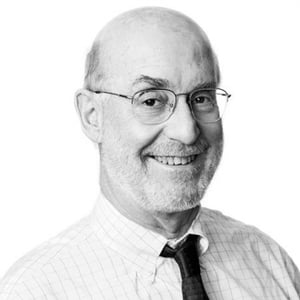
Director, Climate & Clean Air Program, Natural Resources Defense Council
David Doniger has been at the forefront of the battle against air pollution and global climate change since he joined NRDC in 1978. He helped formulate the Montreal Protocol, an international agreement designed to stop the depletion of the earth's ozone layer, as well as several essential amendments to the Clean Air Act. In 1993, he left NRDC to serve on the White House Council on Environmental Quality, followed by key posts at the U.S. Environmental Protection Agency. He rejoined NRDC in 2001 and has since been working to defend the Clean Air Act from assaults in Congress. He is based in Washington, D.C.
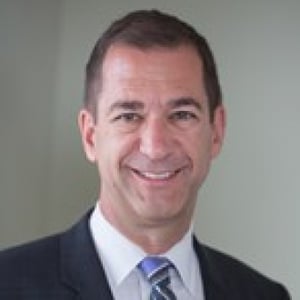
Partner, Crowell & Moring
Mr. Lorenzen is a partner in Crowell & Moring's Washington, D.C. office and is a member of the Environment & Natural Resources and Government Affairs groups. He works with clients seeking to successfully navigate the federal environmental rulemaking process.
With a decade of Justice Department experience managing the legal defense of all EPA rules, Mr. Lorenzen has a unique ability to help clients shape environmental policy, provide vital input on proposed federal environmental regulations through written comment and direct interaction with regulators, and mount effective judicial challenges to EPA actions that adversely affect his clients' interests. He also helps clients ensure compliance with existing environmental regulations. In addition, he is a noted appellate lawyer who has briefed, argued, or supervised hundreds of petitions for review of EPA regulations and other final EPA actions.
While he was at the Department of Justice, Mr. Lorenzen oversaw many of the seminal environmental cases of the last decade. These include Massachusetts v. EPA, in which the Supreme Court affirmed EPA's authority to regulate greenhouse gases under the Clean Air Act, and Entergy v. Riverkeeper, in which the Court held that EPA has discretion under the Clean Water Act to consider or decline to consider costs in determining how to regulate cooling water intake structures. In the D.C. Circuit and the other federal courts of appeals, he oversaw the government's defense in Coalition for Responsible Regulation v. EPA, in which the court upheld EPA's first suite of greenhouse gas regulations (largely upheld by the Supreme Court in Utility Air Regulatory Group v. EPA); EME Homer City Generation, L.P. v. EPA and North Carolina v. EPA, in which the court reviewed EPA's various attempts to address interstate transport of air pollutants; numerous cases challenging EPA regulations governing emissions of hazardous air pollutants; and National Cotton Council v. EPA, in which the Sixth Circuit reviewed EPA's Clean Water Act regulations governing the application of pesticides over waters of the United States.
Mr. Lorenzen is a frequent lecturer and commentator in print, on the internet, and on television regarding federal environmental law, climate change regulation, administrative law, federal policymaking, and effective appellate brief-writing and argument.

Founding Partner, Boyden Gray & Associates
Ambassador C. Boyden Gray is the founding partner of Boyden Gray & Associates, a law and strategy firm in Washington, D.C., focused on constitutional and regulatory issues.
Mr. Gray worked in the White House for twelve years, first as counsel to the Vice President during the Reagan administration and then as White House Counsel to President George H.W. Bush. In the Reagan administration, he was Counsel to the Presidential Task Force on Regulatory Relief, for which he wrote the original Executive Order 12291 requiring cost-benefit analysis and White House review of regulations (later renumbered as current EO 12866). In the George H.W. Bush Administration, Mr. Gray was in charge of judicial selection and was also instrumental in the enactment of the Clean Air Act Amendments of 1990, the Energy Policy Act of 1992, and a cap-and-trade system for acid rain emissions. In 1993, he received the Presidential Citizens Medal. Under President George W. Bush, Mr. Gray was U.S. Ambassador to the European Union and U.S. Special Envoy to Europe for Eurasian Energy.
Mr. Gray practiced law for 25 years at the law firm of Wilmer, Cutler & Pickering and was chairman of the Administrative Law and Regulatory Practice Section of the American Bar Association from 2000 to 2002. Early in his career, Mr. Gray helped to develop the Business Roundtable and served as its first counsel. He is an adjunct professor at Antonin Scalia Law School and a former adjunct professor at NYU Law School (teaching energy and environmental law). Mr. Gray is on the Board of Directors of the Atlantic Council, the Federalist Society, Reason Foundation, and the Trust for the National Mall.
Mr. Gray earned his A.B. magna cum laude from Harvard, where he was an editor of the Crimson, and his J.D. with high honors from the University of North Carolina at Chapel Hill, where he was editor-in-chief of the Law Review. Mr. Gray served in the United States Marine Corps, and after law school, he clerked for Earl Warren, Chief Justice of the United States Supreme Court.
Former Administrator, U.S. Environmental Protection Agency
Scott Pruitt served as the 14th Administrator of the U.S. Environmental Protection Agency.
As Administrator, Mr. Pruitt’s overarching goal was to lead EPA in a way that our future generations inherit a better and healthier environment as he works with the thousands of dedicated public servants at EPA who have devoted their careers to helping realize this shared vision, while faithfully administering environmental laws.
Prior to the EPA, Pruitt served as the Attorney General for Oklahoma. Almost immediately upon taking office, he worked with his Democratic counterpart in Arkansas to reach agreement to study the water quality of the Illinois River, which crosses the border between the two states and has been enjoyed by generations of Oklahomans. The Statement of Joint Principles provides for a best science study using EPA-approved methods, with both states agreeing, for the first time, to be bound by the outcome.
Also during his tenure as Oklahoma’s Attorney General, Pruitt led an historic water rights settlement between Oklahoma, Oklahoma City and the Choctaw and Chickasaw Tribal Nations that preserved the ecosystems of scenic lakes and rivers on native lands. The agreement, which required Congressional approval, was enacted into Section 3608 of Public Law 114-322 and signed in December 2016. It provides a framework that fosters intergovernmental collaboration on significant water resource concerns with the settlement area, while at the same time protecting existing water rights and affirming the state’s role in water rights permitting and administration.
Water settlement cases can be lengthy, costly, divisive and disruptive; however under Pruitt’s forward-thinking leadership, the process was hailed by all parties as one of commitment, hard work, perseverance and cooperation.
Pruitt became a national leader through a career of advocating to keep power in the hands of hard-working Americans. He has a proven track record of working with others – including industry, farmers, ranchers, landowners and small business owners - who want to do the right thing by the environment.
He has dedicated his career to creating policy that serves the people. He strongly believes that environmental law, policy and progress are all based on cooperation between the states, cooperation between the states and EPA, and cooperation between regulators and the public. As Attorney General for Oklahoma, he led the state’s legal challenges against property rights intrusion, while protecting Oklahoma’s natural resources and environment.
He is recognized as a national leader in the cause to restore the proper balance between the states and federal government, and he established Oklahoma’s first federalism unit to combat unwarranted regulation and overreach by the federal government.
Before being elected attorney general, he served eight years in the Oklahoma State Senate where he was a leading voice for fiscal responsibility.
After earning his Bachelor’s Degree from Georgetown College and graduating from the University of Tulsa College of Law, Pruitt went into private legal practice, specializing in constitutional law.
In addition to his life as a civil servant, Pruitt is a successful entrepreneur. As a co-owner and managing general partner of Oklahoma City’s Triple-A minor league baseball affiliate, the Oklahoma City Redhawks, Mr. Pruitt took over the team’s marketing operations and helped the team become one of the minor league leaders in attendance and merchandise sales.
Pruitt is, first and foremost, a family man. He and Marlyn, his wife of 27 years, proudly raised their daughter, McKenna, and son, Cade, in Tulsa. Pruitt has made it a priority to pass on to his children the same principled family values with which he was raised.
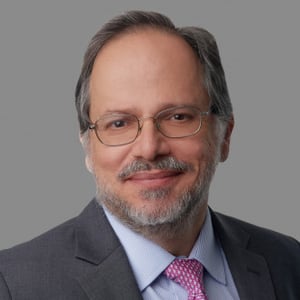
Director of Law & Policy, Environmental Integrity Project
Following Princeton and the University of Chicago Law School, David began practicing law at Paul, Weiss, Rifkind, Wharton & Garrison. Eventually tiring of litigation where the result was a wire transfer from Entity A to Entity B, in the early 1990’s David began his environmental law career at the Massachusetts Attorney General’s Office. Since then, he has litigated dozens of cases under all of the major environmental statutes including, as Sierra Club’s Chief Climate Counsel, initiating and managing Massachusetts v. EPA. Most recently, he has been busy challenging FERC’s permitting of natural gas pipelines and LNG export terminals. Apart from litigation, David has helped lead efforts on both greenhouse gas regulation and global warming legislation (and may be the only person ever invited to testify by both Barbara Boxer and James Inhofe).
He has drafted a range of federal climate legislation, advised states as to their greenhouse gas regulatory authority (and for many years has represented environmental groups defending state GHG regulations from dormant Commerce Clause challenges). David has designed and taught courses on “Environmental Litigation” at Georgetown University Law Center and “Environmental Law and Science” at the William and Mary Law School/Virginia Institute of Marine Science.
Director, Climate & Clean Air Program, Natural Resources Defense Council
David Doniger has been at the forefront of the battle against air pollution and global climate change since he joined NRDC in 1978. He helped formulate the Montreal Protocol, an international agreement designed to stop the depletion of the earth's ozone layer, as well as several essential amendments to the Clean Air Act. In 1993, he left NRDC to serve on the White House Council on Environmental Quality, followed by key posts at the U.S. Environmental Protection Agency. He rejoined NRDC in 2001 and has since been working to defend the Clean Air Act from assaults in Congress. He is based in Washington, D.C.
Former Administrator, U.S. Environmental Protection Agency
Scott Pruitt served as the 14th Administrator of the U.S. Environmental Protection Agency.
As Administrator, Mr. Pruitt’s overarching goal was to lead EPA in a way that our future generations inherit a better and healthier environment as he works with the thousands of dedicated public servants at EPA who have devoted their careers to helping realize this shared vision, while faithfully administering environmental laws.
Prior to the EPA, Pruitt served as the Attorney General for Oklahoma. Almost immediately upon taking office, he worked with his Democratic counterpart in Arkansas to reach agreement to study the water quality of the Illinois River, which crosses the border between the two states and has been enjoyed by generations of Oklahomans. The Statement of Joint Principles provides for a best science study using EPA-approved methods, with both states agreeing, for the first time, to be bound by the outcome.
Also during his tenure as Oklahoma’s Attorney General, Pruitt led an historic water rights settlement between Oklahoma, Oklahoma City and the Choctaw and Chickasaw Tribal Nations that preserved the ecosystems of scenic lakes and rivers on native lands. The agreement, which required Congressional approval, was enacted into Section 3608 of Public Law 114-322 and signed in December 2016. It provides a framework that fosters intergovernmental collaboration on significant water resource concerns with the settlement area, while at the same time protecting existing water rights and affirming the state’s role in water rights permitting and administration.
Water settlement cases can be lengthy, costly, divisive and disruptive; however under Pruitt’s forward-thinking leadership, the process was hailed by all parties as one of commitment, hard work, perseverance and cooperation.
Pruitt became a national leader through a career of advocating to keep power in the hands of hard-working Americans. He has a proven track record of working with others – including industry, farmers, ranchers, landowners and small business owners - who want to do the right thing by the environment.
He has dedicated his career to creating policy that serves the people. He strongly believes that environmental law, policy and progress are all based on cooperation between the states, cooperation between the states and EPA, and cooperation between regulators and the public. As Attorney General for Oklahoma, he led the state’s legal challenges against property rights intrusion, while protecting Oklahoma’s natural resources and environment.
He is recognized as a national leader in the cause to restore the proper balance between the states and federal government, and he established Oklahoma’s first federalism unit to combat unwarranted regulation and overreach by the federal government.
Before being elected attorney general, he served eight years in the Oklahoma State Senate where he was a leading voice for fiscal responsibility.
After earning his Bachelor’s Degree from Georgetown College and graduating from the University of Tulsa College of Law, Pruitt went into private legal practice, specializing in constitutional law.
In addition to his life as a civil servant, Pruitt is a successful entrepreneur. As a co-owner and managing general partner of Oklahoma City’s Triple-A minor league baseball affiliate, the Oklahoma City Redhawks, Mr. Pruitt took over the team’s marketing operations and helped the team become one of the minor league leaders in attendance and merchandise sales.
Pruitt is, first and foremost, a family man. He and Marlyn, his wife of 27 years, proudly raised their daughter, McKenna, and son, Cade, in Tulsa. Pruitt has made it a priority to pass on to his children the same principled family values with which he was raised.

Partner, Baker Hostetler LLP
David Rivkin is a member of the firm's litigation, international and environmental teams and is co-leader of the firm's national appellate practice. He has extensive experience in constitutional, administrative and international law litigation and has been involved in numerous high-profile cases. With his prior experience in the government sector, David draws on a wealth of knowledge when providing compliance advice to companies and handling enforcement proceedings before government agencies on issues arising out of multilateral and unilateral sanctions, the Foreign Corrupt Practices Act (FCPA), anti-boycott issues, bankruptcy and financial fraud matters, and environmental and energy issues.
David has developed and implemented legislative, regulatory and litigation initiatives for two presidential administrations. Over the years, he has published hundreds of articles, op-eds, book reviews and book chapters on a variety of international, legal, constitutional, defense, arms control, foreign policy, environmental and energy issues for various newspapers and magazines, including The Wall Street Journal, The Washington Post, The New York Times, USA Today and The Los Angeles Times, and has been a frequent commentator and guest on TV and radio shows including ABC, CBS, NBC, CNN, Fox News, NPR and PBS.

Laurence H. Silberman Chair in Constitutional Governance, American Enterprise Institute; Executive Director, Antonin Scalia Law School’s C. Boyden Gray Center for the Study of the Administrative State
Adam J. White is the Laurence H. Silberman Chair in Constitutional Governance and senior fellow at the American Enterprise Institute, where he focuses on the Supreme Court and the administrative state. He also directs the Antonin Scalia Law School’s C. Boyden Gray Center for the Study of the Administrative State.
He writes on regulation and constitutional government for a variety of publications. He practiced law in Washington, D.C., after clerking for the D.C. Circuit's Judge David Sentelle. He also has been chairman of the ABA's Administrative Law Section.
In 2021, he served on the Presidential Commission on the Supreme Court of the United States, where he criticized “Court packing” and other efforts to restructure the Supreme Court.
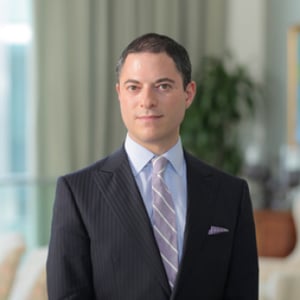
Partner, BakerHostetler, Adjunct Fellow, The Manhattan Institute
Andrew Grossman leads BakerHostetler’s Appellate and Major Motion team. He has appeared before the U.S. Supreme Court, nearly all the federal courts of appeals, as well as some state appellate courts, litigating high-profile and complex commercial, administrative and constitutional issues.
Andrew works with practice groups across BakerHostetler to identify and tackle complex issues, advise on administrative law and strategy, tee up issues for appeal and tackle appeals. He has developed and implemented litigation and administrative strategies for clients in several fields and industries.
In addition to his practice, Andrew advises members of Congress on matters of constitutional and administrative law, having testified more than a dozen times before the House and Senate Judiciary Committees. He has been a frequent legal commentator on radio and television, having appeared on Fox News, CNN, MSNBC, CNBC, NPR and its affiliates, CBN and elsewhere. His legal commentary has also appeared in dozens of magazines and newspapers, including The Wall Street Journal, USA Today, The Washington Post, The Washington Times and many others.
Andrew is a Senior Legal Fellow at the Buckeye Institute, an Adjunct Fellow the Manhattan Institute and a member of the leadership of the Federalist Society. He previously served as an adjunct scholar at the Cato Institute’s Robert A. Levy Center for Constitutional Studies and a legal fellow at the Heritage Foundation’s Meese Center for Legal and Judicial Studies. He clerked for Judge Edith H. Jones on the U.S. Court of Appeals for the Fifth Circuit.

The Major Questions Doctrine: West Virginia v. EPA
Ian Heath Gershengorn, Edith H. Jones, Jenn L. Mascott, Thomas W. Merrill, Yaakov M. Roth
Supreme Court actions during the 2021-2022 term - opinions, grants and denials of petitions for...
Environmental Law After West Virginia v. EPA: Can the Biden Administration’s “Whole of Government” Approaches Survive Judicial Review?
Sean H. Donahue, Lisa Heinzerling, Derrick Morgan, Lindsay See, Lawrence VanDyke
The Biden Administration began with executive orders on an environmental policy agenda, directing a “whole...
Courthouse Steps Decision Webinar: West Virginia v. EPA
David Fotouhi, Garrett Kral, Justin Schwab
On June 30, 2022, the Supreme Court decided West Virginia v. EPA. In a 6-3...
Citizen Suits, Separation of Powers, and the Future of the Supreme Court's Standing Jurisprudence
Jonathan Brightbill, Michael Buschbacher, Robin Kundis Craig, Richard A. Epstein
Internal tensions in the Supreme Court's standing doctrine have led to some unexpected fractures. Last...
FedSoc Study Break: Administrative Law
Christopher J. Walker
The Federalist Society's Student Division & NYU School of Law Chapter present Administrative Law Featuring:...
Florida Chapters Banquet Discussion
R. Alexander Acosta, Gregory G. Katsas, Scott Pruitt
2018 Annual Florida Chapters Conference Panel Discussion Participants: Hon. R. Alexander Acosta - Secretary, United...
The Clean Power Plan: Litigation and Regulatory Challenges, Old and New
David D. Doniger, Thomas A. Lorenzen
In January 16, 2018, the comment period will close on the Environmental Protection Agency’s notice of proposed...
Address by EPA Administrator Scott Pruitt
C. Boyden Gray, Scott Pruitt
EPA Administrator Scott Pruitt delivered this address at the 2017 National Lawyers Convention in Washington,...
The Clean Power Plan Goes to Court
David Bookbinder, David D. Doniger, Scott Pruitt, David B. Rivkin, Adam White
In August 2015 the President announced the Clean Power Plan, characterized by the Environmental Protection...
EPA Power and Power Plants: Michigan v. EPA - Podcast
Andrew Grossman
On June 29, the U.S. Supreme Court limited the power of the EPA. Under the...